James 2:25
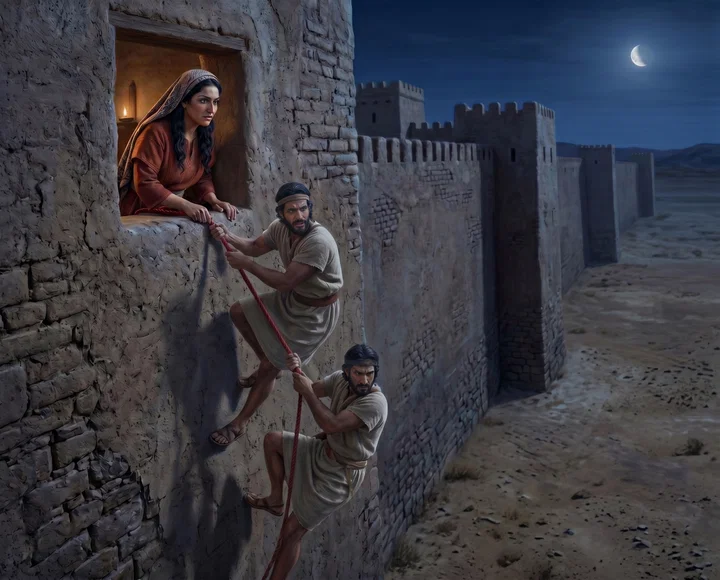
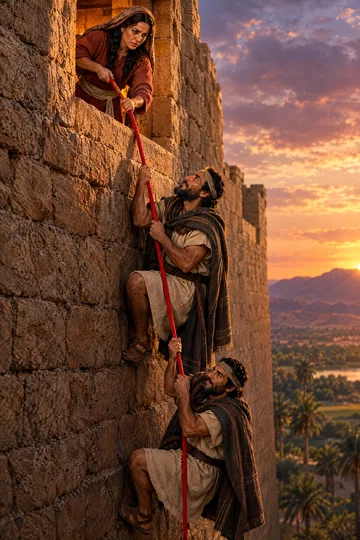
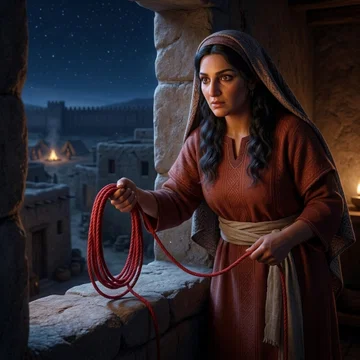
Likewise also was not Rahab the harlot justified by works, when she had received the messengers, and had sent them out another way?
Translations
American King James Version, King James Version, KJV Cambridge Paragraph Bible, Webster Bible
Likewise also was not Rahab the harlot justified by works, when she had received the messengers, and had sent them out another way?
Revised Version, American Standard Version
And in like manner was not also Rahab the harlot justified by works, in that she received the messengers, and sent them out another way?
and in like manner also Rahab the harlot — was she not out of works declared righteous, having received the messengers, and by another way having sent forth?
But was not in like manner also Rahab the harlot justified on the principle of works, when she had received the messengers and put [ them] forth by another way?
And, in like manner also, Rahab the harlot, Was it not, by works, she was declared righteous, when she gave welcome unto the messengers, and, by another way, urged them forth?
Berean Standard Bible, Majority Standard Bible
In the same way, was not even Rahab the prostitute justified by her actions when she welcomed the spies and sent them off on another route?
In the same way, wasn’ t Rahab the prostitute also justified by works when she received the messengers and sent them out another way?
And in the same way, was not the righteousness of Rahab, the loose woman, judged by her works, when she took into her house those who were sent and let them go out by another way?
Likewise also was not Rahab the harlot iustified through workes, when she had receiued ye messengers, and sent them out another way?
Douay-Rheims (Challoner revision)
And in like manner also Rahab the harlot, was not she justified by works, receiving the messengers, and sending them out another way?
Pictures

Cross-references 20 of 36
- James 2:17
Even so faith, if it hath not works, is dead, being alone.
Both show that faith without works is dead.
- Galatians 5:6
For in Jesus Christ neither circumcision availeth any thing, nor uncircumcision; but faith which worketh by love.
Living faith works through love, as shown in Rahab’s active obedience.
- Romans 3:28
Therefore we conclude that a man is justified by faith without the deeds of the law.
Justification by faith apart from works of the law contrasts with Rahab’s faith expressed through works.
- Hebrews 11:31
By faith the harlot Rahab perished not with them that believed not, when she had received the spies with peace.
Rahab’s welcome of the spies demonstrated the faith that kept her from perishing.
- Joshua 2:1-21
And Joshua the son of Nun sent out of Shittim two men to spy secretly, saying, Go view the land, even Jericho. And they went, and came into an harlot’s house, named Rahab, and lodged there.
Records Rahab receiving the spies and helping them escape.
- Romans 5:1
Therefore being justified by faith, we have peace with God through our Lord Jesus Christ:
Faith justifies, while Rahab’s works show faith in action.
- James 2:18
Yea, a man may say, Thou hast faith, and I have works: shew me thy faith without thy works, and I will shew thee my faith by my works.
Works make faith visible.
- Romans 3:20
Therefore by the deeds of the law there shall no flesh be justified in his sight: for by the law is the knowledge of sin.
The law gives knowledge of sin, while Paul denies justification by its deeds.
- James 2:19
Thou believest that there is one God; thou doest well: the devils also believe, and tremble.
Demons believe, but Rahab’s obedient actions show faith in action.
- James 2:21
Was not Abraham our father justified by works, when he had offered Isaac his son upon the altar?
Abraham’s and Rahab’s actions are paired as examples of justification by works.
- James 2:20
But wilt thou know, O vain man, that faith without works is dead?
The passage cites that faith without works is dead.
- Romans 4:9
Cometh this blessedness then upon the circumcision only, or upon the uncircumcision also? for we say that faith was reckoned to Abraham for righteousness.
Abraham’s faith being counted as righteousness is answered with the example of his works.
- Genesis 15:6
And he believed in the LORD; and he counted it to him for righteousness.
Abraham’s belief was counted as righteousness, illustrating faith alongside obedient works.
- Ephesians 2:8-9
For by grace are ye saved through faith; and that not of yourselves: it is the gift of God:
Salvation is God’s gift, not something earned by works.
- Matthew 7:20
Wherefore by their fruits ye shall know them.
Rahab’s actions show the fruit by which people are known.
- Matthew 16:27
For the Son of man shall come in the glory of his Father with his angels; and then he shall reward every man according to his works.
Christ rewards each person according to their works.
- Matthew 7:21
Not every one that saith unto me, Lord, Lord, shall enter into the kingdom of heaven; but he that doeth the will of my Father which is in heaven.
Both connect entry into God’s kingdom with doing, not merely professing.
- Revelation 22:12
And, behold, I come quickly; and my reward is with me, to give every man according as his work shall be.
Christ gives each person his reward according to his works.
- Romans 3:31
Do we then make void the law through faith? God forbid: yea, we establish the law.
Faith establishes rather than abolishes the law.
- Titus 3:8
This is a faithful saying, and these things I will that thou affirm constantly, that they which have believed in God might be careful to maintain good works. These things are good and profitable unto men.
Both texts connect faith with maintaining good works.
Commentary
Each commentary is drawn from primary sources: the writings of Ellen G. White and Adventist pioneers and periodicals. Each commentary is separate. Its own words are not a quotation; follow the references to read the source passages.
Ellen G. White
23 sources
Rahab was counted as right with God because her trust showed itself in action when she took in the messengers and sent them out another way to help them.CTBH 235.4CH 249.1–2Ms 29, 1911, par. 55 Mere claim to believe, even belief that Christ died and rose, has no saving worth when heart and conduct are unchanged, for real faith is not only thought or form but a changed life seen in works.SG1 126.24SP 311.2RH Jan 14, 1902 Faith is brought to fullness and kept alive by works, and without corresponding works it is dead, so faith alone is not enough and works alone are not enough but together they do much.Ms 5, 1866, par. 18–19ST Apr 29, 1875Ms 157, 1902, par. 6ST Oct 25, 1877Lt 33, 1874, par. 1–4 What counts as genuine is love shown in action, working by love and cleansing the life so that it brings forth obedience and righteous deeds.4SP 311.2GC 487.214MR 99.2 God calls for deeds and not for words or pretense alone, and in the end each person will be judged according to the deeds done in the body.17MR 49.2–3
Genuine Faith Shown by Works
James 2:25 belongs to the practical instruction of James's second chapter, which is to be read and lived out daily as faith put into action.Lt 26, 1907, par. 7–8Ms 7, 1898, par. 17–20 Applying these principles in character building brings happiness of spirit, a strong experience, and a sight of God's salvation.Lt 26, 1907, par. 7–8 Rahab's receiving the messengers and sending them out another way demonstrated her faith through obedient action that helped others.CTBH 235.4CH 249.1–2Ms 29, 1911, par. 55
A mere profession of faith has no saving value and does not distinguish Christians when heart and conduct remain unchanged.SG1 126.24SP 311.2Ms 29, 1911, par. 55 Even belief in Christ's crucifixion and resurrection alone does not make one a Christian without good works and imitation of Christ's self-denying life.SG1 126.2 Genuine faith is not merely theoretical, a ceremonial claim, or formalism, but is active in a changed life and shown by works.RH Jan 14, 19026MR 157.2SLP 63.3–65.1 It is proved by its fruit in words, conduct and character, with each person doing his own duty in reliance on Jesus for support and strength.6MR 157.2
What counts as genuine is love demonstrated through action.4SP 311.2 Even small acts done from love are accepted and rewarded by God.GC 487.2 Faith is made perfect, kept alive, and called into exercise by works, and courage and hope grow with working faith.Ms 5, 1866, par. 18–19ST Oct 25, 1877 Without corresponding works it is dead, so professing great love for truth while doing nothing for its advance leaves faith dead and shows conversion has not broken the power of covetousness.ST Apr 29, 1875
Believing God's word means relying on His promises and acting in accordance with that faith rather than waiting for feelings or circumstances to change first.Ms 5, 1866, par. 18–19 Faith alone is not enough and works alone are not sufficient, but united they accomplish much.Lt 33, 1874, par. 1–4 This union joins the inward working of the Holy Spirit with outward practical godliness in daily practice of the law of right.15MR 40.3–4 It requires refusing indolence and inactivity, since no one is at liberty to fold the hands and do nothing, and those who win eternal life face constant conflict.Ms 157, 1902, par. 6
True faith is not feeling and is in no sense allied to presumption, which is Satan's counterfeit of faith.GW 260.2–3 True faith rests on the promises and provisions of Scripture and brings forth fruit in obedience, and does not claim God's favor while refusing to meet the conditions of mercy.GW 260.2–3ST Apr 19, 1910 Presumption claims the promises and Heaven's favor without complying with the conditions on which mercy is granted, using them to excuse transgression.GW 260.2–3 As faith would have led the first parents to trust God's love and obey His commands, presumption led them to transgress believing His great love would save them from sin's consequences.GW 260.2–3
Active Obedience in Life
True faith works by love and purifies the soul, producing obedience and righteous works.14MR 99.2 Merely professing to keep God's commandments and often speaking of the importance of obeying God's law is not living faith when a person fails to work righteousness and walks against God's law.14MR 99.2 God sends messengers to warn those who profess without practicing, to turn them to the paths of righteousness, but those who do not have this working faith refuse to heed the warnings.14MR 99.2
The proof of heart-love is obedience to God's commandments, including loyalty and truth to the Sabbath and through obedience to the Sabbath truth to every principle in the Decalogue.15MR 40.3–4 Faith and works are combined as the inward working of the Holy Spirit with the outward demonstration of practical godliness in daily practice of the eternal law of right.15MR 40.3–4 All who love God study His words, eat His flesh and drink His blood, and live and act in constant submission to His will.15MR 40.3–4 God is responsible for every such soul, securing his title as heir of God and joint-heir with Jesus Christ to an incorruptible inheritance.15MR 40.3–4
Genuine faith is joined to repentance and a changed character, and is proved by its fruit in good works in words, conduct, and character.Ms 29, 1911, par. 556MR 157.2Lt 10, 1888, par. 8 A profession of faith alone does not save and does not prove a saving connection with Christ.Ms 29, 1911, par. 556MR 157.2 Faith that does not lead to resisting wrong inclinations and following God's expressed will at any cost is not genuine, for true conversion requires overcoming selfishness.Ms 29, 1911, par. 55Lt 10, 1888, par. 8 Each person must do his own duty, relying on Jesus Christ for support and strength.6MR 157.2
God calls for works and not for words, profession, pretense, or semblance alone, and future happiness depends on active faith in the Word of God including obedience to His will.17MR 49.2–3 In the day of final judgment every person will be judged according to the deeds done in the body, when nothing will remain but the character formed and the law of God, revealing each one as either righteous or unrighteous.17MR 49.2–3 People are known by their fruits.17MR 49.2–3
No one is at liberty to fold the hands and do nothing, for it is utterly impossible to be saved in indolence and inactivity.Ms 157, 1902, par. 6 Those who win eternal life face constant conflict.Ms 157, 1902, par. 6 Faith is called into exercise by good works, and courage and hope grow in accordance with working faith.ST Oct 25, 1877 Personal effort to bring friends and relatives to Christ exercises faith, so those engaged in the work God gives them to do will have faith increased and will advance in the divine life with a bright living experience, while those who do nothing to gain a living experience do not have it.Ms 157, 1902, par. 6ST Oct 25, 1877
Benevolence belongs beside faith, love, and Christian diligence, so no one can be a good Christian while closing ears and heart to God's calls for liberality.ST Apr 29, 1875 Professing great love for the truth and speaking of interest in its advance while doing nothing for its advance leaves faith dead unless it is made perfect by works.ST Apr 29, 1875 True conversion does not leave a soul under the power of covetousness.ST Apr 29, 1875 Joining faith with practical works includes relieving the sick and helping them live in ways that honor God, as Rahab's deeds aided others and demonstrated her faith.CTBH 235.4CH 249.1–2 Faith must be accompanied by corresponding works and is shown by acting on it rather than resisting the judgment and advice of physicians while claiming to trust God.3T 78.3–79.1
Sources
Pioneers and periodicals
85 sources
Rahab welcomed the messengers and sent them away safely by another route at the risk of her own life, acting out the faith in the God of Israel she had gained from what she had heard of His leading His people toward Canaan.ST Mar 1, 1877ST Jun 23, 1887RH Sep 2, 1873RH Apr 8, 1902
Her receiving them and sending them out proved and made complete that her faith was living, for genuine faith acts and faith without works is dead.ST Mar 1, 1877RH May 12, 1868ST Jul 18, 1911ST Jun 23, 1887ST Aug 20, 1896
To be justified by works here means in this evidentiary sense, that works testify that faith is real and show the believer to have the faith which justifies.ST Jun 23, 1887RH Jul 6, 1869ST Oct 25, 1910RH Aug 13, 1861
Such works do not earn pardon or put away past sin by merit, for justification is entirely by faith, yet no one is saved without them because they are the fruit of grace and of Christ's life within.ST Jun 23, 1887ST Aug 20, 1896ST Mar 4, 1889RH Jul 19, 1870RH Apr 19, 1864
Her deceit to protect the spies was not approved or the reason she was spared, and her deliverance from Jericho's destruction came through forgiving love received by faith that then brought her among God's people to learn the way of truth.ST Mar 30, 1888ST Mar 21, 1878
Rahab's Faithful Actions
Likewise also Rahab was justified by works when she received and welcomed the messengers and sent them out another way or route, protecting them and sending them away safely, and those deeds demonstrated her faith in the God of Israel.ST Mar 1, 1877RH Sep 2, 1873RH Apr 8, 1902ST May 6, 1886ST Feb 7, 1911 Her receiving the messengers and sending them out by another way showed that her faith was living and genuine, not a claim alone but faith in practice proved by corresponding works.ST Mar 1, 1877RH Sep 2, 1873RH Apr 8, 1902ST May 6, 1886RH May 7, 1857 Faith is living when it leads to action, and her actions showed, manifested and tested that reality, for faith without works is dead.ST Mar 1, 1877RH Apr 8, 1902ST May 6, 1886ST Feb 7, 1911RH May 7, 1857
Her faith rested on what she had heard about God leading Israel into Canaan and on the good news of Israel's coming, and it was more than mere assent because she did what faith required in receiving the messengers and sending them out another way.ST Jun 23, 1887 She acted according to the limited light she had, and her faith brought her among God's people where she could learn the way of truth.ST Mar 30, 1888 Her faith was expressed in an act that saved the spies and put her own life at risk to save them. She was saved through God's forgiving love and not by merit.
Her lie to protect the spies is not approved or sanctioned and was not the reason she was saved.ST Mar 30, 1888ST Mar 21, 1878 The verse records what she did but does not sanction her lying or show that God approved it, since lying is never right.ST Mar 21, 1878 God blessed her in spite of the lie, not because of it, because she believed, and she did not know its evil.ST Mar 30, 1888 Her justification by works in this context refers to her deliverance from Jericho's destruction, not to her final salvation.ST Mar 21, 1878
Faith Proved by Works
James 2:25 belongs to the teaching that faith without works is dead, for genuine, living faith acts and is made complete through works and cannot remain without them, just as light and heat disappear together when a candle is put out.RH May 12, 1868ST Jul 18, 1911ST Jan 23, 1912ST Nov 11, 1880 Faith that does not lead to obedience is spurious, while faith that acts on promises and does what is asked is living, moved by the life-giving Spirit rather than left useless.RH May 12, 1868ST Jul 18, 1911ST Jan 23, 1912 Faith must therefore lead to action and be active in works, with humble, prayerful obedience joined to receiving grace, since inactive faith cannot save though works do not earn salvation or give victory by merit.RH May 12, 1868ST Nov 11, 1880ST Mar 20, 1907
Rahab's receiving the messengers and sending them out another way, welcoming them and sending them away safely by another route, proved, demonstrated, manifested and tested that her faith was living.ST Mar 1, 1877ST Jun 23, 1887ST Aug 20, 1896ST Nov 1, 1899ST Sep 28, 1904 Her faith in what she had heard about God leading Israel into Canaan was more than assent, for she did what faith required, and her works were its fruit, proof and evidence, faith being the life of which works are the sign.ST Mar 1, 1877ST Jun 23, 1887ST Aug 20, 1896ST Nov 1, 1899 Her works testified to the reality of her faith and accompanied it as evidence of the faith by which she was justified, showing faith made evident and approved by what it produces and not left alone.ST Jun 23, 1887ST Aug 20, 1896ST Nov 1, 1899ST Sep 28, 1904 These were God's works working in her, not works by which she earned justification, but the fruit of grace and of Christ's life and vitality within, so that faith and works cooperate and a person's life measures the faith professed.ST Aug 20, 1896ST Nov 1, 1899ST Feb 11, 1903ST Sep 28, 1904
Where works are not made manifest there is no ground for boasting of faith, for mere profession, resolutions, prayer, preaching, or scrupulous attention to religious things and temple worship without actual service, sacrifice and works of charity is useless and does not save sinners.RH Jan 15, 1857RH Mar 2, 1911RH Jun 10, 1862RH Dec 15, 1868ST Mar 16, 1904 Prayer and preaching alone do not reach the complaints of sin unless good deeds go with them to raise the fallen and touch bitter needs, and turning away from poor souls close at hand makes them useless, while going to the sinful and needy with a helping hand is better for understanding.RH Mar 2, 1911ST Mar 16, 1904 Rahab's deeds were not promises of future obedience but present receiving and sending, showing that hearing, professing and defending the Word without doing and without working at religion with strength and resources is unstable as sand and no sound basis for hope of eternal life.RH Jun 10, 1862RH Dec 15, 1868ST Mar 16, 1904RH May 15, 1855 Good works do not earn salvation or victory by merit and cannot put away past sins, for a Christian acts because faith is already present, not to obtain faith.ST Jun 23, 1887ST Aug 20, 1896ST Mar 4, 1889ST Nov 1, 1899ST Mar 20, 1907
Yet good works are necessary in the life of one who is saved, for works do not save but no person is saved without them, and either faith or works without the other is dead.RH Jul 19, 1870RH Apr 19, 1864RH Feb 26, 1861ST Sep 26, 1878RH Jul 15, 1873 Works are essential to Christian character as the good fruit of a pure source, showing faith to be living as a body without the spirit is dead, and without them a person cannot inherit eternal life.RH Jul 19, 1870RH Feb 26, 1861RH Jul 15, 1873 Feigned faith depends all upon believing without any doing, all faith and no works, while unfeigned faith is not faith alone but faith which works, and works by love, so that the purpose of the law as love is met.ST Jul 31, 1884RH May 13, 1875ST Nov 22, 1899 Genuine faith therefore works through love and obedience in cause and effect, not as enemies, producing righteous conduct and renunciation of sin rather than taking the place of righteousness.ST Jul 31, 1884RH May 13, 1875ST Nov 22, 1899 The narrow middle path is to rest on faith in Christ and that only for pardon, to use faith as a quickener and help in all well-doing, and to take well-doing as the test of faith's vitality, since Jesus alone redeems from the curse of a fatally broken law and alone effectively helps in holy living, begetting by constant energy a new life constrained to new obedience.RH Jul 3, 1860 Faith must not be made an excuse from good works, as if His obedience avails without the spirit or fact of obedience, nor must works be made the Saviour.RH Jul 3, 1860
Justification by Living Faith
To be justified by works in this verse means it in a secondary, evidentiary sense: receiving the messengers and sending them out another way proved that Rahab's faith was real and did not replace justification by faith.ST Jun 23, 1887RH Aug 13, 1861 Her trust in what she had heard about God leading Israel into Canaan was more than assent, for she did what that faith required.ST Jun 23, 1887 Works are the necessary fruit and evidence of genuine faith, and a faith that produces good works justifies while a faith without works is dead and cannot justify.RH Aug 13, 1861 Her receiving and sending manifested a living, effectual faith, and as long as such faith is held steadfast to the end its deeds manifest it and show the believer to have the faith which justifies, so he is said to be justified by works.ST Oct 25, 1910
Justification is gotten entirely by faith without works, with righteousness imputed because of faith alone, yet that justification must be retained and maintained by works.RH Jul 6, 1869 Works show the virtue of faith and maintain a righteous character before God by keeping from sin, since sinning requires justification again by faith through the Advocate. Without works faith is dead and avails nothing, so justification obtained without works cannot be kept without works. The emphasis on works concerns the good works that are the fruit of faith, in contrast to the sinner's justification by faith apart from works.RH Jul 6, 1869
Rahab's actions belong to the formation of character after justification by faith and to the obedience of faith in the life of faith.ST Mar 29, 1883RH May 5, 1874RH Oct 6, 1863 James is not addressing remission of past sins, which comes freely by God's grace through faith in Christ's blood and cannot be earned by works.ST Mar 29, 1883RH May 5, 1874 Her works did not procure remission for past sins but showed a living faith.RH May 5, 1874RH Oct 6, 1863 Faith does not save without works, and obedience does not replace faith.RH May 5, 1874RH Oct 6, 1863
James does not contradict Paul that no one is justified by deeds of the law and that justification is by faith.ST Aug 20, 1896 Rahab was justified by works when she welcomed the messengers and sent them out by another route, yet in this context her works do not mean that anyone earns justification by deeds.ST Aug 20, 1896 True faith obeys, as Abraham obeyed by faith, and works by love, so Paul and James agree.RH May 5, 1874RH Oct 6, 1863 Christian truth must be held in balance rather than pressing justification by faith so as to exclude good works or treating it as a reason to have none.RH Oct 6, 1863ST Mar 1, 1883
Justification itself is God's instantaneous act of declaring the repentant sinner just through faith in Christ, changing standing from condemnation to acquittal and restoring to favor.ST Oct 25, 1910ST Mar 10, 1887 Through unmerited favor, when the sinner repents, submits all to God, and looks to Christ, God for Christ's sake forgives sin and implants His own nature, so that man is regenerated, born again, created unto good works.ST Oct 25, 1910 Sanctification is distinct from this moral standing: it is the gradual work of God within that frees from sin's power and restores holiness, and it is the sure evidence of justification, for faith is not saving faith if it produces no godly life.ST Mar 10, 1887 A man who never sinned would be justified by his works as the doer of the law is justified by deeds, but sinful man cannot put away past sins or meet the perfect righteousness of the law, so in deeds of the law is only condemnation for all have sinned.ST Oct 25, 1910
Justification requires faith and works together.RH Dec 22, 1863 Merely claiming to believe without working is pretense, and working without believing is also incomplete.RH Dec 22, 1863 The saint obeys the law as if there were no gospel to be believed and believes the gospel as if there were no law to be obeyed.RH Dec 22, 1863 Salvation throughout all ages is through such obedient faith.ST Sep 25, 1907
The faith that justifies does not claim God's favor while refusing to meet the conditions of mercy or rejecting His commands.ST Apr 19, 1910RH Sep 13, 1864ST Apr 16, 1912 It rests on Scripture's promises and provisions, submits with the whole heart, loves the law, hates and mourns over sin, and seeks God to remove and cleanse it.ST Apr 19, 1910RH Sep 13, 1864 Love for God and neighbor sums up the Ten Commandments, and mercy is for those who repent and turn to God with their whole hearts to keep His commandments.RH Sep 13, 1864 Faith is not full or true when one believes God's promises but rejects His commands, and turning away from given duty puts a person out of harmony with Him.ST Apr 16, 1912
Law, Love and Obedience
James 2 sets forth the royal law, the perfect law of liberty, as the Ten Commandments, a perfect and complete moral code spoken by God, written by His finger, placed under the mercy-seat, in force in every precept and binding on Gentiles before and after faith, which Christ and the apostles established and did not set aside and which the New Testament did not need to re-enact.RH Mar 21, 1854RH Dec 1850RH Aug 31, 1905ST Jan 22, 1880RH Jul 22, 1852 Rahab's receiving the messengers and sending them out another way exemplified works accompanying faith, and through grace Christ's people fulfill the righteousness the law requires rather than abolishing its precepts, being redeemed from iniquity and made pure through the blood of Christ.RH Mar 21, 1854RH Jul 4, 1854RH Jul 22, 1852 The law is distinguished from the old covenant obligation to earn life by obedience and from the Levitical priesthood, remaining as the law of Christ.ST Jan 22, 1880 The moral code is God's great mirror or looking-glass into which the sinner looks to see moral faults, stains upon the soul, imperfections of character, and the nature, extent and exceeding sinfulness of sin, without which sin is dead or undiscovered.RH Mar 21, 1854ST Jun 11, 1874 The forgetful hearer deceives himself like one who beholds his natural face in a glass and straightway forgets what manner of man he was, while the doer who looks into the perfect law of liberty and continues therein, not a forgetful hearer, is blessed in deed.RH Mar 21, 1854 Before the sinner can be redeemed he must gain by the moral code a knowledge of the extent and sinfulness of his sins, so the first great work for genuine conversion is to raise this mirror before sinners to produce intelligent conviction that changes mind, heart and life.ST Jun 11, 1874
Faith does not make the law void but works through love and fulfills its righteousness, rebuking the error of treating faith as reason to disregard the law, for faith without righteous acts in keeping with God's law is no better than the faith of devils.RH Feb 17, 1852RH Aug 5, 1852RH Jul 22, 1852 Love for God and neighbor sums up the Ten Commandments, and love of neighbor in God and Christ fulfills them.RH Sep 13, 1864 Faith that justifies is active in obedience, not a claim of faith that refuses God's commandments; without submission to the commandments faith cannot justify or be accepted, while mercy is for those who repent and turn to God with the whole heart to keep His commandments, loving the law, hating sin, mourning over it, and seeking God to remove and cleanse it in order to have part with Christ.RH Sep 13, 1864 A sinner is converted through the application of God's law and keeps God's commandments from the heart, which is the love greater than spiritual gifts.ST Nov 29, 1883
Abraham, Isaac, Jacob, Joseph and others obtained a good report through faith, which could only be by perfecting faith with good works, and their lives set forth in Hebrews 11 are worthy examples for Christians to imitate.ST Aug 13, 1885 Their faith did not lead them to be idolaters, blasphemers, liars, murderers, Sabbath-breakers and the like, but their lives were regulated by the precepts afterward proclaimed at Sinai, proving the Ten Commandments were had and known by the fathers before the old covenant, which was not made with the forefathers but with those who came out of Egypt.ST Aug 13, 1885 The inheritance promised to Abraham is made sure through faith on condition of keeping God's commanded covenant, the Ten Commandments, a condition binding on Abraham's seed.ST Aug 13, 1885RH Sep 18, 1856 Obedience is not the means of attaining righteousness but evidence that faith has made the believer righteous, as Rahab's welcoming the messengers and sending them out by another route demonstrated the righteousness received through faith.RH Jul 4, 1854RH Dec 26, 1912 Keeping God's commandments is evidence of knowing Christ, profession alone is not enough unless expressed in righteous deeds, and words have no value without fitting actions.ST Feb 3, 1909RH Dec 26, 1912
Genuine faith is not full or true when one believes God's promises but rejects His commands, for turning away from given duty puts a person out of harmony with God.ST Apr 16, 1912ST Feb 4, 1897 True trust does not despise commands even when obeying is inconvenient, unpopular or costly, and wholehearted submission to a command trusts the promise implicit in it that God will work its intended good in character.ST Apr 16, 1912ST Feb 4, 1897 True faith like Christ's hangs on the promise and inquires for the path of duty, trusts God with all the heart, loves His law and diligently tries to fulfill all its requirements, making obedience its legitimate fruit, even as Christ believed every word of God yet was careful to fulfill all righteousness, kept His Father's commandments and abode in His love, watching and praying against sin in word, thought or deed from love to God and man.RH Feb 21, 1871 Faith not productive of good works has no conformity to what appeared in Christ, is not the fruit of His Spirit and does not bear His image; to exalt faith to cast down good works, disobey the precepts, teach others to do so and despise those who do and teach them proves a depraved heart that does not delight in the law, disregards Christ's example and turns grace into an excuse for disobedience.RH Feb 21, 1871 Works means obedience to God's moral will in things domestic, social, political and religious, and mere scrupulous attention to religious things and temple worship without such works is powerless.RH Dec 15, 1868 Disobedience to that moral law leaves even a privileged people callous, rejecting God and the Saviour and bringing ruin, dispersion and scattering, whereas sincere zeal with obedience would have kept them from discarding Christ, for God's favor is for those who obey all known duty and selective obedience still makes a person a lawbreaker.RH Dec 15, 1868RH Sep 2, 1862
Practical Faithful Living
Faith is living when it leads to action, as Rahab showed by receiving the messengers and sending them out by another way, and it therefore moves people to take part in and support the work God calls them to do in their own time.ST Mar 1, 1877ST Nov 11, 1880 God calls people to exercise faith in the work he has for their own time, joining and supporting it, including present truth and the third angel's message, rather than relying on work done by others in the past.ST Mar 1, 1877ST Nov 11, 1880RH Dec 9, 1852 Those who believe with all their heart that the third angel's message is now being given cannot grasp after the world, and professed believers in present truth who neglect this teaching are deceived.RH Dec 9, 1852 Knowing and believing the truth cannot save unless faith is put to use in works, for merely holding on to the truth does nothing by itself, just as sitting in a boat does nothing to cross the river unless the oars are taken hold of to propel it.ST Jun 12, 1884 Faith must therefore honor the truth by using all knowledge, faith, and God-given abilities to advance, honor, and exalt the cause of truth and to help others gain the kingdom, and without that active effort even a firm hold on the truth will avail nothing in the end.ST Jun 12, 1884 Each person has a duty to do the work assigned to them in saving themselves and others, for although Christ, angels, and the Holy Spirit act, they do not do the work appointed for people.ST Oct 27, 1881
The same chapter rebukes churches that forget Christ's example by favoring the rich and excluding the poor, for genuine faith is shown by works.ST Jan 30, 1879RH May 31, 1870 Faith is lived out through practical acts of mercy such as feeding and clothing a hungry or destitute person.RH May 31, 1870 Its lesson applies to doing the duty at hand and giving help with kindness and sympathy, since genuine trust is expressed through obedience and faithful action.ST Jun 3, 1889
Living faith is seen in good works, including keeping God's commandments and doing what pleases Him, and belief alone is not enough to receive what is asked for, so faith must be active.RH Jul 9, 1901 Bringing tithes and offerings with right motives is one example of such a pleasing work.RH Jul 9, 1901 True faith shows itself by investing freely in the cause of truth, giving costly and generous offerings, rather than grudgingly bestowing offerings or withholding them altogether under plausible excuses such as a pretense of wide philanthropy unlimited by church or creed or pleading that it is better to give to the poor.ST Oct 9, 1879 Faith is dead unless made perfect by works, and benevolence belongs beside faith, love, and Christian diligence, so no one can be a good Christian while closing ears and heart to God's calls for liberality.ST Apr 29, 1875 Professing great love for the truth and speaking of interest in its advance while doing nothing for its advance leaves faith dead, and true conversion does not leave a soul under the power of covetousness.ST Apr 29, 1875
Faith is called into exercise by good works, and courage and hope grow in accordance with working faith.ST Oct 25, 1877 Personal effort to bring friends and relatives to Christ is the kind of work that exercises faith, so those who do nothing to gain a living experience do not have a bright living experience, while those who engage in the work God gives them to do will have their faith increased and will advance in the divine life.ST Oct 25, 1877 Genuine faith is put into practice rather than remaining theoretical, showing belief through works.RH Jan 14, 1902ST Mar 16, 1904RH Jul 20, 1876 Professed belief is not enough, for hearing and defending the Word without working at one's religion is as unstable as an underpinning of sand, and reaching heaven requires more than words and must involve one's strength and resources.ST Mar 16, 1904 Believing the gospel is demonstrated in how people live.RH Jul 20, 1876
Saving faith and hope in Christ must do their work in the everyday natural life and make the believer better than before, more lovable, kinder, and more considerate.ST Apr 3, 1879 The spiritual cannot remain separate from the natural life but must be incorporated with it until the diviner element, working all through the other like leaven, constantly changes the believer more and more into Christ's image.ST Apr 3, 1879 It is no merit to be amiable where there is nothing to hinder, for faith is proved where there are provocations and hard places, and Christ watches with tender solicitude those set solitary in irreligious households where the strongest tests and the deepest and richest experiences of the Christian life come.ST Apr 3, 1879 Knowing the truth in theory is not enough; faith must take practical effect in a renewed life.RH Sep 17, 1872 Merely holding right doctrines is not religion; faith must be practically exemplified in action, devotion, doing duties, bearing burdens, and sharing in sacrifice.RH Sep 30, 1873 Without a devotion and spirit of sacrifice powerful enough to renovate and purify the heart, all profession is a mere form of no real consequence and of no practical benefit.RH Sep 30, 1873
Living faith is demonstrated by corresponding works, and faith or profession without such action does not avail but ends in condemnation.RH Nov 26, 1872 Obedience requires sustained effort proportionate to the work, rather than a mere claim of belief.RH Nov 26, 1872 Works test faith, for living faith is shown by what a person does, and professing belief without works cannot meet the present call to prepare for Christ's coming.RH Nov 28, 1871 Claiming faith without corresponding works does not make a person ready for the Lord to come, for true faith must be manifest in life by obedient action, choosing the Lord's fast and not one's own way, doing the work commanded in Isaiah 58, and having divine light and comfort in homes and churches.RH Feb 18, 1915 Only such working faith prepares for the gathering of all nations and the separation of sheep and goats, and for consistently giving the loud cry to come out of the fallen churches.RH Feb 18, 1915
Faith and works must harmonize, and those who profess health reform are to live it out and teach it to others.RH Jan 7, 1902 Salvation includes works as part of the gospel alongside grace and faith, for faith is not separated from obedience.ST Sep 18, 1884
Sources