James 2:21
Was not Abraham our father justified by works, when he had offered Isaac his son upon the altar?
Translations
Was not Abraham our father justified by works, when he had offered Isaac his son on the altar?
King James Version, KJV Cambridge Paragraph Bible, Webster Bible
Was not Abraham our father justified by works, when he had offered Isaac his son upon the altar?
Revised Version, American Standard Version
Was not Abraham our father justified by works, in that he offered up Isaac his son upon the altar?
Abraham our father — was not he declared righteous out of works, having brought up Isaac his son upon the altar?
Was not Abraham our father justified by works when he had offered Isaac his son upon the altar?
Abraham our father, was it not, by works, he was declared righteous—when he offered Isaac his son upon the altar?
Berean Standard Bible, Majority Standard Bible
Was not our father Abraham justified by what he did when he offered his son Isaac on the altar?
Wasn’ t Abraham our father justified by works, in that he offered up Isaac his son on the altar?
Was not the righteousness of Abraham our father judged by his works, when he made an offering of Isaac his son on the altar?
Was not Abraham our father iustified through workes, when he offred Isaac his sonne vpon the altar?
Douay-Rheims (Challoner revision)
Was not Abraham our father justified by works, offering up Isaac his son upon the altar?
Pictures



Cross-references 20 of 57
- Genesis 22:9-12
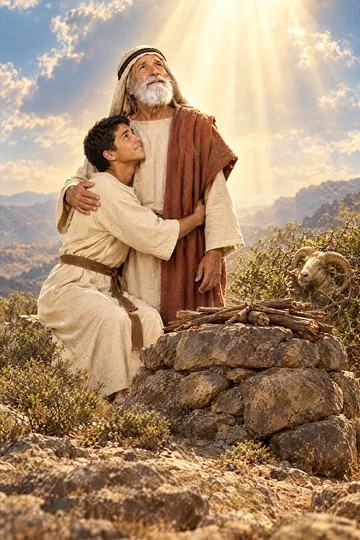
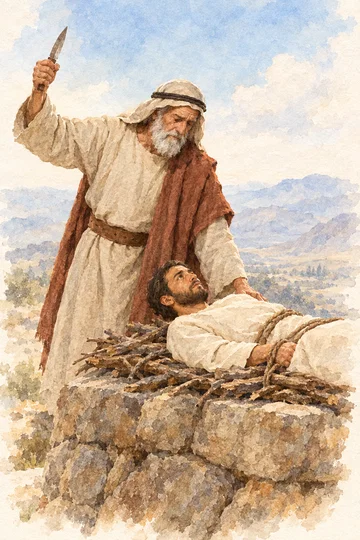
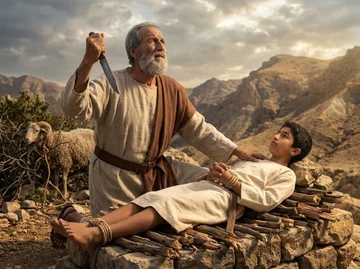
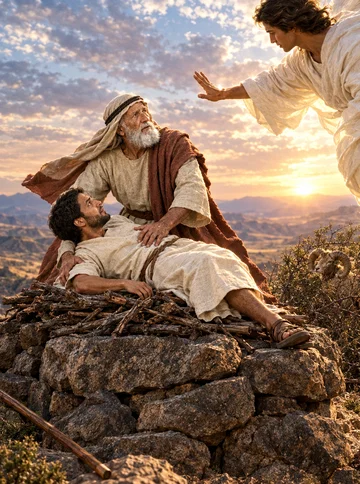
And they came to the place which God had told him of; and Abraham built an altar there, and laid the wood in order, and bound Isaac his son, and laid him on the altar upon the wood.
Abraham’s willingness to offer Isaac shows faith expressed through obedience.
- Genesis 15:6
And he believed in the LORD; and he counted it to him for righteousness.
Abraham’s faith was counted as righteousness, and his obedience fulfilled that faith.
- James 2:17
Even so faith, if it hath not works, is dead, being alone.
Abraham’s works show that his faith was living, not dead.
- Hebrews 11:17-19
By faith Abraham, when he was tried, offered up Isaac: and he that had received the promises offered up his only begotten son,
Abraham offered Isaac by faith, trusting God could raise him from the dead.
- Romans 3:28
Therefore we conclude that a man is justified by faith without the deeds of the law.
Paul excludes works of the law from justification by faith, in contrast with James’s account of Abraham’s works.
- Galatians 5:6
For in Jesus Christ neither circumcision availeth any thing, nor uncircumcision; but faith which worketh by love.
Faith works through love and leads to obedient action.
- Romans 4:1-3
What shall we say then that Abraham our father, as pertaining to the flesh, hath found?
Discusses Abraham’s justification and faith.
- James 2:26
For as the body without the spirit is dead, so faith without works is dead also.
Faith without works is compared to a body without a spirit.
- Romans 5:1
Therefore being justified by faith, we have peace with God through our Lord Jesus Christ:
Justification by faith brings peace with God through Jesus.
- Romans 3:31
Do we then make void the law through faith? God forbid: yea, we establish the law.
Faith establishes rather than makes void the law.
- Galatians 3:9
So then they which be of faith are blessed with faithful Abraham.
Those of faith share the blessing given to faithful Abraham.
- James 2:14
What doth it profit, my brethren, though a man say he hath faith, and have not works? can faith save him?
Abraham’s works show that faith without works cannot save.
- Romans 2:13
( For not the hearers of the law are just before God, but the doers of the law shall be justified.
Both connect justification with doing rather than merely hearing.
- Genesis 26:5
Because that Abraham obeyed my voice, and kept my charge, my commandments, my statutes, and my laws.
Says Abraham obeyed God’s voice and kept his commandments and laws.
- Revelation 22:12
And, behold, I come quickly; and my reward is with me, to give every man according as his work shall be.
Christ gives each person recompense according to their works.
- Matthew 7:21
Not every one that saith unto me, Lord, Lord, shall enter into the kingdom of heaven; but he that doeth the will of my Father which is in heaven.
Both stress that doing God’s will, not merely professing faith, matters.
- 2 Corinthians 5:10
For we must all appear before the judgment seat of Christ; that every one may receive the things done in his body, according to that he hath done, whether it be good or bad.
Each person receives according to what they have done.
- Romans 3:24
Being justified freely by his grace through the redemption that is in Christ Jesus:
faith pardons past sins
- Romans 4:11-12
And he received the sign of circumcision, a seal of the righteousness of the faith which he had yet being uncircumcised: that he might be the father of all them that believe, though they be not circumcised; that righteousness might be imputed unto them also:
Connects Abraham’s faith with the example of the faithful.
- Ephesians 2:8-10
For by grace are ye saved through faith; and that not of yourselves: it is the gift of God:
Salvation is God’s gift, not earned by works, but faith leads to good works.
Commentary
Each commentary is drawn from primary sources: the writings of Ellen G. White and Adventist pioneers and periodicals. Each commentary is separate. Its own words are not a quotation; follow the references to read the source passages.
Ellen G. White
39 sources
Abraham was justified by works when he offered Isaac his son upon the altar, his obedient act fulfilling the word that counted his belief as righteousness.ST Apr 19, 1910GC 471.3–472.2GC88 472.1–2ST Jan 7, 1897ST Apr 3, 1879 In that offering his faith acted together with his works, and by them his faith was made complete, perfect, and brought to maturity.ST Apr 19, 1910GC 471.3–472.2PP 153.4 Living faith is shown by what a person does, while faith without works is dead, no matter how much it professes, feels, or says it believes.ST Apr 19, 1910GC 471.3–472.21T 619.2–620.1SG1 126.2Lt 22, 1878, par. 1–2 Justification is by a faith that works by love and purifies the soul in obedience to God's law, not by faith alone without works.ST Apr 19, 1910GC 471.3–472.2GC88 472.3GC88 472.1–214MR 99.2 That working faith trusts God's commands even when painful, yields what is dearest, and proves itself in daily loyalty, practical service, and care for the afflicted and needy.ST Apr 3, 1879CH 249.1–2CTBH 235.4STSE 41.1ST Apr 3, 1879
Abraham's Offering of Isaac
When Abraham offered Isaac his son upon the altar, his faith acted together with his works, and by those works his faith was made complete, perfect, and brought to maturity. ST Apr 19, 1910GC 471.3–472.2PP 153.4GC88 472.1–2ST Jan 7, 1897 His offering was faith demonstrated in obedient action, proving his faith was living and not a mere claim to safety apart from obedience. ST Apr 19, 1910GC 471.3–472.2PP 153.4GC88 472.3ST Jan 7, 1897 A person is justified by such a living faith that acts, not by faith alone as a bare claim without obedience or effort. ST Apr 19, 1910GC 471.3–472.2GC88 472.3GC88 472.1–2
His readiness to offer Isaac showed implicit trust in God and complete submission to the divine will, with confidence in God's commands even when painful. ST Apr 3, 1879STSE 41.1ST Apr 3, 1879 He was willing to surrender what was dearest to him, holding nothing he possessed as too precious to give to God, even possessions or life itself. ST Apr 3, 1879STSE 41.1ST Apr 3, 1879 He trusted that God had commanded him and that God's promises were sure, and that willingness to yield what is most cherished reveals love for God and the genuineness of faith. ST Apr 3, 1879ST Apr 3, 1879
His obedient works corresponded to his faith and approved his faith, and by that obedience was fulfilled the Scripture that counted his belief as righteousness and called him the friend of God. ST Jan 7, 1897ST Apr 3, 1879 His willingness shows that genuine faith does not rest on personal merit and does not presume on God's favor while disregarding the conditions of mercy. GW 260.2–3Ms 11, 1888, par. 36–38ST Apr 19, 1910 True faith trusts God's commands and promises as sure and acts on them in obedience, bearing fruit in obedience rather than using the promises to excuse disobedience. GW 260.2–3Ms 11, 1888, par. 36–38ST Apr 19, 1910ST Apr 3, 1879
Faith Made Living by Works
Living faith always acts and is shown by what a person does, while faith without works is dead.1T 619.2–620.1Lt 22, 1878, par. 1–2Ms 5, 1866, par. 18–19Ms 4, 1865, par. 16–19 Faith made complete through works is living because it acts in reliance on God, taking Him at His word and working in keeping with that trust rather than merely feeling or waiting passively for a change.1T 619.2–620.1Lt 22, 1878, par. 1–2Ms 5, 1866, par. 18–19 Professed faith in Jesus by itself is not enough, for faith that does not produce good works and lead to imitating Christ's self-denying life leaves the person unchanged and untroubling to Satan.SG1 126.26MR 157.2 A Christian profession without corresponding works is merely a name covering an unsanctified nature and unsubdued passions, and saying "I believe" while acting against that belief does not justify but leaves a person spiritually dead.SG1 126.2Ms 4, 1865, par. 16–196MR 157.2 Faith sustained by works is made perfect, and living it out means trusting God enough to set aside personal feelings and inclinations, endure hardship, and place one's case in His hands, with conformity to God's will in conduct and character demonstrating a saving connection as the fruit of sincere repentance and faith.Lt 22, 1878, par. 1–2Ms 5, 1866, par. 18–196MR 157.2
Abraham's faith was demonstrated in action when he offered Isaac upon the altar, his works cooperating with his faith until through those works his faith was made complete.ST Apr 19, 1910GC 471.3–472.2GC88 472.3GC88 472.1–2 A person is justified by a living faith that acts, not by faith alone as a mere claim without obedience, effort, or practice.ST Apr 19, 1910GC 471.3–472.2GC88 472.1–2 Genuine faith does not claim God's favor while refusing obedience, for faith without works is not sufficient and holiness cannot coexist with willful disobedience.GC 471.3–472.2GC88 472.3GC88 472.1–2 Belief is not merely heard, theoretical, or accepted as theory, but must be put into practice in daily life and shown in what a person does.ST Apr 19, 1910Ms 7, 1898, par. 17–20RH Jan 14, 1902 Those who act on what they believe are not content with theoretical faith but walk in the light and combine faith with works.Ms 7, 1898, par. 17–20RH Jan 14, 1902
Genuine faith bears fruit in obedience and is inseparable from repentance, transformation of character, and the fruit of the Spirit in a life that follows God's will.GW 260.2–3Lt 10, 1888, par. 8 It trusts God's promises and obeys, while presumption uses those promises to excuse disobedience and claims favor apart from obedience.GW 260.2–3 Faith is called into exercise by good works, and without doing anything to gain it, faith has no bright and living experience.ST Oct 25, 1877 Courage and hope accord with working faith, and engaging in the work God gives to do, especially direct personal effort to bring friends and relatives to Christ, makes faith increase and advances the divine life.ST Oct 25, 1877 Such earnest labor brings a larger share of divine grace here and reward hereafter.ST Oct 25, 1877
Faith and works are combined as the inward working of the Holy Spirit with the outward demonstration of practical godliness in daily life, and faith shown in action brings success.15MR 40.3–4Lt 80, 1901, par. 4–5 Proof of heart-love for God is obedience to His commandments, including loyalty and truth to the Sabbath as the sign of His government, through which comes faithfulness to every principle in the Decalogue.15MR 40.3–4 All who love God study His words and eat His flesh and drink His blood, living and acting in constant submission to His will, and every such loyal soul is heir of God and joint-heir with Jesus Christ to an inheritance incorruptible, undefiled, and that fadeth not away.15MR 40.3–4 The same combination is seen in sacrificial effort such as relieving the schools' debts.Lt 80, 1901, par. 4–5
Justified by Working Faith
Abraham was justified by works when he offered Isaac his son upon the altar, because his faith acted together with his works and was made complete, mature, and perfect through them.ST Apr 19, 1910GC 471.3–472.2GC88 472.1–2ST Jan 7, 1897 A person is justified by a living faith that acts in obedience, not by faith alone as a mere claim without obedience, effort, or action.ST Apr 19, 1910GC 471.3–472.2GC88 472.1–2 Genuine faith does not leave a person free to disobey while claiming God's favor, but works through obedience and does not rest on personal merit.GC88 472.1–2ST Jan 7, 1897Ms 11, 1888, par. 36–38 His obedient works corresponded to his faith and fulfilled the Scripture that counted his belief as righteousness and called him the friend of God.ST Jan 7, 1897 The conditions of salvation are stated in different ways to impress different minds and keep none deceived.15MR 184.1–186.1
Faith alone is not enough and works alone are not enough, but faith and works together can accomplish much and must go hand in hand.Ms 157, 1902, par. 6Lt 33, 1874, par. 1–4 No one is at liberty to fold the hands and do nothing, for it is utterly impossible to be saved in indolence and inactivity.Ms 157, 1902, par. 6 A mere profession of faith does not save, but true conversion is accompanied by practical Christian work.Ms 29, 1911, par. 55 Those who win eternal life face constant conflict, obey God at any cost, and overcome selfishness.Ms 157, 1902, par. 6Ms 29, 1911, par. 55
In the judgment a mere profession of faith has no value, for only love shown by works is counted genuine.GC 487.2 Whatever is done from love, however small it appears to men, is accepted and rewarded by God, because love alone gives any act value in the sight of Heaven.GC 487.2 Every person will be judged according to the deeds done in the body, with the law of God as the standard, when nothing will matter but the character formed and all will be seen to be either righteous or unrighteous.17MR 49.2–3 That scrutiny examines whether powers of hand and heart and brain, time, pen, voice, money, and influence have been improved to the glory of God and the blessing of the world so the Lord receives His own with usury, what has been done for Christ in the person of the poor, the afflicted, the orphan, and the widow, and what has been done with the light and truth of God's word entrusted to make men wise unto salvation.GC 487.2 God calls for works and not for words, pretense, or semblance alone, for true faith is active faith in His Word including His will, and future happiness depends on it.17MR 49.2–3
Justification requires a faith that works by love and purifies the soul, producing works of righteousness and walking in paths of righteousness in obedience to God's law.14MR 99.2 Merely professing to keep the commandments and dwelling on the importance of obeying the law is not enough when a person fails to work righteousness and walks against the law.14MR 99.2 God sends messengers to warn such professors and turn them to righteousness, but those who do not have this working faith refuse to heed the warnings.14MR 99.2 Holiness cannot coexist with willful disobedience to God's requirements.GC88 472.3 All who claim to believe present truth must be doers of the word, cherishing a forgiving spirit toward erring brethren because that spirit is indispensable to receiving forgiveness from God, and the sinner forgiven and accepted through Christ will forgive his brother willingly, freely, and thoroughly.15MR 184.1–186.1
Obedience in Daily Life
The verse teaches obedience to all of God's commandments, for genuine faith is not a claim to safety apart from obedience but is demonstrated and made complete through obedient action.PP 153.415MR 40.3–4 Proof of heart-love for God is obedience, shown in loyalty and truth to the Sabbath as the sign of His government, and through obedience to the Sabbath in faithfulness to every principle in the Decalogue.15MR 40.3–4 All who love God study His words and feed upon Christ and live and act in constant submission to His will, and God stands responsible for every such loyal soul as heir of God and joint-heir with Christ to an incorruptible, undefiled inheritance that does not fade away.15MR 40.3–4
The works that make faith perfect include returning to God tithes, gifts, and offerings as a token of loyalty, dependence, and obligation.Ms 25, 1894, par. 12–13 As long as men keep receiving from God's continual bounty the obligation remains, while becoming weary of returning His own causes His blessing to be withheld, and gratitude that ends only in words with profession without works is worthless.Ms 25, 1894, par. 12–13 Living faith is expressed in practical care for the afflicted and sick, and such service helps people glorify God and prepares them for Christ's coming.CH 249.1–2 In caring for the sick, prayer should accompany treatment and right habits of living, for disregarding health principles while asking God to heal does not honor Him.CTBH 235.4 Belief in God is not merely theoretical but is put into practice through works, as seen in medical missionary labor as evidence of faith and walking in the light, and God gives His Spirit and favor to those who work.Lt 55, 1897, par. 9–11
The verse calls believers to accept the responsibility their faith lays on them and to show that faith through active service rather than merely accepting it as theory.10MR 218.3–219.1 Faith sustained by works is living while faith without works is dead, and living it out means trusting God enough to set aside personal feelings and inclinations, endure hardship, and place one's case in God's hands.Lt 22, 1878, par. 1–2 Believers who act on what they believe are not content with theoretical faith but walk in the light and combine faith with works.RH Jan 14, 1902 A profession of faith alone does not save, and true conversion includes obeying God at any cost and overcoming selfishness through practical Christian work.Ms 29, 1911, par. 55
The practical lessons of the chapter are to be brought into daily life, and living by its principles of righteousness through daily action contributes to character, happiness, and experience of God's salvation.Lt 26, 1907, par. 7–8 Faith is not merely heard or claimed but shown in what a person does, calling believers to put the truth into practice in daily life.Ms 7, 1898, par. 17–20 Faith must read the Word to purpose and act out its instruction by helping instead of hindering, having something to do besides tearing to pieces the work given to brethren and acting the part of critics.Lt 185, 1902, par. 19–21 This rebukes hindering the appointed work in the South at Nashville, withholding means that ought to go to that field, turning means into other channels by circulated reports, and leaguing together to criticize and discourage brethren, which God calls robbery and will judge, calling for reformation without delay, for each one to do the work needed for himself, to look closely into the divine mirror and not forget what manner of man he is, and to show greater wisdom by reasoning from cause to effect.Lt 185, 1902, par. 19–21
A profession of faith in Christ has no value by itself, for love shown through deeds is what counts, and a person's use of the abilities and resources entrusted by God will be examined, with faithful service pictured as returning more than was entrusted.4SP 311.2 In the judgment only love shown by works is counted genuine, for love alone gives any act value in Heaven, so whatever is done from love, however small it appears to men, is accepted and rewarded by God.GC 487.2 This is the standard by which the use of every talent is scrutinized, whether powers of hand and heart and brain, time, pen, voice, money, and influence have been improved to the glory of God and the blessing of the world so the Lord receives His own with usury, what has been done for Christ in the person of the poor, the afflicted, the orphan, and the widow, and what has been done with the light and truth of God's word entrusted to make men wise unto salvation.GC 487.2 Faith and works combined bring success, for faith is shown in action, applying also to sacrificial effort such as relieving the schools' debts.Lt 80, 1901, par. 4–5
Sources
Pioneers and periodicals
91 sources
Abraham was counted righteous when he obeyed God in offering Isaac his son, his faith working together with his deed and brought to completion in that act.ST May 13, 1897ST May 13, 1897RH Mar 20, 1855 Faith without obedient action is dead and cannot save, for mere profession or inward consent without doing what God asks is useless.ST Apr 19, 1910ST May 13, 1897ST Mar 1, 1877 This does not contradict justification by faith, because the works that justified him were works of faith wrought by God in him, not deeds by which he earned favor or saved himself.ST Aug 20, 1896ST Aug 20, 1896ST Feb 13, 1896 Such works are the fruit, proof, and visible evidence of living faith, showing its reality before observers and fulfilling the Scripture that his belief was counted to him for righteousness.ST May 13, 1897ST Mar 23, 1888ST Dec 14, 1882ST Jun 17, 1897RH Oct 19, 1916 He obeyed without knowing the outcome, trusting God could even raise Isaac from the dead to keep the promise made through him.RH Mar 20, 1855ST Jul 18, 1911ST Jun 23, 1887ST Mar 23, 1888ST Feb 2, 1915
Abraham's Offering Described
Abraham is counted as having fully offered Isaac upon the altar because his offering was wholehearted and literal as far as God permitted, even though a substitute was provided to take Isaac's place.ST Aug 21, 1901 By contrast Jesus, the antitype of Isaac, had no substitute provided, because he himself was the Substitute for humanity.ST Aug 21, 1901
The command tested Abraham at the very point where the promise centered in Isaac seemed to be made impossible, requiring him to give up his only-begotten son in whom the seed was to be called.ST Feb 2, 1915ST Sep 25, 1901ST Sep 8, 1898 This demand culminated a life of repeated separations and sacrifices, and Abraham is credited with having completed the offering only in a figure.ST Sep 25, 1901ST Sep 8, 1898 He obeyed in preparing to sacrifice his son, and that obedience demonstrated his faith and brought its work to completion and maturity.ST Feb 2, 1915ST Sep 25, 1901ST Sep 8, 1898
He trusted that God was able to raise Isaac from the dead and still fulfill the promise that his descendants would come through Isaac.ST Jun 23, 1887ST Mar 23, 1888ST Feb 2, 1915ST Jul 22, 1886ST Sep 25, 1901 His willingness to offer Isaac thus expressed faith in God's power to raise the dead, even faith in the death and resurrection of Christ.ST Jul 22, 1886 The offering proved and expressed his confidence, implicit trust, and complete submission, in surrendering what was dearest to him and yielding even possessions or life itself.ST Apr 3, 1879ST Apr 1, 1875ST Apr 3, 1879ST Sep 8, 1898RH Mar 19, 1861 Performing the required duty gave visible proof of faith, since mere inward consent was not enough, and it was done not to merit reward but in dependence on God with recognition of his own unworthiness.RH Mar 19, 1861 His righteousness was expressed in obedience rather than in sacrifice by itself, and even obedience in a small or inconspicuous matter can demand greater faith than something conspicuous.ST Aug 21, 1901
Faith Proved and Completed
Faith worked together with Abraham's deeds when he offered Isaac, and was brought to completion, maturity and perfection through them.ST May 13, 1897ST May 13, 1897RH Mar 20, 1855RH Feb 28, 1871RH Apr 24, 1866 The offering was an act of faith through and through, a faith that acted rather than works apart from faith, and it must be read with the following verses that Abraham believed God and it was counted to him for righteousness.ST Apr 19, 1910ST May 13, 1897ST May 13, 1897ST Mar 23, 1888 He trusted the promise, obeyed without knowing how the outcome would unfold, and left the consequences to God, and his obedient action showed that faith to be genuine and active.ST Apr 19, 1910RH Mar 20, 1855RH Apr 24, 1866 Works did not earn everlasting life, which rests on Christ's merits and does not replace faith, but made faith perfect and showed it to be saving faith rather than a mere claim without obedience.ST Apr 19, 1910ST May 13, 1897RH Feb 28, 1871RH Apr 24, 1866
Faith without works is dead and cannot save, and mere profession, claim, mental agreement, feeling, talk or inward consent without obedient action is useless, feigned and gives no ground for boasting.ST Apr 19, 1910ST May 13, 1897ST Mar 1, 1877 Abraham's faith came first when he believed God's promise and that belief was counted to him for righteousness, and his obedience in offering Isaac grew out of that faith and showed it to be active and perfected.ST May 13, 1897ST Mar 23, 1888 Works that justify must have faith beneath them, for faith works through works to show that it is living, while faith that does not lead to work is dead.ST Mar 1, 1877ST Mar 23, 1888ST Nov 11, 1880 Living faith depends on the life-giving Spirit of God, and mere belief without the life and action of faith is as useless as a body without its spirit.ST Nov 11, 1880
Works are the fruit, proof and visible evidence of living, genuine faith rather than a meritorious basis for justification or a source of merit by which people earn salvation.ST Dec 14, 1882ST Mar 4, 1889ST Aug 5, 1889ST Nov 1, 1899 Abraham's willingness to offer Isaac demonstrated the faith by which he was justified, fulfilled the Scripture that Abraham believed God and was counted righteous, and manifested genuine faith by good works rather than remaining barren.ST Dec 14, 1882ST Jun 17, 1897ST Aug 5, 1889 They show the measure and reality of faith, reveal character and conversion, and direct and control action under trial, illustrating that living faith produces faithful obedience to God's law.ST Dec 14, 1882RH Oct 19, 1916 Faithful works are the fruit of Christ's life in the believer, not the believer's own life or righteousness, for a Christian acts because faith is already present, not in order to gain faith or earn salvation.ST Mar 4, 1889ST Nov 1, 1899
Faith demonstrates itself in doing just what God asks and acting on God's promises, in full harmony with justification by faith in Christ, for the faith that avails is the faith of Jesus Christ which works by love.RH Mar 20, 1855ST Jul 18, 1911 Abraham obeyed without knowing how the outcome would unfold, trusted and depended on God with recognition of his own unworthiness, and left consequences and fulfillment of the promise to God.RH Mar 20, 1855RH Mar 19, 1861 Performing the duty gave visible proof of his faith, for mere inward consent, promise or intention was not enough, and professed faith without actual obedience, sacrifice and service remains empty.RH Jun 10, 1862RH Mar 19, 1861 Such obedience does not earn salvation, which is by God's grace, for he acted not to merit a reward but in dependence on God, and God's promise was fulfilled in connection with that obedience.RH Jun 10, 1862RH Mar 19, 1861
Genuine faith leads to action in one's own time, taking part in and supporting the work God calls for rather than merely affirming work done in the past or work done by others.ST Mar 1, 1877ST Nov 11, 1880 Knowing and believing the truth will not save unless faith is put to use by taking hold to help advance the cause of truth in the earth, by using all God-given abilities to advance, honor and exalt it, and by trying to assist others to gain the kingdom.ST Mar 1, 1877ST Jun 12, 1884 Even a firm hold on the truth will avail nothing in the end without that active effort to make the work move forward, and believers who act on what they believe are not content with theoretical faith but walk in the light and combine faith with works.RH Jan 14, 1902ST Jun 12, 1884 Works are the test of faith as living faith in present truth that the coming of Christ is near, even at the doors, with the predicted signs fulfilled, proving faith by doing through zeal and diligence in the cause of human salvation, showing belief of the truth, cutting loose from earthly moorings, putting all on board for the heavenly country and preparing to remove to a better country.RH Nov 28, 1871ST Oct 27, 1881 People have work to do in cooperating with God's saving work, and working faith grows and increases by such doing in unselfish effort to bring others to Christ.ST Jun 12, 1884ST Oct 27, 1881
Faith and works cannot be separated and complement each other, like the light and heat of a candle that both disappear when it is put out, so that neither remains alone or without the other.ST May 6, 1886RH Jul 19, 1864RH Aug 4, 1874 Trust in God and obedience to God belong together, and Abraham's obedience in offering Isaac was the evidence of his faith, inseparable from it and proving it genuine.ST May 6, 1886RH May 13, 1875 Believing without working is pretense just as working without believing is defective, for faith without works is absent just as works without faith are absent.ST May 6, 1886RH Jul 19, 1864 Genuine faith is not opposed to obedience or good works but acts in loving obedience like Christ's faith, works through love rather than taking the place of righteousness, and has obedience as its fruit rather than a substitute for trust in God.RH May 13, 1875RH Feb 21, 1871
Justification by Living Faith
Abraham was justified by a living faith that acted when he offered Isaac upon the altar, and by works, not by faith alone as a mere claim without obedience and not by works apart from faith.ST Apr 19, 1910ST May 13, 1897ST May 13, 1897ST Jul 18, 1911ST Dec 14, 1882 His faith worked together with his deeds and was brought to completion, maturity and perfection through them, for the offering was an act of faith through and through.ST Apr 19, 1910ST May 13, 1897ST May 13, 1897 This does not teach that works earn justification, for faith justifies, but a faith without works is not saving faith, and his obedience showed his faith was genuine while his being counted righteous remained tied to his believing God.ST May 13, 1897ST May 13, 1897 If a man has faith he will have works, since there are no works without faith and only the faith which works is worth anything, demonstrating itself in doing just what God asks and acting on God's promises in full harmony with justification by faith in Christ, even the faith of Jesus Christ which works by love.ST Jul 18, 1911ST Jan 23, 1912 Such saving faith leads to obedience to God and to his law, and that same faith in Jesus Christ which saves from past sins gives power for a life of obedience, so that a faith that does not lead to obedience is spurious.ST Dec 14, 1882ST Jan 23, 1912
Justification is truly spoken of in four ways that do not contradict one another: by the grace of God, by the blood of Christ, by faith, and by works as seen in Abraham offering Isaac.ST Sep 18, 1884 All four are true, and a scriptural view gives each its proper place and meaning without emphasizing one to the neglect or exclusion of the others, with grace, faith and works belonging together in the gospel by which people are saved.ST Sep 18, 1884
One who never sinned would be justified by works, as angels with deeds wrought in faith will be declared just because they have never sinned before God.ST Oct 25, 1910 Sinful man cannot be justified by deeds of the law, which bring only condemnation, because all have sinned and are in a sinful condition by nature, unable to put away past sins or to meet the perfect righteousness of the law required in the present.ST Oct 25, 1910 Through God's unmerited favor a man who repents of sin, submits all to God and looks by faith to Christ is declared just, forgiven for Christ's sake and implanted with God's own nature, regenerated, born again, created unto good works, and as long as he holds this faith steadfast to the end his deeds will show him to have the faith which justifies, manifesting his faith to be a living, effectual faith.ST Oct 25, 1910 Justification is first gotten entirely by faith without works, but it cannot be kept without works, which are needed to show the virtue of faith, to maintain a righteous character before God, to work out salvation and to keep from sin.RH Jul 6, 1869ST Mar 10, 1887 If a person sins, justification is lost and must be gotten again by faith in Jesus Christ as advocate, for Paul describes a sinner's justification as by faith apart from works while James describes the good works of a believer whose faith is active, and sanctification is the evidence of justification, with faith without such fruit unable to save.RH Jul 6, 1869ST Mar 10, 1887
Abraham's actions belong to the formation of character after justification by faith, illustrating the role of works in the Christian life after past sins have been forgiven, even though works cannot bring that forgiveness.ST Mar 29, 1883RH May 5, 1874RH Oct 6, 1863 By works his faith was made perfect, and by works a man is justified and not by faith only, for faith without works is dead; works are as necessary as faith in overcoming, for by virtue of Christ's blood strength to overcome is received, by faith in that blood that strength is appropriated, and that strength prepares to reform life and overcome evil habits, thus overcoming evil with good.ST Mar 29, 1883RH Apr 21, 1868 James speaks of the obedience of faith, not of works earning remission for past sins, for faith does not save without works and obedience does not replace faith, and his works did not procure forgiveness for past offenses but showed faith in action, freely given by grace and not earned by works.RH May 5, 1874RH Oct 6, 1863 Faith alone is the only condition God requires for salvation, because genuine faith includes all else and leads the soul to respond to the Spirit, to submit to God and to choose God's way of salvation through Christ, expressing itself in works and unable to do otherwise.ST Oct 16, 1893ST Mar 13, 1893 True faith always produces its own works in faithful service, and it is not enough to believe that Christ is Saviour in general, for he must be accepted as a personal and individual Redeemer, with God dealing with men not collectively as a nation or church but as distinct and separate individuals, each alone responsible for his own acts, making redemption a personal and practical matter by faith and its works, not by faith without works and not by works without faith.ST Oct 16, 1893ST Mar 13, 1893
Harmony With Paul Explained
James 2:21 does not contradict the teaching that no one is justified by deeds of the law and that justification is by faith, and the apparent conflict is resolved by considering each statement in its setting and comparing Scripture with Scripture.ST Aug 20, 1896ST Feb 13, 1896 James addresses people already justified by faith, whose works are produced by God's grace and show that their faith remains alive.ST Aug 20, 1896 Abraham's offering of Isaac was a work through faith that made his faith visible and brought it to completion, showing that saving faith is living faith expressed in good works rather than mere mental agreement or a profession that excuses evil and neglected good.ST Aug 20, 1896ST Feb 13, 1896
The works by which Abraham was justified were not his own works by which he could claim credit or save himself, but works of faith and God's works working in him.ST Aug 20, 1896ST Feb 11, 1903ST Feb 13, 1896 God approves believers as they do what he requires, but those works do not merit justification.ST Aug 20, 1896 His offering was a work through which faith was demonstrated and brought to maturity, so that genuine righteousness by faith produces works and good works flow from the righteousness freely given by God through Christ and received by personal faith. His actions made his faith acceptable and revealed his faith in God, yet they did not earn justification apart from faith.ST Nov 10, 1914
Being justified by works means being demonstrated, approved, and shown righteous, and Abraham's offering followed and displayed the faith by which he had believed.ST Jun 23, 1887ST Aug 20, 1896ST Aug 27, 1896 His obedience showed that he trusted God to raise Isaac from the dead and fulfill the promise concerning Isaac, and thus fulfilled the Scripture that Abraham believed God and was counted righteous, with works testifying to saving faith while faith was the basis of justification.ST Jun 23, 1887 God pronounced Abraham righteous when he believed, and the offering displayed that righteous character to human observers, who judge by visible actions. In God's sight a sinner is accepted and pronounced righteous when he yields his will, confesses, repents, and believes, and human beings recognize that inward change through the fruit of a holy life, with approval through works coming after faith was counted for righteousness and describing a different moment rather than a contradiction.ST Aug 27, 1896
Abraham's faith could not have been counted as righteousness apart from a disposition to obey, for faith worked with his obedience and was made complete by it.ST Apr 1, 1886 The works that complete justifying faith are the works required by God's law, and that working is the mark of living faith which performs the requirement of the law, establishes the law, and makes a man a doer of the law.ST Apr 1, 1886ST Feb 13, 1896 Justifying faith performs the righteous acts the law requires, and faith without such works is no better than the faith of devils.RH Aug 5, 1852 Abraham believed God and it was imputed to him for righteousness, and he was called the Friend of God, meaning one who regards God's law, and the law could justify him because of the righteousness imputed to him by the Mediator in the judgment, by which God is just in honoring the law while justifying all who believe in Christ, the same rule applying today to those who believe.ST Feb 20, 1896 Justification by faith which works is the only kind of justification known in the Bible.ST Feb 13, 1896
The old issue of faith and works turns on the contrast between works without spiritual life and the power of a life shaped by faith.RH Mar 18, 1909 Abraham could not have been justified had he refused to offer Isaac.RH Oct 27, 1859 By analogy believers are to obey God's present appointment through faith, repentance, baptism, and growth in Christian virtues, though this does not require them to offer their sons or to keep the seventh-day Sabbath in order to be justified.RH Oct 27, 1859
Scripture Connections Affirmed
Abraham's offering of Isaac fulfilled the Scripture that he believed God and it was counted to him for righteousness, for his obedience gave God opportunity to show the truth of what he believed.ST May 13, 1897ST May 13, 1897ST Mar 23, 1888ST Dec 14, 1882ST Jun 23, 1887 His faith came first as the basis of justification, since he believed God's promise before he obeyed, and that belief was counted to him for righteousness.ST May 13, 1897ST Mar 23, 1888ST Aug 20, 1896 The work did not stand apart from faith or earn justification independently, but grew out of faith and showed it to be active, matured, and brought to completion.ST May 13, 1897ST May 13, 1897ST Mar 23, 1888ST Jun 23, 1887ST Aug 20, 1896 Faith worked together with his deeds, and the deeds proved his faith genuine and living rather than mere mental agreement, profession, feeling, or claim that excuses evil and neglects good.ST May 13, 1897ST May 13, 1897ST Dec 14, 1882ST Jun 23, 1887ST Aug 20, 1896 James therefore speaks to people already justified by faith, whose works are produced by grace to show faith remains alive, and God approves them as they do what He requires without those works meriting justification.ST Mar 23, 1888ST Jun 23, 1887ST Aug 20, 1896 The verse must be read with the following verses that say Abraham believed God and was counted righteous, for it teaches justification by a faith that acts and not by works apart from faith nor by faith alone without obedience.ST May 13, 1897ST May 13, 1897ST Mar 23, 1888ST Dec 14, 1882ST May 13, 1897
Through yielding all to God and doing what He commands, Abraham was called the Friend of God.ST Mar 30, 1888ST Jan 7, 1897ST Aug 4, 1914ST Feb 20, 1896 His obedience when he offered Isaac fulfilled the Scripture that counted his belief as righteousness and showed why that name belonged to him.ST Mar 30, 1888ST Jan 7, 1897ST Feb 20, 1896 To be called the Friend of God means one who regards God's law, and genuine faith does not claim God's favor while disregarding the conditions of mercy.ST Mar 30, 1888ST Jan 7, 1897ST Feb 20, 1896 His works corresponded to his faith, proving it living and bringing it to maturity, for a faith that leaves a man free to disobey is dead.ST Mar 30, 1888ST Jan 7, 1897ST Feb 20, 1896 His willingness to offer Isaac expressed trust in God's power to raise the dead and fulfill the promise concerning Isaac, so he was justified by faith in the death and resurrection of Christ.ST Jun 23, 1887ST Jul 22, 1886
Abraham, Isaac, Jacob, Joseph and others obtained a good report through faith only because their faith was perfected by obedient works, as set forth in Hebrews 11.ST Aug 13, 1885 That perfection meant they kept the Ten Commandments and did not live as idolaters, blasphemers, liars, murderers, Sabbath-breakers and the like.ST Aug 13, 1885 Their lives are worthy examples for Christians to imitate because they were regulated by the precepts later proclaimed on Sinai.ST Aug 13, 1885 This proves the commandments were known and kept before Sinai and are distinct from the old covenant made only with the people who came out of Egypt.ST Aug 13, 1885 James 2:16-26 teaches that faith apart from works is dead and faith must be made perfect by good works in order to obtain such a good report.ST Aug 13, 1885
The chapter to which the verse belongs should be read often by those who believe with all their heart that the third angel's message is now being given, because it exposes deceived profession.RH Dec 9, 1852 Such faith cannot grasp after the world but trusts God to sustain.RH Dec 9, 1852 Faith alone is not enough if it remains without action, and Abraham's obedient work brought his faith to completion.ST May 13, 1897ST May 13, 1897
Obedience Required in Life
Those who become Abraham's children through faith in Christ must do Abraham's works to share his blessing and inherit the promise, for his faith was proved genuine and made complete when he obeyed by offering Isaac.RH Nov 8, 1853RH Jul 4, 1854RH Mar 17, 1874 Faith in Christ does not release Christians from obligation to keep God's holy law of Ten Commandments any more than it did Abraham, who was justified by faith and kept God's law, with faith in the promised seed including the Messiah joined to keeping the commandments as the two principles forming righteous character.RH Nov 8, 1853RH Jul 4, 1854RH Mar 17, 1874 God's favor belongs to those who honestly obey every known duty, since choosing which commands to obey makes a person a lawbreaker and good conduct elsewhere cannot make up for known sin, and abiding faith in Christ evidenced in good works will be brought into judgment with every work including secret things compared with the Ten Commandments, so that professing faith and grace while trampling the law and lacking the fruit of the Spirit is self-deception that cannot deceive God.RH Sep 2, 1862ST Oct 7, 1930
The chapter upholds the continuing authority of God's moral law rather than setting it aside, which is why the New Testament does not need to re-enact it.RH Dec 1850RH Aug 31, 1905ST Jan 22, 1880 Faith must not be used to make void the law as in Romans 3:31, but is to work through love in fulfilling it, with the commandments remaining the law of Christ for Gentiles before and after faith rather than a law whose obligation ended with the old covenant.RH Feb 17, 1852RH Aug 31, 1905ST Jan 22, 1880 Christ requires his people through grace to fulfill the righteousness of the moral law, whose precepts remain in force and were not abolished, and justifying faith performs the righteous acts the law requires, so that faith without such works is no better than the faith of devils.RH Jul 22, 1852RH Aug 5, 1852
True faith respects God's precepts, and holding to God's promise while despising God's precept is not faith.ST Feb 7, 1911ST Apr 16, 1912ST Feb 4, 1897 Hoping in God's promises of forgiveness of transgression and immortality in the last great day while despising the commandments or counting them as of no account is self-deception, and sitting in judgment on the divine precepts and treating them as not worthy of observance, especially when obedience is inconvenient, inexpedient, unpopular, or demanding sacrifice, proves the hope false and shows the person out of harmony with God.ST Feb 7, 1911ST Apr 16, 1912 Faith that refuses God's commandments is vain and cannot justify or be accepted by God, for love to God and neighbor fulfills the commandments and one who belongs to Christ hates sin, mourns over it, and seeks God's help to be cleansed from it, obeying the law as if there were no gospel to be believed and believing the gospel as if there were no law to be obeyed.RH Sep 13, 1864RH Dec 22, 1863 Abraham's offering of Isaac was the obedient act demonstrating his faith, proving that obedience to God's precepts is the indicator of true faith and that faith in God's promises cannot be separated from submission to his commands.RH Sep 2, 1862RH Dec 22, 1863ST Feb 4, 1897
Faith must be shown in conduct, including care for the poor, since favoring the rich and excluding the poor forgets this chapter's teaching.ST Jan 30, 1879RH Mar 2, 1911 Being made right with God takes deeds joined with prayer and preaching, for prayers alone do not save a sinner and preaching Sabbath after Sabbath is of no use while turning away from poor souls all around; faith must be linked with deeds that raise the fallen, touch their bitter needs, and give a helping hand to the sinful and needy, with good deeds going with prayers to reach those in sin, since practice teaches them to understand better than preaching alone.RH Mar 2, 1911 Merely saying one has faith without corresponding works does not make one ready for the Lord to come, but true faith has works with it and is manifest in life, in obedience to the work of mercy and practical godliness commanded in Isaiah 58, in light and comfort in the home shown in hospitality, and in doing good to the least of Christ's brethren, for at the judgment when all nations are gathered and the sheep are divided from the goats the reward of Well done and the condemnation for not doing to the least depend on those works.RH Feb 18, 1915 Stingy and covetous conduct proves professed faith dead when actions contradict it, and systematic benevolence tests whether faith is joined to action, with giving freely to God a practical expression of being on his side.RH May 19, 1859RH Sep 1, 1859
The faith that saves is a faith that works, as Abraham's obedience in offering Isaac illustrates a faith leading to obedience to God.ST Jan 23, 1912ST Mar 10, 1887ST Jul 11, 1878 God saves through faith in Jesus Christ, and that same faith gives power for a life of obedience and for doing God's will, for faith does not provide a way to erase past sins or supply righteousness by human effort, and works do not replace faith in Christ as the means of justification, but true faith produces acceptable obedience to God.ST Jan 23, 1912ST Mar 10, 1887 Abraham received the promise because he obeyed God's commandments and his obedience was righteousness, with his faith made complete through works when he offered Isaac, so that faith without works is dead and trust in God and obedience to God belong together, just as works without faith are absent.ST May 6, 1886 Living faith is made visible through good works in keeping God's commandments and doing what pleases him, and a faith that does not lead to obedience or leaves one free to disobey is spurious.ST Jan 23, 1912RH Jul 9, 1901ST Jul 11, 1878
Faith is put into practice through works, for believers who act on what they believe are not content with theoretical faith but walk in the light and combine faith with works.RH Jan 14, 1902ST Oct 27, 1881 Systematic benevolence proves whether faith is joined to action, and Abraham's offering of Isaac as obedient action illustrates that people have work to do in cooperating with God's saving work, including church members volunteering labor to build the church.RH Sep 1, 1859ST Oct 27, 1881 Faith is exercised through good works and called into exercise by them, and working faith grows as believers make unselfish efforts to bring others to Christ.ST Oct 25, 1877ST Apr 1, 1886 Without doing anything to gain it faith has no bright and living experience, but engaging in the work God gives to do, especially direct personal effort to bring friends and relatives to Christ, makes faith increase and advances the divine life, bringing courage and hope in accordance with working faith, a larger share of divine grace here and reward for earnest labor hereafter, while religion that leaves temper and conduct unchanged with daily Christlike kindness lacking in the home, including faithful health reform, is insufficient.ST Oct 25, 1877
Sources