Genesis 15:6
And he believed in the LORD; and he counted it to him for righteousness.
Translations
American King James Version, King James Version, Webster Bible, Revised Version
And he believed in the LORD; and he counted it to him for righteousness.
And he believed in the Lord; and he counted it to him for righteousness.
And he believed in Jehovah; and he reckoned it to him for righteousness.
And he hath believed in Jehovah, and He reckoneth it to him — righteousness.
And he believed Jehovah; and he reckoned it to him [ as] righteousness.
And he had faith in Yahweh,—so he reckoned it to him as righteousness.
Berean Standard Bible, Majority Standard Bible
Abram believed the LORD, and it was credited to him as righteousness.
He believed in the LORD, who credited it to him for righteousness.
And he had faith in the Lord, and it was put to his account as righteousness.
And Abram beleeued the Lord, and he counted that to him for righteousnesse.
Douay-Rheims (Challoner revision)
Abram believed God, and it was reputed to him unto justice.
Pictures
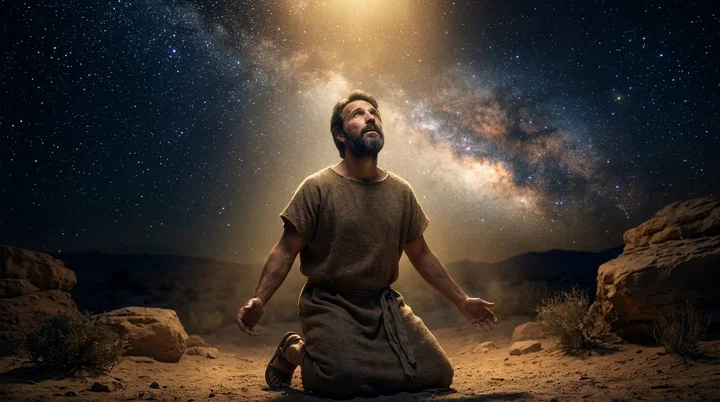
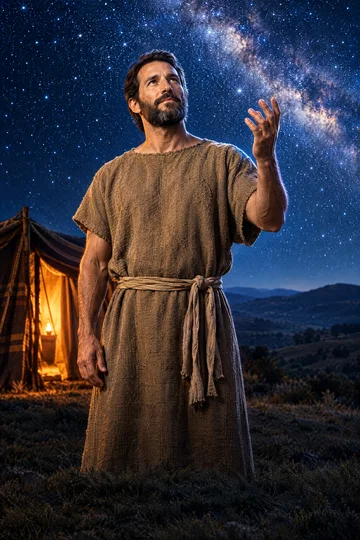
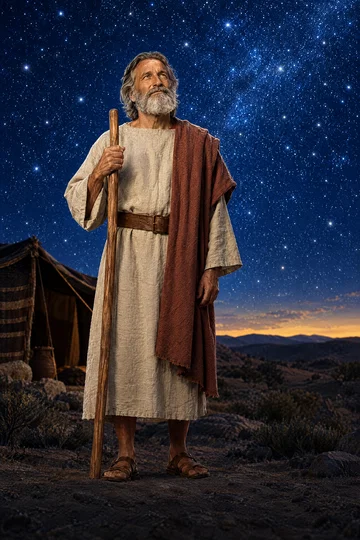
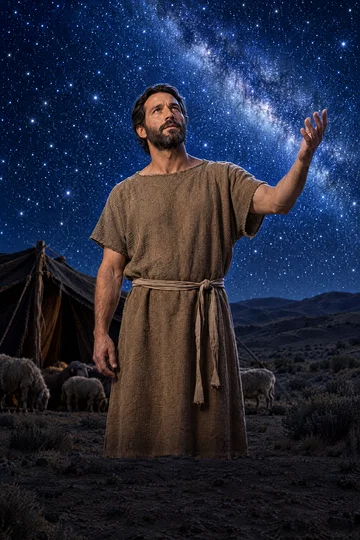


Cross-references 20 of 111
- Romans 4:3
For what saith the scripture? Abraham believed God, and it was counted unto him for righteousness.
Abraham’s faith was counted as righteousness.
- James 2:21-23
Was not Abraham our father justified by works, when he had offered Isaac his son upon the altar?
Abraham’s offering of Isaac showed his faith at work and fulfilled the Scripture.
- Romans 4:13
For the promise, that he should be the heir of the world, was not to Abraham, or to his seed, through the law, but through the righteousness of faith.
Abraham’s promised inheritance of the world comes through righteousness by faith, not law.
- Hebrews 11:17-19
By faith Abraham, when he was tried, offered up Isaac: and he that had received the promises offered up his only begotten son,
Abraham offered Isaac in faith, trusting God could raise him from the dead.
- Genesis 22:16-18
And said, By myself have I sworn, saith the LORD, for because thou hast done this thing, and hast not withheld thy son, thine only son:
God confirms the promise to Abraham by oath.
- Genesis 12:1-3
Now the LORD had said unto Abram, Get thee out of thy country, and from thy kindred, and from thy father’s house, unto a land that I will shew thee:
God promises Abraham land, descendants, and blessing for all families through his seed.
- Romans 4:20-22
He staggered not at the promise of God through unbelief; but was strong in faith, giving glory to God;
Abraham trusted God’s promise without wavering, and his faith was counted as righteousness.
- Galatians 3:8
And the scripture, foreseeing that God would justify the heathen through faith, preached before the gospel unto Abraham, saying, In thee shall all nations be blessed.
Connects Abraham’s faith with God’s promise to bless all nations.
- Galatians 3:29
And if ye be Christ’s, then are ye Abraham’s seed, and heirs according to the promise.
Those who belong to Christ are Abraham’s seed and heirs according to the promise.
- Galatians 3:16
Now to Abraham and his seed were the promises made. He saith not, And to seeds, as of many; but as of one, And to thy seed, which is Christ.
Identifies Abraham’s promised Seed with Christ.
- Romans 4:11
And he received the sign of circumcision, a seal of the righteousness of the faith which he had yet being uncircumcised: that he might be the father of all them that believe, though they be not circumcised; that righteousness might be imputed unto them also:
Circumcision seals the righteousness Abraham received by faith before he was circumcised.
- Genesis 13:14-16
And the LORD said unto Abram, after that Lot was separated from him, Lift up now thine eyes, and look from the place where thou art northward, and southward, and eastward, and westward:
God promises Abraham the land and innumerable descendants.
- Galatians 3:6
Even as Abraham believed God, and it was accounted to him for righteousness.
Repeats Abraham’s faith being counted as righteousness.
- Galatians 3:9
So then they which be of faith are blessed with faithful Abraham.
People of faith share Abraham’s blessing.
- Galatians 3:17
And this I say, that the covenant, that was confirmed before of God in Christ, the law, which was four hundred and thirty years after, cannot disannul, that it should make the promise of none effect.
The law came later and could not annul God’s promise to Abraham.
- Hebrews 11:8
By faith Abraham, when he was called to go out into a place which he should after receive for an inheritance, obeyed; and he went out, not knowing whither he went.
Abraham’s faith led him to obey God’s call and leave his homeland.
- Hebrews 11:4
By faith Abel offered unto God a more excellent sacrifice than Cain, by which he obtained witness that he was righteous, God testifying of his gifts: and by it he being dead yet speaketh.
Abel’s faith and sacrifice received witness that he was righteous.
- Galatians 3:7
Know ye therefore that they which are of faith, the same are the children of Abraham.
Those who share Abraham’s faith are called his children.
- Genesis 22:1-2
And it came to pass after these things, that God did tempt Abraham, and said unto him, Abraham: and he said, Behold, here I am.
Abraham’s willingness to offer Isaac demonstrates the faith counted as righteousness.
- Genesis 17:7
And I will establish my covenant between me and thee and thy seed after thee in their generations for an everlasting covenant, to be a God unto thee, and to thy seed after thee.
God’s covenant with Abraham and his descendants is described as everlasting.
Commentary
Each commentary is drawn from primary sources: the writings of Ellen G. White and Adventist pioneers and periodicals. Each commentary is separate. Its own words are not a quotation; follow the references to read the source passages.
Ellen G. White
8 sources
Abraham believed in the LORD, and God credited that faith to him as righteousness.ST May 19, 1898RH Oct 17, 1907Ms 42, 1890, par. 96–100Ms 19, 1886, par. 15–16 What he believed was God's promise of a son and of blessing to all nations through his seed.RH Oct 17, 19071SP 95.2–3PP 370.2–3 He understood that promise about his seed to point to Christ, and he trusted Christ for forgiveness of sins.RH Oct 17, 1907PP 370.2–3
That faith trusted God's word and promises even when no visible evidence of fulfillment appeared.Ms 42, 1890, par. 96–100 Relying on God's word in darkness makes faith grow until it becomes triumphant, and Abraham's faith is the pattern for this, acknowledged by God as righteousness.Ms 42, 1890, par. 96–100 When a person believes God's promise, that faith is counted for righteousness, and such trust honors God by drawing life from above and fixing the mind on eternal realities.Ms 42, 1890, par. 96–100RH Mar 29, 1870
The faith so counted was not merely professed belief, which cannot justify.ST May 19, 1898 It was genuine faith that works through obedience and love, with works testifying to the character of the faith and making it complete.ST May 19, 1898 It was belief expressed in obedience that was credited by God as righteousness and made him righteous Abraham.ST May 19, 1898
Although Abraham and Sarah believed God would fulfill the promise of a son, their faith was later tested by delay and by Sarah's old age.1SP 95.2–3 They failed to trust God's power to fulfill it through Sarah, and their attempt to secure its fulfillment through Hagar brought unhappiness.1SP 95.2–3
When God required Isaac as a burnt offering, Abraham truly believed and in his heart fully made the sacrifice, and that faith was reckoned to him as righteousness.10MR 119.2 His willingness to offer Isaac made that faith real in his heart, for he believed God could raise Isaac from the dead and he trusted God through the test.10MR 119.2Ms 19, 1886, par. 15–16 His faith was perfect trust at every step, never questioning God's dealings or God's right over him, believing God sees the end from the beginning and is able to raise Isaac from the dead, a conviction he taught to Isaac.10MR 119.2
Mere fleshly descent from Abraham does not make one his child, because lineal connection is superseded by spiritual connection. True relationship to Abraham is shown by doing his works and sharing his spirit of belief and obedience. Unbelief and persistent rejection of truth disinherit a person and prove by works that there is no real relationship to Abraham. That same faith gives strength and courage to others to believe God is their very best friend and to trust Him without questioning.10MR 119.2
Sources
Pioneers and periodicals
124 sources
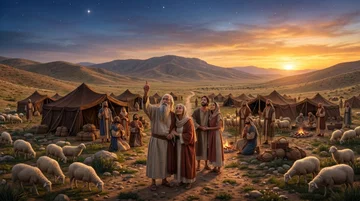
Abraham on that starlit night believed God's renewed promise that a son from his own body would be his heir and that his descendants would be as innumerable as the stars, though he was childless with no natural hope.ST Feb 10, 1898ST Aug 7, 1901ST Sep 22, 1890ST Apr 11, 1900 God freely credited that trust to him for righteousness as a gift and not as wages earned by works, forgiving his sins, covering them and clothing him anew before he had done any work and before he was circumcised.RH Apr 9, 1908ST Feb 17, 1888ST Nov 1, 1899ST Apr 20, 1888ST Sep 9, 1889 The righteousness so reckoned is God's own righteousness in Christ, both counted to the believer and imparted into the life as right being as well as right doing, with obedience as its standard and proof.RH Jan 9, 1900 The Seed promised is Christ, in whom all families of the earth are blessed, and the inheritance with the seed is the land and then the world to come and the new earth, which Abraham could hope to possess personally only by rising from the dead.RH Apr 9, 1908RH Jul 5, 1915RH Jan 9, 1900RH Jun 5, 1900 That living belief was afterward fulfilled and made complete when he offered Isaac trusting God to raise him, and the same blessing is imputed to every one, Jew or Gentile, who believes on Him who raised Jesus from the dead.ST Dec 10, 1885RH Jul 3, 1900ST Nov 1, 1899RH Apr 9, 1908RH Oct 23, 1866
Setting and Wording
The reckoning came in a night vision when Abraham was taken outdoors to be shown the stars and to converse with God about inheriting the land.RH Nov 2, 1869ST Jun 29, 1876RH Jul 3, 1900 When that night vision ended he at once prepared the sacrifice he had been bidden to offer as the token of inheritance.RH Nov 2, 1869ST Jun 29, 1876ST Aug 21, 1879 He divided the pieces and then watched through the whole live-long day until the going down of the sun, driving away the fowls that came to devour the sacrifice and refusing to grow weary or discouraged.RH Nov 2, 1869ST Aug 21, 1879ST Nov 8, 1899 At evening he passed through agonies and a horror of great darkness picturing the coming bondage, and when it was dark God came and granted the desired token of acceptance.RH Nov 2, 1869ST Nov 8, 1899 His believing was thus entering upon something worth all it could cost, laying hold not on appearance but on the Word of God, sure to bring the wished-for result to those who having done their part both wait for God's time and act.RH Nov 2, 1869ST Nov 8, 1899RH Jul 3, 1900
The word for his believing is Amen, regarding God's word as sure, assenting and confiding while setting aside human reasoning about likelihood.ST Sep 8, 1898ST Oct 18, 1899ST Feb 3, 1898 It means building upon God as a firm and sure foundation, stepping out on the promise and resting everything upon it.ST Aug 12, 1897RH Apr 6, 1911 It carries the sense of supporting oneself and resting like a child in its mother's arms, in friendship and love in which God and Abraham spoke and walked together.RH Apr 6, 1911ST Oct 31, 1895 It is trust in God's moral character and not merely accepting that a statement is true, and this trust in its essential and saving sense was counted for righteousness and meant salvation.ST Oct 18, 1899RH Apr 6, 1911ST Oct 31, 1895
What Abraham trusted was spoken with a literal audible voice concerning his heir and his inheritance.ST Jul 16, 1902 The speaker was Jesus Christ as the Voice of the eternal Father.ST Jul 16, 1902 It was the same speaking as when He talked with Abraham concerning the destruction of the cities of the plain.ST Jul 16, 1902
The verse stands in Abraham's progressive dealings with God under overruling providences, after his call, his sojourn in Egypt, and his experience with Lot, and before his circumcision, his doubting in the Hagar experience, Sodom, Isaac, the closing scenes, and his death.ST Jan 2, 1912ST Dec 20, 1910ST Aug 9, 1905 He did not come at once to fullness of faith, but the lesson of faith came over and over from the call onward until here he came fully to trust.ST Jan 2, 1912ST Dec 20, 1910 That growth was shown in unselfishness toward Lot in letting him choose the pasturage and in indifference to present reward, not looking for reward in this world, for his greatness consisted in obedience by faith.ST Jan 2, 1912ST Sep 25, 1901 God met that faith by repeating and enlarging the promise, being Himself Abraham's shield and exceeding great reward, to give further encouragement to His chosen pioneer and progenitor of the promised Seed recorded in Genesis 12 to 26.ST Sep 25, 1901ST His faith is thus set as the model of faith, sacrifice, and power of intercession, in contrast to Lot's doubtful kind of godliness.ST Feb 1, 1877
He trusted what God spoke while surrounded by the vices and wickedness of Egypt and afterward by the idolatry, superstition, and vice of Canaan, refusing to listen to his surroundings in order to listen to God's voice. That trust developed in him the heroism and strength of true faith that made him God's friend, proving such faith comes not by ordinary human reasoning but by taking God's Word as solid and secure and thereby linking finite mortal life with infinite eternity. His offerings belonged to a directed, revealed plan of redemption and atonement and to God's system of religion from the very first, with formal command and direction to make offerings unto the Lord.RH Aug 17, 1876ST Apr 27, 1882 He had already built an altar unto the Lord at least twice before, as Cain, Abel, and Noah had offered before him, and with the instruction for burnt offerings this proves God's children in those early ancient days were carefully instructed from the first in the moral law, rectitude of life, worship, atonement, and essential faith.RH Aug 17, 1876RH Jan 15, 1875 Those who held otherwise taught that the account itself does not state the offering was commanded, since Abraham had built an altar years earlier, while still holding that Abel's offering was accepted because offered by faith and Cain would have been accepted had he done right.ST Jun 3, 1875
God confirmed the promise by solemn covenant ratification when the divided heifer, goat, ram, turtledove, and pigeon were laid out and the smoking furnace and burning lamp passed between the parts.RH Jun 5, 1900RH Jul 20, 1869RH Oct 25, 1853 That passing was the angel of God ratifying the covenant and sealing it by blood, pledging His own life that every promise would be accomplished, with an imprecation that unfaithfulness would bring a like fate.RH Jun 5, 1900RH Jul 20, 1869 It confirmed the special promise to Abraham, Isaac, and Jacob and showed the covenant under which the patriarchs lived as one revelation of the plan of redemption in Genesis.ST Dec 15, 1898 The story belongs to the early history of the world in the five books of Moses that is not done away.RH Nov 26, 1861
Promise Abraham Trusted
Abraham believed the renewed promise that Eliezer his steward would not be his heir but a son coming forth from his own body would be heir, with Sarah as mother in old age when he was about ninety and afterward a hundred and she was ninety, and that the promised son would come from Abraham and Sarah alone.ST Apr 11, 1900RH Jan 9, 1900ST Jan 29, 1894ST Mar 1, 1905ST Jul 1, 1908 Isaac as child of promise came wholly by God's power, in contrast to Ishmael by Hagar through human planning and unbelief devising another way when Sarai remained humanly barren.ST Apr 11, 1900ST Jan 20, 1898ST Sep 28, 1915 If Abraham had simply continued to believe, that unholy arrangement with the bondwoman would not have been made.ST Apr 11, 1900ST Mar 1, 1905 That righteousness by faith in the promise of the seed meant salvation in God's way and by God's power, fitting him by right for the eternal inheritance of the world to come promised to him and his seed together with the blessing to all nations and the benefit of the Melchizedek priesthood.ST Apr 11, 1900RH Jan 9, 1900
He believed that his seed would be as innumerable as the stars, trusting God's promise of an heir and vast posterity though childless and with no natural hope, after God took him outdoors and showed him the stars.ST Feb 10, 1898ST Aug 7, 1901ST Sep 22, 1890RH Sep 11, 1866RH Jul 5, 1915 From the natural and scientific standpoint fulfillment was impossible, and through a long period of testing he could not conceive of God as promising an impossibility but took the word just as it came and stood upon it.ST Feb 10, 1898ST Jul 1, 1908 The promise concerned the line through which the promised Seed would come.RH Jul 5, 1915ST Dec 10, 1885 The stars also picture God's people, whose number cannot be counted by human sight and whose hearts only God can read and number as the faithful.ST Feb 10, 1898
The promise of seed was bound to the promise of land and given in direct answer to his complaint that dying childless made the land promise impossible, for without an heir he saw no way for fulfillment to his seed.ST Jun 2, 1881ST Jan 29, 1894 It named a personal inheritance in Canaan from the river of Egypt to the Euphrates, to be possessed after dispossessing named nations stronger than the Hebrews and after enemies were removed.ST Jul 22, 1913ST Jul 22, 1913 Its fulfillment in that territory is recorded in Solomon's reign.ST Jul 22, 1913ST Jul 22, 1913 The promise also reaches beyond Canaan to the world restored to Eden's beauty by God's power and to the inheritance of the earth for Abraham and his descendants.ST Oct 11, 1899ST Nov 11, 1930ST Oct 4, 1899
His Amen regarded God's word as sure and set his fears at rest for a time with trust and confidence, though his confidence did not remain undisturbed.ST Sep 8, 1898 His faith was still imperfect and yet to be tested, counted to him even though he soon asked for an additional sign, showing God justifies freely by grace sinners whose faith reaches toward Him before they have enough faith to overcome weaknesses.ST Jan 26, 1915ST Mar 1, 1905 He considered adopting Eliezer, twice deceptively called Sarah his sister for lack of trust in God's care, and with Sarah devised the Hagar arrangement to hasten the promise.ST Apr 11, 1900ST Jan 20, 1898ST Sep 23, 1913 Relying on these human expedients and alternatives brought painful consequences, with Hagar's son representing bondage by works while Isaac born through God's power represented freedom by faith.ST Jan 20, 1898ST Sep 23, 1913ST Sep 28, 1915
The chapter foretold that his descendants would be strangers, afflicted and oppressed in a foreign land in Egyptian bondage for four hundred years before deliverance and possession of the Land of Promise.ST Jul 22, 1913RH Mar 9, 1869ST Jun 2, 1881RH Aug 1, 1871 The delay let the iniquity of the Amorites become full so they would be thrust out, and let his seed become numerous enough to fill the land, with Egypt as the place where they waited for the promised time.RH Dec 17, 1861RH Mar 9, 1869 The horror of great darkness and smoking furnace in the vision foreshadowed the iron furnace of bitter servitude where brief prosperity would be followed by long and terrible oppression.RH Dec 17, 1861 Joined to the later offering of Isaac and receiving him back as one raised from the dead, it taught that death and resurrection would precede the seed's inheritance and that faith looked beyond temporal blessings to the life to come.ST Jun 2, 1881
Righteousness Counted by Faith
Abraham trusted the promise that his descendants would be as numerous as the stars, believing when he had no child and no human possibility that God could and would fulfill it by divine power.RH Apr 9, 1908ST Sep 22, 1890ST Jan 14, 1889 God counted that faith as righteousness, freely given as a gift and blessing and not earned as wages or debt through works, so he had nothing to boast before God.RH Apr 9, 1908ST Sep 22, 1890ST Jul 9, 1894 It was credited before he performed any work and before circumcision, through faith and not through works of the flesh, and the same blessing of righteousness is imputed to all who believe on Him who raised Jesus from the dead.ST Nov 1, 1899ST Jul 9, 1894ST Jan 29, 1894 That righteousness is the blessing of Abraham, which anyone can know and receive as quickly as he did by doing as he did, by believing what God says, in order to receive the promise of the Spirit.ST Nov 1, 1899 His confidence in God's power to bring life from the dead was later shown when he offered Isaac, trusting God could raise him.RH Apr 9, 1908
Being counted righteous means forgiveness of sins, with iniquities forgiven, sins covered, and sin not reckoned.ST Feb 17, 1888ST Apr 20, 1888ST Feb 17, 1888 This counting was pardon upon faith through Christ, occurring when God confirmed the promise by promising a son, and it serves as the law's witness to righteousness by forgiveness, showing that Paul's use of "the law" includes Genesis as well as the Mosaic writings.ST Apr 20, 1888RH Feb 18, 1873RH Mar 4, 1873 Pardon does not make law useless but establishes it, because pardon without transgressed law is impossible, so a system of pardon recognizes the existence of law and declares law necessary.RH Mar 4, 1873 Such trust secures pardon and cleansing from defilement, gives a new heart and spirit, clothes with a spotless robe, and meets the law's demand for perfect obedience by covering past sins no future obedience can undo, yet it does not release the believer from continual effort.ST Feb 17, 1888ST Dec 8, 1887 Faith is confidence in another that gives up self-reliance and submits to the one trusted, joining humility with willingness to do whatever God requires, and nothing but such faith secures pardon.ST Dec 8, 1887
The righteousness reckoned is God's own righteousness given to Abraham, flowing into the believer's life in answer to faith.RH Jan 9, 1900 It was not wages given to make him believe nor hire paid to induce faith, but a free gift bestowed by a divine law of faith apart from works on everyone who accepts God's promises of what He would do, the same blessing David pronounces when iniquities are forgiven, sins are covered, and sin is not reckoned. It came after he had received in promise the blessing that would make him a blessing to all nations, the world for an inheritance, the promised seed, and the benefit of the Melchizedek priesthood, fitting him to enter by right into the eternal inheritance of the world to come promised to him and his seed together.RH Jan 9, 1900 It is right-being as well as right-doing, which no unrighteous person has naturally, so making the unrighteous righteous is as miraculous as raising the dead, and the gospel therefore reveals resurrection and life along with righteousness.ST Jun 20, 1900RH Feb 23, 1911 No man except Christ ever perfectly kept God's commandments, so the righteousness credited to the child of faith is Christ's righteousness imputed, while the commandments remain the standard of what righteousness is and obedience is the proof that faith is present.ST Jun 21, 1905 Believing God is itself right-doing in the believer, as it was in Abraham though he had sinned, and as it always has been in sinless intelligences of other worlds who never disbelieved, so that in point of faith there is no difference and all must have faith in God.ST Jun 20, 1900
Abraham trusted God's power to fulfill what human reason, natural law, and worldly wisdom called impossible, even to bring life from the dead.RH Apr 9, 1908ST Aug 7, 1901RH Apr 9, 1908 Taking God's Word as solid and secure links finite mortal life with infinite eternity, and what God counted as righteousness may be dismissed as fanaticism by those who rely on worldly wisdom.ST Aug 7, 1901 He refused to listen to his surroundings in order to listen to God's voice while surrounded by the vices of Egypt and afterward by the idolatry, superstition, and vice of Canaan, developing the heroism and strength of true faith that made him God's friend. Believing is not merely thinking that Christ existed, but holding that when God says a thing is so it is so because He says it, even though all the world may think the believer mad, and that when God says He will do a thing He will do it though it take all heaven, for with God all things are possible.ST Feb 27, 1901 It means opening the eyes, recognizing God and His power, appropriating His promises, yielding to God's will so the promise can be fulfilled in and through the believer by God's power, and it is open equally to all His children; taking heed to men's opinions instead of sure prophecy leaves one driven by every wind, while believing means taking His word for just what it says and resting fully on His promises, learned gradually through faith tested at every step until persevering trust brings intimacy with the Lord as His friend.STRH Apr 9, 1908ST Feb 27, 1901
Because the credit came while Abraham was still uncircumcised, circumcision came afterward only as a sign and seal of the righteousness he already had by faith.ST Feb 20, 1893ST Feb 13, 1896RH Oct 21, 1858 He is therefore father of all who believe though uncircumcised, so that Jews and Gentiles, circumcised or not, share salvation and title to the promises through faith, and the promises made to him come through Jesus Christ, with those who belong to Christ as his offspring and heirs.ST Sep 9, 1889ST Jan 29, 1894ST Feb 13, 1896 His righteousness was not produced by circumcision and his faith came before it, so circumcision could not establish standing as a child of Abraham, and to require it would condemn earlier just men such as Abel, Enoch, Noah, and Lot.ST Feb 13, 1896ST Jan 25, 1899 His faith was active and brought forth righteousness, and those who share his faith are his children, with Israel consisting of those who have personal, saving faith in Christ.ST Feb 13, 1896ST Jan 25, 1899
Covenant Seed and Inheritance
By believing Abraham entered the everlasting covenant relationship with God, the covenant of righteousness by faith in which faith was counted to him as righteousness.RH Jun 5, 1900ST Sep 23, 1913ST Jan 29, 1908 That covenant is the new covenant made with every true child of God from Adam to the end of time, and its promise is life, salvation, and a kingdom through Jesus Christ fulfilled through Christ.ST Feb 1, 1899ST Nov 5, 1896ST Feb 8, 1899 It was given and confirmed while Abraham was old and childless, years after the seed was first mentioned and before Hagar was ever heard of, and it was confirmed in Christ when Abraham believed.RH Jun 5, 1900ST Jan 29, 1908 It provides pardon and restoration of the law in the heart, with its promise of blessing, multiplication, and blessing to all nations through His Seed, and the inheritance comes by promise and not by law.ST Jan 29, 1908ST Feb 8, 1899 God then sealed it by blood, passing between the divided heifer, goat, ram, turtledove and pigeon and pledging His own life that every promise would be accomplished, and that belief led Abraham to obedience, his faith working with his works and made perfect by them unto heirship of the world through the righteousness of faith fulfilled in Christ the Seed.RH Jun 5, 1900ST Jan 29, 1908
The promised Seed to whom the covenant was made is Christ, so the covenant was made in Christ.RH Jun 5, 1900ST Feb 8, 1899 The gospel preached to Abraham was good tidings for sin-sick souls and for the whole world, amplifying and enlarging the promise first given in Eden that the Seed would come to bruise the destroyer's head and deliver those bound and shut up in the prison-house of sin.ST Jun 12, 1907ST Feb 8, 1899 That promised seed meant more than many descendants, for in the seed there was to be One Seed, the hope and desire of all nations, the line through which the promised Seed would come.RH Jul 5, 1915 In Abraham's Seed all families of the earth would be blessed, and all who believe share that blessing as Abraham's children, for all who belong to Christ are Abraham's offspring and heirs.RH Jun 5, 1900ST Feb 8, 1899 Isaac as son of promise, son of faith, was the figure of Him that was to come in contrast to Ishmael the son of the handmaid, teaching that the most sublime promise was the promised Messiah as both seed of the woman and Son of God, an embodiment of divine power not through the ordinary course of nature.
The inheritance promised with the seed is the land of promise which is the world to come, the world for an inheritance, the world renewed by God's creative power and restored to Eden's beauty.RH Jan 9, 1900RH Jun 5, 1900ST Oct 11, 1899ST Oct 4, 1899 It is the earth to be inherited by Abraham and his descendants, the new earth, the everlasting kingdom, and the eternal city which hath foundations whose builder and maker is God, for which Abraham journeyed without a permanent home and looked in the heavenly everlasting covenant corresponding to Jerusalem which is above.RH Jun 5, 1900RH Dec 11, 1866ST Nov 11, 1930 That righteousness is God's own righteousness given to Abraham, fitting him to enter by right into the eternal inheritance promised to him and his seed together, completing what fitted him after he had received in promise the blessing that would make him a blessing to all nations, the promised seed, and the benefit of the Melchizedek priesthood.RH Jan 9, 1900 Those promises of everlasting possession were not fulfilled during Abraham's lifetime but belong to the future, when Abraham and the faithful receive the promised inheritance in the redeemed earth after deliverance after four hundred years and after enemies are removed, and Abraham is now dead to be raised when Jesus comes as King.RH Dec 11, 1866ST Oct 4, 1899
Believing a personal inheritance in Canaan though he would die more than four hundred years before his descendants entered it meant believing that he would rise from the dead, so his faith included hope of resurrection and of the heavenly city.RH Sep 4, 1866 His confidence in God's power to bring life from the dead was later shown when he offered Isaac, trusting that God could raise him and restore life to the dead, and so in faith he received Isaac back from the dead as one raised from the dead.RH Apr 9, 1908RH Apr 9, 1908 Joined to that offering, the foreannounced affliction and oppression before possession teaches that death and a resurrection were to take place before his seed received the inheritance, proving that Abraham's faith grasped the resurrection and looked beyond temporal blessings to the realities of the life to come.ST Jul 22, 1886 His faith rested on God's promise which he believed would be fulfilled even though he did not receive it in his lifetime, including confidence that God could raise the dead and faith in the death and resurrection of Christ, with his offering showing faith working with actions unto maturity.RH Apr 9, 1908ST Jul 22, 1886 He manifests faith counted for righteousness when alive before God and remains just as much alive to God now in His thoughts and presence and knowledge which comprehends all things, with no loss of continuity despite the long break of silence and darkness in the tomb, because God is the God of the living only yet is still Abraham's God, which requires that Abraham will live again by resurrection.RH Jan 16, 1900
The promises stand as God's infallible witness with prediction and fulfillment so far apart in time that no human connivance or collusion was possible, giving basis for confidence.ST Jul 22, 1913 The promise named territory extending from the Euphrates to Egypt by dispossessing certain named nations stronger than the Hebrews, and its fulfillment is recorded in Solomon's reign.ST Jul 22, 1913ST Jul 22, 1913 It foretold that no adopted son but one of his own blood would be his heir through whom the promised Seed would come, that the seed would become afflicted, that four hundred years would pass before deliverance, and that afterward his descendants would receive the Land of Promise and that God would make of him a great nation and make his name great.ST Jul 22, 1913 Isaac's birth taught that the promise could be fulfilled only by God's power, for Abraham was counted righteous because he trusted God's promise and not human ability or visible results, and even after Isaac was born his faith rested on the promise rather than on Isaac as he appeared in the flesh because the promised Redeemer was still to come.RH Jan 14, 1904RH Jan 14, 1904 Abraham's attempt to obtain the heir through the bondwoman was an effort by his own planning to gain what God had promised, representing self-justification and trying to earn justification by law, while Isaac as child of promise came wholly through the power of the One who promised; thus Hagar's son pictures bondage by works and Isaac pictures freedom by faith and new life given by faith to those dead in sin, showing all hope rests wholly in God's promises by Jesus Christ in the obedience of faith as opposed to self-righteous obedience of law.RH Oct 31, 1912
Faith Proved by Works
Saving belief is active trust that both waits for God's time and does its part, laying hold not on appearance but on the Word of God.ST Nov 8, 1899ST Apr 17, 1893 In the covenant he killed the sacrifice and divided the pieces, and though the Lord did not come at once he drove away the fowls that came to devour the sacrifice and kept waiting, suffering at evening the agonies of the Egyptian bondage until when it was dark God came, and blessed are those who, having done their part, wait upon God.ST Nov 8, 1899 Simple belief joined him to God and opened God's promises to him, and that belief was genuine because he acted on it in obedience, so that the promise was fulfilled in his experience and God's plan was worked out in human life, which is righteousness by faith.ST Apr 17, 1893RH Dec 31, 1903 He proved God by doing just what God said, giving Him opportunity to demonstrate what was already believed, for mere holding of truth as theory is not this belief, since devils also believe.RH Dec 10, 1867RH Apr 24, 1866 Confidence and the obedience resulting from confidence taken together are complete faith, trusting God and accepting the crosses obedience requires, and faith without works is dead.RH Dec 10, 1867RH Apr 24, 1866
The Scripture that he believed was fulfilled and brought to maturity when he offered Isaac his son upon the altar, for faith wrought with his works and by works faith was made perfect.ST Jun 23, 1887RH Apr 24, 1866 That night of the original promise about seed as the stars meant depending upon and trusting in the naked promise of God alone for all that the promise contained, and having swerved from that promise into dependence on the flesh with Hagar, the call to offer Isaac on Moriah brought him back to that same night and that same faith.RH Jul 3, 1900 He trusted and expected that when Isaac was offered and burned, God would certainly fulfill the promise of seed by raising him from the dead and bringing him back from the ashes, believing God could restore life to the dead even when obedience appeared to make fulfillment impossible, and so in faith he received Isaac back from the dead.RH Jul 3, 1900RH Apr 9, 1908ST Jun 23, 1887 Had he stood in that belief from the first and refused the Hagar scheme there would have been no Ishmael and no need to offer Isaac, and had he staggered not at the promise through unbelief but stood strong in faith giving glory to God fully persuaded that what God promised He was able to perform, righteousness would have been imputed to him throughout.RH Jul 3, 1900 His offering later showed this was real, saving faith, for he obeyed when commanded to offer Isaac though Isaac was the son through whom God had promised the blessing of the Messiah, trusting God to raise him and fulfill the promise concerning his descendants, and the apparent conflict was resolved to his satisfaction.RH Oct 23, 1866ST Jun 23, 1887
His works made that faith visible and complete but did not earn his righteousness, for he was counted righteous because he believed God and was justified by faith, and his works testified to that faith.ST Jun 23, 1887RH Jan 14, 1904 He trusted God's promise rather than human ability or visible results, and Isaac's birth taught that the promise could be fulfilled only by God's power.RH Jan 14, 1904 Even after Isaac was born his faith rested on the promise rather than on Isaac as he appeared in the flesh, because the promised Redeemer was still to come, and he obeyed even when obedience seemed to leave no hope of fulfillment, leaving its fulfillment wholly to God.RH Jan 14, 1904 His later offering showed this faith was living, his works giving evidence of righteousness and bringing faith to maturity, for righteousness freely given by God through Christ produces good works, and the power that accounted him righteous could also keep him blameless as he continued to walk.
Genuine faith works through obedience and love, and works make faith complete, for merely professed belief cannot justify.ST May 19, 1898 Faith in the promised seed included the Messiah, and faith in Jesus together with keeping the commandments of God made him a righteous man, these two principles of faith and obedience forming character in all the righteous fitting them for the kingdom of God.RH Jul 4, 1854ST Nov 16, 1888 His righteous character was manifested in keeping God's charge, commandments, statutes, and laws, including the ten commandments, and his faith belongs with the same enduring requirements of faith and obedience to God's law that apply in every age.ST Oct 1, 1896ST Aug 13, 1885 It establishes rather than nullifies the law, and if it ceased to produce tangible obedience it would cease to be faith, as shown by Abel's sacrifice, Noah's ark, Abraham's going out, and Abraham's offering of Isaac.
What Paul teaches of justification by faith when he believed and what James teaches of justification by works are in harmony, for the first counting by faith came before the later approval at the offering of Isaac.RH Apr 24, 1866ST Aug 27, 1896ST Oct 17, 1895 Isaac is a child of faith who shared Abraham's faith, so that Abraham's seed means those who have that faith, and true faith is shown by works, his obedience being the fruit of his faith which those counted as his seed follow. Being counted righteous by faith does not contradict the teaching that living faith is shown in works, for justification by works did not mean works earned righteousness, but faith worked together with his works and was made complete through them, his obedience being the living result of faith and his works fulfilling the Scripture's declaration that he believed God.ST Aug 27, 1896ST Oct 17, 1895 A man is thus justified by works and not by faith only in that works manifest living faith without contradicting justification by faith apart from works.RH Apr 24, 1866ST Oct 17, 1895
His faith was faith in Christ the Saviour from sin and sinning, by which he became acquainted with the Lord Jesus, accepted Him as Saviour, entered covenant relation with Him, saw His day and rejoiced in it, and trusted Him for forgiveness.ST Jun 3, 1908 That faith in the gift of the only-begotten Son is what enabled him to offer up his son Isaac, and what Christ did for him then is the ground of hope that He lives and works now.ST Jun 3, 1908 It belongs to the Abrahamic covenant, which provides forgiveness for sin and help to keep God's law, so that people are accounted righteous through faith in the promised Saviour, and every appointed lamb offering looked in faith to the Lamb of God.ST Nov 16, 1888 He was pardoned upon faith, and pardon through faith establishes law because pardon without law transgressed is impossible, so a system of pardon recognizes the existence of law and declares law necessary rather than making law useless.RH Mar 4, 1873 His belief was trust in God expressed in obedience to God's plainly expressed will, not merely obedience to inward impulses or approval of himself, but connected with the gospel preached to him and God's covenant confirmed in Christ, resting on Christ and His complete work, and being justified by faith he rejoiced in hope of God's glory.ST Mar 10, 1887ST Mar 10, 1887
Pattern for All Believers
What held true for Abraham holds true for all who trust God's promise of forgiveness through Jesus and trust in Him who raised Jesus from the dead, who was delivered for trespasses and raised for justification.ST Dec 10, 1885ST Nov 1, 1899ST Feb 3, 1909ST Jan 29, 1894 Believing God is counted as righteousness with no works required and no waiting until one is better, for God accepts sinners just as they are, laden with iniquity and sick with sin, because Christ died for the ungodly to save sinners.ST Feb 3, 1909ST Feb 22, 1899 To those who believe He removes the heavy burden, cleanses filth, heals disease, gives a new heart and new spirit, clothes with His spotless robe of righteousness, and gives the Spirit of righteousness.ST Feb 3, 1909ST Feb 22, 1899 That righteousness is the blessing of Abraham, to be received as quickly as Abraham received it by doing as he did in believing what God says, and it is useless to pray for the baptism of the Holy Spirit until this blessing has been received.ST Nov 1, 1899 Faith is counted for righteousness even before strong feelings or emotions arise, and the same imputation comes to Gentiles as well as Jews.ST Nov 1, 1899RH Dec 30, 1915ST Jan 29, 1894
Abraham became the father of the faithful because he trusted God, and his seed means those who share that faith.ST Dec 10, 1885ST Jan 29, 1894 Mere fleshly descent does not make one his child, for lineal connection is superseded by spiritual connection, and true relationship is shown by doing his works and sharing his spirit of belief and obedience.ST Jun 10, 1886 Those who belong to Christ are Abraham's seed and heirs according to the promise through Christ the promised seed by whom the world is blessed, including believers who are uncircumcised.ST Jan 29, 1894ST Jun 10, 1886RH May 5, 1863 The faith counted to him is the same kind of faith required of believers in Christ in every generation, proving one God and one unchanging religion rather than a new system, but clearer and completed revelation of that by which good men in former ages lived and died.RH May 5, 1863 He was chosen from among idolaters and set apart for fidelity when others apostatized, to keep pure the knowledge of God and the Redeemer, while unbelief and persistent rejection of truth disinherit a person and prove by works that there is no real relationship.
His trust is an example for Christians to imitate.RH Sep 11, 1866 His Amen meant assenting, leaning on, confiding in, and trusting God's word while setting aside human reasoning about what was likely, setting aside what nature and human reason presented as obstacles, and trusting firmly even when it goes against what the senses tell.ST Feb 3, 1898ST Apr 17, 1893 Leaving earthly possessions and relationships for what rested only on God's promise was the obedience of faith growing from unwavering trust that God could fulfill what He promised, linked to receiving the promised inheritance as the new earth and to trusting in Christ's righteousness while obeying God's commandments.RH May 21, 1908 The patriarchs' strength lay in taking God at His word, not in having a different or sinless nature, for they faced weaknesses as people do today, and their lives assure that believing God is possible and within reach and that God still gives aid to transform those who trust Him.ST Feb 15, 1883
God pronounced Abraham righteous when He saw in him an inward disposition to trust and obey, and when a sinner yields the will to God, confesses, repents, and believes, God accepts and pronounces that person righteous by faith without works. The holy life that follows makes this inward faith and character visible to other people, as Abraham's later offering of Isaac manifested that righteous character in outward obedience. Righteousness is imputed only to individuals by personal belief, never to a nation by constitution, law, convention, or public profession, for it is a spiritual attainment through faith in Jesus Christ, not enforced civic righteousness, and only individually righteous people will exalt a nation in the estimation of the universal Judge.ST Dec 25, 1901 This stands in contrast to counting strict Sunday observance as righteousness and fitness for public office, even in an infidel or a Jew.ST Jan 22, 1885 Yet God accepts people who observe Sunday from the heart while sinning ignorantly, not because the observance is right or makes them righteous but despite it, because they have submitted to God, just as He counted Abraham upright because he was right at heart though ignorant of the sin of polygamy.ST Sep 10, 1894
Strong faith does not stagger at the promise through unbelief but stands strong giving glory to God fully persuaded that what He promised He is able to perform, giving glory for things promised long before coming into actual possession.RH Jul 3, 1900ST Jun 22, 1904 It means depending upon and trusting in the naked promise of God alone for all that the promise contains, taking His word for just what it says and resting fully on it, taking the word just as it comes and standing upon it.RH Jul 3, 1900STST Jul 1, 1908 Such faith takes God at His word, complies with the conditions, claims His promises for time and eternity, and holds on by giving glory to Him, learned gradually through faith tested at every step with failures along the way until persevering trust brings intimacy with the Lord as His friend.STST Jun 22, 1904 Abraham swerved into dependence on the flesh with Hagar, and had he stood in belief from the first there would have been no Ishmael and no need to offer Isaac, but the call to offer Isaac on Moriah brought him back to the same night and the same faith, trusting that God would fulfill the promise of seed by raising him from the dead and bringing him back from the ashes.RH Jul 3, 1900 He waited through a long testing until fulfillment came when he was a hundred and Sarah ninety, unable to conceive of God as promising an impossibility, and he died in the triumphs of living faith before receiving all promised, confident God would fulfill every word in His own time and way exactly for the believer's highest good and His glory, to be eternally honored when the Lifegiver calls him with all overcomers to life and immortality.RH Apr 9, 1908ST Jul 1, 1908ST Jun 22, 1904
Believing God gives righteousness as the white raiment to be received and worn, which is the righteousness of Christ obtained by faith, showing that keeping the commandments avails nothing without the faith of Jesus.RH Jul 23, 1857RH Oct 30, 1856 That faith must not be dead and alone without works, for without it it is impossible to please God, and it must be guarded lest an evil heart of unbelief depart from the living God.RH Oct 30, 1856 The belief counted was willingness to obey fully and make entire consecration of all that is had and is to God's service, shown when he willingly obeyed the command to offer his only son, doing all commanded and seeking a deeper work of grace in view of God giving His dear Son to die.RH May 10, 1860 Those who believe as Abraham did may share in his promised inheritance in the New Jerusalem.RH Mar 23, 1852
Noah's implicitly obedient faith illustrates the same reckoning, for righteousness was not secured by keeping the law but by believing the gospel which is the everlasting covenant.RH Feb 23, 1911RH Apr 2, 1908 He trusted the warning of a flood and the way of salvation through the ark, acted to save his household, and invited others to join him, and his obedience and preaching gave practical expression to genuine faith counted as righteousness.RH Apr 2, 1908
Sources