Translations
American King James Version, King James Version, Webster Bible, Revised Version, World English Bible
The word which came to Jeremiah from the LORD, saying,
KJV Cambridge Paragraph Bible, Bible in Basic English
The word which came to Jeremiah from the Lord, saying,
The word which came to Jeremiah from Jehovah, saying,
The word that hath been unto Jeremiah from Jehovah, saying,
The word that came to Jeremiah from Jehovah, saying,
The word that came unto Jeremiah from Yahweh, saying:
Berean Standard Bible, Majority Standard Bible
This is the word that came to Jeremiah from the LORD:
The worde which came to Ieremiah from the Lord, saying,
Douay-Rheims (Challoner revision)
The word that came from Jeremias to the Lord, saying:
Pictures

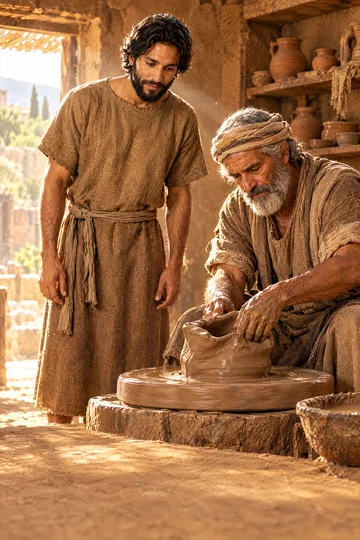
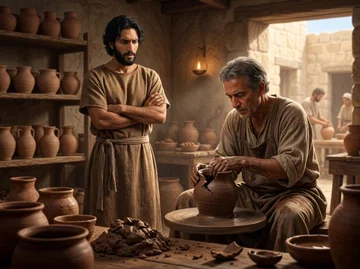
Cross-references
- Romans 9:20-21
Nay but, O man, who art thou that repliest against God? Shall the thing formed say to him that formed it, Why hast thou made me thus?
The potter’s authority over clay parallels God’s authority to shape people.
- Isaiah 64:8
But now, O LORD, thou art our father; we are the clay, and thou our potter; and we all are the work of thy hand.
Both portray God as potter and his people as clay.
- Jeremiah 18:7-10
At what instant I shall speak concerning a nation, and concerning a kingdom, to pluck up, and to pull down, and to destroy it;
A nation’s repentance or evil changes God’s announced course for judgment or good.
- Joel 1:1
The word of the LORD that came to Joel the son of Pethuel.
Both introduce a prophecy as the word of the LORD.
- Jeremiah 19:1-2
Thus saith the LORD, Go and get a potter’s earthen bottle, and take of the ancients of the people, and of the ancients of the priests;
gives second parable after first is rejected
- Ezekiel 1:3
The word of the LORD came expressly unto Ezekiel the priest, the son of Buzi, in the land of the Chaldeans by the river Chebar; and the hand of the LORD was there upon him.
Ezekiel’s message, like Jeremiah’s, came from the Lord.
- Jeremiah 19:10-11
Then shalt thou break the bottle in the sight of the men that go with thee,
A hardened vessel is broken beyond repair as a sign of judgment.
Commentary
Each commentary is drawn from primary sources: the writings of Ellen G. White and Adventist pioneers and periodicals. Each commentary is separate. Its own words are not a quotation; follow the references to read the source passages.
Ellen G. White
9 sources
The word that came to Jeremiah is the opening of a message that sends him down to the potter's house, where the reshaping of a marred clay vessel becomes the illustration of God's dealings with His people.Ms 92, 1891, par. 12–15Lt 34, 1899, par. 11–12Lt 215, 1899, par. 22–2614MR 33.2 God is the Potter and His people are the clay, whom He shapes and works according to His purpose and after His own likeness.8T 186.1–2Lt 215, 1899, par. 22–2614MR 33.2ST Dec 11, 1901Lt 48, 1888, par. 16–18 His announced dealings with a nation are conditional upon its choices, so threatened judgment may be withheld if it turns from evil, and promised good may be withdrawn if it disobeys.Ms 92, 1891, par. 12–15Lt 34, 1899, par. 11–12 Nations and individuals alike are in His hands, so a nation that forsakes sin and turns to God is not held to its fathers' sins, while the virtues of its fathers do not shield children who choose wrongdoing.Ms 92, 1891, par. 12–15
He warns and pleads with His people to turn from evil and do what is right, for as clay in the potter's hand they are subject to His judgment.Lt 34, 1899, par. 11–12 Those who follow Him in righteousness receive His blessings, but those who persist in their own ways prove unfaithful and cannot be blessed.Lt 34, 1899, par. 11–12 Their part is to yield to the Master's forming as pliable clay rather than attempt to direct the work themselves.8T 186.1–2Lt 215, 1899, par. 22–2614MR 33.2ST Dec 11, 1901Lt 48, 1888, par. 16–18 His shaping may include kneading and reshaping, waiting and trimming and polishing, turning the clay again and again until His will is wrought out, with grace and truth perfecting the fashioning work.Lt 215, 1899, par. 22–26Lt 48, 1888, par. 16–18
Yielding means daily, hourly, momentary surrender, with the soul emptied of pride and self-sufficiency to receive divine impressions and make room for Jesus.ST Dec 11, 1901Lt 48, 1888, par. 16–18Lt 78, 1901, par. 5–8 It means giving heed to His instruction and surrendering self to the divine will, serving Him with heart and soul and strength in unselfishness, purity, and holiness.ST Dec 11, 1901Lt 48, 1888, par. 16–18Lt 78, 1901, par. 5–8 To be clay is not to resist advice and counsel and not to follow one's own mind and judgment, but to submit the will to Christ, to counsel together with brethren and be subject one to another, and to let the Spirit of truth inspire and govern all movements in constant connection with Jesus.Lt 48, 1888, par. 16–18 When thus surrendered, His hand removes defects and reshapes character to form a shapely, polished vessel fit for useful service.8T 186.1–2Lt 215, 1899, par. 22–2614MR 33.2Lt 48, 1888, par. 16–18Lt 84, 1886, par. 26–29
That vessel bears much fruit, reveals the perfection God desires every human being to show, displays the Potter's glory, and becomes a blessing to others.8T 186.1–2Lt 215, 1899, par. 22–26ST Dec 11, 1901Lt 48, 1888, par. 16–18 When the clay refuses to be molded and treats its defects as virtues, growth is deformed, defects remain, and character is marred by tendencies to wrong.ST Dec 11, 1901Lt 78, 1901, par. 5–8
Sources
Pioneers and periodicals
23 sources
The word came to Jeremiah from the LORD, sending him to the potter's house where the work of the potter and the marred vessel made again would give the lesson that follows.ST May 3, 1910ST Aug 18, 1909ST Mar 3, 1914ST Sep 27, 1910 It introduces the rule for conditional prophecies that their fulfillment depends on stated conditions, so they cannot be fulfilled when those conditions are not met.ST Jul 22, 1913ST Oct 30, 1879ST Oct 1, 1896 If a nation threatened with uprooting turns from evil He will relent from judgment, and if a nation promised building turns to evil and disobeys He will withhold the good promised.ST Jul 22, 1913ST Mar 13, 1879ST Aug 18, 1909 As Creator He is like the potter among vessels, with the right to shape character and determine the destinies of nations and individuals according to fitness for continued existence and relation to His law, not by arbitrarily creating some for perdition.ST Jan 17, 1906ST Oct 21, 1889ST Jan 31, 1906ST Nov 30, 1915ST Mar 3, 1914 His people are the clay whom He seeks to mold for His purposes and according to His likeness, and their part is to yield and surrender self to His shaping so the marred vessel can be remade, for while still being shaped it can be reformed if they turn, but if hardened in distorted form it is fit only to be broken.ST Dec 8, 1914ST Dec 11, 1901ST Aug 18, 1909
Words and Historical Setting
The word that came to Jeremiah came from the LORD, showing that what the prophets uttered was God's own word spoken through them as instruments and not merely ideas of their own.ST May 3, 1910 It is the word that sends Jeremiah down to the potter's house, where watching the potter at work gives the lesson that follows.ST Aug 18, 1909ST Mar 3, 1914ST Sep 27, 1910 There the marred vessel reformed in the potter's hand teaches that Israel is as clay in God's hands.ST Aug 18, 1909ST Feb 13, 1901
It comes after repeated warnings of coming calamity joined with promises of escape if Judah would repent, and it opens a warning to the Jews that belongs with chapters 12 to 24.RH Jul 27, 1916ST Aug 18, 1909 It opens one of the prophecies of chapters 3 to 21 marked by awful denunciation of sin, by sorrow of heart over the people's transgression, and by touching appeals to return to God met by utter lack of response from the mass of the people.ST Oct 20, 1909 It is to be read together with chapter 19, and like the book's other warnings and appeals it applies to the present day.RH Jul 27, 1916ST Oct 20, 1909
It brings in the parable of the potter's vessel a message of both warning and hope to Israel.ST Aug 18, 1909 Israel would not hear it, but disobediently and unreasonably left it unheeded.ST Aug 18, 1909 Because the parable of the marred vessel was not heeded, God sent forth another parable out of the potter's house, logically following the first, declaring the fate of the marred vessel once hardened into its distorted shape as irretrievable ruin for persistent transgression.ST Aug 18, 1909
Conditional Prophecy and Sovereignty
The word that came to Jeremiah introduces the rule for conditional prophecies taught in verses 5-10, that blessing or judgment depends on the conditions laid down there.ST Jul 22, 1913ST Oct 30, 1879 Their fulfillment depends on stated conditions, so they cannot be fulfilled when those conditions are not met.ST Jul 22, 1913ST Oct 30, 1879 The potter's work declares this as a general principle of God's working among nations and kingdoms.ST Jul 22, 1913ST Oct 1, 1896 A prophecy to pluck up and destroy a nation will not be fulfilled if that nation turns from evil, and a prophecy to build and plant a nation will not be fulfilled if that nation does evil and disobeys, including the scattering of His people for wickedness.ST Oct 1, 1896ST Mar 3, 1914
God may change a declared purpose toward a people when that purpose depends on a condition.ST Jul 22, 1913ST Mar 13, 1879 If a nation threatened with uprooting turns from evil He will relent from the threatened judgment, and if a nation promised building turns from Him to evil and disobedience He will withhold and relent from the good He had spoken of doing for it.ST Mar 13, 1879ST Aug 18, 1909ST Oct 1, 1896ST Mar 3, 1914 The same conditional rule applies to Israel and other nations and to individuals.ST Jul 22, 1913ST Aug 18, 1909ST Mar 3, 1914 Because Jeremiah was contemporary with Ezekiel and the same Spirit spoke through both, this rule applies equally to Ezekiel, and where it is not stated it is always implied.ST Oct 1, 1896
As Creator God is like the potter among his vessels, with the power and the right to preserve or to destroy according to His own will.ST Jan 17, 1906ST Jan 31, 1906 He has the right to command and men have the duty to obey because they belong to Him by creation and redemption.ST Jan 17, 1906ST Jan 31, 1906 The potter's shaping of clay illustrates His active work in shaping character and determining the destinies of nations and individuals according to their voluntary obedience or disobedience to His law.ST Jan 17, 1906ST Mar 3, 1914ST Mar 3, 1914 He does not act arbitrarily or leave His moral law to operate without Him, but administers its inherent rewards and penalties and executes judgment in keeping with each subject's relation to the law.ST Jan 17, 1906ST Mar 3, 1914 His decision to preserve or destroy is always in strict accordance with fitness or unfitness for continued existence.ST Jan 17, 1906
The potter and clay does not teach that God arbitrarily and without reason creates some for perdition or decrees that some must be lost.ST Oct 21, 1889ST Nov 30, 1915 After long endurance of vessels of wrath fitted for destruction not by Him but by their own sinfulness, He makes known the riches of His glory by making such vessels into vessels of mercy.ST Oct 21, 1889 He has perfect right to take a broken and cracked and marred vessel and remake it into a perfect one fitted for honor and glory and eternal life, making those His people who were not His people and bringing enemies and rejecters to become children of the living God, and no one can reasonably object to His doing so.ST Oct 21, 1889 Response to His way matters, and those who reject His repeated offers of mercy bring the consequences on themselves.ST Oct 21, 1889ST Nov 30, 1915 Acceptance and obedience are optional with man but determine destiny: all who submit to His revealed will continue to exist and receive life everlasting, while all who reject it must cease to exist under condemnation.ST Jan 17, 1906 His counsel stands forever, He works all things after the counsel of His own will and does all His pleasure, and His word never returns void but always accomplishes that purpose.ST Jan 17, 1906
Potter and Clay Applied
The verse pictures God as the potter and His people as the clay whom He seeks to mold and fashion for His purposes and according to His likeness, and the part of the clay is to yield to His shaping rather than attempt to do the potter's work.ST Dec 8, 1914ST Dec 11, 1901 Submission and cooperation mean giving heed to His instruction and surrendering self to the divine will, serving Him with heart and soul and strength in unselfishness, purity and holiness so as to be a blessing to others and to bear much fruit.ST Dec 11, 1901 When obeyed, the Potter's hand produces a shapely vessel revealing the perfection He desires every human being to show, but when the clay refuses to be molded and treats defects as virtues, growth is deformed and character is marred by tendencies to wrong.ST Dec 11, 1901
People are yielding clay in the hands that shape them, where weak, unskillful hands left to themselves make crude forms that only poorly show the thought of the maker, while a skilled artisan brings forth beauty.RH May 14, 1901 Children lie as clay in their parents' hands to be shaped as the parents will, so parents must seek aid and skill from God on high that their weak, willing hands may rightly mold the clay to unfold His highest thought in true forms of beauty.RH May 14, 1901 Jesus takes a person today as a lump of earthen clay in His hands to fashion for His use by organized design that is all-wise, almighty and all-benign, carrying out His wisdom, skill, gracious purpose and sovereign will.ST Oct 15, 1902 The clay is also a rough ashlar that cannot guess what it will become once He lays His hands upon it, and left in its rough state and passed by it could make no attainments and could not break off its own rough edges.ST Oct 15, 1902 It must yield to His chisel, compass, square and whatever instruments He chooses, letting Him have His way so His will and way are served and it may rejoice in His great ways.ST Oct 15, 1902
God's shaping work as a master may use painful strokes to form people and complete His purpose, so that they reflect His image.RH Jun 23, 1868 Israel was marred by refusing to submit to God, but He could remake it if the people would turn from evil and become submissive.ST Aug 18, 1909 A vessel still being shaped can be marred and remade, but if it hardens in distorted form it is fit only to be broken.ST Aug 18, 1909
Sources