Jeremiah 36:2
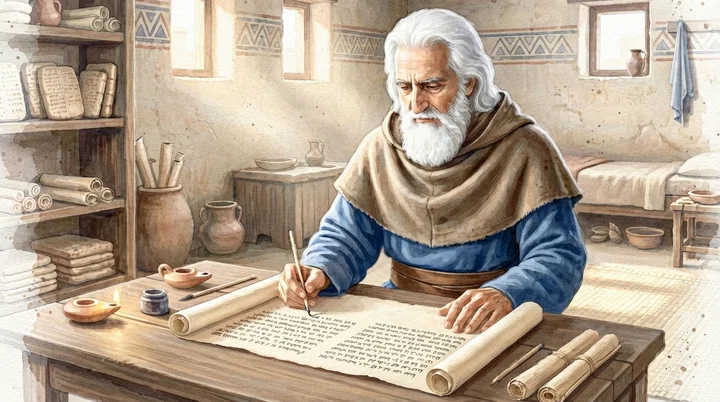
Take thee a roll of a book, and write therein all the words that I have spoken unto thee against Israel, and against Judah, and against all the nations, from the day I spake unto thee, from the days of Josiah, even unto this day.
Translations
Take you a roll of a book, and write therein all the words that I have spoken to you against Israel, and against Judah, and against all the nations, from the day I spoke to you, from the days of Josiah, even to this day.
King James Version, KJV Cambridge Paragraph Bible, American Standard Version
Take thee a roll of a book, and write therein all the words that I have spoken unto thee against Israel, and against Judah, and against all the nations, from the day I spake unto thee, from the days of Josiah, even unto this day.
Take thee a roll of a book, and write in it all the words that I have spoken to thee against Israel, and against Judah, and against all the nations, from the day I spoke to thee, from the days of Josiah, even to this day.
Take thee a roll of a book, and write thereon all the words that I have spoken unto thee against Israel, and against Judah, and against all the nations, from the day I spake unto thee, from the days of Josiah, even unto this day.
'Take to thee a roll of a book, and thou hast written on it all the words that I have spoken unto thee concerning Israel, and concerning Judah, and concerning all the nations, from the day I spake unto thee, from the days of Josiah, even unto this day;
Take thee a roll of a book, and write therein all the words that I have spoken unto thee against Israel, and against Judah, and against all the nations, from the day I spoke unto thee, from the days of Josiah, even unto this day.
Take thee a scroll, and write therein all the words which I have spoken unto thee concerning Israel and concerning Judah and concerning all the nations,—from the day I began to speak unto thee from the days of Josiah, even until this day:
Berean Standard Bible, Majority Standard Bible
“ Take a scroll and write on it all the words I have spoken to you concerning Israel, Judah, and all the nations, from the day I first spoke to you during the reign of Josiah until today.
“ Take a scroll of a book, and write in it all the words that I have spoken to you against Israel, against Judah, and against all the nations, from the day I spoke to you, from the days of Josiah even to this day.
Take a book and put down in it all the words I have said to you against Israel and against Judah and against all the nations, from the day when my word came to you in the days of Josiah till this day.
Take thee a roule or booke, and write therein all the wordes that I haue spoken to thee against Israel, and against Iudah, and against all the nations, from the day that I spake vnto thee, euen from the dayes of Iosiah vnto this day.
Douay-Rheims (Challoner revision)
Take thee a roll of a book, and thou shalt write in it all the words that I have spoken to thee against Israel and Juda, and against all the nations from the day that I spoke to thee, from the days of Josias even to this day.
Pictures
Cross-references
- Jeremiah 36:23-24
And it came to pass, that when Jehudi had read three or four leaves, he cut it with the penknife, and cast it into the fire that was on the hearth, until all the roll was consumed in the fire that was on the hearth.
The king cuts and burns the scroll while showing no fear.
- Jeremiah 36:32
Then took Jeremiah another roll, and gave it to Baruch the scribe, the son of Neriah; who wrote therein from the mouth of Jeremiah all the words of the book which Jehoiakim king of Judah had burned in the fire: and there were added besides unto them many like words.
The burned scroll’s words were rewritten, with many like words added.
- Jeremiah 36:27-28
Then the word of the LORD came to Jeremiah, after that the king had burned the roll, and the words which Baruch wrote at the mouth of Jeremiah, saying,
The Lord commands Jeremiah to write again the words from the burned scroll.
- Jeremiah 45
The word that Jeremiah the prophet spake unto Baruch the son of Neriah, when he had written these words in a book at the mouth of Jeremiah, in the fourth year of Jehoiakim the son of Josiah king of Judah, saying,
Chapter 45 follows chapter 36 in the proposed chronological order.
- Jeremiah 36:7-9
It may be they will present their supplication before the LORD, and will return every one from his evil way: for great is the anger and the fury that the LORD hath pronounced against this people.
The words are read at a temple fast to call the people to turn from evil.
- Jeremiah 36:21
So the king sent Jehudi to fetch the roll: and he took it out of Elishama the scribe’s chamber. And Jehudi read it in the ears of the king, and in the ears of all the princes which stood beside the king.
The roll containing Jeremiah’s words is read before the king.
- Jeremiah 26:20-23
And there was also a man that prophesied in the name of the LORD, Urijah the son of Shemaiah of Kirjath-jearim, who prophesied against this city and against this land according to all the words of Jeremiah:
Jehoiakim’s hostility to the Lord’s word is illustrated by his execution of Urijah.
- Isaiah 40:8
The grass withereth, the flower fadeth: but the word of our God shall stand for ever.
The lesson connects the burned and restored roll with God’s word standing forever.
Commentary
Each commentary is drawn from primary sources: the writings of Ellen G. White and Adventist pioneers and periodicals. Each commentary is separate. Its own words are not a quotation; follow the references to read the source passages.
Ellen G. White
10 sources
The command came in the fourth year of Jehoiakim son of Josiah king of Judah, while Jeremiah was deprived of liberty as a prisoner and shut up so that he could not go into the house of the Lord.PK 432.2–433.1Lt 152, 1907, par. 14–22Ms 65, 1912, par. 19–20 God told him to take a roll of parchment, a roll of a book, and write therein with ink all the words spoken to him against Israel and against Judah and against all the nations, from the day He spoke to him, from the days of Josiah even unto that day.PK 432.2–433.1Lt 152, 1907, par. 14–22Lt 66, 1897, par. 9–10Lt 38, 1891, par. 8–9Ms 65, 1912, par. 19–20 The written record was to rehearse the people's disobedience and the judgments declared because of it, so they would not forget the warnings.PK 432.2–433.14T 176.2–3ST Jun 1, 1876 It stood as a solemn reproof for sin, a warning of the sure result of continual apostasy, and an earnest appeal to renounce all evil.PK 432.2–433.1
The command came from yearning pity for salvation, giving another opportunity to repent before judgment.PK 432.2–433.14T 176.2–3ST Jun 1, 1876 It shows God is reluctant to give up His people and does not delight in afflicting them, but with care like a pitying father for a wayward child patiently entreats them to return and delays judgment, willing to forgive.PK 432.2–433.14T 176.2–3ST Jun 1, 1876 Its purpose was that the house of Judah might hear all the evil purposed against them, that it may be they would present supplication before the Lord and return every man from his evil way, because great is the anger and fury pronounced against them.PK 432.2–433.1Lt 152, 1907, par. 14–22Lt 38, 1891, par. 8–9Ms 65, 1912, par. 19–204T 176.2–3 Hearing could lead them to recognize sin, turn from it, and receive forgiveness, that God might forgive their iniquity and sin and have their sins pardoned.PK 432.2–433.1Lt 152, 1907, par. 14–22Lt 38, 1891, par. 8–94T 176.2–3ST Jun 1, 1876
In obedience Jeremiah called Baruch son of Neriah, his faithful friend and scribe, dictated all the words by mouth, and Baruch wrote them with ink in the book upon the roll.PK 432.2–433.1Lt 152, 1907, par. 14–22Ms 65, 1912, par. 19–20 Baruch was given the roll and commanded to go and read in the roll the words of the Lord in the ears of the people in the Lord's house upon the fasting day and in the ears of all Judah coming out of their cities.PK 432.2–433.1Lt 152, 1907, par. 14–22Ms 65, 1912, par. 19–20 This was fulfilled when he read it to the multitudes assembling at the temple on the national fast day in the fifth year of Jehoiakim in the ninth month, and the message was also read to King Jehoiakim.PK 432.2–433.1MWISDAP 58.2–59.1Lt 18, 1876, par. 2–3 Jeremiah gave the written roll to Baruch the scribe to read to the king.Lt 18, 1876, par. 2–3
The king cut up and burned the roll, with the king's rejection and burning of the scroll including cutting it with a knife.Lt 152, 1907, par. 14–22Lt 66, 1897, par. 9–10MWISDAP 58.2–59.1Lt 18, 1876, par. 2–3 But destroying the scroll did not destroy the message, for by the Holy Spirit it was written again with additional words included, and though rejected and burned the warnings are repeated.Lt 152, 1907, par. 14–22Lt 38, 1891, par. 8–9MWISDAP 58.2–59.1 The chapter is a warning to later believers not to repeat Jehoiakim's act of cutting and burning the messages of the Spirit of God, with parallels for Battle Creek and for God's people in the last days to be studied.Lt 152, 1907, par. 14–22Lt 66, 1897, par. 9–10 Rejecting or trying to suppress God's correction does not end the message but can instead bring it wider attention and confirmation, while the rejection is recorded and the rejecters incur judgment.MWISDAP 58.2–59.1
The command means God still directs His messenger with the direct and repeated charge to write what is revealed, Write, write, even when physical condition makes writing seem impossible and the hand cannot hold steady.RH Jun 14, 1906 Obedience brings miracle-working power that steadies the right hand and makes the use of the pen possible, so page after page can be written with ease.RH Jun 14, 1906 The written light preserves what was revealed, holds in harmony with present teaching, and establishes truth point by point by relating scripture to scripture.RH Jun 14, 1906 It shines forth from the printed page to substantiate faith and give confidence in the spirit of prophecy in the last days, and because the light contained in the books is heavenly light it is to be published and circulated in many languages.RH Jun 14, 1906
Sources
Pioneers and periodicals
15 sources
In the fourth year of Jehoiakim the Lord commanded Jeremiah to write in a roll of a book all the words He had spoken against Israel and against Judah and against all the nations, from the days of Josiah even unto that day.RH Jul 26, 1870RH Jan 3, 1865ST Jul 21, 1881 Because Jeremiah was shut up and faced persecution as Babylon threatened Jerusalem, he dictated the words to Baruch as amanuensis.RH Jul 27, 1916RH Jul 26, 1870RH Jul 27, 1916 The roll was read by Baruch in the Lord's house upon the fasting day in the ears of all the people come out of their cities, then in the ears of the princes, and only afterward in part before the king by Jehudi in his winter house.RH Jul 26, 1870RH Sep 13, 1906ST Aug 9, 1905 It was written and rehearsed so the house of Judah might hear all the evil purposed against them, turn every man from his evil way, and be forgiven of iniquity and sin.ST Jun 1, 1876RH Jan 3, 1865ST Jul 21, 1881 Though Jehoiakim cut the roll with a penknife and burned it in the fire, it was written again with many like words added, for destroying the written record does not cancel God's purposes and opposition to His truth is vain.RH Jul 26, 1870RH Jan 3, 1865ST Jul 21, 1881
Command and Written Roll
The command was to take a roll of a book and write in it all the words the Lord had spoken against Israel and against Judah and against all the nations, from the days of Josiah even unto that day.ST Jun 1, 1876RH Jul 26, 1870RH Jan 3, 1865ST Jul 21, 1881RH Sep 13, 1906 It was a command to put in writing the warnings already given, rehearsing disobedience and the judgments it had brought.ST Jun 1, 1876RH Jan 3, 1865ST Jul 21, 1881ST Aug 9, 1905 The written record covered the whole course of prophetic ministry from its beginning in Josiah's time up to that present time.RH Jan 3, 1865ST Jul 21, 1881ST Aug 9, 1905
The command came in the fourth year of Jehoiakim, when Babylon's advance threatened Jerusalem.RH Jul 27, 1916RH Jul 27, 1916RH Sep 13, 1906ST Nov 24, 1898 It came amid persecution in Judah, when the nation was repudiating God's law and righteousness.ST Jul 29, 1913RH Sep 13, 1906 Because Jeremiah was shut up he could not go himself, and so he dictated the words to Baruch, who wrote them from Jeremiah's mouth as his amanuensis.RH Jul 27, 1916RH Jul 26, 1870RH Jul 27, 1916RH Sep 13, 1906ST Nov 24, 1898
Baruch read the roll in the Lord's house upon the fasting day in the ears of all the people of Judah that came out of their cities.RH Jul 26, 1870RH Sep 13, 1906ST Nov 24, 1898 Then at their request it was read again in the ears of the princes.RH Jul 26, 1870RH Sep 13, 1906 Only afterward was it sent for and read in part before the king by Jehudi in his winter house, with the king surrounded by his princes.RH Jul 26, 1870RH Sep 13, 1906ST Aug 9, 1905
The roll dictated to Baruch formed the basis from which the book of Jeremiah grew.RH Jul 27, 1916RH Jul 27, 1916 The prophets kept written records of their predictions for permanent and lasting use, and gathered some into larger volumes.RH Jul 27, 1916RH Jul 27, 1916 Some of the prophecies now found in chapters 2-11 were written by Baruch after Jehoiakim burned the first roll.RH Jul 27, 1916RH Jul 27, 1916
The prophecies after Jeremiah 20 are not placed in chronological order, because the manuscript rolls were gathered together into one book in displaced order.ST Jul 12, 1910ST Oct 27, 1909 The chapter belongs early in Jeremiah's work rather than late where it stands.ST Jul 12, 1910ST Oct 27, 1909 Its place is after chapter 35 and before chapter 45, and the chapter itself clearly indicates its chronology, with no change in its teaching by the displacement.ST Jul 12, 1910ST Oct 27, 1909
The verse belongs to chapters 34-39, which record Zedekiah's last hope and last offer to spare Jerusalem.RH Jan 2, 1900 There the salvation of the king and his house and the city from burning by the Chaldeans was made to depend on going forth to the king of Babylon's princes and obeying the Lord's voice through Jeremiah.RH Jan 2, 1900
Purpose and Lasting Authority
The roll was to put in writing all the warnings spoken against Israel and Judah and all the nations from the days of Josiah to that day, rehearsing disobedience and the judgments it had brought so the house of Judah might hear all the evil purposed against them.ST Jun 1, 1876RH Jan 3, 1865ST Jul 21, 1881RH Sep 13, 1906ST Aug 9, 1905 Its purpose was to give them another opportunity to recognize sin, present supplication before the Lord, turn every man from his evil way, and be forgiven of iniquity and sin.ST Jun 1, 1876RH Jan 3, 1865ST Jul 21, 1881RH Sep 13, 1906ST Aug 9, 1905 Judgment was delayed and the wandering people were urged to return because God did not delight in afflicting them and was willing to forgive.ST Jun 1, 1876
Jehoiakim in wrath cut the roll with a penknife and burned it in the fire in his winter house after it had been read in the Lord's house and before the princes and in part before him by Jehudi, but the burning did not end it.RH Jul 26, 1870RH Jan 3, 1865ST Jul 21, 1881 Jeremiah was commanded to write the words again, and many like words were added besides.RH Jul 26, 1870RH Jan 3, 1865ST Jul 21, 1881 The uttered thing of God will be, so rejecting or destroying the written record does not cancel His purposes or judgments, and opposition to His truth is only vain weapons against the Most High.RH Jul 26, 1870RH Jan 3, 1865ST Jul 21, 1881
The chapter contained a message directly from the Lord that was not preserved, showing that much has been written by inspiration that has not been given.ST Jul 3, 1884 What was lost was not of special importance or it would have been preserved, for God has given in His word everything necessary to enable people to do His will.ST Jul 3, 1884 The taking of the roll directly to the people and only afterward to the king illustrates God's manner of dealing through the spirit of prophecy when an individual apostatizes.RH Sep 13, 1906 First the appeal is made to the individual for personal correction, but when warnings and entreaties are treated disrespectfully and used to create distrust of the instrument instead of repentance, messages are no longer sent to him but future testimonies concerning him are sent directly to the church, as a warning to those in later time who are being passed by for the same treatment.RH Sep 13, 1906
The command directs God's messenger to write the things revealed, repeated as Write, write, even when physical condition makes writing impossible and the hand cannot hold steady.RH Jun 14, 1906 Obedience brings miracle-working power by which the Lord steadies the hand so that page after page can be written with ease.RH Jun 14, 1906 The written light so preserved holds in harmony with present teaching, establishes truth point by point by relating scripture to scripture, and shines from the printed page to substantiate faith and give confidence in the spirit of prophecy in the last days, and because it is the light of heaven it is to be published and circulated in many languages.RH Jun 14, 1906 Refusal from fear of the people exposed secret unbelief because God's way was not man's way, giving a lesson for the last days to guide relation toward the humble instrument through whom God has spoken and toward the Testimonies sent to leading men and people.RH Jan 2, 1900
Sources