Job 39:21
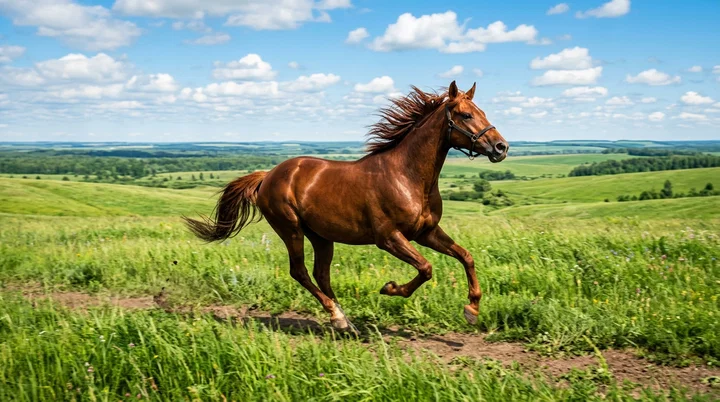
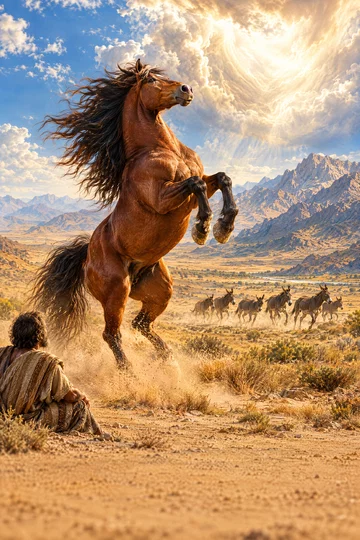
He paweth in the valley, and rejoiceth in his strength: he goeth on to meet the armed men.
Translations
He paws in the valley, and rejoices in his strength: he goes on to meet the armed men.
King James Version, Webster Bible
He paweth in the valley, and rejoiceth in his strength: he goeth on to meet the armed men.
He paweth in the valley, and rejoiceth in his strength.
He goeth on to meet the armed men.He paweth in the valley, and rejoiceth in his strength: he goeth out to meet the armed men.
He paweth in the valley, and rejoiceth in his strength:
He goeth out to meet the armed men.They dig in a valley, and he rejoiceth in power, He goeth forth to meet the armour.
He paweth in the valley, and rejoiceth in [ his] strength; he goeth forth to meet the armed host.
He diggeth into the plain, and rejoiceth in vigour, he goeth forth to meet armour;
Berean Standard Bible, Majority Standard Bible
He paws in the valley and rejoices in his strength;
he charges into battle.He paws in the valley, and rejoices in his strength.
He goes out to meet the armed men.He is stamping with joy in the valley; he makes sport of fear.
When time is, he mounteth on hie: he mocketh the horse and his rider.
Douay-Rheims (Challoner revision)
He breaketh up the earth with his hoof, he pranceth boldly, he goeth forward to meet armed men.
Pictures
Cross-references
- Job 39:9-12
Will the unicorn be willing to serve thee, or abide by thy crib?
The unicorn’s strength and nature are named in God’s instruction to Job.
- Job 39:25
He saith among the trumpets, Ha, ha; and he smelleth the battle afar off, the thunder of the captains, and the shouting.
both describe the war horse scenting from afar
Commentary
Each commentary is drawn from primary sources: the writings of Ellen G. White and Adventist pioneers and periodicals. Each commentary is separate. Its own words are not a quotation; follow the references to read the source passages.
Ellen G. White
2 sources
The horse paws in the valley, exults in its own strength, and presses eagerly forward to meet armed men.Ms 236, 1902, par. 2–4MH 431.2–3 That strength and eagerness belong to the created order, and the life and power at work in the animal come from God.Ms 236, 1902, par. 2–4 The question about the horse stands among questions about the natural world that expose mysteries beyond human grasp, showing that even the might and courage of the warhorse lie inside that deep mystery.MH 431.2–3
Human wisdom is therefore limited before such power and courage, and where God has given no explanation the right response is faith.MH 431.2–3
Sources
Pioneers and periodicals
10 sources
The verse belongs to the Lord's answer to Job, spoken out of the storm-cloud in the closing chapters of the book, where God Himself gives instruction in natural history.ST Jun 30, 1909ST Jul 22, 1908ST Dec 17, 1912ST It describes the horse, the war-horse, pawing the ground in the valley and rejoicing in its strength as it eagerly and fearlessly advances to meet armed men.ST Jul 22, 1908ST Jun 24, 1913ST Apr 10, 1893ST Apr 29, 1908ST Dec 16, 1886 By this familiar, common, material creature God points to His mighty works in creation to show His infinite power and wisdom.ST Jun 30, 1909ST Jul 31, 1879ST Jun 24, 1913 The same display sets forth His greatness and glory, and the fearless, eager horse is one of the works of Christ's hands showing His creative power and mastery of the natural world.ST Jul 31, 1879ST Apr 29, 1908
The material things described are things Job can comprehend only in measure, and the familiar features of creation thus reveal how little he understands of God's works and providence.ST Jun 30, 1909ST Jul 22, 1908 By contrast with infinite power and wisdom the display shows how exceedingly small Job is.ST Jun 30, 1909 From this littleness before creation it follows how little he can comprehend God's moral dealings with men and the great purposes of God where eternal life itself is at stake.ST Jun 30, 1909 From the power and wisdom set forth in creation God's goodness is also to be clearly inferred, so that God's works show His goodness, love and tender care.ST Apr 10, 1893 His sublime yet simple description of the horse shows His interest in animal nature.ST Dec 17, 1912
The description is sublime yet simple, given in language so simple that a child can understand it.ST Dec 17, 1912 It encourages observing study of animals in the home with the Bible kept as guide.ST Dec 17, 1912 The speech to Job was spoken not only for Job's sake but for all who should come after. The pawing war-horse in the valley has a keen instinct that smells what is coming while it is still far off.ST Jan 23, 1901 The image of the eagerly advancing war-horse is also applied to Rome's revived religious orders, portrayed as anticipating conflict and preparing for a coming battle.ST Dec 16, 1886
Sources