Translations
American King James Version, King James Version, Webster Bible
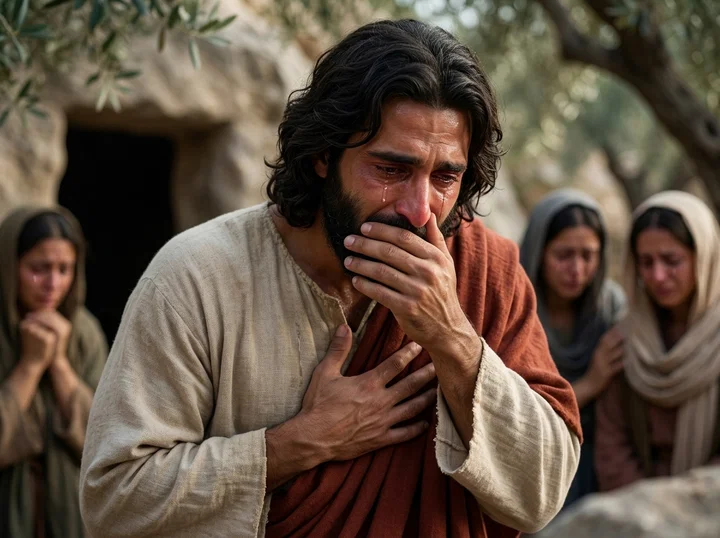
Then said the Jews, Behold how he loved him!
Then said the Jews, Behold, how he loved him.
Revised Version, American Standard Version, Darby Translation
The Jews therefore said, Behold how he loved him!
The Jews, therefore, said, 'Lo, how he was loving him!'
The Jews, therefore, were saying—See! how tenderly he loved him!
Berean Standard Bible, Majority Standard Bible
Then the Jews said, “ See how He loved him!”
The Jews therefore said, “ See how much affection he had for him!”
So the Jews said, See how dear he was to him!
Then saide the Iewes, Beholde, how he loued him.
Douay-Rheims (Challoner revision)
The Jews therefore said: Behold how he loved him.
Pictures
Cross-references
- John 11:25-26
Jesus said unto her, I am the resurrection, and the life: he that believeth in me, though he were dead, yet shall he live:
Jesus declares himself the resurrection and life, promising life to believers beyond death.
- John 11:43-44
And when he thus had spoken, he cried with a loud voice, Lazarus, come forth.
Jesus calls Lazarus from the tomb and restores him to life.
- John 11:47-53
Then gathered the chief priests and the Pharisees a council, and said, What do we? for this man doeth many miracles.
After Lazarus is raised, the leaders plot to kill Jesus.
- John 11:11
These things said he: and after that he saith unto them, Our friend Lazarus sleepeth; but I go, that I may awake him out of sleep.
Jesus describes Lazarus’s death as sleep before raising him.
- John 12:10-11
But the chief priests consulted that they might put Lazarus also to death;
Many believed in Jesus because of Lazarus, prompting the chief priests to plot against him.
- John 11:5
Now Jesus loved Martha, and her sister, and Lazarus.
Jesus loved Lazarus and his sisters.
- Luke 7:11-15
And it came to pass the day after, that he went into a city called Nain; and many of his disciples went with him, and much people.
Christ compassionately raises the widow’s son from death.
- John 11:3
Therefore his sisters sent unto him, saying, Lord, behold, he whom thou lovest is sick.
Lazarus’s sisters describe him as one Jesus loves.
- John 11:41
Then they took away the stone from the place where the dead was laid. And Jesus lifted up his eyes, and said, Father, I thank thee that thou hast heard me.
Jesus lifts his eyes in prayer before calling Lazarus from the tomb.
- Luke 10:38-42
Now it came to pass, as they went, that he entered into a certain village: and a certain woman named Martha received him into her house.
Mary and Martha welcome Jesus in Bethany.
- John 12:3
Then took Mary a pound of ointment of spikenard, very costly, and anointed the feet of Jesus, and wiped his feet with her hair: and the house was filled with the odour of the ointment.
Both events happened at Bethany.
- John 11:23-24
Jesus saith unto her, Thy brother shall rise again.
Martha affirms the hope that Lazarus will rise at the last day.
- Romans 12:15
Rejoice with them that do rejoice, and weep with them that weep.
Jesus weeps with those that weep
Commentary
Each commentary is drawn from primary sources: the writings of Ellen G. White and Adventist pioneers and periodicals. Each commentary is separate. Its own words are not a quotation; follow the references to read the source passages.
Ellen G. White
24 sources
At the tomb of Lazarus, dead four days, those who saw Jesus weep and heard Him groan took His tears as proof of how deeply He personally loved him.DA 5242SP 363.2–364.13RED 105.2 That love was real and mutual, for Lazarus was a steadfast disciple whom Jesus loved with peculiar tenderness, and Bethany was the home where He often found rest.2SP 363.2–364.1DA 524.1ST Jan 4, 1883 The onlookers understood only part of His sorrow, for He was not weeping for Lazarus whom He was about to call to life, but was pressed with the weight of the grief of the ages and all the suffering and death sin had brought upon the race.2SP 363.2–364.1ST Mar 23, 1882DA 533.1–534.2 He delayed coming not from lack of love, but to permit the death so the resurrection would be a powerful testimony leading many to believe.21MR 110.7–111.2Ms 19, 1892, par. 18–21Ms 18, 1898, par. 5–7 That raising was the crowning evidence that He is the Son of God and Lifegiver, revealing the Father and pointing to the resurrection of the dead at His return.Ms 18, 1898, par. 5–7Ms 47, 1897, par. 9–104RED 18.1COS 86.2–87.2
Context and Love Observed
The saying belongs to the account of Lazarus's death and resurrection, when Jesus wept at the tomb and then called Lazarus to come out.DA 524COS 86.2–87.2Ms 127, 1899, par. 5–9 Lazarus had been dead four days when Christ called him from the tomb, and the raising was evidence of Christ's divine authority, showing His love and power.COS 86.2–87.2Ms 127, 1899, par. 5–9 The account shows His power over death and points to the resurrection of the dead at His return.COS 86.2–87.2
Those who saw Jesus weep and heard Him groan took His tears as proof of how deeply He personally loved Lazarus.DA 5242SP 363.2–364.13RED 105.221MR 110.7–111.2ST Apr 13, 1882 The people at the tomb recognized the weeping as an expression of deep love, and the Jews recognized His sincere affection for him.21MR 110.7–111.2ST Apr 13, 1882Ms 19, 1892, par. 18–21 That conclusion understood only part of His sorrow, taking it as grief for Lazarus alone and even as grief over inability to prevent the death, rather than understanding His power to raise him.2SP 363.2–364.13RED 105.2ST Apr 13, 1882
His love for Lazarus was real, and the bystanders rightly recognized it even though His grief reached far beyond him.2SP 363.2–364.1Ms 19, 1892, par. 18–21 Lazarus of Bethany was among the most steadfast disciples, strong in faith from their first meeting and deep in love for Jesus, and he was greatly beloved by Jesus.DA 524.1 Bethany was where Jesus often found rest in Lazarus's home.ST Jan 4, 1883 Jesus blesses all who seek His help and loves all the human family, yet He is bound to some by peculiarly tender associations, and His heart was knit by a strong bond of affection to the family at Bethany, for whom the greatest of His miracles was performed.DA 524.1
He delayed going to Bethany not because He loved Lazarus and his sisters less, but His love was real even though He delayed going to them.21MR 110.7–111.2Ms 19, 1892, par. 18–21 His presence would have brought relief, but the death was permitted so the resurrection could be a powerful testimony leading many to believe in Jesus.21MR 110.7–111.2Ms 19, 1892, par. 18–21Ms 18, 1898, par. 5–7 That resurrection became the crowning evidence to the Jews that Jesus was the Son of God.Ms 18, 1898, par. 5–7 Christ knew that raising Lazarus would lead to His own humiliation and death, for He would pay the ransom for those He rescued, His death being for every person with salvation offered to all who return to loyalty to God.Ms 18, 1898, par. 5–7
Meaning of Jesus' Tears
Those who watched Him weep were right to see real affection in His tears, yet they grasped only part of what moved Him, taking His weeping as sorrow for Lazarus alone.2SP 363.2–364.13RED 105.2DA 533.1–534.2 They saw His tears and heard His groaning and concluded they proved His personal love for Lazarus, softly reading outward circumstance as grief from love for a friend.3RED 105.2DA 533.1–534.2 That reading misunderstood Him, for His groaning was over their unbelief rather than mere sorrow for the dead man.3RED 105.2
His weeping was not for Lazarus, whom He was about to call from the grave, and it was not only from human sympathy with Mary and Martha.DA 533.1–534.2 As Son of God in human nature He was indeed moved by human sorrow with tender pity, and His tears express sympathy for the bereaved, with His return of Lazarus to Mary and Martha showing His care for those who mourn.ST Mar 23, 1882DA 533.1–534.2 Beyond that human pity His tears held a sorrow as high above human sorrow as heaven is above earth.DA 533.1–534.2 The weight of the grief of the ages pressed upon Him, the effects of transgression and the unceasing conflict and suffering and death facing the human family since Abel and throughout the ages, as He longed to relieve all distress.2SP 363.2–364.1DA 533.1–534.2
At the grave He also sorrowed because many then mourning Him would soon plan the death of Him who is the resurrection and the life, premeditate His death, close hope against themselves, and die without hope in the siege of Jerusalem.DA 533.1–534.2 Some bystanders further misunderstood His tears as grief over inability to prevent the death, reasoning that One who had opened the eyes of the blind should have kept Lazarus from dying, rather than understanding His power to raise him.3RED 105.2ST Apr 13, 1882 Those words were blind infidelity from people who should have had faith, and they burdened Him as He approached the grave.3RED 105.2
Power and Witness
Jesus' tears expressed sympathy for the bereaved, and His bringing a dead brother back from the grave and returning Lazarus to Mary and Martha with joy shows a care that can do more than people ask or imagine.ST Mar 23, 1882Ms 1, 1867, par. 44–47 That care belonged to a life marked by compassion in which He healed the sick, fed the hungry, and comforted the grieving.ST Mar 23, 18823RED 112.2 Yet prejudice and hatred kept many from recognizing or accepting Him.3RED 112.2
The raising was a testimony to divine power and authority, permitted in divine wisdom after delay, to be the crowning evidence to the Jews that Jesus was the Son of God.Ms 18, 1898, par. 5–7Ms 47, 1897, par. 9–10Ms 127, 1899, par. 5–9 It was a convincing proof of His divinity and Messiahship, undeniable evidence even to Nicodemus.4RED 18.1Ms 41, 1897, par. 14–20 It revealed the Father through Christ to believers and unbelievers, demonstrated His character as Saviour and Lifegiver, and showed His love and power.Ms 128, 1899, par. 15Ms 41, 1897, par. 14–20Ms 127, 1899, par. 5–9
The delay did not mean He loved Lazarus and his sisters less, but made the resurrection a powerful testimony, and Lazarus's life and witness led many to believe in Jesus.21MR 110.7–111.2Ms 19, 1892, par. 18–21Ms 47, 1897, par. 9–10 That miracle had a powerful effect on minds and drew a large, enthusiastic crowd to see Jesus.Ms 128, 1899, par. 1 It served as a public testimony to divine power and as a final test for the Jewish nation.20MR 147.3–5
Lazarus, together with the son of the widow of Nain and the ruler's daughter, was raised during His ministry not to immortality but restored only to mortal life, not clothed with immortality and still subject to death and decay.ST Feb 3, 1914Ms 115, 1897, par. 17–20 This is different from those who came forth from the grave at Christ's own resurrection, who were raised to everlasting life as trophies of His victory over death and the grave, redeemed from captivity to be with Him where He is, nevermore to see death or experience sorrow.ST Feb 3, 1914Ms 115, 1897, par. 17–20 The account of calling Lazarus from the tomb after four days in the grave shows power over death and points to the resurrection of the dead at His return.COS 86.2–87.2 In raising the dead to life He was just as certainly fulfilling His mission as the Pattern Man as when He toiled as a carpenter hiding His divine mission, when He trod the foaming billows on the sea of Galilee, and when He died as man's sacrifice to lift the whole race to a new and perfect life.Lt 1, 1880, par. 5–6 He knew that raising Lazarus would lead to His own humiliation and death, for He would pay the ransom for those He rescued, a death for every person with salvation offered to all who return to loyalty to God.Ms 18, 1898, par. 5–7
Sources
Pioneers and periodicals
99 sources
At the tomb of Lazarus the bystanders understood the tears of Jesus as proof of how deeply He loved His friend.ST Mar 29, 1905ST Mar 15, 1899ST Mar 15, 1899 That weeping was genuine sympathy stirred by the mourning around Him even though He had come to give life, revealing human love joined to divine power to raise the dead.ST Mar 29, 1905ST Mar 29, 1905RH Jul 6, 1916RH Mar 9, 1905 His sorrow reached beyond that household to the suffering, mourning and death sin has brought upon the whole human family through all ages.ST Jan 7, 1897RH Apr 28, 1910RH Apr 28, 1910ST Apr 10, 1901 The raising that followed after four days in the grave proved there is no limit to His power over death, and shows the dead sleep until He calls them to life again at His coming.ST Dec 19, 1916ST Feb 1, 1899ST Jun 7, 1899ST Feb 7, 1906ST May 30, 1895 That same tender compassion still comforts mourners with assurance that He shares their grief and can heal every sorrow.RH Apr 27, 1911RH Oct 27, 1910RH Mar 9, 1905ST Jan 3, 1911RH Feb 8, 1915
Tomb Setting at Bethany
The saying was spoken at the tomb of Lazarus in Bethany, the home village of Mary and Martha and Lazarus two miles from Jerusalem on the Mount of Olives.ST Nov 17, 1898 Bethany lies on the eastern slope about a mile beyond the summit near where the road from Jerusalem to Jericho begins its descent toward the Jordan valley, now called Lazarieh meaning the place of Lazarus.ST Mar 6, 1901
Lazarus and his sisters Mary and Martha were dear to Jesus as devoted disciples, and their home had welcomed Him during His journeys to Jerusalem. He often found rest there and was a frequent guest in their home.ST Jan 4, 1883ST Dec 19, 1916 His ministering in Lazarus's home shows His care for people in their homes.ST Jun 14, 1905
Lazarus had been dead four days and lay in the tomb until Jesus called him forth.STRH Dec 28, 1911RH Nov 6, 1866 He spent those four days in the tomb with no report of thoughts or experiences, and the account records none.STST Jun 8, 1915 He came forth when Jesus called him and glorified his Lord, awakened from what Jesus called sleep and brought back to life.ST Jun 8, 1915RH Dec 28, 1911 He was Jesus' friend, whom Jesus loved even though He allowed him to die and be buried for four days before calling him from the tomb.ST Jun 8, 1915 He was dead and was raised after a four-day sleep.ST Dec 19, 1916
The family was well known in Jerusalem, so many came from the city to comfort them and thus witnessed the resurrection of Lazarus.ST Nov 17, 1898 The account names Lazarus and Bethany, describes the tomb and the witnesses, and recounts the public reaction to his being raised, including the Jews' response and the council's decision.RH Feb 4, 1862 These details make the event identifiable and open to scrutiny.RH Feb 4, 1862 That public raising belongs to the evidence that His works were not done in secret.ST May 8, 1907 Lazarus of Bethany is named as one who knew the events and could testify to them.ST Jan 19, 1882
The whole wonderful miracle with all its attendant circumstances is told in very few words, with dignified majesty and comprehensive simplicity. It is unlike the many columns, startling headlines, and minute details with which modern newspapers would herald such an event today.
The saying falls within the account of the resurrection of Lazarus.ST May 26, 1909ST Oct 18, 1905 That miracle of raising Lazarus happened during the about five months between the earlier incidents and the triumphal entry in the last week of Christ's life on earth.ST Apr 14, 1898 Lazarus, the brother of Martha and Mary whom Christ raised from the dead, was not the first person Christ raised.ST Mar 24, 1909 His resurrection is given as an example of someone raised from the dead before Christ's own resurrection.ST Dec 30, 1903
Tears Recognized As Love
The Jews who had come with Mary saw Jesus weeping at the tomb and pointed to His tears as proof of how deeply He loved Lazarus.ST Mar 29, 1905ST Mar 15, 1899ST Mar 15, 1899ST Aug 23, 1899ST Aug 23, 1899 His weeping was understood as grief showing love for Lazarus, a recognition of deep love seen in His tears for him.ST Mar 15, 1899ST Mar 15, 1899ST Aug 23, 1899ST Aug 23, 1899ST Jan 7, 1897 His weeping was a further manifestation of His love and sympathy, stirred by seeing Mary weeping and the Jews weeping with her.ST Mar 29, 1905ST Mar 29, 1905
His sorrow was genuine even though He had power to break death's hold and restore Lazarus and had come to give life.RH Mar 9, 1905 He wept in sympathy with Mary and Martha and with mourners, even though He was about to raise Lazarus.RH Sep 4, 1855 Some who spoke of His love spoke reproachfully, misunderstanding the tears as grief over being unable to prevent the death.ST Apr 13, 1882ST Aug 23, 1899 They questioned why He had not prevented Lazarus's death, failing to recognize His power and revealing unbelief even as His mission was doubted there.ST Apr 13, 1882ST Jul 15, 1886ST Sep 26, 1895
His grief at the tomb revealed His love as man while His later raising of Lazarus by His word revealed His divine power.RH Jul 6, 1916RH Jul 6, 1916 Groaning in spirit and weeping in human grief and love for His friend, then bringing Lazarus to life in the same scene, manifests both God and man in one person, the divine controlling the human.RH Jul 6, 1916 This makes known God's attitude toward humanity and displays the power of love in both its human and divine form as God with us.RH Jul 6, 1916 Standing beside the grave at Bethany He groaned in spirit because death's shadow had fallen on one He loved with warm sympathy that had often dispelled His sorrows.RH Dec 15, 1859
While the weeping sisters urged leaving the dwelling of decay unbarred, He lifted His eyes in prayer and then with a God-like summons called the dead man to resurrection.RH Dec 15, 1859 That recognized love also led those present to expect Jesus to come to the grieving household.
Sorrow Beyond The Tomb
The tears at the tomb were grief for Lazarus himself and for the sorrow filling the household, weeping in sympathy with mourning hearts and with the sorrow-stricken sisters.RH Apr 28, 1910RH Apr 28, 1910ST Aug 28, 1884 That sympathy was not distant pity but shared mourning that moved to restore, giving Martha and Mary their brother back and drying the tears of the bereaved by returning Lazarus to them.ST Mar 23, 1882ST Apr 4, 1911 The compassion shown there was the loveliness of a character in perfect keeping with God's law.ST Aug 28, 1884
His grief did not stop with the scene before Him but reached to mourners in every age.ST Jan 7, 1897RH Feb 12, 1901 He bore the sorrow of the human family through all ages and longed to relieve its distress, weeping with people and for people in their suffering.ST Jan 7, 1897 Though He had power to break death's hold and restore Lazarus, He wept in sympathy with Mary and Martha and with all who would mourn thereafter, so His tears express compassion for mourners throughout time, including those grieving today.RH Feb 12, 1901
What He foresaw and mourned was the long history of death and human sorrow, the death and mourning and misery that sin had brought and would bring before sin was destroyed.RH Apr 28, 1910RH Apr 28, 1910ST Apr 10, 1901 He could have prevented Lazarus from dying, but He allowed it, and this was not indifference but part of God's eternal purpose and love for humanity.RH Apr 28, 1910 As God permitted His beloved Son to die for humanity, so Jesus permitted His beloved friend to die, that the return to life would demonstrate power to raise faithful followers, show love and righteousness triumphing over death, and make the hope of resurrection sure unto salvation.RH Apr 28, 1910RH Apr 28, 1910
His mourning in this way reveals God's tenderness and love.ST Feb 25, 1897 It was mercy and a labor of love, weeping at the grave while drying the tears of the orphaned sisters and restoring their dead brother to their joyful embrace by breaking the chain that bound him in the prison of death.RH Jun 13, 1871 His heart sympathized even with the dishonest, the unbelieving, the rash, the licentious, the proud, the stubborn, the slow and the low, and His tenderness was displayed even among people hardened to sympathy and indifferent to human sorrow.ST Jun 13, 1916ST Jun 13, 1916 That love draws people away from sin toward righteousness and from death toward life, breaking through resistance and leading to surrender, and that same voice of love remains near the meek, the lowly and the penitent now.ST Jun 13, 1916ST Jan 31, 1911
In the little house at Bethany He was the comforter binding up wounded hearts, a husband to the widow and a father to the fatherless, a resting place for the weary and a friend to the friendless.RH Feb 8, 1915 He never varies, never fails and never dies, with sympathy ever fresh and love ever free, so widows and orphans and all who sorrow and mourn have cause for thanks.RH Feb 8, 1915 He is present with stricken mourners, weeping with them and gathering His loved ones to Himself, and He comforts those who mourn every kind of loss.ST Apr 10, 1907ST Jan 16, 1896 He wants mourners not to try to bear heavy grief alone, which no heart is strong enough long to endure, because earth has no sorrow He cannot heal.ST Oct 28, 1880
Power To Raise Dead
The raising is the crowning miracle of earthly ministry, done on purpose after permitting Lazarus to die and staying away until he had been dead four days so that the glory of God might be manifested.ST Feb 1, 1899ST Jun 7, 1899 He had raised the dead before, but Lazarus was raised after corruption and decomposition had begun, proving there is no limit of time after death to power to raise the dead.ST Feb 1, 1899ST Jun 7, 1899 Resurrection is re-creation, and because Christ was the active agent in the original creation He is able to re-create.ST Jun 7, 1899
Creative power was shown by producing living tissue in a corrupted body and restoring the breath of life.ST Jun 14, 1905 That work was done by divine power alone without natural agencies or means, in contrast to healing through the employment of means, showing the direct method toward the sick and suffering.ST Mar 31, 1898 It exercises creative power that directs faith toward God as the first cause beyond physical things.ST May 6, 1913
The account shows power over death and supports the promise that the dead will live again, even though corruption had begun and Lazarus afterward sat at table and served.ST Aug 20, 1896 It demonstrates that Jesus is the resurrection and the life, the Messiah and heir to David's throne, with power to give life to the dead, and the raising was done in proof of the statement that he that believes, though dead, shall yet live again by resurrection.ST Dec 19, 1916ST Nov 8, 1883RH Dec 11, 1855 The raising displayed both power over death and loving ministry toward those loved, yet the evidence did not overcome unbelief, for some plotted to kill Jesus and Lazarus because many believed after seeing Lazarus raised.RH Nov 6, 1866ST Nov 10, 1914
The same power that raised Lazarus whose body had decomposed can change what appears beyond repair, change a person's nature and strengthen against sin, meeting every need, and that power will also raise mortal bodies when Christ comes.ST Mar 11, 1889 The resurrection of Lazarus illustrates the miracle of grace in which a sinner hears the call, rises from spiritual death, and comes into light.ST Nov 29, 1905
The raising was a literal, bodily, true miracle, not a story told only to convey a moral lesson nor a merely spiritual resurrection from the tomb.ST Oct 6, 1909ST Jul 21, 1909 Treating it as non-literal rejects a fundamental doctrine of Christianity and the faith once delivered, and the bodily miracle is rejected where the Bible is no longer held as an infallible book.ST Mar 13, 1907ST Jul 21, 1909
Giving the dead back to the living belongs with feeding the hungry multitudes, relieving suffering, comforting the sad and lonely, and opening blind eyes and deaf ears.ST Aug 27, 1885 Going about doing good as friend and helper, casting bread upon the waters with great power and influence so that multitudes began to believe, the work was to give life rather than to lay waste and make desolate.ST Aug 27, 1885 It displays spotless character, noble self-sacrificing deeds, and ardent impartial love, unto the last greatest token of love in giving His own life to open the chasm of death so all who will may cross to be forever beyond its power.ST Aug 27, 1885
Lazarus was truly raised and made a victor over the power of death by virtue of Christ's death and resurrection, together with Moses, Enoch, the Shunammite's son and others raised before Christ Himself rose, though the sacrifice had not yet occurred and was already established in God's purpose.ST Oct 12, 1876ST Jan 11, 1905 Christ is still the first-fruits of those who sleep and the first begotten of the dead because first-fruits means first in pre-eminence, not first in time, even as He was the Lamb slain from the foundation of the world, so the titles cannot mean the first to be restored from natural death.ST Jan 11, 1905RH Feb 25, 1873 Those who so hold leave His firstness to be His arising out from among the dead in the spirit world and His preaching to the departed spirits in prison, with Lazarus standing together with the widow's son, the widow of Nain's son, the daughter of Jairus, and others as proof that such resuscitations to natural life preceded Him.RH Feb 25, 1873
Those raised in the ministry, including Lazarus with the widow of Nain's son and the ruler's daughter, were raised to mortal life still subject to death, not clothed with immortality, though the raising broke death's power.ST Feb 3, 1914ST Aug 12, 1889 They differ from those who came forth from the grave at His own resurrection, who were raised to everlasting life as trophies of victory over death and the grave, redeemed from captivity to be with Him where He is, nevermore to see death or experience sorrow.ST Feb 3, 1914
The raising was an incontestable public miracle that intensified public excitement and led the chief priests and leading Pharisees to consider what to do, part of the evidence that the works were not done in secret.ST Apr 20, 1882ST May 8, 1907 Even hostile Jewish records admitted the deed, though they wrongly attributed the miraculous power to magic.RH Sep 5, 1865 The case cannot be explained by the proposed psychotherapeutic account of the works and would require another theory.RH Mar 18, 1909
Sleep Of The Dead
The chapter shows that the dead are not alive while dead but sleep until they live again.ST Dec 19, 1916 Martha's hope that her brother shall rise again in the resurrection at the last day holds out that same sleep until the last day.ST Dec 19, 1916 Jesus as the resurrection and the life means that he who believes in Him, though dead, shall yet live again by resurrection.ST Dec 19, 1916 The raising of Lazarus after a four-day sleep was done in proof of that statement and of Christ's power to give life to the dead.ST Dec 19, 1916
Lazarus spent four days in the tomb and came forth when Jesus called him, glorifying his Lord, with no report of experiences while dead.ST Jun 8, 1915 He had passed into total unconsciousness and was restored to life without giving any account of a heavenly experience.RH Aug 24, 1905ST Feb 17, 1881 After being raised he made no revelation of things he saw, felt, and enjoyed while dead, and brought no news from Paradise about friends, relatives, the church, or earthly affairs.ST Nov 4, 1880 His silence shows that man in death knows nothing and has no conscious reward, that the dead do not pass immediately to glory at death, and it exposes as error the common teaching that man has an immortal soul that leaves the body at death and lives on consciously.ST Feb 17, 1881ST Nov 4, 1880
If his soul had already been in heaven, bringing him back to earthly toil and death would have been cruel.ST May 5, 1881 The question is therefore raised whether he was conscious during the four days he lay in the tomb and whether bringing him back would have recalled him from heavenly bliss to a sinful world.ST Oct 19, 1915 The Jews at the tomb recognized Jesus' deep love for Lazarus in this setting.ST May 5, 1881ST Oct 19, 1915 The resurrection also shows that the dead are raised in a material form that their friends can recognize.ST Aug 9, 1905
The raising was an exception to the general rule that the dead live again only through a resurrection at Christ's coming.ST Jan 28, 1889 Christ's coming means life, as it did for Lazarus, and the same life will come to all who sleep in Jesus and in Christ.ST Feb 7, 1906ST May 30, 1895 The very same Jesus who raised Lazarus will come again, and the same power that raised Jesus and raised Lazarus whose body had decomposed will change a person's nature, strengthen against sin to meet every need, change what appears beyond repair, and raise mortal bodies when Christ comes.ST Mar 11, 1889ST Apr 15, 1897 Dead men hearing the voice of the Son of God and living during Christ's ministry happened because the Father gave the Son to have life in Himself and power to bestow life on those who hear.RH Oct 19, 1869 That raising stands with the ruler's daughter, the widow's son, and the saints raised after Christ's resurrection as literal accomplishment and foreshadowing of the coming hour when all in the graves hear His voice and come forth, the good to the resurrection of life and the evil to the resurrection of judgment.RH Oct 19, 1869 Those who held a different explanation connected this scene of recognized love with Lazarus's restoration by claiming that he was in a trance and that Christ restored him by His power.RH Sep 8, 1853
Response And Present Comfort
After raising His dead friend once the taint of corruption had begun its work of dissolution and making glad the hearts of the afflicted, Jesus manifested God-given power in love, yet those He loved and came to save still sought opportunity to put Him away from their midst.ST Feb 1, 1899RH Nov 6, 1866 Even so strong an evidence of Messiahship and divine mission did not persuade the chief priests, who sought to kill both Jesus and Lazarus because many believed in Jesus after seeing Lazarus raised.RH Sep 25, 1913RH Nov 6, 1866 He had manifested great light through mighty works and declared Himself to be the Light, but that light was beyond previous experience and men who had loved and lived in darkness so long were blinded by it.ST Dec 23, 1897 The greater the work He did, the more they hated Him and His teaching, for the light was beyond their experience and they had loved darkness.ST Feb 1, 1899ST Dec 23, 1897
The raising produced a general desire on the part of all classes to see Jesus, especially after that miracle and during the days from His triumphal entry into Jerusalem until His crucifixion.ST Oct 17, 1895 That desire had varied purposes, including mere curiosity and hope that He was the Messiah who would give victory over Rome.ST Oct 17, 1895 Others desired relief from physical suffering, while others desired to entrap Him by questions and to find occasion to accuse Him and have Him put to death.ST Oct 17, 1895 Faith by a few that He was really the Son of God was also among those purposes.ST Oct 17, 1895
The people who saw Jesus weep for Lazarus recognized His deep love for him, and the chapter presents that tender sympathy as comfort for mourners.RH Apr 27, 1911RH Oct 27, 1910RH Feb 16, 1911 Christ's love for the dead is a source of comfort in grief and is cited in connection with funeral services.RH Mar 15, 1906RH Dec 23, 1902 The chapter provided words of comfort even at a child's funeral, showing that observers recognized His deep love at Lazarus's death.RH Feb 16, 1911 Seeing His compassion leads hearts to love Him, and the consoling account brings comfort through assurance of Christ's compassion and love for the deceased.RH Apr 27, 1911RH Oct 27, 1910RH Mar 15, 1906
When grief overwhelms, His weeping comforts and assures of His care, for His love is broad, deep, abiding, unselfish, and undying.RH Mar 9, 1905 His compassion and personal love give reason to trust that He will care about others' sorrow and suffering.ST Jan 3, 1911 Contemplating that love moves hearts to ask what service can be rendered in response.RH Mar 9, 1905 At Lazarus's grave He exemplified calm self-possession and repose in God.ST Jul 29, 1886
Sources