John 12:3
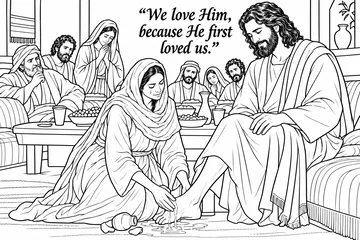
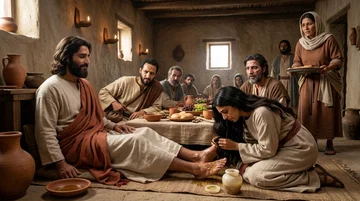
Then took Mary a pound of ointment of spikenard, very costly, and anointed the feet of Jesus, and wiped his feet with her hair: and the house was filled with the odour of the ointment.
Translations
Then took Mary a pound of ointment of spikenard, very costly, and anointed the feet of Jesus, and wiped his feet with her hair: and the house was filled with the odor of the ointment.
King James Version, KJV Cambridge Paragraph Bible
Then took Mary a pound of ointment of spikenard, very costly, and anointed the feet of Jesus, and wiped his feet with her hair: and the house was filled with the odour of the ointment.
Then Mary took a pound of ointment of spikenard, very costly, and anointed the feet of Jesus, and wiped his feet with her hair: and the house was filled with the odor of the ointment.
Mary therefore took a pound of ointment of spikenard, very precious, and anointed the feet of Jesus, and wiped his feet with her hair: and the house was filled with the odour of the ointment.
Mary therefore took a pound of ointment of pure nard, very precious, and anointed the feet of Jesus, and wiped his feet with her hair: and the house was filled with the odor of the ointment.
Mary, therefore, having taken a pound of ointment of spikenard, of great price, anointed the feet of Jesus and did wipe with her hair his feet, and the house was filled from the fragrance of the ointment.
Mary therefore, having taken a pound of ointment of pure nard of great price, anointed the feet of Jesus, and wiped his feet with her hair, and the house was filled with the odour of the ointment.
Mary, therefore, taking a pound of pure nard perfume, very precious, anointed the feet of Jesus, and wiped, with her hair, his feet; and, the house, was filled with the fragrance of the perfume.
Berean Standard Bible, Majority Standard Bible
Then Mary took about a pint of expensive perfume, made of pure nard, and she anointed Jesus’ feet and wiped them with her hair. And the house was filled with the fragrance of the perfume.
Therefore Mary took a pound of ointment of pure nard, very precious, and anointed Jesus’ feet and wiped his feet with her hair. The house was filled with the fragrance of the ointment.
Then Mary, taking a pound of perfumed oil of great value, put it on the feet of Jesus and made them dry with her hair: and the house became full of the smell of the perfume.
Then tooke Mary a pound of oyntment of Spikenarde very costly, and anoynted Iesus feete, and wiped his feete with her heare, and the house was filled with the sauour of the oyntment.
Douay-Rheims (Challoner revision)
Mary therefore took a pound of ointment of right spikenard, of great price, and anointed the feet of Jesus, and wiped his feet with her hair; and the house was filled with the odour of the ointment.
Pictures



Cross-references 20 of 23
- Mark 14:3-9
And being in Bethany in the house of Simon the leper, as he sat at meat, there came a woman having an alabaster box of ointment of spikenard very precious; and she brake the box, and poured it on his head.
The parallel account describes Mary’s costly anointing and Jesus’ defense of her deed.
- Matthew 26:6-13
Now when Jesus was in Bethany, in the house of Simon the leper,
The costly anointing is praised by Jesus and associated with his burial.
- Luke 7:38
And stood at his feet behind him weeping, and began to wash his feet with tears, and did wipe them with the hairs of her head, and kissed his feet, and anointed them with the ointment.
A woman anoints Jesus’ feet and wipes them with her hair.
- John 11:1-44
Now a certain man was sick, named Lazarus, of Bethany, the town of Mary and her sister Martha.
Jesus raised Lazarus, whose raising precedes the feast and Mary’s anointing.
- Mark 14:3
And being in Bethany in the house of Simon the leper, as he sat at meat, there came a woman having an alabaster box of ointment of spikenard very precious; and she brake the box, and poured it on his head.
Both recount the costly spikenard anointing of Jesus at Bethany.
- John 12:7
Then said Jesus, Let her alone: against the day of my burying hath she kept this.
Jesus defends Mary’s act as preparation for his burial.
- Luke 10:39
And she had a sister called Mary, which also sat at Jesus’ feet, and heard his word.
Mary’s attentive devotion to Jesus contrasts with Martha’s distraction.
- Matthew 26:10-13
When Jesus understood it, he said unto them, Why trouble ye the woman? for she hath wrought a good work upon me.
Jesus defends Mary’s anointing as a good work and says it will be remembered.
- Mark 14:4-5
And there were some that had indignation within themselves, and said, Why was this waste of the ointment made?
Guests criticize the costly ointment as wasteful, saying it could have been sold for the poor.
- Matthew 26:8-9
But when his disciples saw it, they had indignation, saying, To what purpose is this waste?
The disciples object that Mary’s costly offering could have been sold for the poor.
- John 11:55-57
And the Jews’ passover was nigh at hand: and many went out of the country up to Jerusalem before the passover, to purify themselves.
Sets the Passover setting and attention focused on Jesus before the anointing.
- Matthew 26:13
Verily I say unto you, Wheresoever this gospel shall be preached in the whole world, there shall also this, that this woman hath done, be told for a memorial of her.
Jesus says the woman’s act of devotion will be remembered wherever the gospel is preached.
- Matthew 26:6
Now when Jesus was in Bethany, in the house of Simon the leper,
Identifies the supper and recounts Mary’s anointing of Jesus.
- Song of Solomon 1:12
While the king sitteth at his table, my spikenard sendeth forth the smell thereof.
Spikenard’s fragrance expresses outpoured love and gratitude to Christ.
- 2 Corinthians 2:14
Now thanks be unto God, which always causeth us to triumph in Christ, and maketh manifest the savour of his knowledge by us in every place.
Both texts use the same Greek word for fragrance.
- John 11:28-32
And when she had so said, she went her way, and called Mary her sister secretly, saying, The Master is come, and calleth for thee.
Mary comes to Jesus and falls at his feet in grief.
- John 12:8
For the poor always ye have with you; but me ye have not always.
Christ is to be honored before care for the poor.
- John 19:38-42
And after this Joseph of Arimathaea, being a disciple of Jesus, but secretly for fear of the Jews, besought Pilate that he might take away the body of Jesus: and Pilate gave him leave. He came therefore, and took the body of Jesus.
parallel loving care for Jesus' body
- John 20:18
Mary Magdalene came and told the disciples that she had seen the Lord, and that he had spoken these things unto her.
Mary proclaimed that she had seen the risen Jesus.
- John 11:43-44
And when he thus had spoken, he cried with a loud voice, Lazarus, come forth.
Lazarus’s return from the dead grounds Mary’s gratitude.
Commentary
Each commentary is drawn from primary sources: the writings of Ellen G. White and Adventist pioneers and periodicals. Each commentary is separate. Its own words are not a quotation; follow the references to read the source passages.
Ellen G. White
40 sources
Six days before the Passover at a supper in Bethany given in His honor by Simon whom He had healed, with Lazarus whom He had raised beside Him and Martha serving, Mary poured a pound of very costly spikenard worth three hundred pence over both His head and His feet and wiped His feet with her hair until its fragrance filled the house.ST Jul 22, 1886DA 557.3–558.120MR 146.1–2DA 558.4–560.1RH Aug 7, 1900 Her act was prompted by deep love and gratitude because He had pardoned her many sins and raised her brother, and by sorrow at His words of His approaching death, so she gave what she had long kept to anoint His body beforehand for burial while He was still with her.DA 558.4–560.1RH Aug 7, 19004RED 107.1–108.12SP 375.1Lt 189, 1909, par. 2–3 Judas condemned the gift as wasteful extravagance that should have been sold for the poor, but his plea was a cover for covetousness and dishonesty as the thief who stole from the money bag, and stung by Christ's rebuke his wounded pride and love of money opened him to Satan to betray his Lord.20MR 146.1–2CET 172.2–173.14T 550.4SG1 44.1DA 720.1 Christ defended her deed as a good work and not waste, teaching that He is to be honored with the best of one's means and that care for the poor must never become an excuse to neglect Him.CET 172.2–173.14T 550.4Ms 147, 1898, par. 18 Through that love she is joined to Christ and the gospel for all time, and the fragrance filling the house shows how pure sanctified love spreads its influence beyond talent or knowledge and must be poured out freely upon all who need it.6T 310.1–26T 84.2–3Ms 17, 1899, par. 4Lt 189, 1909, par. 4Lt 135, 1897, par. 15–16
Setting at Bethany
The anointing took place at Bethany six days before the Passover, when Jesus stopped on His way from Jericho to Jerusalem to attend the feast for rest and refreshment.ST Jul 22, 1886DA 557.3–558.120MR 146.1–2 It was His last visit there, just before His betrayal and death.Ms 175, 1905, par. 2DA 557.1–2 Crowds gathered because Lazarus had been raised, and interest in Jesus and His mission was growing as people watched Him closely.DA 557.3–558.1DA 557.1–2
The occasion was a supper made by Simon of Bethany, whom Jesus had healed of leprosy, to show his Master special honor as an expression of gratitude, with Jesus and His friends as guests.ST Jul 22, 1886DA 557.1–2 Jesus sat at the table with Simon the cured leper on one side and Lazarus the raised dead on the other.ST Jul 22, 18864RED 107.1–108.1 Martha served at the table while Mary earnestly listened to every word that fell from the lips of Jesus.ST Jul 22, 188620MR 146.1–24RED 107.1–108.12SP 374.2
The Bethany home gave Him a quiet resting place for rest and refreshment amid the conjectures, criticism, and accusations of priests and rulers.ST Jul 22, 1886Lt 117, 1899, par. 30 In that home strife, prejudice, and enmity were absent, and He did not meet words that sting and bruise the soul, finding rest and freedom from the strife of tongues.Lt 117, 1899, par. 30 Though as Son of God with divinity enshrouded in humanity, suffering for mankind and bearing the necessities and woes of the human race, He was not dependent on human sympathy, yet He did not check or repulse it.Lt 117, 1899, par. 30 He welcomed hospitality and ordinary social life, accepted the invitation of His friends, and used such social occasions to teach and to make His character known to those He honored, though critics condemned His presence as worldly conformity.Lt 2a, 1878, par. 8–1016MR 318.2–319.1
Mary's Gift and Motives
Mary took a pound of spikenard, very costly, long kept in an alabaster box and valued at three hundred pence, which she had purchased at great personal sacrifice.20MR 146.1–2RH Aug 7, 19004RED 107.1–108.12SP 375.1 Though she regarded the ointment as her own, it ultimately belonged to Christ, and her breaking of the box was a giving of herself.RH Aug 7, 19006T 310.1–2 She anointed both His head and His feet and wiped His feet with her long flowing hair.RH Aug 7, 19004RED 107.1–108.12SP 375.1ST Jul 22, 18864RED 108.2–109.2 She tried to act without drawing notice, but the ointment's fragrance filled the house and made her deed known to everyone present.DA 558.4–560.1RH Aug 7, 1900ST Jul 22, 1886ST Jul 22, 18864RED 108.2–109.2
Her act expressed deep devotion, love, and gratitude because Jesus had pardoned her many grievous sins.DA 558.4–560.1RH Aug 7, 19004RED 107.1–108.1SG1 44.1EW 134.2 With her brother before her in perfect health, her heart went out in gratitude to Jesus who had raised her beloved brother from the dead.4RED 107.1–108.1SG1 44.12SP 374.2EW 134.2 Seeing Jesus sad and knowing He had to seclude Himself to escape persecution after raising Lazarus, having often heard Him speak of His approaching cruel death and grieving over it, she wished to be first to honor Him in love and gratitude while He was still with her.4RED 107.1–108.12SP 374.2ST Jul 22, 1886 She had bought the ointment to anoint His body after death, but having heard many say He would be elevated to kingly authority at Jerusalem, she believed it and rejoiced that He would no longer be despised and rejected and forced to flee for His life.4RED 107.1–108.12SP 375.1ST Jul 22, 1886
Her anointing belonged to a life transformed by Christ: though once controlled by demons and regarded as a great sinner, she found hope, overcame through His strength, and became a close learner and servant through grace.DA 568.1–2 Her devotion continued at the cross and tomb, and she became the first to proclaim the risen Saviour.DA 568.1–2
Foretelling the Burial
Mary's pouring of costly spikenard upon the feet of Jesus and wiping them with her hair, filling the house with fragrance, was an outpouring of gratitude for the forgiveness of her sins and of love for Him.DA 558.4–560.1Lt 189, 1909, par. 2–3 She gave it with prophetic anticipation of His burial, anointing His body beforehand for burial.DA 558.4–560.1Lt 189, 1909, par. 2–3 Jesus accepted the gift.Lt 189, 1909, par. 2–3
Through this act of love she is associated with Christ and the gospel throughout all time.Lt 135, 1897, par. 15–16 Christ justified the deed so that it was not to be reproved, and it stands as evidence that would be needed later.Lt 189, 1909, par. 4 It is noted in the books of heaven, its memory has inspired many to loving service, and in the day of God she will be permitted to behold the outworking of all those lines of influence and will rejoice as she sees it.6T 310.1–2
Judas's Objection and Fall
The gift displeased Judas, who murmured against it and called it wasteful, extravagant, and imprudent, objecting that the ointment could have been sold for three hundred pence and the money given to the poor, and other disciples joined in condemning Mary.20MR 146.1–2CET 172.2–173.1ST May 20, 18974T 486.3–487.2Ms 100, 1897, par. 6–7 His stated concern for the poor was false and only an excuse for covetousness, selfishness, avarice, and dishonesty.CET 172.2–173.1ST May 20, 1897SG1 181.1ST Mar 5, 19124T 486.3–487.2 He cared not for the poor but for himself, for he was a thief who kept the disciples' money bag and was stealing from the money entrusted to him.20MR 146.1–2CET 172.2–173.1Ms 91, 1899, par. 37–38EW 134.2 He prized money above Jesus, and valued his Lord just enough to sell Him for a few pieces of silver.CET 172.2–173.1SG1 44.1EW 228.2SG1 181.1
Christ defended Mary's act as a good work and rebuked the condemning spirit, and Jesus' rebuke vexed and annoyed Judas.4T 550.4ST Jun 27, 18783SP 125.2Ms 100, 1897, par. 6–7 Wounded pride and desire for revenge helped the greed he had long indulged gain control of him, so that he yielded to temptation and gave Satan easy access to his mind.DA 720.1ST Jun 27, 18783SP 125.25RED 45.2–46.1 The love of money had perverted his nobler nature and made him a fit agent for Satan to use in betraying Christ.5RED 45.2–46.1 Afterward Judas despised the covetousness that had tempted him to sell his divine Master, expecting Jesus would display divine power to deliver Himself, cheat the priests of their bribe, and leave the money for his own use.5RED 45.2–46.1
The account warns that sin left unresisted and unconquered makes a person vulnerable to temptation and captive to Satan, as shown by how Judas's first dishonest choices began to ruin his character.Ms 91, 1899, par. 37–38DA 720.1 There are some like Judas among those professing to wait for their Lord, controlled by Satan without knowing it, wrapped up in themselves, close, penurious, and selfish.CET 172.2–173.1 God cannot approve the least degree of covetousness or selfishness and abhors the prayers and exhortations of those who indulge them.CET 172.2–173.1
Honor Due to Christ
Mary's pouring of costly ointment upon Jesus was a liberal offering to Him, not waste.CET 172.2–173.1 Her act of honoring Him by giving and anointing Him was a good work, which Christ defended against the complaint that the ointment should have been sold for the poor.CET 172.2–173.14T 550.4 Satan took advantage of the covetous, selfish disposition of Judas to lead him to murmur against the gift, calling it extravagant and declaring it should have been sold and given to the poor, though he cared not for the poor.CET 172.2–173.1 Judas prized his Lord just enough to sell Him for a few pieces of silver, and there are some like Judas among those professing to wait for their Lord, controlled by Satan without knowing it, wrapped up in themselves, close, penurious, and selfish.CET 172.2–173.1 God cannot approve the least degree of covetousness or selfishness and abhors the prayers and exhortations of those who indulge them.CET 172.2–173.1 Christ is to be honored with the best of one's means, and care for the poor must not become a reason to neglect the cause of Christ, since faithful stewardship provides for both.4T 550.4
Wealth used for good can bring refreshment to Jesus and those around Him, as shown when Mary's costly gift was poured out and its fragrance filled the house.Ms 147, 1898, par. 18 The costly offering was made to Jesus with loving devotion.4T 485.1 The gift of salvation moves its recipient not to calculate the offering's value, but to regret that it could not be richer and more precious.4T 485.1
Lasting Influence for Believers
Mary's costly anointing from the broken alabaster box was a giving of herself as an instrument for the Holy Spirit's working.6T 310.1–2 It is noted in the books of heaven.6T 310.1–2 Its memory has inspired many to loving service, and in the day of God she will be permitted to behold the outworking of all those lines of influence and will rejoice as she sees it.6T 310.1–2
The ointment filling the house with fragrance shows how pure, sanctified love, like the love expressed in Christ's life, spreads its influence.6T 84.2–3 Eloquence, knowledge, and rare talents are precious, but ability and talent cannot take the place of love.6T 84.2–3 Love for God and for those Christ died for is essential to successful missionary work.6T 84.2–3 The broken bottle and outpoured fragrance show that love must not be reserved for a few, but affection and kindness are to be given to all who need them, without neglect or coldness toward anyone.Ms 17, 1899, par. 4
Sources
Pioneers and periodicals
97 sources
Six days before the Passover, at a supper in Bethany in the house of Simon whom Jesus had healed of leprosy, Mary the sister of Lazarus and Martha poured a pound of very costly spikenard ointment on Jesus and wiped his feet with her hair until the house was filled with its fragrance.ST Jul 22, 1886RH Aug 14, 1900RH Aug 25, 1868RH Dec 3, 1867RH Mar 24, 1910 She anointed both his feet and his head, the customary honor shown to a guest, humbly tending him with her own hair in devoted service.ST Jul 22, 1886ST Feb 24, 1914ST May 12, 1914ST Apr 5, 1905ST Dec 20, 1905 Her gift was prompted by love, gratitude for forgiveness and mercy and for the raising of Lazarus, and by desire to honor him while he was still with her, sparing nothing she prized most.ST May 6, 1889ST Sep 20, 1899ST Jul 29, 1889ST Apr 5, 1905ST Sep 20, 1899 It was accepted by him as preparation of his body beforehand for burial, a good work to be remembered wherever the gospel is preached.ST May 12, 1914ST Jan 21, 1897STRH Dec 3, 1867 Judas condemned it as waste that should have been sold for the poor, but his plea hid covetousness and theft, and Jesus rebuked him and commended her, showing that nothing given in loving self-sacrifice to honor Christ is wasted.ST May 20, 1897ST Oct 6, 1881RH Nov 20, 1913ST Jan 10, 1911
Setting at Bethany
The anointing took place at Bethany six days before the Passover, on the last Sabbath before the crucifixion, when Jesus stopped on His way from Jericho to Jerusalem to attend the feast for rest and refreshment.ST Jul 22, 1886ST Dec 16, 1886ST Oct 5, 1882 A supper had been made for Him there, and after that supper Mary anointed Him, with Martha serving and Lazarus who had been raised from the dead sitting at table with Him.ST Jul 22, 1886ST Dec 16, 1886 That stay at the home of Lazarus in Bethany during the six days before the Passover fixes the timing and helps establish the chronology of the events leading to the crucifixion.RH Dec 10, 1867 The feast was followed by several days of events in Jerusalem before the Passover.ST Oct 5, 1882 It stands in the course running from the resurrection of Lazarus to the last public discourse, the acknowledgment from heaven, the institution of the ordinance of humility, the pointing out of the betrayer, and the farewell discourse to the disciples.ST May 26, 1909
The supper was made by Simon of Bethany, whom Jesus had healed of leprosy, to show his Master special honor, with Jesus and His friends as guests.ST Jul 22, 1886 Jesus sat at table with Simon the cured leper on one side and Lazarus the raised dead on the other, while Martha served at the table and Mary earnestly listened to every word that fell from His lips.ST Jul 22, 1886 The setting was the humble home at Bethany where Jesus found retreat, specifically the house of Simon the leper, also the home of Lazarus, only a few days before the crucifixion and after Lazarus was raised.RH Dec 3, 1867RH Mar 24, 1910ST Nov 17, 1898 There, as the Prince of Life in lowly guise with Lazarus seated beside Him, Mary broke her box and honored Him whom man despised, in blessed contrast to the contempt and rejection of the nation and the plots of the rulers.RH Dec 3, 1867 The feast in Simon's house where she saw Jesus and Lazarus was remembered as a chance to witness His loving kindness and pity.ST Jan 31, 1911
Bethany was the quiet friendly retreat of a friendly meal, one of the peaceful moments in a life that also included rejection, enmity, Gethsemane, and the cross.ST Mar 2, 1915 There Jesus carried out a home mission in the house of Lazarus.ST Jun 14, 1905 Love for Jesus makes a home like Bethany, a place of holiness and worship where devotion is expressed in daily sacrifice.ST Sep 23, 1875 Christ being an honored guest in the home of Lazarus provides a test for whether the plans and habits of a household accord with His character.RH Jul 8, 1909
John's account belongs to the last Passover and is identified with the account of the cleansing of the temple near the close of the ministry.RH Apr 24, 1879 It is distinct from the earlier temple cleansing recorded in John 2.RH Apr 24, 1879
The mention of Mary in connection with Lazarus's sickness recalls her later anointing with costly ointment and wiping His feet with her hair, showing that a writer may refer to a later event while narrating an earlier one.RH Aug 27, 1872 Jesus receiving her directly is an example of coming to Christ without the disciples' permission or protection.ST Apr 16, 1896
Ointment and Anointing
The woman who anointed was Mary, the sister of Lazarus and Martha, also identified as Mary Magdalene.RH Dec 24, 1867RH Dec 10, 1867ST Jan 3, 1911 This anointing is the same one described by Matthew and Mark, while it is distinct from the earlier anointing in Luke at a Pharisee's house which involved a different woman.RH Dec 24, 1867 The ointment was a pound of spikenard, very costly, a highly prized strong liquid perfume prepared from an Indian plant growing in short spikes.RH Aug 25, 1868ST Mar 22, 1899ST Sep 20, 1899 Because costly nard was especially liable to adulteration, pistic means genuine or liquid, distinguishing pure spikenard from counterfeit.ST Mar 22, 1899 It was used at baths and banquets, kept sealed in containers such as costly artistic alabaster boxes for precious things, and released a rich fragrance when opened by breaking the box or its seal.RH Aug 25, 1868RH Mar 24, 1910
Its value was more than three hundred pence or denarii, over forty dollars, exceeding ten pounds by the standards of the time, about fifty dollars.RH Dec 10, 1867RH Aug 25, 1868ST Sep 20, 1899 That sum was as much as a laboring man's family might live on for a year, or at least a year of hard work.ST Dec 2, 1880ST Jan 21, 1897 It was an imported liquid perfume from India, made especially costly by its long transport and sold throughout the Roman Empire at fabulous prices, a luxury only the rich could usually afford.ST Sep 20, 1899RH Mar 24, 1910 Although fragrant oil was commonly used to anoint rabbis and special guests at marriage feasts, this ointment surpassed anything of that kind then known, and only exceedingly precious ointment fills a whole house.ST Sep 20, 1899 Mary anointed both his head and his feet, as is seen when John's account of the feet is taken together with Matthew's account of the head.ST Feb 24, 1914ST May 12, 1914ST Apr 5, 1905 Anointing the feet and the head was ordinary hospitality and honor, and anointing the head was the customary way to honor someone, so the Gospel accounts report different details without contradicting one another.ST Feb 24, 1914ST May 12, 1914ST Apr 5, 1905
She poured the costly fragrant spikenard on his weary, soiled feet and wiped his feet with her hair, described as her crown of glory and long hair.ST Jul 22, 1886ST Apr 5, 1905ST Dec 20, 1905 In so doing she humbly tended him in service more honorable than offering wine to a proud ruler or entertaining an earthly prince.ST Dec 20, 1905 She also poured ointment on his head, and the gift filled the house with its fragrance.ST Jan 10, 1911RH Mar 24, 1910ST Jan 21, 1897 The house was filled with the odour of the ointment, so that her act became known to everyone present.RH Aug 7, 1900ST May 25, 1882ST Jan 21, 1897 Though she tried to act without drawing notice and her movements went unnoticed, the scent made her deed known, and the fragrance clung to her hair.RH Aug 7, 1900ST Nov 16, 1876
The Greek word translated odor is the same word translated savor in 2 Corinthians 2:14, and the ointment's fragrance was sensed even though the alabaster box was hidden from view.RH Aug 14, 1900 Her act is thus an image of praise, love, testimony, and service offered openly rather than kept unused within, bringing blessing and refreshment to others.ST Mar 11, 1908 The fragrance also pictures how loving service becomes known beyond the giver's intention.ST Nov 16, 1876
Love and Honor
Mary expressed love, devotion, homage and honor for Jesus by anointing his feet with a pound of very costly spikenard and wiping them with her hair, so that the fragrance filled the house.ST Sep 20, 1899ST Jul 29, 1889ST Sep 20, 1899 Her costly gift showed how highly she prized the Saviour and the depth of her love for him, bringing the best gift she had because her heart overflowed with love.ST Jul 29, 1889ST Sep 20, 1899RH Sep 17, 1901 She considered even her most precious gift not too costly to bestow on him, pouring out all her treasures at his feet and giving him the best of her affections and the warmest place in her heart.ST May 25, 1882RH May 21, 1914RH Sep 17, 1901 That giving of the choicest love as precious perfume answered his giving of the best he had, his life, his broken heart and his precious blood poured out.RH Sep 17, 1901
Her act arose from gratitude for the forgiveness of her sins and for his great mercy in pardoning her many grievous sins.ST May 6, 1889RH Aug 7, 1900ST Oct 9, 1879ST Jul 29, 1889 She was a sin-stricken woman humbly seeking pardon whom Jesus comforts and heals, delivered from demonic possession as a living example of Christ's power to free people from Satan's bondage.ST Apr 5, 1905RH Oct 16, 1913 It also expressed gratitude for restoring Lazarus to life and for the great blessing he had given her.RH Sep 17, 1901
She had bought the ointment at great personal sacrifice, saving means despite her family's poverty and likely disapproval, and had kept it long, intending it for his burial after death.ST May 6, 1889RH Aug 7, 1900ST May 25, 1882 Though she had heard him speak of his coming death, she believed reports that he would receive kingly authority and be honored in Jerusalem rather than rejected or forced to flee, and she mistakenly rejoiced that he would soon be honored.ST May 6, 1889ST May 25, 1882ST Oct 9, 1879ST Jul 22, 1886 She therefore sought to honor him first while he was still with her, fearing she might have no other opportunity to show gratitude for the forgiveness of her great sins.ST May 6, 1889ST Jul 22, 1886RH Dec 10, 1901 She tried to act without drawing notice, but the scent made her deed known.RH Aug 7, 1900
Her anointing illustrates the true spirit of sacrifice, the sacrifice of a heart subdued by grace and broken by love, humble broken-hearted love like precious fragrance poured out.ST Jun 16, 1887RH Jan 6, 1859 She lavishly poured out her precious treasure with attention wholly given to that act and no thought of another use for the gift, rather than keeping it to enjoy herself.ST Oct 21, 1886RH Nov 11, 1915 In this she showed that nothing was too good for Jesus and that giving expresses love and self-denial.RH Nov 11, 1915 Its worth is measured by the love that prompts it, not merely by its outward amount, for Christ sees the heart.ST Dec 10, 1894 Love, not financial calculation, is the standard for judging it, and those who have received pardoning love do not calculate the worth of their offering but regret only that it was not more precious and abundant.ST Jan 10, 1906RH Feb 27, 1908
Though reason measured by expense could call the gift wasteful and it could look mistaken to others, Jesus understood her motive, accepted her act and blessed her.RH Mar 24, 1910ST Jan 10, 1906 He commended it because it arose from a selfless motive of service rather than desire for praise or personal gain, weighing motives and knowing when someone has done what they could and done their best.RH Mar 24, 1910 Her loving appreciation and sympathy in the closing days of his life stands in blessed contrast to the cruel contempt and rejection of the nation and the malignant persecution and bloodthirsty plots of the rulers.RH Dec 3, 1867 Among trusted friends only a few days before the crucifixion, she answered his sorrow as the man of sorrows facing the future, employing all her best and fairest to do honor to him whom man despised.RH Dec 3, 1867RH Mar 24, 1910
Burial Preparation
Mary's anointing of both head and feet was an ordinary act of honor and hospitality, yet it also signified the preparation of Jesus' body for burial.ST May 12, 1914 It was a prophetic deed of love connected with His coming death, anointing beforehand the rejected One for burial.ST May 12, 1914ST Jan 21, 1897 It was offered as costly tribute of love to Jesus as rejected, as though all earthly fragrance and honor must be buried with Him.RH Dec 3, 1867 It was the only such anointing given Him while He was alive, a free act of devotion to Him while living rather than an anointing after His death.ST Feb 15, 1905RH Dec 10, 1901
She had bought the ointment to anoint His body after death, keeping it long and intending it for His burial.ST May 25, 1882ST Oct 9, 1879ST Jul 22, 1886 Hearing people expect He would become king and be honored in Jerusalem, she believed He would soon receive kingly authority rather than be rejected.ST May 25, 1882ST Oct 9, 1879ST Jul 22, 1886 Rejoicing in that hope and wishing to honor Him first while He was still with her, fearing she might have no other opportunity, she offered the gift in gratitude and love.ST May 25, 1882ST Jul 22, 1886 Though mistaken in expecting earthly honor, her loving sacrifice that honored Him was accepted by Him as preparation for burial.ST Oct 9, 1879RH Mar 24, 1910
Jesus called it a good work done for Him, answering His sorrow in the closing days of His life.RH Dec 3, 1867 He promised it would be remembered wherever the gospel was preached.RH Mar 24, 1910 Though men account it waste, Christ promises that everyone who has forsaken houses, brethren, sisters, father, mother, wife, children, or lands for His name's sake shall receive an hundredfold and inherit everlasting life.RH Dec 3, 1867
Judas and Waste
Judas, joined by others present and certain of the disciples, found fault with the anointing and called it waste, insisting the ointment should have been sold and the money given to the poor.ST May 20, 1897ST Dec 18, 1893ST Jul 22, 1886ST Jan 10, 1911 The surrounding verses identify him as a thief, and his plea of concern for the poor concealed selfishness, greed, covetousness, malice and hatred, for he was mastered by mammon and had no care for the poor.ST May 20, 1897ST Dec 18, 1893ST Jul 22, 1886ST Oct 6, 1881 His complaint came from coveting the money that might have been placed in his hands if the ointment had been sold and put into the treasury, counting the cost too great and turning the sum over in his mind as a loss to the treasury.RH Nov 20, 1913RH Dec 28, 1911 The occasion began to reveal his real character through outward actions, bringing into the open a covetousness cultivated over years that had become the ruling trait controlling him when temptation came, though he professed to follow Jesus.ST Dec 18, 1893RH Nov 20, 1913ST Mar 27, 1901
Jesus rebuked his covetous spirit, commended Mary's act as a good work done for Him, and said to let her alone.RH Nov 20, 1913ST Jan 10, 1911RH Dec 10, 1901 The expense bestowed on Him was approved and not wasted, showing how differently He valued it from Judas, who accepts sacrifice offered in gratitude.ST Oct 6, 1881ST Jan 10, 1911 That reproof annoyed and offended Judas as a humiliation and rankled in his heart, so that his selfishness grew stronger until Satan gained access to his mind and he yielded to temptation.ST Jun 27, 1878RH Nov 20, 1913ST Feb 14, 1906RH Dec 28, 1911 This helped lead him to betray Jesus for money, going directly from that supper to the chief priests to covenant for thirty pieces of silver and from that time seeking opportunity to deliver Him, showing how covetousness and resistance to reproof can lead to grave wrongdoing.ST Feb 14, 1906ST Apr 19, 1905RH Dec 28, 1911
No material gift spent honoring the One who gave His life for humanity is invested more profitably, and no sacrifice made for Christ is wasteful, nor does giving to Him prevent truly benevolent work or cause the poor to suffer.ST Jun 7, 1899ST Oct 6, 1881ST Mar 27, 1901 What is given to honor God is not wasted but is a spontaneous offering of love and self-sacrifice, supporting the spending of means to bring people to a knowledge of the truth in Christ.ST Oct 6, 1881RH May 29, 1855RH Oct 25, 1906 That same charge of waste laid against Mary's breaking of the alabaster box is laid against missionary time, money and life spent for black people in Africa.ST Jun 7, 1899ST Jun 29, 1904 Selling the ointment to feed the poor would have done well, giving about three hundred people only brief temporal satisfaction of a pennyworth of bread each, but giving it to Christ did better.ST Jul 15, 1886 Done for Christ's sake out of charity, her devotion and His tenderness have cheered and encouraged millions who read of it, for feeding the poor for humanity's sake is good but transitory and passes away, while giving for Christ's sake is eternal, joining countless small gifts into one golden current flowing into glory, in contrast to Judas's silver which perishes.ST Jul 15, 1886ST Apr 19, 1905
Example for Believers
Mary's costly gift honors the living Jesus with love and gratitude, and it is better to show love to Christ while he lives than to withhold it and place flowers on his tomb.ST Jun 14, 1905RH Jul 3, 1913 Love and tenderness should not be kept sealed until friends are dead but poured out while they live, with approving and cheering words, sympathy and affection, and flowers to brighten homes given while ears can hear and hearts can be thrilled and made happier, to refresh and cheer in weary and troubled hours.ST Post-mortem kindness does not cheer the troubled spirit, flowers on the coffin cast no fragrance backward over life's weary way, and a plain coffin without a flower and a funeral without a eulogy is better than a life without the sweetness of love and sympathy.ST Her act was an offering of devotion to Jesus while he was still alive rather than an anointing after his death, expressing love and honor while he was still with her, and her offering did not prevent caring for the poor after he was gone.ST Jun 14, 1905RH Jul 3, 1913ST Feb 15, 1905
Her act is an image of praise, love, testimony, and service offered openly to Christ rather than kept unused within, bringing blessing and refreshment to others.ST Mar 11, 1908 The fragrance that filled the house and clung to her hair pictures how loving service becomes known beyond the giver's intention, given without seeking reward or recognition.ST Nov 16, 1876 That grace continues to spread beyond what anyone could measure at the time, and a woman's influence and work can spread far beyond where she is seen, like the odor reaching near and far.RH Oct 21, 1909RH Nov 9, 1911 Only exceedingly precious ointment fills a whole house, meaning intense devotion to Jesus produces extensive sympathies that compel carrying what he can do to every man who needs it, to the last who does not know him.ST Dec 4, 1901 The perfume of the box likewise pictures the returns when those with larger learning and experience give themselves to a receptive but untaught and needy people, with manifest and manifold good.ST Sep 9, 1889
True worship is breaking the alabaster box in loving appreciation of Christ as chiefest among ten thousand and altogether lovely.RH Dec 3, 1867 The house filled with odor means the savor of Christ ascending to the Father when saints meet to worship rather than to hear a sermon measured by profit in duties or comforts, giving him and not man first place, recognizing his presence, and pouring out love and gratitude, which is heaven anticipated.RH Dec 3, 1867 It will be perfected when the redeemed gathered together in him fill heaven with praise forever, valuing him beyond all his gifts and beyond the engagements of any service.RH Dec 3, 1867 The broken box means the heart in devotedness has sacrificed all most attractive of earth, crucified unto the world and the world unto it, renouncing for the Lord's sake, which is greater than any service, and though men account it waste Christ calls it a good work with promise that everyone who has forsaken houses, brethren, sisters, father, mother, wife, children, or lands for his name's sake shall receive a hundredfold and inherit everlasting life.RH Dec 3, 1867
Believers now cannot shelter Christ, sit at his feet, walk with him, anoint him, or bury him in person, but they can do the same kind of direct personal deed to the living Christ, whose body is here.RH Dec 3, 1867RH Oct 4, 1870 What is done in love to comfort, care for, and bless his people, to bury his poor friends, clothe the naked, feed the hungry, visit the sick and imprisoned, and save souls, is done to him, because Christ and the church are head and body with one interests.RH Oct 4, 1870 The coming King notes, records, and will remember every such act as he remembers those who buried him.RH Oct 4, 1870 Beyond mere service to man believers may thus minister to him by doing it unto the least of his brethren.RH Dec 3, 1867
Believers ought to bring their best to Christ and give him the best affections and warmest place, gathering choicest love as perfume, because he gave the best he had, his life, broken heart, and precious blood, and now lavishes the best gifts of love from glory.RH Sep 17, 1901 Those who received pardoning love do not calculate worth but regret only it was not more precious, giving what one can in devotion to the King.RH Feb 27, 1908RH Dec 24, 1914 By giving it to the Lord rather than preserving property, deeper experience is gained, where what is given up at great cost becomes more valuable.ST Dec 2, 1880
Her costly gift, representing at least a year of hard work, proved willingness to serve, growing from being served by the Master to delight both.ST Sep 22, 1898 True ministry is self-bestowing oblation done in love, manifesting the same spirit as towel, basin, and cool water, the test of every action and token of sonship, whose glory is in the doing bringing growth, exaltation, and renewed comfort.ST Mar 10, 1909 Her pouring out in loving service became a lasting blessing remembered throughout the world, and the perfume that seemed wasted became lasting blessing and remembrance.RH Jun 24, 1902 Its sweetness returns upon her head as ordered by the Lord and spreads through hearts.ST Apr 11, 1906
Love for Jesus makes a home like Bethany, a place of holiness and worship where devotion is expressed in daily sacrifice.ST Sep 23, 1875 A pure and calm Christian life in a home pervades it from cellar to garret, with heroic beneficent instruction in God's ways, relief of the needy, and spotless life filling every part just as the fragrance filled the house.RH Dec 24, 1903 A sanctified memory becomes a store-room of God's love, where gratitude fills the heart's dwelling like the broken box.ST Mar 16, 1876
Promises, like the alabaster box, give off fragrance when opened, so faith makes them living to fill lives with fragrance and bring glory to God.RH Dec 18, 1900 A humble believer's tearful love, moved that Christ died even for him, shows the same devotion as Mary's costly anointing.ST Oct 10, 1878 The lasting fragrance of a young life remaining until eternal life shows the same influence as the fragrance filling the house.RH May 8, 1879
Her unselfish gift became the occasion for criticism, illustrating the cruelty of condemning loving effort rather than cherishing it.ST Sep 26, 1911 The deed was done from the pure principle of love, while those who would prevent it were mastered by mammon, counting the cost too great and calling it waste, exposing the rule of decision, love or money, for no one can serve God and mammon.ST May 31, 1899 Jesus' word to let her alone means letting people follow good promptings of the Spirit, such as inviting the needy and children expressing love, trusting God to guide, for censure that freezes such acts smothers much that might be done, and that cold spirit comes from beneath.RH Dec 10, 1901
Her lavish pouring of precious treasure with attention wholly given and no thought of another use is worshipful devotion made known by gift and fragrance.ST Jan 3, 1911ST Oct 21, 1886
Sources