John 17:4
I have glorified thee on the earth: I have finished the work which thou gavest me to do.
Translations
I have glorified you on the earth: I have finished the work which you gave me to do.
King James Version, KJV Cambridge Paragraph Bible, Webster Bible
I have glorified thee on the earth: I have finished the work which thou gavest me to do.
Revised Version, American Standard Version
I glorified thee on the earth, having accomplished the work which thou hast given me to do.
I did glorify Thee on the earth, the work I did finish that Thou hast given me, that I may do [it].
I have glorified thee on the earth, I have completed the work which thou gavest me that I should do it;
I, glorified thee on the earth, The work, finishing, which thou hast given me that I should do.
I have glorified You on earth by accomplishing the work You gave Me to do.
I have glorified You on earth. I have accomplished the work You gave Me to do.
I glorified you on the earth. I have accomplished the work which you have given me to do.
I have given you glory on the earth, having done all the work which you gave me to do.
I haue glorified thee on the earth: I haue finished the worke which thou gauest me to doe.
Douay-Rheims (Challoner revision)
I have glorified thee on the earth; I have finished the work which thou gavest me to do.
Pictures
Cross-references 20 of 42
- John 17:21-23
That they all may be one; as thou, Father, art in me, and I in thee, that they also may be one in us: that the world may believe that thou hast sent me.
The passage calls believers to live Christ’s prayer and pray for union.
- John 4:34
Jesus saith unto them, My meat is to do the will of him that sent me, and to finish his work.
Jesus says doing the Father’s will is completing the work he was given.
- John 19:30
When Jesus therefore had received the vinegar, he said, It is finished: and he bowed his head, and gave up the ghost.
Jesus declares on the cross that his saving work is finished.
- 2 Timothy 4:7
I have fought a good fight, I have finished my course, I have kept the faith:
Both describe faithfully completing an appointed course of service.
- John 9:4
I must work the works of him that sent me, while it is day: the night cometh, when no man can work.
Jesus carries out the Father’s work while the time for labor remains.
- John 17:10
And all mine are thine, and thine are mine; and I am glorified in them.
Christ is glorified in those who belong to him.
- John 17:8
For I have given unto them the words which thou gavest me; and they have received them, and have known surely that I came out from thee, and they have believed that thou didst send me.
Jesus gave the disciples the words the Father gave him, and they received and believed them.
- John 13:31-32
Therefore, when he was gone out, Jesus said, Now is the Son of man glorified, and God is glorified in him.
Jesus says the Son glorifies God, matching his completed work of glorifying the Father.
- John 12:28
Father, glorify thy name. Then came there a voice from heaven, saying, I have both glorified it, and will glorify it again.
Jesus prays that the Father will glorify his name, continuing the work Jesus finished.
- John 6:38
For I came down from heaven, not to do mine own will, but the will of him that sent me.
Jesus came to do the Father’s will and completed the work given to him.
- John 5:36
But I have greater witness than that of John: for the works which the Father hath given me to finish, the same works that I do, bear witness of me, that the Father hath sent me.
The Father gives Jesus work to complete, and the works testify that the Father sent him.
- John 16:14
He shall glorify me: for he shall receive of mine, and shall shew it unto you.
The Spirit glorifies Christ, whose work glorified the Father.
- John 5:30
I can of mine own self do nothing: as I hear, I judge: and my judgment is just; because I seek not mine own will, but the will of the Father which hath sent me.
Jesus seeks the Father’s will rather than his own.
- John 17:26
And I have declared unto them thy name, and will declare it: that the love wherewith thou hast loved me may be in them, and I in them.
Jesus has made the Father known so His love may be in His followers.
- Isaiah 53:10
Yet it pleased the LORD to bruise him; he hath put him to grief: when thou shalt make his soul an offering for sin, he shall see his seed, he shall prolong his days, and the pleasure of the LORD shall prosper in his hand.
The Lord’s purpose prospers through the Servant’s completed work.
- John 14:12
Verily, verily, I say unto you, He that believeth on me, the works that I do shall he do also; and greater works than these shall he do; because I go unto my Father.
Believers are to continue the works Jesus did.
- Philippians 2:9
Wherefore God also hath highly exalted him, and given him a name which is above every name:
Christ’s completed work is followed by the Father’s exaltation.
- Psalms 40:8
I delight to do thy will, O my God: yea, thy law is within my heart.
Both portray Jesus delighting in obedience to God’s will.
- John 14:10
Believest thou not that I am in the Father, and the Father in me? the words that I speak unto you I speak not of myself: but the Father that dwelleth in me, he doeth the works.
The Father dwelling in Jesus does the works Jesus was given to finish.
- Hebrews 1:3
Who being the brightness of his glory, and the express image of his person, and upholding all things by the word of his power, when he had by himself purged our sins, sat down on the right hand of the Majesty on high;
After completing his work, Christ sits at God’s right hand.
Commentary part 1 of 2
Each commentary is drawn from primary sources: the writings of Ellen G. White and Adventist pioneers and periodicals. Each commentary is separate. Its own words are not a quotation; follow the references to read the source passages.
Ellen G. White
115 sources
Christ's prayer declares that He glorified the Father on earth by finishing the work the Father gave Him to do.CT 459.1Ms 153, 1899, par. 29–31Ms 158, 1904, par. 2–6 He did this by turning attention from Himself to God as the source of His power, living in complete submission to the Father's will, and revealing the Father's character and infinite love.ST Mar 3, 1898PK 69.1Ms 21, 1890, par. 3–4MYP 162.1–2RH Jan 11, 1906 That assigned work was to make God known so that those given Him might receive eternal life, and to live a righteous and perfect character that fulfills the covenant for fallen humanity and shows that God's law can be kept.Ms 11, 1911, par. 1–3Ms 27, 1897, par. 13–156RED 97.3DA 680.2–4Lt 157, 1901, par. 5–8 He spoke of the work as finished even while Gethsemane, death on the cross, breaking the tomb, and His mediatorial intercession still lay before Him, with its completion sealed in His death that opened the way to God.Ms 119, 1906, par. 5–11Ms 7, 1902, par. 16Ms 128, 1897, par. 30–32Lt 281, 1904, par. 13–15 His words stand as the pattern for every believer, that to glorify God is to finish one's own distinct life-work in spirit, speech, and action, and to answer His prayer by sanctification through truth and oneness with Christ and one another.Ms 60, 1898, par. 14–1817MR 291.2–3MH 454.4–5Lt 61, 1898, par. 11ST May 2, 1916
Prayer Setting and Context
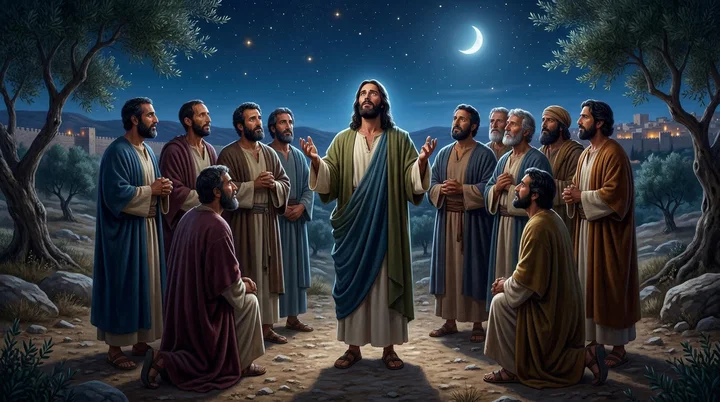
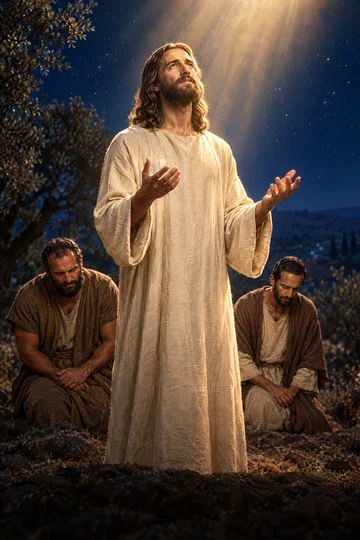
The words are Christ's prayer to the Father, spoken with His eyes lifted to heaven at the close of His instruction to His disciples before His departure and separation from them and His return to the Father.Ms 39, 1908, par. 1–3Lt 263, 1904, par. 16DA 680.2–4Lt 336, 1906, par. 5–9Ms 174, 1903, par. 6–8 It was His last prayer with them just before betrayal and crucifixion, declaring that He had glorified the Father on earth by finishing the work given Him to do, a prayer to be studied as a lesson for all.Ms 39, 1908, par. 1–3Lt 263, 1904, par. 16Ms 151, 1901, par. 7–9 At the close of His ministry with them, before betrayal, trial, crucifixion, burial and resurrection, He declared His earthly work finished by manifesting the Father's name and gathering out those who would continue His work among men.DA 680.2–4Ms 174, 1903, par. 6–8 After His final instruction He offered it to prepare them for His coming suffering and separation from them.Lt 336, 1906, par. 5–9
It was prayed in the upper chamber on the night of the Passover supper after Judas withdrew, when the oppressive shadow lifted and peace returned to Jesus, spoken to faithful followers alone and not in the presence of the multitude who could not understand such sacred truths.3SP 87.3–88.2DA 662.1 Looking upon the eleven with divine love and tenderest sympathy after Judas had left, and before speaking of His approaching separation, He first directed their thoughts to the great object of His mission kept ever before Him, that all His humiliation and suffering would glorify the Father's name.DA 662.1 He spoke just before He was betrayed, rejected, condemned, tried and crucified, with Gethsemane and the last battle with Satan close at hand.Ms 153, 1899, par. 29–31Ms 158, 1904, par. 2–6Ms 119, 1906, par. 5–11Ms 45, 1904, par. 6–7 His work involved the sacrifice by which He would bear the world's sins and give humanity another opportunity for eternal life, passing through betrayal, excruciating agony in Gethsemane where the bitter cup trembled in His hand, and crucifixion where He would give Himself as a criminal for the sins of the whole creation and suffer separation from the Father under the weight of the sins of the world, questioning whether man could be saved without His drinking that cup yet carrying it through.Ms 158, 1904, par. 2–6Ms 119, 1906, par. 5–11 As He was about to leave His disciples to pass through His trial as Redeemer, the prayer lays their burden on the Father to take charge and keep them.Ms 119, 1906, par. 5–11Ms 45, 1904, par. 6–7
It belongs to the burden of His soul poured forth in words of comfort, counsel and prayer in John 15, 16 and 17, imprinted on the disciples and repeated again and again to stay their hearts in disappointment and trial.5RED 8.1–9.13SP 87.3–88.2Lt 217, 1903, par. 22 These words stayed with them through disappointment and trial but were not fully understood or appreciated until after the resurrection, and fully understood and appreciated only after the resurrection and the descent of the Holy Spirit.Lt 117, 1897, par. 2–35RED 8.1–9.13SP 87.3–88.2 From their testimony they have spread over all lands to live through all ages to comfort the desponding and give peace and hope to believers.3SP 87.3–88.2 This instruction before He left them was meant to help them face future trials and temptations, assure them that He would not leave them ignorant of His purposes, and remind them of His love.Lt 217, 1903, par. 22
The prayer was for His disciples in every age and for all who would believe through their word, presenting possibilities for Christian growth as believers strive to answer it and strengthening faith in what they may become.Ms 153, 1899, par. 29–31Ms 21, 1892, par. 9Ms 37, 1892, par. 6–7ST Apr 11, 1900 In it the Good Shepherd identifies His interests with fallen humanity, and though adored by angels He prayed as a human suppliant seeking grace from the Father and then imparting assurance and hope, His prayer offered on humanity's behalf.STB 386.4–387.1 It is Christ's prayer to the Father on behalf of ministers over congregations and the church members entrusted to them when they are clothed with filthy garments and need pardon for sin.Lt 208, 1906, par. 34–36 Jesus presents that prayer while showing the Father His bruised hands bearing the wounds of cruel spikes, pleading that He has graven His church, the names of those who believe on Him, upon the palms of His hands, so that the atoning sacrifice of the Son of God may come up before God for them as they humbly fast and pray with sincere repentance.Lt 208, 1906, par. 34–36
The prayer illustrates His ministration as High Priest in the heavenly sanctuary after His sacrifice for humanity was completed.Ms 29, 1906, par. 1–4 Uttered in the hearing of His disciples, it is full of instruction of the highest type and is a sample of His intercession carried on in heaven, within the veil, for all who receive Him and believe on His name, even unto the ends of the earth, showing His desire that all should be saved through faith in Him.Ms 38, 1896, par. 2 It is a lesson for guiding action and an illustration of the intercession He continues to make for believers.Lt 368, 1904, par. 9–13Ms 38, 1896, par. 2 That prayer offered for His disciples just before His crucifixion is a help to the truly penitent in every emergency.Ms 4, 1904, par. 12–14
What Glorifying God Means
Jesus glorified the Father on earth by finishing the work the Father gave Him to do.CT 459.1Ms 153, 1899, par. 29–31Ms 158, 1904, par. 2–6Lt 44, 1909, par. 7–10Ms 11, 1911, par. 1–3 This was His prayer just before He was betrayed, rejected, condemned, tried and crucified, spoken with His disciples in His final prayer with them, and it was for His disciples in every age.Ms 153, 1899, par. 29–31Ms 158, 1904, par. 2–6PK 69.1 As He spoke, the suffering of Gethsemane was close at hand, for His work involved the sacrifice by which He would bear the world's sins and give humanity another opportunity for eternal life.Ms 158, 1904, par. 2–6 His life's aim was to receive from the Father and give through His teaching and unselfish service what would save people from sin and turn them toward righteousness, and so His life and mission fulfilled the Father's purpose.Lt 44, 1909, par. 7–10Lt 44, 1909, par. 2–6 That work is identified with the mission entrusted to Him, including giving eternal life through the knowledge of the only true God and Jesus Christ whom He sent, after which He asked to be restored to the glory He had with the Father before the world was.Ms 11, 1911, par. 1–3 It stands as the example of the true God being uplifted by every teacher.CT 459.1
He glorified the Father by directing attention away from Himself and toward God as the source of His power.PK 69.1RH Jan 11, 1906 In His ministry He so directed attention that when people saw His healing miracles they glorified the God of Israel.RH Jan 11, 1906 In that same prayer before the crucifixion He asked that the Father glorify Him so that He might glorify the Father.PK 69.1RH Jan 11, 1906 He had made the Father known to His disciples so that God's love would be in them and Christ would be in them.PK 69.1RH Jan 11, 1906
He could say the work was finished as His earthly mission drew to a close because He had subordinated everything to His Father's will and had not acted for self.MYP 162.1–2ST Mar 24, 1909 He did this by emptying Himself and living to serve rather than demand honor.ST Mar 24, 1909 His completed work thus reveals the humility and meekness He calls His followers to learn from Him.ST Mar 24, 1909 His work on earth was directed toward the glory of God, not human uplift, expressing the sanctified zeal responsible workers should share as they follow His example rather than a harsh zeal that wounds others.Lt 4, 1895, par. 13–15
The great object of His mission, kept ever before Him, was to glorify the Father's name, and His joy was that all His humiliation and suffering would glorify that name.DA 662.1 Looking upon the eleven disciples with divine love and tenderest sympathy after Judas had left the upper chamber, and before speaking of His approaching separation from them, He first directed their thoughts to this object.DA 662.1
He glorified the Father by revealing Him, for the world lacked knowledge of God and He came to make God known.ST Mar 3, 1898Ms 21, 1890, par. 3–4 His work on earth was to reveal the Father, to represent Him and reveal a love without parallel, to reveal God's character and infinite love and to manifest His name to the men given to Him out of the world.Ms 21, 1890, par. 3–4Ms 11, 1902, par. 17–2015MR 262.1–3Lt 281, 1904, par. 13–15 To glorify the Father on earth was to give His whole life on earth to teach how to work as devoted, consecrated missionaries for God, and this was the work the Father gave Him to do.Lt 281, 1904, par. 13–15 His untiring work was complete as He prepared to leave the earth, finished before His crucifixion, breaking the fetters of the tomb, ascension to His Father, and intercession as Mediator, and His example calls His followers to reveal that love in their lives so that He may be glorified in them.Ms 11, 1902, par. 17–20Lt 281, 1904, par. 13–15 He did this while living in vital connection with God as the source of strength, a life free from self-deception, self-sufficiency, self-indulgence and self-love, showing that without correction by the Holy Spirit natural tendencies hold the seeds of moral death, while vital connection with God gives power to resist temptation to sin.MH 455.3
Work the Father Gave
The work given was to give eternal life to as many as the Father had given, and eternal life is knowing the only true God and Jesus Christ whom He sent.Ms 11, 1911, par. 1–3Ms 27, 1897, par. 13–15Ms 68, 1903, par. 9–10Ms 91, 1909, par. 2–5Lt 82, 1895, par. 6–8 Having power over all flesh for this purpose, He carried it out by manifesting the Father's name to the men given Him out of the world and by giving them the words the Father had given Him, which they received and kept.Ms 27, 1897, par. 13–15Ms 68, 1903, par. 9–10Lt 82, 1895, par. 6–8 In this way He made God known and gathered out those who were to continue His work among men.Ms 11, 1911, par. 1–3DA 680.2–4Ms 68, 1903, par. 9–10
That work was accomplished by living on earth a righteous, pure and perfect character that people could follow.6RED 97.3Ms 7, 1902, par. 16ST Oct 31, 18783SP 260.2–261.2 He revealed the Father's character and likeness without dimming its glory, and neither His words nor His actions perpetuated sin.Ms 7, 1902, par. 16Lt 157, 1901, par. 5–86MR 233.2–235.2 His offering for sin thereby made it possible for people to hate sin and be rescued from sin's influence.Ms 7, 1902, par. 16
By that completed life He fulfilled the conditions of the heavenly covenant concerning fallen humanity.6RED 97.3ST Oct 31, 18783SP 260.2–261.2 He perfected character for humanity, demonstrating that people can keep God's law in a sinful world and overcome by sharing in the divine nature.Lt 157, 1901, par. 5–86MR 233.2–235.2ST Oct 31, 18783SP 260.2–261.2 Those who believe are secured as the reward of His work.ST Oct 31, 18783SP 260.2–261.2
The work was a life of self-denial, toil, privation and suffering devoted to doing others good and saving them from ruin.SG4 272.21T 369.3–370.1GW92 55.3 He denied Himself, lived to bless the world with the example of a pure and perfect life, taught truth as He taught in order to save the lost, and endured to the end rather than seeking comfort, ease or a better position.SG4 272.21T 369.3–370.1GW92 55.3Ms 104, 1898, par. 13–14Lt 70, 1886, par. 15 His finished work is the model for accepting hardship and humiliation in service and following Him through tribulation, a divine work left in the hands of believing disciples who labor together with God.SG4 272.2Ms 104, 1898, par. 13–14Lt 70, 1886, par. 15
Brief as His public ministry was, He accomplished and completed what He came to do.CH 530.3RH Apr 25, 1912 His life-work was complete in teaching truth and giving spiritual food by presenting the bread of life in such simplicity that a child could understand, with impressive manner, intonation, emphasis and gestures, and in promising nothing He did not perform.CH 530.3RH Apr 25, 1912 It was a living ministry of the word that interpreted the gospel by doing good, sympathizing with the weary, heavy-laden and oppressed, feeding the hungry and healing the sick, and by loving words and kindly deeds making souls glad in the truth.RH Apr 25, 1912 His path at every step was marked by deeds of mercy, so that wherever He went health sprang up and happiness followed, the blind and deaf rejoiced, and His words opened to the ignorant a fountain of life in abundant, continuous blessings.RH Apr 25, 1912
He declared the work finished before going to the final conflict, yet the great conflict still lay before Him.Ms 119, 1906, par. 5–11Ms 7, 1902, par. 16Lt 281, 1904, par. 13–15Ms 52, 1904, par. 3 The prayer was spoken just before betrayal and trial, immediately before His agony in Gethsemane where the sins of the whole world weighed upon Him and the bitter cup trembled in His hand.Ms 119, 1906, par. 5–11Ms 52, 1904, par. 3 Beyond that lay death on the cross as a criminal for the sins of the whole creation with suffering and separation from the Father, then breaking the fetters of the tomb, ascension to His Father, and intercession as Mediator.Ms 119, 1906, par. 5–11Lt 281, 1904, par. 13–15
That work of humiliation and conflict was completed when He died on the cross.Ms 128, 1897, par. 30–32 At His death the way to God was opened and the temple veil was torn, so that people could approach God without sacrificial offerings or earthly priestly service because Christ became the eternal priest.Ms 128, 1897, par. 30–32 He then ascended to heaven and took His place at God's right hand, where He continued His mission by sending the Holy Spirit to His disciples.Ms 128, 1897, par. 30–32
Glory Ascension and Reward
Having finished the work given Him, He asked the Father to restore Him to the glory He had shared with the Father before the world existed, the honor belonging to Him from before creation now claimed at the close of His earthly mission of making God known and giving eternal life through the knowledge of God and of Christ.Ms 11, 1911, par. 1–3Ms 119, 1906, par. 5–1121MR 83.6–84.2Ms 29, 1906, par. 8 That request was made in His last prayer with His disciples before betrayal, Gethsemane, and the cross, laying their keeping upon the Father as He passed through trial as Redeemer.Ms 119, 1906, par. 5–11 The finished work thus looks at once backward to completed obedience on earth and forward to resumed glory in heaven.Lt 141, 1906, par. 5–9RH Mar 4, 1909
That glory is His recompense for His conquests, fulfilling the promise that He would see His seed, prolong His days, and that the pleasure of the Lord would prosper in His hand.Lt 141, 1906, par. 5–9RH Mar 4, 1909 It is Christ claiming His own reward for victory, not an added honor but the due return for what His humiliation and conflict accomplished.Lt 141, 1906, par. 5–9RH Mar 4, 1909
His chief glory is in His ransomed church, and He is glorified in those who believe in Him.Lt 141, 1906, par. 5–9RH Mar 4, 1909ST Oct 31, 18783SP 260.2–261.2AA 24.1 Those believers are the reward of His work and the fulfillment of heaven's agreement concerning fallen humanity, having been gathered to continue His work among men, and when finally redeemed they will be His glory through eternity.ST Oct 31, 18783SP 260.2–261.2AA 24.1 Through them the manifold wisdom of God is made known to principalities and powers in heavenly places.Lt 141, 1906, par. 5–9RH Mar 4, 1909
The completed work led to His ascension to His Father's throne, returning as a divine conqueror with the trophies of victory to the heavenly courts and taking His place at God's right hand.Ms 128, 1897, par. 30–32DA 829.1–2 That work of humiliation and conflict was completed in His death on the cross, when the way to God was opened and the temple veil was torn so that people could approach God without sacrificial offerings or earthly priestly service, Christ having become the eternal priest.Ms 128, 1897, par. 30–32 His ascension was cause for rejoicing because it enabled Him to guide and protect His followers in a special sense by sending the Holy Spirit and continuing His mission through them.Lt 141, 1906, par. 5–9
Finishing the work did not bring immediate departure, for after the resurrection He stayed on earth for a time so the disciples would become familiar with Him in His risen and glorified body.DA 829.1–2 In this way He proved Himself a living Saviour, that they would no longer associate Him with the tomb but think of Him as glorified before the heavenly universe and ready for His leave-taking.DA 829.1–2
His self-giving work included laying down His life to impart life to others, coming from heaven to give His life so that people might receive eternal life through His word.Ms 11, 1911, par. 4Ms 83, 1909, par. 19 He left the royal courts in pity to save perishing souls by great sacrifice, and His prayer asks grace for His disciples to follow His example and continue the work He began with earnest ministry to every soul possible.Ms 135, 1909, par. 3–4Ms 83, 1909, par. 19
Father Son and Oneness
The prayer shows the Father and the Son to be two distinct persons and distinct personages, and the oneness asked for followers is the same oneness that exists between the Father and the Son, a unity that does not destroy individuality or personality.Ms 58, 1905, par. 14–15Ms 29, 1906, par. 8 That oneness is to exist between Christ and His followers even though they are scattered over the world, and it is to make plain to the world that God sent His Son to save sinners and to stand as the great unmistakable proof of it.Ms 58, 1905, par. 14–15 It requires giving up one's own way for His way and working to be one with Christ and to fulfill God's purpose in all its height and depth.Ms 58, 1905, par. 14–15 The request to be restored to the glory shared with the Father before the world existed confirms this distinction of persons.Ms 29, 1906, par. 8
The surrounding prayer defines eternal life as knowing the only true God and Jesus Christ whom He sent, and the work finished is the mission by which, having power over all flesh, He gives that eternal life to as many as were given Him.Ms 11, 1911, par. 1–3Ms 27, 1897, par. 13–15Ms 91, 1909, par. 2–5 That work is carried out by manifesting the Father's name to those given Him out of the world and by giving them the words given Him, which they receive and keep.Ms 27, 1897, par. 13–15 To be able to share in it requires becoming acquainted with God as Governor of heaven and Lawgiver and with Jesus Christ as His representative sent into the world, which presents the obligation to acknowledge God in all ways and to seek more and more to obtain a knowledge of God.MH 454.4–5ST May 2, 1916Ms 23, 1895, par. 6 These words are to have due weight upon the heart at all times and in all places, and it is the privilege of believers to understand their full meaning as the mystery of godliness, which lifts those who grasp it onto a higher plane of action.Ms 91, 1909, par. 2–5
The prayer is to serve as the creed of the church, showing that difference and disunion dishonor God.5MR 49.1 It is to be read over and over and carried into practical life, and it raises fallen humanity.Lt 31, 1892, par. 29–31 Preserved unity brings the promise that God loves believers as He loved His Son, by which the sinner is saved and God is eternally glorified, which is Christ glorifying the Father on earth and finishing the work given Him to do.Lt 31, 1892, par. 29–31
The prayer gives the representation of believers united to Christ and to one another by the true work of grace in the heart, becoming partakers of the divine nature and escaping the corruption in the world through lust.Ms 31, 1906, par. 18–19Ms 52, 1905, par. 5 They become one with Christ in God, changed from sin to holiness and loved by the Father as He loves His Son, with Christ in His people and His people united to God their great Head.Ms 31, 1906, par. 18–19Lt 86, 1900, par. 26–28 It is the privilege of men and women to have this enduring union with Christ, which opens to them the source of rich and eternal happiness that outlives all earthly sinful enjoyment.Ms 31, 1906, par. 18–19 That close relation is entered when every wrong standing between a person and God or between a person and brethren is taken out of the way and sins are confessed and forsaken, producing living union with God in oneness with Christ.Ms 52, 1905, par. 5 This oneness is the result of grace upon human hearts, gives evidence to the world that God sent His Son to save sinners, reveals the light of the glory of God when conviction of sin comes, and makes the soul hate the sin that separates from God.Ms 52, 1905, par. 5
Christ is formed within believers as the hope of glory by eating the Word of God, which is His flesh and blood, for the written Word brings the searcher to the flesh and blood of the Son of God, and through obedience to that Word believers become partakers of the divine nature.Ms 66, 1897, par. 18–21 As blood is formed by food eaten and the body must be daily renewed with food, so spiritual life is kept by daily eating the Word, whose knowledge is eternal life.Ms 66, 1897, par. 18–21 The entrance of the Word gives light and understanding to the simple when received as meat and drink and as the bread from heaven which is Christ Himself, renewing the spirit of the mind and causing growth up into Christ the living Head, as the branch united fiber by fiber to the vine is supplied with nourishment for fruit.Ms 66, 1897, par. 18–21
Finishing Our Assigned Work
Christ glorified God on earth by completing the work given Him, and that completed work is the pattern for every believer for the close of life-work.Ms 60, 1898, par. 14–18MH 454.4–5ST May 2, 1916Lt 184, 1902, par. 10–1218MR 168.1–169.1 To glorify God is to finish the distinct work appointed to each person, doing one's best in spirit and speech and action so that Christ is revealed and His name manifested and the power of the gospel made visible.Ms 60, 1898, par. 14–18MH 454.4–5ST May 2, 1916Lt 184, 1902, par. 10–1218MR 168.1–169.1 This is lived as distinct branches of the true Vine drawing all sustenance from Christ and working together with God in perfect unity and love to bear fruit to His glory, and only by being cleansed of self-exaltation, practicing obedience, and being wholly sanctified with a decisive change of character can a person represent the professed faith and show what following Jesus means.Lt 184, 1902, par. 10–1218MR 168.1–169.1Ms 29, 1906, par. 7 To be able to speak these words truthfully when life-work ends is to be prepared.MH 454.4–5ST May 2, 1916
That preparedness is urgent because probation may soon close, life is brief, death may strike at any time, the call to give up the world and all its interests may soon come, eternity stretches before, and the curtain is about to be lifted.ST May 2, 1916 Becoming able to say this requires becoming acquainted with God as Governor of heaven and Lawgiver and with Jesus Christ sent as His representative.MH 454.4–5ST May 2, 1916 It requires hating sin with a perfect hatred, looking not to weak men and women but to Christ who values purity and the salvation of every soul, casting the helpless soul on Him as the only hope, and receiving strength from Him lest life be a failure.Ms 119, 1906, par. 5–11 It requires centering thoughts on God and overcoming the evil tendencies of the natural heart in order to win the crown of life.MH 455.1–2
It requires living in vital connection with God as the source of strength, free from self-deception, self-sufficiency, self-indulgence and self-love, understanding that without correction by the Holy Spirit natural tendencies hold the seeds of moral death, while vital connection gives power to resist temptation.MH 455.3 It requires true knowledge of self as a sinner in utter helplessness, renunciation of all self-trust and self-sufficiency at the beginning of the Christian life and at every advance step heavenward, continual reaching of the heart after God in earnest confession and humbling of soul, and clinging with the grasp of faith to Christ as the mighty Deliverer to lay hold on divine power outside oneself against peril, self-indulgence, self-love and temptation.MH 455.4–5 Glorifying God in this way means filling mind and lips with His praise, letting life practice shine as light before the world, speaking words that bring happiness rather than harsh sharp words that sadden and discourage, teaching children to live together peaceably as God's little children, gaining intelligent knowledge of true religion, and searching the Scriptures that testify of Christ.Ms 179, 1907, par. 24–26
It is lived out with a heart emptied of selfishness and filled with the love of Christ and the Holy Spirit, esteeming others better than self, appreciating one another, helping and strengthening one another with words of hope and cheer that make hearts glad, and ceasing backbiting, criticizing, accusing and weakening one another's hands, for where love for one another is missing God is not glorified in the life.Lt 184, 1902, par. 10–12 For those who minister in word and doctrine the verse plainly states God's will and means just what it says, and it is to be believed every word and lived out, with conversion needed to understand the philosophy of genuine missionary work in it.CT 459.1Ms 139, 1902, par. 1 Their work is to uplift the only true God and proclaim from the Scriptures the truth and knowledge that comes from God and the message given for this time to a world dead in trespasses and sins, rather than exalting human theories and wisdom or inventing theories without Scriptural foundation, for without that knowledge teachers are blind leaders of the blind giving false education and failing to follow a plain Thus saith the Lord.CT 459.1Ms 96, 1899, par. 26–27Ms 17, 1903, par. 1–513MR 267.1–2
As Christ finished His assigned work by doing all commanded Him, those who minister in Word and doctrine are given a work and Christ expects them to do the work He did, preaching His Word under the Holy Spirit's working, receiving and speaking the words God gives, leaving churches that know the truth to go into the harvest field to establish new churches and present the word of truth to those ignorant of the warning message.Ms 78, 1900, par. 17–19Ms 17, 1903, par. 1–5 Carrying out this instruction begins in the home, where the works of Christ are to be done and an unchristlike course must not grieve the Spirit, for God measures church members by what they are in the home.RH Jul 21, 1903Ms 127, 1901, par. 44–46 Obedience there extends its influence to the church, shaping influence and making believers on earth a symbol of the family in heaven whose lamp burns brightly and whose light shines before men so that others glorify the heavenly Father.RH Jul 21, 1903Ms 127, 1901, par. 44–46
The verse calls for seeking the Lord more earnestly and giving self to the Lord as a whole sacrifice, with confession of sins in brokenness, weeping and prayer, and with apportioning means and putting it into circulation to supply deficiencies by giving back to the Lord His own portion to advance His cause in the world.Ms 45, 1890, par. 16 It belongs among the lessons of John 13 through 17 that are of deep import and need to be studied and even committed to memory where the richest promises are found, calling for more real genuine piety in light of great light received, for more diligent searching of the Word, and for keeping the mind as a storehouse of truth to speak a word in season to the oppressed, the sorrowful, the afflicted and those ready to perish, that souls may be like a garden whose waters fail not, refreshing all around.Ms 42, 1890, par. 16–19
Unity Answering His Prayer
John 17, to which the verse belongs, is to be read over and over, studied, committed to memory, believed exactly as written, carried into practical life, and made the rule of life.Lt 263, 1904, par. 16Lt 31, 1892, par. 29–31Ms 1, 1903, par. 13–1417MR 291.2–3Ms 168, 1901, par. 17 It was spoken with eyes lifted to heaven just before trial and crucifixion as Christ's prayer to the Father in behalf of His disciples, and it is to be studied and followed as a guide for prayer and life.Lt 263, 1904, par. 16Lt 31, 1892, par. 29–313MR 19.2–317MR 291.2–3Ms 168, 1901, par. 17 Living that prayer so that character honors God and life shows the fruit of obedience to the truth is what carries it into practical life and resists conformity to the world through truth that sanctifies the soul.Lt 31, 1892, par. 29–313MR 19.2–3Ms 1, 1903, par. 13–1417MR 291.2–3Ms 168, 1901, par. 17 Preserving the unity it teaches brings people into the Father's love with the promise that God loves believers as He loved His Son, leads to the sinner's salvation, raises fallen man, and glorifies God eternally, which is Christ glorifying the Father on earth and finishing the work given Him to do.Lt 263, 1904, par. 16Lt 31, 1892, par. 29–313MR 19.2–3
Believers answer the prayer by entire consecration to God, hearing and obeying Christ as He speaks to His followers from His Word.Lt 61, 1898, par. 11Ms 2, 1891, par. 8–9Ms 25, 1908, par. 14–15 They answer it by seeking sanctification through the truth and using their talents in ways that foster unity and love for God and one another, identifying with Christ and bound to Him in the work of saving a lost world.Ms 2, 1891, par. 8–9Ms 25, 1908, par. 14–15Ms 102, 1903, par. 1–2 Answering it means representing Him in character with the powers of the whole being, reading and practicing God's Word, taking self sternly in hand, correcting thoughts, words and acts, and setting a right example while doing no wrong.Ms 24, 1905, par. 10–11Ms 25, 1908, par. 14–15Ms 102, 1903, par. 1–2 So lived, it makes believers kind, tender, loving and Christlike and lights in the world, so that others take knowledge that they have been with Jesus and have learned of Him.Ms 24, 1905, par. 10–11Ms 102, 1903, par. 1–2Ms 21, 1892, par. 11
Answering the prayer in this way brings purification, refinement and sanctification onto a higher platform, which is the only hope for obtaining in this world a fitness for heaven and makes certain work for eternity.Ms 25, 1908, par. 14–15Lt 131, 1900, par. 1–3Ms 51, 1912, par. 1–2 It brings unity with Christ and one another, strength against the enemy, and readiness to stand the test.Ms 25, 1908, par. 14–15Lt 131, 1900, par. 1–3Ms 51, 1912, par. 1–2 Its message sustains courage, strengthens faith, and keeps believers in God's love as truth found in Jesus calling for faith that lays hold of God's promises.Ms 25, 1908, par. 14–15Lt 131, 1900, par. 1–3Ms 51, 1912, par. 1–2 Those who answer it feel the worth of souls for whom Christ died and realize the peril of doing nothing to bring souls to Christ.Ms 25, 1908, par. 14–15Lt 131, 1900, par. 1–3
Its teachings call believers to be one with Christ and, through Him, one with one another, seeking the unity of His disciples with one another as Christ is one with the Father.17MR 291.2–3Lt 79, 1903, par. 11–14Ms 172, 1905, par. 4Ms 58, 1905, par. 14–15Ms 20, 1892, par. 57–60 God's people must believe and practice this instruction in order to reach God's standard of unity with every thread of selfishness removed.Lt 79, 1903, par. 11–14Ms 172, 1905, par. 4Lt 92, 1901, par. 18–20 Christians must constantly seek to answer that prayer, because being at variance with one another is incompatible with being branches of the True Vine.17MR 291.2–3Ms 172, 1905, par. 4Ms 20, 1892, par. 57–60 This oneness of Christ's followers with Him, even though scattered the world over, is to be worked for in order to fulfill God's purpose in all its height and depth.Ms 172, 1905, par. 4Ms 58, 1905, par. 14–15Ms 20, 1892, par. 57–60
That oneness is entered when every wrong standing between a person and God or between a person and brethren is taken out of the way and sins are confessed and forsaken, in living union with God as the result of the grace of God upon human hearts.Ms 52, 1905, par. 5Ms 58, 1905, par. 14–15Lt 193, 1903, par. 3–4 It reveals the light of the glory of God when conviction of sin comes, and makes the soul hate the sin that separates from God.Ms 52, 1905, par. 5Lt 108, 1900, par. 1–2 It is shown in meekness, Christlike sympathy and love, and fellowship loyal to Christ, demonstrating the truth's sanctifying power in heart and character.Ms 52, 1905, par. 5Ms 24, 1905, par. 10–11Lt 108, 1900, par. 1–2 Maintained in this way, with believers giving up their own way for His way, it gives evidence to the world that God sent His Son to save sinners and fallen humanity, and stands as the great unmistakable proof of it.Ms 52, 1905, par. 5Ms 58, 1905, par. 14–15Ms 24, 1905, par. 10–11Lt 193, 1903, par. 3–4Lt 108, 1900, par. 1–2
The prayer presents possibilities for Christian growth as believers strive to answer it, showing the possibilities open to Christians and strengthening faith in what they may become.RH Nov 4, 1902Ms 21, 1892, par. 9Ms 37, 1892, par. 6–7 It contains instruction for God's family on earth, including the call to give oneself wholly to God's service in partnership with God and building on Christ rather than leaving out divine agency.RH Nov 4, 1902Lt 92, 1906, par. 3–4Ms 21, 1892, par. 9 It is Christ's prayer to the Father on behalf of ministers over congregations and church members entrusted to them when clothed with filthy garments and needing pardon for sin, with Jesus showing the Father His bruised hands bearing the wounds of cruel spikes and pleading that He has graven His church upon the palms of His hands, so that His atoning sacrifice may come up before God for them as they humbly fast and pray with sincere repentance.Lt 208, 1906, par. 34–36Ms 19, 1902, par. 7–8 It points to the advantages He purchased for the human race by His sacrifice, which in temptation and trial people can claim in Christ's name, and it shows the breadth of Jesus' mercy and love, ready to be given to all who walk before Him in obedience and humility.Ms 53, 1912, par. 24–26Lt 208, 1906, par. 34–36Ms 19, 1902, par. 7–8
Sources