John 4:46
So Jesus came again into Cana of Galilee, where he made the water wine. And there was a certain nobleman, whose son was sick at Capernaum.
Translations
American King James Version, King James Version, KJV Cambridge Paragraph Bible, Webster Bible
So Jesus came again into Cana of Galilee, where he made the water wine. And there was a certain nobleman, whose son was sick at Capernaum.
Revised Version, American Standard Version
He came therefore again unto Cana of Galilee, where he made the water wine. And there was a certain nobleman, whose son was sick at Capernaum.
Jesus came, therefore, again to Cana of Galilee, where he made the water wine, and there was a certain courtier, whose son was ailing in Capernaum,
He came therefore again to Cana of Galilee, where he made the water wine. And there was a certain courtier in Capernaum whose son was sick.
So he came again into Cana of Galilee, where he had made the water, wine. And there was a certain courtier, whose son was sick, in Capernaum.
So once again He came to Cana in Galilee, where He had turned the water into wine. And there was a royal official whose son lay sick at Capernaum.
So once again Jesus came to Cana in Galilee, where He had turned the water into wine. And there was a royal official whose son lay sick at Capernaum.
Jesus came therefore again to Cana of Galilee, where he made the water into wine. There was a certain nobleman whose son was sick at Capernaum.
So he came to Cana in Galilee, where he had made the water wine. And there was a certain man of high position whose son was ill at Capernaum.
And Iesus came againe into Cana a towne of Galile, where he had made of water, wine. And there was a certaine ruler, whose sonne was sicke at Capernaum.
Douay-Rheims (Challoner revision)
He came again therefore into Cana of Galilee, where he made the water wine. And there was a certain ruler, whose son was sick at Capharnaum.
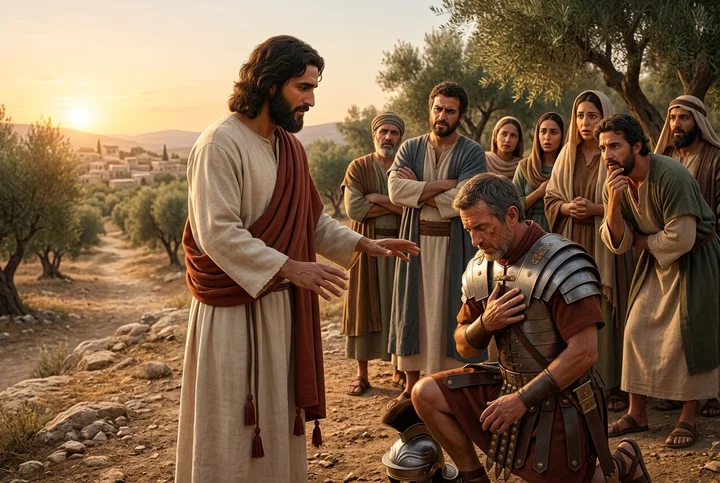
Pictures
Cross-references
- John 2:1-11
And the third day there was a marriage in Cana of Galilee; and the mother of Jesus was there:
Jesus’ first Cana miracle grounds the nobleman’s confidence in his power.
- Matthew 8:5-13
And when Jesus was entered into Capernaum, there came unto him a centurion, beseeching him,
Both accounts show Jesus healing a distant sufferer in response to a man’s appeal and trust.
- John 4:53
So the father knew that it was at the same hour, in the which Jesus said unto him, Thy son liveth: and himself believed, and his whole house.
The father confirms the same-hour healing and believes with his household.
- John 4:50
Jesus saith unto him, Go thy way; thy son liveth. And the man believed the word that Jesus had spoken unto him, and he went his way.
Jesus heals the son by his word, without traveling to him.
- Luke 7:2-10
And a certain centurion’s servant, who was dear unto him, was sick, and ready to die.
A healing at a distance demonstrates Jesus’ power without his physical presence.
- Matthew 4:12-16
Now when Jesus had heard that John was cast into prison, he departed into Galilee;
Both texts place Jesus’ ministry in Galilee.
- Luke 4:31-37
And came down to Capernaum, a city of Galilee, and taught them on the sabbath days.
Jesus teaches with authority and performs a mighty work in Capernaum.
- Mark 1:21-27
And they went into Capernaum; and straightway on the sabbath day he entered into the synagogue, and taught.
Jesus teaches and casts out a demon in Capernaum.
Commentary
Each commentary is drawn from primary sources: the writings of Ellen G. White and Adventist pioneers and periodicals. Each commentary is separate. Its own words are not a quotation; follow the references to read the source passages.
Ellen G. White
27 sources
Jesus came again to Cana in Galilee where he had turned water into wine, after returning from Judea, while a Jewish nobleman and royal officer lived at Capernaum more than twenty miles away with a son gravely ill and near death beyond the help of physicians.DA 196.1–3DA 196.4–197.13RED 15.2–16.12SP 152.1–153.1ST Feb 3, 1881 Hearing Jesus had returned, the father would not send a servant but hastened to Cana himself to beg Jesus to come to the bedside, fearing the child would die in his absence and faltering when he saw only a plain, travel-worn man, though Jesus already knew his sorrow.DA 196.4–197.13RED 15.2–16.1ST Feb 3, 1881 Jesus did not go down to Capernaum but healed from a distance by his spoken word, and at that very hour in the heat of the day the fever suddenly left and health fully returned with no lingering disease.Ms 16, 1899, par. 23–2410MR 197.1–201.53RED 17.3–18.22SP 154.3–155.2 The father trusted the word with perfect faith and turned homeward in peace before he knew the outcome, and when servants met him with tidings of recovery at that same hour, he and his whole household believed and their report opened the way for further works in Capernaum.3RED 19.13RED 17.3–18.22SP 154.3–155.2ST Feb 3, 18812SP 156.1 His first faith was shallow and conditional, seeking a temporal favor and a sign before believing, but true faith trusts Christ's unlimited power on his word alone, laying aside selfish motives and coming to him as Redeemer for body and soul.2SP 154.3–155.2ST Feb 3, 1881ST Feb 3, 1881ST Feb 1, 18772SP 153.2–3
Place, People and Need
Jesus came again into Cana of Galilee, where He had made the water wine, after returning from Judea, and news of His return spread through Galilee to Capernaum.3RED 15.2–16.12SP 152.1–153.1ST Feb 3, 1881ST Feb 1, 1877 He did not visit Nazareth because its people did not believe, their narrow judgment of His humble birth, clothing and daily work keeping them from recognizing His sinless character.DA 196.1–3 The earlier miracle at Cana had become known, confirming the faith of the disciples and helping prepare the Galileans to receive Jesus.Ms 16, 1899, par. 23–24ST Sep 6, 1899 Reports of His works and even the opposition of the Jerusalem leaders stirred hopes that He was the promised Deliverer and the world's Redeemer.DA 196.1–3ST Sep 6, 1899
The certain nobleman was a Jew of honor, a royal officer and ruler living in Capernaum, quite a distance from Cana.3RED 15.2–16.12SP 152.1–153.1ST Feb 3, 1881ST Feb 1, 1877 Capernaum lay more than twenty miles away, and Jesus remained in Cana while the sick son lay at Capernaum.3RED 15.2–16.13RED 39.2–42SP 176.3–177.1 His son was gravely ill, very low with disease, seeming incurable and near death.DA 196.4–197.13RED 15.2–16.12SP 152.1–153.1ST Feb 1, 1877 The most learned physicians had pronounced the case incurable and expected him soon to die.DA 196.4–197.13RED 15.2–16.1ST Feb 3, 1881ST Feb 1, 1877
Hearing Jesus had returned to Galilee encouraged the father because he believed one who could change water into wine and cleanse the temple could raise his son even from the brink of the grave.3RED 15.2–16.1ST Feb 3, 1881ST Feb 1, 1877 Though fearing the child might die in his absence, he would not trust the errand to a servant but hastened to Cana himself hoping a father's plea would move Jesus to come to the bedside.DA 196.4–197.13RED 15.2–16.1ST Feb 3, 1881ST Feb 1, 1877 He forced through the crowd, secured a hearing and begged Jesus to accompany him home.3RED 15.2–16.1 Though his faith faltered at seeing only a plainly dressed man dusty and worn with travel, he determined to make trial.3RED 15.2–16.1ST Feb 1, 1877 Jesus already knew his sorrow, having read his grief before he left home and gone out in sympathy for the suffering child.3RED 15.2–16.1
Healing by Distant Word
Jesus did not go down to Capernaum but remained in Cana and healed from a distance by His spoken word, sending healing to the bedside by divine power.Ms 16, 1899, par. 23–243RED 17.3–18.22SP 154.3–155.23RED 39.2–42SP 176.3–177.1 This was the further work following Cana, demonstrating His power and the continuing influence of His first miracle, as the next miracle He performed in Galilee.Ms 16, 1899, par. 23–2410MR 197.1–201.5 At the same hour He spoke, in the heat of the day, the fever suddenly left the dying child and health and strength fully returned.Ms 16, 1899, par. 23–243RED 17.3–18.22SP 154.3–155.2ST Feb 3, 1881 The mind became clear, the flesh soft and moist, with no lingering signs of disease, followed by peaceful sleep, a sudden and complete recovery while the father was still traveling home.3RED 17.3–18.22SP 154.3–155.2ST Feb 3, 1881
The cure shows His power is unlimited and does not depend on His physical presence, healing by His word and touch even from more than twenty miles away.2SP 154.3–155.23RED 39.2–42SP 176.3–177.1ST Mar 10, 1881ST Aug 25, 1898 The father believed the word with perfect faith and turned homeward with peace and joy and solemn assurance of unlimited power, with no doubt his son was healed before he knew the outcome.3RED 17.3–18.22SP 154.3–155.2ST Feb 3, 1881 While still some distance from home the servants met him with tidings of recovery.3RED 17.3–18.2ST Feb 3, 1881 At the house the child, radiant in health and beauty, met him as one restored from the dead.3RED 17.3–18.2
When he learned the boy recovered at the very hour Jesus spoke, he and his whole household believed and became disciples, testifying joyfully to their faith.3RED 19.1ST Feb 3, 18812SP 156.1ST Feb 1, 1877DA 253.1–2 Their affliction was turned to the conversion of the whole family.3RED 19.12SP 156.1ST Feb 1, 1877 Their report of the miracle astonished Capernaum, made the people glad Jesus was among them, stirred them to seek Him, and opened the way for His further remarkable works there.3RED 19.1ST Feb 3, 1881DA 253.1–23RED 39.2–42SP 176.3–177.1
Faith Tested and Applied
The father's first faith was shallow and conditional, for he would believe in Jesus as Messiah only if his request was granted and a sign was performed.ST Feb 3, 1881ST Feb 1, 18772SP 153.2–3 His urgent need for a temporal favor blinded him to his deeper spiritual need for divine grace.ST Feb 3, 1881ST Feb 1, 18772SP 153.2–3 In this he represented many Jews who sought Jesus for personal benefits and demanded miracles before they would trust Him.ST Feb 3, 18812SP 153.2–3 This stood in contrast to the Samaritans, who accepted Him as God's teacher and the promised Messiah without requiring a sign to prove His divinity.ST Feb 3, 18812SP 153.2–3
True faith trusts His power even before the promised help is seen.2SP 154.3–155.2ST Feb 3, 1881ST Feb 3, 1881 The father at last trusted Jesus' word without first seeing proof, and left with peace and confidence before he knew the outcome.2SP 154.3–155.2ST Feb 3, 1881 He turned homeward with solemn assurance of unlimited power, with no doubt his son was healed.2SP 154.3–155.2
The account teaches that Christ is willing and able to save all who come to Him as a Redeemer.ST Feb 3, 1881ST Feb 1, 1877 His gifts may be delayed in order to awaken a sense of need and dependence on true piety.ST Feb 3, 1881ST Feb 1, 1877 Seekers should therefore lay aside selfish motives, admit their helplessness and need, and trust His promises.ST Feb 3, 1881ST Feb 1, 1877
The verse shows Jesus seeking to reach not only the poor but also the wealthy and influential and people of every social rank.MH 24.2ST Jun 9, 1914 He cultivated the nobleman's acquaintance in order to gain access to the heart.MH 24.2ST Jun 9, 1914 He met him within familiar concerns so that He could reveal imperishable riches.MH 24.2ST Jun 9, 1914
Christ's power and compassion in healing a sick child by His word shows His care for bodily suffering.ST Aug 25, 1898 That same care points to His power to bring pardon and peace to the soul.ST Aug 25, 1898
Comers like this father seeking help for a sick son at Capernaum represent the great human family of other nations who did not know God or the truth but felt a soul-longing for something they did not have.Ms 50, 1897, par. 2 All who came listened to His instruction and were deeply impressed by the word of truth.Ms 50, 1897, par. 2 In speaking hope to weary unsatisfied souls and healing infirmities He was acting for humanity at large.Ms 50, 1897, par. 2 In this He was setting an example to be practiced from one end of the world to another.Ms 50, 1897, par. 2
Sources
Pioneers and periodicals
35 sources
Jesus came again to Cana of Galilee where he had made the water wine, and there met a Jewish nobleman and ruler from Capernaum whose son lay at home gravely ill with a fever and near death beyond human skill.ST Feb 3, 1881ST Mar 8, 1899ST Apr 12, 1905ST Jun 2, 1898ST May 6, 1886 Having heard of his healing power, the father had come himself more than twenty miles to Cana to plead for him to come to the bedside, fearing the boy might die while he was away.ST Feb 3, 1881ST Feb 1, 1877ST Jun 2, 1898ST May 6, 1886 Jesus healed the dying son at a distance by his spoken word alone, without traveling to Capernaum, and the recovery was sudden and complete at that very hour.ST Oct 22, 1896ST Mar 15, 1899ST Jun 2, 1898 His first faith was shallow and conditional, seeking temporal benefit and expecting to believe only if the cure was granted, but being tested and led to trust Christ's character, he believed the assurance and went home obediently before seeing proof.ST Feb 3, 1881ST Feb 3, 1881ST Feb 1, 1877RH Dec 6, 1906ST Oct 22, 1896 When he learned the fever broke at the same hour, he and his whole household believed, for this second sign in Galilee bears witness that he is the Son of God whose power is not limited by distance and who is willing and able to save those who come to him in genuine trust.ST Feb 3, 1881RH Dec 6, 1906ST Mar 15, 1905ST Apr 12, 1905ST Oct 22, 1896
Setting and Circumstances
Jesus came again into Cana of Galilee, where he had made the water wine, after returning from Judea.ST Sep 6, 1899ST Feb 3, 1881ST Feb 1, 1877ST Mar 8, 1899ST Apr 12, 1905 The earlier miracle there had become known, confirming the disciples' faith and helping prepare people to recognize him as the world's Redeemer.ST Sep 6, 1899 News of his return and of his miracles and healing power, including the change of water into wine and the cleansing of the temple, had reached Capernaum and encouraged hope that he could restore the dying child.ST Feb 1, 1877ST May 6, 1886ST May 6, 1886
The healing introduced here is the second sign in Galilee, the next miracle there after the water made wine.ST Sep 6, 1899ST Mar 15, 1905ST Apr 12, 1905ST Feb 1, 1905 It is not necessarily his second miracle overall, for other signs had already been performed.ST Apr 12, 1905 The events belong to the well-begun opening of his Galilean ministry, dated to the second year of his ministry, A.D. 28, when he was between 31 and 32 years old.ST Dec 23, 1897ST Oct 4, 1899 That opening followed the calling of the first disciples, the first miracle at Cana, the driving of the traders from the temple courts with divine authority, the mission to Samaria, and preaching and teaching in the synagogues of Galilee where he was glorified of all.ST Oct 4, 1899
The petitioner was a Jewish nobleman, ruler, royal official, and prominent man who lived in Capernaum.ST Feb 3, 1881ST Feb 1, 1877ST Feb 3, 1881ST May 6, 1886ST Aug 13, 1896 One account identifies him as a Roman officer.ST Apr 12, 1905 His son lay sick at Capernaum, gravely ill with a fever and near death.ST Feb 3, 1881ST Feb 1, 1877RH Dec 6, 1906ST Jun 2, 1898ST May 6, 1886 Learned physicians had declared the illness incurable and expected him to die, placing the case beyond human skill and ordinary means.ST Feb 3, 1881ST Feb 1, 1877ST May 6, 1886
Jesus was in Cana while the son was in Capernaum, twenty or more miles and more than twenty miles away.ST Mar 10, 1881ST Jun 2, 1898ST Feb 1, 1905ST Jul 7, 1898 Because Capernaum was far from Cana and the child was gravely ill, the father feared the boy might die while he was away.ST Feb 3, 1881ST Feb 1, 1877ST May 6, 1886 Having heard of his miracles and healing power, the father came himself from Capernaum to Cana to ask him to come to the bedside, rather than trusting the plea to a servant, hoping a parent's plea and prayer would move him.ST Feb 1, 1877ST Mar 8, 1899ST May 6, 1886ST Feb 1, 1905ST May 6, 1886 Seeing him plainly dressed and worn from travel made his faith falter, though he already knew the father's grief and felt compassion for the suffering child before the father arrived.ST May 6, 1886
Faith, Healing, and Witness
Jesus met the father's plea by testing the demand for signs and wonders, laying bare his thoughts and exposing his heart.ST Mar 8, 1899RH Dec 6, 1906ST Feb 1, 1905 The father had come expecting a cure because of the miracle he hoped to see, but was led through that testing from seeking what was expected to trusting Jesus' true character as the Son of God.ST Mar 8, 1899ST Feb 1, 1905ST Aug 13, 1896ST Feb 1, 1905 When doubt gave way to faith and the appeal was renewed in trust, the prayer was answered at once.ST Feb 1, 1905ST Feb 1, 1905ST Jun 13, 1900 At first that faith was shallow and conditional, willing to believe in him as Messiah only if the request was granted and a sign was performed.ST Feb 3, 1881ST Feb 1, 1877 The desire for temporal benefit blinded him to his spiritual need for divine grace, and his faltering at seeing Jesus plainly dressed and worn from travel showed a case that represented many Jews who sought personal benefits and demanded miracles, in contrast to Samaritans who accepted him as God's teacher and the promised Messiah without requiring a sign.ST Feb 3, 1881ST Feb 1, 1877
The dying son was healed at a distance by the spoken word alone, without a journey to Capernaum and without laying hands on him.ST Feb 3, 1881ST Feb 1, 1877ST Oct 22, 1896ST Jun 2, 1898ST Feb 1, 1905 The recovery was sudden and complete at the very hour Jesus spoke, the seventh hour understood as 1 p.m. in the extreme heat, when the fever broke and the boy lived in good health.ST Feb 3, 1881RH Dec 6, 1906ST Oct 22, 1896 Such healing shows power not limited by physical distance, personal presence, or immediate surroundings, a truth even devoted disciples struggled to grasp.ST Mar 15, 1905ST Mar 15, 1899 It cannot be explained as suggestion or natural magnetic power, since neither father nor son exercised the kind of faith such theories require and no touch was used, and the use of different actions in different healings only met weak faith without any change in his power.RH Mar 18, 1909ST Mar 15, 1899ST Nov 29, 1910 The father believed the assurance that his son lived and went home obediently before seeing proof.ST Feb 3, 1881RH Dec 6, 1906ST Oct 22, 1896 Obeying the command brings the help needed at the time, and such trust in the word before visible confirmation is genuine faith that answers trusting prayer.RH Dec 6, 1906ST Oct 22, 1896ST Jun 13, 1900
When inquiry showed the fever left at the same hour Jesus had spoken, he and his whole household believed and became disciples, so that faith established a whole household.ST Feb 3, 1881RH Dec 6, 1906ST Oct 22, 1896 Their affliction led the family to faith, and the report of the miracle opened the way for further work in Capernaum, an event standing before what is described as happening after these things.ST Feb 3, 1881ST Feb 1, 1877ST Feb 8, 1905 The account teaches willingness and ability to save those who come, with faith trusting power even before the promised help is seen.ST Feb 3, 1881ST Feb 1, 1877 Gifts may be delayed to awaken a sense of need and dependence on true piety, calling people to lay aside selfish motives, admit helplessness and need, and trust the promises.ST Feb 3, 1881ST Feb 1, 1877 The healing with all his work bears witness that he is the Anointed of God and the Son of God, and the boy's living in good health stands as evidence that miracles were performed.ST Mar 8, 1899ST Oct 4, 1899ST Aug 16, 1910 Works bear witness whether a man is God-sent, and every man's work will at last be tried by fire to show what sort it is, while true power and the true Christian's influence reach beyond immediate surroundings.ST Mar 15, 1905
His personal ministry met people individually within their familiar concerns to gain access to hearts and reveal imperishable riches, and personal effort of that kind opens the way for others to receive the gospel.ST Jun 9, 1914RH Nov 28, 1912 He reached people of every social rank, including the Jewish nobleman, with loving compassion that no standing could hinder.ST Jun 9, 1914RH Mar 24, 1910 His care for bodily suffering in healing the sick child by word and touch also points to power to bring pardon and peace to the soul.ST Aug 25, 1898 The ruler's trust for a sick child remains an example reaching out to the Great Physician, as when a mother is called to trust likewise.ST Feb 17, 1890
Sources