Jonah 4:11
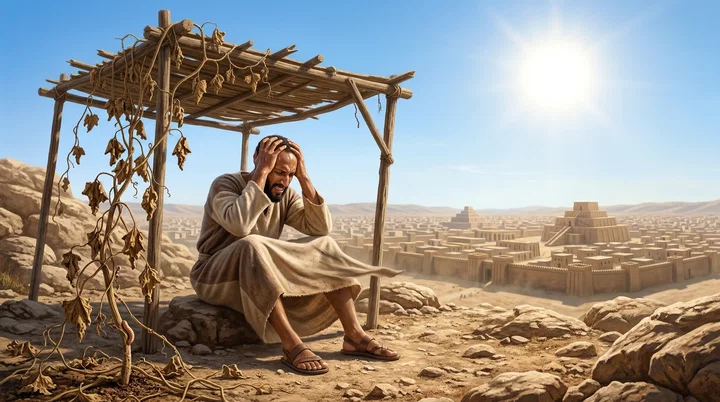
And should not I spare Nineveh, that great city, wherein are more than sixscore thousand persons that cannot discern between their right hand and their left hand; and also much cattle?
Translations
And should not I spare Nineveh, that great city, wherein are more than six score thousand persons that cannot discern between their right hand and their left hand; and also much cattle?
And should not I spare Nineveh, that great city, wherein are more than sixscore thousand persons that cannot discern between their right hand and their left hand; and also much cattle?
and should not I spare Nineveh, that great city, wherein are more than sixscore thousand persons that cannot discern between their right hand and their left hand; and also much cattle?
And should not I spare Nineveh, that great city, in which are more than a hundred and twenty thousand persons that cannot discern between their right hand and their left hand, and also many cattle?
and should not I have pity on Nineveh, that great city; wherein are more than sixscore thousand persons that cannot discern between their right hand and their left hand; and also much cattle?
and should not I have regard for Nineveh, that great city, wherein are more than sixscore thousand persons that cannot discern between their right hand and their left hand; and also much cattle?
and I — have not I pity on Nineveh, the great city, in which there are more than twelve myriads of human beings, who have not known between their right hand and their left — and much cattle!'
and I, should not I have pity on Nineveh, the great city, wherein are more than a hundred and twenty thousand persons that cannot discern between their right hand and their left hand; and also much cattle?
And was not, I, to spare Nineveh, the great city,—wherein are more than twelve times ten thousand human beings, who cannot discern between their right hand and their left, besides much cattle?
Berean Standard Bible, Majority Standard Bible
So should I not care about the great city of Nineveh, which has more than 120,000 people who cannot tell their right hand from their left, and many cattle as well?”
Shouldn’t I be concerned for Nineveh, that great city, in which are more than one hundred twenty thousand persons who can’t discern between their right hand and their left hand, and also many animals?”
And am I not to have mercy on Nineveh, that great town, in which there are more than a hundred and twenty thousand persons without the power of judging between right and left, as well as much cattle?
And shoulde not I spare Nineueh that great citie, wherein are sixe score thousande persons, that cannot discerne betweene their right hand, and their left hand, and also much cattell?
Douay-Rheims (Challoner revision)
And shall not I spare Ninive, that great city, in which there are more than a hundred and twenty thousand persons that know not how to distinguish between their right hand and their left, and many beasts?
Pictures
Cross-references
- Jonah 3:10
And God saw their works, that they turned from their evil way; and God repented of the evil, that he had said that he would do unto them; and he did it not.
Nineveh turns from evil, and God spares the city.
- Jonah 3:4-5
And Jonah began to enter into the city a day’s journey, and he cried, and said, Yet forty days, and Nineveh shall be overthrown.
Jonah warns Nineveh, and its people receive the message.
- 2 Kings 14:25
He restored the coast of Israel from the entering of Hamath unto the sea of the plain, according to the word of the LORD God of Israel, which he spake by the hand of his servant Jonah, the son of Amittai, the prophet, which was of Gath-hepher.
Identifies Jonah as a prophet of God.
- Jonah 4:1-2
But it displeased Jonah exceedingly, and he was very angry.
Jonah resents God’s mercy toward Nineveh, prompting a lesson about God’s care for other nations.
- Deuteronomy 1:39
Moreover your little ones, which ye said should be a prey, and your children, which in that day had no knowledge between good and evil, they shall go in thither, and unto them will I give it, and they shall possess it.
Both describe children who do not yet know good from evil.
- Exodus 34:6-7
And the LORD passed by before him, and proclaimed, The LORD, The LORD God, merciful and gracious, longsuffering, and abundant in goodness and truth,
Jonah describes God as gracious, merciful, and slow to anger.
- Matthew 12:39
But he answered and said unto them, An evil and adulterous generation seeketh after a sign; and there shall no sign be given to it, but the sign of the prophet Jonas:
Jesus’ reference to Jonah confirms the book’s authority.
Commentary
Each commentary is drawn from primary sources: the writings of Ellen G. White and Adventist pioneers and periodicals. Each commentary is separate. Its own words are not a quotation; follow the references to read the source passages.
Ellen G. White
10 sources
God's question presents Nineveh as that great city, holding more than 120,000 persons who could not discern between their right hand and their left hand, and also much cattle or many animals.PK 271.2–272.4RH Dec 11, 1913Ms 61a, 1906, par. 1–8SW 110.2–111.2RH Oct 18, 1906 Those unable to discern are people in ignorance and need, who have not been taught to know right from wrong and are especially in need of care.RH Dec 11, 1913Ms 164, 1897, par. 7–11SW 110.2–111.2RH Oct 18, 1906 His compassion for those lives is the reason He would spare it, valuing the people and extending His care even to the cattle and animals.PK 271.2–272.4RH Dec 11, 1913Ms 61a, 1906, par. 1–8SW 110.2–111.2RH Oct 18, 1906
Sparing the city was right and merciful, especially after its people repented and turned from evil.RH Dec 11, 1913Ms 61a, 1906, par. 1–8LS 204.1–3 The verse contrasts Jonah's pity for a plant that he did not grow or make grow with God's rightful care for the people and creatures of the city.PK 271.2–272.4RH Dec 11, 1913Ms 61a, 1906, par. 1–8SW 110.2–111.2RH Oct 18, 1906 Jonah valued his reputation, comfort, and feelings above people's lives, and grieved and felt humiliated because the city he had warned was not destroyed.RH Dec 11, 1913SW 110.2–111.2RH Oct 18, 1906LS 204.1–3 He thereby exposed his failure to care about people who might perish, when he should have joined God's merciful purpose.RH Dec 11, 1913Ms 164, 1897, par. 7–11SW 110.2–111.2RH Oct 18, 1906
God's sparing granted the city a longer probation and more time, so that delay in judgment allowed the warning to reach more widely and gave people greater light by which to be tested and to prepare for His coming and be brought to repentance and salvation.LSEGW 78.1LS 204.1–3LSEGW 78.2 Nineveh's reprieve is a parallel to the delay after the 1844 expectation, which was a reprieve for the world to allow more time for people to prepare, hear the warning of judgment, and come to repentance and salvation.LS 204.1–3LSEGW 78.2 God's concern for those who lack understanding calls His people to care for them, help them, and give them compassionate instruction rather than cruel treatment.Ms 164, 1897, par. 7–11Lt 99, 1899, par. 6–10 This is illustrated by the ignorance of enslaved Black people who scarcely knew God's Word; God sees the injustice done to them and will judge those who inflict it.Lt 99, 1899, par. 6–10
Sources
Pioneers and periodicals
22 sources
God asks Jonah whether He should not spare the great city, teaching that it was right and merciful to spare Nineveh after its people repented and turned from their evil deeds.RH Dec 11, 1913RH May 13, 1915ST Sep 9, 1913ST Dec 15, 1909ST Mar 25, 1913 The more than a hundred and twenty thousand who cannot tell their right hand from their left are those never taught to know right from wrong, living in ignorance and without discernment and therefore especially in need of care.RH Dec 11, 1913RH Oct 18, 1906RH Dec 26, 1907 He contrasts Jonah's pity for a short-lived gourd he did not grow with His own far greater concern for the lives in the city, reproving Jonah for letting care for his own reputation, feelings and comfort overshadow divine compassion.RH Dec 11, 1913RH Oct 18, 1906RH May 13, 1858ST Nov 5, 1885 His pity embraces the whole city, even its many animals who shared in the suffering of the fast, showing loving-kindness rather than delight in condemning His creatures.RH Dec 11, 1913RH May 13, 1915ST Dec 15, 1909ST Mar 25, 1913ST Jan 7, 1913 This mercy reveals the universality of His love toward the wicked outside Israel, and calls His people to carry His warning to today's cities in darkness so they too may repent and be spared.ST Mar 25, 1913RH May 9, 1912RH Feb 13, 1900RH Sep 17, 1901ST Jan 7, 1913
God's Mercy to Nineveh
The closing question shows it was right and merciful to spare the great city once its people had repented, for compassion reaches both the people and even their animals.RH Dec 11, 1913ST Dec 15, 1909 The question was meant to draw Jonah into sharing that compassion for sinful people and to reprove his selfish attachments and joys.RH Dec 11, 1913RH May 13, 1858 His concern for his own reputation and feelings, and his humiliation and grief that the warned city was not destroyed, had overshadowed divine compassion.RH Dec 11, 1913RH Oct 18, 1906LS 204.1–3
The rebuke turns on the contrast between Jonah's pity for a gourd he had not grown and God's concern for the lives in the city.RH Dec 11, 1913RH Oct 18, 1906 The plant had appeared only briefly and then perished and withered, leaving him distressed by the heat, yet he pitied it while begrudging mercy to the city.RH Dec 11, 1913RH Oct 18, 1906ST Nov 5, 1885 Against that brief life is set a city holding more than 120,000 who cannot discern between right hand and left, together with much cattle.RH May 13, 1915ST Dec 15, 1909ST Nov 5, 1885 Those more than 120,000 are people who had not been taught to know right from wrong, living in ignorance and lacking discernment, and for that reason especially in need of care.RH Dec 11, 1913RH Oct 18, 1906RH Dec 26, 1907
That care embraces the whole city including its many animals, with pity extending even to cattle suffering hunger and thirst during the fast.RH Dec 11, 1913RH Oct 18, 1906ST Dec 15, 1909ST Nov 5, 1885ST Mar 25, 1913 The sparing came because Jonah did God's bidding and carried the warning God gave him, and the Spirit worked through the preached message to save the city.RH May 13, 1915ST May 24, 1910 Stirred by their repentance, God was moved with concern when the Ninevites turned from their evil deeds, and the book thus shows what thorough repentance ought to be.ST Sep 9, 1913ST Mar 25, 1913ST Nov 4, 1930 In that repentance the city was granted a longer probation.LS 204.1–3
That reprieve parallels the delay after the 1844 expectation, which allowed more time for people to prepare, hear the warning, and come to repentance and salvation.LS 204.1–3 Such mercy displays loving-kindness rather than pleasure in condemning creatures to endless suffering.ST Mar 25, 1913 It expresses the universality of divine love, for though Nineveh was wicked and outside Israel, Israel was meant to share God's truth with other nations, and the Ninevites' welcome of the warning showed that people beyond Israel could turn to Him.ST Mar 25, 1913RH Feb 13, 1900ST Jan 7, 1913
Warning and Caring Today
The more than 120,000 who could not tell their right hand from their left were spared because they repented and turned from their evil deeds after hearing the warning against sin, and the same warning must now be carried to today's cities concerning their sins and the coming time of wrath.RH May 9, 1912 When the warning was carried to that great city, the whole city received it and turned to God within forty days.RH Oct 22, 1903 Their lack of discernment is the spiritual darkness that now covers the world, and their condition was the reason for sparing the whole city with its animals.RH Sep 17, 1901
Those who do not know their right hand from their left are those who do not know the truth, like the people of Java, a Nineveh needing warning, whom God can reach even by strengthening weak human voices. They are like the inhabitants of Bahia, who do not know the Sabbath commandment, the call to prepare to meet God, or that Jesus is soon coming.RH Dec 26, 1907 They are people who lack religious understanding, who are to be prayed for so that they may find Christ and learn to love His appearing.RH Nov 3, 1910 They include some of the native mine workers with little understanding among the diverse groups needing the gospel message, and people with very little knowledge such as the many Indians who scarcely knew how to read.RH Nov 27, 1913RH Nov 24, 1904
The same phrase describes very young children, who may have spiritual life and grace in their hearts before they can speak or think intelligently, and whose early spiritual life should be nurtured rather than crushed or quenched.RH Nov 29, 1906 It describes the infant as one unable to understand or choose for himself.ST Oct 6, 1887
Sources