Joshua 7:21
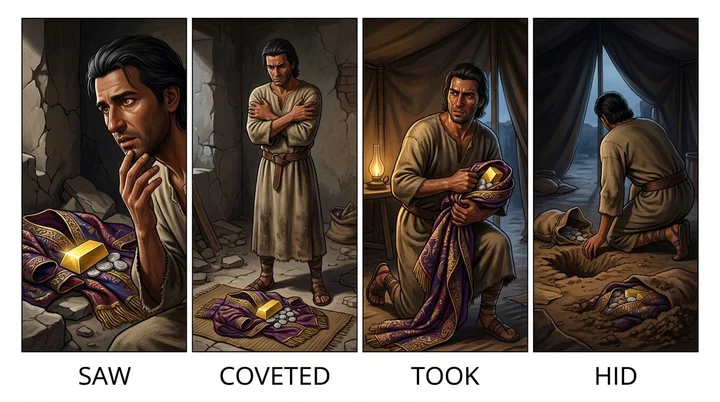
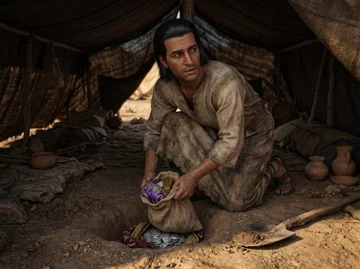
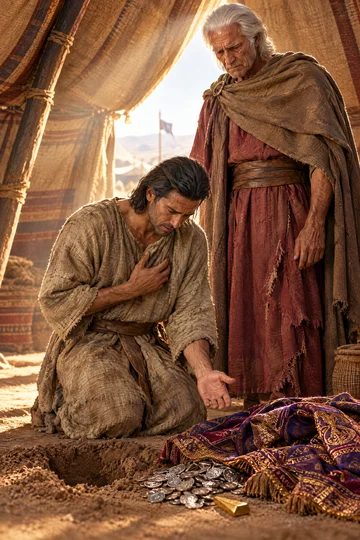
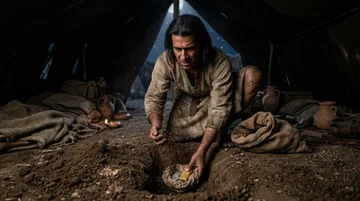
When I saw among the spoils a goodly Babylonish garment, and two hundred shekels of silver, and a wedge of gold of fifty shekels weight, then I coveted them, and took them; and, behold, they are hid in the earth in the midst of my tent, and the silver under it.
Translations
When I saw among the spoils a goodly Babylonish garment, and two hundred shekels of silver, and a wedge of gold of fifty shekels weight, then I coveted them, and took them; and, behold, they are hid in the earth in the middle of my tent, and the silver under it.
When I saw among the spoils a goodly Babylonish garment, and two hundred shekels of silver, and a wedge of gold of fifty shekels weight, then I coveted them, and took them; and, behold, they are hid in the earth in the midst of my tent, and the silver under it.
when I saw among the spoils a goodly Babylonish garment, and two hundred shekels of silver, and a wedge of gold of fifty shekels weight, then I coveted them, and took them; and behold, they are hid in the earth in the midst of my tent, and the silver under it.
When I saw among the spoils a goodly Babylonish garment, and two hundred shekels of silver, and a wedge of gold of fifty shekels weight, then I coveted them, and took them, and behold, they are hid in the earth in the midst of my tent, and the silver under it.
when I saw among the spoil a goodly Babylonish mantle, and two hundred shekels of silver, and a wedge of gold of fifty shekels weight, then I coveted them, and took them; and, beheld, they are hid in the earth in the midst of my tent, and the silver under it.
when I saw among the spoil a goodly Babylonish mantle, and two hundred shekels of silver, and a wedge of gold of fifty shekels weight, then I coveted them, and took them; and, behold, they are hid in the earth in the midst of my tent, and the silver under it.
and I see among the spoil a goodly robe of Shinar, and two hundred shekels of silver, and one wedge of gold, whose weight [is] fifty shekels, and I desire them, and take them; and lo, they [are] hid in the earth, in the midst of my tent, and the silver under it.'
I saw among the spoils a beautiful mantle of Shinar, and two hundred shekels of silver, and a golden bar of fifty shekels weight, and I coveted them and took them; and behold, they are hid in the earth in the midst of my tent, and the silver under it.
When I saw among the spoil a certain goodly mantle of Babylonia and two hundred shekels of silver and a certain wedge of gold—fifty shekels the weight thereof, then I coveted them, then I took them,—and, there they are, hid in the earth, in the midst of my tent, and the silver under it.
Berean Standard Bible, Majority Standard Bible
When I saw among the spoils a beautiful cloak from Shinar, two hundred shekels of silver, and a bar of gold weighing fifty shekels, I coveted them and took them. They are hidden in the ground inside my tent, with the silver underneath.”
When I saw among the plunder a beautiful Babylonian robe, two hundred shekels of silver, and a wedge of gold weighing fifty shekels, then I coveted them and took them. Behold, they are hidden in the ground in the middle of my tent, with the silver under it.”
When I saw among their goods a fair robe of Babylon and two hundred shekels of silver, and a mass of gold, fifty shekels in weight, I was overcome by desire and took them; and they are put away in the earth in my tent, and the silver is under it.
I sawe among the spoyle a goodly Babylonish garment, and two hundreth shekels of siluer, and a wedge of golde of fiftie shekels weight, and I coueted them, and tooke them: and behold, they lye hid in the earth in the mids of my tent, and the siluer vnder it.
Douay-Rheims (Challoner revision)
For I saw among the spoils a scarlet garment exceeding good, and two hundred sides of silver, and a golden rule of fifty sides: and I coveted them, and I took them away, and hid them in the ground is the midst of my tent, and the silver I covered with the earth that I dug up.
Pictures
Cross-references 20 of 33
- Joshua 7:11-12
Israel hath sinned, and they have also transgressed my covenant which I commanded them: for they have even taken of the accursed thing, and have also stolen, and dissembled also, and they have put it even among their own stuff.
Achan’s concealed theft is identified as covenant sin that brought Israel’s defeat.
- Joshua 6:18-19
And ye, in any wise keep yourselves from the accursed thing, lest ye make yourselves accursed, when ye take of the accursed thing, and make the camp of Israel a curse, and trouble it.
These verses give the command concerning Jericho’s spoils that Achan violated.
- Joshua 7:1
But the children of Israel committed a trespass in the accursed thing: for Achan, the son of Carmi, the son of Zabdi, the son of Zerah, of the tribe of Judah, took of the accursed thing: and the anger of the LORD was kindled against the children of Israel.
Achan’s taking devoted things brought trouble upon Israel.
- Exodus 20:17
Thou shalt not covet thy neighbour’s house, thou shalt not covet thy neighbour’s wife, nor his manservant, nor his maidservant, nor his ox, nor his ass, nor any thing that is thy neighbour’s.
Achan’s coveting illustrates violation of the tenth commandment.
- Hosea 2:15
And I will give her her vineyards from thence, and the valley of Achor for a door of hope: and she shall sing there, as in the days of her youth, and as in the day when she came up out of the land of Egypt.
The Valley of Achor, where Achan’s sin brought judgment, becomes a door of hope.
- Acts 5:1-11
But a certain man named Ananias, with Sapphira his wife, sold a possession,
Ananias and Sapphira’s concealed sin parallels Achan’s, and both are judged by God.
- Colossians 3:5
Mortify therefore your members which are upon the earth; fornication, uncleanness, inordinate affection, evil concupiscence, and covetousness, which is idolatry:
Achan’s covetousness is identified as idolatry.
- Joshua 7:4-5
So there went up thither of the people about three thousand men: and they fled before the men of Ai.
whole Israel defeated at Ai for one sin
- Joshua 7:25-26
And Joshua said, Why hast thou troubled us? the LORD shall trouble thee this day. And all Israel stoned him with stones, and burned them with fire, after they had stoned them with stones.
Achan is punished for his sin, and his punishment gives the valley its name.
- Joshua 7:12
Therefore the children of Israel could not stand before their enemies, but turned their backs before their enemies, because they were accursed: neither will I be with you any more, except ye destroy the accursed from among you.
Israel’s defeat follows Achan’s theft, which must be removed from the camp.
- Ephesians 5:3
But fornication, and all uncleanness, or covetousness, let it not be once named among you, as becometh saints;
Covetousness is forbidden among God’s people.
- Luke 12:15
And he said unto them, Take heed, and beware of covetousness: for a man’s life consisteth not in the abundance of the things which he possesseth.
Jesus warns against covetousness.
- Joshua 6:19
But all the silver, and gold, and vessels of brass and iron, are consecrated unto the LORD: they shall come into the treasury of the LORD.
states the consecration Achan violated
- Ecclesiastes 12:14
For God shall bring every work into judgment, with every secret thing, whether it be good, or whether it be evil.
God brings every deed, including hidden acts, into judgment.
- Ephesians 5:5-6
For this ye know, that no whoremonger, nor unclean person, nor covetous man, who is an idolater, hath any inheritance in the kingdom of Christ and of God.
Covetousness is called idolatry, excludes from God’s kingdom, and brings God’s wrath.
- Joshua 7:6
And Joshua rent his clothes, and fell to the earth upon his face before the ark of the LORD until the eventide, he and the elders of Israel, and put dust upon their heads.
Joshua and Israel’s elders mourn the defeat caused by Achan’s hidden sin.
- 1 Corinthians 5:11-13
But now I have written unto you not to keep company, if any man that is called a brother be a fornicator, or covetous, or an idolater, or a railer, or a drunkard, or an extortioner; with such an one no not to eat.
Covetous members are to be put away from the church.
- 1 Chronicles 2:7
And the sons of Carmi; Achar, the troubler of Israel, who transgressed in the thing accursed.
Records Achan as the troubler of Israel.
- Joshua 7:13
Up, sanctify the people, and say, Sanctify yourselves against to morrow: for thus saith the LORD God of Israel, There is an accursed thing in the midst of thee, O Israel: thou canst not stand before thine enemies, until ye take away the accursed thing from among you.
Commands Israel to remove the accursed thing from among them.
- Leviticus 27:28
Notwithstanding no devoted thing, that a man shall devote unto the LORD of all that he hath, both of man and beast, and of the field of his possession, shall be sold or redeemed: every devoted thing is most holy unto the LORD.
Defines the holiness of what Achan took.
Commentary
Each commentary is drawn from primary sources: the writings of Ellen G. White and Adventist pioneers and periodicals. Each commentary is separate. Its own words are not a quotation; follow the references to read the source passages.
Ellen G. White
79 sources
Achan admitted that he saw a beautiful Babylonian robe with silver and gold among the forbidden spoil of Jericho, let desire master him, took what God had banned and reserved for Himself, and buried it in his tent.3T 268.1–2Lt 13, 1893, par. 17–18Lt 14a, 1893, par. 16–20 His ruin grew from cherished greed that dulled judgment until seeing led to coveting, coveting to stealing from God, and stealing to hiding and deceit.4T 492.2–3ST May 5, 18813T 268.3PP 496.2–34T 491.1–492.1 That one hidden theft laid guilt upon all Israel, drew God's displeasure, withdrew His presence, and brought defeat and death in battle.Lt 4, 1892, par. 10–141T 139.23T 239.1–33T 519.1 Exposed by God after the loss, his confession came too late and from terror rather than repentance, yet it cleared the facts and vindicated God's justice before his stoning with his household in the Valley of Achor turned away wrath.3T 268.1–2Lt 13, 1893, par. 17–18Lt 14a, 1893, par. 16–203T 270.2PP 497.4 Therefore hidden covetousness must be promptly searched out, confessed, and put away from God's people, for love of money and gain still withholds blessing and ends in certain destruction unless rooted out.1T 140.1CH 672.2Lt 25, 1888, par. 8–10SG4 183.15T 147.1
Verse Words and Setting
The verse is Achan's own confession of what he did with the spoil: when he saw a costly Babylonish garment with two hundred shekels of silver and a wedge of gold of fifty shekels weight, he coveted them, took them, and hid them in the earth in the middle of his tent with the silver under the rest.3T 268.1–2Lt 13, 1893, par. 17–18Lt 14a, 1893, par. 16–20Ms 53, 1902, par. 31–34ST May 5, 1881 The coveting led to stealing and then to concealing what had been taken, and the confession names the objects and their weights exactly as they were afterward found.3T 268.1–2Lt 13, 1893, par. 17–18Lt 14a, 1893, par. 16–20Ms 53, 1902, par. 31–34ST May 5, 1881 His admission came only after the investigation exposed him, after Israel's defeat and the search for the guilty one had begun, and it was too late to save him because he had kept silent while Israel suffered.Lt 14a, 1893, par. 16–20ST May 5, 1881
The confession admits sin against the Lord God of Israel, makes plain what was done, and makes plain the justice of God before Israel.Lt 13, 1893, par. 17–18Ms 53, 1902, par. 31–3418MR 143.4–144.1 It was given in answer to Joshua's charge to give glory to God by confessing and hiding nothing.Lt 13, 1893, par. 17–1818MR 143.4–144.1 It was required before punishment so the people would not charge God with being unmerciful and severe or reproach Joshua with harshness and severity, and so Israel would receive a lesson never to forget.18MR 143.4–144.1
The setting is the capture of Jericho as the first step in the conquest of Canaan.PP 487.3 That undertaking followed Joshua's withdrawing to seek assurance of divine guidance, when he met the armed Captain of the host of the Lord who is Christ the Exalted One, worshiped Him, and received assurance that Jericho with its king and mighty men of valor was given into his hand, with instruction for taking the city.PP 487.3 Messengers sent by Joshua ran to the tent and found the goods hidden exactly as confessed, took them out, brought them to Joshua and to all Israel, and laid them out before the Lord.Lt 13, 1893, par. 17–18 Achan had thought his sin secret and hidden from all human eyes except those of his own household, yet the discovery exposed the secret sin and showed that God knows hidden actions.Lt 13, 1893, par. 17–18Lt 14a, 1893, par. 16–20
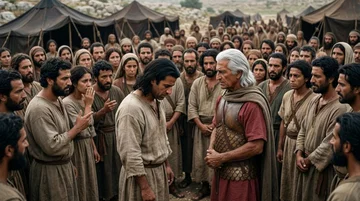
Achan's penalty was inflicted at Gilgal on the plain of Israel's first encampment in the promised land, following the march from there to the overthrow of Jericho and the conquest of Ai.ST Jul 27, 1882PP 613.3–614.2 Joshua with all Israel took Achan son of Zerah with the silver, the garment, the wedge of gold, his sons and daughters, oxen, asses, sheep, tent and all that he had to the Valley of Achor.Lt 13, 1893, par. 17–18 There Joshua declared that trouble would come upon him, all Israel stoned him with stones, burned them with fire, raised over him a great heap of stones, and so the Lord turned from the fierceness of His anger.Lt 13, 1893, par. 17–18
The goodly Babylonish garment stands for things God appointed to destruction that are not to be desired or coveted.Lt 13, 1893, par. 24–26 Such things are cursed of God and cannot be blessed by Him, and they are a snare to the soul leading to vanity, pride and self-exaltation.Lt 13, 1893, par. 24–26 They are the idols of people estranged from God who have corrupted their ways and say they want their own way and not God's way, and the account was written for admonition as a lesson not to desire them.Lt 13, 1893, par. 24–26 The wedge of gold stands for wealth of the highest earthly worth, yet experience gained in hard and hindered work for God is of more value because it gives assurance that the Lord is with the worker and guides him.Lt 66, 1901, par. 19–20 The same wedge also pictures the worth of character and principles formed by obedience to the holy law of ten commandments as the standard of righteousness, which would make character as fine gold and principles as the golden wedge of Ophir, keeping in happiness and peace and bearing fruit in sanctified love and beauty of character.13MR 381.2–382.1
Steps From Seeing to Hiding
Ruin began not with a sudden fall but with greed gradually fostered until it became a binding habit, and as sin dulled his judgment he became easy prey to temptation, lingered over it, and then gave in.4T 492.2–3PP 496.2–3ST Sep 1, 1909 When he saw the costly Babylonish robe with the silver and gold among the spoil, the sight stirred covetousness that moved from desire to selfish, greedy taking of what was forbidden and then to stealing and concealing it.ST May 5, 1881PP 496.2–3ST May 5, 1881PP 495.5–496.1 He took what was devoted to destruction under the curse of Jericho after hearing the charge to keep from the accursed thing, in disobedience to a plain command.3T 264.218MR 143.2–3Ms 12, 1893, par. 3–5Lt 13, 1893, par. 7–8
What he seized included silver and gold reserved for the Lord's treasury and consecrated to be put into His house, and he knew they belonged to God so that taking them violated God's command and was theft and robbery of God.3T 268.34T 491.1–492.1PP 495.5–496.1Lt 19, 1887, par. 3–4Lt 13, 1893, par. 7–8 His act was covetousness leading to theft and embezzlement, taking what was dedicated to God and hiding it for self and family, with dissembling by pretending innocence under examination and failure to confess while Israel suffered adding deceit, falsehood and dishonesty terrible in God's sight.4T 491.1–492.1Lt 14a, 1893, par. 21–24Ms 13, 1894, par. 6–9Lt 13, 1893, par. 19–23Lt 74, 1886, par. 3 He treated the taking of the wedge of gold, Babylonish garment and silver commanded to be utterly consumed as a very small matter, but to God it was very serious sin against the Lord, regarded with great displeasure.18MR 143.2–3Lt 13, 1893, par. 19–23
He felt no distress or remorse, did not reason from cause to effect that his theft brought the Lord's displeasure and defeat, and had no thought of making the wrong right by confession and humiliation of soul.Lt 13, 1893, par. 7–8 The garment and gold picture hidden wrongdoing and misuse of what belongs to God, including coveting and taking what belongs to another, even affections and property.Lt 25, 1888, par. 8–10Lt 74, 1886, par. 3Ms 142, 1903, par. 109–110
Sin Brings Corporate Guilt
The coveting and hiding of goods devoted to destruction put an accursed thing in the midst of Israel, and the sin of one man was charged to the whole body.Lt 4, 1892, par. 10–141T 139.28MR 208.1Lt 51, 1888, par. 22–23 That hidden wrong brought God's frown and displeasure, His rebuke and curse upon all Israel, and success in battle was withheld until the accursed thing was dealt with.Lt 4, 1892, par. 10–141T 139.2EDFCP 5.2–48MR 208.1Lt 51, 1888, par. 22–23 A wrong course pursued by one toward his brother turns the light of God from His people until the wrong is searched out and the cause of the oppressed is vindicated.3T 519.1
Israel was discomfited and driven before enemies, slain in battle because of one man's concealed theft.1T 139.23T 239.1–3Ms 12, 1862, par. 15–19Lt 11, 1870, par. 8 The loss included thirty-six lives, and thousands were killed in defeat while the stolen goods and transgression remained hidden in the camp.3T 239.1–3Lt 14a, 1893, par. 21–24Ms 12, 1862, par. 15–19Lt 13, 1893, par. 19–23 Though Achan held no holy office, his secret keeping of the Babylonian garment, silver, and gold still brought God's displeasure on all Israel.3T 239.1–3
God would not bless the people in battle while the theft remained hidden, for He would not serve with sin.3T 239.1–318MR 143.2–3Lt 29a, 1872, par. 45–51 He withdrew His presence from their armies until the accursed was destroyed from among them, and after He had done a great and glorious work for Israel by His mighty power His way was barred so He could not do what He would for them.EDFCP 5.2–4Ms 81, 1893, par. 85–8718MR 143.2–3Ms 13, 1894, par. 13–15 The hidden golden wedge and Babylonish garment hindered God from blessing and leading Israel into battle, and allowed the enemy to triumph over them.18MR 143.2–3Ms 13, 1894, par. 13–15Lt 29a, 1872, par. 45–51
His private theft brought defeat, shame, and death upon Israel and suffering on the whole congregation.1T 139.24T 492.2–3SG4 182.1–2ST May 12, 1881 One person's cherished sin harmed the whole people, showing that concealed wrongdoing can burden and injure an entire community.4T 492.2–3Ms 12, 1862, par. 15–19Lt 29a, 1872, par. 45–51 To wipe the curse from Israel, Achan and his household with all they possessed were destroyed.1T 139.2SG4 182.1–2ST May 12, 1881Ms 12, 1862, par. 15–19 After Achan received the divine sentence, the fierceness of God's anger was turned away and God again fought for Israel against Ai.Lt 13, 1893, par. 17–18ST May 12, 1881
Confession Exposure and Punishment
Nothing hidden escapes divine sight, for the searching Spirit lays bare concealed guilt and knows what people misunderstand or hide from themselves and others.ST May 12, 1881ST May 5, 1881Ms 12, 1893, par. 3–5 The theft beneath the tent was brought to light by God Himself after Israel had failed to keep watch for sin in its midst.Ms 12, 1893, par. 3–5PP 519.4–520.2 What was buried in the earth was exposed, and the facts were made plain to the whole congregation.Lt 14a, 1893, par. 16–20Ms 12, 1893, par. 3–5
The wrong was hidden and held back, with no willingness to confess or to relieve the church until investigation searched the sinner out.3T 270.2 The admission came only after exposure, only after defeat in battle and after the search for the guilty one had begun.ST May 5, 18813T 272.2 It came too late to save the man himself or to turn aside the consequences.ST May 5, 1881PP 497.43T 272.2
That confession was forced and not voluntary, drawn out in terror when crisis came and God spoke on behalf of His people.3T 270.23T 271.1 It did not spring from conviction of his true state, from a sense of how displeasing his course had been to God, from contrition, from change of purpose, or from hatred of evil.PP 497.43T 271.1 He had kept on in his course until hardened, knowing Israel was weakened before enemies because of his guilt yet with conscience unmoved to humble his proud rebellious heart and put the wrong away.3T 270.2 Those who confess in this way show by further trial that they will not endure testing, for they are not in harmony with right and despise the straight testimony that reaches the heart.3T 272.2
Though too late to benefit himself, the confession from his own lips relieved the cause of God.3T 271.1 It made clear what had been done, established the justice of the punishment, vindicated the character and honor of God, and gave Israel a lesson never to forget.3T 268.1–2PP 497.418MR 143.4–144.1Lt 13, 1893, par. 19–23 God already knew where the goods were hidden and led Joshua to them, yet He required the acknowledgment from the sinner's own mouth so that the people would not charge Him with being unmerciful and severe nor reproach Joshua with harshness and severity.18MR 143.4–144.1Lt 13, 1893, par. 19–23 Christ Himself from the pillar of cloud directed the punishment.Lt 13, 1893, par. 19–23
As with Achan, so at the final judgment every deed will be brought vividly to the sinner's memory and guilt will be confessed.4T 492.2–3 The same principles that controlled him had entered his family, making their influence dangerous to Israel, which is why the Lord required his destruction with his household.Ms 13, 1894, par. 6–9 Yet this searching out of guilt also assures those who trust in Him that He can vindicate their cause.ST May 12, 1881PP 519.4–520.2
Cleansing Sin from Church
Hidden, prevailing sin among God's people brings His frown and displeasure upon the whole body and must be promptly searched out, rebuked, corrected and removed so His frown may be turned away.CH 672.2Lt 25, 1888, par. 8–105T 147.13T 270.1 Secret sin defiles the soul and contaminates the whole camp, so sin and sinners in the church must be promptly dealt with that others may not be contaminated.CH 672.25T 147.1 Truth and purity require thorough work to cleanse the camp from Achans, pictured by the coveted Babylonish garment and silver and gold hidden in the tent, which must be searched out, rebuked and removed before the Lord will bless the community.Lt 25, 1888, par. 8–105T 147.1 A person who will not put away sin must be separated from the church.CH 672.2
This searching work belongs to those upon whom God lays the burden and duty of it and who have the discretion of Joshua.3T 270.1 Those who have no such special duty must not hinder them or question and doubt and find fault with them as having a wicked, fault-finding spirit.3T 270.1 God is not to be trifled with and His warnings cannot be disregarded with impunity.3T 270.1
Those in responsible positions must not allow sin to remain in a brother but must show him that he must either put away his sins or be separated from the church.5T 147.17MR 210.1–2Ms 9, 1880, par. 47–54 Sin within the community must not be covered up or excused, but as the camp had to be cleansed, the member must be required to put away sin or be separated.7MR 210.1–2Ms 9, 1880, par. 47–54 Death before dishonor or transgression of God's law is the rule rather than defiling the soul with sin through poverty, reproach, separation from friends, loss, or any suffering avoided, and all act as in God's presence under the eye that sees every secret thought, motive, desire and purpose.5T 147.17MR 210.1–2 Those treasuring sacred, solemn, purifying truth must choose poverty, separation, loss, reproach, or any suffering rather than commit such sin, with death before dishonor or transgression as their motto.7MR 210.1–2 When such sin and sinners are in the church they must be promptly dealt with to cleanse the camp of the Achans, to elevate the standard far higher, and to cause others to fear God.7MR 210.1–2
Those in the church who do wickedly and refuse to hear admonition and repent are as Achan was — deceived and deceiving — bringing guilt upon the whole body so that the saints are held accountable for their evil deeds.SG4 167.1–211MR 209.1–210.2Lt 215, 1902, par. 1–10 They must not be retained on the church books but must be visited, labored with, and if they still refuse to repent be separated from church fellowship by disfellowshipping.11MR 209.1–210.2Lt 215, 1902, par. 1–10 To keep unrepentant wrongdoers in the church is contrary to the will of God and is an insult to the God of heaven.11MR 209.1–210.2Lt 215, 1902, par. 1–10 God enlightens them as to their sins and gives them opportunity to reform, but when they will not heed and will not be reformed He in mercy rids the church of them and gives them up to their own ways to be filled with their own doings, where they injure His cause less from outside than they would injure it by their influence if they remained inside, while every honest one is enlightened as to their true state and remains with His peculiar people.SG4 167.1–2
The defects of character in any church member or minister are charged to the whole church if the church makes light of them.EDFCP 5.2–48MR 208.1 By placing such a man over the church as minister the church assumes his defects and makes them its own and stands under the rebuke of God, as taking the accursed thing brought all ancient Israel under rebuke and caused God to withdraw His presence until the accursed was destroyed from among them.EDFCP 5.2–4 To do this knowingly, hiding the eyes from known evil and walking contrary to the will of God, is more grievous than the case of Israel with Achan.EDFCP 5.2–4 By knowingly overlooking a member's or minister's defects, the church takes those defects as its own and comes under rebuke.8MR 208.1
God has not changed but is the same in the gospel as in ancient Israel, so hidden sins among His people still cause loss of His favor and dishonor Him by deception, falsehood and moral corruption.Ms 67, 1894, par. 18–20 The gospel standard is no lower now than in Joshua's day but higher under increased light.Ms 67, 1894, par. 18–20Lt 13, 1893, par. 19–23 Those who know the truth and hear His Word daily must not become careless and pass by sin and transgression in their midst, for they will be held equally responsible with open transgressors if they let things drift and confirm that sin is not exceedingly offensive to God.Ms 67, 1894, par. 18–20 When principals and teachers do their duty in closely guarding righteousness and judgment, God by His Holy Spirit will point out the wrongdoers and demonstrate that He will not tolerate sin, and His people must work diligently to separate the Achans from the camp rather than hold their peace.Ms 67, 1894, par. 18–20
When a church faces difficulty or spiritual decline, its members should humbly examine themselves for concealed sin, since one person's concealed theft of valuable spoil in disobedience, hidden beneath the ground inside his tent, brought disaster and could keep God's displeasure upon the whole church until the wrongdoing was found and removed.PP 497.2–3 Hidden sin among God's people hinders God's work and blessing and bars His way so that He cannot do what He would for them, even after He has done a great and glorious work by His mighty power.Ms 13, 1894, par. 13–15 Sin must be called by its right name, hated while the sinner is loved, and put away by cleansing from all filthiness, because tampering with sin makes it seem less sinful to those who do it.Ms 13, 1894, par. 13–15
God rebuked Israel's lack of vigilance in discovering sin among them.ST May 12, 1881 That failure led the Israelites to resolve to act promptly and earnestly against sin, though their later zeal went to the opposite extreme.ST May 12, 1881
Present Warnings and Applications
Covetousness, selfishness, love of money and love of the world gain upon the heart imperceptibly so that those who have it are not aware of it, dry up sacrifice, and unless rooted out end in certain destruction as surely as Achan perished with his household for coveting and secretly taking what did not belong to him.1T 140.1SG4 183.1RH Jan 13, 1863 Seeing, coveting, taking and hiding devoted spoil for self is the sure path to perishing with the world, and taking means for self and for worldly gain and increase is taking the sacrifice from God's altar.RH Jan 13, 1863 Means are only lent by God and held as stewards, and when His prospering hand is removed all is snatched away in a moment, so the Israel of God must arise and renew strength by renewing and keeping covenant with Him through entire change, sacrificing for God and denying self for the truth's sake, for human loftiness is soon to be brought down and pride humbled when kings and nobles, rich and poor alike bow under withering plagues.RH Jan 13, 1863
Holding back means from God is taking the golden wedge and goodly Babylonish garment and hiding them in the camp instead of giving all for Christ, and such hidden covetousness weakens the whole people as one Achan weakened the whole camp of Israel.5T 156.3–157.1 When every church and almost every family has its Achan little success attends the work, and the power of the work depends on disinterested benevolence that supplies the treasury with means by personal example.5T 156.3–157.1 Workers in schools, institutions and churches who measure themselves by themselves, compare themselves among themselves, grow dissatisfied over wages, take care that they receive all they think they should have, become wise above what is written, and appropriate treasury means for their own use commit Achan's sin of robbing God by covetous, selfish taking for one's own use of what belongs to God.Ms 97, 1899, par. 21–23 An atmosphere of unbelief surrounds such a man, leading to double-dealing, God is not with him, he cannot give the right mold to the work nor supply the necessities of laborers in hard fields, and God sees every such case and will pass judgment on it.Ms 97, 1899, par. 21–23
Taking money belonging to God's cause is robbery in every sense of the word, done through selfishness at every point, lack of principle and perverted ideas, which God hates and which abuses His Spirit.Lt 210, 1900, par. 4–6 The verse is fulfilled when means are kept from their rightful field, when men in hard places are driven, and when money is appropriated so it never comes to God's cause, while professing missionary spirit and willingness to do much yet doing scarcely anything and causing disappointment to others.Lt 210, 1900, par. 4–6 It demands full restitution of both principal and interest, and those who make every excuse not to make that restitution blind their spiritual discernment until they have no real sense of what justice and mercy and equity and truth is.Lt 210, 1900, par. 4–6 Concealed theft like Achan's admitting that he coveted and took valuable spoils and hid them beneath the ground inside his tent is the case to learn from when dishonest, scheming business practices dishonor God, calling for full repentance and restitution as evidence of a changed life.Lt 80, 1897, par. 4–5
The golden wedge and the Babylonish garment are temporal gain of far less worth than the blessing of God, which is often bartered away for such gain by letting down the standard of piety.ST Dec 10, 1885 This happens when Christ is not in the heart and in the home, when parents let children go on in sin without restraint and exert an influence that leads others away from righteousness, so the divine presence cannot remain in the home.ST Dec 10, 1885 The wedge of gold stands for wealth of the highest earthly worth, yet experience gained in hard and hindered work for God is of more value than that wedge, because it gives assurance that the Lord is with the worker and guides him.Lt 66, 1901, par. 19–20 Hidden covetousness may persist even among outward worshipers and church members, leading people to conceal unlawful gains illustrated by coveting valuable spoils from Jericho, taking them despite command, and hiding them beneath the ground inside the tent, and to sacrifice conscience, integrity, usefulness and hope of heaven for possessions like the goodly garment and silver shekels.ST Sep 1, 1909PP 496.4–497.1
The time of feeling secure is the time of greatest danger of stumbling and falling, for temptation must never be undervalued and cannot be met and resisted in one's own strength.4MR 218.3–220.2Lt 58, 1880, par. 5 Israel was warned to avoid idolatrous connections and even the borders of sin, because departing from God would bring ruin, while God is faithful both to His promises and to His warnings, a lesson to be applied personally.4MR 218.3–220.2 Wrongdoing hidden in a home or heart, as in Achan's confession of coveting and taking goods devoted to destruction and hiding them in his tent, can hinder God's blessing, for his sin was charged to all Israel and God withheld success in battle until the accursed thing was dealt with.Lt 4, 1892, par. 10–14 Concealed theft of the hidden golden wedge and Babylonish garment brought God's displeasure on all Israel so that thousands died in battle because of one man's sin, showing that concealed wrongdoing can burden and injure an entire community and that God would not lead Israel into battle while such sin remained among them.Lt 29a, 1872, par. 45–51
Hidden coveted sin kept in the midst of God's people blocks the Lord from working for them until it is searched out, rebuked and put out of the camp, with the golden wedge and Babylonish garment standing for concealed wrongs such as improper freedom of married men with women and girls and unwise, wasteful management, whose exposure and removal alone open the way for the Lord to act.21MR 322.4–323.1 A covetous spirit like that taking possession of Achan is working in men in important positions, remaining as a living, unrepented thing with no restoration made and no falling on the Rock and being broken.Ms 88, 1900, par. 15–17 Unless leading men let the Word into the mind and humble themselves, there is no hope for the institutions, and deceptions enveloped in mist and fog, blacker than velvet, will come so that men never know at what they stumble.Ms 88, 1900, par. 15–17 Backbiting — cherishing envy and hatred against brethren, going up and down as talebearers, accusing and condemning, blackening character, inspiring hearts with maliciousness, and carrying false reports that cause hearers to lose the Spirit — is worse than Achan's sin of coveting and taking forbidden spoils and hiding them in his tent.18MR 147.5–6Ms 52, 1902, par. 8–9 Its influence is not confined to those who cherish it, but as a root of bitterness it defiles many, corrupts minds and spirits, reaches beyond those who commit it, and God cannot bless the church till the church is purged of this evil unless those who practice it repent and change their course.18MR 147.5–6Ms 52, 1902, par. 8–9
Concealment of a Babylonian garment and valuable metals that brought God's displeasure upon all Israel shows how concealed wrongdoing and dissembling can be even graver when influence reaches husbands and the wider work.Lt 13, 1869, par. 14–15 Taking the wedge of gold and Babylonish garment with the silver from spoil commanded to be utterly consumed, though treated as a very small matter, was very serious sin against the Lord that kindled His anger against all Israel, withdrew His presence from their armies because He would not serve with sin, and allowed the enemy to triumph.18MR 143.2–3 The goodly garment stands for things appointed to destruction which are not to be desired or coveted, cursed of God and unable to be blessed by Him, a snare to the soul leading to vanity, pride and self-exaltation, the idols of people estranged from God who have corrupted their ways and say they want their own way and not God's way, written for admonition as a lesson not to desire such things.Lt 13, 1893, par. 24–26 Those who claim to follow God while following their own way instead of His way become false signboards pointing in the wrong direction.18MR 143.2–3Lt 13, 1893, par. 24–26 Achans in the camp as individuals with corrupt hearts inside the church, whose selfishness, love of self, exaltation and wanting to be foremost when God and brethren have not placed them there, bring God's frown upon the whole church, weigh God's people down like clogs, make the work progress but little, discourage servants, and keep truth from taking effect and adding more to the church.SG4 167.1–2 God enlightens them as to their sins and gives opportunity to reform, but when they will not heed He in mercy rids the church of them and gives them up to their own ways to be filled with their own doings, where they find pasture with those of their kind and injure the cause less by lying tongues and misrepresentations from outside than by influence inside, while every honest one is enlightened as to their true state and remains with His peculiar people.SG4 167.1–2
Sources
Pioneers and periodicals
101 sources
Achan saw devoted spoil from Jericho — a prized Babylonian robe, two hundred shekels of silver and a fifty-shekel wedge of gold — coveted it, took it, and buried it in the ground inside his tent with the silver underneath.RH Jul 29, 1909RH Dec 2, 1858 The silver and gold had been consecrated as firstfruits to come into the Lord's treasury for sacred use, so taking them for himself made them an accursed thing and was robbery from God.RH Sep 23, 1873ST Feb 23, 1915 That one hidden trespass withdrew God's presence and brought guilt and weakness on the whole congregation, causing Israel's only defeat in the conquest when thirty-six men fell at Ai.RH Dec 1, 1910ST Feb 23, 1915ST Sep 26, 1906 Seeing ripened into lustful coveting and coveting into stealing and concealment, a binding habit that dulled his sense of wrong until he valued the booty above his people and would not repent and restore it even while Joshua mourned.ST Apr 21, 1881ST Apr 21, 1881RH Nov 4, 1873RH Jul 8, 1873RH Dec 2, 1873 Exposed by God after prayer and confessing only when the search singled him out, he was stoned and burned with all his house in the valley of Achor, teaching that hidden covetousness and withheld tithes must now be searched out, confessed, restored and put away before the church can have God's power and victory.ST May 5, 1881RH Sep 23, 1873RH Apr 8, 1902RH Sep 28, 1916ST Jun 13, 1906
Words and Historical Setting
The confession traces a fourfold sequence of seeing valuable spoil, then coveting it, then taking it, then hiding it in the earth in the midst of the tent with the silver under it, involving a goodly Babylonish garment with two hundred shekels of silver and a wedge of gold of fifty shekels weight.ST Apr 21, 1881ST May 5, 1881RH Jul 29, 1909RH Dec 2, 1858 The seeing was of forbidden spoil from Jericho, the coveting was lustful greedy desire, the taking was secret theft of what belonged to God, and the hiding was burial beneath his tent.ST Apr 21, 1881ST May 5, 1881RH Dec 2, 1858 The silver and gold taken were devoted to destruction as to their common use yet reserved for God, so that appropriating them turned away blessing and brought judgment on the whole assembly.ST Apr 21, 1881
The Babylonish garment was a famed precious textile, a richly made royal robe, even woven entirely of gold and fit for a king, a noble trophy such as might be found in the dwelling of a great man of Jericho or the king's palace.ST Dec 5, 1911ST Dec 18, 1907RH Dec 2, 1873RH Jun 10, 1875 Its presence among the spoils shows Babylon was already famed for precious treasure and celebrated fabrics in Joshua's time, its textiles being of great celebrity in the ancient world.ST Dec 5, 1911ST Dec 18, 1907RH Dec 2, 1873 The spoil of Jericho was devoted to the Lord, with Rahab and her family excepted for salvation, and the silver and gold and vessels of brass and iron were consecrated to come into the Lord's treasury.ST Jan 18, 1877RH Apr 8, 1902RH Apr 8, 1902 They were the consecrated firstfruits of Canaan's spoils, already the Lord's as Conqueror who overthrew the walls by His own power and reserved the disposition of the spoils to Himself, to be put to sacred use in sanctuary service and the proclamation of the gospel, purged by fire and converted to sacred use to decorate the sanctuary of the King of kings to the glory of God.ST Jan 18, 1877RH Dec 2, 1873RH Apr 8, 1902RH Apr 8, 1902 Joshua stated this devotion plainly to all the people the very day the city was overthrown, and all Israel heard it.RH Apr 8, 1902
Achan was the son of Carmi, the son of Zabdi, the son of Zerah, of the tribe of Judah, who marched around Jericho and shared in the shout of victory and rejoiced in God's power.RH Dec 1, 1910RH Jul 29, 1909 He was numbered with God's chosen people as a professed servant of God with no record of being specially bad at heart, who knew what had been reserved for the treasury and knew the gold and silver he coveted were the Lord's.RH Jul 29, 1909RH Jul 29, 1909 He took secretly when his brethren were not looking, with greedy eye alert for plunder and no guard over his eyes or the lusts of his heart, not considering how worthily the things would grace the Tabernacle nor remembering that Jericho was accursed and its gold and silver, the gain of vice and oppression and sacred to Baal and Ashtaroth, were already the Lord's.RH Jul 29, 1909RH Dec 2, 1873 He made speed to his tent, dug a trench in the earth in the midst of his tent, and buried the goods deep among his own belongings and his own stuff, with the silver under, hidden from all eyes, while the eye of their Owner was fixed on him.RH Jul 29, 1909RH Dec 2, 1873RH Dec 2, 1873RH Nov 25, 1873
The events followed the march from Gilgal on the plain of Israel's first encampment in the promised land to the overthrow of Jericho and then the first attempt to press through the narrow defile from the plain of Jordan to the highlands of Canaan at Ai.ST Jul 27, 1882ST Feb 14, 1906 The dire penalty upon the sinner came at Gilgal after that march to Jericho and the conquest of Ai, and the rugged valley where defeat and sharp justice took place was named the Valley of Achor, that is, trouble.ST Jul 27, 1882ST Feb 14, 1906
Defeat Spreading Through Israel
The hidden wrong in the camp brought Israel's defeat at Ai.RH Dec 1, 1910ST Feb 23, 1915ST Sep 26, 1906ST Aug 1, 1911RH Dec 2, 1873 That was Israel's only defeat and loss of men in battle during the seven-year conquest of Canaan.RH Dec 1, 1910 Thirty-six men were killed, the people's hearts melted as water, and shame and lamentation filled the camp while Joshua and the elders mourned before the ark.ST Feb 23, 1915RH Dec 2, 1873 Israel afterward returned under different circumstances and conquered, with victory coming only after the sin was put away.ST Sep 26, 1906ST Aug 1, 1911
The defeat was joined with Israel's self-confidence after Jericho.RH Dec 1, 1910RH Sep 28, 1916ST Apr 30, 1912 That victory at Jericho had been given wholly by God's own power while Israel only marched with the ark.ST Apr 30, 1912 Instead of seeking God to know His will, Israel in self-confidence recommended that only a few men go up to take Ai and attacked by their own strength.RH Dec 1, 1910RH Sep 28, 1916ST Apr 30, 1912
One traitor's trespass turned away God's blessing from Israel.RH Apr 8, 1902ST Apr 30, 1912ST Apr 6, 1882RH Jun 1, 1916 His presence withdrew God's presence and brought guilt, weakness, darkness, suffering, and divine wrath upon the whole congregation, so that the people could not stand before their enemies.RH Apr 8, 1902ST Apr 30, 1912ST Apr 6, 1882RH Jun 1, 1916 God's people are bound together as one, so if one member sins the others suffer in consequence, and the whole regiment was held accountable until the theft was uncovered and the transgressor punished.RH Apr 13, 1876ST Apr 30, 1912 Each person therefore bears responsibility for the harm their conduct may cause and for hindering the usefulness of many, and when those responsible overlook sin the whole congregation can bear responsibility with one sinner darkening the entire community.ST Apr 6, 1882RH Jun 1, 1916
The cause was carefully investigated after Joshua's prayer.RH Dec 1, 1910RH Sep 28, 1916ST Sep 5, 1900 God Himself became the accuser and made plain that a sinner was in Israel.RH Dec 2, 1873 The guilty man was found and confessed, but after Israel was humbled his confession came too late to avail for him.RH Apr 8, 1902ST Jun 13, 1906 After Achan received the divine sentence God's wrath was turned away and God again fought for Israel against Ai.ST May 12, 1881
Achan and his house were taken to the valley of Achor and utterly destroyed.RH Dec 1, 1910RH Sep 28, 1916 There he was stoned and his wealth burned with fire, left stiff and stark below his cairn.ST Jun 9, 1898ST Feb 14, 1906 The rugged valley where that defeat and that sharp act of justice took place was named the Valley of Achor, that is trouble, a synonym for trouble, sorrow, and despair.ST Jun 9, 1898ST Feb 14, 1906ST Jun 13, 1906 Yet a cleansed and purified camp made the valley of Achor a door of hope, teaching for all future ages that if God's people are taught by their trouble and purge themselves of the accursed thing, disaster makes a way for hope to come again.RH Dec 1, 1910RH Sep 28, 1916ST Feb 14, 1906ST Jun 13, 1906
One hidden act of disobedience clogs the whole cause and keeps Israel from moving forward even when others are obedient.RH Jun 16, 1863ST Jun 16, 1914RH Dec 31, 1914 It is an awful lesson with fearful consequences showing the awful results of even one sin among God's people.ST Mar 17, 1909 As Miriam's complaining once stayed the whole camp, so one man's sin excused and covered up prevented the blessing of the Lord from descending upon a whole people.RH Jun 16, 1863ST Jun 16, 1914 Achan's attachment to the stolen goods marks him as one sifted out before Israel was prepared to advance by faith into the promised inheritance, and Achans are dead weights in the church who must be purged out so the church can rise, stand each trying test, shout the victory, and be gathered fitted for heaven.RH Dec 31, 1914RH Sep 3, 1872
The defeat at Ai was chastisement for moral failure to all who were influenced by his spirit, and at the same time a trial of faith to all Israel, even to Joshua.ST Aug 8, 1906 All chastisement comes because of moral wrong, and every apparent disaster to God's people and cause, whether directed or only permitted by God, is for a wise purpose for their good, for correction or for trial of faith or for both.ST Aug 8, 1906 No catastrophe, even if apparently fatal, can shorten God's power.ST Aug 8, 1906
Covetousness Growing Into Theft
The look became lustful, greedy longing, and the longing became theft and hiding, for the words for lusting and for coveting carry the same force and do not name two separate sins.ST Apr 21, 1881ST May 5, 1881RH Jan 13, 1863RH Nov 4, 1873RH Jul 8, 1873 What was seen among the forbidden spoil was desired, what was desired was taken, and what was taken was buried in the earth inside the tent, bringing an accursed thing into the camp.ST Apr 21, 1881ST May 5, 1881RH Nov 4, 1873 The confession itself lays out the order as seeing valuable spoil, coveting it, taking it, and hiding it beneath the ground inside the tent, with the kinds and weights named.ST Apr 21, 1881ST May 5, 1881RH Nov 4, 1873 It came only after inquiry of the Lord and investigation exposed the doer, who had stayed silent even after defeat and after the search began, so it was too late to save him.ST May 5, 1881RH Nov 4, 1873
Covetousness in him had grown little by little into a binding habit that dulled judgment and deadened the sense of wrong.ST Apr 21, 1881ST Sep 1, 1909 Cherished known sin made further wrong easier, and when he was not detected and openly rebuked he grew bolder, so warnings had less effect.ST Apr 21, 1881ST Sep 1, 1909 To handle the golden wedge in the way of temptation to test the strength of virtue ended in stealing it.
He loved the garment, the silver shekels, and the wedge of gold for themselves and not for any use to be made of them, a true miser gloating over his booty with relish and still calling it goodly when about to die.RH Dec 2, 1873 He made speed to his tent and hid them in a trench dug in the earth in the midst of his tent, with the silver under, though they were God's property as consecrated firstfruits of the spoils of Canaan.RH Dec 2, 1873 He had plenty of time to deliberate, to repent, and to restore, but he had no thought of doing either.RH Dec 2, 1873RH Dec 2, 1873ST Jan 18, 1877 Even when he knew his hidden treasure was the cause of the blow at Ai where thirty-six warriors died and hearts melted as water, and when he saw Joshua weeping with torn garments before the ark and the elders with dust on their heads, even the chiefs of his own tribe lamenting before an offended God, he did not confess and restore.RH Dec 2, 1873ST Jan 18, 1877 He valued his treasure more than the lives and happiness of his people and more than the fate of the nation.RH Dec 2, 1873ST Jan 18, 1877
His hidden theft shows how covetousness moves people to conceal unlawful gain and to sacrifice conscience, integrity, usefulness, and hope of heaven for possessions.ST Sep 1, 1909 It was trading lasting spiritual privilege for a small immediate gain, a worthless bargain for something only briefly possessed.ST Sep 1, 1909RH Jun 10, 1902
His desire for a Babylonian robe was like the modern love for fashionable bonnets and fine clothing.RH Nov 4, 1873 That worldly fashion of the garment can tempt men as well as women and lead to sin, for coveting led him to take it with silver and gold and hide them in his tent.RH Nov 4, 1873RH Aug 21, 1900
His covetous love of wealth outweighed love of God and loyalty to his people.RH Jan 13, 1863RH Dec 2, 1858 Covetousness, selfishness, love of money, and love of the world dry up sacrifice, gain upon the heart imperceptibly so that possessors are unaware of it, and unless rooted out they perish with the world as surely as he did.RH Jan 13, 1863RH Dec 2, 1858 To take means for self and for worldly gain and increase is to take the sacrifice from God's altar, forgetting that means are only lent by God and held as stewards, and when His prospering hand is removed all is snatched away in a moment.RH Jan 13, 1863
He became a thief because he coveted what he saw among the spoils and took it.RH Nov 4, 1873ST Feb 4, 1886 It is the same covetousness that made Lucifer become Satan, brought leprosy on Gehazi, made Ananias an infamous liar, and led Judas to betray his Lord. Unlike David who sinned and repented and Peter who denied his Lord and wept bitterly, he perished like Judas who for thirty pieces of silver sold his Lord and went out and hanged himself.RH Nov 4, 1873 Covetousness shuts a man out of heaven as surely as lying, drunkenness, idolatry, and adultery, and liberality is as necessary to the Christian as faith, love, and prayer, though God will not visibly strike down every covetous professor in the same way in every age; it stands as a striking warning, one of the most dangerous rocks in the channel with little hope for the man who runs upon it, and the greatest sin now in the church, especially offensive to God yet left unrebuked by human judgment that despises the drunkard.RH Nov 4, 1873ST Feb 4, 1886
His gain from forbidden spoil cost him his life and clove his soul from his body.RH May 23, 1854 Sin is deceitful and yields no real fruit, its promises of profit proving false, with only shame if repented and death if not.RH May 23, 1854
His act was deliberate disobedience in taking what God had forbidden, treating obedience as though it made little difference.ST May 5, 1881RH Jun 1, 1916ST Mar 5, 1912 Such selfishness and greed is offensive to God and must be dealt with decisively, for concealed sin is seen, searched out, and judged, and when those responsible overlook sin the whole congregation can bear responsibility and one sinner can darken the entire community.ST May 5, 1881RH Jun 1, 1916ST Mar 5, 1912
Theft From God's Treasury
The silver and gold of Jericho had been reserved for the Lord's treasury as the consecrated firstfruits of the spoils of Canaan to be put to sacred use, so to take what God had devoted to destruction or to Himself for whatever purpose He chose and to pervert it to personal service was theft and robbery from God and made it an accursed thing.RH Sep 23, 1873ST Feb 23, 1915RH Apr 8, 1902ST Jan 18, 1877 Achan saw the valuable goods, coveted the silver and gold and valuable garment, stole what belonged to God, and hid it beneath the earth inside his tent among his own belongings instead of bringing it to the treasury.RH Sep 23, 1873ST Feb 23, 1915 His confession exposed both covetousness and concealment with dissembling, leaving in the camp of Israel what God had forbidden, and his act brought the ban of destruction upon him.RH Sep 23, 1873RH Apr 30, 1867 That disregard for what God set apart turned what would have been a blessing in the treasury into the accursed thing when appropriated to common use, and it brought defeat at Ai with thirty-six men killed and great mourning in the camp, so that the sin of one member brought suffering on all Israel until the wrong was unitedly put away.ST Feb 23, 1915RH Apr 8, 1902
What was thus devoted became most holy and of priceless value beyond market value, because once devoted to God the altar sanctifies the gift and to withdraw it is sacrilege.RH Apr 8, 1902 This is far more true of what God Himself devotes to a sacred and holy purpose than of what man devotes of his own free action, as when the gold and silver of Jericho were devoted to be brought into the treasury of the Lord to support the proclamation of the gospel as presented in the sanctuary service.RH Apr 8, 1902 To take it for one's own use and hide it among one's own stuff in one's own tent, as confessed when the sin fully found him out, is sacrilegious misappropriation.RH Apr 8, 1902RH Apr 8, 1902
The same sin is committed today by many in the church who profess to keep the commandments of God yet through covetousness appropriate to their own use the means the Lord has entrusted to them that should come into His treasury.RH Sep 23, 1873RH Oct 1, 1903RH Jul 29, 1909 To fail to render a true tithe, to withhold tithes and offerings, to keep the Lord's money among one's own stuff and be dishonest in handling what belongs to another entrusted as a steward, to live for self and use means for selfish worldly purposes instead of giving all for Christ and to shirk duty, is to repeat Achan's taking of what is holy and belongs to God.RH Oct 1, 1903RH Jul 29, 1909RH Jun 1, 1916RH Apr 14, 1910RH Jul 29, 1909 Achan was a professed servant of God who knew the reserve that had been made and knew the gold and silver he coveted were the Lord's, yet he stole from God's treasury for his own benefit by coveting goods devoted to the Lord, taking them, and hiding them among his own possessions.RH Oct 1, 1903RH Jul 29, 1909 This covetousness brings spiritual poverty and darkness upon individuals and the church, with spiritual leanness to individuals and weakness and darkness to the church, so that the presence of one Achan is sufficient to weaken the whole camp of Israel and when every church and almost every family has its Achan there is little success attending efforts for God and no copious shower of His Spirit.RH Sep 23, 1873RH Oct 1, 1903RH Jun 1, 1916RH Apr 14, 1910
God's requirements concerning what is holy and devoted to Him are exacting, and His mercy does not mean that withheld things escape the final reckoning, as shown when Achan coveted and took goods devoted to God and hid them in his tent and is used as a warning against withholding holy tithe.ST Oct 15, 1902 The tithe remains the Lord's even when someone secretly keeps it as Achan coveted and secretly kept what belonged to God, and concealing it displeases God and delays His work at home and abroad.RH Jan 19, 1911 Every person must therefore examine possessions and personal accounts to see if anything there belongs in the Lord's treasury and to be sure the Lord's money is not kept among personal possessions.RH Apr 14, 1910RH Jul 29, 1909 If so, restitution must be made without delay while there is still time before it is too late as with Achan, the full tithe must be brought into the storehouse to support workers seeking souls, and turning from robbing God serves as an awful warning heeded in time.RH Jul 29, 1909RH Jul 29, 1909RH Jan 19, 1911 Attending to this matter individually removes the Achan and brings refreshing collectively to the church with more of the Spirit and power in the home to instruct children.RH Apr 14, 1910
Exposure Confession and Punishment
Achan tried to hide what he had taken, burying it in his tent as if it were securely hidden, but no one can hide secret wrongdoing from God.RH Jul 29, 1909RH Jul 3, 1860 God knows what people misunderstand or conceal, searches out hidden guilt, and vindicates those who trust in Him.ST May 12, 1881 The treasure buried in the tent became telltale evidence that exposed the wrongdoer, for sin acts to reveal itself even when concealed.RH Sep 11, 1900
His confession that he saw, coveted, took, and hid the spoil came only after investigation exposed him.ST May 5, 1881RH Apr 8, 1902 He had remained silent even after Israel's defeat at Ai and after the search for the guilty person began.ST May 5, 1881 Though the search narrowed step by step from all Israel to Judah to the Zarhites to the household of Zabdi to himself, giving him opportunity to repent, he braved it out until God laid His finger on him and pointed him out.RH Jul 29, 1909 His confession was too late to save him and could not avail for true repentance, leaving only regret for not confessing before exposure.ST May 5, 1881RH Apr 8, 1902ST Jun 13, 1906RH Jul 29, 1909RH Sep 23, 1873
He was stoned and his wealth burned with fire, and his name was left for a curse and a hissing beneath a pile of stones.RH Nov 4, 1873 His family perished with him by stoning and fire because they were connected with him in it, like-minded with himself, sharing his crime and standing with him in that sin in every respect, as the justice of God requires.ST Apr 30, 1912RH Dec 2, 1873 His disobedience also brought suffering on the whole congregation of Israel.ST May 12, 1881ST Apr 30, 1912
That his violation was punished with death proves the penalty of death was attached to the other commandments equally with the Sabbath and was not peculiar to it.RH Apr 12, 1864 Nor was that stoning limited to Sabbath-breaking or other positive laws, since covetousness and theft were among the offenses for which he was stoned.RH Aug 13, 1857 The death inflicted was the civil penalty attached to the commandments while they were incorporated into the civil code and constitution of the Hebrew nation, inflicted by the magistrate upon an offender against the national constitution and representing final retribution.RH Apr 12, 1864 That civil penalty ceased when the Jewish polity ceased, while the real penalty of the moral law to be inflicted by the great Lawgiver remains.RH Apr 12, 1864
Through his hidden sin God rebuked Israel's lack of vigilance in discovering sin among them.ST May 12, 1881 That failure led them to resolve to act promptly and earnestly against sin, though their later zeal went to the opposite extreme.ST May 12, 1881 After Achan received the divine sentence, God's wrath was turned away and God again fought for Israel against Ai.ST May 12, 1881
Symbols and Scriptural Connections
The Babylonish garment is not the wedding garment and must never be taken for it.RH Sep 3, 1857 It pictures sectarian creeds and worldly love hidden among God's people, bringing divine wrath upon them.RH Apr 1, 1858 It pictures those still contaminated by paganism who reject the light God sends, in contrast with the wedding robe of Christ's righteousness, who are cut off from the true church unto destruction at Christ's coming.ST Nov 8, 1899
The garment is iniquity that must be put away and cleansed, and doing so without delay in brotherly-kindness brings unity of faith and advances the cause against discord.RH Oct 9, 1860 It is costly dress and ornaments coveted by professed followers of Christ.RH Sep 23, 1858 It is pride and immodest fashions still kept in homes, which is idolatry and an abomination in God's sight, harbored even by parents who profess reform yet indulge their children, and forbidden things that have been in tents too long must be put away so Christians are pure in mind and person with united testimony against them.RH Aug 4, 1863 The wedge of gold is the devil's gain with which men content themselves, and the Babylonish garment is worldly dress coveted for wives and daughters, meaning a carnal mind and a worldly heart, carnality and corruption and sins of flesh and spirit as great now as in Israel before the taking away into Babylon, bringing loss of spiritual power, captivity and powerlessness both to meet the world and to escape it, leaving harps on the willows and dead indifference, calling for awaking out of sleep and casting off the works of darkness.ST Jan 3, 1884
Yearning for Babylonish garments and wedges of gold knits people to the perishable world as the lust of the flesh and the lust of the eye and the pride of life.ST Feb 14, 1906 They must be coerced and subdued and put safely out of the way with swift, sharp, unrelenting justice, for no shining hope stands out unless Achan is first dead.ST Feb 14, 1906 Sorrow and pain by themselves do not make God's love more discernible or hope firmer, but all depends on using the trial to judge covetousness, and only then do trials become doors of hope.ST Feb 14, 1906 Past judgment, like past victories and rest behind and the strong enemy and narrow way ahead, is not where hope is found, but hope comes only when trouble knits to God, when sorrow drives to see God, with eyes fixed higher on Him as the brightness that goes before God's face.ST Feb 14, 1906
The goodly garment and wedge of gold are worldly encumbrances that must be dropped and left behind.ST Jun 23, 1887 Religion means renunciation of what is sinful, selfish, sensual and devilish, and God will have the whole heart or none.ST Jun 23, 1887 No one can serve God and mammon with a divided heart, and no one can go through the narrow gate or into God's Eden carrying such things, but must enter as naked as at birth with a heart separated unto God.ST Jun 23, 1887 Clinging to them is looking back, and backward looks betray backward longings and beget backward steps, bringing peril even after fleeing one danger.ST Jun 23, 1887
As Achan was to Israel so Ananias and his wife were to the early church.RH Dec 1, 1910 Peter through the manifest presence of the Holy Ghost had spiritual insight and discernment to detect their sin and put it away beforehand, so instead of defeat the church received revival with multitudes added to the Lord.RH Sep 28, 1916RH Dec 1, 1910 Joshua and the leaders would likewise have been shown the hidden sin before marching on Ai if they had lived in abiding fellowship of the Holy Spirit with spiritual discernment to detect sin.RH Sep 28, 1916RH Dec 1, 1910
The golden wedge and Babylonish garment are temporal gain of far less worth than the blessing of God.ST Dec 10, 1885 That blessing is lost by letting down the standard of piety and is often bartered away for such gain when Christ is not in the heart and in the home, when parents let children go on in sin without restraint and lead others away from righteousness, so the divine presence cannot remain.ST Dec 10, 1885 The stolen gold, called a golden wedge of Ophir, shows gold and precious stones are worthless beside the mental and spiritual possibilities of human beings.ST May 22, 1901
The hidden wedge becomes an example of concealed wrongdoing that can turn into a snare and an accursed thing, applied to keeping jealous suspicions buried in the heart, where spouses should speak frankly and trustingly rather than brood secretly.ST Nov 23, 1904 It is also the hidden, cherished sin kept in the soul that blocks sanctification and keeps prayer for holiness unanswered until found out and put away.ST Oct 16, 1879 That inner Achan is a dearest idol enthroned above God, proving stronger than God when craving pulls a man from his knees and cuts short Bible reading to satisfy it, requiring naming the idol, tearing it from its throne, destroying it at once, and worshiping God only, which brings rejoicing.ST Oct 16, 1879
Warning and Call Today
The record stands as a showing of the dreadful outcome of even a single sin among God's people, an awful lesson with fearful consequences and of incalculable value to God's people today.RH Dec 1, 1910ST Mar 17, 1909 The undetected sin in the camp caused Israel's only defeat and loss of men in battle during the seven-year conquest of Canaan, the defeat at Ai, when Achan the son of Carmi, the son of Zabdi, the son of Zerah, of the tribe of Judah, took and hid forbidden spoil.RH Dec 1, 1910 That taking was joined with Israel's self-confidence in recommending that only a few men go up to take the city, bringing humiliation and turning their backs before their enemies.RH Dec 1, 1910 Afterward the cause was carefully investigated and traced to Achan, and he and his house were taken to the valley of Achor and utterly destroyed, so that a cleansed and purified camp made the valley of Achor a door of hope, a lesson of greatest moment to Israel.RH Dec 1, 1910
Perpetual failure in life or labor means hidden sin in heart or life, and God's severe dealing then stands as a sufficient object lesson for all time without needing repetition.RH Sep 28, 1916 If Joshua and the leaders had lived in abiding fellowship of the Holy Spirit with spiritual discernment to detect sin, God would have revealed the sin before the march on Ai as certainly as afterward.RH Sep 28, 1916 The same abhorrence of sin appears with Ananias and his wife, where the manifest presence of the Holy Spirit and spiritual insight prevented defeat and gave revival instead.RH Sep 28, 1916 Great victories for God follow great reformations of heart and life by putting away the accursed thing, which is what Christ came to die to do, and the church returning to apostolic purity and power by diligent searching will see the manifest working of God.RH Sep 28, 1916
A church must be cleansed of such concealed uncleanness before it can have the fullness of God's power, for Achan's seeing valuable spoil, coveting it, taking it, and hiding it in his tent brought uncleanness into Israel that had to be removed.ST Nov 15, 1899RH Oct 1, 1901ST Jun 17, 1897 Sin within stands in the way of the Spirit's work and conversions, as one person's wrongdoing brought defeat and discomfiture to Israel.RH Oct 1, 1901ST Jun 17, 1897 Achans are dead weights in the church who must be purged out so the church can rise, and only those who stand each trying test will remain to shout the victory, gathered into a company fitted for heaven.RH Sep 3, 1872 They are false workers and a source of trouble whose removal is followed by the Lord's blessing on the work, while people who are not truly converted would be like Achan and bring defeat if received.RH Feb 14, 1907RH Apr 3, 1913
One hidden act of disobedience kept all Israel from moving forward and clogs the whole cause even when others are obedient, just as complaining by Miriam once stayed the whole camp.RH Jun 16, 1863 Therefore each person must individually be right with God, examine the heart, clear the King's highway, walk up to the light, keep the commandments fully, and have the faith of Jesus, lest laborers be crippled, for when this is done the work will move on in power.RH Jun 16, 1863ST Jun 16, 1914 The hidden transgression of one man excused and covered up prevented the blessing of the Lord from descending upon a whole people, and if obstacles are not cleared the Almighty will remove them by an overwhelming scourge.ST Jun 16, 1914 Stolen treasures must be brought into the open and removed so that sin and worldliness do not obstruct the Lord's work or the purity of His people.RH Aug 25, 1859 Covetousness and other hidden sins among God's people will be searched out and must be confessed and forsaken, and what is cherished in the heart or withheld must be given up in whole consecration, for God reveals faults to those who yield themselves to Him and gives grace to overcome them, or spiritual gifts will become a curse rather than a blessing, and holding back anything from God is incompatible with entire consecration.RH Feb 19, 1857RH Dec 10, 1857RH Feb 17, 1859
Though hidden from all eyes, the act buried deep in the earth in the privacy of the tent withered the strength of the armies of Israel, and in the same way a hidden lack of true blending of spirit and union of heart impedes the free working of God's Spirit that is essential to the full success of the work.RH Nov 25, 1873 The Babylonish garment is iniquity that must be put away and cleansed without delay and without pulling one's own way, and doing so in brotherly-kindness and love brings unity of the faith and advances the cause of God and overcomes hindrances and Satan's sowing of discord and confusion.RH Oct 9, 1860 The call is to come out of Babylon, with response shown in surrendering ornaments as gifts to God's cause.RH Apr 13, 1905 Sin must be confessed before expecting God to hear prayer, for Achan's sin caused the defeat of Israel's armies.RH Sep 11, 1913 His presence stood in the way of victory extending beyond Jericho into promised rest, which would have continued throughout the land had Israel been wholly devoted to God with no Achan allowed among them, and the defeat at Ai following self-sufficiency and sin with faith bringing final victory illustrates the call to trust God in faith for final victory over sin instead of self-sufficiency.RH Oct 1, 1903ST Jan 22, 1894RH Apr 20, 1911
Sources