Acts 5:1
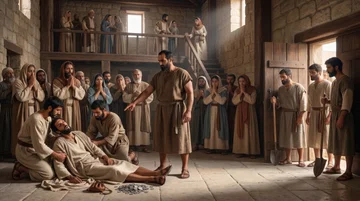
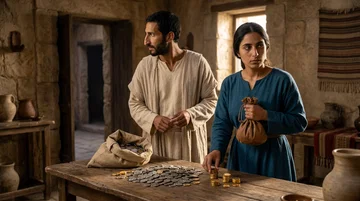
But a certain man named Ananias, with Sapphira his wife, sold a possession,
Translations
American King James Version, King James Version, KJV Cambridge Paragraph Bible, Webster Bible, Revised Version, American Standard Version, World English Bible
But a certain man named Ananias, with Sapphira his wife, sold a possession,
And a certain man, Ananias by name, with Sapphira his wife, sold a possession,
But a certain man, Ananias by name, with Sapphira his wife, sold a possession,
But, a certain man, Ananias by name, with Sapphira his wife, sold a possession,
Berean Standard Bible, Majority Standard Bible
Now a man named Ananias, together with his wife Sapphira, also sold a piece of property.
But a certain man named Ananias, with Sapphira his wife, got money for his property,
But a certaine man named Ananias, with Sapphira his wife, solde a possession,
Douay-Rheims (Challoner revision)
But a certain man named Ananias, with Saphira his wife, sold a piece of land,
Pictures



Cross-references
- Acts 4:34-37
Neither was there any among them that lacked: for as many as were possessors of lands or houses sold them, and brought the prices of the things that were sold,
Believers sold possessions and brought the proceeds to the apostles for distribution.
- Acts 5:9-10
Then Peter said unto her, How is it that ye have agreed together to tempt the Spirit of the Lord? behold, the feet of them which have buried thy husband are at the door, and shall carry thee out.
Sapphira shares the consequence of the couple’s deceit.
- Acts 4:36-37
And Joses, who by the apostles was surnamed Barnabas, ( which is, being interpreted, The son of consolation,) a Levite, and of the country of Cyprus,
Barnabas’s generous, whole gift contrasts with Ananias and Sapphira’s partial gift.
- Acts 5:11
And great fear came upon all the church, and upon as many as heard these things.
The deaths of Ananias and Sapphira brought great fear upon the church.
- Acts 2:44-45
And all that believed were together, and had all things common;
Believers shared their possessions and goods with one another.
- Acts 5:8
And Peter answered unto her, Tell me whether ye sold the land for so much? And she said, Yea, for so much.
false answer about the sale price
- Joshua 7:11
Israel hath sinned, and they have also transgressed my covenant which I commanded them: for they have even taken of the accursed thing, and have also stolen, and dissembled also, and they have put it even among their own stuff.
Both texts describe hidden theft and dishonesty among God’s people.
- Malachi 3:8
Will a man rob God? Yet ye have robbed me. But ye say, Wherein have we robbed thee? In tithes and offerings.
Both describe keeping back part of what was given to God.
- Titus 2:10
Not purloining, but shewing all good fidelity; that they may adorn the doctrine of God our Saviour in all things.
Both texts use the same Greek word for keeping back or purloining.
- Acts 4:32
And the multitude of them that believed were of one heart and of one soul: neither said any of them that ought of the things which he possessed was his own; but they had all things common.
Believers were united and shared their possessions.
- Acts 5:13
And of the rest durst no man join himself to them: but the people magnified them.
The people magnified the apostles after the judgment on Ananias and Sapphira.
- 1 Corinthians 10:11
Now all these things happened unto them for ensamples: and they are written for our admonition, upon whom the ends of the world are come.
Ananias and Sapphira’s story warns later generations.
- Joshua 7:1
But the children of Israel committed a trespass in the accursed thing: for Achan, the son of Carmi, the son of Zabdi, the son of Zerah, of the tribe of Judah, took of the accursed thing: and the anger of the LORD was kindled against the children of Israel.
Achan took for himself what was devoted to God.
- Hebrews 4:13
Neither is there any creature that is not manifest in his sight: but all things are naked and opened unto the eyes of him with whom we have to do.
Nothing is hidden from God’s sight.
- Ephesians 4:25
Wherefore putting away lying, speak every man truth with his neighbour: for we are members one of another.
The lesson’s golden text calls for putting away lying and speaking truth.
Commentary
Each commentary is drawn from primary sources: the writings of Ellen G. White and Adventist pioneers and periodicals. Each commentary is separate. Its own words are not a quotation; follow the references to read the source passages.
Ellen G. White
53 sources
Ananias with Sapphira his wife sold a possession voluntarily, joining other believers who were selling to support the needy, in contrast to the noble benevolence of Barnabas.3SP 284.2–285.2COL 72.3ST Feb 9, 1915 Under the Spirit's influence they pledged the land and its proceeds to the Lord, but when the impression lessened they regretted the pledge and agreed together to keep back a large share while bringing part as if it were the whole.3SP 284.2–285.2AC1 21.1–22.2ST Jan 29, 1880RH Feb 2, 1911 That pretense was not merely deceiving men but lying to God and to the Holy Ghost, hypocrisy and fraud rooted in love of money and covetousness while seeking a reputation for self-sacrifice.3SP 284.2–285.2AC1 21.1–22.27RED 21.1–2Ms 151, 1906, par. 25–28 Because a portion consecrated by vow is no longer the giver's own, to take it back is sacrilege and robbing God, and their instant death by divine judgment was directed to meet that first falsehood and guard the young church from demoralization.ST Jan 29, 18804T 462.2–463.3AA 71.2–73.3RH Feb 2, 1911Ms 142, 1903, par. 105–107 Their brief but terrible history stands as a danger-signal for every age, for the same withholding and deceptive dealing continues and, though often without visible displeasure now, will as surely be visited in the judgment.ST Jan 29, 18805T 148.3RH Feb 2, 1911AA 73.4–74.14T 469.2–470.2
Sale Setting and Background
Ananias acted together with Sapphira his wife in selling a possession, in contrast to Barnabas's noble benevolence, as a dark stain upon the first church.3SP 284.2–285.2 They had noted that those who parted with possessions to supply the wants of poorer brethren were held in high esteem among believers, and upon consulting together decided to sell their property and affect to give all the proceeds into the general fund while really retaining a large share for themselves.3SP 284.2–285.2 The sale followed the example of other believers who gave their possessions to support those in need, and in this Ananias and Sapphira joined the disciples in that movement of generosity. Their presence as those who joined shows that false or unworthy members were present even in the first church.COL 72.3ST Feb 9, 1915
While under the direct influence of the Spirit of God they were moved by softening grace to release selfish hold on earthly possessions, after hearing the apostles preach the gospel with power and deep conviction resting on all present.ST Jan 29, 1880 In that state they pledged certain lands and their proceeds to the Lord.ST Jan 29, 1880RH Feb 2, 1911RH Feb 2, 1911 The decision to sell and give was entirely voluntary with no compulsion and no undue influence compelling them to sacrifice.3SP 284.2–285.2AC1 21.1–22.27RED 21.1–2 The property before sale and its proceeds afterward remained in their own power to dispose of as they chose, and no one required them to give up their property.AA 71.2–73.3Ms 91, 1899, par. 34–36RH Feb 2, 1911 Their sale thus became the setting for deception, as they kept back part while presenting the gift as the full amount.AC1 21.1–22.27RED 21.1–2AA 71.2–73.3Ms 91, 1899, par. 34–36
The name Ananias in this setting has come to represent a reputation for misrepresentation, pretending to give all while keeping some back.Ms 169a, 1899, par. 3–6 The verse sets the scene for their offense against God.Lt 83, 1896, par. 19–22 The swift and terrible manifestation of divine judgment that followed was observed by the Jewish leaders and increased their fear and hatred of the apostles.SLP 12.1 The Jewish priests and rulers in council planned to accuse the apostles of murdering Ananias and Sapphira, joining that charge to insurrection and a plot to take away priestly authority and put the priests to death, in order to stir up the mob to treat the apostles as they had treated Jesus.7RED 24.3
Motives and Deceptive Agreement
By agreement together they decided to keep back a large share of the price while bringing a certain part to the apostles as if it were the whole, understating the sale price and claiming the amount named was all they had received.3SP 284.2–285.2AC1 21.1–22.27RED 21.1–2Lt 13, 1893, par. 24–26 The case was one of underhanded, deceptive work in which the keeping back with the wife privy to it was a joint plan to affect to give all into the general fund while really retaining for themselves.3SP 284.2–285.2AC1 21.1–22.27RED 21.1–2Lt 13, 1893, par. 24–26Ms 151, 1906, par. 25–28
When the heavenly impression grew less forcible they thought they had been too hasty, questioned the pledge, wished to reconsider, and drew back from fulfilling what had been promised.ST Jan 29, 1880RH Feb 2, 1911AA 74.2–75.2RH Feb 2, 1911 Covetousness first cherished in the heart led them to regret fulfilling it and to decide not to fulfil it.ST Jan 29, 1880RH Feb 2, 1911AA 74.2–75.2 Selfishness warped their character and opened the door by which Satan at once entered and gained control of their minds.ST Jan 29, 18805T 103.3
They sought both security and esteem: to secure a living from the common fund and to receive support from the common stock, to be thought liberal and self-denying, to gain a reputation for self-sacrifice and devotion and the high esteem of the brethren, and to appear generous while retaining money.3SP 284.2–285.27RED 21.1–2AC1 22.3–23.1RH Feb 2, 1911 Having noted that those who parted with possessions to supply the wants of poorer brethren were held in high esteem, they planned both to secure that esteem and to have their living estimated much higher than it really was.3SP 284.2–285.27RED 21.1–2 Their attempt to appear generous while keeping back part of the price was a deceptive effort to win praise for liberality.3SP 284.2–285.27RED 21.1–2AC1 22.3–23.1RH Apr 13, 1905
Ashamed to have brethren know their selfish souls grudged what had been solemnly dedicated and pledged to God, they deliberately talked the matter over together and decided to withhold part of the price and practice deception.ST Jan 29, 1880RH Feb 2, 19114SP 44.1–45.1 They pretended to greater generosity and to full surrender to God, acting the part of deceivers by pretending to make an entire sacrifice when they were covetously withholding a portion for themselves.ST Jan 29, 1880RH Feb 2, 19114SP 44.1–45.1
Nature of Their Sin
Their bringing of only part of the price as if it were the whole, while pretending to be wrought upon by the Holy Spirit, was hypocrisy, fraud, falsehood and dissembling.3SP 284.2–285.2AC1 21.1–22.2AA 73.4–74.1 They were two avaricious hypocrites and dissemblers who professed to serve God while worshiping mammon, and their dissembling grew out of love of money that led them to withhold means entrusted to them for God's work.3SP 284.2–285.23SP 285.3–286.17RED 22.3–23.1 Their false claim was lying not unto men but unto God, lying to the Holy Ghost and tempting the Spirit of the Lord.3SP 284.2–285.2Ms 151, 1906, par. 25–28ST Jan 29, 1880 By agreement together they kept back part of the price while bringing a certain part as if it were the whole, claimed to offer its full value to God, and understated the sale price by saying the land sold for the amount they named though it had sold for much more.Ms 151, 1906, par. 25–281T 221.2SG4 210.4
Lying is not a slight evil but an enormous sin that God regards with abhorrence.Lt 20, 1882, par. 10–12 When a matter is carried from man to God, false witness is borne not to man but to the great God himself.SG4 201.2 God reads the heart and knows the exact truth, motives and purposes in every case, so hidden iniquity cannot be concealed and He will not be mocked.RH Feb 2, 19114T 469.1ST Jan 29, 18801T 202.1–2SG4 201.2 Their withholding of what God claimed while thinking the brethren would never know it only proved that motives and purposes cannot be hidden from Him who searches the heart, even if other people do not discover it.4T 469.1ST Jan 29, 18801T 529.1–2
Their deception was the first departure from truthful dealing among believers and the first falsehood and first case of falsehood in the newly formed church.Ms 169a, 1899, par. 7–10Ms 142, 1903, par. 105–107 Their hidden iniquity was like Achan's, exposed by God and followed by swift judgment as a warning that sins bringing God's wrath in ancient Israel can also bring it upon the church.ST May 5, 1881ST Sep 1, 1909 Their covetousness expressed itself in appropriating what belonged to the Lord to supply a fancied deficiency in what they were paid, the same principle that led Judas to steal from the Lord's treasury while carrying the bag and reasoning that his labors were not sufficiently appreciated and that he had a right to pay himself according to his own ideas.Ms 142, 1903, par. 105–10713MR 189.2–190.1 Secretly misappropriating sacred funds and excusing dishonesty in handling money given for God's work corrupts conscience and character, betrays God's cause and endangers the soul.13MR 189.2–190.1
Like Judas among the twelve they belonged to the class who profess to follow Christ while secretly cherishing iniquity, acting the part of deceivers in the church by pretending to make an entire sacrifice for God when covetously withholding a portion for themselves.4SP 44.1–45.1 They cherished evil under profession of godliness and shunned plain practical truth that exposes error, and all who so cherish evil hate those who condemn their sin and will betray faithful reprovers when opportunity comes.4SP 44.1–45.1 One not wholly consecrated to God, led by Satan to lie to the Holy Ghost, may do Satan's work while believing himself to serve Christ.5T 103.3 No one can defraud God of what is His and prosper any more than Ananias and Sapphira could, for all people are God's property.Ms 95, 1902, par. 17–19
Vows and Giving Principle
A pledge to support God's work made when stirred by the Spirit is a vow to God, not merely a promise to people.4T 462.2–463.3AA 71.2–73.3RH Feb 2, 19114T 469.2–470.2 Once a portion has been consecrated by such a vow it is no longer the giver's own to keep back or use for self.RH Feb 2, 1911AA 74.2–75.24T 469.2–470.2 Ananias and Sapphira had pledged the proceeds of their sold possession to the Lord and then withheld part of the price while pretending to give all.4T 462.2–463.3AA 71.2–73.3RH Feb 2, 1911AA 74.2–75.2
To take back what was pledged to advance God's sacred work is sacrilege and a broken vow made to God, not to man.4T 469.2–470.2ST Jan 29, 1880 A verbal or written pledge made in the presence of brethren is a contract between the giver and God, more binding than any promise to fellow men or any legal bond.RH Feb 2, 1911ST Jan 29, 1880 Such a vow must be sacredly kept and not released.4T 469.2–470.2ST Jan 29, 1880
The verse stands under God's plan of systematic benevolence in which the work bears equally on all according to ability, and each is his own assessor to give as he purposes in his heart.RH Feb 2, 1911ST Jan 29, 1880 Voluntary offerings and the tithe are God's revenue, what He claims in the tithing system.RH Feb 2, 1911ST Jan 29, 1880 Their sin was withholding a portion of what God claimed while thinking the brethren would never know it.4T 469.1ST Jan 29, 1880
Withholding what God claims in tithes and offerings, even if undiscovered by others, is sin because God searches the heart and knows human motives and purposes.4T 469.1ST Jan 29, 1880 To withhold part of the proceeds from a sale while pretending to meet God's requirements is robbing God.4T 469.1ST Jan 29, 18805T 150.2 God exposed Ananias and Sapphira as evidence that motives and purposes cannot be hidden from Him, and their example is a perpetual warning to Christians of all ages against the sin to which human hearts are continually inclined.4T 469.1ST Jan 29, 18805T 150.2
God will not accept a stinted, unwilling offering brought while means are spent lavishly on self-gratification.RH Feb 2, 1911TBC1868 16.1–17.1 A small offering given while withholding what is due to God is no more acceptable when people spend freely to gratify themselves.RH Feb 2, 1911TBC1868 16.1–17.12T 127.2–128.1 Withholding from God what one ought to give while spending freely on self-gratification is an attempt to rob God, and even a small offering given unwillingly when withheld from duty is not accepted.TBC1868 16.1–17.12T 127.2–128.1
Guilt for breaking such a pledge rests on others in proportion to similar offenses.4T 470.3–472.1ST Jan 29, 1880 Vows and actions are weighed in the balance of justice in the heavenly courts.4T 470.3–472.1ST Jan 29, 1880 Though the same sin repeated now is often without visible displeasure, it will as surely be visited in the day of judgment, with many feeling the curse of God even in this life.4T 469.2–470.2ST Jan 29, 1880
Judgment and Church Purity
When exposed their punishment was instant death by divine judgment, and in that death they lost both this life and the life to come.ST Jan 29, 1880RH Feb 2, 1911Ms 91, 1899, par. 34–3613MR 188.3–189.1Lt 20, 1882, par. 10–12 Keeping back part of the price while bringing a certain part as if it were the whole met sure punishment because it was lying to the Holy Ghost, tempting the Spirit of the Lord, and lying not unto men but unto God.Ms 151, 1906, par. 25–28ST Jan 29, 1880RH Feb 2, 1911 Their deception was wholly voluntary, for no one required them to give up their property, yet God searched them out and struck them both dead as a warning against dishonesty, fraud and falsehood.Ms 91, 1899, par. 34–3613MR 188.3–189.1Lt 20, 1882, par. 10–12 Peter's dealing with them was directed by the Lord to meet that first departure from truthful dealing among believers at its start in order to prevent untold evil.Ms 142, 1903, par. 105–107
The signal manifestation of God's wrath and retributive justice was detected and exposed by the evidence of the Spirit of God and the Spirit of truth to the apostles.3SP 285.3–286.17RED 22.3–23.1RH Apr 13, 19054SP 44.1–45.1GC88 44.1 The Holy Spirit read the deception of two avaricious hypocrites and dissemblers who professed to serve God while worshiping mammon, and sudden stern punishment came upon them, showing deep contempt for all deception.3SP 285.3–286.1RH Apr 13, 1905Lt 15, 1905, par. 6 The Spirit of truth revealed their real character as deceivers in the church who pretended to make an entire sacrifice while covetously withholding a portion for themselves.4SP 44.1–45.1GC88 44.1 A special example was necessary to guard the rapidly increasing young church from becoming demoralized and disgraced.ST Jan 29, 18803SP 285.3–286.1 By that judgment God forever rid the church of this foul blot upon its purity and removed this stain from the church.4SP 44.1–45.1GC88 44.1GC 43.2–44.1
The marked judgment brought great fear upon the church and upon all that heard.Ms 151, 1906, par. 25–28ST Jan 29, 1880 It excited reverential awe in all the new converts and produced greater caution and more thorough self-examination in testing the motives of actions.AC1 22.3–23.13SP 285.3–286.1 It checked the spread of such hypocrisy in the rapidly growing church and served as a needed warning to the early church.AC1 22.3–23.17RED 22.3–23.1 This signal evidence of the discerning Spirit of Christ in the church was a terror to hypocrites and evildoers, who could not long remain in connection with those who in habit and disposition constantly represented Christ.4SP 44.1–45.1 So as long as trials and persecution continued the church remained comparatively pure, but when persecution ceased less sincere and devoted converts were added and the way was opened for Satan to obtain a foothold.4SP 44.1–45.1
Their fate proves that God has not changed but is the same God in the gospel that He was in the time of ancient Israel.Ms 67, 1894, par. 18–20 It shows the responsibility resting upon those who stand in high positions of trust not to pass over known sin but to purge it from among God's people.Ms 67, 1894, par. 18–20
Warning for Later Generations
The brief but terrible history that begins with a man and his wife selling a possession was traced for the benefit of all who profess to follow Christ as a danger-signal not only to the early church but to Christians in every age.ST Jan 29, 1880RH Feb 2, 1911AA 73.4–74.14T 469.1ST Jan 29, 1880 It is a perpetual warning against withholding a portion of what God claims in the tithing system while thinking no one will know, for God searches the heart and no motive or purpose can be hidden from Him.4T 469.1ST Jan 29, 1880ST May 5, 1881 The judgment that exposed their hidden iniquity, like that of Achan, shows that sins bringing God's wrath in ancient Israel can also bring it upon the church.ST May 5, 1881 God requires faithfulness in the performance of vows, and the warning should lead all to fear and tremble to repeat sins that brought such punishment, condemning selfishness and fraud still practiced in withholding from God what He claims and thus robbing Him in conflict with His arrangements to diffuse light and truth.ST Jan 29, 1880 Their example warns the church in every generation against covetousness, pretending to serve God, and withholding what has been dedicated to Him.AA 73.4–74.1
The same sin continues, for there are many Ananiases and Sapphiras in our day whom Satan tempts through love of money to withhold by various plans and excuses from God's treasury the means entrusted to them for the advancement of His work.AC1 22.3–23.13SP 285.3–286.11T 529.1–2 Love of money leads professed Christians to dissemble and withhold means entrusted to them, pretending to give the whole while secretly keeping part.AC1 22.3–23.17RED 22.3–23.1 In any great religious movement there is always a class carried away by the current of feeling who soon reveal selfishness and vainglory, and such persons can never be an honor to the cause they advocate.3SP 285.3–286.1 Should the same punishment be visited now there would be many dead bodies in churches requiring burial, for concealing covetousness does not remove responsibility to use entrusted property for God's cause.3SP 285.3–286.11T 529.1–2
Although the same fraud, selfishness, and covetousness remain prevalent and are now often repeated without visible displeasure, withholding from God is no less heinous, destroys the soul, endangers eternal life, and will as surely be visited in the day of judgment.5T 148.3RH Feb 2, 19114T 469.2–470.2ST Jan 29, 1880Ms 91, 1899, par. 37–38 A pledge made to support God's work is a vow to God and not merely a promise to people, binding and to be judged even when no visible punishment follows at the time.4T 469.2–470.2 The same sin repeated now is just as heinous in God's sight even though no visible mark of displeasure follows as then, with many feeling the curse of God even in this life.ST Jan 29, 1880 The same divine displeasure rests on dealings in the Lord's work that are not straightforward but deceptive, oppressive and unjust, using lawyers to take advantage of circumstances, exacting exorbitant prices, hindering the work, conniving at fraud and diverting His means into a wrong channel.Ms 151, 1906, par. 25–28 It rests likewise on any who give the impression that profits are used to aid benevolent enterprises while in reality they are used for personal interests, and all who deceive in this way will surely meet the same fate in the day of final reckoning.Ms 92, 1902, par. 57–61
Their presence shows false or unworthy members were present even in the first church, for they joined the disciples and became examples of such.COL 72.3ST Feb 9, 1915 Yet this does not make Christianity untrue or warrant discouragement, and Christians are to bear patiently with false brethren who remain in the church.COL 72.3 The lesson requires that all selfish meanness, underhand conduct, and deception be put away from the character, for the same Spirit that exposed their deceit still condemns all underhand dealing today.RH Apr 13, 1905Lt 15, 1905, par. 6 Practices offensive to God must not be used to control others, and no one can defraud God of what is His and prosper any more than they could, for all people are God's property; the warning is to forsake sin and turn to God and cultivate the Christian graces, because the influence of one unrepentant sinner is defiling and corrupts many others.Lt 83, 1896, par. 19–22Ms 95, 1902, par. 17–19 Christian fathers should pray with their children about lying and impress its enormity upon their minds, lest they repeat sins that brought such punishment, for lying is not a slight evil but an enormous sin regarded with abhorrence.Lt 20, 1882, par. 10–12
Sources
Pioneers and periodicals
110 sources
Acts 5:1 opens the account of Ananias joining with his wife Sapphira to sell a piece of land during the early Jerusalem sharing when believers sold houses and lands and laid the price at the apostles' feet, standing in contrast to Barnabas.RH Jul 22, 1909ST Jul 7, 1914 The selling and the giving were wholly voluntary, for the property was their own before sale and the money remained in their own power to keep or to give.ST May 20, 1889ST Aug 5, 1889 Under the moving of the Holy Spirit they pledged the proceeds to God, making it consecrated to Him, then jointly agreed to keep back part while presenting the gift as the whole.ST Jan 29, 1880ST Jul 7, 1914ST Feb 5, 1902ST Oct 14, 1880ST May 10, 1883 Their guilt was not in keeping part, which they were free to do, but in hypocrisy and deceit for reputation, lying not to men only but to the Holy Spirit and to God.RH Jul 22, 1909ST May 10, 1883ST Aug 5, 1889 The Spirit exposed the hidden lie through Peter, and swift death followed as retributive judgment, cleansing the infant church and striking fear on all who heard.ST May 20, 1889RH Dec 1, 1910RH Sep 28, 1916ST Feb 5, 1880ST Jan 22, 1902
Words and Historical Setting
The opening word sets Ananias and Sapphira his wife over against Barnabas, for Barnabas had freely given the whole price of land sold while they sold a possession meaning land or property and did otherwise.RH Jul 22, 1909ST Jul 7, 1914ST Jan 21, 1897ST Jul 29, 1897 Their sale took place after Pentecost in the early Jerusalem church when believers sold lands or houses and laid the prices at the apostles' feet for distribution to each according to need.RH Jul 22, 1909ST Feb 5, 1902ST Jan 21, 1897ST Jul 29, 1897 That sharing of resources supported those in need and carried forward the gospel work at a time when persecution was scattering believers and funds were needed, and Ananias and Sapphira acted after seeing others give their possessions to support the community.RH Jul 22, 1909ST Jul 7, 1914ST Feb 5, 1902ST Jul 29, 1897 They wanted to appear as generous as the others and to gain both security from the common fund and the esteem of the church, so they kept back part while presenting the gift as the whole amount.ST Jul 7, 1914ST Feb 5, 1902ST Jan 21, 1897ST Jul 29, 1897
No one required them to sell or to give all, for the sale and the gift were entirely voluntary.ST May 20, 1889ST May 18, 1904ST Jul 29, 1897RH Jul 22, 1909 The property remained theirs before the sale and the proceeds remained in their own power to keep or give, still theirs to control even though it was customary to give such proceeds to the apostles for the gospel.ST May 20, 1889ST Aug 5, 1889ST May 18, 1904ST Jul 29, 1897 Their vow when stirred to consecrate made them responsible to fulfill it, but the act of selling itself was not imposed by compulsion or human rule over conscience.ST May 20, 1889ST Aug 5, 1889ST May 18, 1904RH Jul 22, 1909
The keeping back was deliberate joint deception, for Sapphira knew and agreed with Ananias to withhold part of the price while bringing only part and laying it at the apostles' feet as if whole.ST Jan 29, 1880ST Feb 5, 1902ST May 10, 1883ST Feb 5, 1902ST Feb 5, 1902 They talked the matter over together and decided to withhold, cherishing covetousness in the heart before the outward act and persisting in a place of solemn prayer.ST Jan 29, 1880RH Feb 2, 1911ST May 10, 1883ST Feb 5, 1902ST Feb 5, 1902 Even silent giving of only part with desire to appear better than they were would have been hypocrisy, and their course sought a reputation for generosity without the corresponding self-denial.ST Jan 29, 1880RH Feb 2, 1911ST May 10, 1883 Tested separately, Ananias fell after hearing conviction and Sapphira affirmed the same false price when questioned and died at rebuke, showing both as partners in the false report and as agents bringing serious deceit into the first church under the new order.ST Jan 29, 1880RH Feb 2, 1911ST May 10, 1883ST Feb 5, 1902ST Feb 5, 1902
The word rendered keep back in this account is the same Greek word rendered purloining in Titus 2:10, meaning withholding or appropriating property entrusted to someone.RH May 5, 1863 Its sense there warns servants against taking their masters' property for their own use, and here it marks the withholding of what had been pledged.RH May 5, 1863
The episode belongs to the first century apostolic age, the Ephesus church period when the church went forth conquering and to conquer and the gospel was preached in its purity with demonstration of the Spirit and of power and mighty works.ST Feb 9, 1915RH Oct 16, 1900RH Feb 28, 1856ST Jul 7, 1914RH Jul 2, 1857 Ananias and Sapphira belonged outwardly to the visible church and had joined the early disciples, though membership did not necessarily represent the true subjects of God's kingdom.ST May 10, 1883ST Feb 9, 1915RH Oct 16, 1900RH Feb 28, 1856ST Jul 7, 1914 Ananias was of the wealthy class, and their presence shows that false-hearted professors and unworthy believers could be present even then and that the purest preaching does not shut them out.ST May 10, 1883ST Feb 9, 1915RH Feb 28, 1856ST Jul 7, 1914RH Jul 2, 1857
Voluntary Gift and Sacred Vow
Under the direct influence of the Spirit of God and His softening grace, Ananias and Sapphira were moved to release their selfish hold on earthly possessions and pledged certain lands, or a set amount of the proceeds, to the Lord for His work and the support of believers in need.ST Jan 29, 1880RH Feb 2, 1911ST Jul 7, 1914RH Jul 22, 1909RH Jun 30, 1903 The pledge was made while deep conviction rested upon all who heard the gospel preached with power, but when that heavenly influence grew less forcible they thought they had been too hasty, questioned the pledge, wished to reconsider it, and opened the door to covetousness first cherished in the heart.ST Jan 29, 1880RH Feb 2, 1911ST Jul 7, 1914 Ashamed to have their brethren know their selfish souls grudged what they had solemnly dedicated, they talked the matter over together and deliberately decided to withhold part of the price while seeking the esteem given to wholehearted sacrifice and seeking to secure their own living.ST Jan 29, 1880RH Feb 2, 1911ST Jul 7, 1914RH Jul 22, 1909RH Jun 30, 1903 The warning covers both vows to draw nearer to God and to be faithful and devoted and vows of financial pledges to support the cause.ST Oct 14, 1880
Once they decided to devote the sale proceeds to God's cause the property belonged to God and became consecrated and holy to Him, whether expressed in a formal vow or signified by outward dedication.ST Jan 29, 1880ST Sep 6, 1883ST Oct 14, 1880ST May 10, 1883RH May 22, 1913 Secretly keeping part for themselves after that dedication was therefore theft, fraud against God, sacrilege in taking back what was pledged, and robbing Him of what was due to Him to advance His sacred work.ST Jan 29, 1880RH Feb 2, 1911ST Jan 29, 1880ST May 10, 1883RH May 22, 1913 A promise freely made to God under the influence of the Holy Spirit leaves no right to the consecrated portion, for what is vowed and accepted by Him must be held sacred.RH Feb 2, 1911ST Oct 14, 1880RH May 22, 1913
Vows and pledges made to God are sacred, binding, and must be faithfully paid and not treated lightly or counted as nothing, for to forget them is evil, a snare, a source of weakness, and a violation of integrity before God.ST Sep 6, 1883ST Oct 13, 1881ST Oct 14, 1880RH Jun 30, 1903 This faithfulness is required in pledges of money, service, tithe, and offerings to carry forward His work, and keeping them strengthens moral integrity and puts a person in the way of blessing.RH Feb 2, 1911ST Oct 13, 1881ST Oct 14, 1880RH Jun 30, 1903 A verbal or written pledge made in the presence of brethren is a contract between the giver and God, more sacred and binding than promises to men, written agreements, or any legal bond, and it must be sacredly kept and not released.RH Feb 2, 1911ST Jan 29, 1880 People may deceive others, but they cannot deceive God who knows the heart and searches out hidden sin, and vows and actions are weighed in the balance of justice in the heavenly courts.RH Feb 2, 1911ST Jan 29, 1880RH Jun 30, 1903
The same fraud often repeated since is not attended with immediate visible displeasure, and liars may now appear to escape instant death, but such unfaithfulness remains sinful in the present dispensation and is no less heinous in the sight of God.ST Jan 29, 1880RH Feb 2, 1911ST Sep 6, 1883RH Oct 20, 1874RH Jul 30, 1908 God does not execute every sentence against evil immediately, but leaves room to obey from conscience and moral principle rather than mere fear.ST Mar 24, 1887 Every work will ultimately come into judgment, the same sin will as surely be visited upon the transgressor in the day of judgment to the destruction of the soul and the loss of this life and the life to come, and many even in this life feel the curse of God and the destruction of the work of the hands.ST Jan 29, 1880RH Feb 2, 1911ST Jan 29, 1880ST Sep 6, 1883ST Oct 14, 1880
Nature of Their Sin
Their guilt was not in keeping part of the money, for the property and its proceeds remained in their own power to keep or give, and no one required them to sell or to give all, but in deceitfully keeping back part while presenting the gift as the whole amount.ST Aug 5, 1889RH Jun 20, 1871ST Jul 29, 1897ST May 10, 1883 They wanted the reputation, honor, credit, fellowship and esteem of wholehearted generosity without its self-denial, seeking both security from the common fund and the praise of the church, and access to that fund without the sacrifice it required.ST May 10, 1883RH Jun 20, 1871ST Jul 29, 1897ST May 10, 1883 Even a silent partial gift given to appear better than they were would have made them guilty, for their sin was hypocrisy and not merely lying.ST May 10, 1883ST May 10, 1883 Those who profess to give themselves wholly to Christ are thus warned not to reserve what they have promised to give.RH Jun 20, 1871
Their falsehood was lying to the Holy Spirit and to God and not merely to men, judged by the perfect law of heaven, which makes it a far greater offense.ST Jan 29, 1880ST Aug 5, 1889ST Feb 5, 1902ST Jul 29, 1897 By publicly acting as those filled with the Spirit and giving all, while pretending their action was prompted by the Holy Spirit, they practiced a pantomimic lie, an insult to that sacred Power and an effort to tempt the Spirit of the Lord.ST Jan 29, 1880RH Jul 22, 1909 They persisted in this deception in a place of solemn prayer, and defrauded the Lord who searched them out.ST Jan 29, 1880ST May 10, 1883
They lied by conveying the false idea that the amount brought was the full price, as when the question was asked whether the land was sold for so much and the answer was given yes for so much.ST Sep 6, 1883RH Jan 17, 1865RH Jan 17, 1865 The words used could in one sense be claimed as technically true, since they did sell it for that amount and something more, yet the deceptive half-truth that misleads for advantage leaves the speaker unjustified and still lying.ST Sep 6, 1883RH Jan 17, 1865RH Jan 17, 1865 Keeping back part of the truth for advantage is therefore lying, and will meet certain punishment.RH Jan 17, 1865RH Jan 17, 1865
The sin grew from selfishness that warped the character, avarice resisting the giving of everything, and covetousness first cherished in the heart.ST Jan 29, 1880RH Feb 2, 1911ST Jul 7, 1914RH Oct 31, 1865 That love of money, which is idolatry and the root of evil opposed to the worship of God, led them to regret the pledge, think they had been too hasty, reconsider and withhold for security, while desire for praise led them to appear as devoted as others.ST Jan 29, 1880RH Feb 2, 1911RH Oct 31, 1865 It shows itself still when people live in luxury and spend lavishly on self-gratification yet give little to God while claiming it is all they can spare.RH Feb 2, 1911ST Nov 28, 1892ST Feb 20, 1907
The act broke the ninth precept against lying, the eighth against stealing by keeping back part of the truth to advantage themselves in buying and selling and failing to tell the whole truth and give and take only an equivalent, and the command not to covet.ST Sep 9, 1913RH May 15, 1856RH Sep 17, 1872RH Jul 30, 1872 Every wilful transgression of the Ten Commandments brings the transgressor under its curse, and such dishonesty in business dealings even within the church and excused by custom will be exposed and condemned in the judgment.ST Sep 9, 1913RH Sep 17, 1872 Their hearts were not right with God and not ruled by love for Him, for they had cherished sin inwardly before yielding to temptation and had already agreed in the heart to lie before the outward act.RH Oct 31, 1865RH Jan 20, 1916ST Nov 14, 1895 The single act did not by itself settle their fate but pointed to a longer course of deliberate choices, showing that people are not lost by accident but by the direction they have willingly chosen, and that breaking the hedge of conscience, the knowledge of right and wrong, brings sin's consequences and risks loss of the soul through self-deceived false confidence.RH Jan 20, 1916RH May 22, 1900ST Nov 14, 1895ST Jun 5, 1879ST Dec 16, 1913
Exposure and Divine Judgment
The sin was exposed because the Holy Spirit was specially present in the early church, and Peter possessed spiritual discernment to know hidden thoughts and plans by power given to him.RH Dec 1, 1910RH Sep 28, 1916RH Apr 7, 1868RH Mar 18, 1915 When he spoke under the Spirit's direction he acted as the Lord's representative and spokesman, so his word carried the power of God's command and his reproof guarded the infant church from hypocrites.ST Jan 22, 1902ST Feb 5, 1902RH Mar 18, 1915 Scripture already states the moral principle from God, as in the command not to covet, but the gift of the Spirit was still necessary to point out personal fault in new circumstances, to reprove secret sin, to bring duty to remembrance, and to say in effect to the guilty, Thou art the man.RH May 15, 1856
Conviction was followed by instant death as marked retributive justice and immediate judgment for guilt, an object lesson of God's abhorrence of lying and a temporal showing of the wages of sin as warning of eternal penalty.ST Jan 29, 1880ST May 20, 1889ST Feb 5, 1880 This was not the general time of recompense when all receive reward, but God sometimes making His displeasure known at the time of transgression.ST Feb 5, 1880 Ananias fell after hearing his conviction, not after a formal sentence was pronounced, and Sapphira fell after being questioned separately, affirming the same false price, and receiving rebuke and sentence through the Spirit.ST Jan 29, 1880RH Feb 2, 1911ST Feb 5, 1902 Their lying was judged not by an earthly standard between man and man but by the perfect law of heaven as lying to the Holy Ghost and to God, which explains the swiftness and severity of the punishment.ST Jan 29, 1880RH Feb 2, 1911ST May 20, 1889ST Feb 5, 1902
They brought the lie into a specially manifest presence of God among the believers, seeking popularity, honor, credit, fellowship and support like that given to devoted givers such as Barnabas, by giving only part while pretending to give all and keeping back the rest to secure themselves.STST Sep 3, 1894ST Jul 29, 1913 That presence which blessed those separated from sin slew those identified with sin, for sin cannot remain with impunity in the presence of God's Spirit.STST Jan 29, 1908ST Oct 9, 1901ST Jul 29, 1913 God destroyed them with the lie and accepted no substitute for faithful service, and Christ thereby showed His direction of the church in discipline as its head.STST Sep 24, 1896 Their fate is compared with Nadab and Abihu's death for offering strange fire before the Lord.ST Sep 3, 1894
Peter's dealing with them was a practical illustration of the specific endowment of power to remit or retain sins upon persons conferred when Christ breathed the Holy Ghost upon the apostles.ST Jan 22, 1902RH Jun 11, 1901ST Feb 5, 1902 That power no church nor any individual now possesses, and it could not be transferred to associates or successors.RH Jun 11, 1901 His words showing the lie was against God, and the judgment that manifested Christ's presence with the church, confirm that the apostles in this act were God's spokesmen.ST Jan 22, 1902ST Feb 5, 1902
Purity and Growth of Church
The sudden death that followed the sale kept hypocrisy from spreading in the fast-growing company of believers and moved the rest to caution and self-examination. The Spirit exposed the pretense and swift punishment followed, cleansing the organized body of uncleanness and relieving it of unworthy members.ST Oct 16, 1893ST Sep 24, 1896 In this Christ directed His church in discipline as its head and made His presence with it known.ST Sep 24, 1896 By pretending an act prompted by the Spirit while seeking both security from the common fund and the esteem given to wholehearted givers like Barnabas, the offenders identified themselves with sin in the very presence that blesses the separated but slays the impenitent, and that presence kept the early church pure.ST Jul 29, 1913 That same discernment through Peter guarded the infant church from hypocrites.RH Mar 18, 1915 Their fate therefore stood as a warning that kept hypocrites from joining while sincere believers were added in great numbers.ST Apr 4, 1900
Great fear came upon the church and upon all who heard when Ananias fell and when Sapphira fell after separately affirming the same false price.ST Jul 29, 1897RH Apr 7, 1868 The judgment frightened off all who were like-minded, so that others dared not join themselves to the apostles.ST Jul 29, 1913ST Jun 27, 1900 The apostolic body thus showed itself a real organized body with authority to cleanse itself of hypocritical members, and was kept clear of hypocrites by this power.ST Jun 27, 1900 At the same time those who were seeking God yielded themselves, and sincere believers were added in multitudes, including five thousand more in Jerusalem.ST Apr 4, 1900ST Jul 29, 1913 This stands in contrast to the pure unselfish life of Stephen.ST Jul 29, 1913
The hidden iniquity was like that of Achan in Israel, and like the concealment of coveting and deceit before God's people.ST May 5, 1881RH Dec 2, 1858 As the counterpart to Achan, this inward sin threatened the church just before a great work for God and could hinder its progress and delay the community.RH Sep 28, 1916RH Jun 12, 1913 The presence of the Spirit with Peter's spiritual discernment exposed and removed the sin before that work was undertaken.RH Dec 1, 1910RH Sep 28, 1916 In this way the church did not suffer a defeat like Israel at Ai, but instead the record that follows is revival with many joining the Lord.RH Dec 1, 1910RH Sep 28, 1916 The lesson remains that cherished hidden sin brings failure and putting sin away prepares the way for God's work, while uncleanness like that of the Ananiases, like that of the Achans, must be removed if the church is to know apostolic purity before receiving fulness of the Spirit's power.RH Sep 28, 1916ST Nov 15, 1899 Such sins bringing wrath in ancient Israel can also bring it upon the church in every age.ST May 5, 1881
What happened then shows what the church will be like when the power of the Spirit comes in fulness before the close of the work and when the restoration of all things is completed.RH Dec 4, 1913RH Nov 12, 1901 The divine presence will again be so manifest that great fear will come upon all the church and all who hear.RH Dec 4, 1913 No insincere person will dare to join himself to them, for hypocrisy hiding beneath a cloak of piety will not be able to stand.RH Dec 4, 1913RH Nov 12, 1901 Unworthy members will go out of their own choice to more congenial associations, even to Babylon, while true believers who love the truth will be added to the Lord in multitudes of men and women.RH Dec 4, 1913RH Nov 12, 1901 The latter rain, like the outpouring at Pentecost, will therefore bring not only great power and results but also deadly consequences for some who fall under it and do not rise again.RH Mar 30, 1905
Terrible sins were discovered within even while the gospel was preached in its purity with demonstration of the Spirit and of power and mighty works.RH Feb 28, 1856ST May 19, 1881 Ananias and Sapphira lied to the Holy Spirit to save worldly wealth while keeping the name of giving it all, and were counted among the early believers and among the converts of the great revival begun at Pentecost.RH Feb 28, 1856RH Sep 9, 1858 Their presence proves that even primitive purity and mighty works do not shut out false-hearted professors and bad members, without making the church as a whole bad.RH Jul 2, 1857ST Jul 21, 1898 People may belong outwardly to the visible church while deceived about their spiritual condition, and the church has never been free of unfaithful members.RH Sep 9, 1858 So the present Third Angel's Message will also be professed by the untrue-hearted, whose real character only the judgment will fully determine.RH Feb 28, 1856RH Jul 2, 1857
Scripture Parallels and Doctrine
The hidden iniquity in the early church and its swift removal correspond to Achan's concealment of sin within Israel, for as his sin threatened Israel before its work and brought defeat at Ai, so the sin of Ananias and his wife threatened the church before a great work for God and its exposure and removal prevented such defeat and prepared the way for revival and many joining the Lord.ST May 5, 1881RH Dec 1, 1910RH Sep 28, 1916RH Dec 2, 1858 Concealing sin within the church is therefore a serious wrong in every age, and cherished hidden sin brings failure while putting sin away prepares for God's work.ST May 5, 1881RH Sep 28, 1916RH Dec 2, 1858 Their death for attempting to join with false hearts also matches the death of Nadab and Abihu for offering strange fire before the Lord, showing God's powerful and holy presence among believers after the crucifixion as before it.ST Sep 3, 1894ST Jan 2, 1901 This proves God has not changed and is no less merciful and no more merciful than under the theocracy, because sin is death and righteousness is life and sin in this age will as surely be punished as sin in that age.ST Jan 2, 1901
Withholding part of the price while pretending to fulfill the vow illustrates robbing God in tithes and offerings, as when one claims to pay a full tithe while knowingly withholding part of it.RH Sep 17, 1908RH Jul 22, 1909RH Jul 22, 1909 A tithe is a tenth of all increase, and giving it according to God's plan provides means to carry forward His work, while withholding what is due to God through selfishness that hardens the heart is robbery and lying to the Holy Spirit even where there is a reputation as a faithful tithe-payer.RH Jul 22, 1909RH Jul 22, 1909 The same deception appears in secretly holding back part of the price or value while representing property as less valuable than it really is, in understating worth, and in offering a grudging deceptive token while concealing selfishness.ST Jan 29, 1880RH Apr 20, 1869 Under God's plan of systematic benevolence the work bears equally on all according to ability with each as his own assessor to give as he purposes in his heart, yet what God claims in the tithing system must not be withheld on the thought that brethren will never know it, for He searches the heart and motives and purposes cannot be hidden from Him.ST Jan 29, 1880 His people are therefore duty bound to give to help the cause, to spread and support the gospel and assist the destitute, to pay vows pledged to the cause diligently according to a scriptural plan, and to give cheerfully to the Lord His dues first rather than serving self and the world first, which is wrong and heinous; honest and acceptable doing brings His approval and the word Well done at Christ's appearing.RH Apr 20, 1869 God looks at motive, holds each steward accountable, rejects such withheld offerings, and requires free-will, cheerful, whole giving to carry forward His work and relieve need, with the punishment of Ananias and Sapphira for pretending to give God what they kept for themselves standing as a perpetual warning against dishonesty in giving and against taking the holy tithe or Sabbath for personal use.ST Jan 29, 1880RH Sep 17, 1908
The early sharing of goods illustrated by the sale was voluntary and not a system imposed by compulsion, for the property remained theirs before the sale and the proceeds were still theirs to give or keep.ST May 18, 1904 Human rule must not take the place of conscience or God.ST Apr 23, 1912 That common life depended on the Holy Spirit's presence and guidance and on free choice without selfishness and hypocrisy, since selfish motives could exploit the sharing of possessions for personal gain, and common ownership is not genuine when it is not freely chosen and free from such motives.ST Mar 16, 1904
The sudden deaths under the new covenant, after the old covenant had passed away, demonstrate that God's law remains the rule of conduct and its penalty for transgression still stands, even though Christ's servants have no commission to inflict physical punishment on members and execution of the sentence is reserved for the future.ST Jan 24, 1906 God takes obedience to His word seriously and judges those who treat as interchangeable what He has distinguished as sacred and common, remaining jealous of His word, as applied to the distinction between the day He sanctified and other days offered to Him.RH Oct 28, 1873 He requires obedience rather than selective compliance and treats disregard of obedience as unimportant with grave consequence.RH Oct 28, 1873ST Mar 5, 1912 The account is an example of apostolic discipline in the church, not evidence that the apostles had authority to change God's moral law or the Sabbath.RH Nov 14, 1871
Warnings for Believers Today
Ananias with Sapphira his wife sold a possession after seeing other believers give to support those in need, and then kept back part of the proceeds while presenting the gift as the whole amount, seeking both security from the common fund and the esteem of the church for wholehearted generosity.ST May 10, 1883RH Jun 20, 1871 Their giving was entirely voluntary, for the property and its price had been in their own power, and their guilt lay not in keeping part but in deceitfully pretending to give all.RH Sep 17, 1908RH Jun 20, 1871 By acting as if prompted by the Holy Spirit they lied to God and not merely to men, and love of money led professed Christians in the same way to dissemble and withhold means entrusted to them for God's work.ST May 10, 1883 The same warning reaches those who withhold part of the tithe while claiming to be faithful tithe-payers, and those who profess to give themselves wholly to Christ while reserving what was promised.RH Sep 17, 1908RH Jun 20, 1871 Living in luxury yet giving little to God while claiming it is all that can be spared is the same deceit, and giving to the Lord for worldly gain as a bargain is even worse than their example.ST Nov 28, 1892ST Feb 20, 1907
Partial consecration presented as whole surrender is no consecration at all, for money can be divided but the heart cannot be divided.RH Sep 30, 1902ST Jan 6, 1888 Ananias and Sapphira sought the reputation for complete consecration without the experience, giving some of the money but none of the heart, keeping back part of the price and thereby keeping back the whole of the heart.RH Sep 30, 1902ST Jan 6, 1888ST Jan 21, 1897 Their course is what hypocrites of all ages do, professing to give themselves to God while withholding self, the great part of the price, and such profession is no more acceptable than their misrepresented gift.ST Jan 21, 1897 God demands the whole heart, exact obedience, and full self-surrender and self-control, and will accept no half-way service or substitute offering.ST Jan 6, 1888ST Apr 8, 1875RH Nov 20, 1856 He who gives all receives all, laying all on the altar and laying up treasure in heaven after Christ's example rather than laboring to add to earthly possessions.RH Sep 30, 1902RH Nov 20, 1856
The same deed warns against dishonesty in giving and business, including neglecting giving, understating worth, putting property down below true value for systematic benevolence, and lying and stealing for self-advantage within the church.RH Apr 20, 1869RH Jul 2, 1867RH Apr 9, 1867 To understate the value of property to withhold means when there is plenty to support and carry on the work if consecrated is to attempt to deceive God, which is impossible, and is foolish to imperil salvation for part of the price of a farm.RH Apr 20, 1869RH Jul 2, 1867 God's people are duty bound to give to help the cause, spread and support the gospel, and assist the destitute, to pay vows pledged to the cause diligently according to a scriptural plan, and to give cheerfully to the Lord His dues first rather than serving self and the world first.RH Apr 20, 1869RH Apr 9, 1867 True religion does not excuse, shield, or tolerate sin to spare feelings, but strips off the covering of hypocrisy and deceit and reproves plainly without regard to consequences, and such dishonesty about business matters meets God's displeasure and will be exposed and condemned in the judgment.RH Apr 15, 1858RH Dec 10, 1903RH Jul 22, 1873
The account also warns against hypocrisy that seeks popularity, honor, credit, fellowship, support, and good society through the growing church.ST May 10, 1883STST Jul 29, 1913 Ananias and Sapphira gave only part while claiming the credit of giving all and keeping back the rest to secure themselves in case the early church failed, bringing that lie into a specially manifest presence of God.STST Jul 29, 1913 Joining God's church is therefore a solemn matter, for hypocrisy and dishonesty are incompatible with its holiness, and using Christian profession to advance selfish ends is presumption.ST Jul 14, 1881ST Mar 18, 1903ST Dec 24, 1912
Their divided commitment warns against self-deception and the almost-Christian life of false confidence, in which a person closes the eyes to evidence of sin and misery and thereby risks loss of the soul.ST Aug 17, 1882RH Apr 17, 1900ST Jun 5, 1879 To appear religious while holding back what should be given to God is to be almost a Christian, and insincerity in giving only part does not excuse disobedience but meets God's displeasure.ST Sep 16, 1875ST Aug 17, 1882RH Apr 17, 1900
Their experience teaches that God condemns deception and selfish dealing and that underhand conduct must be removed from the character, for sin brings death and deceit cannot remain in the presence of God's Spirit.RH Apr 13, 1905RH Jul 15, 1862ST God's standards of righteousness apply equally to everyone, He is angry with sinners and punishes the wicked without partiality, and disregarding truth brings consequences that guide conduct.RH May 12, 1868STST Nov 25, 1880 The call is therefore to give all one's possessions and advantages to His service rather than keeping back part of what is entrusted to God.RH Jul 15, 1862RH Jan 14, 1915
Sources