Judges 2:1
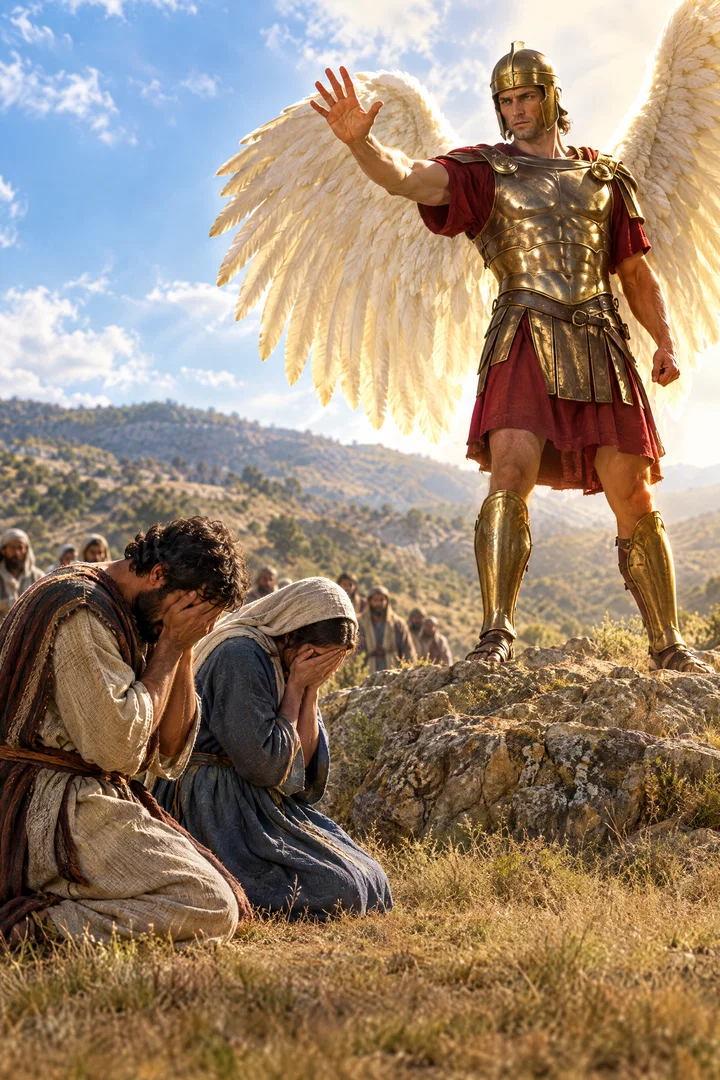
And an angel of the LORD came up from Gilgal to Bochim, and said, I made you to go up out of Egypt, and have brought you unto the land which I sware unto your fathers; and I said, I will never break my covenant with you.
Translations
And an angel of the LORD came up from Gilgal to Bochim, and said, I made you to go up out of Egypt, and have brought you to the land which I swore to your fathers; and I said, I will never break my covenant with you.
And an angel of the LORD came up from Gilgal to Bochim, and said, I made you to go up out of Egypt, and have brought you unto the land which I sware unto your fathers; and I said, I will never break my covenant with you.
And an angel of the Lord came up from Gilgal to Bochim, and said, I made you to go up out of Egypt, and have brought you unto the land which I sware unto your fathers; and I said, I will never break my covenant with you.
And an angel of the LORD came up from Gilgal to Bochim, and said, I made you to depart from Egypt, and have brought you to the land which I swore to your fathers; and I said, I will never break my covenant with you.
And the angel of the LORD came up from Gilgal to Bochim. And he said, I made you to go up out of Egypt, and have brought you unto the land which I sware unto your fathers; and I said, I will never break my covenant with you:
And the angel of Jehovah came up from Gilgal to Bochim. And he said, I made you to go up out of Egypt, and have brought you unto the land which I sware unto your fathers; and I said, I will never break my covenant with you:
And a messenger of Jehovah goeth up from Gilgal unto Bochim,
And the Angel of Jehovah came up from Gilgal to Bochim, and said, I made you to go up out of Egypt, and have brought you to the land which I swore unto your fathers; and I said, I will never break my covenant with you; and as for you,
And the messenger of Yahweh came up from Gilgal, unto Bochim. And he said—I led you up out of Egypt, and brought you into the land, which I had sworn unto your fathers, And I said, I will not break my covenant with you, to times age-abiding;
Berean Standard Bible, Majority Standard Bible
Now the angel of the LORD went up from Gilgal to Bochim and said, “ I brought you up out of Egypt and led you into the land that I had promised to your fathers, and I said, ‘ I will never break My covenant with you,
The LORD’s angel came up from Gilgal to Bochim. He said, “ I brought you out of Egypt, and have brought you to the land which I swore to give your fathers. I said, ‘ I will never break my covenant with you.
Now the angel of the Lord came up from Gilgal to Bochim. And he said, *** I took you out of Egypt, guiding you into the land which I gave by an oath to your fathers; and I said, My agreement with you will never be broken by me:
And an Angel of the Lord came vp from Gilgal to Bochim, and sayd, I made you to go vp out of Egypt, and haue brought you vnto the land which I had sworne vnto your fathers, and sayd, I wil neuer breake my couenant with you.
Douay-Rheims (Challoner revision)
And an angel of the Lord went up from Galgal to the place of weepers, and said: I made you go out of Egypt, and have brought you into the land for which I swore to your fathers: and I promised that I would not make void my covenant with you for ever:
Pictures
Cross-references
- Exodus 20:2
I am the LORD thy God, which have brought thee out of the land of Egypt, out of the house of bondage.
The speaker identifies himself as the one who brought Israel out of Egypt.
- Deuteronomy 7:2-5
And when the LORD thy God shall deliver them before thee; thou shalt smite them, and utterly destroy them; thou shalt make no covenant with them, nor shew mercy unto them:
Israel was commanded to dispossess the nations and reject their treaties and idolatry.
- Joshua 24:14-28
Now therefore fear the LORD, and serve him in sincerity and in truth: and put away the gods which your fathers served on the other side of the flood, and in Egypt; and serve ye the LORD.
Israel renews its covenant commitment to serve the LORD faithfully.
- Joshua 23:8-11
But cleave unto the LORD your God, as ye have done unto this day.
Israel is urged to remain faithful to the Lord and keep his commands.
- Numbers 33:55
But if ye will not drive out the inhabitants of the land from before you; then it shall come to pass, that those which ye let remain of them shall be pricks in your eyes, and thorns in your sides, and shall vex you in the land wherein ye dwell.
The remaining inhabitants would become thorns and trouble for Israel.
- Joshua 5:13-15
And it came to pass, when Joshua was by Jericho, that he lifted up his eyes and looked, and, behold, there stood a man over against him with his sword drawn in his hand: and Joshua went unto him, and said unto him, Art thou for us, or for our adversaries?
The angel appearing to Joshua at Jericho is identified as the same person.
- Judges 1:27-34
Neither did Manasseh drive out the inhabitants of Beth-shean and her towns, nor Taanach and her towns, nor the inhabitants of Dor and her towns, nor the inhabitants of Ibleam and her towns, nor the inhabitants of Megiddo and her towns: but the Canaanites would dwell in that land.
Israel failed to drive out the inhabitants of the land.
- Judges 2:16-19
Nevertheless the LORD raised up judges, which delivered them out of the hand of those that spoiled them.
Israel repeatedly abandoned its deliverers and returned to corrupt practices.
Commentary
Each commentary is drawn from primary sources: the writings of Ellen G. White and Adventist pioneers and periodicals. Each commentary is separate. Its own words are not a quotation; follow the references to read the source passages.
Ellen G. White
3 sources
The angel of the Lord who came up from Gilgal to Bochim is Jesus Christ, the Son of God, equal with God.Lt 112, 1895, par. 8 In this verse he declares that he himself made Israel go up out of Egypt and brought them into the land which he swore to their fathers.Lt 112, 1895, par. 8RH Sep 25, 1900 His declaration that he will never break his covenant with them was conditional on their obedience, which required making no agreements with the inhabitants of the land and throwing down their altars.Lt 112, 1895, par. 8RH Sep 25, 1900
Israel failed that condition by not obeying his voice, for they did not dispossess the heathen, they spared their altars, and they joined them in degrading practices.Lt 112, 1895, par. 8RH Sep 25, 1900PP 564.2 For that disobedience he rebuked them at Bochim and warned that those remaining inhabitants would remain as a snare to them.Lt 112, 1895, par. 8RH Sep 25, 1900
His words led the people to weep, repent, confess their sin, and offer sacrifices to God.RH Sep 25, 1900 Their repentance was genuine so that God forgave them, and the revival brought reform for a time, though their later departure from God showed that the seed of evil remained.RH Sep 25, 1900 Their disobedience left them under the power of their oppressors, and they even abandoned the deliverer God raised up instead of following him toward freedom.PP 564.2
Sources
Pioneers and periodicals
14 sources
The Son of God came from Gilgal to Bochim to address all the children of Israel together in reproof, speaking with the Lord's own authority and recalling His own acts.ST Jun 2, 1881ST Jun 2, 1881ST Jan 16, 1907 He declared that He had brought them up out of Egypt into the land sworn to their fathers and would remain faithful and never break His covenant with them.RH Sep 25, 1900ST Dec 12, 1895 That covenant required them to make no agreements with the inhabitants, to refuse their worship, and to destroy their altars.RH Sep 25, 1900ST Jun 2, 1881ST Jun 2, 1881 Israel, not God, broke the covenant by disobeying those commands and adopting the nations' worship, so God would not drive those peoples out and they and their gods would remain as thorns and a snare.RH Sep 25, 1900ST Jun 2, 1881ST Jun 2, 1881 At Bochim the whole congregation wept, repented, confessed, and offered sacrifices, and God forgave them, bringing reform for a time, though their later departure showed the seed of evil remained.RH Sep 25, 1900ST Jan 16, 1907
Setting, Speaker, and Wording
Judges 2:1 stands in the introduction to the book, made up of chapters 1, 2, and 3:1-6, which shows that not all of the country had been possessed. It follows the division and settling of the Promised Land among the tribes, the fulfillment of all God promised, the return of the two and one-half tribes to their inheritance east of the Jordan and their altar of witness, and Joshua's closing counsel and death at 110 years with Joseph's charge kept, and belongs with Joshua 23-24 and Psalm 97. It belongs to the account of the period after Joshua, when Israel is reminded of God's deliverance, bringing into the land, and covenant commitment.ST Mar 28, 1911 It stands in the opening part of Judges, which records the experiences of God's people between Joshua's death and the raising up of Samuel over about three hundred fifty to four hundred fifty years, a history of ups and downs, constant backsliding from God, and repeated captivities to surrounding enemies, showing that God uses very unpromising material, yet always the best at hand.ST Apr 1, 1913
The angel comes from Gilgal to Bochim, surveying Israel's history in Canaan. The angel addresses all the children of Israel together in one vast audience in reproof of sin.ST Jan 16, 1907 The speaker is the Son of God, who brought Israel from Egypt and established them in Canaan.ST Jun 2, 1881ST Jun 2, 1881 The angel speaks with the Lord's own authority, recalling his acts, and his message is the Lord's own.
The Lord's ministering to his people through an angel is a sign of his care for them.RH Apr 9, 1857 "Angel" means "messenger," as the margin supplies for understanding the work of angels and as the Hebrew word is translated elsewhere.ST Nov 28, 1878RH Feb 27, 1900ST Aug 13, 1874 That meaning does not imply that angels are humans or the spirits of dead people, because the term also applies to created beings higher than humans and different from them in nature.ST Nov 28, 1878
Covenant, Reproof, and Response
The verse declares that God himself made Israel go up out of Egypt and brought them into the land sworn to their fathers, and that he would remain faithful and never break his covenant with them.RH Sep 25, 1900ST Dec 12, 1895ST Mar 28, 1911 It belongs to the account of the period after Joshua, when Israel is reminded of that deliverance, that bringing into the land, and that covenant commitment.ST Dec 12, 1895ST Mar 28, 1911 For the sake of his promises to Abraham, Isaac, and Jacob, even when the people had turned away, he delivered Israel from times of extremity and captivity by raising up judges, who sought to lead them back to the Lord.ST Dec 12, 1895ST Mar 17, 1909
The covenant required Israel not to make agreements or treaties with the inhabitants of the land, not to mingle with Canaan's nations or worship their gods, and to destroy their altars.RH Sep 25, 1900ST Jun 2, 1881ST Jun 2, 1881RH Apr 3, 1879 God had not broken the covenant or failed to provide help; Israel, not God, violated and broke the covenant by disobeying those commands and adopting the nations' worship.ST Jun 2, 1881ST Jun 2, 1881RH Apr 3, 1879 Because of that disobedience, God would not drive those peoples out, and they and their gods would remain as thorns and a snare to Israel.RH Sep 25, 1900ST Jun 2, 1881ST Jun 2, 1881
The angel's words at Bochim led the whole congregation to weep, repent, confess, and offer sacrifices; their repentance was genuine, and God forgave them.RH Sep 25, 1900ST Jan 16, 1907 That revival brought reform for a time, but the later departure from God showed that the seed of evil remained.RH Sep 25, 1900 Bochim is the house of God become a place of weeping where aching hearts find relief in tears.RH Feb 4, 1875 When the need of repentance and the first love of the church is pressed in plain, simple, earnest love for souls, with no stern word, with free confession of one's own sins and sparing mention of the sins of others, with willingness to bear the sins of others in repentance before God, and with the freeness of pardon through Christ, God's people repent with one heart, come up to the help of the Lord, and many are turned from sin to praise redeeming love.RH Feb 4, 1875
Sources