Judges 2:2
And ye shall make no league with the inhabitants of this land; ye shall throw down their altars: but ye have not obeyed my voice: why have ye done this?
Translations
And you shall make no league with the inhabitants of this land; you shall throw down their altars: but you have not obeyed my voice: why have you done this?
King James Version, Webster Bible
And ye shall make no league with the inhabitants of this land; ye shall throw down their altars: but ye have not obeyed my voice: why have ye done this?
And ye shall make no league with the inhabitants of this land; you shall throw down their altars: but ye have not obeyed my voice: why have ye done this?
and ye shall make no covenant with the inhabitants of this land; ye shall break down their altars: but ye have not hearkened unto my voice: why have ye done this?
and ye shall make no covenant with the inhabitants of this land; ye shall break down their altars. But ye have not hearkened unto my voice: why have ye done this?
and saith, 'I cause you to come up out of Egypt, and bring you in unto the land which I have sworn to your fathers, and say, I do not break My covenant with you to the age; and ye — ye make no covenant with the inhabitants of this land — their altars ye break down; and ye have not hearkened to My voice — what [is] this ye have done?
ye shall make no covenant with the inhabitants of this land; ye shall throw down their altars: but ye have not hearkened unto my voice. Why have ye done this?
But, ye, must not solemnise a covenant with the inhabitants of this land, Their altars, must ye tear down,—But ye have not hearkened unto my voice, what is this ye have done?
Berean Standard Bible, Majority Standard Bible
and you are not to make a covenant with the people of this land, but you shall tear down their altars.’Yet you have not obeyed My voice. What is this you have done?
You shall make no covenant with the inhabitants of this land. You shall break down their altars.’ But you have not listened to my voice. Why have you done this?
And you are to make no agreement with the people of this land; you are to see that their altars are broken down: but you have not given ear to my voice: what have you done?
Ye also shall make no couenant with the inhabitants of this land, but shall breake downe their altars: but ye haue not obeyed my voyce. Why haue ye done this?
Douay-Rheims (Challoner revision)
On condition that you should not make a league with the inhabitants of this land, but should throw down their altars: and you would not hear my voice: why have you done this?
Pictures
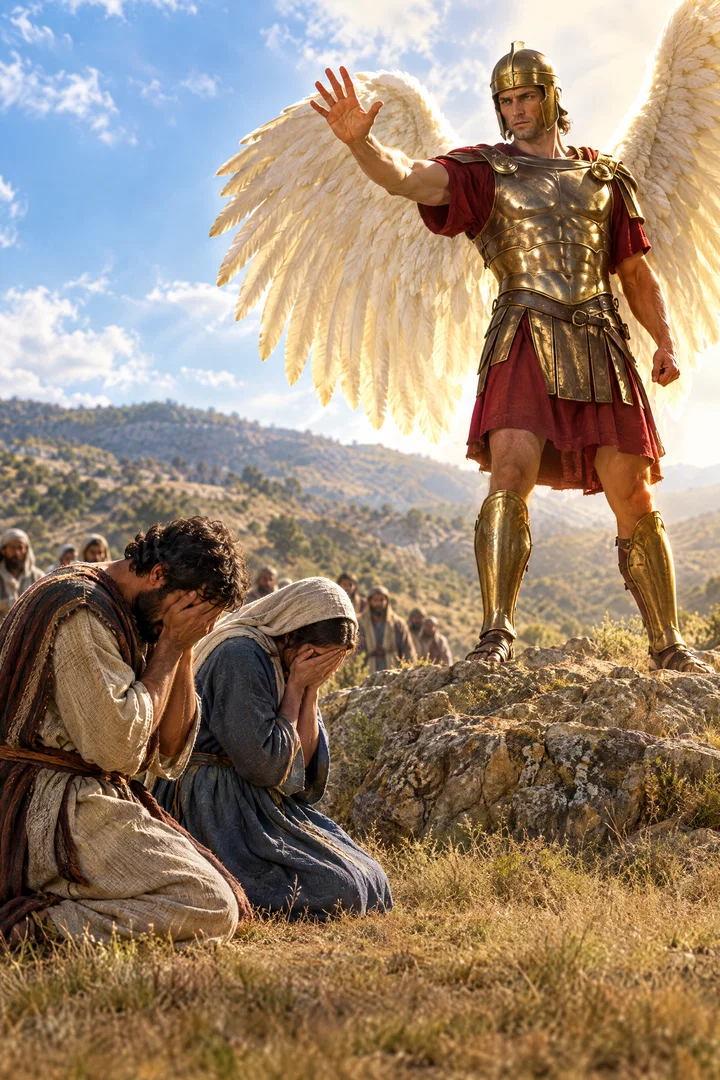
Cross-references
- Exodus 23:32-33
Thou shalt make no covenant with them, nor with their gods.
Forbids covenants with the Canaanites and warns their gods will ensnare Israel.
- Deuteronomy 7:2-5
And when the LORD thy God shall deliver them before thee; thou shalt smite them, and utterly destroy them; thou shalt make no covenant with them, nor shew mercy unto them:
Forbids covenants with Canaan’s peoples and commands the destruction of their altars.
- Deuteronomy 12:3
And ye shall overthrow their altars, and break their pillars, and burn their groves with fire; and ye shall hew down the graven images of their gods, and destroy the names of them out of that place.
Both command Israel to overthrow Canaanite altars and destroy their idols.
- Exodus 23:24
Thou shalt not bow down to their gods, nor serve them, nor do after their works: but thou shalt utterly overthrow them, and quite break down their images.
Israel was commanded not to serve Canaanite gods or follow their practices.
- Joshua 23:12-13
Else if ye do in any wise go back, and cleave unto the remnant of these nations, even these that remain among you, and shall make marriages with them, and go in unto them, and they to you:
Close ties with the remaining nations bring disobedience and ensnare Israel.
- Judges 2:20-22
And the anger of the LORD was hot against Israel; and he said, Because that this people hath transgressed my covenant which I commanded their fathers, and have not hearkened unto my voice;
God left nations to test Israel after they broke his covenant.
- Judges 2:11-12
And the children of Israel did evil in the sight of the LORD, and served Baalim:
Israel forsook the LORD and served Baalim.
- Joshua 24
And Joshua gathered all the tribes of Israel to Shechem, and called for the elders of Israel, and for their heads, and for their judges, and for their officers; and they presented themselves before God.
listed together as revival accounts to study
- Judges 2:7
And the people served the LORD all the days of Joshua, and all the days of the elders that outlived Joshua, who had seen all the great works of the LORD, that he did for Israel.
Israel remained faithful to the LORD during Joshua’s days.
Commentary
Each commentary is drawn from primary sources: the writings of Ellen G. White and Adventist pioneers and periodicals. Each commentary is separate. Its own words are not a quotation; follow the references to read the source passages.
Ellen G. White
4 sources
The Speaker who came up from Gilgal to Bochim to review Israel's history and rebuke disobedience is Jesus Christ Himself, the Son of God equal with God, appearing as the Angel of the Lord.Lt 112, 1895, par. 8RH Sep 25, 1900 He does not speak in the manner of human messengers who speak as commissioned oracles saying Thus saith the Lord, but speaks in His own voice with authority.Lt 112, 1895, par. 8 Only the Son of God could claim to have brought Israel up out of Egypt into the land sworn to their fathers.Lt 112, 1895, par. 8RH Sep 25, 1900 His pledge never to break His covenant with Israel was made upon condition of obedience, and here He charges them with not obeying His voice.Lt 112, 1895, par. 8RH Sep 25, 1900
The command was to dispossess the heathen inhabitants of the land, to make no league with them, to keep separate from them, and to throw down their altars.RH Sep 25, 1900MYP 432.1–2PP 564.2 Israel disobeyed by neglecting that work and instead associating with the godless Canaanites.RH Sep 25, 1900MYP 432.1–2PP 564.2 They united with them in degrading practices, tolerating their cruelty and even countenancing their injustice so long as it was not directed against themselves.PP 564.2 The closing question why have ye done this exposes their covenant-breaking.RH Sep 25, 1900 For that reason judgment followed that God would not drive out the inhabitants, but they would be as thorns in their sides and their gods would be a snare to them.RH Sep 25, 1900
That disobedience left them dispirited and cowardly, tamely submitting to an oppression and degradation they might have escaped had they obeyed.PP 564.2 It went so far that they deserted the deliverer God raised up for them and sided with their enemies instead of joining him to gain freedom from their oppressors.PP 564.2 The rebuke is to be searched and applied by all who profess to belong to God to test whether they are in the faith.RH Sep 25, 1900 When heard with contrition it produces weeping, with confession to God and to one another, and with sacrifice that has value only with true repentance.RH Sep 25, 1900 Through the grace of Christ working in the heart it brings forgiveness, genuine revival, and a reformation that keeps the covenant for a time, though the seed of evil sown by disobedience still springs up to bear fruit in a later departing generation.RH Sep 25, 1900
The verse means Christians must not choose the society of those who have no connection with God and whose course displeases Him.MYP 432.1–2 They must not invite vain, trifling, ungodly relatives into their homes or make concessions to please irreligious relatives and friends.MYP 432.1–2 Their example and influence harms children, and one concession prepares the way for another until those once true in life and character are conformed to the customs of the world.MYP 432.1–2 The connection with God is broken and they become Christians in name only, having sold themselves and their children to the enemy and dishonored God.MYP 432.1–2 When the test hour comes their hope will be seen to be without foundation, and in the revelation of righteous judgments they will reap what they have sown, when Christ will address this same rebuke to them.MYP 432.1–2
Sources
Pioneers and periodicals
10 sources
The Angel of the Lord came from Gilgal to Bochim to rebuke all Israel together for failing to carry out God's instructions after Joshua's death, for God had brought them out of Egypt into the promised land and pledged never to break His covenant while commanding them to make no league with its inhabitants and to throw down their altars and idols, but they did not obey His voice.RH Sep 25, 1900ST Dec 12, 1895ST Jan 16, 1907 The question why have ye done this is a solemn and sorrowful reproof that confronts them with disobedience to known duty and covenant-breaking.RH Sep 25, 1900ST Dec 12, 1895 The judgment upon that disobedience was that God would not drive out the inhabitants, but they would remain as thorns in their sides and their gods a snare to them.RH Sep 25, 1900ST Jun 2, 1881 That sparing of the Canaanites was failure of the condition of the Lord's help and victory, leaving Israel exposed to hardship obedience could have spared and leading through close association and intermarriage to the worship of Baal, Ashtoreth, Milcom, Chemosh and other idols, and on to captivity that made necessary the saviours God raised up as judges.ST Jun 2, 1881ST Jun 2, 1881ST Mar 17, 1909RH Apr 3, 1879 Heard with contrition the rebuke gives opportunity to return to God in weeping, confession, and true repentance with sacrifice and reformation through Christ's forgiveness, and the same reproof searches all who name God's name today, especially Christians who must separate themselves and their families from ungodly friendships and concessions that draw children from religion into conformity with the world.RH Sep 25, 1900ST Jun 2, 1881ST Jan 16, 1907RH Feb 4, 1875
Setting and Rebuke
Judges 2:2 belongs to the introduction to the book, which shows that Israel had not possessed all the land, and stands as part of the account of backsliding and mercy. Its setting is after the death of Joshua, marking the failure to carry out the instructions God had given.ST Mar 17, 1909
The Angel of the Lord came up from Gilgal to Bochim to review the history of Israel and to rebuke disobedience.RH Sep 25, 1900 There the angel addressed all the children of Israel together in one vast audience in reproof of sin in not obeying the divine voice.RH Sep 25, 1900ST Jan 16, 1907
God had brought Israel up out of Egypt into the land sworn to their fathers and had promised never to break His covenant.RH Sep 25, 1900 He had commanded them to make no league, treaty, or alliance with the inhabitants of the land and to throw down their altars and destroy their idols.ST Jun 2, 1881ST Jun 2, 1881ST Dec 12, 1895 Israel did not obey His voice but disobeyed these commands and broke its covenant, while God kept His promises.RH Sep 25, 1900ST Jun 2, 1881ST Jun 2, 1881ST Dec 12, 1895
The question why this was done confronts the people with failure to obey and challenges them to account for disobedience.ST Dec 12, 1895 It is a solemn, sorrowful reproof of failure to act on known duty, exposing covenant-breaking and fastening responsibility upon Israel.RH Sep 25, 1900ST Jun 2, 1881ST Jun 2, 1881ST Jun 2, 1881 The rebuke brings the judgment that God would not drive out the inhabitants from before them, but they would remain as thorns in their sides and their gods would be a snare to them.RH Sep 25, 1900ST Jun 2, 1881
Consequences and Application
The commands to make no treaty and to tear down the altars were necessary for Israel's success and were the conditions of the Lord's assistance.ST Jun 2, 1881ST Jun 2, 1881 The Lord kept His covenant and offered to guide and give victory, but Israel broke its covenant, so failure left the people exposed to nations they could have overcome with His help and brought hardship that obedience could have spared.ST Jun 2, 1881ST Jun 2, 1881 Failure to drive out the Canaanites led to close association, intermarriage, and idolatry.ST Jun 2, 1881RH Apr 3, 1879 That disobedience allowed the worship of Baal and Ashtoreth, with Milcom, Chemosh, and other idols, to take hold among them.ST Jun 2, 1881RH Apr 3, 1879 The disobedience led to captivity and made necessary the help that came through the judges, or saviours, whom the Lord raised up on their behalf.ST Mar 17, 1909
Recognition of sin gave opportunity to return to God and to show repentance through immediate action, by which the curse might have been turned away.RH Sep 25, 1900ST Jun 2, 1881 Instead they returned to evil ways and suffered the consequences of neglect.RH Sep 25, 1900ST Jun 2, 1881 Revival keeps the covenant for a time, yet the seed of evil sown still springs up to bear fruit in a later departing generation.RH Sep 25, 1900 Heard with contrition, the rebuke produces weeping by the whole congregation.RH Sep 25, 1900ST Jan 16, 1907 It brings confession to God and to one another, and sacrifice that is of value only with true repentance, while the grace of Christ working in the heart brings forgiveness, genuine revival, and reformation.RH Sep 25, 1900
Bochim, the house of God become a place of weeping, is where aching hearts find relief in tears.RH Feb 4, 1875 When sin and backsliding are set before the people in a plain, simple way with no stern word, with confession of own sins, with love and prayer for souls, and with the freeness of pardon through Christ for grievous sins, God's people repent, return to their first love, and come up with one heart to the help of the Lord, and many are turned from their sins to praise redeeming love.RH Feb 4, 1875 The same reproof is to be searched and applied by all who name the name of God to see whether they be in the faith.RH Sep 25, 1900 It applies to Christians who disregard God's command to separate themselves and their families from ungodly influences, since worldly friendships and concessions can draw children from religion and lead parents and children to conform to the world.RH Sep 25, 1900ST Jun 2, 1881
Sources