Leviticus 12:5
But if she bear a maid child, then she shall be unclean two weeks, as in her separation: and she shall continue in the blood of her purifying threescore and six days.
Translations
But if she bear a maid child, then she shall be unclean two weeks, as in her separation: and she shall continue in the blood of her purifying three score and six days.
King James Version, KJV Cambridge Paragraph Bible
But if she bear a maid child, then she shall be unclean two weeks, as in her separation: and she shall continue in the blood of her purifying threescore and six days.
But if she shall bear a female-child, then she shall be unclean two weeks, as in her separation: and she shall continue in the blood of her purifying sixty six days.
But if she bear a maid child, then she shall be unclean two weeks, as in her impurity: and she shall continue in the blood of her purifying threescore and six days.
But if she bear a maid-child, then she shall be unclean two weeks, as in her impurity; and she shall continue in the blood of her purifying threescore and six days.
'And if a female she bear, then she hath been unclean two weeks, as in her separation; and sixty and six days she doth abide for the blood of her cleansing.
And if she bear a female, then she shall be unclean two weeks, as in her separation; and she shall continue sixty-six days in the blood of her cleansing.
But if, a female child, she bear, then shall she be unclean two weeks as in her removal,—and, for sixty-six days, shall she continue in the blood of purification.
Berean Standard Bible, Majority Standard Bible
If, however, she gives birth to a daughter, the woman will be unclean for two weeks as she is during her menstruation. Then she must continue in purification from her bleeding for sixty-six days.
But if she bears a female child, then she shall be unclean two weeks, as in her period; and she shall continue in the blood of purification sixty-six days.
But if she gives birth to a female child, then she will be unclean for two weeks, as when she is unwell; and she will not be completely clean for sixty-six days.
But if she beare a mayde childe, then shee shalbe vncleane two weekes, as when shee hath her disease: and she shall continue in the blood of her purifying three score and sixe dayes.
Douay-Rheims (Challoner revision)
But if she shall bear a maid child, she shall be unclean two weeks, according to the custom of her monthly courses, and she shall remain in the blood of her purification sixty-six days.
Pictures
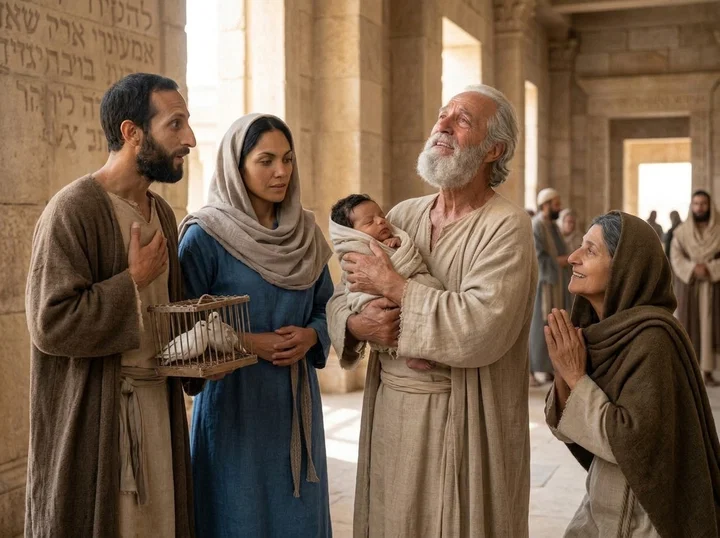
Cross-references
- Luke 2:22-24
And when the days of her purification according to the law of Moses were accomplished, they brought him to Jerusalem, to present him to the Lord;
Joseph and Mary observe the purification law and offer the prescribed sacrifice after Jesus’ birth.
- Luke 2:39
And when they had performed all things according to the law of the Lord, they returned into Galilee, to their own city Nazareth.
They returned home after completing the purification required by the law.
- Luke 2:21
And when eight days were accomplished for the circumcising of the child, his name was called JESUS, which was so named of the angel before he was conceived in the womb.
The eighth-day circumcision preceded the period of purification.
Commentary
Each commentary is drawn from primary sources: the writings of Ellen G. White and Adventist pioneers and periodicals. Each commentary is separate. Its own words are not a quotation; follow the references to read the source passages.
Ellen G. White
1 source
The law to which this verse belongs required a mother after childbirth to pass through a set time of ceremonial uncleanness and then to present a prescribed offering for her purifying.DA 50.1 It forms part of the Leviticus 12:2-8 requirement that governed the mother who had borne a child.DA 50.1 After the birth of Christ, Mary and Joseph observed this same requirement when they brought Him to the temple for presentation.DA 50.1 In doing so Christ, through His parents' obedience, was conformed to the law in every particular as humanity's substitute.DA 50.1
Sources
Pioneers and periodicals
11 sources
Leviticus 12:5 belongs to the laws regulating ritual uncleanness and to the sanitary instructions concerning childbirth and ceremonial uncleanness, prescribing a period of purification after a woman bears a daughter.ST Feb 3, 1909 It belongs to the ecclesiastical laws and ceremonies in Leviticus 12-15, which repeat ceremonial instruction.ST Feb 25, 1913 It is not among the greater essentials of Leviticus, such as the yearly sabbaths and feast days, the day of atonement and its sacrifices, the jubilee year, the solemn warnings of calamities for rejecting God, and the law of tithing, but it still contains food for thought and meditation.ST Feb 25, 1913 In the chapter's broader setting, leprosy is presented as a fitting type of sin.
The Hebrew word for week means a group of seven days, as the Septuagint renders two weeks as twice seven days, which supports the use of Sabbath as a name for the week as well as for the seventh day.RH Jun 4, 1908 The verse illustrates the rule that an unclean person was not to enter the sanctuary, meaning the Lord's tabernacle.RH Jan 6, 1853 It belongs to the law of bodily purification that made a person visibly clean before the sanctuary's cleansing with blood, and childbirth-related uncleanness was one way the earthly sanctuary could be defiled when an unclean person entered it.RH Oct 14, 1852 The verse belongs to the complete round of service of the Levitical sanctuary built by Moses in the wilderness, performed every year, which typifies Christ and his priesthood in the heavenly sanctuary begun when he ascended on high, typifying in each year the service of Christ which was once for all.ST Nov 28, 1895
The purification ceremony the verse describes is the ceremony that Mary kept after the birth of Jesus and that Joseph and Mary observed when they brought Jesus to the temple.ST Jan 27, 1890ST Jun 25, 1894ST Aug 17, 1904ST Dec 22, 1898 The law required a lamb of the first year for a burnt offering and a young pigeon or turtledove for a sin offering, but a poor family could offer only a pair of turtledoves or two young pigeons instead of the lamb.ST Jan 27, 1890ST Dec 22, 1898 Mary made this poorer offering of only the two birds, showing that the family's circumstances were modest and proving they were in the deepest poverty.ST Jan 27, 1890ST Dec 22, 1898 The law of Moses required every mother to go to Jerusalem with an offering when her days of purification were finished, which Mary fulfilled after the birth of Jesus, who was her firstborn son.ST Dec 22, 1898
For a son the time is completed forty days after birth, when the mother brings her offering.ST Aug 17, 1904 Jesus was carried to the temple at that forty-day time and ransomed, and when this was accomplished the family returned to Nazareth, with Jesus about six weeks old.ST Aug 17, 1904 The same visit to Jerusalem also fulfilled the law requiring that a firstborn son be redeemed by a fixed sum.ST Dec 22, 1898 The verse is part of the cleanliness laws given to ancient Israel and is included among the cleansing ordinances that serve as examples for God's people.RH Nov 3, 1868 It belongs to the pattern of cleansing applied to bodily purity and obedience to health principles, and continuing in that reform prepares clean vessels for God's Spirit and the latter rain.RH Nov 3, 1868
Sources