Leviticus 17:5
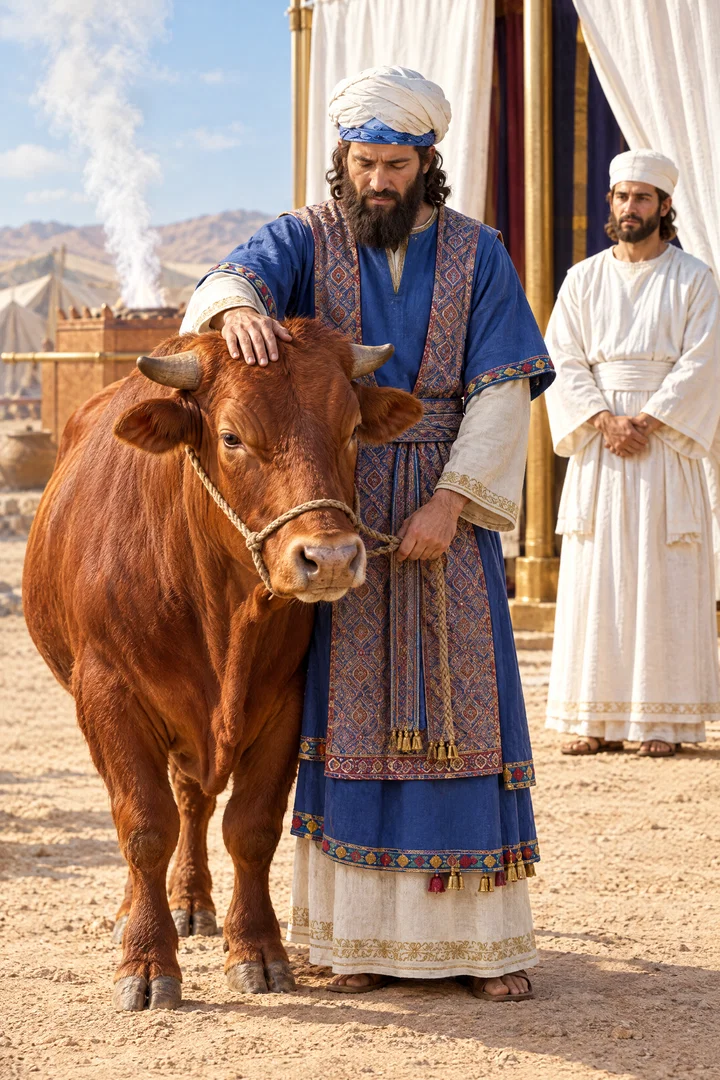
To the end that the children of Israel may bring their sacrifices, which they offer in the open field, even that they may bring them unto the LORD, unto the door of the tabernacle of the congregation, unto the priest, and offer them for peace offerings unto the LORD.
Translations
To the end that the children of Israel may bring their sacrifices, which they offer in the open field, even that they may bring them to the LORD, to the door of the tabernacle of the congregation, to the priest, and offer them for peace offerings to the LORD.
To the end that the children of Israel may bring their sacrifices, which they offer in the open field, even that they may bring them unto the LORD, unto the door of the tabernacle of the congregation, unto the priest, and offer them for peace offerings unto the LORD.
to the end that the children of Israel may bring their sacrifices, which they offer in the open field, even that they may bring them unto the Lord, unto the door of the tabernacle of the congregation, unto the priest, and offer them for peace offerings unto the Lord.
To the end that the children of Israel may bring their sacrifices which they offer in the open field, even that they may bring them to the LORD, to the door of the tabernacle of the congregation, to the priest, and offer them for peace-offerings to the LORD.
To the end that the children of Israel may bring their sacrifices, which they sacrifice in the open field, even that they may bring them unto the LORD, unto the door of the tent of meeting, unto the priest, and sacrifice them for sacrifices of peace offerings unto the LORD.
to the end that the children of Israel may bring their sacrifices, which they sacrifice in the open field, even that they may bring them unto Jehovah, unto the door of the tent of meeting, unto the priest, and sacrifice them for sacrifices of peace-offerings unto Jehovah.
so that the sons of Israel do bring in their sacrifices which they are sacrificing on the face of the field, yea, they have brought them in to Jehovah, unto the opening of the tent of meeting, unto the priest, and they have sacrificed sacrifices of peace-offerings to Jehovah with them.
to the end that the children of Israel bring their sacrifices, which they sacrifice in the open field, that they bring them to Jehovah, unto the entrance of the tent of meeting, unto the priest, and sacrifice them as sacrifices of peace-offerings to Jehovah.
to the end that the sons of Israel may bring in their sacrifices which they are offering upon the face of the field, that they may bring them in unto Yahweh—unto the entrance of the tent of meeting, unto the priest,—and that so as peace-offerings unto Yahweh, they may offer them.
For this reason the Israelites will bring to the LORD the sacrifices they have been offering in the open fields. They are to bring them to the priest at the entrance to the Tent of Meeting and offer them as sacrifices of peace to the LORD.
For this reason the Israelites will bring to the LORD the sacrifices they have been offering in the open fields. They are to bring them to the priest at the entrance to the Tent of Meeting and offer them as sacrifices of peace offerings to the LORD.
This is to the end that the children of Israel may bring their sacrifices, which they sacrifice in the open field, that they may bring them to the LORD, to the door of the Tent of Meeting, to the priest, and sacrifice them for sacrifices of peace offerings to the LORD.
So that the children of Israel may take to the Lord, to the door of the Tent of meeting and to the priest, the offerings which they have put to death in the open country, and that they may make their peace-offerings to the Lord.
Therefore the children of Israel shall bring their offrings, which they would offer abroad in the fielde, and present the vnto ye Lord at the doore of the Tabernacle of ye Congregation by ye Priest, and offer them for peace offrings vnto the Lord.
Douay-Rheims (Challoner revision)
Therefore the children of Israel shall bring to the priest their victims, which they kill in the field, that they may be sanctified to the Lord before the door of the tabernacle of the testimony, and they may sacrifice them for peace offerings to the Lord.
Pictures
Cross-references
- Deuteronomy 12:5-6
But unto the place which the LORD your God shall choose out of all your tribes to put his name there, even unto his habitation shall ye seek, and thither thou shalt come:
Israel is directed to bring sacrifices to the place God chooses.
- Hebrews 9:22
And almost all things are by the law purged with blood; and without shedding of blood is no remission.
Remission is connected with the shedding of blood.
- Hebrews 9:26
For then must he often have suffered since the foundation of the world: but now once in the end of the world hath he appeared to put away sin by the sacrifice of himself.
Christ puts away sin through the sacrifice of himself.
- Deuteronomy 12:13-14
Take heed to thyself that thou offer not thy burnt offerings in every place that thou seest:
Both command that sacrifices be offered only at the place chosen by the LORD.
- Leviticus 17:11
For the life of the flesh is in the blood: and I have given it to you upon the altar to make an atonement for your souls: for it is the blood that maketh an atonement for the soul.
Blood makes atonement because the life is in it.
- Deuteronomy 12:17-18
Thou mayest not eat within thy gates the tithe of thy corn, or of thy wine, or of thy oil, or the firstlings of thy herds or of thy flock, nor any of thy vows which thou vowest, nor thy freewill offerings, or heave offering of thine hand:
Sacred offerings are brought to the Lord’s chosen place and eaten before him.
- Leviticus 4:5-7
And the priest that is anointed shall take of the bullock’s blood, and bring it to the tabernacle of the congregation:
The priest uses the victim’s blood to make atonement.
- Exodus 29:42
This shall be a continual burnt offering throughout your generations at the door of the tabernacle of the congregation before the LORD: where I will meet you, to speak there unto thee.
God meets Israel at the sanctuary through its offerings.
- Deuteronomy 12:23
Only be sure that thou eat not the blood: for the blood is the life; and thou mayest not eat the life with the flesh.
The blood is identified with the life.
Commentary
Each commentary is drawn from primary sources: the writings of Ellen G. White and Adventist pioneers and periodicals. Each commentary is separate. Its own words are not a quotation; follow the references to read the source passages.
Ellen G. White
1 source
The law required Israel to take the animals they were inclined to slaughter and sacrifice out in the open country and bring them instead to the entrance of the meeting tent.ST May 12, 1881 There they were to present them to the priest and offer them to the Lord as fellowship offerings.ST May 12, 1881 No sacrifice was to be made at any other place apart from that appointed center.ST May 12, 1881 For that reason an altar built east of the Jordan could not rightly stand as another legitimate site for sacrifice or worship.ST May 12, 1881
Sources
Pioneers and periodicals
10 sources
To the end that sacrifices offered in the open field be brought to the Lord at the door of the tabernacle to the priest and offered there as peace offerings, and to no other place, on pain of being cut off from the people.RH Feb 3, 1916ST Nov 27, 1884 The requirement shut out sacrifice to devils in the fields and called Israel to recognize God's personal presence where He met His people.RH Dec 15, 1868RH Sep 8, 1904 Its law of blood shows that atonement requires blood because blood is life, the life forfeited by sin, so a substitute must die for sin to be removed.RH Sep 6, 1870 The slain animals point to the Lamb of God who takes away the sin of the world, Christ putting away sin by the sacrifice of Himself once for all outside the tabernacle in the court.ST Jan 1, 1885 Sins laid in figure on the offering and forgiven by its blood or flesh brought into the sanctuary were blotted out entirely at the cleansing of the sanctuary on the day of atonement for the one who remained penitent, joining the people's offerings to the high priest's work of atonement and cleansing.ST Jan 1, 1885
Worship at Appointed Place
Any sacrifice that would otherwise be slain out in the open country had to be brought to the Lord, to the entrance of the tent of meeting, handed to the priest, and there presented as a peace offering.RH Feb 3, 1916ST Nov 27, 1884RH Dec 15, 1868 No such offering was permitted anywhere else, but only in the place where the Lord chose to set His name, where the sanctuary was erected, where His testimony was kept, and where only the priests served, and whoever offered elsewhere and failed to bring the victim to the tabernacle was to be cut off from among the people.ST Nov 27, 1884 That exclusive appointment was given to stop sacrifices in the fields to demons, so that to withhold offerings from the sanctuary was itself evidence of idol worship.RH Dec 15, 1868RH Sep 8, 1904RH Oct 30, 1855
To carry the offerings to the sanctuary was to acknowledge God's personal presence in a definite place, where He met His people.RH Sep 8, 1904 The strictness of the direction shows how exacting God was over the details of the appointed manner of worship.RH Feb 3, 1916 In the procedure for a personal sin offering or trespass offering the animal was likewise brought to the tabernacle, the offerer laid his hand upon its head and slew it, and the priest then applied its blood to make atonement and obtain forgiveness.RH Sep 16, 1852
The requirement to bring field sacrifices to the tabernacle entrance does not mean forgiveness could be found only in the first apartment of the sanctuary, and it says nothing for or against the high priest's atonement for the people inside the most holy place.RH Dec 15, 1868RH Oct 30, 1855 Since all sacrifice had to be made at the door of the tabernacle and nowhere else, an altar erected east of the Jordan could not rightly stand as another lawful center of sacrifice or worship.ST May 12, 1881
Blood Atonement and Christ
The verse stands within instructions governing the use of blood in sacrifice, where blood is required to make atonement because blood is life, even the life forfeited through sin.RH Sep 6, 1870 Blood is life, and therefore the removal of sin requires the shedding of blood, which requires a substitute sacrifice to be offered in its place. The sacrifices of the book in which the verse stands teach how serious sin is.
Sins were transferred in figure to the sin offering and forgiven when its blood or flesh was carried into the sanctuary, and for the one who remained penitent they were blotted out entirely when the sanctuary was cleansed on the day of atonement.ST Jan 1, 1885 The sacrificial system of the chapter is joined to offerings made on behalf of the whole people and to the high priest's work of atonement for their sins, a work that embraces both the sins of the people and the cleansing of the sanctuary.
The sacrifices point to Jesus Christ, the slain animals pointing to the Lamb of God who takes away the sin of the world, and the whole work pointed to Christ putting away sin by the sacrifice of himself.ST Jan 1, 1885 Its sacrificial setting points to Christ's offering made outside the tabernacle in the court and to His death once for all.
God established His law so that those who obey it may live, joining obedience to the law with life.ST May 31, 1899 The appointed blood sacrifices were to be brought from the open field to the Lord at the door of the tabernacle of the congregation to the priest and offered as peace offerings, and not offered elsewhere but only in the place where the Lord chose to put His name, where the sanctuary was built, His testimony kept, and only the priests ministered, with anyone offering elsewhere to be cut off from among the people, and because that dwelling-place of God's name has been destroyed and Jerusalem is in the hands of strangers they cannot now be offered, their cessation coming by necessity of circumstances and not by any Scriptural authority for atonement without blood.ST Nov 27, 1884
Sources