Leviticus 17:4
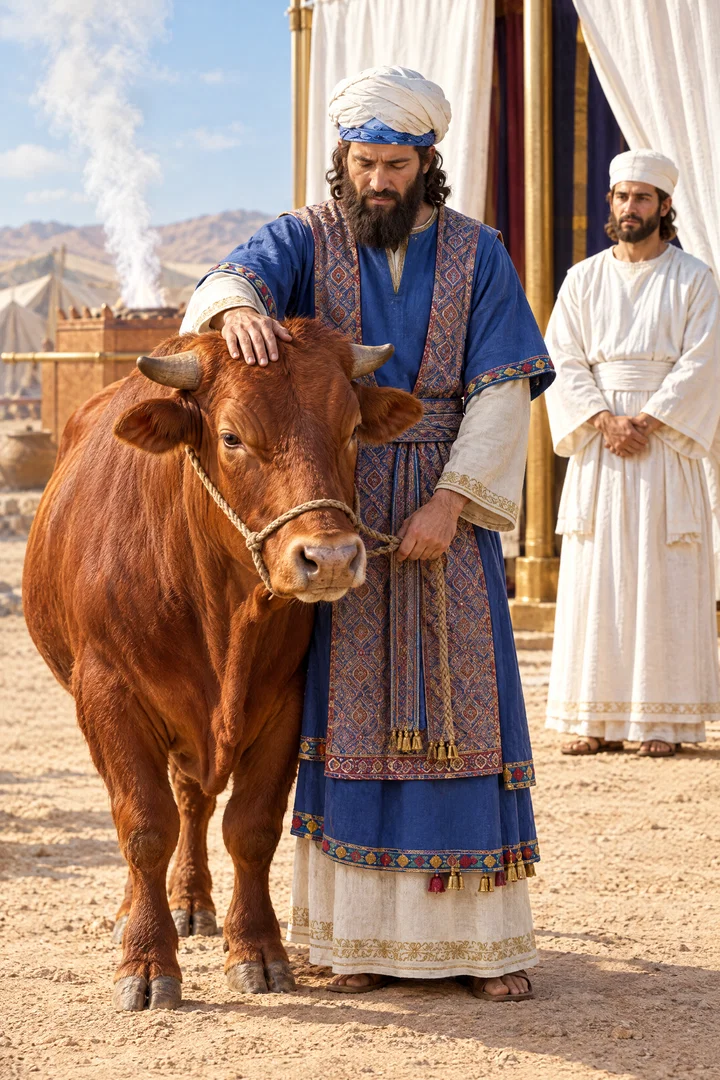
And bringeth it not unto the door of the tabernacle of the congregation, to offer an offering unto the LORD before the tabernacle of the LORD; blood shall be imputed unto that man; he hath shed blood; and that man shall be cut off from among his people:
Translations
And brings it not to the door of the tabernacle of the congregation, to offer an offering to the LORD before the tabernacle of the LORD; blood shall be imputed to that man; he has shed blood; and that man shall be cut off from among his people:
And bringeth it not unto the door of the tabernacle of the congregation, to offer an offering unto the LORD before the tabernacle of the LORD; blood shall be imputed unto that man; he hath shed blood; and that man shall be cut off from among his people:
and bringeth it not unto the door of the tabernacle of the congregation, to offer an offering unto the Lord before the tabernacle of the Lord; blood shall be imputed unto that man; he hath shed blood; and that man shall be cut off from among his people:
And bringeth it not to the door of the tabernacle of the congregation, to offer an offering to the LORD before the tabernacle of the LORD; blood shall be imputed to that man; he hath shed blood; and that man shall be cut off from among his people:
and hath not brought it unto the door of the tent of meeting, to offer it as an oblation unto the LORD before the tabernacle of the LORD: blood shall be imputed unto that man; he hath shed blood; and that man shall be cut off from among his people:
and hath not brought it unto the door of the tent of meeting, to offer it as an oblation unto Jehovah before the tabernacle of Jehovah: blood shall be imputed unto that man; he hath shed blood; and that man shall be cut off from among his people:
and unto the opening of the tent of meeting hath not brought it in to bring near an offering to Jehovah before the tabernacle of Jehovah, blood is reckoned to that man — blood he hath shed — and that man hath been cut off from the midst of his people;
and doth not bring it to the entrance of the tent of meeting to present it as an offering to Jehovah, before the tabernacle of Jehovah, blood shall be reckoned unto that man: he hath shed blood; and that man shall be cut off from among his people,
and, unto the entrance of the tent of meeting, bringeth it not in, to present it as an oblation unto Yahweh, before the habitation of Yahweh, blood, shall be imputed to that man—blood, hath he shed, therefore shall that man be cut off from the midst of his people:
Berean Standard Bible, Majority Standard Bible
instead of bringing it to the entrance to the Tent of Meeting to present it as an offering to the LORD before His tabernacle— that man shall incur bloodguilt. He has shed blood and must be cut off from among his people.
and hasn’t brought it to the door of the Tent of Meeting to offer it as an offering to the LORD before the LORD’s tabernacle: blood shall be imputed to that man. He has shed blood. That man shall be cut off from among his people.
And has not taken it to the door of the Tent of meeting, to make an offering to the Lord, before the Lord's House, its blood will be on him, for he has taken life, and he will be cut off from among his people:
And bringeth it not vnto the doore of the Tabernacle of the Congregation to offer an offring vnto the Lord before the Tabernacle of the Lord, blood shalbe imputed vnto that man: he hath shed blood, wherefore that man shall be cut off from among his people.
Douay-Rheims (Challoner revision)
And offer it not at the door of the tabernacle an oblation to the Lord, shall be guilty of blood: as if he had shed blood, so shall he perish from the midst of his people.
Pictures
Cross-references
- Deuteronomy 12:5
But unto the place which the LORD your God shall choose out of all your tribes to put his name there, even unto his habitation shall ye seek, and thither thou shalt come:
Both require offerings only where God puts His name.
- Hebrews 9:22
And almost all things are by the law purged with blood; and without shedding of blood is no remission.
Both connect the shedding of blood with remission of sin.
- Hebrews 10:19
Having therefore, brethren, boldness to enter into the holiest by the blood of Jesus,
Jesus’ blood gives believers boldness to enter the holy places.
- Hebrews 9:26
For then must he often have suffered since the foundation of the world: but now once in the end of the world hath he appeared to put away sin by the sacrifice of himself.
Christ put away sin through the sacrifice of himself.
- Hebrews 9:7
But into the second went the high priest alone once every year, not without blood, which he offered for himself, and for the errors of the people:
The high priest offers blood for the people’s sins in the holiest place.
- Deuteronomy 12:23
Only be sure that thou eat not the blood: for the blood is the life; and thou mayest not eat the life with the flesh.
States that blood is life.
- Leviticus 17:11
For the life of the flesh is in the blood: and I have given it to you upon the altar to make an atonement for your souls: for it is the blood that maketh an atonement for the soul.
Blood makes atonement because life is in it.
- Deuteronomy 12:13-14
Take heed to thyself that thou offer not thy burnt offerings in every place that thou seest:
Both forbid offering burnt offerings outside the place the LORD chooses.
- Joshua 22:19
Notwithstanding, if the land of your possession be unclean, then pass ye over unto the land of the possession of the LORD, wherein the LORD’s tabernacle dwelleth, and take possession among us: but rebel not against the LORD, nor rebel against us, in building you an altar beside the altar of the LORD our God.
They offer to move rather than disobey the LORD.
- Leviticus 4:3-4
If the priest that is anointed do sin according to the sin of the people; then let him bring for his sin, which he hath sinned, a young bullock without blemish unto the LORD for a sin offering.
Both describe bringing and killing an offering for sin before the LORD.
- Genesis 9:4-6
But flesh with the life thereof, which is the blood thereof, shall ye not eat.
Both link blood with life and require an account for bloodshed.
- Joshua 22:10-12
And when they came unto the borders of Jordan, that are in the land of Canaan, the children of Reuben and the children of Gad and the half tribe of Manasseh built there an altar by Jordan, a great altar to see to.
The altar is judged as a breach of the command on proper worship.
- Leviticus 4:15
And the elders of the congregation shall lay their hands upon the head of the bullock before the LORD: and the bullock shall be killed before the LORD.
The congregation’s elders present and kill its sin offering before the LORD.
- Leviticus 1:1
And the LORD called unto Moses, and spake unto him out of the tabernacle of the congregation, saying,
The offering was brought to the tabernacle entrance.
- Leviticus 16
And the LORD spake unto Moses after the death of the two sons of Aaron, when they offered before the LORD, and died;
Together they give instructions about blood in atonement.
- Deuteronomy 12:17-18
Thou mayest not eat within thy gates the tithe of thy corn, or of thy wine, or of thy oil, or the firstlings of thy herds or of thy flock, nor any of thy vows which thou vowest, nor thy freewill offerings, or heave offering of thine hand:
Certain offerings and worship were to take place at God’s chosen place.
- 1 Peter 2:24
Who his own self bare our sins in his own body on the tree, that we, being dead to sins, should live unto righteousness: by whose stripes ye were healed.
The sacrificial victim typifies Christ bearing sins.
Commentary
Each commentary is drawn from primary sources: the writings of Ellen G. White and Adventist pioneers and periodicals. Each commentary is separate. Its own words are not a quotation; follow the references to read the source passages.
Ellen G. White
1 source
The verse positively commands that no sacrifice should be offered except at the door of the tabernacle.ST May 12, 1881 To erect another altar for sacrifice and worship apart from the tabernacle at Shiloh is rebellion against the Lord and departing from God.ST May 12, 1881 Such rebellion brings the wrath of God upon the whole nation.ST May 12, 1881 Therefore those dwelling at a distance must either abide without such an altar where they are or be welcomed to a share in the possessions and privileges of their brethren on the other side rather than disobey.ST May 12, 1881
Sources
Pioneers and periodicals
10 sources
Any animal intended as an offering to the Lord had to be brought to the door of the tabernacle of the congregation where God met His people, and to kill it elsewhere was counted as shedding blood for which that man was to be cut off from among his people.RH Feb 3, 1916ST Nov 27, 1884 The requirement was given to keep Israel from offering sacrifices in the open fields to devils, for failure to bring the offering to the sanctuary showed idol worship, since true worship recognized God's personal presence in a particular place.RH Sep 8, 1904RH Dec 15, 1868 The law of blood teaches that blood stands for life and calls for reverence for life.RH Sep 6, 1870 Because sin forfeits life and the law of life demands the life of the transgressor, sin can be put away only by the shedding of blood, making a vicarious sacrifice necessary if the sinner is not to die eternally, and in this God showed Himself particular about the details of worship.RH Feb 3, 1916RH Sep 6, 1870
Central Worship at Tabernacle
An animal intended as an offering to the Lord had to be brought to the door of the tabernacle of the congregation, where God would meet His people, rather than killed elsewhere.RH Feb 3, 1916ST Nov 27, 1884RH Sep 8, 1904RH Sep 16, 1852 Killing it elsewhere counted as shedding blood, and that man was to be cut off from among his people.RH Feb 3, 1916ST Nov 27, 1884 For an individual sin or trespass offering, the victim was brought to the tabernacle entrance on the north side of the altar of burnt offering in the court, where hands were laid on it and it was killed.RH Sep 16, 1852
The statute's stated purpose was to prevent sacrifices in the open fields to devils.RH Dec 15, 1868RH Oct 30, 1855 Failing to bring the offering to the sanctuary was evidence of idol worship, because proper worship recognized God's personal presence in a particular place.RH Sep 8, 1904
The central place where the Lord put His name is Jerusalem, where His holy dwelling was built, His testimony kept, and only the priests ministered.ST Nov 27, 1884 An offering is valid only when brought to the door of the tabernacle of the congregation, to that place, and a man who offers elsewhere shall be cut off from among his people.ST Nov 27, 1884 Since Jerusalem is in the hands of strangers and the dwelling-place of His name has been destroyed, the appointed sacrifices cannot be brought there and have ceased of necessity and not by choice.ST Nov 27, 1884
To erect another altar for sacrifice and worship apart from the tabernacle at Shiloh is rebellion against the Lord and departing from God, bringing His wrath upon the whole nation.ST May 12, 1881 Therefore those dwelling at a distance must either abide where they are without such an altar or be welcomed to a share in the possessions and privileges of their brethren rather than disobey.ST May 12, 1881 The verse illustrates that God was particular about details of worship.RH Feb 3, 1916
Blood, Atonement, and Life
The instructions about blood belong within a teaching that life is in the blood and that blood is used for atonement, teaching regard for life.RH Sep 6, 1870 Since sin forfeits life and the law of life requires the life of the transgressor, blood represents the life given to meet the law's demand.RH Sep 6, 1870 Sin can be put away only through the shedding of blood, which makes a vicarious sacrifice necessary if the sinner is not to die eternally.RH Sep 6, 1870
God established His law so that those who obey it may live; the law is ordained to life, while transgression brings death.ST May 31, 1899 Forgiveness granted when the blood or flesh of the sin offering was carried into the sanctuary was followed by a complete blotting out.ST Jan 1, 1885 If the forgiven sinner remained penitent until the day of atonement, his sins were then blotted out entirely when the sanctuary was cleansed, pointing to Christ who appeared to put away sin by the sacrifice of himself.ST Jan 1, 1885 Israel's offerings concerned the people as a whole, and the sanctuary service involved atonement for the people's sins as well as cleansing of the sanctuary, showing the twofold purpose of the high priest's work in the holiest place.
An animal intended for sacrifice had to be brought to the tabernacle rather than slaughtered elsewhere, otherwise the act was treated as bloodshed and the person was cut off from the people. The statute's stated purpose is to prevent sacrifices in the open fields to devils, not to establish that forgiveness is available only in the tabernacle's first apartment.RH Dec 15, 1868 It does not address where forgiveness is found, nor does it contradict the account of atonement for the people's sins in the holiest place in Leviticus 16.RH Dec 15, 1868RH Oct 30, 1855
Sources