Leviticus 4:5
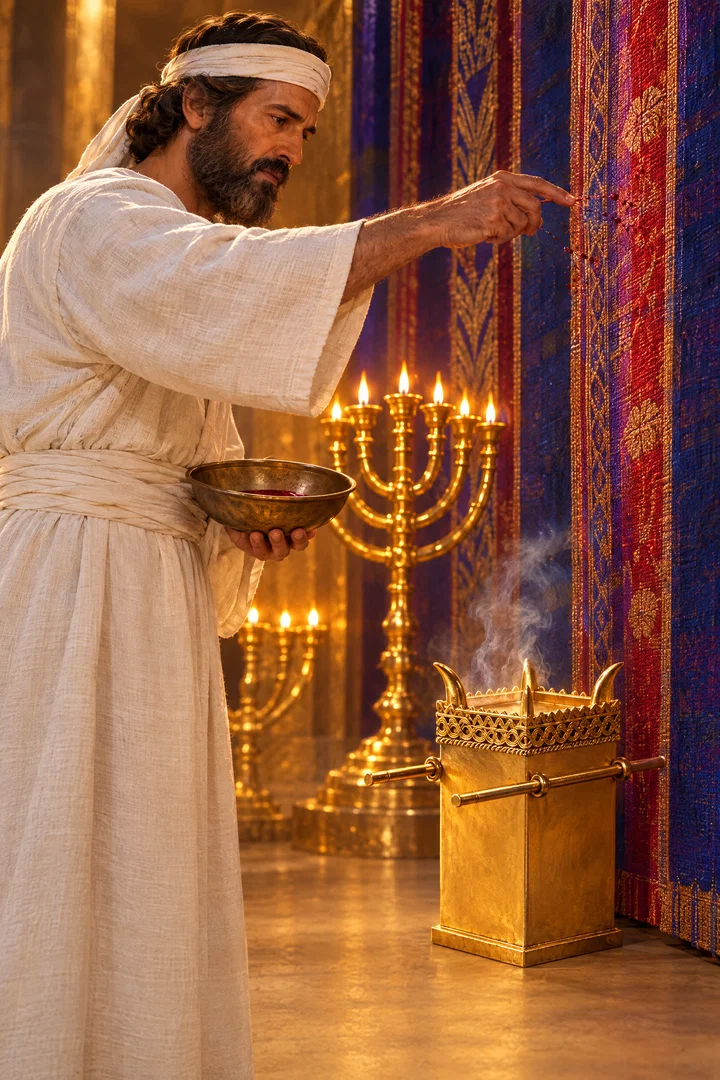
And the priest that is anointed shall take of the bullock’s blood, and bring it to the tabernacle of the congregation:
Translations
American King James Version, King James Version, KJV Cambridge Paragraph Bible
And the priest that is anointed shall take of the bullock’s blood, and bring it to the tabernacle of the congregation:
And the priest that is anointed shall take of the bullock's blood, and bring it to the tabernacle of the congregation:
Revised Version, American Standard Version
And the anointed priest shall take of the blood of the bullock, and bring it to the tent of meeting:
'And the priest who is anointed hath taken of the blood of the bullock, and hath brought it in unto the tent of meeting,
And the priest that is anointed shall take of the bullock's blood, and bring it into the tent of meeting;
And the anointed priest shall take of the blood of the bullock,—and bring it into the tent of meeting;
Berean Standard Bible, Majority Standard Bible
Then the anointed priest shall take some of the bull’s blood and bring it into the Tent of Meeting.
The anointed priest shall take some of the blood of the bull, and bring it to the Tent of Meeting.
And the chief priest is to take some of its blood and take it to the Tent of meeting;
And the Priest that is anointed shall take of the bullocks blood, and bring it into the Tabernacle of the Congregation.
Douay-Rheims (Challoner revision)
He shall take also of the blood of the calf, and carry it into the tabernacle of the testimony.
Pictures
Cross-references 20 of 53
- Hebrews 8:5
Who serve unto the example and shadow of heavenly things, as Moses was admonished of God when he was about to make the tabernacle: for, See, saith he, that thou make all things according to the pattern shewed to thee in the mount.
Earthly priestly service is a shadow of heavenly ministry.
- Leviticus 16:15-16
Then shall he kill the goat of the sin offering, that is for the people, and bring his blood within the vail, and do with that blood as he did with the blood of the bullock, and sprinkle it upon the mercy seat, and before the mercy seat:
Sacrificial blood is brought into the sanctuary to cleanse it and make atonement for sin.
- Hebrews 9:12
Neither by the blood of goats and calves, but by his own blood he entered in once into the holy place, having obtained eternal redemption for us.
Christ enters the heavenly sanctuary as High Priest by his own blood.
- Leviticus 17:11
For the life of the flesh is in the blood: and I have given it to you upon the altar to make an atonement for your souls: for it is the blood that maketh an atonement for the soul.
The blood represents the victim’s life and makes atonement.
- Hebrews 10:4
For it is not possible that the blood of bulls and of goats should take away sins.
Animal blood cannot take away sins.
- Leviticus 6:30
And no sin offering, whereof any of the blood is brought into the tabernacle of the congregation to reconcile withal in the holy place, shall be eaten: it shall be burnt in the fire.
Sin offerings whose blood entered the tabernacle were burned, not eaten.
- Hebrews 13:11-12
For the bodies of those beasts, whose blood is brought into the sanctuary by the high priest for sin, are burned without the camp.
Sin-offering blood was brought into the sanctuary while the bodies were burned outside the camp, as Jesus suffered outside the gate.
- Hebrews 10:1
For the law having a shadow of good things to come, and not the very image of the things, can never with those sacrifices which they offered year by year continually make the comers thereunto perfect.
The earthly sacrificial service was a shadow of Christ’s work.
- Hebrews 9:7
But into the second went the high priest alone once every year, not without blood, which he offered for himself, and for the errors of the people:
The high priest enters the sanctuary with blood for the people’s sins.
- Hebrews 9:24
For Christ is not entered into the holy places made with hands, which are the figures of the true; but into heaven itself, now to appear in the presence of God for us:
Christ enters the heavenly sanctuary to appear before God on our behalf.
- Leviticus 10:17-18
Wherefore have ye not eaten the sin offering in the holy place, seeing it is most holy, and God hath given it you to bear the iniquity of the congregation, to make atonement for them before the LORD?
Priests bear the congregation’s iniquity through the sin offering when its blood is not brought inside.
- Leviticus 4:16-18
And the priest that is anointed shall bring of the bullock’s blood to the tabernacle of the congregation:
The priest brings the congregation’s offering blood into the tabernacle and performs the blood rite.
- Hebrews 8:1-2
Now of the things which we have spoken this is the sum: We have such an high priest, who is set on the right hand of the throne of the Majesty in the heavens;
Christ ministers as high priest in the heavenly sanctuary.
- Hebrews 9:1
Then verily the first covenant had also ordinances of divine service, and a worldly sanctuary.
The earthly sanctuary and its services belonged to the first covenant.
- Numbers 15:24-28
Then it shall be, if ought be committed by ignorance without the knowledge of the congregation, that all the congregation shall offer one young bullock for a burnt offering, for a sweet savour unto the LORD, with his meat offering, and his drink offering, according to the manner, and one kid of the goats for a sin offering.
Both texts prescribe offerings and priestly atonement for sins committed unintentionally.
- Leviticus 17:14
For it is the life of all flesh; the blood of it is for the life thereof: therefore I said unto the children of Israel, Ye shall eat the blood of no manner of flesh: for the life of all flesh is the blood thereof: whosoever eateth it shall be cut off.
The blood is identified with the life of the victim.
- Leviticus 3:2
And he shall lay his hand upon the head of his offering, and kill it at the door of the tabernacle of the congregation: and Aaron’s sons the priests shall sprinkle the blood upon the altar round about.
Both describe sacrificial blood being brought to the tabernacle for application.
- Leviticus 1:5
And he shall kill the bullock before the LORD: and the priests, Aaron’s sons, shall bring the blood, and sprinkle the blood round about upon the altar that is by the door of the tabernacle of the congregation.
The bullock is killed and its blood is handled by the priest.
- Hebrews 9:8-9
The Holy Ghost this signifying, that the way into the holiest of all was not yet made manifest, while as the first tabernacle was yet standing:
The earthly tabernacle service typifies the heavenly sanctuary and its access.
- Isaiah 53:10
Yet it pleased the LORD to bruise him; he hath put him to grief: when thou shalt make his soul an offering for sin, he shall see his seed, he shall prolong his days, and the pleasure of the LORD shall prosper in his hand.
Christ’s soul is made an offering for sin.
Commentary
Each commentary is drawn from primary sources: the writings of Ellen G. White and Adventist pioneers and periodicals. Each commentary is separate. Its own words are not a quotation; follow the references to read the source passages.
Ellen G. White
4 sources
For the sin offering of a priest or of the whole congregation, the anointed priest was to take some of the bull's blood into the holy place, sprinkle it before the veil, and put it on the horns of the golden altar.PP 761.5 For the individual sin offering, the priest carried the victim's blood into the holy place and sprinkled it before the veil.PP 354.2–355.1 That blood brought inside signified the transfer of the repentant sinner's confessed sin from the sacrifice to the sanctuary.PP 354.2–355.1
In the Mosaic dispensation this was part of a law requiring sin offerings in addition to the tenth of all increase.ST May 6, 18754T 467.1–2 It belonged to a Levitical system marked by the setting apart of property for God, in which God kept His claims first and in nearly everything required returns to remind Israel of Himself as the Giver.4T 467.1–2 In that system sin offerings stood alongside trespass offerings, thank offerings, tithes, redemption of the firstborn, firstfruits of flocks and harvest, corners of fields and dropped grain left for the poor, letting the land lie untilled every seventh year for the needy, release of debts every seventh year, hospitality, gifts to the poor, assessments on property, and special voluntary gifts such as those for the wilderness tabernacle and the Jerusalem temple.4T 467.1–2
Those requirements applied to everyone in proportion to what each possessed, so a conscientious giver devoted about one-third of all income to religious purposes and the poor.4T 467.1–2 Those contributions benefited the givers themselves as well as supporting God's service, and the amount required grows with the amount entrusted, so those with greater wealth owe a costlier gift, including sin offerings and thank offerings over and above the tithe.4T 467.1–2
Sources
Pioneers and periodicals
75 sources
The verse describes the anointed priest carrying some of the blood of the bullock slain for sin into the first apartment of the tabernacle of the congregation.RH Sep 16, 1852RH Dec 1, 1910RH Aug 3, 1876 That blood stands for the forfeited life of the sinner and the life of the innocent substitute, whose guilt was laid upon the victim by confession and laying on of hands and whose death bore that guilt in the sinner's place.ST Jan 18, 1883RH Mar 10, 1874ST Nov 20, 1879 By bringing that sin-bearing blood before God the priest removed guilt from the penitent and lodged it in the sanctuary itself, so the sinner was forgiven and freed while the holy dwelling was defiled and made to need cleansing.ST Jan 18, 1883RH Mar 10, 1874ST Nov 20, 1879RH Sep 16, 1852ST Jun 27, 1911 Atonement is made not by killing the victim at the door but by the priest presenting its blood in the sanctuary, and so Christ's atonement was made not where he died but as High Priest with his own blood in the heavenly sanctuary after his ascension.ST Aug 8, 1916ST Jul 2, 1885RH Sep 30, 1852ST Mar 29, 1883 This covers even sins done unknowingly or in ignorance, which are still truly sin and leave guilt until they are discovered, confessed, and met by a sin-offering through faith in the coming Redeemer.ST Apr 20, 1904ST Feb 20, 1893ST Nov 25, 1886ST Aug 24, 1888ST Apr 26, 1883
Ritual Action Described
The verse describes the anointed priest taking some of the bullock's blood and bringing it into the tabernacle of the congregation, into the holy place or first apartment.RH Sep 16, 1852RH Dec 1, 1910RH Aug 3, 1876ST May 22, 1901ST Apr 15, 1889 It belongs to the sin-offering for the anointed priest and for the whole congregation when collectively guilty, requiring that blood to be carried inside the sanctuary.RH Dec 1, 1910RH Aug 3, 1876ST Mar 11, 1886ST May 22, 1901ST Apr 15, 1889 Where the entire sin-offering was to be burnt, this taking of blood inside was the appointed course.RH Aug 3, 1876ST Mar 11, 1886ST Apr 15, 1889 Along with verses 6, 16, and 17, it shows the people's sin-offering blood sprinkled in that first apartment for removal of sin from the sinner.RH Sep 16, 1852RH Dec 1, 1910
After confession and restitution, the sinner or the elders laid the hand on the victim and killed it at the door of the tabernacle on the north side of the altar of burnt-offering.RH Sep 16, 1852ST Sep 5, 1900 The sinner, or the elders representing the congregation, did the killing, and the anointed priest's own duties began only when he obtained the blood.RH Sep 16, 1852ST Sep 5, 1900 He then took that blood into the Holy to minister with it in the Holy and in the court.RH Sep 16, 1852ST Sep 5, 1900
With his finger he sprinkled the blood seven times before the veil of the sanctuary, before the Lord in front of the inner veil.RH Sep 16, 1852ST Jan 14, 1886ST Jun 27, 1911ST Sep 5, 1900 He put some of the blood on the horns of the altar of sweet incense, the golden altar of incense.RH Sep 16, 1852ST Jan 14, 1886ST Jun 27, 1911ST Sep 5, 1900RH Jun 27, 1912 The remainder he poured at the bottom or base of the altar of burnt-offering in the court.RH Sep 16, 1852ST Jan 14, 1886ST Jun 27, 1911ST Sep 5, 1900RH Jun 27, 1912 By that blood ministration atonement was made and the sin forgiven.RH Sep 16, 1852ST Jun 27, 1911
This carrying of blood into the sanctuary distinguished the offering for the priest or the whole congregation from the offering for a ruler or any of the common people.ST Mar 11, 1886ST Jan 14, 1886ST May 22, 1901ST Dec 10, 1912ST Sep 5, 1900 For the priest and congregation the body was burned outside or without the camp, and because the priest was concerned in the sin he was not permitted to eat of that offering.ST Mar 11, 1886ST May 22, 1901ST Sep 5, 1900 For a ruler or common person the blood was applied at the burnt-offering altar and was not brought into the sanctuary, while the flesh was eaten by the priests in the holy place to bear the iniquity of the congregation and make atonement for them before the Lord.ST Jan 14, 1886ST May 22, 1901ST Dec 10, 1912ST Sep 5, 1900 In those cases where the blood was taken inside, the victim's body burned outside the camp and the blood figuratively carried the sin into the sanctuary.RH Aug 3, 1876ST Mar 11, 1886
Sins and Offerings Addressed
The directions to which this verse belongs concern sin committed unknowingly, unwillingly, or in ignorance through simple unacquaintance with or misunderstanding of circumstances, including transgression of one or many of God's commandments.ST Apr 20, 1904ST Aug 24, 1888RH Nov 10, 1863ST Oct 30, 1884ST May 31, 1905 Such unintentional sin is still truly sin and requires repentance and forgiveness, though it is less serious in God's sight than sin of presumption.ST Nov 25, 1886ST Aug 24, 1888ST Oct 30, 1884 Ignorance may lessen guilt and blame, but it cannot justify sin or make it innocent.ST Aug 24, 1888ST Oct 30, 1884 Even sins of ignorance sully the robe of righteousness and need forgiveness and cleansing for complete purification, and if left unforgiven can bring terrible vengeance.ST Aug 24, 1888ST Oct 30, 1884
A sin done in ignorance is not passed by as of no consequence, for lack of knowledge brings destruction and ignorance itself is sin.ST Feb 20, 1893 A person may sin and be ignorant of it, yet when the sin is brought to mind, becomes known, or is discovered, he is deemed guilty.ST Apr 20, 1904ST Feb 20, 1893ST Apr 26, 1883 Then the fault must not be excused by saying it was thought right, but must be confessed, with a sin offering brought and atonement made for it.ST Apr 20, 1904ST Feb 20, 1893ST Apr 26, 1883 If atonement is not made the sin remains, and a sin committed unknowingly still required atonement through the blood of the bullock brought into the tabernacle by the anointed priest.ST Apr 26, 1883RH Nov 10, 1863
The provision covers individual atonement for the forgiveness of sins made for one person and atonement for the congregation when collectively guilty of sin, including the sin offering when the anointed priest and when the whole congregation sinned through ignorance.RH Sep 16, 1852ST May 22, 1901 For the priest's own sin offering some of the bull's blood was brought into the tabernacle, into the holy place.RH Aug 3, 1876ST May 22, 1901 Because the priest was concerned in the sin he was not permitted to eat of that offering, but its body was burned without the camp, dealt with differently from the sin offering for a ruler or any of the common people, which was eaten by the priests to bear the iniquity of the congregation and make atonement for them before the Lord.ST May 22, 1901 This daily individual atonement for forgiveness could be made at any time and is distinct from the yearly national atonement for blotting out sins made in the Holy of Holies on the tenth day of the seventh month.RH Sep 16, 1852
The verse belongs to the ceremonial law, which was instituted in consequence of sin.RH Jan 10, 1916 It belongs to the instruction God gave through Moses by hand after speaking the ten commandments directly to the people, having reference to flesh and prescribing flesh offerings involving the blood of a bullock.ST Jul 8, 1886 It gives part of the law for special offerings such as sin offerings, peace offerings, and thank offerings, which cost the offerer something real, with the cost varying with the wealth or position of the one making the offering.ST Aug 16, 1883 In the Mosaic dispensation God required such sin offerings in addition to the tenth of all increase, and the types of Leviticus chiefly concern worship, with this chapter about offerings presenting a detail of the sin offering's priestly ritual.ST May 6, 1875ST Jan 31, 1911
Blood and Transfer Explained
The blood taken inside stands for life, the life of an innocent victim and substitute given in place of the life the lawbreaker had forfeited by breaking God's law.ST Jan 18, 1883RH Mar 10, 1874ST Nov 20, 1879ST Aug 15, 1878RH Feb 25, 1858 It was the life of the slain innocent victim presented to God to make atonement, the sinner's own forfeited life represented in the death of the offering.ST Aug 15, 1878ST Jul 8, 1930RH Feb 25, 1858 After confession the guilt lay first on the victim and then, in the bringing of its blood, was carried into the sanctuary itself.RH Feb 25, 1858
When a repentant man brought his sin offering to the door, laid his hand on its head and confessed his sins, his sin was in figure transferred to the offering.RH Dec 8, 1915RH Mar 10, 1874ST Oct 22, 1874RH Mar 8, 1870RH Feb 3, 1853 He then took its life with his own hand, acknowledging that he deserved death and accepting the offering as a substitute dying in his stead.RH Dec 8, 1915 The victim was slain because of that transferred guilt, dying in the sinner's place for that transgression.RH Mar 10, 1874ST Oct 22, 1874RH Mar 8, 1870
By taking that blood bearing sin and guilt into the sanctuary and sprinkling it before God, the priest transferred the penitent's guilt from the person through the victim to the sanctuary of God.ST Jan 18, 1883RH Mar 10, 1874ST Nov 20, 1879ST Aug 15, 1878RH Mar 8, 1870 This carrying and sprinkling was the most important feature of the first-apartment work, conveying the confessed sin laid on the offering into the sanctuary upon its holy vessels.RH Mar 10, 1874ST Jun 4, 1885 In this way sins passed from the people to the sacrifices and through the blood to the sanctuary itself.RH Mar 8, 1870RH Feb 3, 1853
By that blood ministration in the Holy and the court atonement was made and the sin was forgiven.RH Sep 16, 1852ST Jun 27, 1911 The rite represented the substitute's life offered for the transgressor, separated the sinner from sin, and left the sinner free from guilt.ST Jun 27, 1911 Yet the blood left in the sanctuary testified both to pardon granted and to sin and defilement brought upon God's dwelling place.ST Jun 27, 1911
That blood also stands for the sinner's sinful life and sins, covered by continually ascending incense when placed on the horns of the altar of incense.RH Feb 19, 1901 Sprinkled before the veil and upon the mercy seat above the broken law kept in the ark, it shows sins dealt with before the law and mercy granted when the people joined the offering with repentance and faith.ST Aug 8, 1878RH Jun 21, 1864RH Mar 10, 1874 The appointed victim's death was thus accepted in place of the offender's, as God provided atonement through a substitute.RH Aug 3, 1876
Daily Work and Cleansing
The carrying of the bullock's blood into the tabernacle of the congregation was the daily or occasional ministry of the first apartment, the holy place, carried on through the entire year except for the Day of Atonement.RH Mar 10, 1874ST Oct 22, 1874RH Mar 8, 1870RH Apr 6, 1869 It belonged to the especial work for individuals as they presented their particular offerings during the year set forth in Leviticus 1-7, which is the first grand division of the ministration of the earthly sanctuary, the daily service in the holy place alongside the regular morning and evening burnt offering, the burning of sweet incense, and the special work upon the Sabbaths, annual sabbaths, new moons, and feasts, and that ministration is the example and shadow of the more excellent ministry in the true tabernacle in heaven.RH Mar 8, 1870RH Apr 6, 1869 Among the regulations for the sanctuary services it is counted with those performed from time to time, in contrast with the continual daily offerings on the one hand and the yearly Day of Atonement service on the other, as held by those who made that distinction.ST Jan 21, 1886 When a man repented he brought a sin offering to the door, confessed his sin, and put his hand on its head to transfer his guilt to the offering, the victim was then slain because of that transferred guilt, and its blood, representing the life of the victim, was taken by the priest into the sanctuary and sprinkled there before God.RH Mar 10, 1874ST Oct 22, 1874RH Mar 8, 1870 This was the offering of the life of an innocent victim in place of the life of the lawbreaker, and by it the guilt of the penitent was transferred from himself through the sacrifice and through the blood to the sanctuary of God itself, the most important feature of the first-apartment work.RH Mar 10, 1874ST Oct 22, 1874RH Mar 8, 1870RH Apr 6, 1869
This blood ministration in the first apartment made reconciliation and began the work of atonement.RH Jan 11, 1870ST Jun 6, 1878 Through it sins were transferred to the sanctuary, leaving the sanctuary as the receptacle of the people's sins transferred day by day until the yearly cleansing.RH Jan 11, 1870ST Jun 6, 1878 When the anointed priest took the bullock's blood into the tabernacle and sprinkled it upon the altar before the ark, he left there in figure the forgiven sins of the penitent, the sinner's offering made in faith transferring sin in figure to the sanctuary through the blood of the sacrifice and the person of the priest.ST This transferring work, with the daily offering, went on all the year until the tenth day of the seventh month, when the accumulated sins were cleansed out on the day of atonement.RH Jan 11, 1870ST Jun 6, 1878ST
So bringing blood inside figuratively polluted and defiled the holy places.ST Apr 1, 1886RH Mar 28, 1854ST Nov 19, 1894 When the anointed priest took the blood of the bullock and brought it into the tabernacle of the congregation, sin was carried into the sanctuary itself, the sinner's guilt represented as transferred first to the victim and then through the blood to the sanctuary, the blood thus brought in representing the life of the victim.ST Apr 1, 1886RH Mar 28, 1854ST Nov 19, 1894 In the daily service for the individual sinner the repentant sinner brings his offering to the door of the tabernacle, lays his hand on the victim's head and confesses his sins, transferring them in figure to the innocent sacrifice, then slays the animal with his own hand, and the priest carries its blood into the holy place and sprinkles it before the veil behind which is the ark containing the law the sinner transgressed, so that by this ceremony the sin is through the blood transferred in figure to the sanctuary.ST Nov 19, 1894 Because the sins of Israel are thus transferred day by day throughout the year the holy places are defiled and require a special work of atonement to cleanse and hallow them from the uncleanness of the children of Israel.ST Apr 1, 1886RH Mar 28, 1854ST Nov 19, 1894
That first-apartment service only partially accomplished the work and began what was later taken up and completed.RH Jan 11, 1870ST Jun 6, 1878ST Aug 15, 1878RH Mar 10, 1874 On the tenth day of the seventh month the high priest cleansed the sanctuary, removed the accumulated sins from the sanctuary, and blotted out the people's sins, the later work in the second apartment serving as the pattern of the heavenly sanctuary's work.RH Jan 11, 1870ST Jun 6, 1878ST Aug 15, 1878RH Mar 10, 1874 Where the blood was not taken into the holy place the priest eating the flesh to bear the iniquity of the congregation likewise symbolized the transfer of sin from the penitent to the sanctuary, both ceremonies alike effecting that transfer.ST Nov 19, 1894 This daily individual atonement for forgiveness could be made at any time for one person or for the congregation when collectively guilty, and is distinct from the yearly national atonement for blotting out sins made in the Holy of Holies on the tenth day of the seventh month.RH Sep 16, 1852
Foreshadowing of Christ's Ministry
The daily service of the earthly sanctuary foreshadowed the ministry of the great High Priest in the temple of God above, and its priesthood and rites were typical of Christ's priesthood in the heavenly sanctuary.RH Dec 8, 1915RH Mar 8, 1870ST Nov 28, 1895 It belonged to the first grand division of the earthly ministration, the daily service in the holy place carried on through the year alongside the regular morning and evening burnt offering, the burning of sweet incense, and the special work upon Sabbaths, annual sabbaths, new moons and feasts, as the example and shadow of a more excellent ministry in the true tabernacle in heaven.RH Dec 8, 1915RH Mar 8, 1870 In that figure the sinner brought his offering to the door, laid his hand upon its head and confessed his sins so that his sin was transferred in figure to the offering, then took its life with his own hand in acknowledgment that he deserved death and that he accepted the offering as a substitute dying in his stead.RH Dec 8, 1915RH Feb 3, 1853 The priest then took the blood bearing that guilt and carried it into the sanctuary and sprinkled it before the veil, behind which stood the ark containing the law of ten commandments with the mercy seat above it, and by that sprinkling the sinner through the priest acknowledged that he had broken the divine law and sought mercy and pardon through the blood of the sacrifice, making reconciliation day by day throughout the year.RH Dec 8, 1915RH Feb 3, 1853 In the heavenly reality thus pictured Christ bears the world's sins and presents his shed blood for penitent sinners as their High Priest and Advocate, whose work of removing sin is completed before his return.RH Feb 3, 1853
As the earthly blood was presented in the first apartment, so Christ after his ascension presented his own blood as a sin-offering in the first apartment of the heavenly sanctuary.RH Dec 1, 1910RH Jun 27, 1912 The anointed priest bringing the sin-offering's blood into the tabernacle's first apartment, with the blood of the people's sin-offerings sprinkled there, typified the removal of sin from the sinner.RH Dec 1, 1910 This action typified Christ entering the holy place by his own blood and obtaining eternal redemption for humanity, presented as the bleeding Lamb before God given as an atoning sacrifice for human redemption.RH Jun 27, 1912RH Nov 13, 1900
The priest's sin-offering represented the sinner, with guilt laid on the victim which died in the sinner's place, pointing to Christ bearing sin and the law's curse so the guilty sinner may go free.ST Jun 27, 1911ST Apr 15, 1886 An innocent animal was substituted for the sinner, the sinner's sins were confessed over it and it was slain, and its blood was brought into the tabernacle so that either the flesh or the blood was carried within the sanctuary and the sinner was forgiven, the sin being laid upon the substitute as a whole and entirely consumed.ST Apr 15, 1886 That foreshadowed the Lamb of God who alone removes sin and put away sin by the sacrifice of himself, having the iniquity of all laid on him and bearing sins in his own body on the tree.ST Apr 15, 1886ST Jul 8, 1886RH Apr 10, 1900 Because the priest was concerned in the sin he was not permitted to eat of that offering for priest or congregation, but the body was burned without the camp, unlike the sin-offering for a ruler or any of the common people which was eaten by the priests to bear the iniquity of the congregation and make atonement for them before the Lord; and the burning without the camp points to Jesus, who sanctified the people through his own blood by suffering without the gate, giving himself as an offering and sacrifice to God whose soul is made an offering for sin.ST May 22, 1901
The appointed sacrifices provided a means for people to receive forgiveness, but the blood of animal offerings did not itself take away sin, could not give life or make perfect, and did not atone for a single sin.ST Apr 15, 1886ST Jan 27, 1890ST Aug 5, 1889 Pardon came through Christ's promised sacrifice, the offerings expressing faith in him as Mediator of the new covenant, the Lamb of God who alone removes sin and put away sin by the sacrifice of himself, bearing sins in his own body on the tree.ST Apr 15, 1886ST Jan 27, 1890ST Jul 8, 1886 The law reveals a person's sin and need and shows that sin against God's commandments brings guilt and requires an offering and atonement so that sin can be forgiven and guilt removed, while the offering points to Christ who bears human iniquity and is offered for sin; yet this atonement in itself could not take away sin but pointed to Christ's death, which was designed to provide the atonement that takes sin away.RH Apr 10, 1900RH May 19, 1863 After Christ's sacrifice those typical sacrifices were no longer required but were abolished in his flesh, finding fulfillment in his body, so that eternal life now requires eating the flesh of the Son of man and drinking his blood.ST Apr 15, 1886ST Jul 8, 1886
The ritual taught the deadly nature of sin and the need to confess and forsake it, showing that sin brings a penalty and death and that the sinner's life is forfeited under the law.ST Nov 23, 1904ST Feb 3, 1909 The priests' laying hands on the victims represented the people's confession, and the blood symbolized the sinner's life forfeited under the law.ST Nov 23, 1904 The offering pointed to Christ whose blood was shed for the whole world, while its benefit applies to those who humble themselves before God and confess their sin.ST Nov 23, 1904 Individual offerings brought by people burdened with sin expressed faith in the coming Redeemer where sin was remembered, and the sin-offering represents a sinner coming to God in repentance for being sinful by nature and yielding life to him, with sin and its remedy represented in the sanctuary service pointing forward to Jesus Christ.ST Sep 20, 1910ST Feb 3, 1909ST Apr 2, 1912ST Sep 5, 1900
Atonement by Priestly Mediation
Atonement for sin is made in the sanctuary by the priest with the blood of the sin-offering, not by the slaying of the sacrifice or at the place where it was slain.ST Aug 8, 1916ST Jul 2, 1885RH Jul 6, 1869 The sinner laid hands on the animal and slew it to prepare for atonement, while the anointed priest taking its blood into the tabernacle and sprinkling it upon the altar before God is what is called making an atonement.ST Aug 8, 1916ST Jul 2, 1885ST Mar 29, 1883RH Jul 6, 1869 The blood itself atones and cleanses, but it is the priest presenting that blood before the shekinah that makes the atonement, a work done always in the sanctuary and never where the offering was slain, for the offering was never slain in the sanctuary.ST Mar 29, 1883
The slaying of the victim is not the making of the atonement, for the sinner slew the victim and after that the priest took the blood and made the atonement, since making atonement is the work of a priest done with the blood in the sanctuary.RH Sep 30, 1852 Therefore the atonement was not made on Calvary, where Roman soldiers and wicked men officiated and where there was no sanctuary, but by Christ as the appointed High Priest with His own blood in the heavenly sanctuary after His resurrection and ascension.RH Sep 30, 1852 This daily pattern, repeated through Leviticus 4 and 5, proves that Christ makes atonement not by dying as the sin-offering but in His office as Priest in the heavenly sanctuary.ST Aug 8, 1916 He is both sacrifice and priest, but not at the same time, and He was not acting as priest when He died, so His death makes salvation possible to the applicant while His priestly presentation of blood whereby atonement is made makes salvation positive, fixed, and certain.ST Aug 8, 1916ST Mar 29, 1883
Call to Repentance Today
The sin-offering ritual taught the deadly nature of sin and the need to confess it and forsake it.ST Nov 23, 1904 Its benefit reaches those who humble themselves before God and confess their sin, for the laying of hands on the victim represented the people's confession and the blood symbolized the sinner's life forfeited under the law.ST Nov 23, 1904 The sinner, or the elders acting for the congregation, killed the sacrifice himself, showing that sin brings death and not that death is demanded by arbitrary divine anger.ST Sep 5, 1900
A sin done in ignorance is still truly sin and is not passed by as of no consequence, and lack of knowledge itself brings destruction.ST Feb 20, 1893ST Apr 26, 1883 A person may sin without knowing it, yet when the sin becomes known he is deemed guilty, and if atonement is not made the sin remains.ST Apr 26, 1883 Such a fault must not be excused by saying it was thought right, but once recognized it must be confessed, repented of, and put away.ST Feb 20, 1893RH Apr 28, 1910
Sins of ignorance are truly sinful, yet they are less obnoxious to God and less serious in His sight than sins of weakness and presumption.RH Mar 3, 1874ST Nov 25, 1886 Ignorance may lessen guilt and blame, but it cannot justify sin, make it innocent, or remove the need for forgiveness and purification.ST Aug 24, 1888ST Oct 30, 1884 Even sins of ignorance sully the robe of righteousness and require forgiveness and cleansing for complete purification, and if left unforgiven they can bring terrible vengeance.ST Aug 24, 1888 No one is saved from sin beyond the light on duty from God's word that he follows, so to claim complete salvation from sin merely from having no consciousness of sin denies this whole class of sins.ST Mar 22, 1883
Those who sinned ignorantly are called to repent and reform as soon as their ignorance is removed, a duty that continues now.RH Mar 3, 1874 When the people of God discover they have sinned unwillingly or through ignorance by transgressing God's commandments, they are to repent.ST May 31, 1905 God takes account of a sinner's knowledge and opportunities to know what is right when judging responsibility.RH Apr 28, 1910 When light comes and is refused, former sins of ignorance are indorsed and become doubly sinful, imputed as sins done with full knowledge or counted as sins of presumption.RH Mar 3, 1874ST Mar 22, 1883
The anointed priest bringing the bull's blood into the tabernacle, in contrast to offerings whose flesh he ate in the holy place, shows that the priest bore responsibility for sins committed in ignorance by those under his charge.ST Sep 5, 1900
Sources