Leviticus 2:8
And thou shalt bring the meat offering that is made of these things unto the LORD: and when it is presented unto the priest, he shall bring it unto the altar.
Translations
And you shall bring the meat offering that is made of these things to the LORD: and when it is presented to the priest, he shall bring it to the altar.
And thou shalt bring the meat offering that is made of these things unto the LORD: and when it is presented unto the priest, he shall bring it unto the altar.
And thou shalt bring the meat offering that is made of these things unto the Lord: and when it is presented unto the priest, he shall bring it unto the altar.
And thou shalt bring the meat-offering that is made of these things to the LORD: and when it is presented to the priest, he shall bring it to the altar.
And thou shalt bring the meal offering that is made of these things unto the LORD: and it shall be presented unto the priest, and he shall bring it unto the altar.
And thou shalt bring the meal-offering that is made of these things unto Jehovah: and it shall be presented unto the priest, and he shall bring it unto the altar.
and thou hast brought in the present which is made of these to Jehovah, and [one] hath brought it near unto the priest, and he hath brought it nigh unto the altar,
And thou shalt bring the oblation that is made of these things to Jehovah; and it shall be presented to the priest, and he shall bring it to the altar.
Then shalt thou bring in the meal-offering that is made of these, unto Yahweh,—and one shall bring it near unto the priest, and he shall take it near unto the altar.
Berean Standard Bible, Majority Standard Bible
When you bring to the LORD the grain offering made in any of these ways, it is to be presented to the priest, and he shall take it to the altar.
You shall bring the meal offering that is made of these things to the LORD. It shall be presented to the priest, and he shall bring it to the altar.
And you are to give the meal offering made of these things to the Lord, and let the priest take it to the altar.
After, thou shalt bring the meate offering (that is made of these things) vnto the Lord, and shalt present it vnto the Priest, and he shall bring it to the altar,
Douay-Rheims (Challoner revision)
And when thou offerest it to the Lord, thou shalt deliver it to the hands of the priest.
Pictures
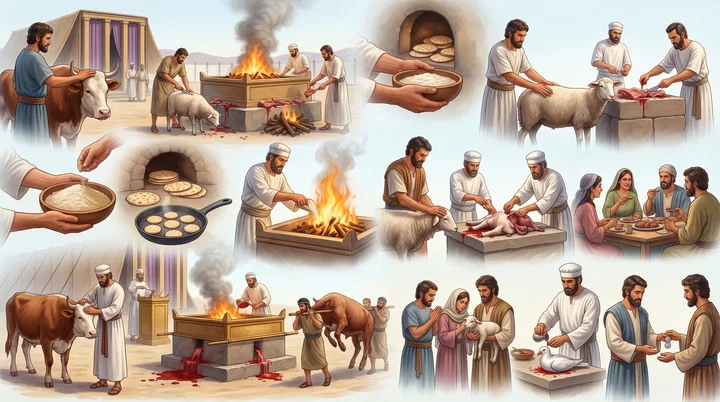
Cross-references
- Hebrews 8:5
Who serve unto the example and shadow of heavenly things, as Moses was admonished of God when he was about to make the tabernacle: for, See, saith he, that thou make all things according to the pattern shewed to thee in the mount.
Earthly sanctuary service followed the pattern of heavenly things.
- Leviticus 1:1-2
And the LORD called unto Moses, and spake unto him out of the tabernacle of the congregation, saying,
The chapters describe individual offerings brought in faith.
- Hebrews 9:9
Which was a figure for the time then present, in which were offered both gifts and sacrifices, that could not make him that did the service perfect, as pertaining to the conscience;
The earthly sanctuary and its service are described as a figure.
- Hebrews 9:23-24
It was therefore necessary that the patterns of things in the heavens should be purified with these; but the heavenly things themselves with better sacrifices than these.
The earthly sanctuary’s service points to the heavenly sanctuary.
Commentary
Each commentary is drawn from primary sources: the writings of Ellen G. White and Adventist pioneers and periodicals. Each commentary is separate. Its own words are not a quotation; follow the references to read the source passages.
Ellen G. White
1 source
The offering in view is prepared from flour and oil.CTBH 169.5 The term meat therefore does not signify animal flesh here.CTBH 169.5 It signifies food in the general sense, including cereal food made from grain.CTBH 169.5
Sources
Pioneers and periodicals
16 sources
The verse directs that the grain offering made from the prescribed ingredients be brought to the Lord and handed to the Aaronic priest to carry it to the altar.ST Jan 31, 1911STST Jan 31, 1911 The term meat means food in general rather than animal flesh, and the offering was prepared from fine flour mixed with oil, with olive oil and frankincense and green ears of grain.RH Jul 22, 1902ST Apr 8, 1875RH Aug 1, 1871ST Jan 31, 1911ST Aug 1, 1911 It belongs among the daily and special offerings brought by individuals in faith by which Israel worshiped God.RH Mar 8, 1870ST Apr 2, 1912ST Jan 31, 1911 The earthly sanctuary service so described was a type and object lesson of the heavenly sanctuary and Christ's priestly work, with its various offerings as shadows fulfilled in Jesus Christ.ST Jun 19, 1907ST Feb 3, 1909ST Nov 28, 1895ST Feb 13, 1912 The flour represented Christ as the bread of life, the oil represented the influence of the divine Spirit, and the frankincense represented grateful prayer rising as a fragrant offering to God.ST Aug 1, 1911
Offering and Its Procedure
The “meat offering” is a food offering, not an offering of animal flesh, since “meat” in the Bible can mean food generally.RH Jul 22, 1902ST Apr 8, 1875RH Aug 1, 1871RH Mar 4, 1875
It was made from the prescribed non-animal ingredients, including fine flour mixed with oil, olive oil, frankincense, and green ears of grain.RH Jul 22, 1902ST Jan 31, 1911ST Aug 1, 1911
The prepared grain offering was brought to the Lord and presented to an Aaronic priest, who then carried it to the altar.ST Jan 31, 1911STST Jan 31, 1911ST Aug 1, 1911
It belongs among the daily and special offerings brought by individuals as acts of faith by which Israel worshiped God.RH Mar 8, 1870ST Apr 2, 1912ST Jan 31, 1911
Individual offerings made in faith were part of the means by which a penitent’s sins were represented as transferred to the sanctuary through the sacrifice’s blood or the priest’s ministry.ST
The meat offering was part of individual atonement for the forgiveness of sins for a single person, or for the whole congregation when collectively guilty, and confession of sin with restitution where due was necessary before the atonement could be made.RH Sep 16, 1852
The chapter’s salt offering is called the salt of the covenant, with the salt making the covenant effective and signifying its preserving, uncorrupting nature.ST Aug 10, 1904
The priest placed a handful of the flour, oil, and frankincense on the altar as a memorial, with the frankincense burned, while the remaining offering could serve as food for the priest.ST Aug 1, 1911
Type of Christ's Ministry
Leviticus 2:8 belongs to the instructions for the sanctuary service, whose earthly service was a type and object lesson of the heavenly sanctuary and Christ's priestly work.ST Jun 19, 1907ST Nov 28, 1895 Its instructions help explain God's way in the sanctuary and Christ's work for humanity, for its priesthood and rituals were typical of Christ and His priesthood in the heavenly sanctuary.ST Jun 19, 1907ST Nov 28, 1895 The various offerings and different kinds of sacrifices described there are shadows of their fulfillment in Jesus Christ, with each holding something in type concerning the work of Jesus Christ.ST Feb 3, 1909ST Feb 13, 1912 The yearly round of these services typified Christ's ministry, which was accomplished once for all.ST Nov 28, 1895
Offerings of meal and oil were acts of faith in the coming Redeemer, forming part of the daily sanctuary services that kept remembrance of sin before the people and pointed forward to Christ.ST Nov 28, 1895ST Apr 2, 1912 The fine flour of the offering represented Christ as the bread of life, the olive oil represented the influence of the divine Spirit, and the frankincense represented grateful prayer.ST Aug 1, 1911 The frankincense made it a fragrant offering to God.ST Aug 1, 1911
Sources