Leviticus 21:22
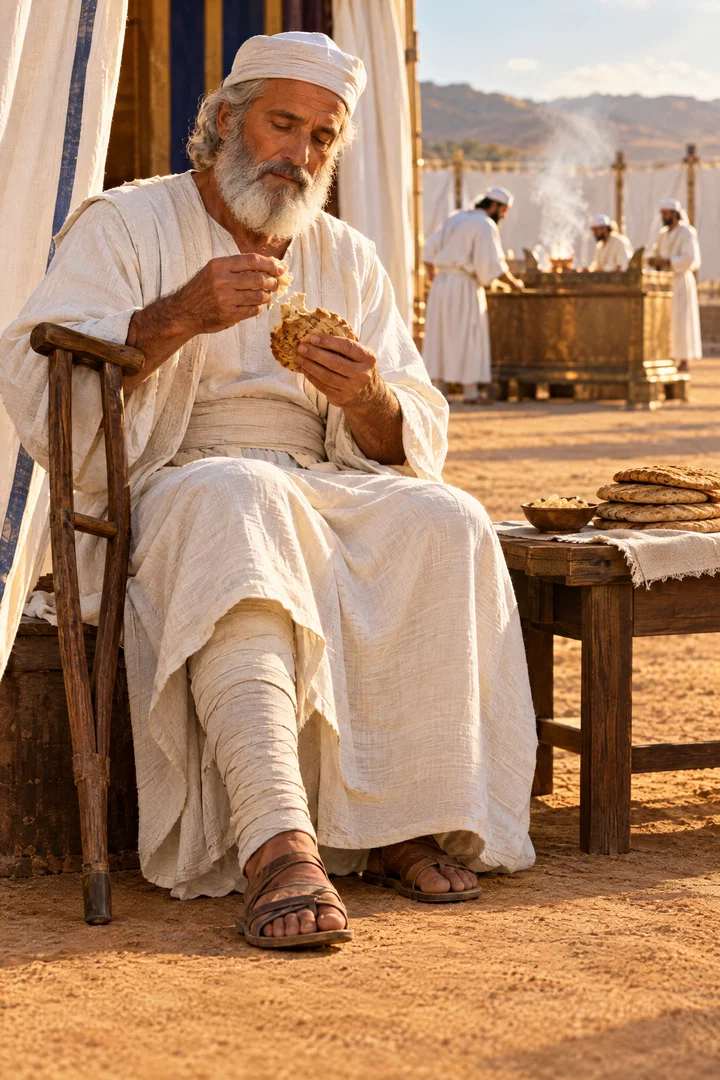
He shall eat the bread of his God, both of the most holy, and of the holy.
Translations
American King James Version, King James Version, KJV Cambridge Paragraph Bible, Webster Bible, Revised Version, World English Bible
He shall eat the bread of his God, both of the most holy, and of the holy.
He shall eat the bread of his God, both of the most holy, and of the holy:
'Bread of his God — of the most holy things, and of the holy things — he doth eat;
The bread of his God, of the most holy and of the holy, shall he eat;
Of the food of his God, both of the most holy,—and the holy, may he eat:
Berean Standard Bible, Majority Standard Bible
He may eat the most holy food of his God as well as the holy food,
He may take of the bread of God, the holy and the most holy;
The bread of his God, euen of the most holie, and of the holy shall he eate:
Douay-Rheims (Challoner revision)
He shall eat nevertheless of the loaves, that are offered in the sanctuary,
Pictures
Cross-references
- Leviticus 6:16-18
And the remainder thereof shall Aaron and his sons eat: with unleavened bread shall it be eaten in the holy place; in the court of the tabernacle of the congregation they shall eat it.
Both describe priests eating their allotted holy offerings.
- Leviticus 22:10-12
There shall no stranger eat of the holy thing: a sojourner of the priest, or an hired servant, shall not eat of the holy thing.
Defines which members of a priest’s household may eat holy food.
- Leviticus 24:9
And it shall be Aaron’s and his sons’; and they shall eat it in the holy place: for it is most holy unto him of the offerings of the LORD made by fire by a perpetual statute.
The priests eat the holy bread in the holy place.
- Leviticus 2:10
And that which is left of the meat offering shall be Aaron’s and his sons’: it is a thing most holy of the offerings of the LORD made by fire.
The grain offering’s remainder is assigned to the priests.
- Leviticus 2:3
And the remnant of the meat offering shall be Aaron’s and his sons’: it is a thing most holy of the offerings of the LORD made by fire.
Both describe the holy offerings eaten by priests.
Commentary
Each commentary is drawn from primary sources: the writings of Ellen G. White and Adventist pioneers and periodicals. Each commentary is separate. Its own words are not a quotation; follow the references to read the source passages.
Ellen G. White
3 sources
The verse stands within the instructions laying down bodily fitness for priestly sanctuary service, forming part of the wider direction in Leviticus 21:6-23.EW 82.2SCEV 21.1Ms 2, 1853, par. 2–3 A priest barred by bodily defect from coming near to serve at the altar was still permitted to eat the provision of his God, both from what was most holy and from what was holy.SCEV 21.1 Those who performed the sacred work itself were required to be holy and pure and without defect, because that work brought them into close connection with God.EW 82.2SCEV 21.1Ms 2, 1853, par. 2–3 To minister while in a defective condition brought warning of destruction from God.EW 82.2Ms 2, 1853, par. 2–3 That destruction is not pronounced in this verse itself upon the defective priest who eats.SCEV 21.1 Since God remains just as holy and pure and particular, those who minister for Jesus are to be people of experience and deep piety who exert a holy influence.EW 82.2
Sources
Pioneers and periodicals
6 sources
Leviticus 21:22 belongs to the laws in Leviticus 5-23 concerning sacrifices and offerings and the consecration and duties of the priests.ST Feb 7, 1911 It bars a priest with a physical blemish from offering the bread of God and from performing priestly service in the highest offices of Jehovah's service.RH Aug 28, 1853ST Aug 21, 1884RH Apr 1, 1909 A priest with a physical defect could still eat the sacred food allotted to priests, including both the most holy offerings and the holy offerings.ST Apr 7, 1914ST Aug 21, 1884 In the verse holy and most holy describe kinds of sacred bread, not places in the tabernacle, since no bread belonged to or was offered in the most holy place.RH Aug 28, 1853
The description of certain offerings as most holy does not rank them above the Sabbath and makes no comparison between them, for the Sabbath is holy and set apart by God and, there being only one Sabbath, it is not ranked against other Sabbaths by degrees of holiness.RH Jun 10, 1862 The verse belongs to the mighty object-lessons given in Leviticus that everywhere emphasize the exceeding sinfulness of sin. Like the other dry details of laws about sacrifices and priestly service, it is a type of Jesus Christ, with its meaning found more fully in his sacrifice, life, and work and with the slain beasts pointing forward to the Lamb of God who takes away the sin of the world.ST Feb 7, 1911 Seen with Christ in it, it is invested with new life and made a blessing to the reader, though spending much time on the meaning of every detail is not comparatively profitable.ST Feb 7, 1911
Sources