Leviticus 23:22
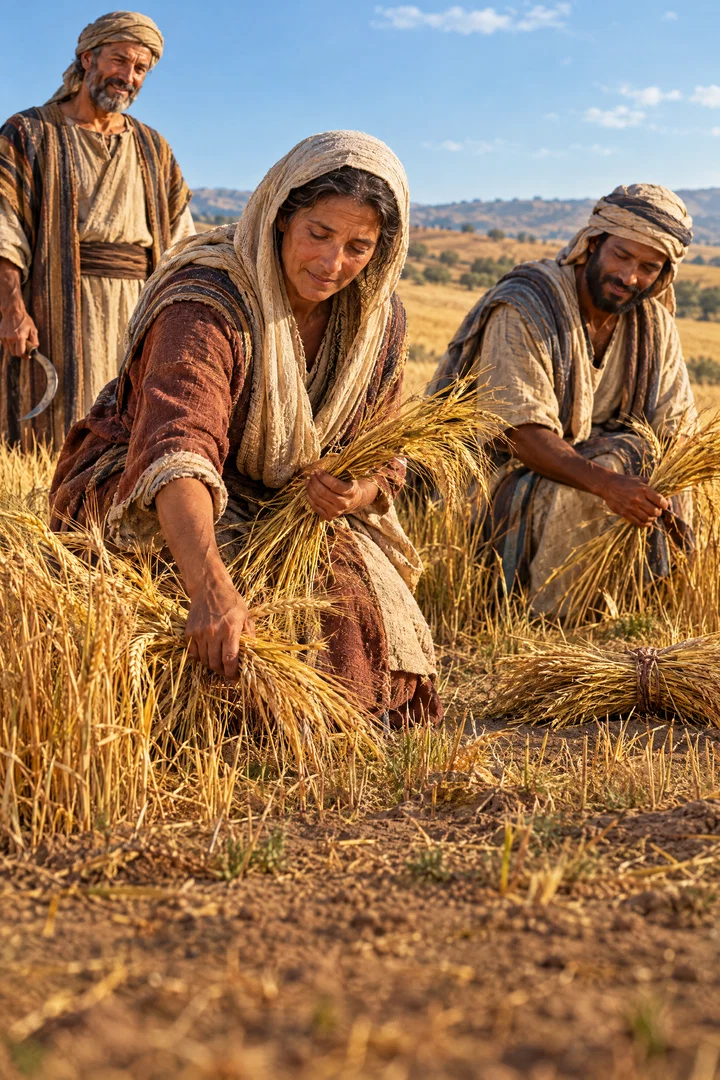
And when ye reap the harvest of your land, thou shalt not make clean riddance of the corners of thy field when thou reapest, neither shalt thou gather any gleaning of thy harvest: thou shalt leave them unto the poor, and to the stranger: I am the LORD your God.
Translations
And when you reap the harvest of your land, you shall not make clean riddance of the corners of your field when you reap, neither shall you gather any gleaning of your harvest: you shall leave them to the poor, and to the stranger: I am the LORD your God.
And when ye reap the harvest of your land, thou shalt not make clean riddance of the corners of thy field when thou reapest, neither shalt thou gather any gleaning of thy harvest: thou shalt leave them unto the poor, and to the stranger: I am the LORD your God.
And when ye reap the harvest of your land, thou shalt not make clean riddance of the corners of thy field when thou reapest, neither shalt thou gather any gleaning of thy harvest: thou shalt leave them unto the poor, and to the stranger: I am the Lord your God.
And when ye reap the harvest of your land, thou shalt not make clean riddance of the corners of thy field when thou reapest, neither shalt thou gather any gleaning of thy harvest: thou shalt leave them to the poor, and to the stranger: I am the LORD your God.
And when ye reap the harvest of your land, thou shalt not wholly reap the corners of thy field, neither shalt thou gather the gleaning of thy harvest: thou shalt leave them for the poor, and for the stranger: I am the LORD your God.
And when ye reap the harvest of your land, thou shalt not wholly reap the corners of thy field, neither shalt thou gather the gleaning of thy harvest: thou shalt leave them for the poor, and for the sojourner: I am Jehovah your God.
'And in your reaping the harvest of your land thou dost not complete the corner of thy field in thy reaping, and the gleaning of thy harvest thou dost not gather, to the poor and to the sojourner thou dost leave them; I Jehovah [am] your God.'
And when ye reap the harvest of your land, thou shalt not in thy harvest entirely reap the corners of thy field, and the gleaning of thy harvest shalt thou not gather: thou shalt leave them unto the poor and to the stranger: I am Jehovah your God.
And, when ye reap the harvest of your land, thou shalt not wholly clear the border of thy field when thou reapest, and, the gleanings of thy field, shalt thou not glean,—for the poor and for the sojourner, shalt thou leave them. I—Yahweh, am your God.
Berean Standard Bible, Majority Standard Bible
When you reap the harvest of your land, do not reap all the way to the edges of your field or gather the gleanings of your harvest. Leave them for the poor and the foreign resident. I am the LORD your God.’”
“‘ When you reap the harvest of your land, you must not wholly reap into the corners of your field. You must not gather the gleanings of your harvest. You must leave them for the poor and for the foreigner. I am the LORD your God.’”
And when you get in the grain from your land, do not let all the grain at the edges of the field be cut, and do not take up the grain which has been dropped in the field; let that be for the poor, and for the man from another country: I am the Lord your God.
And when you reape the haruest of your land, thou shalt not rid cleane the corners of thy field when thou reapest, neither shalt thou make any aftergathering of thy haruest, but shalt leaue them vnto the poore and to the stranger: I am the Lord your God.
Douay-Rheims (Challoner revision)
And when you reap the corn of your land, you shall not cut it to the very ground: neither shall you gather the ears that remain; but you shall leave them for the poor and for the strangers. I am the Lord your God.
Pictures
Cross-references
- Deuteronomy 24:19-21
When thou cuttest down thine harvest in thy field, and hast forgot a sheaf in the field, thou shalt not go again to fetch it: it shall be for the stranger, for the fatherless, and for the widow: that the LORD thy God may bless thee in all the work of thine hands.
Requires leaving portions of the harvest for the needy and the stranger.
- Leviticus 19:9-10
And when ye reap the harvest of your land, thou shalt not wholly reap the corners of thy field, neither shalt thou gather the gleanings of thy harvest.
Both command leaving harvest gleanings for the poor and the stranger.
- Deuteronomy 10:18-19
He doth execute the judgment of the fatherless and widow, and loveth the stranger, in giving him food and raiment.
God’s care for strangers grounds Israel’s command to love them.
- Deuteronomy 26:12
When thou hast made an end of tithing all the tithes of thine increase the third year, which is the year of tithing, and hast given it unto the Levite, the stranger, the fatherless, and the widow, that they may eat within thy gates, and be filled;
The third-year tithe provides for the stranger and others in need.
- Leviticus 23:10-11
Speak unto the children of Israel, and say unto them, When ye be come into the land which I give unto you, and shall reap the harvest thereof, then ye shall bring a sheaf of the firstfruits of your harvest unto the priest:
Both concern harvest offerings acknowledging God.
- Acts 2:1-13
And when the day of Pentecost was fully come, they were all with one accord in one place.
The passage compares Leviticus 23’s festival account with the New Testament account of Pentecost.
Commentary
Each commentary is drawn from primary sources: the writings of Ellen G. White and Adventist pioneers and periodicals. Each commentary is separate. Its own words are not a quotation; follow the references to read the source passages.
Ellen G. White
4 sources
At harvest the field was not to be reaped to its very corners and no second gathering of fallen grain was to be made, but the corners and the gleanings were to be left for the poor and the stranger instead of collecting everything.4T 77.2–36T 273.3–4RH Aug 3, 1905Ms 81, 1901, par. 38–40 That reservation made provision for the needy an integral part of the harvest regulation rather than an afterthought.4T 77.2–3 It rested on the ownership of the land and its yield as God's, with His people holding what they harvested as stewards entrusted with it.4T 77.2–3
The arrangement displayed care, kindness and welcome toward the destitute, and toward outsiders in particular, by bringing strangers into a share of the community's material provision.6T 273.3–4RH Aug 3, 1905 Welcoming them into the harvest also opened access to spiritual good, so that those who came to acknowledge God could share those blessings and be taught His law.6T 273.3–4RH Aug 3, 1905
The portion left supplied food for the poor.Ms 81, 1901, par. 38–40 It reflects the divine intent that those who have should assist those laboring to secure a footing, dealing with others in generosity and mercy.Ms 81, 1901, par. 38–40 That same spirit requires that the work of others not be made unnecessarily difficult.Ms 81, 1901, par. 38–40
Sources
Pioneers and periodicals
38 sources
When the harvest is reaped the corners of the field must not be reaped clean and the gleanings must not be gathered, but they must be left for the poor and the stranger under the authority of the Lord as God.RH Feb 10, 1916ST Mar 20, 1884RH Nov 12, 1908
It stands within the enumeration of the set feasts of the Lord, holy convocations and yearly sabbaths connected with Passover, First-fruits, Weeks, Trumpets, Atonement and Tabernacles.ST Jun 17, 1903ST
Those yearly sabbaths fall on specified dates of the month and therefore fall on all days of the week, and they are distinguished as beside the Sabbaths of the Lord listed apart from the weekly Sabbath described in verses 1-3.ST Jul 17, 1879ST Jun 17, 1903
They belong to the ceremonial law of ordinances and not to the moral law of Exodus 20:3-17, and as shadows whose substance is Christ they were taken away and nailed to the cross when the antitype came, while the weekly seventh-day Sabbath instituted in Eden before sin continues as perpetual and for all people.ST Jan 3, 1878ST Jun 5, 1884ST Dec 25, 1893RH Jan 22, 1914
Each spring type was fulfilled exactly as to time in Christ sacrificed as Passover, risen as first-fruits, and the outpouring of the Holy Spirit at Pentecost, while the specific agricultural law of leaving corners and gleanings is not binding on farmers today but its underlying principle remains morally binding to provide for the poor.RH Oct 30, 1855RH Nov 12, 1908
Text and Chapter Setting
When the harvest of the land was reaped, the corners of the field were not to be reaped clean and the gleanings of the harvest were not to be gathered, but both were to be left for the poor and for the stranger.RH Aug 3, 1905RH Feb 10, 1916ST Mar 20, 1884RH Nov 12, 1908 This leaving of part of the crop at harvest rather than gathering everything was a duty laid under the authority of the Lord as God.RH Aug 3, 1905RH Feb 10, 1916 It belonged to the instructions given for Israel upon entering the promised land, by which they were to acknowledge God as the giver in all temporal blessings received by rendering to Him a thank-offering of the first-fruits of the best received.ST Aug 14, 1879
The command stands within the enumeration in Leviticus 23:4-38 of the set feasts of the Lord, holy convocations and yearly sabbaths connected with Passover, First-fruits, Pentecost or Weeks, Trumpets, Atonement, and Tabernacles.ST Jun 17, 1903STST Sep 9, 1913ST Feb 25, 1913 Those feasts were holy convocations set apart from common days, including days kept as sabbaths on which no servile work was done.STST Sep 9, 1913RH Aug 12, 1858 The list is the most elaborate list of the Jewish feasts, presenting all the yearly sabbaths and feast days, including the Day of Atonement and the sacrifices and offerings made on that day.ST Sep 9, 1913RH Aug 12, 1858ST Feb 25, 1913
The chapter sets forth the spring types with their times and offerings: the Passover killed on the fourteenth of the first month, the sheaf of first-fruits waved on the sixteenth, and the feast of weeks on the fiftieth day from first-fruits with its burnt offerings in verses 10-21.RH Oct 30, 1855RH Apr 29, 1873RH Feb 6, 1879 The waving of the sheaf on the sixteenth day of the first month, described as the day after the Sabbath, is tied to barley-harvest timing.RH Oct 30, 1855RH Feb 6, 1879 The chapter also names yearly sabbaths on the first, tenth, and fifteenth days of the seventh month, including the feast of trumpets on the first day, the Day of Atonement on the tenth day, and the feast beginning the fifteenth day, as well as seven-day feasts whose first and last days were sabbaths.ST Sep 9, 1913RH Apr 29, 1873ST Jul 15, 1880
The chapter reckons days of the feast and not days of the week, so that its eighth day is the day of the feast and not the weekly day.RH Apr 19, 1870 Its instruction belongs to the instruction regarding the yearly feasts paralleled in Deuteronomy 16.ST Mar 18, 1913 It is part of the instruction about services performed in the sanctuary from time to time, distinct from the daily round of service on the altar.ST Jan 21, 1886
Yearly Sabbaths Contrasted Weekly
Leviticus 23:22 stands in a chapter that also appoints annual sabbaths different in nature from the Lord's weekly Sabbath, for those annual days fall on specified dates of the month and therefore naturally fall on all days of the week, sometimes coinciding with the weekly Sabbath but not regularly doing so.ST Jul 17, 1879ST Jun 17, 1903ST Apr 8, 1897ST Jul 15, 1880 The enumeration belongs to the yearly feast days and Sabbaths connected with Passover, First-fruits, Trumpets, Atonement, Pentecost or Weeks, and Tabernacles, including seven-day feasts whose first and last days were sabbaths and the Day of Atonement as a sabbath kept on a set day of the month each year without regard to the day of the week.ST Jun 17, 1903ST Jul 15, 1880 Seven annual Jewish sabbaths are listed there as shadowy, typical sabbaths enforced by a law of types.
Those yearly days are distinguished by the expression beside or besides the Sabbaths of the Lord, listed apart from the weekly Sabbath described in verses 1-3 and distinguished again in verse 38.ST Jun 17, 1903ST Sep 9, 1913RH Jan 22, 1914RH Apr 29, 1873 The chapter is the most elaborate list of the Jewish feasts, showing holy days and sabbath days besides the weekly Sabbath, where the feasts of the Lord were holy convocations set apart from common days and some of these holy days were sabbaths in which no servile work was to be done.STST Sep 9, 1913 These include the first and seventh days of unleavened bread at Passover, the feast of trumpets on the first day of the seventh month, the Day of Atonement on the tenth day of the seventh month, and the feast beginning the fifteenth day of the seventh month, with several days kept as sabbaths on which no servile work was done, separate from the regular weekly Sabbath of Jehovah.STST Sep 9, 1913RH Apr 29, 1873
The yearly feasts, fasts, sabbaths, new moons, meats, drinks, and meat and drink offerings belong to the ceremonial or typical law of Moses, the law of ordinances and the Levitical system of priesthood and sacrifices, not to the moral law of Exodus 20:3-17 spoken by God and written on stone.ST Jan 3, 1878RH Jan 22, 1914ST Feb 13, 1912RH Apr 29, 1873 These festival observances and their ceremonial sabbaths are distinct from the Lord's weekly Sabbaths and are described as shadows of things to come, with Christ as their reality.ST Jan 3, 1878ST Dec 25, 1893 They were set apart as days for bringing special offerings to the Lord and belonged to the Jewish ceremonial law whose types were fulfilled in Christ.ST Jan 3, 1878RH Jan 22, 1914
The yearly days came in consequence of sin as types and prophecies pointing forward to Christ and met their fulfilment in Christ Jesus, while the Sabbath of the Lord is eternal as the memorial of creative power and the sign of sanctifying power and will exist forever.ST Jun 17, 1903RH Dec 18, 1860ST Jun 5, 1884 Those other holy days grew out of man's actions as a sinner and would never have existed but for sin, originating this side of the fall after types and shadows were introduced, which marks them as shadowy and typical.RH Dec 18, 1860ST Feb 25, 1875 They are yearly rather than weekly, ceremonial, temporal, and for one nation, unlike the seventh-day Sabbath which is unchangeable, perpetual, and for all people.ST Feb 25, 1875 The weekly Sabbath is always the seventh day of the week in constant succession, instituted in Eden before the fall and before types were introduced and guarded by the fourth commandment, with nothing shadowy about it, a memorial pointing back to creation rather than a shadow of things to come.ST Jun 17, 1903RH Dec 18, 1860ST Sep 9, 1913ST Jun 5, 1884
The yearly sabbaths were typical of certain events in the work of redemption and expired by limitation when the thing typified was reached, when the shadow reached the substance.ST Apr 8, 1897 Each sabbath was dependent for its existence on the typical feast to which it belonged and ceased with it when the feast met its antitype in the work of Christ, unlike the weekly Sabbath of the Lord which is an absolute and independent institution.RH Aug 12, 1858 Those ceremonial observances were shadows pointing forward and ceased at the cross, taken away when their fulfillment in Christ came, abolished, nailed to the cross, and ceased with the sacrificial law at the cross.ST Jun 5, 1884RH Jan 22, 1914ST Feb 13, 1912RH Apr 29, 1873 While they ceased, the weekly Sabbath instituted before the fall continues throughout eternity, remains part of the eternal, immutable law, and continues on the new earth.ST Sep 9, 1913RH Jan 22, 1914
Those who held a different position presented the seventh-day Sabbath as the first of the chapter's feasts and holy convocations and said they were all abolished together.RH Mar 8, 1864
Types Fulfilled in Christ
The spring types set out their times and offerings, with the Passover lamb killed on the fourteenth of the first month, the sheaf of first-fruits waved on the sixteenth, and the feast of weeks on the fiftieth day from first-fruits with its burnt offerings in verses 10-21.RH Oct 30, 1855 Each of those types was fulfilled exactly as to time, with Christ sacrificed as the Passover, risen as the first-fruits, and the outpouring of the Holy Spirit at Pentecost.RH Oct 30, 1855 Circumstantial offerings do not prevent the grand event of the day from meeting its antitype on the day pointed out in the type.RH Oct 30, 1855
The appointed feasts and ordinances as a whole formed part of the typical dispensation, which was a shadow whose substance is found in Christ's ministration.RH May 13, 1862 Its ceremonies therefore meet their antitype in Christ's work and cease when the real ministration begins, while the gleaning command itself carries no separate explanation or distinct antitype.RH May 13, 1862 The yearly or typical sabbaths listed in the chapter are shadows, types, rites, and ceremonies that came in because of sin, pointed forward to Christ, and ended in Him as a shadow ends in the substance, distinct from the Sabbath of the Lord which was given before sin entered and is not typical or shadowy in nature. Christians find headship in Jesus Christ alone and take Christ and His word for leading and guidance rather than being judged or condemned by what men say about meat, drink, feast days, or sabbath days. Following teachings of men alone is following shadows even when the teachings concern things divinely ordained, and following Moses alone leaves the veil of unbelief over the face, while looking beyond the human to Christ writes God's glory and His law in the heart.
Other Scriptures and Sunday
The chapter reckons days of the feast, not days of the week, and its eighth day is the day of the feast, not a weekly day.RH Apr 19, 1870 It lists yearly feasts and Sabbaths that are distinct from the weekly Sabbath.ST Sep 24, 1894 It therefore supplies no proof for Sunday-keeping, for it does not identify a day of the weekly cycle and cannot make Sunday a weekly Sabbath.RH Apr 19, 1870ST Sep 24, 1894
The list of feasts that had yearly sabbaths connected with them proves that the holy day in Colossians 2:16 includes the yearly sabbaths and that the Sabbath days include the weekly Sabbaths.RH Oct 29, 1872 It proves that the Sabbath is a type and therefore a positive institution with no moral basis, since moral institutions are not typical and typical institutions are not moral.RH Oct 29, 1872 The section lists seven ceremonial sabbaths with their meat offerings and drink offerings besides the Sabbath of the Lord, showing that those sabbaths belong to the typical law that is against man and is taken out of the way in Colossians 2. These ceremonial sabbaths associated with offerings, food and drink, and new moons are distinguished from the Lord's Sabbaths, belonging to the law of ordinances described as against us and figuratively nailed to the cross, unlike the enduring moral law, and they do not include the seventh-day Sabbath that was made for man.RH May 16, 1854
The annual feast days and their associated sabbaths, including the Passover and the Day of Atonement, belong to the Jewish ritual system of meats, drinks, and carnal ordinances joined together as one whole, distinct from the Sabbath spoken by God's own voice and written on the tables of stone.ST Sep 16, 1875ST Feb 7, 1911 They were part of the typical system as shadows pointing forward and ceased at the cross, while the weekly Sabbath is distinct as a memorial pointing back and not a shadow of things to come.ST Jun 5, 1884 They are the days spoken of in Romans 14, where esteeming one day above another is a matter of indifference and Christian liberty unless they are kept for justification to reject the sacrifice of Jesus, marking the change to the spiritual worship of Jesus in the faith of the gospel.ST Jun 5, 1884ST Sep 16, 1875 They were kept by Jewish believers from old association without binding others, so one may keep them while another regards them like all other days without judging each other, but the weekly Sabbath is different because it is not man's but God's and is not included in esteeming every day alike.ST Sep 16, 1875ST Feb 7, 1911
The verse belongs among the commemorative institutions of the Old Testament.RH Jun 17, 1873 In such institutions the appointed day of observance is different from the day on which the institution was given.RH Jun 17, 1873 The time of instituting an ordinance therefore does not determine the time of keeping it.RH Jun 17, 1873
Care for Poor Stranger
The harvest law requires landowners not to reap the corners of the field clean nor to gather the gleanings, but to leave them for the poor and the stranger.RH Aug 3, 1905ST Mar 20, 1884 This provision for the poor and the stranger is distinct from the Lord's tithe, which was dedicated to the Levites for their sanctuary service.ST Mar 20, 1884 It showed kindness and welcome to people outside Israel, allowing them to share in the community's material provision and, when they joined those acknowledging God, in its spiritual blessings.RH Aug 3, 1905
The annual observances to which the command belongs, unlike the seventh-day Sabbath, were tied to particular days and months as part of the chapter's regulations for the Jewish annual feasts and Sabbaths.RH Aug 29, 1871RH Apr 9, 1872RH Oct 14, 1873 That ceremonial code was associated with the land of Canaan and designed especially for its inhabitants, pertaining to that earthly inheritance.RH Aug 29, 1871RH Oct 14, 1873 It formed a burden of ceremonial requirements that would have been a wall between Jews and Gentiles.RH Apr 9, 1872 It could not be kept when the land was under Gentile rule, unlike the weekly Sabbath, which remained unaffected and belonged to a higher order of institutions, while that ceremonial system was among the ordinances abolished by Christ.RH Aug 29, 1871RH Oct 14, 1873
The leaving of the field's corners and harvest gleanings was an agricultural law given to Israel whose specific legal requirement is not binding on farmers today, but whose underlying principle remains binding because people are morally bound to provide for and help the poor.RH Nov 12, 1908 The yearly system of religious instruction to which it belonged was carefully ordered, so that departure from even a small particular was blameworthy.ST Mar 24, 1887
Sources