Leviticus 19:9
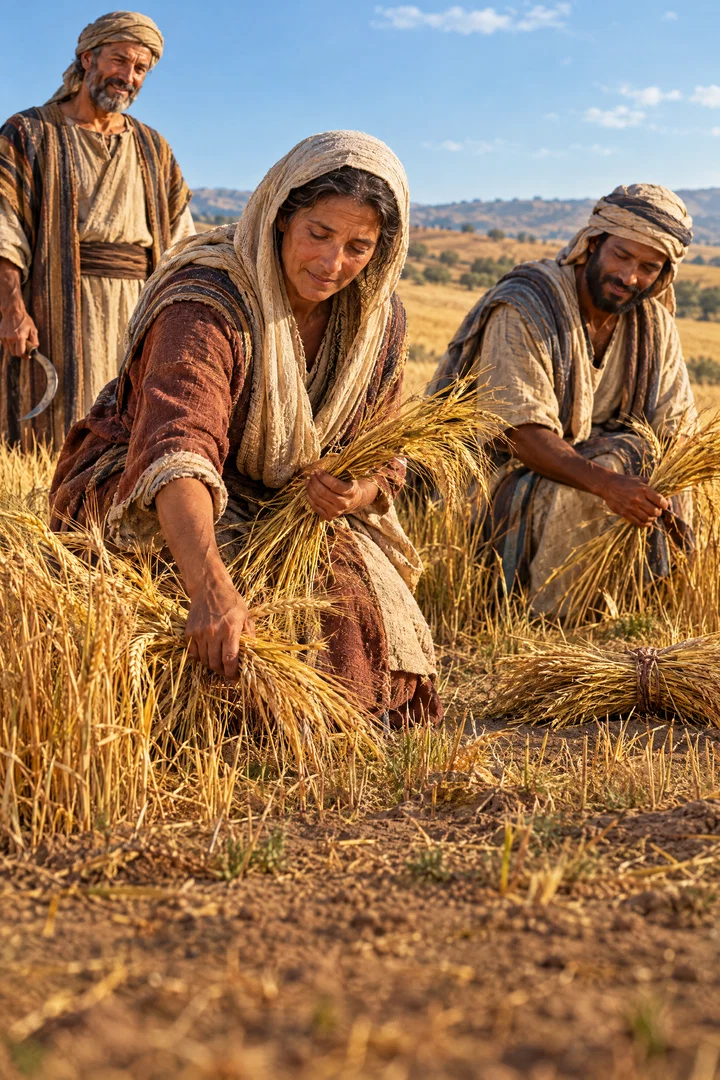
And when ye reap the harvest of your land, thou shalt not wholly reap the corners of thy field, neither shalt thou gather the gleanings of thy harvest.
Translations
And when you reap the harvest of your land, you shall not wholly reap the corners of your field, neither shall you gather the gleanings of your harvest.
King James Version, KJV Cambridge Paragraph Bible, Webster Bible
And when ye reap the harvest of your land, thou shalt not wholly reap the corners of thy field, neither shalt thou gather the gleanings of thy harvest.
Revised Version, American Standard Version
And when ye reap the harvest of your land, thou shalt not wholly reap the corners of thy field, neither shalt thou gather the gleaning of thy harvest.
'And in your reaping the harvest of your land ye do not completely reap the corner of thy field, and the gleaning of thy harvest thou dost not gather,
And when ye reap the harvest of your land, thou shalt not wholly reap the corners of thy field, and the gleaning of thy harvest thou shalt not gather.
And when ye reap the harvest of your land, thou shalt not wholly clear the border of thy field, in reaping,—nor shalt thou gather up the gleaning of thy harvest.
Berean Standard Bible, Majority Standard Bible
When you reap the harvest of your land, you are not to reap to the very edges of your field or gather the gleanings of your harvest.
“‘ When you reap the harvest of your land, you shall not wholly reap the corners of your field, neither shall you gather the gleanings of your harvest.
And when you get in the grain from your land, do not let all the grain be cut from the edges of the field, or take up what has been dropped on the earth after the getting in of the grain.
When yee reape the haruest of your land, ye shall not reape euery corner of your field, neither shalt thou gather the glainings of thy haruest.
Douay-Rheims (Challoner revision)
When thou reapest the corn of thy land, thou shalt not cut down all that is on the face of the earth to the very ground: nor shalt thou gather the ears that remain.
Pictures
Cross-references
- Deuteronomy 24:19-21
When thou cuttest down thine harvest in thy field, and hast forgot a sheaf in the field, thou shalt not go again to fetch it: it shall be for the stranger, for the fatherless, and for the widow: that the LORD thy God may bless thee in all the work of thine hands.
Both require leaving harvest produce for the needy and the stranger.
- Leviticus 23:22
And when ye reap the harvest of your land, thou shalt not make clean riddance of the corners of thy field when thou reapest, neither shalt thou gather any gleaning of thy harvest: thou shalt leave them unto the poor, and to the stranger: I am the LORD your God.
It repeats the command to leave field edges and gleanings for the poor and stranger.
- Exodus 23:11
But the seventh year thou shalt let it rest and lie still; that the poor of thy people may eat: and what they leave the beasts of the field shall eat. In like manner thou shalt deal with thy vineyard, and with thy oliveyard.
Both provide for the poor from the land’s harvest.
- Deuteronomy 23:25
When thou comest into the standing corn of thy neighbour, then thou mayest pluck the ears with thine hand; but thou shalt not move a sickle unto thy neighbour’s standing corn.
Permits taking grain by hand from a neighbor’s field.
Commentary
Each commentary is drawn from primary sources: the writings of Ellen G. White and Adventist pioneers and periodicals. Each commentary is separate. Its own words are not a quotation; follow the references to read the source passages.
Ellen G. White
20 sources
When the harvest is reaped the corners of the field are to be left unreaped and the gleanings are not to be gathered, so that food remains for those in need.Ms 60, 1902, par. 31–34Ms 56, 1898, par. 18–20Ms 115, 1905, par. 12–13PP 531.1–2Ms 60, 1902, par. 25–26 What is left includes scattered grain and what falls from the hands in reaping, and reaches to orchard and vineyard, for it is the Lord's portion reserved to relieve the poor and the stranger, who have a right to a share of the soil's produce.Ms 15, 1901, par. 22–23PP 531.1–2Ms 60, 1902, par. 25–2618MR 87.3–4RH Aug 3, 1905 The requirement teaches that fields, harvests, and possessions belong to God and men are only stewards of His gifts, keeping His claims first and sanctifying property to Him.Ms 15, 1901, par. 22–234T 77.2–3RH Feb 14, 1856AA 336.3–337.1RH Nov 15, 1906 It makes holiness practical as justice and unselfish love to neighbor, spoken by Christ Himself with the same high standard of love taught in the New Testament.Ms 15, 1901, par. 22–23Ms 56, 1898, par. 18–20Ms 34, 1900, par. 11–14Lt 42, 1894, par. 16–19 By this permission the disciples could pluck and eat standing grain as they passed through a field, and its principle still binds today to deal generously with those struggling to gain a place, to give proportionately and thankfully, and to love one another as Christ has loved.PP 531.1–2Lt 42, 1894, par. 16–19RH Feb 14, 1856Ms 81, 1901, par. 38–40ST Jan 29, 1880
Harvest Law Explained
When reaping the harvest of the land, the corners of the field must be left unreaped and the gleanings of the harvest must not be gathered, so that produce and food remain available for those in need.Ms 60, 1902, par. 31–34Ms 56, 1898, par. 18–20Ms 115, 1905, par. 12–13Ms 86, 1905, par. 9–14MH 186.5 This is practical love for others, requiring landowners to leave the corners uncut and not collect all the gleanings, preserving food for the poor and the stranger.Ms 60, 1902, par. 31–34Ms 56, 1898, par. 18–20Ms 115, 1905, par. 12–13Ms 86, 1905, par. 9–14Ms 34, 1900, par. 11–14 It is part of God's guidance for a holy life, reflecting practical care for others by leaving what the needy may gather.Ms 60, 1902, par. 31–34Ms 56, 1898, par. 18–20Ms 34, 1900, par. 11–14
What is left includes the scattered grain and what drops from the hands in reaping, and the same rule extends to orchard and vineyard, with some of the vineyard's fruit left for the needy.PP 531.1–2Ms 60, 1902, par. 25–2618MR 87.3–44T 467.1–2Ms 81, 1901, par. 38–40 The corners and gleanings left in harvest-field, orchard, and vineyard are the Lord's portion, reserved to relieve the necessities of the poor and the stranger.PP 531.1–2Ms 60, 1902, par. 25–2618MR 87.3–4 The harvest is not wholly the landowner's to gather, but part is set aside as provision for those in need, and the poor have a right to a certain portion of the produce of the soil.PP 531.1–2Ms 60, 1902, par. 25–264T 467.1–2 All the gleanings of the harvest field, orchard, and vineyard belong to the poor.PP 531.1–2 When hungry a man may go into his neighbor's field, orchard, or vineyard and eat of the grain or fruit to satisfy his hunger.PP 531.1–2
This provision taught Israel to put God first and to remember that fields, harvests, and possessions belonged to Him, and that they were only stewards of what He had given.4T 77.2–3AA 336.3–337.1RH Nov 15, 1906 Property was thus sanctified to God, His claims were kept paramount, and in almost every article Israel was reminded of the Giver by being required to make returns to Him.4T 77.2–3RH Nov 15, 1906ST Jan 29, 1880 The same provision supplied practical support to the poor, the stranger, the destitute, and servants from the edges of the field and among the gleanings.Ms 15, 1901, par. 22–23RH Aug 3, 1905RH Feb 14, 1856AA 336.3–337.1 It taught liberality and care for those in need and expressed unselfish love for neighbor.Ms 15, 1901, par. 22–23AA 336.3–337.1 It also welcomed strangers to share in Israel's material blessings and accompanied their welcome into the community of those who knew God, where they could learn His law and share in spiritual blessings.RH Aug 3, 1905
Holiness Justice and Love
The command was spoken by Christ the Redeemer Himself from the cloudy pillar.Ms 15, 1901, par. 22–23Lt 42, 1894, par. 16–19 It sets forth the same high standard of love that is taught in the New Testament.Lt 42, 1894, par. 16–19 In it holiness is made to include leaving part of the harvest uncut and not collecting all the gleanings, so that the poor and the stranger can gather food.Ms 15, 1901, par. 22–23Ms 56, 1898, par. 18–20Ms 34, 1900, par. 11–14 This is holiness lived out as justice in dealing with others and as practical, unselfish love for neighbor.Ms 15, 1901, par. 22–23Ms 56, 1898, par. 18–20Ms 34, 1900, par. 11–1418MR 87.3–4 It forbids oppressing fellow Israelites and brethren in any way and requires that God's gifts be shared, with the corners and gleanings left in harvest-field, orchard, and vineyard as the Lord's portion reserved to relieve the necessities of the poor and the stranger.Ms 60, 1902, par. 25–2618MR 87.3–4
Holiness like God's holiness is required in order to be accepted and approved of God.Ms 66, 1890, par. 7 That means practicing godliness in every circumstance and giving mercy and relief not only to one's own sect but to all who need it.Ms 66, 1890, par. 7 It means first being a blessing to the members of one's own family at home and then to fellow men, loving neighbors as self.Ms 66, 1890, par. 7 It means striving daily against selfishness and self-centeredness, and cultivating the attributes of Jesus, which are the attributes of God, growing up to the full stature of Jesus Christ.Ms 66, 1890, par. 7 It means living as individual believers in Jesus Christ as personal Saviour rather than being saved by membership in a particular church.Ms 66, 1890, par. 7
The instruction was given as a lesson for the benefit of future generations.Lt 42, 1894, par. 16–19 It calls those who have received the great gift of Jesus and all heaven in Him to love one another as Christ has loved them.Lt 42, 1894, par. 16–19
Scripture Link and Application
The leave to enter a neighbor's field and eat to satisfy hunger is the legal ground on which the disciples were entitled to pluck and eat the standing grain as they went through a field on the Sabbath day.PP 531.1–2 The same requirement stands together with letting the land bring forth of itself for the needy every seventh year, and with the tithe, the ransom price for the first-born son, the first-fruits of flocks and harvest, sacrificial offerings, trespass offerings, sin offerings, release of debts every seventh year, hospitalities, gifts to the poor, assessments on property, and special freewill offerings.ST Jan 29, 1880 All of these were proportioned to what each person possessed and were required of all, so that among conscientious givers about one third of income went to religious interests and to the poor.ST Jan 29, 1880
For Christians the divine claims remain just as binding, calling not only for proportionate giving according to the tithing system but also for the presenting of sin offerings and thank offerings, and failure in such beneficence is robbing God and must be met in the final reckoning.ST Jan 29, 1880 The same principle now requires helping those who are struggling to secure a place, dealing with them generously and mercifully and not making their work harder than necessary, while still gathering up the remaining fragments so that nothing is wasted.Ms 81, 1901, par. 38–40 Under the old order even servants were to have a share from the edges of the field and from the gleanings, and to withhold even the gleanings reveals the absence of the sacrificial spirit the command enjoins.RH Feb 14, 1856
Sources
Pioneers and periodicals
17 sources
At harvest the corners of the field were to be left unreaped and the gleanings of the harvest were not to be gathered, including what dropped from the hand, so that the poor and the stranger might have food to eat.ST Jul 22, 1880ST Apr 7, 1914ST Apr 7, 1914 It belongs to the ethical laws for governing the people rather than to ceremonial law, as one of the special moral requirements that applies God's moral law and expresses the principles of the Ten Commandments in duty to fellow man and obligation to God.ST Jul 22, 1880ST May 20, 1875 It shows that God remembers the poor and requires His people to remember them, welcoming strangers to share in material blessings and into the community of those who knew God.ST Jul 22, 1880RH Aug 3, 1905 Its provision made giving part of duty in order to counteract selfishness and covetousness and to encourage benevolence, teaching the people to put God first and to remember as stewards that fields and harvests belonged to Him.ST Jul 22, 1880RH Feb 14, 1856RH Nov 15, 1906RH Jul 12, 1870ST Aug 23, 1883 The specific agricultural rule in its exact form is not binding on farmers today, but its underlying principle remains morally binding that people must provide for and help the poor.ST Jan 29, 1880RH Nov 12, 1908
Command and Historical Setting
When the harvest of the land was reaped, the corners of the field were to be left unreaped and the gleanings of the harvest were not to be gathered, including what dropped from the hand, so that the poor and the stranger might have food to eat.ST Jul 22, 1880ST Apr 7, 1914ST Apr 7, 1914ST Mar 20, 1884RH Jul 12, 1870 The requirement fell on landowners and harvesters to leave the edges unreaped and to leave the leftover grain uncollected rather than reaping wholly and gathering everything.ST Jul 22, 1880ST Apr 7, 1914ST Mar 20, 1884RH Jul 12, 1870 Part of the crop was thus to remain in the field for the stranger and the poor, welcoming them to share in material provision.RH Aug 3, 1905ST Apr 7, 1914ST Mar 20, 1884
The command belongs to Israel's laws for governing the people, which are ethical rather than ceremonial.ST May 20, 1875 It is one of the special moral requirements that applies God's moral law, defines duty of man to his fellow man and obligation to God, and expresses the principles of the Ten Commandments.ST Jul 22, 1880 Some such special precepts were given because customs and morals had been corrupted, while the laws generally governed by God's moral law.ST Jul 22, 1880ST May 20, 1875
It belongs to the law given at Sinai, not to a different later law.RH Aug 2, 1870 It was spoken less than one year after Israel left Egypt and before Israel left Sinai, not nearly forty years later at the time of Deuteronomy.RH Aug 2, 1870
Care for Poor and God
God remembers the poor and requires His people to remember them by leaving part of the harvest in the corners of the field and leaving the gleanings unreaped and ungathered for the poor.ST Jul 22, 1880RH Aug 3, 1905 The requirement was given to counteract selfishness and to encourage benevolence, to the same effect as Christ's teaching to His disciples upon the mount.ST Jul 22, 1880 Its provision for the stranger and the poor at harvest welcomed strangers to share in material blessings and at the same time welcomed them into the community of those who knew God, where they could learn His law and share in spiritual blessings.RH Aug 3, 1905
The provision made giving part of duty and helped keep the people from selfishness and covetousness.RH Jul 12, 1870 Servants were to receive a share of the harvest, including what was left at the edges of the field and among the gleanings, supplying practical support to those in need, and withholding even the gleanings shows lack of the sacrificial spirit the command calls for.RH Feb 14, 1856
The command taught the people to put God first and reminded them that fields and harvests belonged to Him and that they were stewards of what He had given them.RH Nov 15, 1906 Care for people in need was thus made part of giving alongside consecrating the first-fruits to God.ST Aug 23, 1883 Property was sanctified to God and His claims were kept paramount, with the people reminded of the Giver in almost every article by being required to make returns to Him, leaving the corners of the harvest fields for the destitute and leaving whatever dropped from the hand in reaping for the poor, while in every seventh year the land was allowed to produce spontaneously for the needy.ST Jan 29, 1880
The duty is illustrated as resting even on a widow, alongside rules about plowing and sowing and offerings to priests.RH Mar 17, 1859 It stands with the tithe, the ransom for the first-born son, the first-fruits of flocks and harvest, sacrificial offerings, trespass-offerings, sin-offerings, free-will offerings, hospitalities, gifts to the poor, assessments on property, remission of debts every seventh year, and special offerings, all proportioned to what each possessed and required from all, amounting in conscientious givers to about one-third of income for religious interests and the poor.ST Jan 29, 1880 The specific agricultural rule was binding on Israel as national law and is not binding on farmers today in that exact form, but its underlying principle remains morally binding that people must provide for and help the poor.RH Nov 12, 1908 For Christians God's claims are still imperative, not only to give proportionately according to the tithing system but to present sin-offerings and thank-offerings, and neglect of such beneficence is robbery of God that must be settled in the final account.ST Jan 29, 1880
Harvest Imagery Applied
The gleanings left after the harvest give the picture of being gathered among the least rather than counted among the full sheaves.RH Sep 4, 1900 The harvest figures the soul being reaped and brought home, with angels laying it in God's heavenly garner.RH Sep 4, 1900 It expresses the longing to become fruitful in faith and obedience before death, and to be made and accepted by God even as the least of the grain.RH Sep 4, 1900
The provision for gleaning shows that the harvest field has work even for the weakest, since those unable to reap or bind sheaves can gather the ears left behind.RH Jan 14, 1873 This illustrates that even a child can serve in the Master's harvest.RH Jan 14, 1873 Each person is to do diligently what he is able to do, for the Master knows human weakness and requires no more than a person can do, while idleness and putting off the work leave no sheaves to bring Him.RH Jan 14, 1873 Even in gathering grain some is left uncollected for gleaning, which urges gathering what a careless reaper leaves, including grain hidden among briars, as a lesson to take up useful work wherever it can be found.RH May 7, 1861
Sources