Luke 1:39
And Mary arose in those days, and went into the hill country with haste, into a city of Juda;
Translations
American King James Version, King James Version, KJV Cambridge Paragraph Bible
And Mary arose in those days, and went into the hill country with haste, into a city of Juda;
And Mary arose in those days, and went into the hill-country with haste, into a city of Judah,
Revised Version, American Standard Version
And Mary arose in these days and went into the hill country with haste, into a city of Judah;
And Mary having arisen in those days, went to the hill-country, with haste, to a city of Judea,
And Mary, rising up in those days, went into the hill country with haste, to a city of Judah,
And Mary, arising, in these days, journeyed into the hill country with haste, into a city of Judah,—
Berean Standard Bible, Majority Standard Bible
In those days Mary got ready and hurried to a town in the hill country of Judah,
Mary arose in those days and went into the hill country with haste, into a city of Judah,
Then Mary got up and went quickly into the high lands, to a town of Judah;
And Marie arose in those daies, and went into ye hil countrey with hast to a citie of Iuda,
Douay-Rheims (Challoner revision)
And Mary rising up in those days, went into the hill country with haste into a city of Juda.
Pictures
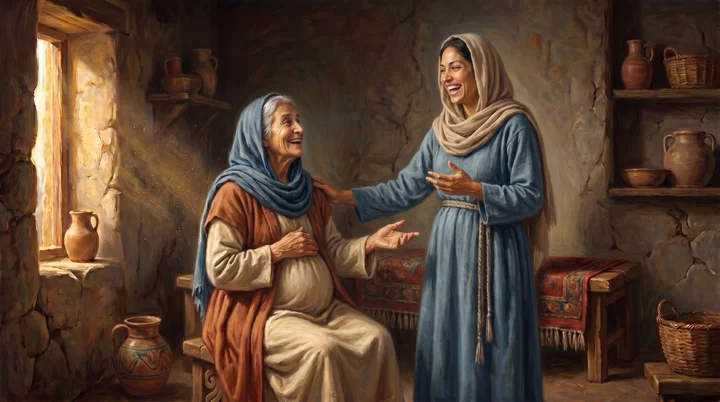

Cross-references
- Micah 5:2
But thou, Beth-lehem Ephratah, though thou be little among the thousands of Judah, yet out of thee shall he come forth unto me that is to be ruler in Israel; whose goings forth have been from of old, from everlasting.
Cited as a prophecy concerning Jesus.
- Luke 1:5-17
There was in the days of Herod, the king of Judæa, a certain priest named Zacharias, of the course of Abia: and his wife was of the daughters of Aaron, and her name was Elisabeth.
same birth narrative incidents
Commentary
Each commentary is drawn from primary sources: the writings of Ellen G. White and Adventist pioneers and periodicals. Each commentary is separate. Its own words are not a quotation; follow the references to read the source passages.
Pioneers and periodicals
9 sources
After the angel announced the birth of Jesus and departed, Mary promptly arose and went with haste into the hill country of Judah to visit Elizabeth at her home and greet her.ST Jan 1, 1894ST Jan 1, 1894 The home of Zacharias to which she went was in a city in that hill country of Judah.RH Apr 14, 1903 That humble home of Zacharias and Elizabeth in the hill country belongs to the stream of sacred history.RH May 1, 1879 The phrase those days illustrates the use of day in a sequence of days to mean a full twenty-four-hour period including night and daylight, not only the hours of daylight.RH Dec 12, 1871
The visit follows the angel's annunciation and is one of the incidents connected with the birth of John the Baptist.ST Mar 12, 1896 It stands at about B.C. 5 in the sequence running from the annunciation to Mary to the permanent residence at Nazareth.ST Mar 12, 1896 It is one of the events in Luke 1 that come before the prophecy of Zacharias and the birth of Christ. The verse belongs to Luke's extended opening account of the early history of the mission of Jesus, in which Luke dwells more largely on that early history than the other evangelists.ST Mar 17, 1909 That account covers the births of John the Baptist and of Jesus, the angelic vision to the shepherds, their worship of the child Jesus, the presentation in the temple, the preaching of John the Baptist, the genealogy of Jesus as Saviour of all nations traced back to Adam, the temptation of Jesus, and his ministry in Nazareth about six months later.ST Mar 17, 1909
The verse belongs to the account of the birth of Jesus, which marks the fulfillment of the gospel promises given in the Old Testament. The larger account in Luke 1 shows that Jesus was truly human, born of Mary with conception by the power of the Highest.RH Nov 14, 1854 The account of Christ's birth to which the verse belongs shows that the Bible records supernatural events involving real heavenly beings, not merely influences or impulses.RH Apr 10, 1913
Sources