Translations
American King James Version, King James Version, Webster Bible
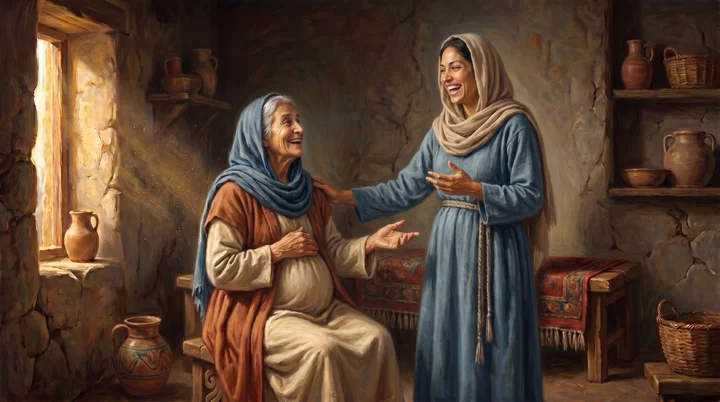
And entered into the house of Zacharias, and saluted Elisabeth.
KJV Cambridge Paragraph Bible, Young's Literal Translation
and entered into the house of Zacharias, and saluted Elisabeth.
Revised Version, American Standard Version
and entered into the house of Zacharias and saluted Elisabeth.
and entered into the house of Zacharias, and saluted Elizabeth.
and entered into the house of Zachariah, and saluted Elizabeth.
Berean Standard Bible, Majority Standard Bible
where she entered the home of Zechariah and greeted Elizabeth.
and entered into the house of Zacharias and greeted Elizabeth.
And went into the house of Zacharias and took Elisabeth in her arms.
And entred into the house of Zacharias, and saluted Elisabet.
Douay-Rheims (Challoner revision)
And she entered into the house of Zachary, and saluted Elizabeth.
Pictures
Cross-references
- Luke 1:5-17
There was in the days of Herod, the king of Judæa, a certain priest named Zacharias, of the course of Abia: and his wife was of the daughters of Aaron, and her name was Elisabeth.
Zacharias’s priestly service leads to the angel’s announcement of John’s birth.
- Luke 1:36
And, behold, thy cousin Elisabeth, she hath also conceived a son in her old age: and this is the sixth month with her, who was called barren.
identifies Elizabeth as kinswoman six months with child
- Luke 1:23
And it came to pass, that, as soon as the days of his ministration were accomplished, he departed to his own house.
After his service ended, Zacharias returned home.
Commentary
Each commentary is drawn from primary sources: the writings of Ellen G. White and Adventist pioneers and periodicals. Each commentary is separate. Its own words are not a quotation; follow the references to read the source passages.
Pioneers and periodicals
8 sources
After the angel Gabriel departed from her in Nazareth, Mary arose in those days and went with haste into the hill country to a city of Judah, where she entered into the house of Zacharias and saluted Elisabeth her kinswoman, who was herself with child in old age.ST Jan 1, 1894 That house was in that city in the hill country of Judah, where Zacharias had returned after completing his priestly service in Jerusalem.ST Jan 1, 1894RH Apr 14, 1903RH May 1, 1879 The chapter presents Zacharias as Elisabeth's husband, which necessarily means Elisabeth is his wife, a relationship that death dissolves.RH Mar 22, 1870
The visit carries the announcement of the birth of Jesus into the home where the birth of John the Baptist had been promised, and Mary in turn receives Elisabeth's salutation.ST Jan 1, 1894 It is one of the incidents connected with the birth of John the Baptist the forerunner of Christ, standing with the angel's annunciation and its results, occurring about B.C. 5.ST Mar 12, 1896 The verse belongs to Luke's longer telling of the early history of the mission of Jesus, which gives the birth of John the Baptist and the birth of Jesus more fully than the other Gospels do.ST Mar 17, 1909 It gives the background to the birth of Christ in Bethlehem that is to be clearly understood before the announcement to the shepherds and the presentation in the temple where Jesus is worshiped by angels and men.ST Jan 22, 1894
The birth account that includes this verse shows that Jesus was truly human, born of Mary, conceived by the power of the Highest and born in Bethlehem during the reign of Augustus.RH Nov 14, 1854 By placing Mary's visit in the home of Zacharias and Elisabeth in the hill country, the verse shows that sacred history includes humble households as well as kings, cities, and palaces.RH May 1, 1879
Sources