Luke 12:18
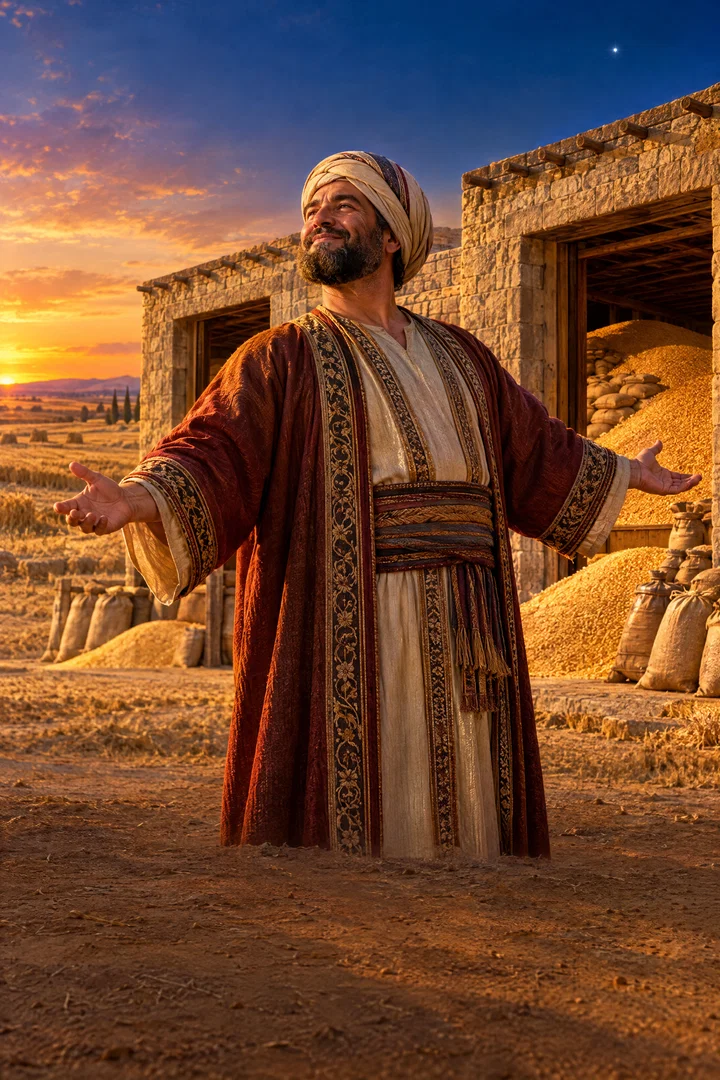
And he said, This will I do: I will pull down my barns, and build greater; and there will I bestow all my fruits and my goods.
Translations
American King James Version, King James Version, KJV Cambridge Paragraph Bible
And he said, This will I do: I will pull down my barns, and build greater; and there will I bestow all my fruits and my goods.
And he said, This will I do: I will pull down my barns, and build greater; and there will I deposit all my fruits and my goods.
And he said, This will I do: I will pull down my barns, and build greater; and there will I bestow all my corn and my goods.
And he said, This will I do: I will pull down my barns, and build greater; and there will I bestow all my grain and my goods.
and he said, This I will do, I will take down my storehouses, and greater ones I will build, and I will gather together there all my products and my good things,
And he said, This will I do: I will take away my granaries and build greater, and there I will lay up all my produce and my good things;
And he said—This, will I do,—I will pull down my barns, and, greater ones, build, and gather, there, all my wheat and good things;
Then he said, ‘ This is what I will do: I will tear down my barns and will build bigger ones, and there I will store up all my grain and my goods.
Then he said, ‘ This is what I will do: I will tear down my barns and will build bigger ones, and there I will store up all my crops and my goods.
He said, ‘ This is what I will do. I will pull down my barns, build bigger ones, and there I will store all my grain and my goods.
And he said, This I will do: I will take down my store-houses and make greater ones, and there I will put all my grain and my goods.
And he said, This wil I do, I wil pul downe my barnes, and builde greater, and therein will I gather all my fruites, and my goods.
Douay-Rheims (Challoner revision)
And he said: This will I do: I will pull down my barns, and will build greater; and into them will I gather all things that are grown to me, and my goods.
Pictures

Cross-references 20 of 36
- Matthew 6:19-21
Lay not up for yourselves treasures upon earth, where moth and rust doth corrupt, and where thieves break through and steal:
Contrasts storing earthly wealth with laying up treasure in heaven.
- Luke 12:33-34
Sell that ye have, and give alms; provide yourselves bags which wax not old, a treasure in the heavens that faileth not, where no thief approacheth, neither moth corrupteth.
Contrasts storing surplus in barns with giving alms and laying up lasting treasure in heaven.
- 1 Timothy 6:17-19
Charge them that are rich in this world, that they be not highminded, nor trust in uncertain riches, but in the living God, who giveth us richly all things to enjoy;
Contrasts hoarding and trusting wealth with generosity, good works, and lasting treasure.
- Matthew 6:33
But seek ye first the kingdom of God, and his righteousness; and all these things shall be added unto you.
Seeking God’s kingdom contrasts with the rich man’s self-focused plan.
- Colossians 3:5
Mortify therefore your members which are upon the earth; fornication, uncleanness, inordinate affection, evil concupiscence, and covetousness, which is idolatry:
Covetousness is identified as idolatry.
- Luke 12:22-23
And he said unto his disciples, Therefore I say unto you, Take no thought for your life, what ye shall eat; neither for the body, what ye shall put on.
The counsel against anxious concern for necessities contrasts with the parable’s hoarding of possessions.
- 1 Timothy 6:9-11
But they that will be rich fall into temptation and a snare, and into many foolish and hurtful lusts, which drown men in destruction and perdition.
Warns of the dangers of desiring riches.
- James 4:14
Whereas ye know not what shall be on the morrow. For what is your life? It is even a vapour, that appeareth for a little time, and then vanisheth away.
The warning says no one can know what tomorrow will bring.
- Matthew 6:24
No man can serve two masters: for either he will hate the one, and love the other; or else he will hold to the one, and despise the other. Ye cannot serve God and mammon.
Contrasts serving God with serving wealth.
- Luke 12:24
Consider the ravens: for they neither sow nor reap; which neither have storehouse nor barn; and God feedeth them: how much more are ye better than the fowls?
Ravens have no barns, yet God feeds them, illustrating the Father’s care.
- Psalms 39:6
Surely every man walketh in a vain shew: surely they are disquieted in vain: he heapeth up riches, and knoweth not who shall gather them.
Both texts describe accumulating wealth without knowing who will ultimately receive it.
- James 5:1-3
Go to now, ye rich men, weep and howl for your miseries that shall come upon you.
Warns the rich of judgment on hoarded wealth.
- Psalms 62:10
Trust not in oppression, and become not vain in robbery: if riches increase, set not your heart upon them.
Warns against setting the heart on increasing riches.
- Proverbs 23:4-5
Labour not to be rich: cease from thine own wisdom.
The warning against striving for riches reinforces the lesson of the rich man.
- Luke 12:31
But rather seek ye the kingdom of God; and all these things shall be added unto you.
Seeking God’s kingdom contrasts with storing wealth for oneself.
- Luke 12:29-30
And seek not ye what ye shall eat, or what ye shall drink, neither be ye of doubtful mind.
Anxious pursuit of possessions contrasts with trust in the Father’s care.
- Mark 8:36
For what shall it profit a man, if he shall gain the whole world, and lose his own soul?
Asks what gaining the world profits if one loses the soul.
- Ephesians 5:5
For this ye know, that no whoremonger, nor unclean person, nor covetous man, who is an idolater, hath any inheritance in the kingdom of Christ and of God.
Covetousness is named as sin and linked with idolatry.
- Matthew 6:21
For where your treasure is, there will your heart be also.
Earthly treasure reveals where a person’s heart and interests lie.
- Proverbs 11:28
He that trusteth in his riches shall fall: but the righteous shall flourish as a branch.
Warns against trusting in wealth.
Commentary
Each commentary is drawn from primary sources: the writings of Ellen G. White and Adventist pioneers and periodicals. Each commentary is separate. Its own words are not a quotation; follow the references to read the source passages.
Ellen G. White
31 sources
The verse pictures a man whose land has yielded a full and abundant harvest deciding to tear down his barns and build larger ones to store and keep all his crops and goods.ST Jul 1, 19083T 545.2 His plan is wholly centered on himself, treating what he has as his own to secure his own ease, comfort and enjoyment rather than recognizing any higher claim.ST Jul 1, 1908ST May 25, 1915 That increase came from God, who owns the land and gives the rain, sunshine and harvest, yet the man forgets Him, gives Him no thanks and leaves Him out of his reckoning.Lt 15, 1899, par. 1–3ST Dec 17, 18963T 154.1 All that is possessed is only lent by God to stewards to use for His work and to bless others, so to hoard the surplus instead of relieving the poor, hungry and needy around him is covetousness and unfaithful stewardship.3T 545.2Ms 65, 1902, par. 8ST Jun 25, 1894Lt 15, 1899, par. 1–3 Such storing is not being rich toward God, for possessions cannot give life or secure the future, and abundance is a test of character that showed he could not be trusted with eternal riches.ST May 25, 1915ST Jun 25, 1894Ms 107, 1908, par. 33–3615MR 97.2–3Ms 44, 1900, par. 8
The Barn-Building Plan
The verse pictures a landowner whose ground has brought forth plentifully, meeting a full and abundant harvest with a deliberate resolve to pull down his already full barns and build greater ones in which to bestow and store all his fruits, crops, produce, possessions and goods.ST Jul 1, 19083T 545.2ST May 25, 1915Ms 65, 1902, par. 8 The tearing down and enlarging is not to distribute but to keep, an accumulation of the surplus for himself instead of serving God and helping people in need.ST Jul 1, 19083T 545.2ST May 25, 1915Ms 107, 1908, par. 33–36 His calculation treats increase as something to be housed more roomily for his own holding, a hoarding that reveals covetousness and a false security in earthly wealth rather than generosity that honors God.3T 545.2Ms 65, 1902, par. 8Ms 107, 1908, par. 33–36
His plan centers entirely on himself, treating what he handles as his own and making provision only for his own comfort, ease, enjoyment and selfish security.ST Jul 1, 1908Lt 15, 1899, par. 1–3Lt 15, 1899, par. 4–6ST Jul 1, 1908 He seeks to keep and consume the surplus upon himself rather than recognize God as giver, failing to act as steward and to consider that his life and all he has belong to God.ST Jul 1, 1908ST May 25, 1915Lt 15, 1899, par. 4–6ST Jul 1, 1908 What is lent to him is managed for self-gratification and self-glorification instead of for God's work.Lt 15, 1899, par. 1–3Lt 15, 1899, par. 4–6
The abundance came directly from the hand of God, who owns the land and gives rain, dew, sunshine, harvest, watchcare over goods, and every means of gaining wealth.Lt 15, 1899, par. 1–3Ms 44, 1900, par. 11 Yet in the year of plenty the man forgets God, ignores Him altogether, manifests no gratitude and gives no thanks to his gracious Benefactor.ST Dec 17, 18963T 154.1Ms 44, 1900, par. 11 He gives God none of what is due, living for worldly wealth and ease, and his failure to acknowledge where his possessions came from is ingratitude that justly angers Him.ST Dec 17, 18963T 154.1 No extensive fortune or degree of wealth secures God's favor, for all bounties and blessings come from Him.3T 154.1
He had enough and abundant means and many opportunities to relieve the suffering around him, to feed the hungry, clothe the naked, and help the poor, the orphan, the widow, and others in need.Ms 65, 1902, par. 8Ms 65, 1902, par. 9–10ST Jul 1, 1908COL 256.1–2 Instead he closed his heart to their needs and chose to hoard his surplus rather than use it to help others and glorify God.Ms 65, 1902, par. 8ST Jun 25, 1894Ms 65, 1902, par. 9–10COL 256.1–2 His full barns could have helped a poor widow and her children suffering nearby, but the Lord's poor were not relieved because he calculated to hold the gift.ST Jul 1, 1908COL 256.1–2Ms 44, 1900, par. 11
Selfish Hoarding Condemned
The barn-building resolve exposes covetousness and supreme selfishness, living to accumulate wealth and enlarge earthly storehouses for self instead of giving and sacrificing for the good of others and for God.3T 545.2Ms 65, 1902, par. 8Ms 107, 1908, par. 33–36Ms 77, 1903, par. 16–193T 401.3–402.1 It is the self-pleasing spirit that bestows fruits and goods upon self, keeping abundance rather than honoring God with generosity.Ms 65, 1902, par. 8Ms 107, 1908, par. 33–36Lt 20, 1897, par. 5–7 Such hoarding turns blessing into a curse, for earthly possessions cannot give life, cannot secure a long or happy life, and cannot ultimately benefit the one who piles them up.Ms 107, 1908, par. 33–363T 401.3–402.1
What is possessed is only lent and entrusted by God as stewardship to be managed for His work, to bless fellow men and glorify the Maker, to help the needy and lay up treasure in heaven.3T 545.2Lt 15, 1899, par. 1–3Lt 15, 1899, par. 4–6ST Jul 1, 1908 God owns the land and provides rain, dew, sunshine, harvest, watchcare and every means of gaining wealth, so treating increase as one's own and using it only for self-gratification and self-glorification is unfaithful stewardship and ingratitude that justly angers Him.Lt 15, 1899, par. 1–3Lt 15, 1899, par. 4–6ST Jul 1, 1908 Life itself and all that is handled belong to God, and failure to recognize Him as giver while spending His money to satisfy wants is to ignore responsibility to Him.Lt 15, 1899, par. 4–6Lt 147, 1899, par. 2ST Jul 1, 1908
Storing up wealth for self is not being rich toward God, for possessions and abundance do not make a person rich toward Him.ST May 25, 1915Ms 107, 1908, par. 33–3615MR 97.2–3Ms 73, 1893, par. 1–3COL 254.3–255.1 Confidence in one's own provision and focus on keeping goods centers the heart on self rather than seeking God and becoming rich toward Him.ST May 25, 191515MR 97.2–3Ms 73, 1893, par. 1–3 The wealth hoarded will be lost when life ends, so to sacrifice eternal riches for what cannot give life or secure God's favor is folly.Ms 107, 1908, par. 33–363T 401.3–402.1
Abundance is given to prove, test and develop character, and no extensive fortune or degree of wealth secures God's favor.ST Jun 25, 18943T 154.1 Receiving more does not increase personal worth and does not in itself make a person worse or better; it is the character developed under blessing that does, and binding the sense of worth to growing wealth and ability leaves one deficient in character value before God.Ms 44, 1900, par. 8Ms 44, 1900, par. 9 The decision to store rather than share, to forget God and give Him no grateful thanks as gracious Benefactor, showed the man could not be trusted with eternal riches.ST Jun 25, 18943T 154.1
All that is received increases responsibility and accountability and tests how much dependence upon God is felt.Ms 44, 1900, par. 9 Gratitude is shown by recounting His goodness, doing the good work He designs, and transferring goods to members of the human family who need those very things.Ms 44, 1900, par. 9 As one receives abundantly he gives abundantly, and such faithful giving proves he can be entrusted with goods, while failure to glorify God through wealth leaves him deficient to that degree.Ms 44, 1900, par. 9
Hoarding is linked to withholding what belongs to God, withholding the tenth and failing to use wealth to meet the needs of others.3T 545.23T 546.1 It puts into His treasury only grudgingly, as a hard master paying a laborer, for fear of coming to want and daring not to trust God.2T 198.1 It spends the Lord's money to satisfy wants and accumulate earthly wealth instead of using it in the Lord's work and giving to those in need, and it devotes time and energy to making money while neglecting God's work and the proclamation of the cross, which is idolatry born of too little faith and selfish, covetous attachment to wealth.Lt 147, 1899, par. 25T 270.2
The same course is acted over by many professing to believe the truth and professing that Christ is soon to come and the end of all things is at hand.2T 662.1–3 Though greatly prospered they lay up treasure for themselves, turning blessing into a curse instead of using blessings to bless others, with ambition only to tear down and build greater to bestow their goods.2T 662.1–3 They are buried in the cares of this life with work, work, work and large farms on the high-pressure plan, plunging deeper into the world with no spirit of sacrifice, allowing themselves and their households little time to study the word of life, meditate and pray.2T 662.1–3 A man acts out all the faith he has and loves God and truth only as much as his works show, so treasure and hearts remaining upon this earth make example and influence a curse to the cause; to all such God says Thou fool, and as the Lord cut short the rich man's unprofitable life so He will deal with covetous lovers of the world now.2T 662.1–32T 198.1
Wealthy people are warned not to leave property arrangements unsettled from year to year, since delay risks losing the ability to decide its proper disposition and makes them unfaithful stewards.TCBMP 148.1 All sons and daughters of God are warned against the self-pleasing spirit, and must not spend the Lord's money in needless adornment or erect a cathedral to court praise.Lt 20, 1897, par. 5–7 They are to move out by faith to build only a plain, neat, tasteful tabernacle in harmony with faith, dedicated to God free from debt, because interest on debt is great loss.Lt 20, 1897, par. 5–7
Believers are pilgrims and strangers whose citizenship is above, who must sacrifice for the cause without ostentation or display, hide self in Jesus, and learn self-abasement and lowliness instead of exalting self.Lt 20, 1897, par. 5–7 They must guard the heart with perpetual vigilance and much prayer, lest in this corrupt age it grow worldly, selfish, ungrateful to the Giver of all mercies and estranged from God, keeping the soul with diligence.Lt 20, 1897, par. 5–72T 198.1 True wisdom does not follow the rich man's example of foolish focus on material wealth, but seeks first God's kingdom and righteousness and makes the kingdom of heaven the first concern.Ms 95, 1898, par. 1Ms 43, 1896, par. 6–8 Children and youth must be educated and trained not to live to please themselves and not to thirst for human appreciation and honor, but to hunger and thirst after righteousness and to gain inward spiritual perception of truth that keeps sanctification humble.Lt 20, 1897, par. 5–7
Sources
Pioneers and periodicals
101 sources
The verse records the rich man's resolve after an abundant harvest left him with no room to store his crops, to pull down his barns and build greater ones where he will bestow all his fruits and his goods.ST Jun 25, 1894ST Sep 5, 1900 His reasoning is self-centered and godless, full of I and my, laying up much goods for many years so he can take ease and eat, drink, and be merry.ST Mar 15, 1883ST Jun 9, 1890ST Jul 7, 1887ST Jun 9, 1890ST Sep 5, 1900 It exemplifies covetousness, making hoarded wealth the purpose and measure of life, though a man's life does not consist in the abundance of things he possesses.ST Jun 25, 1894ST Sep 5, 1900ST Feb 2, 1882ST Feb 5, 1885ST Aug 9, 1899 The increase came from God and was entrusted to him as steward to relieve the hungry, clothe the naked, help the poor and suffering, and advance God's cause, storing treasure in heaven by giving alms rather than storing everything for self.ST Jul 1, 1908ST May 25, 1915ST Jun 25, 1894 God calls him fool and requires his soul of him that very night, so what he provided passes to others and he who laid up treasure for himself and was not rich toward God loses all.ST Mar 15, 1883ST Feb 22, 1899RH Jan 23, 1900
Rich Man's Planned Expansion
The resolve follows a plentiful yield from his ground that leaves him with no room to store his fruits, so he determines to pull down his barns and build greater barns and there store all his fruits and his goods.ST Jun 25, 1894ST Sep 5, 1900ST Mar 15, 1883ST Nov 26, 1896 The storing is for himself rather than for God, keeping the abundance instead of recognizing God as giver and using it to help the needy, and it makes hoarding wealth for self the purpose of life.ST Jul 1, 1908ST Jun 25, 1894ST Sep 5, 1900ST Nov 26, 1896 The plan treats stored wealth as security for a life of ease, yet it is exposed as the folly of laying up goods for oneself instead of being rich toward God.ST Jun 25, 1894ST Mar 15, 1883ST Nov 26, 1896
To be rich in the parable means to have abundance and even superfluity of this world's good things so that every temporal want is met and nothing is lacking.RH Nov 29, 1906 The man is called rich because his ground produced a plentiful crop, giving him more produce and property than he had room to keep, and his plan to tear down his storehouses and make larger ones to hold everything shows a life made to consist in the abundance of possessions.RH Nov 29, 1906 He is specifically a farmer with an abundance of land whose productive fields bring forth far more than he and his family can consume.RH Nov 29, 1906 His speech is self-centered, marked by repeated I and my as he decides what to do with the surplus after his storehouses are filled.ST Jun 9, 1890 He reasons within himself without praying or following God's light, making a selfish choice that pleases himself but conflicts with God's purpose and ends in disappointment, distress, and ruin, since the value of life depends on what a person is and not on what he possesses.ST Sep 5, 1900
His existing barns were already large enough, yet he decides to replace them with larger ones so he can keep all the abundant produce given by God.ST Jan 22, 1880ST Sep 19, 1878 The plan is presented as prudent and orderly by worldly standards, reflecting careful planning and confidence in wealth while focusing on accumulating and securing it for himself.ST Apr 9, 1912ST Feb 5, 1885ST Apr 9, 1912 By that worldly measure it is treated as sound business to hold the harvest for a better market and to carry the work out the next morning, assuming time to pursue wealth before attending to spiritual needs, and to keep adding farm to farm and thousands to thousands.ST Apr 9, 1912RH Nov 29, 1906 His purpose in storing everything is to lay up much goods for many years so he can take ease and eat, drink, and be merry in a long life of ease, pleasure, and personal ambition.ST Mar 15, 1883ST Jun 9, 1890ST Jul 7, 1887ST Aug 18, 1887ST Nov 26, 1896 He arranges life around possessions and future pleasure while putting off helping the sick and poor, but death may come before he can enjoy or carry out any of it, leaving the accumulated wealth with no lasting value to him.ST Feb 5, 1885ST Nov 26, 1896ST Nov 25, 1930
The account belongs to the parable of the foolish rich man in Luke 12:15-21, whose lesson is being rich toward God rather than laying up treasure for oneself.ST Jun 17, 1886ST Sep 20, 1905 It is listed among events and teachings recorded in Luke but not in the other Gospels.ST Sep 20, 1905
Covetousness and False Security
The resolve to tear down the barns and build greater ones to store all the fruits and goods is covetousness itself, the covetous spirit against which the chapter warns to take heed and beware.ST Sep 5, 1900ST Feb 5, 1885ST Aug 9, 1899ST Sep 19, 1878ST Jul 1, 1889 To be rich in this sense is to have abundance and even superfluity of this world's good things so that every temporal want is met, and the man is called rich because his ground brought forth plentifully beyond room to bestow it.ST Jul 1, 1889RH Nov 29, 1906 His plan makes hoarding wealth for self the purpose of life and treats accumulated possessions as the measure of life's worth, which is condemned as a false measure.ST Sep 5, 1900ST Feb 5, 1885ST Aug 9, 1899RH Nov 29, 1906 Instead of using the abundance to help the poor and support God's cause, he focuses on securing earthly goods for himself and laying them up for himself alone.ST Aug 9, 1899ST Sep 19, 1878ST Jul 1, 1889
A man's life does not consist in the abundance of the things possessed, so treating stored wealth as security and making room for a life of ease is folly.ST Jun 25, 1894ST Aug 9, 1899ST Feb 22, 1899ST Jun 9, 1890ST May 3, 1899 He who lays up treasure for himself in larger barns and is not rich toward God assumes his goods will secure many years of ease, eating, drinking and merriment, yet his life is uncertain and may be required that very night.ST Jun 25, 1894ST Feb 2, 1882ST Feb 22, 1899ST Jun 9, 1890 Gathering earthly treasure in this way leaves the soul unprovided for, for accumulation is no safeguard for life and what is stored will then belong to another.ST Jun 25, 1894ST Feb 22, 1899ST May 3, 1899 The worldly, self-centered view considers no duty to help those in need and assumes many years to enjoy abundance, though continuance depends on God's will.ST Feb 2, 1882
He leaves God out of his plans and makes no grateful acknowledgment of God, though the ground was made fruitful by God and the wealth came through God's providence and not by his skill alone.ST Feb 2, 1882ST Sep 6, 1883ST Mar 31, 1887 He acts as though he alone were responsible for prosperity and treats as his own what God gave and entrusted to him as steward to help the needy.ST Jul 1, 1908ST Jul 1, 1908ST Mar 31, 1887 His calculation centers on securing his own wealth and ease and keeping everything for himself, instead of storing surplus in heaven by giving alms.ST Jul 1, 1908ST Sep 6, 1883 In so doing he forgets that life is uncertain, lays up treasure for himself, and is not rich toward God.ST Feb 2, 1882ST Sep 6, 1883
Trusting in riches in this way denies the God above and says in effect in the heart that there is no God, which is why he is answered with Thou fool.ST Jul 7, 1887ST Aug 18, 1887 Covetousness is idolatry, for a man's life does not consist in the abundance of things possessed, and laying up treasure for self while not being rich toward God brings the requirement of the soul that night.ST Jul 7, 1887ST Aug 18, 1887 The ambition to keep accumulating and enlarging absorbs time and interests, leaving little room to study God's word, pray, or serve God, and contradicting the claim to be a pilgrim expecting Christ's soon return.ST Aug 13, 1894 The pursuit of more though already having enough fills life with labor and care, so there is no time to read, meditate, pray, or consider God, future judgment, and the world to come.ST Aug 13, 1894RH Jan 13, 1874
Stewardship and True Riches
The increase did not originate with the man himself but was given by God and placed in his hands in trust, and enlarging barns to keep it all exposes failure to acknowledge God as giver and to act as His steward toward those in need.ST Jul 1, 1908ST May 25, 1915ST Jul 1, 1908ST Jul 1, 1908 The abundance was a test of trustworthiness for eternal riches, and choosing larger storehouses instead of relieving surrounding suffering proved unfaithfulness in stewardship.ST Jun 25, 1894 To treat what providence made fruitful as private property for personal comfort alone is selfish use of entrusted goods, ignoring responsibility to help the poor out of means already sufficient to answer their needs.ST Jul 1, 1908ST Jul 1, 1908
Surplus was meant to be stored in heaven by giving alms rather than retained in greater barns, for wealth is given for doing good and blessing others, not for selfish accumulation. That duty includes relieving suffering, feeding the hungry, clothing the naked, aiding the poor, the orphaned, the widowed and the afflicted, supporting God's cause and missionary work, cooperating with angels, laying a good foundation for the future, securing eternal life, and advancing the saving of souls.ST Jun 25, 1894ST May 25, 1915ST Apr 19, 1883ST Sep 19, 1878 While the man laid up earthly treasure, the Lord's poor lacked daily food, because he treated the Lord's goods as his own instead of sharing abundance and sustaining God's work as a faithful steward.ST May 25, 1915ST Sep 19, 1878
The lesson of the parable is to be rich toward God, and the truly rich person is rich in character and toward God rather than merely rich in money and possessions.ST Nov 4, 1886ST Jan 1, 1885ST Apr 16, 1885ST Oct 2, 1884ST Jun 17, 1886 To enlarge barns and keep all fruits and goods is to choose earthly riches of one's own and to be rich in possessions while refusing the true riches God offers.RH Feb 5, 1901ST Apr 16, 1885ST Oct 2, 1884 Honoring God with substance is therefore the required response, explaining why tithes and offerings are due from gratitude for His gifts and care.ST Jun 17, 1886 God's people are to bring tithes to the storehouse and dedicate all to Him in preparation for blessing and the finishing of the last message of mercy, while withholding from God in order to keep and use wealth for self is dishonest and sinful.RH Jan 15, 1857RH Mar 16, 1916
Those with more property than needed should dispose of a portion for the spread of Bible truth and vigorous, extensive missionary enterprises rather than add to holdings and increase the burden and care of this world.RH Nov 10, 1859 This command is to be obeyed with good sense sanctified by truth: the poor are not to rashly sell a little home into want while others retain surplus, but all bear part even as the widow's two mites, with main support from those with surplus and none of it sustaining religious idleness.RH Nov 10, 1859 What is sacrificed or invested from pure motive to glorify God is not lost but saved, transferred from mortal life to the immortal shore beyond this world's fire as treasure in heaven.RH Jun 17, 1873 Houses, lands, means, reputation, health, and even mortal life given for Christ and the gospel will be exchanged for immortal health in glory, and making Christ's friends, especially the poor and widows, the storehouse keeps the gift secure from theft, decay, and loss, turning a temporal gift into eternal reward.RH Jun 17, 1873RH Jun 11, 1857
Hoarded wealth kept only until it is torn away could have blessed the poor, given the consciousness of good done in life, and left a good influence after death.RH Jun 4, 1857ST May 19, 1881ST Mar 15, 1883 It is better to do good while opportunity lasts and to give freely in lifetime, so gifts go exactly where intended and are seen applied to their objects with genuine satisfaction, than to postpone generosity until death.RH Jun 4, 1857ST May 19, 1881ST Jul 21, 1881ST Jul 29, 1897 Leaving stored fruits and goods to wills is uncertain, for apparent wishes often fail, heirs quarrel, courts divide, no thanks or honor attaches to memory, and the deathbed is made no better.ST May 19, 1881ST Mar 15, 1883 To rake wealth together, keep it as long as possible, get no real good from it, die unable to carry it, and leave £200,000 hoarded for self is poor capital for the next world and a life that fails by laying up treasure for self instead of being rich toward God.ST Mar 15, 1883ST Jul 21, 1881 Surplus therefore prompts present help to neighbors, even paying another's debt, rather than keeping wealth until death takes it, since the thought of having given is more agreeable in dying moments than the reflection of having spent or laid up.ST Jun 9, 1890ST Jul 21, 1881
Sudden Folly and Loss
God calls the man fool and requires his soul that very night, so the morning he counted on for business never comes.ST Mar 15, 1883ST Feb 22, 1899RH Jan 23, 1900ST Mar 24, 1887ST Jul 7, 1887 Sudden death overtakes him before he can enjoy his promised ease or carry out any later plan to help the sick and poor.ST Mar 15, 1883ST Feb 22, 1899RH Jan 23, 1900 His accumulation is no safeguard for life, for he assumes stored goods will secure years of ease, eating, drinking and merriment, yet his life is taken the same night.ST Feb 22, 1899RH Jan 23, 1900ST Mar 24, 1887 His fault is laying up treasure for himself instead of being rich toward God, trusting in riches and denying the God above, which is covetousness and idolatry since a man's life does not consist in the abundance of things possessed.ST Mar 24, 1887ST Jul 7, 1887ST Aug 18, 1887 Though he may have appeared moral and upright and felt satisfaction that he was planning wisely and doing well, God thinks differently and answers him with Thou fool.RH Jan 23, 1900ST Mar 24, 1887ST Aug 18, 1887
The things he provided then belong to others, and he does not know who will inherit what he prepared.ST Mar 15, 1883ST Feb 22, 1899RH Jun 25, 1901RH Nov 12, 1914ST Nov 3, 1898 He keeps his wealth only as long as he can and leaves it behind, raking it together with no real good from it and making himself unready for the next world.ST Mar 15, 1883ST Mar 15, 1883 Greater possessions do not guarantee use for God or neighbor but create further cares, and plans to expand storage may be cut short by death leaving the goods to someone else.RH Nov 12, 1914ST Nov 3, 1898 Such hoarding is foolish blindness, loving the things of this world more than the things of God while still reaching after eternal life, trusting in uncertain riches exposed to loss.RH Jun 25, 1901RH Nov 12, 1914 What happened to him will happen to every man who lays up treasure for himself and is not rich toward God.ST Feb 22, 1899RH Jan 23, 1900
He who lays up treasure for himself and is not rich toward God wastes the most and the best that came to him, throwing it all away and dying as poor as any creature of earth with nothing.ST Mar 15, 1883ST Feb 22, 1899RH Jan 23, 1900 To die leaving £200,000 hoarded for self is a poor capital to begin the next world with, keeping wealth only until death forces it into other hands.ST Mar 15, 1883ST Mar 15, 1883 Full barns cannot protect from death or buy release at death and judgment, for building larger barns and increasing deposits while others lack food and clothing turns blessing into curse through selfishness.ST Sep 3, 1894ST Mar 15, 1883ST Jul 21, 1881 A life centered on acquiring and keeping wealth becomes a snare rather than a source of hope and is useless at death.ST Sep 3, 1894ST Jul 21, 1881 Hoarded wealth makes the deathbed no better, since the man cannot keep it forever or carry it with him, leaving it only to those who come after and to quarrels in courts with no thanks due for any good it afterward does.ST Sep 3, 1894ST Mar 15, 1883
Trying to gain the whole world while losing his own soul profits him nothing, and he loses eternal life by living and planning wholly for himself.RH Nov 23, 1916ST Sep 19, 1900RH Jan 8, 1914 This is the end of all who live only for this life, death with no hope and no light beyond.RH Nov 23, 1916ST Sep 19, 1900 Earthly ambition and wealth cannot answer what comes after death without remembering God and the life beyond, for earthly riches cannot meet a person's greatest need at judgment.RH Nov 7, 1871RH Jun 10, 1858RH Mar 12, 1872 Piling up riches and enlarging possessions cannot overcome the brevity of life, gaining little more than a tomb and soon leaving only a grave-sized plot.RH Nov 23, 1916RH Mar 12, 1872RH May 6, 1858 The call therefore is for a life directed beyond this world beginning today, since tomorrow is not assured and accountability may end.RH Jun 10, 1858RH Mar 12, 1872
Earthly plenty with houses insured and a large life policy for wife and child still leaves the soul unprovided for and in danger of being lost.RH Jun 7, 1870RH Nov 7, 1871ST Dec 2, 1880 A man may have broad acres covered with bountiful produce and barns filled with plenty, with buildings well covered with insurance, yet give not one thought to his own soul.RH Jun 7, 1870ST Dec 2, 1880 Riches do not secure life or help at judgment, for their value is mistaken when they are treated as life's chief success instead of being used to do good and advance God's cause.RH Jun 7, 1870RH Nov 7, 1871RH Jun 10, 1858 Soul insurance must be obtained right away, since plenty of fruits and goods and insurance of buildings and life cannot secure the soul.RH Jun 7, 1870RH Jun 10, 1858ST Dec 2, 1880
Full barns foster boasting and a false sense of having no need, while the real need is living faith that works by love as enduring spiritual wealth.ST Jul 16, 1912ST May 17, 1910ST Oct 31, 1900 Enlarging barns, storehouses, business and farms for present-life greatness and gain shows eyes seeing large visions and a heart hoping in the present life, but death ends it with strength turned to a prone and cold form and enlarged barns left as dead dreams.ST Jul 16, 1912ST May 17, 1910 Planning only for the momentary present brings eternal loss, as a little dollar blinds men to eternal riches and a little present gain shuts out future gain.ST May 17, 1910ST Oct 31, 1900 Wisdom rightly weighs the little against the great and the momentary present against the infinite future, refusing to barter eternity for time but using time as part of eternity to put enduring character into life.ST May 17, 1910ST Oct 31, 1900 To hug wealth that cannot be used while lacking the riches all may gain is to house the chaff and burn the grain for want of wit to choose the things that are more excellent.ST Jul 16, 1912ST Oct 31, 1900
Call to Watchful Giving
Faith rests on the care of the God who feeds birds and clothes lilies, who will also feed, clothe and care for those who truly believe, and provision is secured not by serving mammon but by denying self, seeking first God's kingdom and righteousness, and trusting Him to add needful earthly things.RH Apr 4, 1865ST Sep 17, 1896ST Aug 27, 1902RH Sep 17, 1857RH Apr 28, 1868 The need to support a family or the fear that keeping the seventh-day Sabbath will interfere with business is no valid excuse for disobedience, for life is not made secure by accumulated goods and a man cannot serve God and riches.RH Apr 4, 1865ST Sep 30, 1880RH Sep 17, 1857 Enlarging barns to store increase for self does not secure life, and gaining the whole world by such saving profits nothing if the soul is lost, so worldly goods and business interests must not be put ahead of obedience to God.RH Apr 4, 1865ST Sep 30, 1880RH Sep 17, 1857RH Feb 7, 1916
The verse warns against putting off the soul's salvation until worldly affairs are placed in a satisfactory condition, which reverses the command to seek first the kingdom of God and shows unbelief in the promise of added earthly things.ST Aug 27, 1902ST Jul 8, 1875 It exposes presumption on continued life to delay readiness to meet God, treating wealth, business and continued life as grounds for postponing service until a later, supposedly safer time and valuing earthly goods above God's call.ST Jul 8, 1875ST Mar 9, 1882 Many spend their days getting ready to live, sacrificing present sweetness, ties and pleasures to amass goods for future comfort, only for life's journey to end before that time comes, and wealth, business and ambition must not delay obedience or helping others.ST Aug 27, 1902RH Mar 24, 1904ST Mar 9, 1882
Its exhortations to watch were given in connection with the signs of the second advent and apply to the waiting, watching time since the disappointment in 1844, when believers wait for the Lord's coming without definite time in moral and spiritual darkness.RH Oct 15, 1872ST Aug 13, 1894RH Nov 12, 1857 Earthly treasure and service to God cannot command the heart at the same time, and ambition to tear down barns and build larger ones absorbs time and interests, leaving little room to study God's word, pray or serve Him, contradicting the claim to be pilgrims expecting Christ's soon return.RH Oct 15, 1872ST Aug 13, 1894RH Nov 12, 1857 It illustrates the attitude of the unfaithful servant and the world at large, taking license in selfishness and love of this world's pleasures to eat, drink and lord it over others on the excuse that the Lord's coming is far off, which always deadens spiritual sense.RH Aug 1, 1854ST Mar 5, 1896 Continuing to build and accumulate goods while rejecting final warning is like the conduct of people before the Flood and ends in destruction.RH Aug 1, 1854ST Mar 5, 1896
Near the end the time when wealth could have been used for God will lapse irretrievably, so treasure should be transferred as the end draws near rather than devoted to worldly accumulation that may be consumed in the final conflagration just ahead.RH Nov 12, 1914RH Nov 29, 1906RH Oct 22, 1903RH May 5, 1903 The warning not to trust uncertain riches but to be rich in good works and willing to share applies to professed believers living like sharp traders joining farm to farm and loaning at big interest, to wealthy landowners shutting needy workers out of work and bread while taking pride in abundance, and to all who amass wealth, refuse religious and charitable giving, and trust money or future intentions.ST Dec 16, 1903RH Nov 29, 1906ST Apr 19, 1910RH Oct 22, 1903 Increasing means by every honest means is right only to supply bodily necessities, advance higher conditions of life for the human family and bless the world, never to set affections on riches or make wealth an idol that shuts out of the kingdom, for possessions cannot be kept long and the end of earthly things is near.RH Nov 29, 1906RH Oct 22, 1903RH Mar 10, 1868 Personal, worldly and temporal concerns must not keep anyone from accepting God's invitation, for full discipleship requires surrendering everything in the way.RH Mar 4, 1909RH Dec 9, 1852 Attachment to earthly possessions pursued while giving nothing to the poor is an idol calling for sacrifice, yet abundant harvests and stored wealth do not make a person secure, and hoards may be lost suddenly, teaching humility and daily dependence on God who gives harvest and daily bread.RH May 2, 1865ST Jun 13, 1878ST Jan 2, 1912
Serving the Lord matters even when the harvest gathered is small, and a person need not have overflowing garners for the offering to be valuable.ST Sep 29, 1881ST Jun 9, 1890ST Aug 14, 1893 Surplus should prompt helping neighbors, even paying another's debt, rather than keeping wealth for self.ST Sep 29, 1881ST Jun 9, 1890ST May 30, 1911 Worldly security and gain cannot replace being rich toward God through unselfish works for others, for he who hoards all below loses all at evening while he who bestows his best finds it in heaven, and what is found is enriched by free use in kindness while withholding loses it.ST Sep 29, 1881ST Jun 9, 1890ST Aug 14, 1893ST May 30, 1911
Sources