Luke 12:19
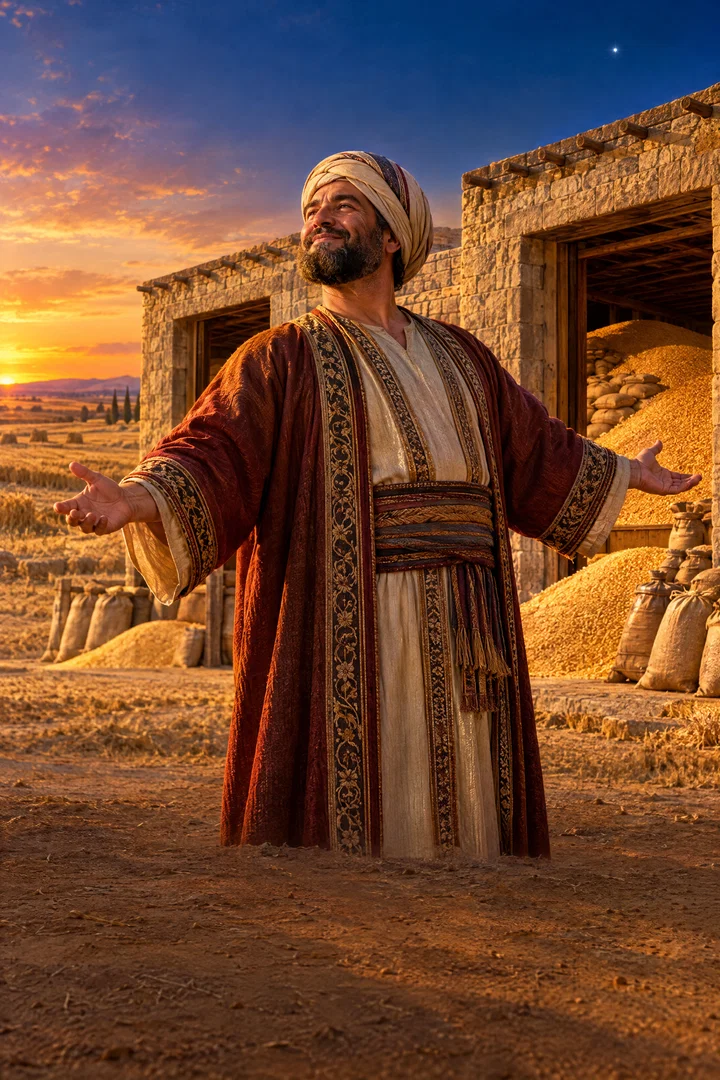
And I will say to my soul, Soul, thou hast much goods laid up for many years; take thine ease, eat, drink, and be merry.
Translations
And I will say to my soul, Soul, you have much goods laid up for many years; take your ease, eat, drink, and be merry.
King James Version, KJV Cambridge Paragraph Bible
And I will say to my soul, Soul, thou hast much goods laid up for many years; take thine ease, eat, drink, and be merry.
And I will say to my soul, Soul, thou hast abundance of goods laid up for many years; take thy ease, eat, drink, and be merry.
Revised Version, American Standard Version
And I will say to my soul, Soul, thou hast much goods laid up for many years; take thine ease, eat, drink, be merry.
and I will say to my soul, Soul, thou hast many good things laid up for many years, be resting, eat, drink, be merry.
and I will say to my soul, Soul, thou hast much good things laid by for many years; repose thyself, eat, drink, be merry.
and will say to my soul—Soul! thou hast many good things [lying by for many years: be taking thy rest, eat, drink,] be making merry!
Berean Standard Bible, Majority Standard Bible
Then I will say to myself, “ You have plenty of good things laid up for many years. Take it easy. Eat, drink, and be merry!”’
I will tell my soul, “ Soul, you have many goods laid up for many years. Take your ease, eat, drink, and be merry.”’
And I will say to my soul, Soul, you have a great amount of goods in store, enough for a number of years; be at rest, take food and wine and be happy.
And I wil say to my soule, Soule, thou hast much goods laide vp for many yeeres: liue at ease, eate, drinke and take thy pastime.
Douay-Rheims (Challoner revision)
And I will say to my soul: Soul, thou hast much goods laid up for many years take thy rest; eat, drink, make good cheer.
Pictures

Cross-references 20 of 57
- Luke 12:15
And he said unto them, Take heed, and beware of covetousness: for a man’s life consisteth not in the abundance of the things which he possesseth.
Warns that life does not consist in possessions, a lesson illustrated by the rich man.
- Matthew 6:19-21
Lay not up for yourselves treasures upon earth, where moth and rust doth corrupt, and where thieves break through and steal:
Both contrast storing wealth on earth with treasure in heaven.
- 1 Timothy 6:17-19
Charge them that are rich in this world, that they be not highminded, nor trust in uncertain riches, but in the living God, who giveth us richly all things to enjoy;
Earthly wealth is to be used generously and laid up as lasting treasure.
- Luke 12:33-34
Sell that ye have, and give alms; provide yourselves bags which wax not old, a treasure in the heavens that faileth not, where no thief approacheth, neither moth corrupteth.
Contrasts self-indulgent ease with giving and storing lasting treasure in heaven.
- Matthew 6:31-33
Therefore take no thought, saying, What shall we eat? or, What shall we drink? or, Wherewithal shall we be clothed?
Contrasts seeking material security with seeking God’s kingdom and trusting him to provide.
- Matthew 16:26
For what is a man profited, if he shall gain the whole world, and lose his own soul? or what shall a man give in exchange for his soul?
Warns that gaining the world cannot compensate for losing one’s soul.
- James 4:13-15
Go to now, ye that say, To day or to morrow we will go into such a city, and continue there a year, and buy and sell, and get gain:
People cannot know what tomorrow will bring.
- 1 Timothy 6:9-10
But they that will be rich fall into temptation and a snare, and into many foolish and hurtful lusts, which drown men in destruction and perdition.
The rich man’s confidence in wealth contrasts with the ruin brought by pursuing riches.
- Matthew 6:24
No man can serve two masters: for either he will hate the one, and love the other; or else he will hold to the one, and despise the other. Ye cannot serve God and mammon.
Both warn that serving wealth conflicts with serving God.
- Colossians 3:5
Mortify therefore your members which are upon the earth; fornication, uncleanness, inordinate affection, evil concupiscence, and covetousness, which is idolatry:
Covetousness is identified as idolatry, linking devotion to goods with false worship.
- 1 Corinthians 15:32
If after the manner of men I have fought with beasts at Ephesus, what advantageth it me, if the dead rise not? let us eat and drink; for to morrow we die.
Both express an eat-and-drink attitude based on expecting death.
- James 5:1-3
Go to now, ye rich men, weep and howl for your miseries that shall come upon you.
Hoarded riches testify against the rich and face judgment.
- Psalms 39:6
Surely every man walketh in a vain shew: surely they are disquieted in vain: he heapeth up riches, and knoweth not who shall gather them.
Accumulated riches may pass to someone whose identity is unknown.
- Proverbs 23:4-5
Labour not to be rich: cease from thine own wisdom.
Both warn against striving for wealth that cannot provide lasting security.
- Mark 8:36
For what shall it profit a man, if he shall gain the whole world, and lose his own soul?
Both warn that gaining worldly riches while losing one’s soul is a ruinous exchange.
- Isaiah 22:13
And behold joy and gladness, slaying oxen, and killing sheep, eating flesh, and drinking wine: let us eat and drink; for to morrow we shall die.
Both texts urge feasting despite impending death and judgment.
- Luke 12:24-28
Consider the ravens: for they neither sow nor reap; which neither have storehouse nor barn; and God feedeth them: how much more are ye better than the fowls?
Ravens and lilies illustrate the Father’s care and provision for his creatures.
- Ephesians 5:5
For this ye know, that no whoremonger, nor unclean person, nor covetous man, who is an idolater, hath any inheritance in the kingdom of Christ and of God.
Both connect covetousness with idolatry and exclusion from God’s kingdom.
- Matthew 6:20
But lay up for yourselves treasures in heaven, where neither moth nor rust doth corrupt, and where thieves do not break through nor steal:
Giving and sacrificed goods are secured as treasure in heaven.
- Luke 12:29-30
And seek not ye what ye shall eat, or what ye shall drink, neither be ye of doubtful mind.
Anxious pursuit of food and drink contrasts with trusting the Father’s care.
Commentary
Each commentary is drawn from primary sources: the writings of Ellen G. White and Adventist pioneers and periodicals. Each commentary is separate. Its own words are not a quotation; follow the references to read the source passages.
Ellen G. White
53 sources
The verse records a rich man talking to himself with complete confidence that his stored plenty will secure many years of ease, eating, drinking and pleasure.ST Jul 1, 1908ST May 25, 1915 He speaks to his soul as if material wealth could satisfy and secure it, but no amount of goods can satisfy the soul, make it happy, or give it worth in heaven.3T 401.3–402.1ST Jul 1, 1908Ms 44, 1900, par. 11 His presumption is folly, for a person's life does not consist in the abundance he owns, and his boast of many years is overturned when his life is required of him that very night, leaving his hoard useless to him.ST Jun 25, 1894Ms 77, 1903, par. 16–19Ms 107, 1908, par. 33–3615MR 97.2–3Lt 123, 1893, par. 17–18 His plentiful harvest came wholly from God and was entrusted to him as a steward, yet he forgot the Giver, worshiped the blessing, and closed his heart to the poor, widow, orphan and suffering whom he was meant to relieve.Ms 65, 1902, par. 8Lt 15, 1899, par. 1–3Ms 65, 1902, par. 9–10Lt 15, 1899, par. 4–6FE 39.1 The verse therefore teaches that means are not given for selfish ease and hoarding but to be used faithfully to bless others and advance God's work, for only such stewardship makes a person rich toward God.ST May 25, 19153T 545.25T 259.2–260.1RH May 27, 1902Lt 109, 1902, par. 12–15
Parable Setting and Wording
The verse records the rich man speaking confidently to himself, telling his soul that he has much goods laid up for many years and urging it to take ease and eat, drink, and be merry.ST Jul 1, 1908ST May 25, 19153T 545.2Ms 65, 1902, par. 8 He trusts his stored wealth to guarantee years of security, comfort, and pleasure, and plans to spend that time at ease and in self-indulgence.ST May 25, 1915Ms 65, 1902, par. 8ST Jun 25, 1894 His words reveal self-centered confidence and covetousness, a reliance on earthly goods and on what he owns rather than being rich toward God.ST May 25, 19153T 545.2Ms 65, 1902, par. 8 He thinks only of his own comfort and plans to use his abundance only for himself, forgetting God, the needy, and his responsibility to use his goods to help others and serve God.ST Jul 1, 1908Ms 65, 1902, par. 8ST Jun 25, 1894 His goods cannot secure his life, which is required that very night, and his laying up treasure for himself instead of becoming rich toward God shows he is not trustworthy with eternal riches.ST Jun 25, 18943T 401.3–402.1
He addresses his soul as though material wealth could satisfy and secure it, as though possessions could guarantee the future.3T 401.3–402.1ST Jul 1, 1908 But goods cannot satisfy the soul or make it happy, and the soul cannot be put or secured in any amount of goods.Ms 44, 1900, par. 10Ms 44, 1900, par. 11 Storing goods for self in this way does not make a man's character of greater value in the sight of heaven, nor increase a person's worth in heaven.Ms 44, 1900, par. 10Ms 44, 1900, par. 11
He had kept acquiring means and adding to his possessions until he had nowhere to bestow his goods.2T 198.1 Convinced the future would be full of plenty, he resolved to pull down his barns and build larger ones to store all his fruits and goods for himself, and then to tell his soul to take ease and eat, drink, and be merry.Ms 44, 1900, par. 10 His life was unprofitable because he withheld from God and dealt grudgingly with his Master, fearful he would come to want and daring not to trust God.2T 198.1 The Lord cut short his life, and will deal in the same way with many lovers of the world who rob God while professing to serve Him, showing how easy it is in a corrupt age to grow worldly, selfish, and ungrateful to the Giver of all mercies, and calling for great watchfulness and much prayer to keep the soul with all diligence.2T 198.1
He speaks in a self-sufficient spirit, indulging himself and speaking to himself as though accountable to no one but his own desires.Lt 33, 1899, par. 16–18Ms 56, 1899, par. 12–14 He lives as though his possessions are his own, owing nothing to God or other people, and as though there were no God, heaven, or future life. He acts as though no one knows what he is doing, but God knows every action and the motives behind it, and self-sufficiency is sin and prepares the way for ruin.Lt 33, 1899, par. 16–18 He forgot God, the giver of his blessings, and his all-consuming love of gain left no room in his thoughts for the poor and needy.Ms 56, 1899, par. 12–14 His wealth could not preserve his life or make it useful to others, and he died still rich.Ms 56, 1899, par. 12–14 The verse belongs to Christ's parable of the foolish rich man, which is presented alongside the parable of the lilies of the field and before the teaching about the faithful steward.Ms 95, 1898, par. 1
Folly of False Security
A person's life does not consist in the abundance of things he owns, so treating stored wealth as security for many years of ease and self-indulgent pleasure is foolish.Ms 77, 1903, par. 16–19Ms 107, 1908, par. 33–36COL 254.3–255.1 Living to accumulate for oneself cuts the soul off from life rather than making one rich toward God, for such self-centered confidence rests on possessions rather than God and thinks only of personal comfort instead of using abundance to help the needy.Ms 77, 1903, par. 16–19Ms 107, 1908, par. 33–36COL 254.3–255.1 Speaking to the soul as though possessions could guarantee life exposes the same folly, since covetousness severs the soul from true life.Ms 77, 1903, par. 16–19Ms 107, 1908, par. 33–36
The assumption of controlling the future and having many years ahead is overturned because life is required that very night.ST Jun 25, 189415MR 97.2–3Lt 123, 1893, par. 17–183T 401.3–402.1COL 258.1–2 Wealth and personal calculations cannot make the future secure, for confidence built on what is stored up proceeds without regard for God, without gratitude to the Giver, and without reckoning how soon life may end, even using heaven's gifts without thought of the Giver and misusing them to lead others away.15MR 97.2–3Lt 123, 1893, par. 17–18 The rich man credits himself for success and plans to enjoy what he has gathered, but death can come that very night, making his wealth useless to him.COL 258.1–2 Then he cannot control who will receive what he accumulated, and others take what he stored.3T 401.3–402.1COL 258.1–2
Earthly riches cannot ensure a long or happy life, nor preserve life nor make it useful to others.RH Dec 15, 1874Ms 56, 1899, par. 12–14 Forgetting God the giver of blessing and speaking as though accountable to no one but his own desires, the fool's all-consuming love of gain leaves no room in his thoughts for the poor and needy, and he dies still rich.Ms 56, 1899, par. 12–14 Covetousness lived out in laying up treasure for oneself instead of becoming rich toward God can thus cost a person both earthly and heavenly treasure.RH Dec 15, 1874 His words show he is not trustworthy with eternal riches and is not rich toward God.ST Jun 25, 1894
He kept for himself what was due to God and prized worldly treasure over eternal riches, believing he could spend life at ease in eating, drinking, and pleasure.ST Dec 17, 1896 Yet he cannot keep his goods when his life ends, and possessions cannot guarantee the life or future he assumes.Ms 73, 1893, par. 1–3ST Dec 17, 1896 The verse depicts a man bound up with his treasure and measuring his worth by the increase of his wealth.Ms 44, 1900, par. 8 It warns against making the pursuit and accumulation of riches an all-consuming goal, adopting the same self-satisfied attitude that forgets service to God and presumes tomorrow will bring still greater abundance, when instead what is received adds to true value only through wise stewardship for the Lord and seeking treasure in heaven.STB 680.1Ms 44, 1900, par. 8
Stewardship Versus Covetousness
His plentiful harvest came entirely from God, who let the sun shine on the just and unjust, sent showers on the evil and good, and caused vegetation to flourish, so that his life, harvest, and possessions depended on God and were only entrusted to him to be used faithfully as God's steward rather than for selfish ends.Lt 15, 1899, par. 1–3Lt 15, 1899, par. 4–6COL 256.1–2ST May 25, 1915 His confident talk of stored goods securing many years of ease and pleasure ignored that his life and possessions belonged to God and were entrusted for faithful use, and the judgment that followed exposed the folly of treating them as his own.Lt 15, 1899, par. 1–3Lt 15, 1899, par. 4–6 His confidence in his possessions reflected forgetfulness of God and failure to thank the One from whom they came, for the wealth had been entrusted to bless others and glorify God, and storing it for himself did not make him rich toward God or secure God's favor.FE 39.13T 154.1 His harvest was a gift from God and a chance to provide for the poor, but he thought only of his own comfort and kept the surplus for himself.COL 256.1–2
He used heaven's gifts without thought of the Giver and even misused them to lead others away from God, showing no gratitude while trusting tangible possessions to make the future secure.Lt 123, 1893, par. 17–18 He spoke to himself as though his soul were his god, his blessings had become the object of his worship, and his all-consuming love of gain enslaved his mind and left him without concern for the poor, the widow, or the orphan.Ms 56, 1899, par. 9–11 Earthly wealth in itself does not make a person favored by God, and without heavenly treasure and divine wisdom the wealthy are counted fools.FE 39.2
He closed his heart to the needy, the poor, the widow, the orphan, and the suffering and afflicted, though their condition was brought to his attention and abundant provision for their wants had been made in the blessing bestowed on him.ST Jul 1, 1908ST May 25, 1915 Instead of using his blessed opportunity to be God's almoner to free homes from want, feed the hungry, clothe the naked, gladden hearts, and answer prayers for bread and clothing, he thought only of ministering to his own comfort and resolved to store all his fruits and goods for himself for self-indulgent ease for many years.ST May 25, 1915 His confidence rested on what he owned while he ignored needy people who could have been helped by his abundance, exposing the selfishness and false security of hoarding wealth instead of using it to serve God and others.Ms 65, 1902, par. 8Ms 65, 1902, par. 9–10 His abundance had been entrusted so he could help others and glorify God, and sharing it would have brought gratitude to God and a valuable experience of giving, but he kept his surplus for himself and planned to enjoy it, living as though his possessions were his own and he owed nothing to God or other people.Ms 65, 1902, par. 9–10ST Jul 1, 1908
His self-satisfied belief that abundant possessions guarantee years of ease and pleasure, and his plan to use them only for personal comfort, express covetousness and reliance on earthly goods rather than being rich toward God.ST May 25, 19153T 545.2 True elevation of the soul comes not through seeking enjoyment in possessions but through active service, self-control, and holy purposes, while earthly riches cannot secure life or make a person rich toward God.5T 259.2–260.1 Blessings are to be used to bless others rather than hoarded for oneself, for possessing much with heart and interests fixed on earthly treasure does not make a person rich toward God.2T 662.1–3
Abundance of goods in itself does not make a person better or worse, but reveals the character he develops under blessing and tests how much he feels his dependence on God.Ms 44, 1900, par. 9 All he received increased his responsibility and accountability, and what he received adds to his true value only through wise stewardship for the Lord.Ms 44, 1900, par. 8Ms 44, 1900, par. 9 His choice to keep his increase for himself instead of glorifying God through it and transferring his goods to members of the human family who need those very things left him deficient in character value to that degree, whereas had he given abundantly as he received abundantly God would have counted him trustworthy to be entrusted with goods.Ms 44, 1900, par. 9 He was bound up with his treasure and measured his worth by the increase of his wealth.Ms 44, 1900, par. 8
His selfish accumulation followed from withholding what belonged to God, including the tenth, and failing to use his goods to meet the needs of others, warning against serving self instead of loving God and neighbor.3T 546.1 Wealth used for good would make a person rich in good works and lay up treasure in heaven.3T 546.1 He kept acquiring means and adding to his possessions until he had nowhere to bestow his goods, and his life was unprofitable because he withheld from God and dealt grudgingly with his Master, fearful he would come to want and daring not to trust God.2T 198.1 The Lord cut short his life, and will deal in the same way with many lovers of the world who rob God while professing to serve Him, showing how easy it is in a corrupt age to grow worldly, selfish, and ungrateful to the Giver of all mercies and calling for great watchfulness and much prayer to keep the soul with all diligence.2T 198.1
Call to Faithful Use
To take ease in stored goods, to eat and drink and be merry, is folly, and the meaning is not to live to please self, not to court praise and human honor, and not to spend the Lord's money in needless adornment.Lt 20, 1897, par. 5–716MR 46.1Lt 147, 1899, par. 2 Instead all the sons and daughters of God are to move out by faith, to build only what is neat and plain and free from debt, and to live as pilgrims and strangers whose citizenship is above.Lt 20, 1897, par. 5–716MR 46.1 The heart is to be guarded with perpetual vigilance lest it be estranged from God, hungering and thirsting after righteousness, sacrificing for the cause without ostentation or display, hiding self in Jesus, and walking in self-abasement and lowliness through sanctification of the Spirit.Lt 20, 1897, par. 5–7
Having enough to eat and drink and live comfortably is no reason to settle down to eat, drink, and be merry, to stop useful work, or to live only for ease and pleasure.RH Dec 24, 1903RH May 27, 1902Ms 123, 1898, par. 26Ms 139, 1898, par. 246T 452.3 Means do not remove the duty to exert oneself, and idleness while others labor to support the Lord's work incurs guilt.Ms 123, 1898, par. 26Ms 139, 1898, par. 246T 452.3 Those who have means should use them in the Lord's work and help bring light to people who are perishing, for failing to give and serve when able brings guilt through indolence.RH Dec 24, 1903Ms 139, 1898, par. 246T 452.3
Means are entrusted for service and should be used to help others, to support those in need, and to advance the Lord's work.RH May 27, 1902Lt 109, 1902, par. 12–15Lt 72, 1902, par. 6–9 Hoarding wealth in houses, land, costly goods, or unused riches brings eternal loss, hinders the spread of the message, and places the heart there, while giving faithfully prepares for Christ's return and answers for stewardship.RH May 27, 1902Lt 109, 1902, par. 12–15Lt 72, 1902, par. 6–9 This faithful use is especially urgent while there is still opportunity to support the proclamation of the third angel's message.Lt 72, 1902, par. 6–9
The same warning applies to wealthy parents who leave the disposition of their property unsettled, acting as though wealth and life are secure for many years.TCBMP 148.1 They do not know when their probation may end, and sudden death may leave their property handled in ways they would not have approved.TCBMP 148.1 Such neglect shows unfaithfulness as stewards.TCBMP 148.1
The verse warns against making the pursuit and accumulation of riches an all-consuming goal, focusing on accumulating possessions and money-making projects instead of giving time, abilities, and energy to God's work.STB 680.15T 270.2 Believers who forget they are God's servants may adopt the same self-satisfied attitude and presume that tomorrow will bring still greater abundance.STB 680.1 Their business dealings should instead be conducted with care, and they should seek treasure in heaven, with stored goods used in helping the widow and fatherless and possessions laid up as treasure in heaven by supporting others and God's work.STB 680.1Ms 35, 1885, par. 11–12
The chapter speaks to people blessed with great light, especially students who are striving in a tame, listless way without putting the whole heart into the service of Christ, calling them to daily prayer and watchfulness and to earnestly seek the Lord by not only claiming to believe the truth but living and practicing it.Ms 185, 1898, par. 7–10 Earthly wealth does not make a person favored by God or better in His sight, and without heavenly treasure and divine wisdom the wealthy are counted fools, having forgotten God and failed to use possessions to bless others and honor their Giver.FE 39.2 To follow the foolish rich man is folly and not true wisdom, for true wisdom does not spend time, wisdom, strength, and influence taking sides with political parties and in political strife, but seeks first the kingdom of God and His righteousness under Christ's banner.FE 39.2Ms 43, 1896, par. 6–8
Sources
Pioneers and periodicals
124 sources
The rich man whose land yielded more than his barns could hold decided to pull them down and build greater ones to store all his fruits and goods, and then told himself to rest for many years ahead in ease and feasting and merriment as though his future were assured.ST Mar 15, 1883ST Feb 5, 1885ST Oct 21, 1886ST Jun 25, 1894
Soul here means the man himself in his mortal life that is sustained by material food, not an immortal essence able to live consciously apart from the body.ST Jan 30, 1879RH Oct 24, 1854RH Feb 10, 1903
His confidence is folly, for a life does not consist in abundance and God requires his life that very night, so his hoarded wealth passes to another before he enjoys it.ST Jun 25, 1894ST Feb 22, 1899ST Aug 9, 1899
His resolve exposes covetousness in laying up treasure for self and not being rich toward God, leaving God out of account in practical unbelief while closing his heart to the needy his abundance could have blessed.ST May 25, 1915ST Sep 6, 1883ST Jul 1, 1889ST Nov 4, 1886
The warning therefore opposes easeful trust in stored wealth to watchful readiness for the returning Lord, calling for abundance to be used to honor God, help the poor and lay up treasure in heaven rather than for selfish comfort.RH Aug 1, 1854RH Oct 15, 1872RH Jun 17, 1873ST Apr 19, 1883
Parable Setting and Wording
The rich man's ground brings forth plentifully beyond what he can use, leaving no room for his fruits and corn and goods, so he decides to pull down his barns and build greater ones to store all his fruits and goods, and then speaks to himself.ST Mar 15, 1883RH Nov 29, 1906ST Aug 18, 1887ST Jul 7, 1887 That decision to enlarge his storehouses comes after a great harvest, and his plan is to keep everything for himself instead of sharing it or becoming rich toward God.ST Feb 5, 1885RH Nov 29, 1906 His confidence in that stored abundance reflects covetousness and a greedy spirit, trusting in riches and laying up treasure for self, which is idolatry.ST Feb 5, 1885ST Aug 18, 1887ST Jul 7, 1887
He congratulates himself that abundant provision is laid up for many years ahead, so his soul can rest and feast and celebrate in ease, eating, drinking, and merriment.ST Mar 15, 1883ST Oct 21, 1886ST Jun 25, 1894ST Sep 5, 1900ST Dec 11, 1893 He speaks as though his future were assured and his soul's needs could be met by possessions, treating stored wealth as able to secure many comfortable years of ease, pleasure, and feasting.ST Oct 21, 1886ST Jun 25, 1894ST Sep 5, 1900ST Dec 11, 1893 That confidence rests on heaping up riches and filling his barns, with no thought of God or of the sudden end of life, and it is misplaced because his life is not in his control and life is uncertain.ST Jun 25, 1894ST Dec 11, 1893 The value of life depends on what a person is, not on what he possesses, since even a beast can carry gold without its worth changing.ST Sep 5, 1900
His reasoning within himself and his repeated I and my show a self-centered attitude.ST Sep 5, 1900ST Jun 9, 1890 He chooses an answer pleasing to self rather than praying and following the light God gives, and such self-centered reasoning conflicts with God's purpose and leads to disappointment, distress, and ruin.ST Sep 5, 1900 His question about what to do shows he is portrayed as an industrious, careful, thoughtful, and successful farmer who considered his plans before acting and valued an orderly, well-managed life.ST Apr 9, 1912 The parable prompts consideration of how surplus resources should instead be used to help others.ST Jun 9, 1890
Soul in the verse means the person himself, the concrete living person and inner self speaking to himself and to his own life as though he controlled its future.RH Oct 24, 1854RH Feb 10, 1903ST Jan 24, 1884RH Sep 12, 1854 It means life in the margin sense, the life a person shares with other animal creation, received through material generation and sustained with material food.RH Feb 10, 1903ST Jan 24, 1884ST May 13, 1903 In this sense the soul eats natural food and drinks and rests on goods laid up for years, taking material nourishment.ST Jan 30, 1879ST Jan 24, 1884ST May 13, 1903 That the soul so eats, drinks, and rests proves it is mortal and subject to death, a material and corporeal thing sustained by goods, not an immaterial, immortal, intangible essence capable of conscious existence apart from the body.ST Jan 30, 1879ST Jan 24, 1884
Folly of False Security
The stored goods are treated as security for many years of comfort, ease, leisure and pleasure, as though the future were assured and life's purpose were indulgence.ST Jun 25, 1894ST Feb 22, 1899ST Aug 9, 1899ST Nov 26, 1896ST Jun 9, 1890 That confidence is foolish because a person's life does not consist in possessions and abundance, and earthly goods cannot secure life or guarantee the future.ST Jun 25, 1894ST Aug 9, 1899ST Nov 26, 1896ST Sep 19, 1878ST Jun 9, 1890 That very night life is required, death comes suddenly before enjoyment, and the hoarded wealth passes to someone else and becomes useless.ST Jun 25, 1894ST Aug 9, 1899ST Nov 26, 1896ST Sep 19, 1878ST Jun 9, 1890 Storing wealth for self in this way is set against being rich toward God.ST Aug 9, 1899ST Sep 19, 1878ST Jun 9, 1890
The resolve to rest and enjoy expresses satisfaction and belief in wise planning and good economy, yet it is false economy.RH Jan 23, 1900 It wastes and throws away the most and the best that had been given, so that at death there is nothing left and dying comes as poor as any creature of earth.RH Jan 23, 1900 The opposite divine judgment of fool proves there was no true economy, and the same fate belongs to everyone laying up treasure for self without being rich toward God.RH Jan 23, 1900
Goods, full barns and abundant land cannot give the soul peace or rest, satisfy its deepest desire for peace, secure lasting happiness, or make a person truly rich toward God.RH Jun 25, 1901ST Apr 9, 1912ST Oct 31, 1900 They cannot be kept when life ends and cannot protect in the day of God's wrath.ST Dec 17, 1896ST Apr 9, 1912 To prize worldly treasure above eternal riches while keeping for self what was due to God is self-assurance that ends in loss.ST Dec 17, 1896 Even ordinary activity and enjoyment without open wickedness fails to enter the kingdom when the kingdom is not earnestly sought wholeheartedly and secured first, since stored wealth and ease must not be taken as life's highest good.ST Oct 31, 1900
The attitude is practical unbelief that plans without regard for God, fails to trust His care or show gratitude, and makes self and possessions the center.ST Sep 6, 1883RH Oct 2, 1855 It acts as though provision depended on self alone, as though independent of God, as though possessions were one's own with nothing owed to God or others, and as though there were no God, heaven or future life.ST Sep 6, 1883RH Oct 2, 1855 Trusting in riches in this way denies the God above and is in effect saying in the heart that there is no God.ST Aug 18, 1887ST Jul 7, 1887 Laying up treasure for self without being rich toward God is covetousness, and covetousness is idolatry, since life does not consist in abundance of things possessed.ST Aug 18, 1887ST Jul 7, 1887
The plan postpones attention to eternal things until after possessions are secured, assuming many years and a future morning in which to rest satisfied.ST Aug 27, 1902ST Apr 9, 1912ST Apr 9, 1912 That reverses the command to seek first the kingdom of God and His righteousness with trust that needful earthly things will be added, by putting off the soul's salvation until worldly affairs are satisfactory.ST Aug 27, 1902 Tomorrow may never come, death can prevent the plans, and life is uncertain and continually spent.ST Apr 9, 1912ST Jul 8, 1875 Stores may be destroyed overnight and a lifetime's savings disappear in an hour, so wealth cannot make the future certain and self-confidence in possessions must give way to humility and dependence on God for life and provision.ST Jan 2, 1912 Absorbed in business and seeking riches and honor, time for prayer and devotion is put off with promise of later service, days are spent getting ready to live and sacrificing present sweetness and ties to amass goods for future comfort, yet the journey ends before that enjoyment comes.ST Jul 8, 1875RH Mar 24, 1904
Gaining the whole world in this manner is losing one's own soul and profiting nothing.ST Sep 19, 1900ST Jul 18, 1878 No real good is gotten from wealth in this life, and no readiness is gained for the next, since it cannot be carried beyond the grave and makes the deathbed no better.ST Apr 1, 1886ST Mar 15, 1883RH Apr 18, 1865 At death it is left to those who come after, to heirs who may quarrel over it or to others who consume it, the whole result of toil and anxious days and sleepless nights ending in raking together, keeping as long as possible, then dying and leaving it.ST Apr 1, 1886ST Mar 15, 1883RH Apr 18, 1865 Earthly success, reputation and plans for retirement cannot answer what comes after death, and gaining material security at the cost of the soul is no true profit when life must be weighed in light of God and what lies beyond.ST Sep 19, 1900ST Jul 18, 1878RH Mar 12, 1872 Capital while living ought instead to be converted into blessing for the poor, the consciousness of having done good, and hope of doing good after death by being rich toward God rather than laying up treasure for self.ST Mar 15, 1883
Covetous Selfish Heart
Christ spoke the parable to expose covetousness, and the resolve to store abundant fruits and goods for many years and then rest in ease, eating and drinking and merriment, lays bare a greedy, self-centered confidence that lays up treasure for self instead of becoming rich toward God.ST May 25, 1915ST Jul 1, 1889ST Nov 4, 1886ST Feb 12, 1885 The confidence mistakes stored wealth for lasting security and makes comfort and pleasure the use of increase, contrary to the warning that life does not consist in the abundance of possessions and contrary to the duty to give of means in honor to God.ST Jul 1, 1889ST Nov 4, 1886ST Apr 16, 1885 Though strong and vigorous, with no thought of death or adversity, the man speaks with complacent assurance of years without trouble, an attitude of worldly self-confidence that others may mistakenly praise as financial wisdom and hold up for imitation.ST Feb 5, 1885
The harvest came not by skill alone but by providence, by sunshine upon just and unjust and showers upon evil and good causing vegetation to flourish, yet he leaves God out of account and acts as though he alone must provide for himself.ST Jul 1, 1908ST Jul 1, 1908ST Mar 31, 1887 He does not think of God from whom all mercies come, forgets the giver, treats the Lord's goods as his own, and makes himself and his possessions the center without gratitude, trust, or recognition of duty and of the needy.ST Jul 1, 1908ST Jul 1, 1908ST Jul 1, 1908ST Jan 14, 1886ST Sep 19, 1878 His self-address shows trust in wealth for personal comfort and a plan to spend abundance only upon himself.ST Jul 1, 1908ST Jan 14, 1886ST Mar 31, 1887
He lives as though his possessions are his own and he owes nothing to God or to others, as though there were no God, no heaven, and no future life, keeping for himself what was due to God and prizing worldly treasure above eternal riches.ST Feb 2, 1882RH Apr 28, 1868 He makes comfort and appetite the purpose of life, treating eating, drinking, and being merry as the chief good, with no regard for accountability, the uncertainty of life, the soul, eternity, or the needs of others.ST Feb 2, 1882RH Mar 4, 1902RH Apr 28, 1868 That easeful expectation of pleasure for many years is a false security, as though death, judgment, and hell were already behind, a thoughtless, careless, and hopeless outlook that treats this world as home instead of longing as a pilgrim for an eternal home.ST Feb 2, 1882RH Nov 11, 1858RH Jan 7, 1858
He closes his heart to the needy whose wants could have been met from his blessing, to the poor, the orphan, the widow, and the suffering and afflicted brought to his attention.ST Jun 25, 1894ST Jul 1, 1908ST Jul 1, 1908RH Nov 23, 1916 Instead of serving as God's almoner to free homes from want, feed the hungry, clothe the naked, gladden hearts, answer prayers, bless others, support God's cause, and advance His work and the spread of the gospel, he hoards all his fruits and goods for selfish ease and pleasure.ST Jul 1, 1908ST Jul 1, 1908RH Nov 23, 1916ST Jan 22, 1880 Such laying up for self instead of generosity proves untrustworthiness with eternal riches, for abundance belonging to God should be used faithfully for the poor and His cause rather than stored for self.ST Jun 25, 1894ST Jan 22, 1880ST Sep 19, 1878
Covetousness is not limited to wanting what belongs to another, for a person may be covetous with goods he owns or holds as steward of the Lord's goods when he lays them up for himself rather than becoming rich toward God.ST Feb 5, 1902 Apparent contentment resting on accumulation is exposed as covetousness when he refuses to give to one in need, showing he is content only so long as he can keep his property intact.ST Feb 28, 1884 Hoarding wealth and provisions beyond use, heaping up for its own sake, hoarding money while giving grudgingly to benevolent causes, and loving gain without rightly enjoying or using what is held, are irrational, wicked, useless, and sinful, leaving the hoarder poor in spirit and miserable rather than truly rich.RH Feb 1, 1870RH Mar 12, 1861ST Jun 13, 1878ST Dec 1, 1881 That kind of storing is useless treasure that does nobody any good, whereas saving with prudence for a good, fixed purpose is right.ST Feb 5, 1902ST Dec 1, 1881
Last-Day Warning and Judgment
The self-assured resolve to rest for many years on stored abundance stands opposed to the urgent readiness and watchfulness required of those awaiting the returning Lord.RH Aug 1, 1854RH Oct 15, 1872 In the chapter's end-time setting, to keep on with ordinary pursuits such as planting, building, buying and selling in unbelief of the final warning brings destruction, as with the people in Noah's time.RH Aug 1, 1854 That easeful confidence belongs to the servant who says his lord delays his coming.ST Mar 5, 1896
It portrays the attitude of the world at large and even of many entrusted with the Lord's heritage, where selfishness and the pleasures this world can give prevail and license is taken to indulge appetite and lord it over others on the excuse that the coming is far off.ST Mar 5, 1896 Gratification of carnal desires in this way always deadens the sense of spiritual things.ST Mar 5, 1896 The haughty, self-complacent spirit settles into ease and indulgence with folded arms, congratulating itself on stored-up treasures and vast facilities for wholesale possession.RH Oct 27, 1859 That heedlessness and worldliness blinds professed Christians and sinners to God's workings, fulfilled prophecy and flaming signs of approaching glory, while mysteries of nature are seized to serve inflamed passions and lusts in defiance of God.RH Oct 27, 1859 This condition ripens the mass of the world to be surprised and deceived, so that the coming day overtakes them as a snare from which there is no escape, ending in storm, vengeance and eternal ruin unless they become sober, temperate, heavenly-minded, watchful and prayerful.RH Oct 27, 1859
Absorption in wealth and present comforts, with plans for a long future, blinds to the sudden coming of the day of God's wrath.RH Jun 10, 1875 Trust in accumulated wealth expects many comfortable years of enjoyment, unaware that the coming is near and the Judge will call to account.RH Jun 2, 1868 Such confidence in earthly goods cannot deliver in the day of the Lord's wrath.RH Jun 2, 1868
Turning from the promise of the Saviour's coming to present ease and pleasure says in effect that one can eat, drink and be merry.ST Aug 21, 1884 It joins those who say all things continue unchanged since the fathers fell asleep.RH Mar 7, 1871 It stands opposite the believer's longing and prayer for Christ to come speedily, and His coming will prove it false by fulfilling every promise exactly and showing redemption is no failure.ST Aug 21, 1884RH Mar 7, 1871
Hoarding prosperity for one's own gratification in ease, eating, drinking and merriment, instead of using it to advantage God's cause, is laying up treasure for self and not being rich toward God, loving the things of this world more than the things of God while still reaching after eternal life and a place in the new earth and refusing to invest means in upbuilding His kingdom.RH Nov 12, 1914 Such hoarding ends in God's judgment that very night, when the soul is required and all that was provided is lost.RH Nov 12, 1914 There is an awakening when harvest is past and summer is ended and wealth can no longer be of any use in the kingdom of God.RH Nov 12, 1914 Trust in wealth and ease as though they could secure lasting happiness forfeits the heavenly reward that could have been gained by using them for good and to advance God's cause, so that pursuit of pleasure and wealth ends in loss of eternal life and turns counted success into failure.RH Nov 7, 1871 Earthly goods cannot meet a person's greatest need at the judgment, and a life devoted merely to this world is a failure, for life is not secure or self-owned and the turn toward what matters eternally must not be delayed.RH Jun 10, 1858
The same false security is heard in the tempter's assurance of peace and safety urging enjoyment of ease and pleasure without fear, a voice that lures to destruction and must be rejected in favor of heaven's warning to escape for life.ST Oct 16, 1893 It assumes there is no need to fear or prepare because there will be time later to repent and enjoy ease, even to wait until after the Lord's coming to seek repentance.RH Mar 20, 1856 The wastrel's cheer of eat, drink and be merry in the face of approaching death is followed by despair, in contrast to the prayer, contrition and repentance required in the closing time of atonement.RH Oct 28, 1915 It is the wish of sinners who want to enjoy present pleasures and believe death will end their existence, leaving no future punishment.RH Feb 21, 1856 It becomes a motto of living only for the present with little thought of the life to come, denying the resurrection, angels and spirits.ST Sep 11, 1893RH Feb 21, 1856
Confidence in stored wealth and plans for ease crowds out thought of God and the life to come, so that one who has enough wants more and devotes self and workers to continual labor for it.RH Jan 13, 1874 Absorbed in business and seeking riches and honor, there is left no time to read, reflect or pray.RH Jan 13, 1874 A Christian may in this complacency keep a religious profession and place in the church while neglecting Christ's works, and spiritual life can quietly die without being noticed.RH Feb 7, 1865
Sabbath Duty and Stewardship
The call in the chapter to sell and give is to be put into practice in supporting the spread of Bible truth, with those who hold surplus property selling a portion of it to sustain missionary work, while the poor are not to sell their homes rashly and bring themselves into want, but all are to contribute as they are able.RH Nov 10, 1859 The resolve to rest at ease upon goods laid up for many years exposes the folly of treating possessions as security for life, and it warns against letting the need to support a family or protect business interests and earthly inheritance take priority over obedience to God.ST Jul 18, 1878ST Sep 30, 1880RH Feb 7, 1916 To seek family support and business gain by refusing to keep the seventh-day Sabbath is to lose the soul, for what is gained in the whole world is nothing if the soul is lost, and such storing up for self is covetous loss rather than gain.ST Jul 18, 1878RH Apr 4, 1865RH Sep 17, 1857 God feeds and provides for those who trust Him and seek His kingdom and obedience first instead of putting livelihood before obedience, so material security and ease can never justify risking the loss of the soul.RH Apr 4, 1865RH Sep 17, 1857RH Feb 7, 1916
The parable shows why God requires men to give of their means and to honor Him with their substance in tithes and offerings as gratitude for His gifts and care, in contrast to laying up for self instead of being rich toward God.ST Feb 12, 1885ST Apr 16, 1885ST Oct 2, 1884ST Jun 17, 1886 Hoarding wealth for oneself while withholding what belongs to God is dishonest and sinful, and money used in ways God cannot approve is an offense against Him.RH Mar 16, 1916
Wealth itself is not condemned, for the ability to gain it is God-given and its possessor is responsible for using it rightly and generously. Wealth used to bless people and support God's cause is not condemned, but the confidence that trusts stored wealth to secure years of ease and pleasure and uses abundance for self rather than helping others or serving God illustrates covetousness and selfishness, not the mere fact of being rich.RH May 23, 1907 Wealth gathered for selfish purposes, or through oppression, fraud, injustice, or dishonesty, becomes a curse, and such self-centered confidence that is rich toward self but not toward God leads to destruction and leaves a person spiritually poor.RH May 23, 1907
Treating material wealth as the riches needed and trusting stored goods to provide ease and pleasure for years stands opposed to true riches, which consist in faith, good works, and the Lord's blessing and are found in Christ.RH Feb 5, 1901 Riches are uncertain and are not to be trusted as lasting security, and lasting treasure is found in doing good and laying hold of eternal life rather than spending life at ease in pleasure.ST Dec 16, 1903 The rich man's duty and refuge are not to be high-minded, but to trust in the living God who gives all things to enjoy, to do good, to be rich in good works, to be ready to distribute and willing to share, and so to lay up a good foundation against the time to come that he may lay hold on eternal life, a merciful forewarning by which every rich heart may be saved and may help save the poor.ST Dec 16, 1903
Generous and Watchful Living
Temporal abundance is entrusted for wise use in God's service rather than for hoarding or selfish comfort, to honor God, help the poor, advance His work, bless others, and store treasure in heaven.ST Jan 14, 1886ST Apr 19, 1883RH Jan 14, 1915ST Apr 19, 1883ST Sep 29, 1881 The mistaken way is to try to save means by laying up much goods for many years to take ease, eat, drink, and be merry, making no use of prosperity for God's work while treating it as security for ease and pleasure.RH Jun 17, 1873ST Apr 19, 1883RH Jan 14, 1915ST Apr 19, 1883ST Sep 29, 1881 The sure way to save means, reputation, and life is to sacrifice and invest them in God's cause from a pure motive to glorify God, dedicating wealth, abilities, and other advantages to Christ's service rather than trusting possessions and seeking riches in character and toward God.RH Jun 17, 1873ST Apr 19, 1883RH Jan 14, 1915 What is so given is not lost but transferred from mortal life to the immortal shore, placed safely beyond the reach of the fiery element of this world, laying a foundation for eternal life and sowing for eternal joy.ST Jan 14, 1886RH Jun 17, 1873ST Apr 19, 1883RH Jan 14, 1915 A poor mortal life sacrificed for Christ and the gospel is sent in advance to be exchanged for immortal health in the kingdom of glory, and houses, lands, earthly friends, and everything this world calls dear and precious given to God secure treasure in heaven instead of becoming a person's trust, god, or saviour.ST Jan 14, 1886RH Jun 17, 1873 The contrast to the judgment that life will be required that very night is being rich toward God through disinterested care for others, giving to those in need and to God's work rather than accumulating more for selfish enjoyment.ST Jan 14, 1886ST Sep 29, 1881
It is better to do good while there is opportunity and to give freely beforehand, for wealth kept for many years of ease, eating, drinking, and pleasure can be held only a very short time before it is all torn away by death.RH Jun 4, 1857ST Jul 21, 1881ST May 19, 1881 Those who spend their lives accumulating may fail to give even when they intend to, and their wealth will eventually be disposed of without their control.RH Jun 4, 1857 Hoarding money for the sake of hoarding breeds a closefisted and mean disposition, and storing wealth to live on in coming years instead of using it for good now is folly.ST May 19, 1881 The right course for stewards of God's treasures is to give in one's lifetime so gifts go exactly where intended with the satisfaction of seeing them applied as desired, rather than leaving property to uncertain wills that often fail to carry out the owner's wishes and leaving money for heirs to quarrel over with no honor to the giver.RH Jun 4, 1857ST May 19, 1881 In dying moments the thought of having given is at least as agreeable as the reflection of having spent or having laid up.ST Jul 21, 1881
True wisdom believes God and accepts His estimate of present and future things, seeking first the kingdom of God and His righteousness and storing treasure in heaven rather than on earth, viewing unseen heavenly things in the light of eternity.RH Feb 4, 1904 Such a life of faith is the soundly practical life, in contrast to devoting all time and strength to gaining earthly goods that can be lost in a moment and to the world's idea of prudent provision that lays up treasure for self and is not rich toward God.RH Feb 4, 1904ST Jan 22, 1880ST Jul 29, 1897 Relying on earthly abundance rather than trusting God offers no assurance that possessions secured for oneself will guarantee lasting security, and the resolve to rest in stored goods is folly because the soul can be required that very night and the provided things pass to others.RH Feb 4, 1904ST Jan 22, 1880ST Jul 29, 1897 Enlarging barns and storehouses and business and farms to lay up much for present-life greatness while ignoring the infinite future is foolish business planning, since this life gives no promise of continuance and strength and vitality today can become a prone cold form in death tomorrow, with seeing eyes made sightless and the busy scheming mind made oblivious to every earthly impulse.ST May 17, 1910 Then stored goods become dead dreams, and the heart that hoped in the present life dies with its hopes; true wisdom rightly weighs the little against the great, the minute against the hour, and the momentary present against the infinite future, using time as part of eternity instead of bartering eternity for time, and refusing to let a little dollar blind to eternal riches or a little present gain shut out future gain to cause eternal loss.ST May 17, 1910
The verse exposes measuring success by earthly wealth and expecting to enjoy it for many years, when one has worked to satisfy self, postponed serving God, and failed to store up treasure in heaven, so that worldly success proves spiritual failure and it is too late to change.RH Mar 4, 1909RH Jul 27, 1876ST Nov 20, 1879 It warns against letting confidence in earthly goods and the desire for ease, food, drink, and pleasure displace spiritual watchfulness and care for duty, and against letting personal, worldly, or temporal concerns keep anyone from accepting Christ's invitation.RH Mar 4, 1909RH Jul 27, 1876 It pictures the easy, comfortable path chosen by one who claims that freedom from the law releases him from obedience to God, warning that such ease is not the life of godliness, self-denial, and faithful obedience, but evidence of self-deception.RH Dec 27, 1864 Settling into a life of ease and ordinary worldly activity without seeking God's kingdom is condemned, for eating, drinking, buying, selling, building, planting, and even praying are not enough if they are all one does; eternal life requires earnestly seeking the kingdom, since wealth, power, position, and fame may have some good but cannot satisfy the soul and are not the highest good.ST Oct 15, 1885 The same spirit of feasting and self-indulgence appears when people seek ease, food, drink, and pleasure while destruction approaches, and when refreshments and dining arrangements at church social gatherings are treated as essential alongside the gospel.RH Apr 2, 1867
Confidence in future comfort that ignores both life's uncertainty and present duties is warned against, for one who plans to gain money, status, and pleasure while putting off generosity toward the sick and poor finds his plans ended when he suddenly dies.ST Nov 25, 1930 Making wealth for luxurious indulgence through ease, eating, drinking, and pleasure repeats the same folly, because life can end that very night, and self-satisfied confidence in growing wealth that looks forward to ease and comfort reflects the prosperous trust in growing wealth and expectation of making still more.ST Oct 20, 1887ST Oct 6, 1881 Those who cling selfishly to what the Lord gives, laying up goods so they may take ease, eat, drink, and be merry, and spending their lives in ease and selfishness, stand on a slippery foundation with destruction awaiting them, whose end is seen when one goes into the sanctuary of God after feet almost slipped at seeing that class and nearly concluding it foolish to live a life of poverty and sacrifice.RH Nov 23, 1916 Calling a prosperous year of money-making a good work and promising self ease from goods laid up is false when wealth is built on grinding down widows and orphans and leaving tenants to unjust agents, for such treasures will not last forever.ST Oct 6, 1881 Ownership brings the duty to know and to see that tenants are justly treated, and neglect is guilt; the soul that says take ease will itself be required, for the lives of the widow and the fatherless will be demanded of the oppressor.ST Oct 6, 1881 The same self-satisfied confidence in wealth and security, imagining enjoyment of abundance for many years, is seen in ill-gotten, blood-stained wealth from fertile fields that could expect ease and pleasure but was not enjoyed for long, and in amassing estates while refusing laborers work and bread, excusing reckless pleasure that values excitement and gain above life, enlarging barns, business, and farms for present greatness while ignoring the infinite future, spending life getting ready to live until the journey ends, and clinging selfishly to ease.ST Jan 6, 1904
This confidence was held up in Christ's sermon addressed to His disciples in the presence of a multitude, in widest contrast between the confidence of willing faith and the fear of unbelief.ST Oct 3, 1878 It warns against devoting all time and strength to gaining earthly goods that can be lost in a moment.RH Feb 4, 1904 It warns against building one's plans around wealth and worldly desires when life and possessions last only a little while and may be consumed.RH May 5, 1903
Sources