Luke 13:17
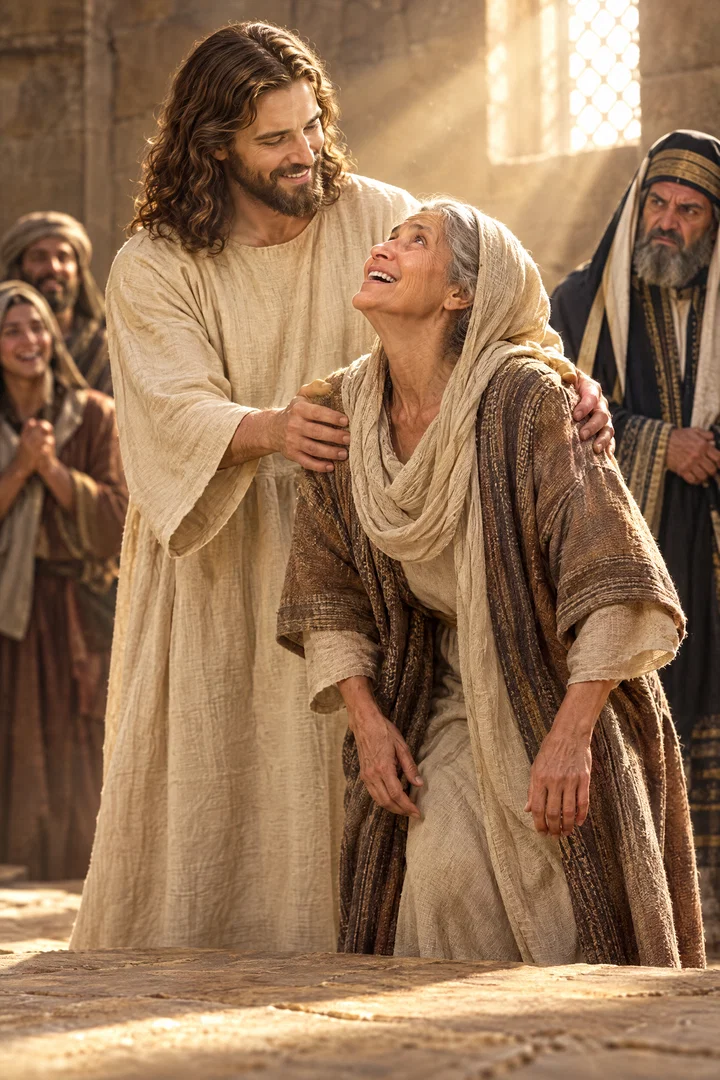
And when he had said these things, all his adversaries were ashamed: and all the people rejoiced for all the glorious things that were done by him.
Translations
American King James Version, King James Version, KJV Cambridge Paragraph Bible, Webster Bible
And when he had said these things, all his adversaries were ashamed: and all the people rejoiced for all the glorious things that were done by him.
Revised Version, American Standard Version
And as he said these things, all his adversaries were put to shame: and all the multitude rejoiced for all the glorious things that were done by him.
And he saying these things, all who were opposed to him were being ashamed, and all the multitude were rejoicing over all the glorious things that are being done by him.
And as he said these things, all who were opposed to him were ashamed; and all the crowd rejoiced at all the glorious things which were being done by him.
And, as he was saying, these, things, all who had been setting themselves against him were being put to shame; and, all the multitude, were rejoicing over all the glorious things which were being brought to pass by him.
Berean Standard Bible, Majority Standard Bible
When Jesus said this, all His adversaries were humiliated. And the whole crowd rejoiced at all the glorious things He was doing.
As he said these things, all his adversaries were disappointed; and all the multitude rejoiced for all the glorious things that were done by him.
And when he said these things, those who were against him were shamed, and all the people were full of joy because of the great things which were done by him.
And when he said these things, all his aduersaries were ashamed: but all the people reioyced at all the excellent things, that were done by him.
Douay-Rheims (Challoner revision)
And when he said these things, all his adversaries were ashamed: and all the people rejoiced for all the things that were gloriously done by him.
Pictures
Cross-references
- Matthew 12:11-12
And he said unto them, What man shall there be among you, that shall have one sheep, and if it fall into a pit on the sabbath day, will he not lay hold on it, and lift it out?
Jesus teaches that doing good on the Sabbath is lawful and a person is worth more than a sheep.
- John 7:22-23
Moses therefore gave unto you circumcision; ( not because it is of Moses, but of the fathers;) and ye on the sabbath day circumcise a man.
Jesus defends his Sabbath healing against criticism.
- Luke 13:12
And when Jesus saw her, he called her to him, and said unto her, Woman, thou art loosed from thine infirmity.
The healing of the bound woman shamed Jesus’ adversaries.
- Luke 21:15
For I will give you a mouth and wisdom, which all your adversaries shall not be able to gainsay nor resist.
The same Greek word is translated “adversary.”
- Philippians 1:28
And in nothing terrified by your adversaries: which is to them an evident token of perdition, but to you of salvation, and that of God.
The same Greek word is translated “adversary.”
- Matthew 12:10
And, behold, there was a man which had his hand withered. And they asked him, saying, Is it lawful to heal on the sabbath days? that they might accuse him.
Cited with Christ’s teaching about what is lawful on the Sabbath.
Commentary
Each commentary is drawn from primary sources: the writings of Ellen G. White and Adventist pioneers and periodicals. Each commentary is separate. Its own words are not a quotation; follow the references to read the source passages.
Ellen G. White
6 sources
The verse describes the moment after Jesus defended healing a woman on the Sabbath, when His adversaries were put to shame and all the people rejoiced for the glorious healings He had done.ST Apr 23, 1896SW 79.1–81.1ST Apr 23, 18965MR 84.2Ms 238, 1902, par. 7 That rejoicing was for His teachings and words of comfort as well.Ms 79, 1910, par. 3–5Ms 238, 1902, par. 7 His reply exposed the inconsistency of the synagogue ruler who opposed Him.ST Apr 23, 1896 The healing at issue involved a woman freed from Satan's long affliction.ST Apr 23, 1896
The healing and its defense revealed God's mercy and compassion and Christ's divine power through a work of mercy.ST Apr 23, 1896SW 79.1–81.1 To release a suffering person from bondage on the Sabbath was right.SW 79.1–81.1 It was in harmony with the Sabbath, not a violation of its sanctification.ST Apr 23, 1896 Christ's Sabbath work of healing showed His willingness and gladness to restore the sick, to comfort them with words of comfort, and to bring them health.5MR 84.2Ms 238, 1902, par. 7
His work of healing on the Sabbath was extensive, and He never grew weary of it.Ms 238, 1902, par. 7 His example of serving others is a pattern Christians should follow.Ms 79, 1910, par. 3–5Ms 238, 1902, par. 7 That serving work is to be done with a greater measure of the Holy Spirit's power.Ms 79, 1910, par. 3–5 Some who saw the good He had done were moved toward faith but feared confessing it lest they be expelled from the synagogue, valuing human praise more than God's approval.ST Apr 23, 1896
Sources
Pioneers and periodicals
34 sources
The verse closes a Sabbath healing in the synagogue of a woman bound eighteen years by a spirit of infirmity and bowed together, whom Jesus freed and made straight so that she glorified God as a daughter of Abraham loosed from Satan's bondage.ST Jul 16, 1894RH Feb 11, 1862ST Nov 14, 1900 The ruler of the synagogue answered with indignation at the Sabbath healing, condemning Jesus and telling the people to seek healing on the six working days and not on the Sabbath.ST Jul 16, 1894ST Nov 14, 1900ST Mar 19, 1894 Jesus exposed that objection as hypocrisy, reasoning that each one looses an ox or ass on the Sabbath to water it, and much more this daughter of Abraham bound eighteen years ought to be loosed on the Sabbath, since it is lawful to do well on the Sabbath.ST Jul 16, 1894ST Mar 30, 1888ST Nov 14, 1900 At his words all his adversaries were put to shame, silenced and confounded and unable to answer, because their valuing of animals, property and tradition above a suffering human being was laid bare.ST Nov 11, 1897ST Feb 23, 1882ST Jul 16, 1894 At the same time all the people rejoiced for all the glorious healings and good works done by him, glorifying God and recognizing the Sabbath as freedom and fullness of joy in the Lord.ST Nov 11, 1897ST Feb 23, 1882ST Jul 16, 1894 Relieving suffering and doing good on the Sabbath is therefore lawful mercy in exact accord with the design and law of the Sabbath, not a breaking of the fourth commandment, for the Sabbath was made for the good of man and the whole human family and not as a yoke of bondage.ST Mar 30, 1888ST Feb 7, 1911RH Feb 11, 1862ST Apr 5, 1883RH Apr 18, 1871
Healing Setting and Response
The verse closes a Sabbath healing in the synagogue of a woman with a spirit of infirmity for eighteen years, bowed together and unable to lift herself up.RH Feb 11, 1862ST Nov 14, 1900RH Jul 18, 1854ST Jun 20, 1911ST Apr 14, 1881 Jesus saw her, called her to Him, declared her freed from her infirmity with the words of loosing, and laid His hands on her so that she was immediately made straight and glorified God.ST Nov 14, 1900RH Jul 18, 1854ST Jun 20, 1911 She was a daughter of Abraham freed from long bondage by Satan, bound eighteen years.ST Apr 23, 1896ST Jul 16, 1894RH Feb 11, 1862ST Nov 14, 1900 The healing was one of seven recorded miracles He performed on the Sabbath, and He did not avoid such acts to accommodate prejudice or objection.RH Jul 18, 1854ST Apr 14, 1881 It was immediate and gave cause to recognize Him as the promised Messiah.ST Feb 23, 1882RH Jul 18, 1854
The ruler of the synagogue answered with indignation because the healing was done on the Sabbath day.ST Jul 16, 1894ST Nov 14, 1900ST Mar 19, 1894 He condemned Jesus and told the people to come for healing on the six working days and not on the Sabbath.ST Jul 16, 1894ST Nov 14, 1900 His indignation was directed not only at Jesus for healing but also at the woman for submitting to be healed and at the people for rejoicing over the glorious healing.ST Mar 19, 1894
Jesus defended the healing by exposing inconsistency as hypocrisy.ST Apr 23, 1896ST Jul 16, 1894ST Mar 30, 1888ST Nov 14, 1900ST Apr 13, 1904 He argued that each one looses an ox or ass from the stall on the Sabbath and leads it away to watering so it will not suffer, and likewise this daughter of Abraham whom Satan had bound eighteen years ought to be loosed from this bond on the Sabbath day.ST Jul 16, 1894ST Mar 30, 1888ST Nov 14, 1900ST Apr 13, 1904 The synagogue ruler thus accepted the lesser work of untying animals to lead them to water but condemned the healing of the woman.ST Mar 30, 1888 On a similar occasion He added that as a man is better than a sheep it is lawful to do well on the Sabbath days by lifting a sheep fallen into a pit.ST Apr 13, 1904
When He had said these things all His adversaries were put to shame, meaning silenced, humiliated, confused and unable to answer, beginning to blush.ST Nov 11, 1897ST Feb 23, 1882ST Jul 16, 1894RH Feb 11, 1862ST Nov 14, 1900 His reply with tremendous sifting justice exposed their hostility, bigotry, inconsistency and hypocrisy in valuing animals, property and tradition above a suffering human being.ST Jun 11, 1894RH Nov 4, 1858ST Apr 13, 1904ST Mar 19, 1894 Those put to shame included the ruler of the synagogue and the Pharisees, and the antagonism of the chief priests, Pharisees and Herodians grew, so that shame only made them hate Him more.ST Jul 16, 1894ST Nov 14, 1900ST Mar 19, 1894 He kept healing and doing good on the Sabbath, and a later Sabbath controversy is linked to this one in that He likewise challenged objectors and left them confused and unable to answer.ST Nov 14, 1900ST Mar 2, 1882
At the same time all the people rejoiced for all the glorious healings, miracles, good works and deeds done by Him.ST Nov 11, 1897ST Jul 16, 1894RH Feb 11, 1862ST Nov 14, 1900RH Apr 28, 1863 They glorified God and He grew in favor with the people, and their rejoicing was evidence pointing to Him as the promised Messiah.ST Feb 23, 1882ST Nov 14, 1900 The Sabbath is thereby shown to mean freedom and fullness of joy in the Lord.RH Feb 11, 1862 Some onlookers were moved toward faith yet feared confessing it lest they be expelled from the synagogue, because they valued human praise more than divine approval.ST Apr 23, 1896 The word translated adversaries means those who oppose, and is also used for the one who opposes in the description of the man of sin.RH Oct 28, 1902
Sabbath Truth and Practice
Relieving suffering and doing good on the Sabbath is lawful, an act of mercy in exact accord with the design and law of the sabbatic institution, not a careless or irreverent violation, relaxation, or breaking of the fourth commandment even when opponents accuse it as such.ST Mar 30, 1888ST Apr 5, 1883RH Apr 7, 1851RH May 5, 1874RH Apr 25, 1854 Leading an animal to water so it will not suffer is lawful, and likewise healing the afflicted is lawful, for deeds of mercy to the afflicted exactly accord with the design of the Sabbath.ST Mar 30, 1888ST Apr 5, 1883RH May 5, 1874 Special care was taken to teach what is lawful on the Sabbath, supporting the continuing obligation to keep the Sabbath in the gospel age.RH Apr 18, 1871 The healing of the woman bowed down with infirmity was a vindicated act done for the relief of suffering and the honor of God, kept holy in spirit and truth, and accusations against it did not make it Sabbath-breaking.RH Apr 7, 1851RH May 5, 1874RH Apr 25, 1854
The Sabbath is a merciful institution made for man's good and not a yoke of bondage, a day of blessing rather than a burden.ST Feb 7, 1911RH Feb 11, 1862RH May 5, 1874 It was given in the beginning and perpetuated to be a blessing to mankind and to the whole human family, not to Jews only, revealing divine power to deliver and heal and bringing freedom from sin and the curse.ST Jul 8, 1897RH Jul 18, 1854ST Apr 13, 1904 True Sabbath-keeping follows God's purpose rather than human traditions, defending the Sabbath against rules that distorted its purpose and turned blessing into burden.RH Feb 11, 1862ST Jul 8, 1897ST Oct 29, 1896 The shame of the adversaries and the joy of the people reveal that human need matters more than property or tradition, for the individual man of eternal worth is ever exalted above the thing, however holy the thing or holily regarded.ST Oct 29, 1896ST Apr 13, 1904ST Apr 13, 1904
The controversy arose because restrictive human traditions were rejected by word and example, correcting the Jewish tradition that every act of healing the sick was unlawful on the Sabbath.ST Jun 11, 1894RH May 5, 1874 The Sabbath had been buried under a heap of rabbinical superstition, where human tradition obscured the commandment and made Scripture and the law of God void and ineffective in practice.ST Oct 7, 1897RH May 5, 1874ST Sep 29, 1909 Those superstitious traditions forbidding healing on the Sabbath were in opposition to the divine will, and immediate healings of the woman bound eighteen years, the paralytic, and the man infirm thirty-eight years at Bethesda were most conclusive testimony from God against them.RH Jul 18, 1854 The rebuke stripped off false glosses and trampled down such traditions, exposing that in opposing such mercy the opposers were of their father the devil.RH Jul 18, 1854
The Sabbath commandment was kept according to divine ideas rather than Pharisaic ideas, and that obedience was counted as Sabbath breaking. That charge became part of the misrepresentation by which aid of Rome was secured to put Christ to death. What was taught by Christ and the apostles supports the continuing obligation of the Sabbath in the gospel age, and the Sabbath is and will ever remain a sign between God and Israel forever.RH Apr 18, 1871 Israel here does not mean literal Jews exclusively, but all who are of faith in Christ, with no difference between Jew and Gentile, who are children of Abraham and heirs according to promise. The instruction concerns the seventh day of the seven alone, not the first day of the week, and belongs with all Sabbath commandments and all instruction about observing the day; it has no application to Sunday and cannot be applied to Sunday without wrestling the Scriptures, for there are no Scriptures enjoining Sunday observance.ST Apr 11, 1900
Keeping the Sabbath in harmony with this vindication includes social visits, religious instruction, and acts of charity such as visiting the sick, poor, or imprisoned, and relieving the sick and helping people in trouble with care for others.ST Mar 13, 1879ST May 21, 1912ST Aug 3, 1904 The Jews put their Sabbath law and their property in sheep and oxen above the suffering bowed woman, counting the thing more than the human being, yet a man is better than a sheep and it is lawful to do well on the Sabbath days, as by lifting a sheep fallen into a pit and by loosing an ox or ass to water it.ST Apr 13, 1904ST Apr 13, 1904 With tremendous sifting justice the reply exposed hypocrisy in valuing animals, property, and tradition above loosing a daughter of Abraham bound by Satan eighteen years.ST Apr 13, 1904 In this way keeping the Sabbath includes relieving suffering and showing care for others, because human need matters more than property or traditions that turn the Sabbath from blessing into burden.ST Oct 29, 1896ST Aug 3, 1904
In its surrounding teaching the passage directs attention to the warning that not all will be saved.ST Jun 10, 1889 There will be no more favorable opportunity to make peace with God after this life, so salvation must be sought now.ST Jun 10, 1889
Sources