Matthew 12:10
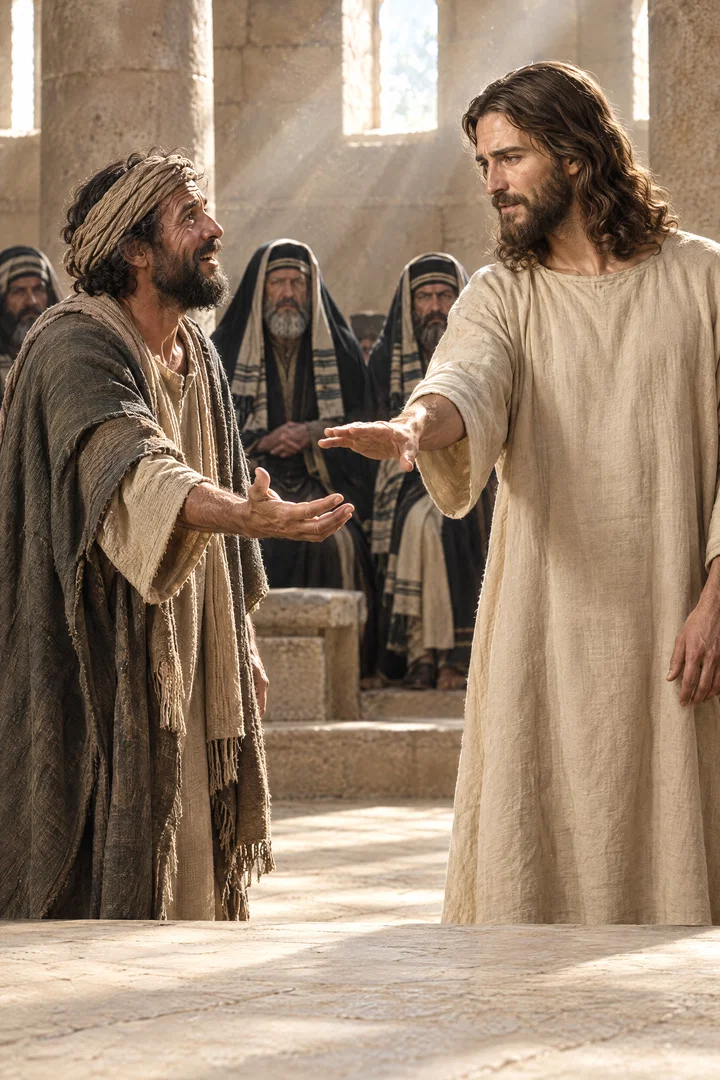
And, behold, there was a man which had his hand withered. And they asked him, saying, Is it lawful to heal on the sabbath days? that they might accuse him.
Translations
American King James Version, King James Version
And, behold, there was a man which had his hand withered. And they asked him, saying, Is it lawful to heal on the sabbath days? that they might accuse him.
and behold, there was a man which had his hand withered. And they asked him, saying, Is it lawful to heal on the sabbath days? that they might accuse him.
And behold, there was a man who had his hand withered. And they asked him, saying, Is it lawful to heal on the sabbath? that they might accuse him.
Revised Version, American Standard Version
and behold, a man having a withered hand. And they asked him, saying, Is it lawful to heal on the sabbath day? that they might accuse him.
and lo, there was a man having the hand withered, and they questioned him, saying, 'Is it lawful to heal on the sabbaths?' that they might accuse him.
And behold, there was a man having his hand withered. And they asked him, saying, Is it lawful to heal on the sabbath? that they might accuse him.
and lo! a man having, a withered hand, and they questioned him, saying, Is it allowable, on the sabbath, to heal? that they might accuse him.
Berean Standard Bible, Majority Standard Bible
and a man with a withered hand was there. In order to accuse Jesus, they asked Him, “ Is it lawful to heal on the Sabbath?”
And behold, there was a man with a withered hand. They asked him, “ Is it lawful to heal on the Sabbath day?” so that they might accuse him.
And there was a man with a dead hand. And they put a question to him, saying, Is it right to make a man well on the Sabbath day? so that they might have something against him.
And beholde, there was a man which had his hand dried vp. And they asked him, saying, Is it lawfull to heale vpon a Sabbath day? that they might accuse him.
Douay-Rheims (Challoner revision)
And behold there was a man who had a withered hand, and they asked him, saying: Is it lawful to heal on the sabbath days? that they might accuse him.
Pictures
Cross-references 20 of 50
- Mark 3:1-5
And he entered again into the synagogue; and there was a man there which had a withered hand.
A parallel account of the withered-hand healing and the Sabbath dispute.
- Exodus 20:10
But the seventh day is the sabbath of the LORD thy God: in it thou shalt not do any work, thou, nor thy son, nor thy daughter, thy manservant, nor thy maidservant, nor thy cattle, nor thy stranger that is within thy gates:
The commandment identifies the seventh day as the Sabbath Jesus observed.
- Luke 6:6-11
And it came to pass also on another sabbath, that he entered into the synagogue and taught: and there was a man whose right hand was withered.
Parallel account of the Sabbath healing and the Pharisees’ hostile response.
- Mark 2:27-28
And he said unto them, The sabbath was made for man, and not man for the sabbath:
Jesus teaches that the Sabbath was made for humanity and that he is its Lord.
- John 5:8-9
Jesus saith unto him, Rise, take up thy bed, and walk.
both defend Jesus as not breaking the Sabbath
- Isaiah 58:13
If thou turn away thy foot from the sabbath, from doing thy pleasure on my holy day; and call the sabbath a delight, the holy of the LORD, honourable; and shalt honour him, not doing thine own ways, nor finding thine own pleasure, nor speaking thine own words:
The Sabbath is the Lord’s holy day, meant to be honored and enjoyed.
- Luke 14:1-5
And it came to pass, as he went into the house of one of the chief Pharisees to eat bread on the sabbath day, that they watched him.
Jesus teaches that healing and helping the distressed are lawful on the Sabbath
- Luke 13:14-16
And the ruler of the synagogue answered with indignation, because that Jesus had healed on the sabbath day, and said unto the people, There are six days in which men ought to work: in them therefore come and be healed, and not on the sabbath day.
Jesus defends healing a suffering person on the Sabbath as merciful and lawful.
- Genesis 2:2-3
And on the seventh day God ended his work which he had made; and he rested on the seventh day from all his work which he had made.
God rested on the seventh day and set it apart at creation.
- Matthew 5:17-19
Think not that I am come to destroy the law, or the prophets: I am not come to destroy, but to fulfil.
Jesus’ Sabbath conduct upholds the enduring claims of God’s law.
- John 5:16
And therefore did the Jews persecute Jesus, and sought to slay him, because he had done these things on the sabbath day.
Jesus is persecuted for healing on the Sabbath.
- Matthew 12:5
Or have ye not read in the law, how that on the sabbath days the priests in the temple profane the sabbath, and are blameless?
Priests’ Sabbath service shows that lawful acts do not break the Sabbath.
- John 9:14-16
And it was the sabbath day when Jesus made the clay, and opened his eyes.
Jesus heals a blind man on the Sabbath, prompting dispute about Sabbath healing.
- Matthew 12:1-2
At that time Jesus went on the sabbath day through the corn; and his disciples were an hungred, and began to pluck the ears of corn, and to eat.
Both passages describe Sabbath disputes involving accusations against Jesus.
- Mark 2:28
Therefore the Son of man is Lord also of the sabbath.
Jesus is Lord of the Sabbath and defines its lawful use.
- John 7:23
If a man on the sabbath day receive circumcision, that the law of Moses should not be broken; are ye angry at me, because I have made a man every whit whole on the sabbath day?
Jesus defends Sabbath healing by comparison with circumcision.
- Numbers 15:32-36
And while the children of Israel were in the wilderness, they found a man that gathered sticks upon the sabbath day.
Defiant Sabbath-breaking contrasts with permitted works of mercy.
- Luke 13:14
And the ruler of the synagogue answered with indignation, because that Jesus had healed on the sabbath day, and said unto the people, There are six days in which men ought to work: in them therefore come and be healed, and not on the sabbath day.
A synagogue ruler objected when Jesus healed on the Sabbath.
- Leviticus 23:3
Six days shall work be done: but the seventh day is the sabbath of rest, an holy convocation; ye shall do no work therein: it is the sabbath of the LORD in all your dwellings.
The seventh day is described as a Sabbath of rest and holy convocation.
- Exodus 31:13
Speak thou also unto the children of Israel, saying, Verily my sabbaths ye shall keep: for it is a sign between me and you throughout your generations; that ye may know that I am the LORD that doth sanctify you.
The Sabbath is a sign between God and his people, and Jesus is challenged over healing on it.
Commentary
Each commentary is drawn from primary sources: the writings of Ellen G. White and Adventist pioneers and periodicals. Each commentary is separate. Its own words are not a quotation; follow the references to read the source passages.
Ellen G. White
21 sources
A man with a withered hand was in the synagogue on the Sabbath hoping to be healed, while hostile leaders watched closely because they expected Jesus to heal him.DA 286.2–3Ms 31a, 1898, par. 4–62SP 294.2 Their question about healing on the Sabbath was asked not to learn but to trap Him, since they counted such mercy as breaking their restrictions.DA 286.2–3Ms 31a, 1898, par. 4–62SP 198.2–199.1 Doing good and saving life on the Sabbath is lawful, and to neglect an opportunity to relieve suffering is evil.DA 286.2–32SP 198.2–199.1 His healing was in perfect harmony with God's law and the fourth commandment, sweeping away human traditions and false restrictions while leaving the Sabbath standing as God gave it.2SP 198.2–199.14RED 51.2PK 183.1 The day sanctified by God permits urgent works of relief and care, yet common work that can wait is to be postponed and the day kept holy as a sign between God and His followers.CH 238.2–37T 106.1–23MR 245.1
Synagogue Setting and Accusation
On the Sabbath a man with a withered hand was present in the synagogue, having come hoping to receive the great blessing of healing.DA 286.2–3Ms 31a, 1898, par. 4–6 The Pharisees watched Jesus there, and the scribes and teachers were also watching closely for grounds to accuse Him.DA 286.2–32SP 294.23RED 70.1–2 They knew why the man had come and felt sure Jesus meant to heal him, and they were determined to confront Him with their view.Ms 31a, 1898, par. 4–6
Their question whether it is lawful to heal on the Sabbath days was not asked to learn but so they might accuse Him.DA 286.2–3Ms 31a, 1898, par. 4–62SP 198.2–199.1RH May 28, 1901 Jesus knew that healing would be treated as breaking their traditional restrictions, yet He did not let those rules prevent Him from helping the man.DA 286.2–3 When He healed the withered hand on the Sabbath, His opponents watched with hatred and were enraged that He did this good work on the Lord's day.2SP 294.23RED 70.1–2ST Oct 16, 1879 That rage was intense malice and hatred despite their claim to enjoy God's favor.2SP 294.23RED 70.1–2ST Oct 16, 1879
The Sabbath miracle became widely known and news of it spread through the region.2SP 201.14RED 53.1 After the healing Jesus withdrew to the seaside of Galilee, where crowds followed and He continued teaching and healing with compassion.2SP 201.1 The accusation that He broke the Sabbath by this healing of the withered hand could not be supported.Ms 29a, 1885, par. 6–8Ms 51, 1897, par. 19–22 His enemies feared that examining His healing work would expose its just and merciful character, reveal the injustice of the accusation, and defeat their purpose to condemn Him, so if they had been able to prove Sabbath-breaking they would not have needed false witnesses.ST Jun 13, 1878Ms 29a, 1885, par. 6–8Ms 51, 1897, par. 19–22DA 704.1–705.1
Lawful Mercy on Sabbath
To heal on the Sabbath is lawful, for doing good and saving life belong to the day, and to neglect an opportunity to do good is evil; relieving human suffering honors the Sabbath rather than breaking it.DA 286.2–32SP 198.2–199.1 The healing of the withered hand was in perfect harmony with God's law and the fourth commandment, and in healing and doing good on the Sabbath there was no breaking of the law.2SP 198.2–199.14RED 51.2ST Oct 1, 1896Ms 3, 1879, par. 9–10RH May 28, 1901 The act swept away restrictive human traditions and false teachings about the day instead of breaking or abolishing the Sabbath, leaving the fourth commandment standing as God gave it, upholding its binding claims, and keeping the Sabbath according to God's law despite hostility.2SP 198.2–199.14RED 51.2PK 183.1
By keeping the Sabbath in this way, the Healer revealed God's character in contrast to the selfishness and arbitrariness of those who had distorted and misrepresented the institution, and He affirmed His authority as Lord and Maker of the Sabbath, so that the leaders' charge of Sabbath-breaking shows how blindly they treated the day.PK 183.1ST Oct 1, 189618MR 155.1–3 Human need must not be left unaided when even an animal in danger would be rescued, for the critics' useless rites dishonored the day while their hostile pursuit of His life stood in stark contrast to His work of healing and mercy.2SP 198.2–199.14RED 51.2 The healing reveals a great and essential work to be done on the Sabbath for the relief of suffering humanity whose needs are not to be neglected, and such Sabbath miracles were never performed merely to display power but always to meet Satan in his afflicting and torturing of sufferers.CH 238.2–37T 106.1–2Ms 3, 1879, par. 9–103MR 245.1
The Sabbath sanctified by God permits this work of relief and care that cannot wait, yet it is to be kept holy as a sign between God and His followers.CH 238.2–37T 106.1–23MR 245.1 Common work is not to be done on that day, and ordinary treatments and operations that can wait should be postponed until another time.CH 238.2–37T 106.1–23MR 245.1 Pleasure-seeking such as ball playing and swimming is not necessity but sinful neglect of the sacred day.3MR 245.1
Sources
Pioneers and periodicals
130 sources
In the synagogue on the Sabbath a man with a withered, powerless right hand was present, and the Pharisees watching Jesus asked whether healing on the Sabbath days was lawful in order to trap and accuse Him.RH Feb 4, 1862ST Apr 14, 1881ST Feb 17, 1898ST Apr 14, 1881ST Jun 21, 1905
Lawful means according to and in agreement with law, so His healing was lawful and did not break the Sabbath command but condemned the guiltless accusers.RH Mar 1, 1864ST May 20, 1875RH Apr 13, 1869RH Jan 13, 1852RH Aug 27, 1857
The Sabbath was made for man for good, blessing and refreshment, so healing, doing good, showing mercy and relieving need honor God and accord with its true meaning.ST Feb 17, 1898RH Jul 18, 1912ST Apr 10, 1893RH Sep 2, 1851RH Apr 5, 1860
Jesus upheld the Sabbath and left the commandment in force, and the Sabbath days in question are the weekly seventh-day Sabbath, Saturday, not Sunday.ST Mar 10, 1898ST Mar 16, 1904ST Sep 2, 1897ST Nov 17, 1909
The charge rested on rigid human traditions that made the Sabbath a yoke of bondage, and as Lord of the Sabbath He freed its observance from them and restored its original simplicity and joy.RH Feb 4, 1862ST Aug 6, 1912ST Apr 10, 1893RH Apr 25, 1854
Scene and Hostile Question
The setting is the synagogue on the Sabbath, entered directly from the cornfield, in Galilee likely around Capernaum, where keeping the custom of resorting to the synagogue for public worship brought Jesus there.RH Feb 4, 1862ST Apr 14, 1881ST Feb 17, 1898ST Nov 11, 1897ST Feb 18, 1886 A man with a withered hand was present, and the Pharisees began watching Jesus to find accusation against Him for violating the Sabbath.RH Feb 4, 1862ST Feb 17, 1898ST Feb 10, 1904 The question whether healing on the Sabbath days is lawful was put to trap Him so they might accuse Him, exposing the malignity of their hearts and their utter perversion of the Sabbath and showing the urgent need for authoritative correction of false teaching about the Sabbath.RH Feb 4, 1862ST Feb 17, 1898ST Feb 10, 1904
The afflicted man stood before Jesus in the synagogue with a withered right hand that was powerless though he wished to use it.ST Apr 14, 1881ST Jun 21, 1905 His condition was chronic, his hand having been shattered and never stretched since, yet when told to stretch it forth he determined to obey and a new power possessed him so that without being touched it was made whole like the other.ST Feb 24, 1914 One account names him as Cleopas, an old man become the servant of Machbor, whose arm was restored in the crowded Capernaum synagogue.
Those who asked were Pharisees, rabbis, priests and spies watching Jesus at every step out of intense and persistent religious hatred, malignity of heart and hardness of heart.RH Feb 4, 1862ST Apr 14, 1881ST Nov 11, 1897 They did not ask to learn truth but to trap Him and find grounds to accuse Him, reflecting a distorted, outwardly scrupulous view of Sabbath observance rather than genuine concern for the day.RH Feb 4, 1862ST Apr 14, 1881RH Mar 1, 1864RH Nov 4, 1858 Their silence before His counter-question whether it is lawful to do good or evil, to save life or kill, showed the hardness of their hearts.ST Nov 11, 1897 Breaking the Sabbath was counted as guilt worthy of stoning, and readiness to die rather than break the holy day was the boast of the Jews.ST Apr 14, 1881
Their challenge reflected strict rules that did not allow the sick to be brought for healing until the Sabbath ended at sunset.RH Feb 28, 1871 The teachers allowed care that eased a sick person's distress but forbade treatment intended to cure disease, so healing the withered hand became grounds for accusation.RH Jul 18, 1854RH Jan 28, 1862 Because the man's condition was chronic, they believed he could wait until the next day and thought they had a strong case.ST Feb 24, 1914
In this way the man's need was turned into a test over Sabbath keeping, making the Sabbath and how it should be kept the basis of hostility.ST Feb 17, 1898ST Jan 21, 1903 His refusal to uphold their Sabbath traditions and His healing led them to oppose Him, conspire and plot to destroy Him and to seek His death.ST Jun 5, 1901ST Mar 15, 1899ST Feb 24, 1914RH Feb 5, 1867 This healing gives another instance of the same charge that led the Jews to persecute Jesus for healing the Bethesda cripple on the Sabbath.ST Mar 15, 1899
There was no dispute that the day was the Sabbath, only whether healing was proper work to do on that day.ST Sep 18, 1884 The dispute concerned the manner of Sabbath observance, not which day was the Sabbath, for the Jews faulted Jesus for rejecting their traditions and did not accuse Him or His disciples of keeping the wrong day.ST Sep 18, 1884ST Oct 17, 1900
Meaning of Lawful Healing
To ask whether healing is lawful is to ask whether it is according to law, constituted by law and conformable to law.RH Mar 1, 1864ST May 20, 1875RH Apr 13, 1869ST Sep 18, 1884ST May 17, 1910 To declare the accused guiltless and to declare that doing well is lawful is to declare their acts in agreement with the Sabbath law rather than a violation of it.RH Mar 1, 1864ST May 20, 1875ST May 17, 1910ST Jun 6, 1878 Calling it lawful to do good on the Sabbath days therefore proves there is a law regulating Sabbath observance still binding, and a lawful Sabbath for all.RH Apr 13, 1869 Violation of the Sabbath consists in going contrary to the law that enforces it, and that law is the law given on Sinai, which Jesus observed.ST Sep 18, 1884 The question sets truth against tradition, not spirit against letter, and what is lawful is in perfect harmony with law.ST May 17, 1910
Jesus' healing was therefore lawful and did not break the Sabbath command, for what is lawful cannot be a violation of the law.ST May 20, 1875RH Jan 13, 1852RH May 13, 1875ST Dec 6, 1883 He did only what was lawful, kept His Father's commandments, and committed no sin, for sin is the transgression of the law.ST May 20, 1875RH Aug 27, 1857 His doing what was lawful on the Sabbath was keeping the day according to the law, without abating one jot or tittle. The charge of Sabbath-breaking rested on His healing the sick on that day and on no other reason, yet His answer was that doing good on the Sabbath days is lawful, so He was not a Sabbath-breaker.ST Dec 6, 1883 In answering the charge that He and His disciples broke the Sabbath law, He testified that the accused were guiltless, while the accusers condemned the guiltless.ST May 20, 1875RH May 13, 1875
The act that enraged them was only a word from Jesus and the stretching out of the man's arm, neither of which the Sabbath law forbids.RH Feb 4, 1862 Jesus publicly broke only the Pharisaic tradition forbidding any healing on the Sabbath.RH Feb 4, 1862 Sweeping away that wicked tradition was necessary to preserve the Sabbath for man, and Jesus acted in behalf of the Sabbath by setting aside the traditions that perverted it.RH Feb 4, 1862
The plural phrase sabbath days is applied to the seventh-day Sabbath, and both the singular sabbath and the plural sabbath days are applied to the seventh day, so the plural form alone does not prove another day or another kind of sabbath is meant.RH Nov 8, 1853 The first three Gospels use the plural Greek word sabbata to mean the Sabbath day, not a week.RH Jan 29, 1867
The verse refers to the weekly Sabbath, the Sabbath of the Lord, not to a festival day, sabbath of the land, or other local sabbath that expired and ceased at the cross.RH Mar 19, 1857 It is one of 59 New Testament mentions of the Sabbath of the Lord, corresponding to 81 Old Testament mentions, showing that the Sabbath of the Lord exists in the present dispensation as really as in the former dispensation.RH Mar 19, 1857
The Sabbath days in the question are the seventh-day Sabbath, Saturday as kept by the Jews, not Sunday, because the question about lawfulness and anger over healing only fits the seventh day.ST Sep 2, 1897 The Sabbath on which He healed is the same seventh day kept by the Jewish people and given to man from the beginning, and His miracle proves its sacred, unchangeable and eternal claim.ST Nov 17, 1909 The day was the definite seventh day of the week, and His reply that it was lawful to do good on the Sabbath affirmed that the Sabbath was a definite day and that healing did not violate it.ST Oct 23, 1893 His practice identifies it as the same Sabbath given in the law: the seventh day.ST May 1, 1884
The dispute concerned what actions were permitted on the Sabbath under the law that guarded its sacredness, not whether the Sabbath was sacred or enduring.RH Nov 1, 1864RH Nov 1, 1864 The law in question was the law that guarded the Sabbath's sacredness.RH Nov 1, 1864 Jesus recognized a Sabbath law and accepted the Sabbath and the Sabbath law that makes the seventh day the Sabbath, and taught that doing good, including healing, on that day is permitted.ST Sep 2, 1897ST Aug 19, 1886
Sabbath Made for Mercy
The questioning over the withered hand establishes that healing on the Sabbath is lawful, and that relieving human need, doing good, showing mercy, saving life, and caring for the sick accord with the binding requirements and true meaning of God's law and honor God.ST Feb 17, 1898RH Jul 18, 1912RH Jul 25, 1912RH Apr 25, 1854ST Jan 25, 1910 The Sabbath does not forbid work that relieves suffering and meets human need, and healing the sick on that day accords with the Sabbath's purpose.RH Jul 18, 1912RH Jul 25, 1912RH Apr 25, 1854ST Jan 25, 1910ST Jul 1, 1908
The Sabbath was made for man and not man for the Sabbath, given for humanity's good, happiness, blessing, refreshment, joy and delight, not to prevent doing good, visiting the sick, or relieving need.ST Apr 10, 1893RH Sep 2, 1851RH Apr 5, 1860RH May 5, 1874RH Oct 29, 1914 It was not given as a yoke of bondage or cause of suffering, nor as a day for personal profit, but as sacred and a day of rest and blessing.ST Apr 10, 1893RH Sep 2, 1851RH Apr 5, 1860RH May 5, 1874 Its observance includes ministering in love and bringing relief to the sick, so that meeting human needs including healing the sick or providing necessary warmth does not break it.ST Apr 10, 1893RH Sep 2, 1851RH Apr 5, 1860RH Oct 29, 1914
The incident belongs to the rebuke of slavish Sabbath-keeping and to careful teaching by word and example showing how the Sabbath should be observed.ST Aug 6, 1912ST Mar 13, 1907ST Mar 11, 1889ST Dec 5, 1892 As Teacher, Example, Lord of the Sabbath and Sabbath Reformer, He freed its observance from burdensome human traditions and restored it to its original simplicity, joy, proper place and use appointed in the beginning.ST Aug 6, 1912ST Mar 13, 1907ST Mar 11, 1889ST Dec 5, 1892ST As Creator and Lord of the Sabbath He knew it was given for mankind, and His teaching and miracles challenged traditions that had made it burdensome and restored it to its intended purpose.ST Aug 6, 1912ST Mar 13, 1907ST Mar 11, 1889ST
The Sabbath was chosen for such acts to teach that the day is for human good and that relieving suffering and prompting gratitude and holy joy are fitting worship.RH Jan 8, 1857 Though the healing was not urgently required at that precise moment, it was performed rather than delayed to avoid hostility, making it a deliberate lesson in the benevolent purpose and spirit of the Sabbath.RH Jan 8, 1857 Had relief of the sick been withheld because it was the Sabbath, the Sabbath would indeed be a yoke not made for man's good; the healing was not done carelessly or irreverently but had relief of suffering and honor of God in view.RH May 5, 1874 Doing good on the Sabbath does not take away the holiness of the day and does not mean the day is not to be kept in a special way, for such merciful healing exactly accords with the design of the Sabbath and is exactly adapted to the sabbatic institution.ST Mar 16, 1904RH May 5, 1874
Sabbath Still Binding Law
Jesus upheld the Sabbath and did not abolish, overthrow, destroy or change it from the seventh day to another day.ST Mar 10, 1898ST Jul 28, 1898 His teaching about whether healing is lawful, His healing of the withered hand, and His vindication against accusers cleared away errors and traditions that obscured the Sabbath while leaving the commandment itself in force.ST Mar 10, 1898 He kept the day Himself and taught its proper observance by precept and example, and He made no suggestion that its observance would change to another day after His death.RH May 20, 1909ST Jul 28, 1898 He recognized the Sabbath as part of God's law which should be observed, upholding the commandment on the authority of the original law rather than replacing or abolishing it.ST Jul 28, 1898
Calling it lawful to do good on the Sabbath days proves there is a law regulating Sabbath observance still binding and a lawful Sabbath for all.RH Apr 13, 1869RH Apr 18, 1871 The Sabbath commandment remains part of God's law in the gospel age, and transgressing it is sin, for the Sabbath is not a type belonging to an obsolete system of shadows.RH Oct 3, 1865RH Apr 18, 1871 The only Sabbath law in all the Bible identifies that lawful day as the seventh day.RH Apr 13, 1869ST Oct 13, 1898 The Sabbath at issue is the seventh day commanded in the fourth commandment, which Christ as Teacher and Example affirmed and kept.RH Apr 13, 1869ST Oct 13, 1898
Christ kept the seventh-day Sabbath Himself as one of God's spiritual, just and good commandments, without abating one jot or tittle, not after outward form in self-righteousness.RH May 20, 1909 His doing what was lawful on the Sabbath was keeping the day according to the law, and because He observed the day lawfully He committed no sin, for sin is the transgression of the law.RH Nov 1, 1853 He treated the day as sacred and His own day, purposely honoring the seventh-day Sabbath with one of His greatest miracles in healing the man with the withered hand.RH May 20, 1909ST Nov 17, 1909 That Sabbath is the same seventh day kept by the Jewish people and given to man from the beginning, and His miracle proves its sacred, unchangeable and eternal claim.ST Nov 17, 1909 As Lord of the Sabbath He protects and rightly teaches its use rather than abolishing it, freeing it from abuses imposed by human tradition.
Doing good on the Sabbath does not take away the holiness of the day and does not mean the day is not to be kept in a special way.ST Mar 16, 1904 Jesus still honored the Sabbath and laid its keeping upon His disciples, bidding them pray that their flight at the destruction of Jerusalem about thirty-six years later would not be on the Sabbath day.ST Mar 16, 1904 As Lord of the Sabbath He had no plan to abolish His memorial of creation and of redemption.ST Mar 16, 1904 If He had transgressed God's law He would have been a sinner and could not be the sacrifice through whom sinners receive pardon and salvation.RH Nov 1, 1853
The passage is listed among New Testament texts that identify the seventh day as the Sabbath in the Christian dispensation.RH Jun 5, 1860 It is cited as evidence that when Christ came the Sabbath was known and observed on the right day and that the Jews were strict and particular in keeping it.RH Jun 5, 1860 The work belongs among His first reforms bringing Sabbath observance back to the basis of the Sabbath law in A.D. 28.ST Jun 11, 1894ST Sep 10, 1896 The dispute over proper keeping became a test of obedience to God's commandments, standing as the Jewish-era parallel to the end-time calling out of a remnant who by faith in Christ keep all the commandments of God and His Sabbath.ST Jun 11, 1894ST Jan 30, 1896
Against Burdensome Traditions
The charge against healing grew out of a false, mistaken and rigid conception of Sabbath keeping and out of human Sabbath rules, not out of any true violation of God's law.RH Feb 4, 1862ST Apr 10, 1893RH Apr 25, 1854RH Sep 2, 1851 Rigorous and burdensome traditions, fanatical rules and ceremonial restrictions had been loaded upon the Sabbath until its design was perverted into a yoke of bondage, including the false tradition that every act of healing the sick was entirely unlawful on that day.RH Sep 2, 1851RH May 5, 1874ST Jun 11, 1894 The question was put to accuse, not to learn truth, and it exposed malignity of heart and utter perversion of the Sabbath that urgently needed authoritative correction.RH Feb 4, 1862
The answer exposed malice, hypocrisy and inconsistency by the cases of pulling a sheep fallen into a pit out again, loosing an ox to lead it to watering, and loosing the woman bound by Satan eighteen years.ST Apr 10, 1893RH Apr 21, 1868ST Apr 14, 1881 The reasoning was that a man is much better than a sheep, so that relieving suffering and doing good and saving life are lawful even under the strictest terms of God's law.ST Apr 10, 1893RH Apr 21, 1868ST Apr 14, 1881 When asked whether it was lawful to do good or evil, to save life or to kill, the watchers answered with silence, and their silence showed hardness of heart.RH Jan 13, 1852ST Nov 11, 1897RH Sep 19, 1854
The act that enraged them was only a word and the stretching out of the man's arm, neither of which the Sabbath law forbids, so what was publicly broken was only the Pharisaic tradition forbidding any healing on the Sabbath.RH Feb 4, 1862 Sweeping away that wicked tradition was necessary to preserve the Sabbath for man, and the work was done in behalf of the Sabbath by setting aside the traditions that perverted it, while in madness a plot was laid to destroy the Healer.RH Feb 4, 1862 The issue sets truth against tradition, not spirit against letter, for the offense was failure to follow Jewish tradition while the law itself was correctly interpreted and never broken, and what is lawful is in perfect harmony with law.RH Feb 4, 1862ST May 17, 1910 With its context the question and answer supply everything necessary for a full and complete defense of the Sabbath and its proper observance, giving doctrine, reproof, correction, theory and practice in sound logical reasoning concluded in the proposition that doing well on the Sabbath days is lawful and demonstrated as a solved problem by restoring the withered hand whole as the other.RH Feb 4, 1862RH Apr 21, 1868
Their traditions put mercenary interests and a sheep's money value above love and human life, while mercy toward the man with the withered hand stood against murderous intent and a plan to take life.ST Sep 27, 1899ST Feb 10, 1904 Doing good and saving life on the Sabbath accords with love and mercy and brings happiness, while harboring murderous hatred and objecting to deeds of mercy dishonors the holy day and neglects the duty to bless others.ST Feb 10, 1904RH Oct 7, 1915 In this way faithful Sabbath keeping according to God's word was denounced as Sabbath breaking, showing how religious feeling can be used to oppose what is right.ST Mar 12, 1894ST Apr 9, 1894 Compelling people to appear to keep a sacred day cannot make them worship or love it, for worship must be voluntary, which condemns such Pharisaic observance.ST May 28, 1912
Mercy, Necessity, and Faith
No work for God and no work of mercy or necessity was forbidden on the seventh day, and providing for necessities, doing good for the Lord, caring for animals in distress, and relieving suffering are lawful Sabbath keeping.RH Aug 27, 1914ST Sep 10, 1902RH Dec 10, 1857 Healing the sick, ministering to the sick, getting mail in need, building a fire for one freezing or cooking for one starving are of that lawful kind, while work that could have been done beforehand such as ordinary food preparation and chores should not be done.ST Apr 10, 1893RH Aug 27, 1914RH Jul 29, 1862ST May 21, 1912 When such work is unnecessary, as building fire was for Israel in the wilderness, doing it is just as sinful now as then.ST Apr 10, 1893 Deciding how much work is necessary is left to individual conscience before God, household work should be made as light as possible, and working in the mines is not a work of mercy or necessity.ST Oct 9, 1901
The Sabbath rest is from labor for one's own profit or pleasure and from secular and ordinary work, described as our own work, not from serving God, beneficial service, active ministry for people and salvation of souls, worship and purposeful activity.ST Nov 28, 1906RH Jan 17, 1871ST Jun 20, 1911 The commandment forbids secular work, not beneficial service.ST Nov 28, 1906 The Sabbath is a fitting time to do good by helping people who are morally sick and assisting their healing.RH Aug 9, 1870 By healing the sick and forgiving sins on the Sabbath it is taught that the day carries special blessing and the blessing of His presence, with sin as humanity's greatest disease and root of other diseases.ST Sep 13, 1910ST Jul 16, 1894
The healed man regards his restored hand, given new life and strength and made whole like the other, as a gift restoring ability to work and show affection and offering it for God's service. The Sabbath is celebrated as blessing even as hostility raises the possibility he may be cast out of the synagogue. The healing demonstrates that the Sabbath was made for human good as a day for doing good, showing mercy, relieving burdens, bringing blessing, joy and delight, freeing the oppressed, and not making God's service oppressive.RH Jul 18, 1912ST Jul 21, 1898 The man was not healed before making effort but in the very act of obeying the command to stretch forth his hand.RH Mar 19, 1901 He had to venture in faith doing what he could, Christ supplied the lacking power, and the command supplied strength to obey, illustrating faith that works and through working receives new power.RH Mar 19, 1901ST Sep 17, 1896ST Jun 21, 1905ST Feb 11, 1897RH Jun 8, 1869
The healing proves He is the Messiah, the Christ, the Shiloh of Jacob, Jesus of Nazareth born King of the Jews in Bethlehem, and shows Christ's power to save from sin and willingness to heal in answer to faith by touch or command.ST Sep 13, 1910 The healing was one of seven Sabbath miracles recorded in His ministry and belongs to thirty-six miracles described in the Gospels, half repeated so there are sixty-seven reports besides many noticed but not recorded, centered at Capernaum on the Sea of Galilee.ST Jan 16, 1896ST Apr 14, 1881 He did not refrain to avoid shocking the Pharisees even though people feared bringing the sick on the holy day.ST Apr 14, 1881 In the crowded Capernaum synagogue no others sought healing because they feared the priests, yet He taught differently from the rabbis, won the man's trust, read thoughts, exposed scowling watchers with no pity by asking whether it is lawful to do good or evil, to save life or kill, called the man to stand forth, and with eyes of love commanded him, when without being touched a new power possessed him and his hand was made whole. The man had never stretched it since it was shattered.
His healing shows just how He kept the Sabbath after becoming Son of Man and is the right way to keep it. The Spirit dwelling in people causes them to keep it by His example, making them delight in the Lord and understand the Sabbath as a sign that the Lord who created all things can recreate them as new creatures in Christ. Christ's merciful Sabbath work added to the day's sanctity, affirmed its proper works and honored the day and true religion, showing benevolence in harmony with it.ST Nov 18, 1880 Such deeds even for dumb beasts are lawful, but this must not be perverted to deny the sanctity of rest, since work for Christ's dead body that was neither mercy to the living nor necessity for decent burial was still forbidden, differing from preparing His body after death which could wait until the Sabbath passed.ST Feb 16, 1882RH May 5, 1874 His conduct did not excuse lax observance.
Describing this Sabbath healing as taking place on Sunday misrepresents the biblical record. The repeated condemnation He faced argues that Sabbath-breaking by early Christians would likewise have provoked constant disputes, arrests and violence appearing in Acts if it had occurred.ST Oct 19, 1882 The verse is used to show that Jesus vindicated the Sabbath from Pharisaic austerities, tradition and superstition especially for Christians in this dispensation, clarifying what was lawful, distinguishing lawful mercy from forbidden work, and showing the perpetuity of the Sabbath law.RH Mar 14, 1854RH Jan 17, 1871RH Oct 10, 1854RH Jan 13, 1852ST Nov 9, 1882 Jesus' Sabbath-day works of relieving the sick and helping people in trouble demonstrated healing did not break God's law and affirmed His authority as Lord of the Sabbath.ST Oct 1, 1896 His accusers feared examination would reveal He had healed the needy and exposed injustice.ST Jun 13, 1878
The human suffering in the verse is part of the picture Jesus came to relieve, and His healing the sick even amid opposition presents Him healing despite the accusing question.RH Dec 9, 1852ST Jul 15, 1897 Christ's Sabbath ministry of blessing, helpfulness and God's work, including relieving the afflicted as God's work of mercy and love spent lawfully, must be kept according to law just as on other days for acts of mercy.ST Oct 8, 1894ST Apr 19, 1877 The charge of Sabbath-breaking rested on His healing the sick on that day and on no other reason, made at another time and not when arraigned before the high priest.ST Dec 6, 1883 The disciples traveling that day to the synagogue in obedience to holy convocation was not breach of law.RH Aug 27, 1857 This healing gives another instance of the same charge that led Jews to persecute Jesus for healing the Bethesda cripple on the Sabbath.ST Mar 15, 1899
Christ determined what was lawful on the Sabbath, and His explanation clarified the law and removed traditional distortions without changing or abolishing the command.RH Apr 7, 1851RH Mar 24, 1903 By explaining it He confirmed it and upheld the fourth commandment as God gave it until the crucifixion.RH Apr 7, 1851RH Mar 24, 1903 His defense of the disciples rubbing grain to eat and His healing show Sabbath observance does not require withholding what is necessary for life and comfort.ST Works of mercy and piety can truly honor and hallow the day.RH Jan 10, 1916RH Mar 24, 1903 The account supports not making Sabbath observance a burden through human restrictions; doing good and serving God are consistent with keeping the Sabbath holy as a blessing and delight rather than a burden.ST Sep 7, 1904
Jesus' conduct did not diminish the Sabbath's sacredness or violate its law, and the Sabbath remains binding because made for all humanity, not only Jews, as Creator and Lord who knew it was given for mankind.RH Apr 5, 1860ST Mar 11, 1889 Christ, as Lord of the Sabbath, could set right any lost reckoning during the Levitical period, and the Sabbath He recognized was the original seventh day.ST Mar 25, 1889 Christ's example does not justify willfully violating the fourth commandment, nor excuse lax observance.RH Feb 3, 1852 He rejected added rabbinic restrictions, not the Sabbath's claims, and understood and kept it in the spirit of the commandment.RH Dec 10, 1857 Deeds of mercy and benevolence, including healing, are not forbidden work but lawful on the Sabbath, to which the Sabbath should be devoted.RH Jan 28, 1873ST Mar 30, 1888RH Feb 25, 1873RH May 27, 1873ST Nov 7, 1900
His answer that doing good is lawful upheld the Sabbath commandment while condemning narrow ideas, serving as divine commentary on the fourth commandment that works of mercy including caring for the sick are permissible.ST Nov 7, 1900ST Relieving human suffering on the Sabbath is lawful compassion that should lead even more to help people made in God's image than to rescue an animal.ST Jul 21, 1898 It fulfills the highest requirements of binding law and makes the day a blessing.ST Jul 21, 1898 Those who hear Him in all things will therefore recognize that same seventh day and do good on it.ST Sep 2, 1897 Keeping the Sabbath in this merciful way rejects senseless traditions that hedged it about, restoring joyful service God designed, with ministering in love and relief to the sick.RH Oct 29, 1914RH Aug 27, 1914
The Sabbath permits acts of mercy and necessity for people or animals in distress, with Jesus' healing as example, and the Sabbath law allows works of mercy.ST Feb 16, 1882ST May 1, 1884 The verse is part of Christ's Sabbath observance and correction of false ideas, giving no indication He intended the Sabbath abolished and showing the kinds of work consistent with the Creator's institution.ST Nov 18, 1880ST Feb 15, 1883 The healing stirred rulers already thirsting for His life and seeking cause against Him, putting Him in great danger from them. The Jews asking if it is lawful to heal on the Sabbath days and then opposing Him for healing shows the controversy concerned whether healing was lawful and that opponents used the issue against Him.ST Sep 7, 1904 The Pharisees persisting in accusation even after rebuke over the disciples shows Jesus always vindicated Himself because He had done only what was lawful, since breach would be unlawful.RH Aug 27, 1857
The Pharisees claimed healing should be done on one of the six working days instead. The Pharisees asked whether healing was lawful in order to accuse Jesus, reflecting their Sabbath regulations not the Sabbath itself, and Jesus' response establishes doing good lawful.ST Apr 19, 1883 The Jews' religious practice treated healing or even relieving suffering as violation while neglecting duty to bless others.RH Oct 7, 1915 The episode illustrates how human rules burdened observance and made mercy cause for complaint, becoming a test over proper keeping.ST Jun 11, 1894 The healing demonstrates the Sabbath made for human good as a day to seek and do good, bring joy and blessing, relieve burdens and free the oppressed.ST Jul 21, 1898 The Sabbath was made for human good and happiness, and Christ's merciful acts honored the day and displayed true religion.
The Sabbath is sacred and a day of rest and blessing for refreshment, not for personal profit; meeting human needs including necessary warmth does not break it. The Sabbath rest applies not only to people but to what they possess and control, while relieving pain or sickness is permitted and ordinary work should not be done.RH Sep 4, 1860 The verse belongs to Matthew 12:1-12 showing what are works of charity and necessity and showing Christ teaching true spirit by relieving the sick and suffering.RH Jan 21, 1915
Sources