Luke 16:20
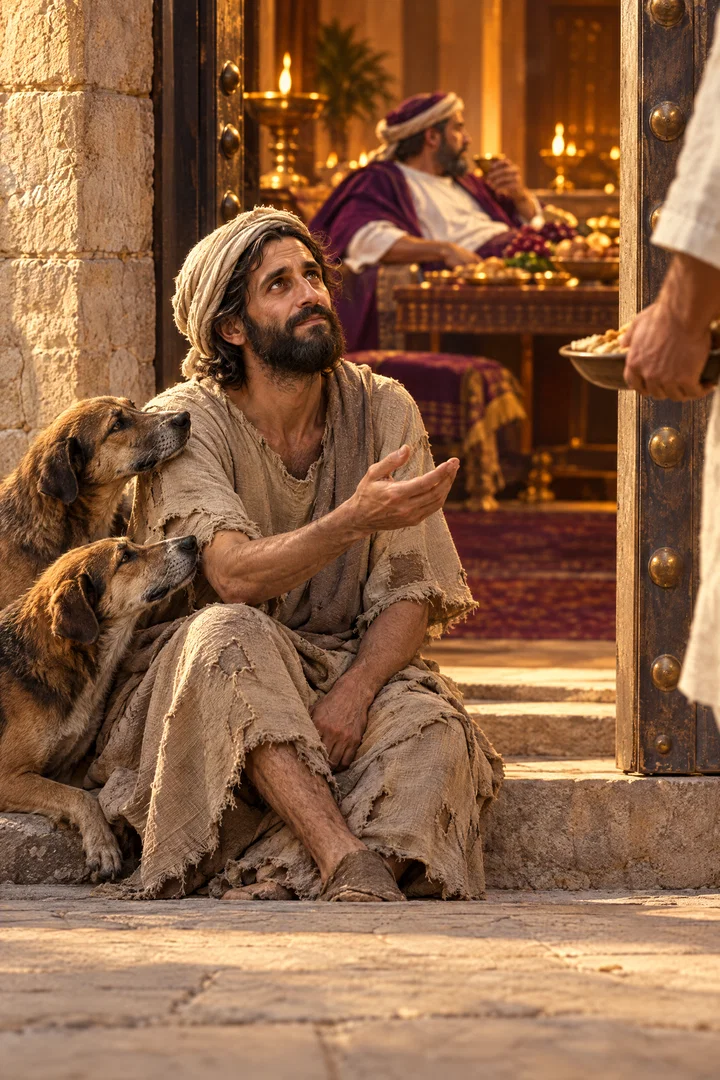
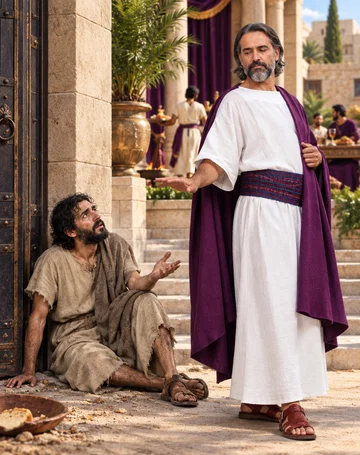
And there was a certain beggar named Lazarus, which was laid at his gate, full of sores,
Translations
American King James Version, King James Version
And there was a certain beggar named Lazarus, which was laid at his gate, full of sores,
and there was a certain beggar named Lazarus, which was laid at his gate, full of sores,
And there was a certain beggar named Lazarus, who was laid at his gate, full of sores,
Revised Version, American Standard Version
and a certain beggar named Lazarus was laid at his gate, full of sores,
and there was a certain poor man, by name Lazarus, who was laid at his porch, full of sores,
And [ there was] a poor man, by name Lazarus, [ who] was laid at his gateway full of sores,
And, a certain beggar, by name Lazarus, used to be cast near his gate, full of sores,
Berean Standard Bible, Majority Standard Bible
And a beggar named Lazarus lay at his gate, covered with sores
A certain beggar, named Lazarus, was taken to his gate, full of sores,
And a certain poor man, named Lazarus, was stretched out at his door, full of wounds,
Also there was a certaine begger named Lazarus, which was laide at his gate full of sores,
Douay-Rheims (Challoner revision)
And there was a certain beggar, named Lazarus, who lay at his gate, full of sores,
Pictures
Cross-references
- Luke 16:29-31
Abraham saith unto him, They have Moses and the prophets; let them hear them.
Moses and the prophets are sufficient; miracles will not persuade those who refuse their testimony.
- Luke 16:25
But Abraham said, Son, remember that thou in thy lifetime receivedst thy good things, and likewise Lazarus evil things: but now he is comforted, and thou art tormented.
Their earthly fortunes are reversed in comfort and torment after death.
- Luke 16:1-13
And he said also unto his disciples, There was a certain rich man, which had a steward; and the same was accused unto him that he had wasted his goods.
The surrounding lesson concerns using entrusted wealth in God’s service.
- John 11:11
These things said he: and after that he saith unto them, Our friend Lazarus sleepeth; but I go, that I may awake him out of sleep.
Jesus describes Lazarus as asleep, distinguishing him from the poor Lazarus in the parable.
- Luke 16:26
And beside all this, between us and you there is a great gulf fixed: so that they which would pass from hence to you cannot; neither can they pass to us, that would come from thence.
The fixed gulf shows that the separation after death cannot be crossed.
- Luke 16:24
And he cried and said, Father Abraham, have mercy on me, and send Lazarus, that he may dip the tip of his finger in water, and cool my tongue; for I am tormented in this flame.
The rich man recalls Lazarus and pleads for relief from torment.
- John 12:10-11
But the chief priests consulted that they might put Lazarus also to death;
The leaders respond to Lazarus’s raising by plotting to kill him.
- Luke 15
Then drew near unto him all the publicans and sinners for to hear him.
The parable belongs to Christ’s connected series of teaching.
- Luke 16:27-28
Then he said, I pray thee therefore, father, that thou wouldest send him to my father’s house:
The rich man asks Abraham to send Lazarus to warn his five brothers.
Commentary
Each commentary is drawn from primary sources: the writings of Ellen G. White and Adventist pioneers and periodicals. Each commentary is separate. Its own words are not a quotation; follow the references to read the source passages.
Ellen G. White
47 sources
Luke 16:20 belongs to the parable of the rich man and Lazarus, picturing a named beggar laid at the rich man's gate covered with sores.COL 260.1COL 260.2–3Ms 81, 1898, par. 1–2COL 259.1–2ST Jun 21, 1899 He lay there day after day without friends, home, money or food, longing for crumbs from the rich man's table, while the rich man lived in daily luxury with every want supplied.Ms 81, 1898, par. 1–2ST Jun 1, 1915COL 261.2ST Jun 1, 1915 The verse sets a sharp contrast between abundance and comfort on one side of the gate and poverty, sickness and need on the other.Ms 81, 1898, par. 1–2STBk 158.1SW 7.1 Lazarus represents the poor who trust in God and patiently endure suffering, whose outward misery did not reflect their worth before God and fitted them for exaltation as heirs with Christ.COL 260.2–3STBk 158.1STA 154.1ST Mar 22, 18831T 539.2–540.1 His suffering placed before the rich man a stewardship responsibility to help, which he selfishly neglected, and so the parable warns that destiny is fixed in this life with no further probation after death.COL 260.1COL 261.2ST Jun 1, 1915Ms 81, 1898, par. 5Ms 81, 1898, par. 3–4
Parable Setting and Picture
This verse belongs to the parable of the rich man and Lazarus, the account of Dives and Lazarus that warns against living for self and enjoying God's gifts while failing to help people in need.COL 260.1COL 259.1–2ST Jun 21, 1899Lt 21, 1898, par. 4–5ST Jun 6, 1900 It presents the rich man as living sumptuously in extravagant use of money entrusted to him, without considering accountability or the coming reckoning.ST Jun 21, 1899Lt 21, 1898, par. 4–5 The rich man's wealth and gate did not keep Lazarus's need from his sight, and their later reversal shows that selfish pleasure is not the sum of happiness.COL 259.1–2ST Jun 21, 1899
Lazarus is a named beggar who was laid at the rich man's gate, covered with sores, poor and suffering and destitute.COL 260.2–3Ms 81, 1898, par. 1–2ST Jun 21, 1899Ms 22, 1898, par. 27Ms 22, 1898, par. 31 He was left there day after day without friends, a home, money, or food, in great need while the wealthy man had every want supplied.Ms 81, 1898, par. 1–2ST Jun 1, 1915COL 261.2Ms 81, 1898, par. 3–4 He was so poor that he longed for crumbs falling from the rich man's table, for scraps the rich man discarded and despised, living on crumbs from that table.Ms 81, 1898, par. 1–2ST Jun 1, 1915ST Mar 22, 18831T 539.2–540.12T 196.2–197.1 He was extremely sick and afflicted, abjectly poor and loathsome in appearance and loathsome to look at, yet he could find comfort in seeing the rich man enter his home.ST Mar 22, 18831T 539.2–540.1COL 242
The rich man was a Jewish nobleman living in customary daily luxury, with his needs supplied and with all that money could procure.Ms 81, 1898, par. 1–2COL 261.2ST Jun 1, 1915Lt 21, 1898, par. 4–5COL 267.1 The verse sets a sharp contrast between his abundance and comfort and Lazarus's poverty, suffering, and need at his gate.Ms 81, 1898, par. 1–2STBk 158.1SW 7.1Ms 6, 1899, par. 22–242T 196.2–197.1 That contrast teaches rich and poor throughout time that earthly circumstances do not determine final outcome, for Lazarus later receives comfort while the rich man who enjoyed good things is tormented.STBk 158.1SW 7.1ST Jun 1, 1915
Whom the Figures Represent
Lazarus stands for the poor who trust in God and fear Him, who patiently and quietly endure suffering with a faith that is real and not merely theoretical. COL 260.2–3STBk 158.1STA 154.1Ms 81, 1898, par. 9SW 7.1 He was laid in that suffering at the rich man's gate, receiving only scraps, yet his patient endurance bore witness to Christ and proved his faith under trial. Ms 81, 1898, par. 9Ms 81, 1898, par. 12–14 He stands for God's believing, suffering people, whom God blesses and chooses and commends. Ms 81, 1898, par. 914MR 57.3Lt 207, 1899, par. 7
Together Lazarus and the rich man present two representative classes whose true standing is estimated in the unseen world. COL 266.1ST Jun 1, 1915 Lazarus's outward misery did not measure his worth before God, for he possessed true faith and moral soundness which God valued above wealth and worldly honor. ST Mar 22, 18831T 539.2–540.1 That character fitted him for the company of holy angels and for the inheritance of God and Christ. ST Mar 22, 18831T 539.2–540.1
People are therefore not to be judged or valued by wealth or by the honors others give them, for Lazarus was not worthless to God but was raised to an exalted place among the holy as an heir of God and joint-heir with Christ. 1T 539.2–540.1 Those who trust God, though low in this life, will one day be exalted above people of high worldly position who have not surrendered their lives to God, so earthly poverty and suffering do not determine final standing. COL 260.2–3ST Jun 1, 1915 The rich man, by contrast, stands for those entrusted with God-given privileges and gifts who fail to use them to bless and enlighten the world, especially the Jewish nation in its failure to share its spiritual and material blessings with people in need. COL 269.1COL 269.2COL 267.3
Stewardship Duty and Failure
Lazarus in great need, without friends, home, money or food, was left day after day at the rich man's gate while every want of the wealthy man was supplied, and his visible and audible suffering placed before the rich man an opportunity and responsibility to give help and sympathy.COL 261.2Ms 81, 1898, par. 5Ms 81, 1898, par. 3–4 The needy and sick were brought within reach of those entrusted with means so that they could be helped, and the beggar's presence near the rich man placed the needy within reach of help and sympathy.Ms 81, 1898, par. 5Ms 81, 1898, par. 3–4 Neglecting the poor and suffering while indulging oneself brings serious responsibility before God.Ms 81, 1898, par. 5
The rich man was accountable as God's steward for the means, gifts, possessions, wealth and abilities entrusted to him, and the suffering poor at his gate had claims he was bound by God to meet.Ms 6, 1899, par. 1–5COL 261.4Ms 81, 1898, par. 8COL 267.1 He owed God the tithe and was to give further gifts and offerings to help people like Lazarus, but he lived as if all he possessed were his own and treated for himself what should have served God and humanity.Ms 81, 1898, par. 8COL 267.1 He forgot his duty to God and to his neighbor and his accountability to God, and those who have abundance and refuse to help the needy answer to God for how they use their means.Ms 6, 1899, par. 1–5COL 261.4Ms 81, 1898, par. 8
That stewardship gave opportunity to show love to God and neighbor by providing food, medical care, clothing and spiritual help, and by using entrusted means and abilities for the good of others to carry out God's purposes.Ms 6, 1899, par. 1–5Ms 81, 1898, par. 6Ms 87, 1898, par. 26–29 The greater Lazarus's affliction with sores and need of care, the greater the sympathy and help he should have received, for he lay as a wretched, fallen, hopeless being in need of food and clothing and words fitly spoken.Ms 6, 1899, par. 1–5Ms 87, 1898, par. 26–29 Those who claim to be sons and daughters of God must not do as Dives did, who felt at liberty to enjoy the good things of this life and made no right use of what God gave, and must not look on like the priest and Levite without effort, but must be human channels through whom the pitying tenderness of the Saviour is communicated, lifting up a standard against the enemy to restore the moral image of God in man.Ms 87, 1898, par. 26–29 The rich man instead lived for pleasure and neglected that duty, being accountable to God for this selfish use of what he had received.Ms 81, 1898, par. 6
He used what was entrusted to him for himself in luxurious, intemperate, sumptuous and extravagant living, refusing to share his abundance with Lazarus laid at his gate poor and covered with sores.Ms 6, 1899, par. 1–5ST Jun 21, 1899COL 261.4Ms 22, 1898, par. 27Lt 21, 1898, par. 4–5 He used extravagantly the money entrusted to him by God without considering his accountability or the coming day of reckoning, and his intemperate, luxurious living led to his ruin.Ms 22, 1898, par. 27Lt 21, 1898, par. 4–5 In sickness he learned what suffering meant and remembered his heartless treatment of Lazarus, but he had no knowledge of God.Ms 22, 1898, par. 27 Although he allowed Lazarus to remain at the gate and did not drive him away, harm him, or use violence against him, he remained selfishly indifferent day after day and did not try to relieve his suffering despite being able to help him.ST Jun 1, 1915COL 261.1Ms 81, 1898, par. 3–4
He is condemned not for possessing riches, for riches are no sin if not gained by injustice, and poverty itself does not make a man sinful.COL 266.1ST Jun 1, 1915Ms 6, 1899, par. 22–24 A rich man is not condemned for having riches but for spending entrusted means in selfishness instead of serving God and aiding those in need and responding with sympathy and help to the suffering poor.COL 266.1ST Jun 1, 1915Ms 6, 1899, par. 22–24 Poverty itself is not sin and does not exclude a person from heaven, for Lazarus in humble condition without earthly comforts nevertheless had a heavenly home.Ms 6, 1899, par. 22–24Ms 6, 1899, par. 25–27 Those who trust Christ as their personal Saviour are heirs to an immortal inheritance and have title to a home in heaven even when they hold a humble place in the world.Ms 6, 1899, par. 22–24Ms 6, 1899, par. 25–27
Probation and Eternal Outcome
Eternal destiny is decided in this life while grace is offered during probation, and those who waste their opportunities in self-pleasing cut themselves off from everlasting life and by their own choice fix an impassable gulf between themselves and God.COL 260.1ST Jun 1, 1915 There is no further probation after this life, for at death probation ends, the dead cannot choose or change, and God does not remake those who refused the opportunities to be changed.COL 260.1Ms 81, 1898, par. 34–36 Character is formed through life's choices and is retained at the resurrection with the appetites and passions cherished in life, and death suddenly snatches the unconverted to the grave with character fixed, where he has no power to choose good or evil because his thoughts perish.Ms 81, 1898, par. 34–36COL 269.3
At death the unfaithful steward is commanded by irresistible power, by a power he cannot question or resist, to quit the premises where he is no longer steward, reduced from purple and fine linen to hopeless poverty and nakedness without the robe of Christ's righteousness, which can never cover that nakedness, for he brought nothing into the world and can take nothing out of it and his probation is ended.ST Jun 1, 1915COL 267.1 The later reversal shows that selfish pleasure is not the sum of happiness and is not true happiness, for Lazarus is comforted while the rich man who enjoyed good things in life and left Lazarus to endure evil things is tormented, comes to long for Lazarus's relief, and would have given all he had to exchange places with him, but a great gulf separates them.STBk 158.1STA 154.1ST Jun 21, 1899SW 7.1Ms 22, 1898, par. 31 At his death Lazarus is pictured as carried by angels to Abraham's bosom, and when the dead are raised at Christ's call his patient suffering, endured patiently and quietly as a test of faith, will receive its reward.Ms 81, 1898, par. 9
The history portrays the closing scenes of earth's history, and its warning was remembered by the Jews when Jerusalem was destroyed because they neglected to let their God-given light shine to the world.Ms 81, 1898, par. 34–36COL 269.3COL 269.2 The rich man claimed to be a son of Abraham but was separated from Abraham by an impassable gulf of disobedience, because Abraham served God in faith and obedience while the rich man was unmindful of God and of suffering humanity.COL 269.3 The same course is followed today by unconverted church members who profess to long after God while loving worldly pleasure and display and indulging appetite and the lust of the flesh, choosing the atmosphere of sin and forming character in copartnership with Satanic agencies.COL 269.3
Wealth Doctrine and Present Call
Life is not secured by possessions but by a life of love that gives and serves.COL 259.1–2COL 266.1 Means used to do good are laid up beside the throne of God as eternal riches that death cannot take away, so death cannot make poor the one who devotes himself to seeking them.COL 266.1 The man who hoards treasure for self cannot take it to heaven and proves himself an unfaithful steward, showing forgetfulness of obligation to God during a lifetime of having good things and failing to secure the heavenly treasure.COL 266.1 The rich man had all that money could procure but lived as if all he possessed were his own, neglected the call of God and the claims of the suffering poor laid at his gate, and did not possess the riches that keep his account right with God and make him rich toward God.ST Jun 1, 1915COL 267.1 What is highly esteemed among men is abhorrent in the sight of God, and the condition of Lazarus living on crumbs is preferable to that of professed believers who store up wealth on earth instead of becoming rich toward God.ST Jun 1, 19152T 196.2–197.1
Wealth is only lent by God, and its misuse leaves a person lower than even the poorest and most afflicted person who loves and trusts God.ST Jun 1, 1915 The parable uses the listeners' belief in conscious existence between death and the resurrection to teach this truth.ST Jun 1, 1915 Genuine faith would lead professed believers who store up wealth on earth to sell their possessions, release their hold on earthly things, and transfer their treasure to heaven.2T 196.2–197.1 God offers blessings in this life and immortal life, and receiving them is tied to hearing and obeying His will as the foundation of faith, goodness, and mercy.Ms 81, 1898, par. 28–32 Spending for self-gratification instead of helping the poor is unfaithfulness, while God blesses and commends the suffering believer.14MR 57.3Lt 207, 1899, par. 7 Those who use entrusted resources for self-gratification instead of helping the poor face God's judgment, for the needy and sick were brought within reach of people entrusted with means so they could be helped, and neglecting them while indulging self brings serious responsibility before God.Lt 207, 1899, par. 7Ms 81, 1898, par. 5 God and angels hold people accountable for turning means entrusted to them into self-indulgence instead of using them to bless others.STMW7 56.2
The account warns all who are rich in this world's goods against enjoying God's gifts while failing to use them to help people in need.ST Jun 25, 1894ST Jun 6, 1900 Christ lifted the curtain on this picture before priests and rulers, scribes and Pharisees to warn all who are rich in this world's goods and not rich toward God.ST Jun 1, 1915 Those who claim to be sons and daughters of God must not do as Dives did, who felt at liberty to enjoy the good things of this life and made no right use of what God gave to carry out His purposes.Ms 87, 1898, par. 26–29 They must not look on like the priest and Levite without effort, but must be human channels through whom the pitying tenderness of the Saviour is communicated, lifting up a standard against the enemy to restore the moral image of God in man.Ms 87, 1898, par. 26–29 Such wretched, fallen, hopeless beings are in need of food and clothing and words fitly spoken.Ms 87, 1898, par. 26–29
The colored people of the South lie like Lazarus full of sores at the gate of Dives, with the white race standing as Dives the rich man.SBAWP 49.1–2 White Christians rest under a heavy responsibility to bend a portion of their energies to the moral uplifting of this people to higher standards of education and of home life.SBAWP 49.1–2 Woe will fall on Dives if he does not heed the sufferer at his gate.SBAWP 49.1–2
Sources
Pioneers and periodicals
120 sources
The verse belongs to a parable, not a literal history of persons and events after death, and its figurative details cannot by themselves prove doctrine about the afterlife.ST Apr 10, 1907RH Dec 22, 1868ST Jul 15, 1913 It pictures a poor, helpless beggar who was laid, unable to walk, at the rich man's gate, covered with sores and in dire need, in stark contrast to daily luxury beside him.ST Jul 15, 1913RH Dec 27, 1855RH Mar 28, 1865RH Jul 10, 1856ST Oct 14, 1913 Spoken to the covetous Pharisees who derided Christ, it continues the lesson that no one can serve God and mammon and uses ideas about Hades current among the Jews to enforce its moral without affirming every detail as true.ST Oct 1, 1894ST Mar 30, 1882RH Feb 8, 1912ST Sep 16, 1880ST Dec 9, 1897 Lazarus represents the Gentiles, spiritually poor and longing for spiritual riches, and also the penitent poor and suffering believers whom God values, while his poverty itself has no merit to save him, as God judges character and faith, not outward condition.ST Apr 10, 1907ST Jul 15, 1913STST Mar 6, 1907ST Aug 26, 1880 The dead sleep unconscious without thought, so his being carried to Abraham's bosom depicts the certain reward at the resurrection and not bliss at death, destiny is fixed in this life with no second probation, and wealth is a stewardship to relieve the poor at the gate rather than spend selfishly on self.RH Dec 22, 1868ST Jul 15, 1913ST Jun 23, 1881ST Dec 4, 1884ST Nov 14, 1900
Parable Form and Setting
Luke 16:20 belongs to a parable, not to a literal history of real persons and events after death, and its figurative details cannot by themselves prove doctrine about the afterlife.ST Apr 10, 1907RH Dec 22, 1868RH Dec 27, 1855ST Mar 16, 1876 The dead portrayed as conversing in hades, the place of the dead, are in sleep without thought or knowledge, and the picture of reward with a body looks to the resurrection and final judgment, not to conscious bliss or torment by disembodied souls immediately at death.RH Dec 22, 1868ST Jul 15, 1913 As metaphor the story cannot be used in proof of doctrine, because matters of eternal salvation require the most pointed and express evidence, and no separate doctrinal meaning is assigned to the sores or the place at the gate beyond serving the story.RH Dec 27, 1855ST Mar 16, 1876 Its opening with a certain man resembles the openings of other parables and follows a series of parables, and it must be understood in harmony with Scripture that the dead know nothing and that life after death requires resurrection.RH Dec 22, 1868ST Jul 15, 1913
Those who held the minority teaching treated the account as a narrative or statement of fact rather than a parable, bearing on the resurrection of the dead, future punishment, the glory of the gospel, and conscious existence after death.RH Mar 4, 1862RH Mar 1, 1860 In that use Lazarus appears as a real suffering beggar laid at the gate and later comforted before the resurrection as a foretaste of final reward, and the spirits of the dead whether good or evil are said to remain conscious.RH Mar 4, 1862RH Mar 1, 1860 Even taken as literal history, the account does not by itself prove immortal souls, since that claim is assumed rather than established, and if deathless spirits were meant then eyes, tongue, fire, and water would also have to be taken literally.RH Apr 8, 1858 The same literal picture has been used to teach that the righteous go to heaven at death and the wicked to hell's flames where the two groups see and speak across a nearby gulf, a picture then set against the martyrs' prayer for judgment and vengeance in Revelation 6:9-11 as inconsistent with their already seeing persecutors suffer and others arriving in torment.RH Jul 18, 1865ST Nov 16, 1876
The verse is part of teaching spoken to the covetous Pharisees who derided Christ, continuing the lesson of the unjust steward in Luke 16 that men are stewards of property, must use wealth to be rich toward God and lay up treasure in heaven, that no one can serve God and mammon, and that what is highly esteemed among men is abomination in the sight of God.ST Mar 30, 1882RH Feb 8, 1912RH Dec 19, 1854 The whole chapter is directed against covetousness, and the parable of the rich man and Lazarus is the second of two parables in Luke 16 together with the parable of the unfaithful steward, to be meditated upon without speculation, fanciful interpretation, or controversy over its meaning.ST Aug 13, 1894RH Dec 19, 1854 It was given first to Israel, the literal seed and recognized people to whom belonged the adoption and glory and covenants and giving of the law and service of God and promises and of whom Christ came in the flesh, that they would have the first opportunity to receive Him and through them the nations would be reached.ST Oct 1, 1894 As one of a series of parables spoken to the Jews, who would listen to figurative instruction when they would not endure the literal, it strikes directly at the root of covetousness and exposes the belief that illness, poverty, or suffering proves God has forsaken a person or is displeased with him, a belief that nurtured self-righteousness and heartlessness, while the lowly and self-exalted sides together show how the humbled will be exalted and the self-exalted abased.ST Mar 30, 1882RH Feb 8, 1912
The story borrows ideas about Hades current among Jews and Pharisees and uses them to enforce its moral without affirming or correcting every detail as true doctrine.ST Sep 16, 1880ST Dec 25, 1901ST Nov 3, 1881ST Sep 2, 1880ST Sep 2, 1880 Jesus seized ideas about the departed already resting in Jewish minds, assuming the standpoint and belief of those He addressed as He assumes the claim of an austere man in the parable of the unfaithful servant without affirming it true, to teach that life in this world determines life beyond, that this life is probation and the life beyond retribution and reward, and that wealth does not entitle anyone to happiness in the future state.RH Feb 8, 1912ST Nov 3, 1881RH Dec 19, 1854 The Lazarus and the place described belong to the same imaginary topography set forth by the Jewish rabbis long before Christ and described by Josephus, with the gulf separating righteous and wicked, the flame and its torment, the bosom of Abraham filled with the righteous, and angels conveying souls of the good to one place and the bad to the other.ST Dec 9, 1897ST Sep 2, 1880 That rabbinical account predates Christ and is more full and circumstantial, so it could not have been derived from Him, and He added nothing to and subtracted nothing from it but took such portions of current opinions as were best adapted to enforce the sentiment He wished to inculcate, using imagery of a place of reward for the good and punishment for the wicked familiar from Pharisaic belief in Hades without settling whether the belief was true.ST Dec 25, 1901ST Sep 2, 1880 To take Lazarus as a literal man who actually went to the place assigned to him would make that place matter of fact and part of the structure of the world, requiring belief that for four thousand years from creation to the cross God fitted up in the bowels of the earth an immense sunless cavern with but one entrance as the prison-house for souls of both good and bad, and the story taken literally without becoming nonsense would teach converse across an impassable gulf.ST Nov 3, 1881ST Sep 2, 1880
The verse is the second of two parables in Luke 16 together with the parable of the unfaithful steward, in a chapter directed against covetousness.ST Aug 13, 1894 It belongs among the lessons in Luke 14 through Luke 18 that bring the soul nearer to God and make it stronger for life's conflicts.ST Apr 14, 1909 Its account of the rich man and Lazarus is found in Luke's record and not in the other Gospels.ST Sep 20, 1905
Lazarus Described at Gate
Lazarus was a poor beggar laid at the rich man's gate, covered with sores and in dire need, so helpless he could not walk or even stand.RH Dec 27, 1855RH Mar 28, 1865ST Oct 31, 1900ST Jun 23, 1881ST Mar 15, 1877 He was a poor, sick and afflicted man introduced in stark lowliness at the door of plenty.ST Jul 15, 1913RH Mar 4, 1862RH Sep 15, 1859RH Jul 10, 1856ST Mar 30, 1882 His sores and his place at the gate belong to the story as the marks of an embodied sufferer, with no separate doctrinal meaning assigned to each detail beyond serving the account.RH Dec 27, 1855RH Mar 4, 1862RH Sep 15, 1859 The one who died and is afterward carried by angels to Abraham's bosom is Lazarus himself, not an immaterial part of him separately named in the account.RH Mar 4, 1862RH Sep 15, 1859 That carrying is placed after the future resurrection, when angels gather the dead at Christ's return, picturing him receiving his reward with a body at the final judgment rather than as a disembodied soul consciously rewarded at death.ST Jul 15, 1913RH Mar 4, 1862RH Sep 15, 1859
He longed for crumbs, for scraps from the rich man's table, having no other food.RH Mar 28, 1865ST Jun 23, 1881RH May 5, 1874ST Oct 14, 1913ST Mar 15, 1877 He had no human nurses, and dogs came and licked his sores.RH Mar 28, 1865ST Jun 23, 1881RH May 5, 1874ST Mar 15, 1877 His dependence on scraps and tending by dogs shows the depth of his destitution.RH Mar 28, 1865ST Jun 23, 1881RH May 5, 1874 His presence in need at the very gate shows the rich man's opportunity to care for him and rebukes selfish neglect of suffering at his own door and failure to love his neighbor.ST Oct 14, 1913ST Mar 15, 1877ST Jan 29, 1902
Death came to his relief, yet his burial is unrecorded because men dispose of him with as little trouble and care as possible.RH Mar 28, 1865ST Jun 23, 1881RH May 5, 1874ST Mar 15, 1877 Angels bear him to the quiet resting-place of the righteous dead.RH Mar 4, 1862RH Sep 15, 1859ST Jun 23, 1881RH May 5, 1874ST Mar 15, 1877 There he sleeps in Jesus, resting in hope with Abraham and all the faithful until hades gives up the righteous dead at the sound of the last trumpet, when he will be raised and taken up through the air to meet his triumphant Redeemer.RH Mar 28, 1865ST Jun 23, 1881RH May 5, 1874ST Mar 15, 1877 His future comfort after such neglect is expressed through personification as rest in hope until the resurrection.RH Mar 28, 1865RH Mar 4, 1862RH Sep 15, 1859
His poverty and affliction stand in stark contrast to the rich man's daily luxury, comfortable life, fine clothing and sumptuous living.RH Jul 10, 1856ST Oct 14, 1913ST Aug 25, 1881ST Jan 29, 1902ST Apr 9, 1896 His low and suffering condition set against a life of pleasurable enjoyment of wealth warns against pursuing earthly pleasure while neglecting what lies ahead and shows the worthlessness of worldly honors and pleasures when tested by God's judgment.RH Jul 10, 1856ST Aug 25, 1881ST Mar 30, 1882 The parable does not judge worth by wealth or status but by character, patiently borne want being comforted after death while indulgence is tormented.RH Jul 10, 1856ST Aug 25, 1881ST Mar 30, 1882 Those despised and downtrodden who suffer here, if they belong to Christ, will ultimately be brought to the city for which Abraham hoped.ST Aug 25, 1881ST Mar 30, 1882
Names and Details Explained
Lazarus is the true proper name of the beggar laid at the gate, while the rich man himself is given no personal name.RH Jan 30, 1879ST Mar 30, 1882 Dives is not his name but the Latin word for rich or a rich man, matching the Greek plousios used to describe him and used for him in Latin versions of the Scriptures.RH Jan 30, 1879ST Mar 30, 1882 Calling him Dives is no more correct than calling him Plousios, and treating Dives as a name mistakes a description for a proper noun, an error that grew from old pictures titled in Latin Dives et Lazarus where viewers took the first word to be the rich man's name because the last word truly was the beggar's name.RH Jan 30, 1879ST Mar 30, 1882 The name Lazarus means God aids or God the helper, Greek for the Hebrew Eleazar meaning Whom God aids.ST Mar 29, 1905ST Mar 24, 1909 This Lazarus is not Lazarus the brother of Martha and Mary, who was the son of a wealthy Jew and was raised from the dead; the Lazarus laid at the gate full of sores is simply a typical case in the parable.ST Mar 24, 1909
The sores and being laid at the gate describe him as an embodied person, not a disembodied soul or spirit.RH Dec 12, 1854RH Dec 12, 1854RH Dec 12, 1854RH Dec 12, 1854 He and the rich man are presented as two embodied men who die and are buried, and the later need for Lazarus to rise from the dead to warn the rich man's brothers fits embodied people rather than immortal souls speaking and acting apart from the body.RH Dec 12, 1854RH Dec 12, 1854 The account belongs to a parable and not to a literal history of two individuals and their final state, and its setting draws on ideas about Hades accepted at the time, using portions of those ideas to illustrate a moral lesson.RH Dec 27, 1855ST Sep 2, 1880 No separate doctrinal meaning is assigned to the sores or to his place at the gate beyond serving the story, and the details cannot all be taken as literal history so as by themselves to establish that the dead remain conscious.RH Dec 27, 1855ST Sep 2, 1880RH Dec 12, 1854
Symbolic Identities Taught
Lazarus laid at the gate is not a literal beggar after death but in the parable stands for the Gentiles, poor in soul, without God and without hope, starving for the true riches of truth and willing to receive grace.ST Apr 10, 1907STST Mar 6, 1907RH Dec 12, 1854ST Feb 26, 1902 The rich man in contrast stands for the Jewish nation, exalted as heirs of the promises, covenants, law, descent from Abraham and noble ancestry, relying on that standing for salvation.ST Mar 6, 1907ST Oct 1, 1894ST Feb 26, 1902 As the Jews regarded themselves as exalted and the Gentiles as beneath notice, fit only to lie at their feet and depend on mercy, so Lazarus lies beneath notice at the gate, longing for crumbs and attended only by dogs, marking the contemptuous status assigned to the Gentiles and the Jewish expectation of their dependence when Messiah came.STST Dec 14, 1904ST Oct 1, 1894 The account is not history or doctrine about what follows death but a parable illustrating the condition of Jews and Gentiles and their attitude toward God, and it does not teach that Lazarus was the child of a righteous person.STST Mar 6, 1907ST Dec 14, 1904
In another application of the same parable Lazarus stands for Christ, whose name means God aids or God the helper, the Hebrew Eleazar meaning Whom God aids, and whose work and sacrifice God accepted.ST Mar 29, 1905 He came to His own people and was rejected, becoming poor and suffering at the nation's gate, the place of its judgment, in contrast to the rich man's selfishness and contempt for the poor and for Gentiles.ST Mar 29, 1905ST Oct 14, 1913 In yet another application Lazarus stands for the penitent poor, the suffering poor who believe in Christ and depend on God, those who sleep in Jesus, the class who deny self, live the life of Christ and lay hold of eternal life, continuing in the world until the end.ST Jul 15, 1913RH Oct 10, 1912RH Jan 7, 1902 His poverty and sores reflect the first hearers' belief that suffering proved a person under God's judgment, which Christ overturns to show that wealth, health and status do not prove righteousness or earn favor, and that a poor afflicted person who loves and trusts God is valued no less than the wealthy and will be honored when judged by true worth.RH Oct 10, 1912ST Aug 25, 1881RH Oct 10, 1912 Their contrasting lives and outcomes warn against pursuing earthly pleasure while neglecting what lies ahead, show the worthlessness of worldly honors when tested by judgment, and picture the despised downtrodden who belong to Christ ultimately brought to the city for which Abraham hoped, receiving reward with a body at resurrection and final judgment, not as disembodied souls consciously rewarded at death.ST Jul 15, 1913ST Aug 25, 1881ST Aug 2, 1910
The deaths of the two men picture a change of dispensations and of condition, Israel's national death, in which the Gentiles gained what the Jews lost through refusing God's call to use entrusted intellectual and material resources to bless and enlighten the world.RH Mar 16, 1869RH Dec 12, 1854RH Dec 12, 1854RH Jul 16, 1901 The gulf stands for disobedience, destiny is fixed in this life, and the application was understood by the Jews at the destruction of Jerusalem, the parable being specially fitted to Israel's history and present condition in rejecting Christ.RH Mar 16, 1869ST Aug 2, 1910ST Oct 28, 1913 At the same time it gives a lesson about sin and the need of a personal Saviour that applies to every human life.ST Oct 28, 1913 Poverty itself has no merit and does not save, just as wealth does not prove favor and poverty does not prove curse; God judges character and faith as He sees them, not outward condition, the poor man's true advantage appearing when the rich man's good things are seen as confined to this life.ST Aug 26, 1880ST Sep 9, 1880ST Dec 18, 1879ST Dec 4, 1884ST Nov 30, 1915 The reversal overturns the idea that worldly wealth proves God's favor and affliction proves His displeasure, placing Lazarus after death in the highest favor without making suffering itself meritorious.ST Aug 26, 1880ST Feb 26, 1902ST Nov 30, 1915
Every sinner is Lazarus, a poor beggar full of sin, lost and undone, needing covering from wrath but having nothing to pay by good works or by blameless keeping of holy law.RH Nov 29, 1864 To him God freely offers the perfect robe of Christ's righteousness, covering all sins and fitting all wants without money and without price, to be taken at God's word at once thankfully by faith without doubting or delay as free salvation.RH Nov 29, 1864
Moral Teaching on Wealth
Wealth is a stewardship entrusted by God to be used to relieve the poor and to be rich toward God by laying up treasure in heaven, for no one can serve God and mammon.ST Mar 30, 1882RH Jun 9, 1859 Lazarus laid at the gate in dire need, covered with sores and longing for crumbs, set beside daily luxury and sumptuous living, exposes what is highly esteemed among men as abomination in the sight of God.ST Mar 30, 1882ST Oct 14, 1913ST Jan 29, 1902 The rich man is condemned not for driving the beggar away or doing him direct harm but for selfish indifference day after day, using means only for himself though able to help and failing to love his neighbor at his very door.ST Jun 1, 1915ST Oct 14, 1913ST Jan 29, 1902 By right use of unrighteous mammon men may secure the friendship of God, of Christ, and of holy angels who alone can receive them into everlasting habitations, in keeping with the commands not to lay up treasures on earth but to sell and give alms.ST Mar 30, 1882RH Jun 9, 1859
Choices and character in this life determine destiny, and divine judgment reverses human estimates so that the self-exalted will finally be abased and the humbled exalted.ST Mar 30, 1882ST Oct 31, 1900ST Sep 16, 1880 Present suffering does not bar future comfort nor present prosperity prevent future punishment, for the poorest and weakest, destitute and afflicted and dependent on charity, may be highly esteemed in heaven while those clothed finely and feasting daily may be subjects of divine wrath.ST Oct 31, 1900ST Aug 25, 1881ST Sep 16, 1880 Lazarus patiently bearing want is afterward comforted while the rich man who pleasurably enjoyed wealth is tormented, the reason being worldly indulgence itself and not merely alleged injustice or extortion.RH Jul 10, 1856ST Aug 25, 1881 Riches rightly and beneficently used will avail in the judgment, but otherwise will not avail, and poverty will not keep anyone out of heaven, since worldly riches may reward those who serve mammon yet do not determine the final reward.ST Oct 31, 1900ST Jun 11, 1896RH Aug 7, 1916
The whole chapter is directed against covetousness, spoken to the covetous Pharisees who derided Christ after the parable of the unjust steward, and this second parable in Luke 16 continues the same subject to be meditated upon without fanciful speculation.ST Mar 30, 1882ST Aug 13, 1894RH Dec 19, 1854 It strikes directly at the wicked root of covetousness, trust in riches, and worldly indulgence, warning that worldly indulgence cannot be joined with God's reward and that wealth does not entitle anyone to happiness in the future state.RH Jul 10, 1856RH Feb 8, 1912ST Aug 27, 1902RH Dec 19, 1854 It condemns putting off the soul's salvation until worldly affairs are placed in satisfactory condition, which reverses the command to seek first the kingdom of God and His righteousness in utter unbelief that needful things will be added.RH Feb 8, 1912ST Aug 27, 1902 The suffering beggar at the gate also exposes the belief that illness, poverty, or suffering proves God has forsaken a person or is displeased with him, a belief that nurtured self-righteousness and consequent heartlessness and the folly of judging worth by status.ST Jun 1, 1915RH Feb 8, 1912
Poverty itself is not the rich man's offense and has no merit in itself; he is condemned because wealth was only lent by God and he used entrusted wealth selfishly rather than responding to the needs of the suffering poor who had claims from God upon his means.ST Jun 1, 1915ST Jun 1, 1915ST Jun 1, 1915 He lived as if all he possessed were his own, neglected the call of God, did not possess the riches that keep his account right with God and make him rich toward God, and at death his probation ends and the unfaithful steward is commanded by irresistible power to quit premises of which he is no longer steward.ST Jun 1, 1915ST Jun 1, 1915 He is reduced to hopeless poverty and nakedness without the robe of Christ's righteousness, for he brought nothing into the world and can take nothing out.ST Jun 1, 1915ST Jun 1, 1915 The same picture warns all rich in this world's goods and not rich toward God, and is applied to those with power and resources to heed and help those at their gate, such as the colored race in suffering and need of moral uplift likened to Lazarus, or face judgment for neglect.ST Jun 1, 1915ST Oct 4, 1905
State of the Dead
The dead lie unconscious in hades, the place of the dead, asleep without thought or knowledge, so the converse pictured between the rich man and Lazarus is personification and not proof that the dead see, remember, reason or speak.RH Dec 22, 1868ST Jun 23, 1881RH Dec 22, 1868 The account is often taken as clear, minutely circumstantial and decisive proof that man stays conscious in death, the righteous happy in heaven and the wicked tormented in hell, yet even for that theory the text presents very serious difficulties.ST Jun 23, 1881ST Sep 29, 1881 Both the righteous and the wicked dead go to the same place, the grave, and the story does not establish that the rich man enters hell before the judgment.ST Dec 4, 1884RH Oct 31, 1865 The case of Lazarus laid at the gate full of sores is one of two particular passages raised as possible evidence that some wicked dead are now in torment, but it does not prove present punishment.RH Oct 31, 1865ST Sep 29, 1881 The parable directs hearers to Moses and the prophets for instruction about the dead, for hades is a place of forgetfulness and deep sleep and the dead are not alive.RH Dec 22, 1868RH Dec 22, 1868
Being carried to Abraham's bosom and comforted depicts the certain future reward at the resurrection and gathering at Christ's return, not bliss consciously received immediately at death, with no felt interval between death and resurrection.ST Jul 15, 1913RH Mar 4, 1862RH Sep 15, 1859 Lazarus dies in deepest poverty, too helpless to walk or stand so that he was laid at the gate, dependent on crumbs and tended only by dogs that licked his sores, and his burial is unrecorded because men dispose of him with little care.RH Mar 28, 1865ST Jun 23, 1881RH May 5, 1874 Angels bear him to the quiet resting-place of the righteous dead, where he sleeps in Jesus resting in hope with Abraham and all the faithful until hades gives up the righteous dead at the last trumpet.RH Mar 28, 1865ST Jun 23, 1881RH May 5, 1874 What is carried is Lazarus himself who died, not an immaterial part of him separately named in the text, and the carrying belongs to the angels gathering the dead through the air to meet the triumphant Redeemer, with a body at the final judgment.ST Jul 15, 1913RH Mar 4, 1862RH Sep 15, 1859
The bodily parts and actions belong to the figurative form, and the account never mentions soul or spirit and does not teach that disembodied spirits converse, possess bodies, or are punished before judgment.ST Mar 20, 1879RH Dec 19, 1854RH Jan 7, 1902 Abraham's bosom, the gulf, fire, water, tongues and fingers mark the story as figurative, and the finger and tongue show that physical members do not prove conscious disembodied existence after death.ST Mar 20, 1879RH Jan 7, 1902 The parable speaks of events as present that would not occur until after the day of judgment in order to teach its lesson, and does not teach separation of soul from body at death.RH Aug 12, 1862RH Nov 18, 1858 Lazarus appears as an embodied person, not as a disembodied soul or spirit, and the parable alone does not locate Hades or settle whether it is a whole world or part of one.RH Dec 19, 1854RH Dec 12, 1854 Its change at the two deaths pictures a change of dispensations rather than bodies tormented before judgment.ST Mar 20, 1879RH Dec 12, 1854
Hades is the same as Hebrew sheol, the grave and region of the dead beneath the earth, not heaven nor a burning hell entered at death.RH Dec 22, 1868RH Dec 22, 1868ST Jun 30, 1881 To take the topography literally would make the assigned place a matter of fact and part of the structure of the world, requiring that for the first four thousand years from creation to the cross God fitted up in the bowels of the earth an immense sunless cavern with but one entrance as prison-house for souls of both good and bad.RH Dec 22, 1868ST Sep 2, 1880 It would confine patriarchs for ages in that sunless cavern within sight and speaking distance of torment.RH Dec 22, 1868ST Sep 2, 1880 The parable borrows accepted notions of its time to enforce its moral without making every detail literally true, personifies the dead and speaks of them as alive because in God's purpose they will surely live again, and is in harmony with Bible testimony that judgment comes before punishment is inflicted.ST Sep 2, 1880ST Jun 30, 1881ST Jun 30, 1881 Hades itself is not a place of thought but utter forgetfulness and deep sleep, and things existing only in God's purpose are spoken of as existing because they shall surely exist.ST Jun 30, 1881ST Jun 30, 1881
The parable does not prove the soul's immortality, immediate reward, or torment at death.RH Sep 15, 1859RH Aug 27, 1872ST Aug 19, 1880 Its opening with a certain man resembles the openings of other parables and follows a series of parables, and being a parable it cannot serve as proof of an immaterial, ever-conscious, never-dying principle, for an important doctrine cannot be proved merely from the object lesson in a parable.RH Jan 7, 1902ST Aug 19, 1880 A literal reading would inflict punishment thousands of years before judgment, put heaven within speaking distance of hell, and contradict Scripture that the dead know nothing and do not praise God.RH Sep 15, 1859RH Dec 15, 1868 The account of the rich man and Lazarus therefore does not prove that the wicked suffer consciously after death nor that people live consciously between death and the judgment.RH Dec 15, 1868RH Jan 7, 1902ST Aug 19, 1880
Probation Scripture and Judgment
Eternal destiny is fixed in this life and cannot be altered after death, for death ends probation and sets an impassable gulf that leaves no passage from loss to blessing.ST Jun 1, 1915ST Oct 1, 1894ST Aug 2, 1910ST Dec 4, 1884 Salvation must be received now through faith while the Lord may be found, for now is the accepted time and day of salvation, and it is never forced upon the unwilling.ST Nov 14, 1900ST Oct 1, 1894 The parable therefore denies another probation after death, denies that suffering itself brings repentance and acceptance of Christ, and denies universal salvation.ST Nov 14, 1900ST Aug 25, 1881 Punishment may harden rather than soften the sinner, and at death the unfaithful steward is by irresistible power required to quit the stewardship he abused, stripped to hopeless poverty without the robe of Christ's righteousness, since he brought nothing into the world and can carry nothing out.ST Jun 1, 1915ST Aug 25, 1881 The gulf figures the fixed result of disobedience, and its lesson was pressed home upon the Jews in the overthrow of Jerusalem.ST Aug 2, 1910ST Dec 4, 1884
Moses and the prophets are the appointed and sufficient witness pointing to Christ, and the only ground of faith, since faith comes by hearing the word of God.ST Oct 1, 1894ST Dec 30, 1880ST Oct 1, 1894 Scripture is more convincing evidence than even a miracle, and those who refuse to hear it rebuke themselves by hardness of heart and unbelief.ST Dec 30, 1880RH Mar 1, 1860 Those who believe its teaching will receive Jesus as Messiah, while those who reject God's word in favor of human traditions will not be persuaded though one should rise from the dead.ST Feb 17, 1904ST Oct 1, 1894ST Oct 1, 1894 Literal descent from Abraham secures nothing, for even Abraham cannot aid his own unbelieving descendants.ST Oct 1, 1894ST Oct 1, 1894
The dead are not permitted to return to earth to warn or commune with the living, for return would mean resurrection, and the dead know nothing as Ecclesiastes 9:5 declares.RH May 19, 1851RH Dec 23, 1851ST Oct 1, 1894 Claimed communications from departed spirits therefore cannot be instruction sent from the dead but must be deception.RH May 19, 1851 The rich man's cry to Abraham is the plea of a lost soul and gains nothing, giving no sanction to prayer addressed to fellow men or to deceased saints.ST May 6, 1880ST Oct 1, 1894ST Nov 30, 1915 Christ alone is mediator between God and man, so appeal to dead saints is useless, and trust in natural descent from Abraham is vain.ST Oct 1, 1894ST Oct 1, 1894 The dialogue does not establish heaven and hell as places close enough for their inhabitants forever to see and converse across the distance, nor that the saved forever hear the suffering of the lost.ST Nov 30, 1915
Punishment is not inflicted consciously immediately at death but follows judgment at the end of the world, when the wicked awake to damnation and Christ's enemies are slain before Him at His second coming after receiving the kingdom.ST Feb 17, 1881ST Dec 17, 1896 The usual use of the parable to place reward or torment before the resurrection is therefore rejected.ST Dec 17, 1896
Present Duty and Application
The verse lays a suffering beggar at the gate of luxury and thereby rebukes selfish indifference to want at one's very door, calling those with means to show compassion and to make every effort to save the perishing.RH Feb 8, 1912RH Oct 20, 1904ST Aug 24, 1904ST Aug 24, 1904 It is one of a series of figurative instructions addressed to covetous hearers who would receive a parable when they would not endure literal reproof, and it takes up their own standpoint and current belief about the afterlife — a belief drawn from the heathen — just as the parable of the unfaithful servant takes up the claim of an austere master, without affirming that framework as true doctrine about consciousness in death.RH Feb 8, 1912ST Sep 16, 1880 In that setting it exposes the notion that illness, poverty, or suffering proves that God has forsaken or is displeased with a person, a notion that nurtured self-righteousness and heartlessness toward the poor and unfortunate.RH Feb 8, 1912RH Oct 20, 1904RH Aug 15, 1907 The rich man enjoys good things without gratitude to God and without sympathy, doing nothing to relieve the sores, hunger for scraps, and destitution before him, living for himself alone in sumptuous daily indulgence while resources that could meet human need and advance the gospel are spent on self.RH Feb 7, 1907RH Oct 20, 1904ST Aug 24, 1904ST Aug 24, 1904ST Feb 10, 1887 That gulf between table and gate pictures the social distance in which fashion, wealth, and highly paid ministry stand far above working people and the destitute and fail to offer sympathetic welcome.ST Oct 8, 1885
Outward affliction does not measure worth before God, for the beggar loathsome to look at and discarded by men can possess true faith and moral soundness valued above wealth and worldly honor and fitting for the company of holy angels and the inheritance of God and Christ.ST Mar 22, 1883ST Aug 30, 1905ST Jun 29, 1876 His poverty and sickness do not mean God has rejected him or failed to care for him, and earthly blessings do not reveal standing with God; loss of property and bodily suffering can go with growing richer in spirit, drawing nearer to God, and gaining character that endures forever.ST Mar 22, 1883RH Aug 15, 1907ST Jun 29, 1876 In this sense the beggar at the gate is richer than the householder, because faith anchored in Christ turns every change to profit while selfishness without faith turns every change to loss ending in eternal failure.ST Jun 29, 1876 Even laid helpless with only dogs to tend his sores and begging crumbs from another's table, he can have the peace of God in the soul, since that peace does not depend on good health, freedom from pain, earthly comfort, or human care.ST Mar 22, 1883 Those who so trust God and patiently endure suffering will be welcomed into a blessed future and exalted above worldly status, while self-centered character perishes; destiny is decided in this life while grace is offered, and living for self fixes its own separation from God.ST Jun 1, 1915ST Aug 30, 1905
The contrast of present luxury and future reversal warns against pursuing earthly pleasure while neglecting what lies ahead and shows the worthlessness of worldly honors and pleasures when tested by judgment.ST Aug 25, 1881ST Aug 27, 1902 It condemns trusting in riches as a means of grace or help in spiritual attainment, and condemns putting off the soul's salvation until worldly affairs are placed in satisfactory condition, which reverses the command to seek first the kingdom of God and His righteousness with the promise that needful things will be added.ST Aug 27, 1902 Wealth brings responsibility to recognize God as its giver and to use it to help others and support His cause rather than hoarding it for self-indulgence, luxurious and intemperate living; the rich man's refusal to share his abundance with the sufferer at his gate becomes his warning in torment.ST Jun 21, 1899RH Feb 7, 1907RH Jul 24, 1856ST Feb 10, 1887 Selfish pleasure is not the sum of happiness, for the one who would spare not even crumbs comes to long for relief across an impassable separation, while the despised and downtrodden who belong to Christ are brought at last to the city for which Abraham hoped.ST Jun 21, 1899ST Aug 25, 1881
Sources