Luke 16:21
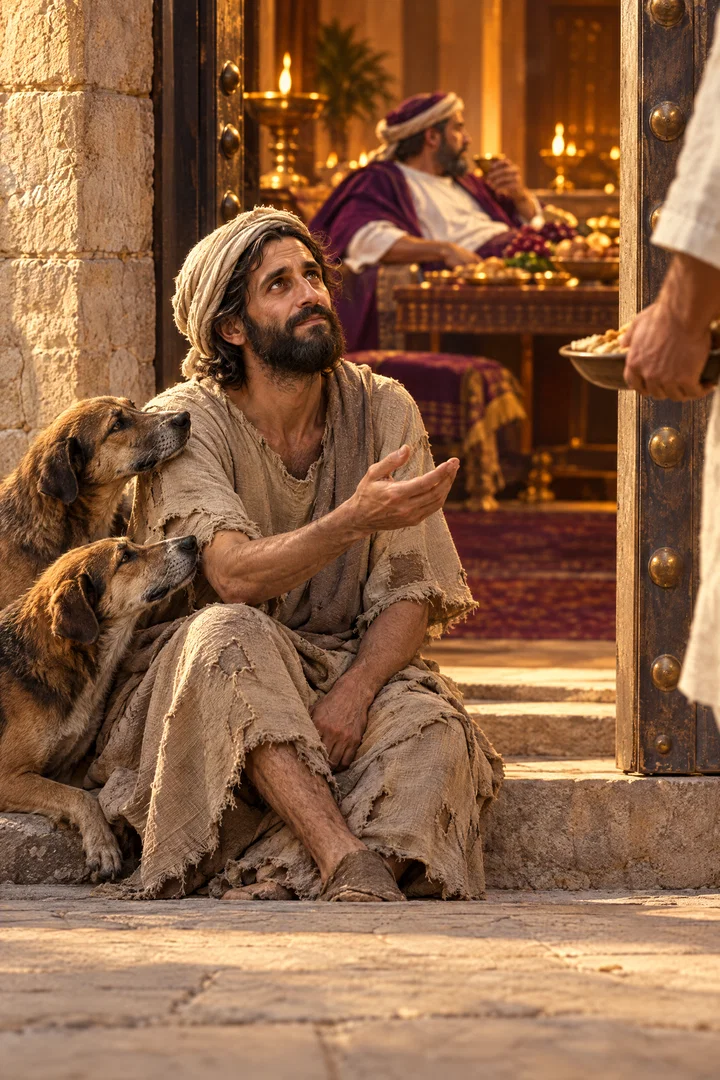
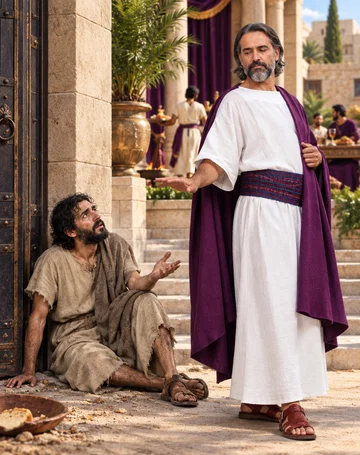
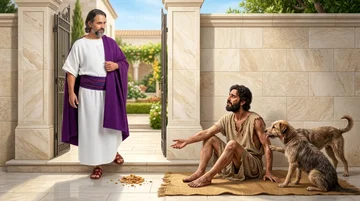
And desiring to be fed with the crumbs which fell from the rich man’s table: moreover the dogs came and licked his sores.
Translations
American King James Version, King James Version
And desiring to be fed with the crumbs which fell from the rich man’s table: moreover the dogs came and licked his sores.
and desiring to be fed with the crumbs which fell from the rich man’s table: moreover the dogs came and licked his sores.
And desiring to be fed with the crumbs which fell from the rich man's table: moreover, the dogs came and licked his sores.
Revised Version, American Standard Version
and desiring to be fed with the crumbs that fell from the rich man’s table; yea, even the dogs came and licked his sores.
and desiring to be filled from the crumbs that are falling from the table of the rich man; yea, also the dogs, coming, were licking his sores.
and desiring to be filled with the crumbs which fell from the table of the rich man; but the dogs also coming licked his sores.
and to long to be fed from the crumbs that fell from the table of the rich man: nay! even, the dogs, used to come and lick his sores.
Berean Standard Bible, Majority Standard Bible
and longing to be fed with the crumbs that fell from the rich man’s table. Even the dogs came and licked his sores.
and desiring to be fed with the crumbs that fell from the rich man’s table. Yes, even the dogs came and licked his sores.
Desiring the broken bits of food which came from the table of the man of wealth; and even the dogs came and put their tongues on his wounds.
And desired to bee refreshed with the crommes that fell from the riche mans table: yea, and the dogges came and licked his sores.
Douay-Rheims (Challoner revision)
Desiring to be filled with the crumbs that fell from the rich man’s table, and no one did give him; moreover the dogs came, and licked his sores.
Pictures
Cross-references
- Luke 16:9
And I say unto you, Make to yourselves friends of the mammon of unrighteousness; that, when ye fail, they may receive you into everlasting habitations.
The lesson on using wealth to help others contrasts with the rich man’s neglect of the needy.
- Luke 16:25
But Abraham said, Son, remember that thou in thy lifetime receivedst thy good things, and likewise Lazarus evil things: but now he is comforted, and thou art tormented.
Contrasts Lazarus’s hardship in life with his later comfort and the rich man’s torment.
- Luke 16:29-31
Abraham saith unto him, They have Moses and the prophets; let them hear them.
Moses and the prophets provide sufficient testimony, which should be heeded.
- Luke 16:26
And beside all this, between us and you there is a great gulf fixed: so that they which would pass from hence to you cannot; neither can they pass to us, that would come from thence.
The fixed gulf shows the final separation after death.
- Matthew 15:27
And she said, Truth, Lord: yet the dogs eat of the crumbs which fall from their masters’ table.
Crumbs from the table figure receiving crumbs of God’s word.
- Luke 16:27-28
Then he said, I pray thee therefore, father, that thou wouldest send him to my father’s house:
The rich man pleads for Lazarus to warn his five brothers.
- John 12:10-11
But the chief priests consulted that they might put Lazarus also to death;
The leaders sought to kill Lazarus despite his resurrection and its effect on many.
- John 11:11
These things said he: and after that he saith unto them, Our friend Lazarus sleepeth; but I go, that I may awake him out of sleep.
Jesus calls Lazarus’s death sleep, supporting the passage’s claim that the dead are not conscious.
- Psalms 37:25
I have been young, and now am old; yet have I not seen the righteous forsaken, nor his seed begging bread.
Contrasts the righteous not begging bread with Lazarus begging for crumbs.
- Luke 6:24
But woe unto you that are rich! for ye have received your consolation.
The rich man’s fate illustrates the woe to the rich who have received their consolation.
- James 2:5
Hearken, my beloved brethren, Hath not God chosen the poor of this world rich in faith, and heirs of the kingdom which he hath promised to them that love him?
The poor man’s standing before God contrasts with worldly estimation.
Commentary
Each commentary is drawn from primary sources: the writings of Ellen G. White and Adventist pioneers and periodicals. Each commentary is separate. Its own words are not a quotation; follow the references to read the source passages.
Ellen G. White
46 sources
Lazarus lay day after day at the rich man's gate, desperately poor and afflicted with sores, hungry and dependent on scraps falling from the table while dogs licked his sores.COL 260.2–3Ms 6, 1899, par. 1–5Ms 81, 1898, par. 1–2ST Mar 22, 1883COL 261.2 Beside him the rich man lived in daily abundance and luxury with every want supplied, yet left Lazarus unaided though he could have relieved him without hardship.Ms 6, 1899, par. 1–5Ms 81, 1898, par. 1–2ST Jun 1, 1915ST Jun 21, 1899ST Jun 1, 1915 His plenty was entrusted to him to care for the needy, and by spending it on himself and neglecting the suffering at his gate he proved an unfaithful steward.Ms 6, 1899, par. 1–5COL 266.1COL 261.4ST Jun 25, 1894ST Jun 1, 1915 Lazarus's misery did not measure his worth before God, for his patient faith fitted him for angels' company and an inheritance with Christ, while wealth and honor recommend no one to God.COL 260.2–3ST Mar 22, 18831T 539.2–540.1ST Jun 1, 1915ST Jun 1, 1915 The parable teaches that character formed in this life fixes eternal destiny, so that after death their conditions are reversed, the God-fearing beggar comforted and the self-serving rich man tormented with an impassable gulf between.COL 260.1COL 259.1–2STA 154.1STBk 158.1ST Jun 1, 1915
Lazarus in Want and Suffering
Lazarus was a poor beggar laid at the rich man's gate, covered with sores and longing to be fed with the crumbs that fell from the rich man's table.COL 260.2–3Ms 6, 1899, par. 1–5Ms 81, 1898, par. 1–2ST Jun 1, 19151T 539.2–540.1 He begged for the scraps the rich man did not want and remained dependent on what fell, while dogs came and licked his sores.Ms 6, 1899, par. 1–5Ms 81, 1898, par. 1–2ST Jun 1, 19151T 539.2–540.1Ms 81, 1898, par. 8 His sores and the dogs licking them show his extreme misery and distress.Ms 6, 1899, par. 1–5Ms 81, 1898, par. 1–2ST Jun 1, 1915
He had no friends, home, money, or food of his own, and remained hungry and suffering beside the house.ST Mar 22, 1883COL 261.2ST Jun 1, 1915 Desperately poor, afflicted, and dependent on scraps, he was so loathsome in appearance that he was rejected by others.ST Mar 22, 1883ST Jun 1, 1915COL 242 He was left there day after day in extreme misery.ST Mar 22, 1883COL 261.2
Some scraps were given to him by the servants, and without making an outward demonstration or pressing his claim he might otherwise have been driven from the gate.Ms 81, 1898, par. 9 His patient endurance of suffering was a witness and a test of faith.Ms 81, 1898, par. 9 At death he was carried by angels into Abraham's bosom.Ms 81, 1898, par. 9
Rich Man's Plenty and Neglect
Luke 16:21 sets extreme poverty and distress in sharp contrast to daily abundance and luxury, with Lazarus laid at the rich man's gate longing even for crumbs from his table while his sores were licked by dogs.Ms 81, 1898, par. 1–2ST Jun 21, 1899ST Jun 1, 1915 The rich man was a Jewish nobleman whose every want was supplied, while the poor sufferer hungered beside him and beside his house.Ms 81, 1898, par. 1–2ST Jun 1, 1915Ms 22, 1898, par. 27 The rich man refused to share his abundance, and his selfish, luxurious life was followed by a reversal in which he himself suffered and longed for relief.ST Jun 21, 1899ST Jun 1, 1915Ms 22, 1898, par. 27
The rich man had enough to relieve that suffering and could have helped without hardship, even by small self-denial, yet he left Lazarus unaided in that miserable condition.Ms 6, 1899, par. 1–5ST Jun 1, 1915COL 261.2Ms 81, 1898, par. 3–4Ms 81, 1898, par. 6 Lazarus had no friends, home, money, or food of his own and remained day after day hungry and suffering beside the house where the wealthy man's needs were met.Ms 6, 1899, par. 1–5COL 261.2Ms 81, 1898, par. 3–4 The rich man allowed him to remain at the gate and did not use violence or drive him away, but he was selfishly indifferent to the need before him.COL 261.1Ms 81, 1898, par. 3–4Ms 81, 1898, par. 6 He used his entrusted blessings for selfish pleasure and neglected his responsibility to his needy neighbor, failing to comfort and help his suffering brother though he claimed to be a son of Abraham.Ms 6, 1899, par. 1–5COL 261.1Ms 81, 1898, par. 6
That failure was selfish indifference even without outward violence, illustrating responsibility toward suffering people within reach.COL 261.1Ms 81, 1898, par. 3–4 The crumbs that fell show how little was given to the poor man at the gate despite abundance.Ms 81, 1898, par. 8 Lazarus was left dependent on what fell from the rich man's table, longing for scraps while dogs came and licked his sores.Ms 81, 1898, par. 1–2ST Jun 1, 1915Ms 81, 1898, par. 8
True Worth and Coming Reversal
Lazarus lay in abject poverty at the gate, begging for crumbs the rich man despised, loathsome in appearance and rejected by others while suffering with sores.ST Mar 22, 18831T 539.2–540.1 His miserable outward condition did not reflect his worth before God, for he possessed true faith and moral soundness that made him valuable to God.ST Mar 22, 18831T 539.2–540.1 That faith and moral worth, which God valued above wealth and worldly honor, fitted him for the company of holy angels and for inheritance with Christ.ST Mar 22, 18831T 539.2–540.1 Wealth and worldly honor do not recommend anyone to God, and people are not to be judged by riches or social standing.ST Mar 22, 18831T 539.2–540.1
He represents those who have little in this world but trust in God and patiently endure suffering beside those whose every want is supplied.COL 260.2–3ST Jun 1, 1915 Though lowly now and dependent on God, they will one day have their position reversed and be exalted above those who prosper in this life and hold high worldly positions but have not surrendered their lives to God.COL 260.2–3ST Jun 1, 1915 His desperately poor and afflicted dependence on scraps does not make him worthless, for in the unseen world he stands above a rich man who misused what God had lent him.ST Jun 1, 1915ST Jun 1, 1915 Poverty itself is not condemned and does not make a person worthless, nor is wealth itself sinful, but the rich man is condemned for using what was entrusted to him selfishly and neglecting the suffering poor.ST Jun 1, 1915ST Jun 1, 1915
The parable stands as a lasting lesson for rich and poor that their conditions are reversed after death.STA 154.1STBk 158.1SW 7.1 Lazarus was a poor beggar who feared God, longing for scraps and suffering with sores in stark contrast with the rich man's abundance, and afterward Lazarus is comforted while the rich man whose earthly comfort was spent on self is tormented.STA 154.1STBk 158.1SW 7.1 Selfish pleasure is not the sum of happiness, for the rich man later would have given everything to exchange places with him.Ms 22, 1898, par. 31 The poor man had no earthly riches or comforts yet had a home in heaven, illustrating that those who trust Christ as personal Saviour, though humble in worldly circumstances, are heirs of God sharing an immortal inheritance with Christ.Ms 6, 1899, par. 25–27 Poverty itself is not sin, and even poverty brought on by recklessness can be pardoned when a person repents.Ms 6, 1899, par. 25–27
Lazarus lay outside the gate pleading for pity and help which the wealthy man had the means to give but neglected.14MR 57.3Lt 207, 1899, par. 7 Their story shows God's treatment of both classes: He blesses and commends the suffering faithful rather than those who spend on self-gratification what they should give to the poor, and wealth entrusted by God must be used to care for the poor.14MR 57.3Lt 207, 1899, par. 7 Poor Lazarus feeding on crumbs from the rich man's table is in a preferable condition to people who claim faith while accumulating earthly wealth.2T 196.2–197.1 Genuine faith would lead them to sell possessions, free themselves from earthly burdens, and transfer treasure to heaven where their hearts would be drawn.2T 196.2–197.1 Lazarus as a suffering brother made petitions for help and bore suffering with patience and resignation, while the rich man carelessly neglected him and failed to lay up treasure in heaven.Ms 81, 1898, par. 12–14 In sickness the positions are reversed, with the rich man finding no consolation from possessions, relatives, friends, or servants and impatiently longing for Lazarus to minister to him, calling continually for relief.Ms 81, 1898, par. 12–14
Stewardship Tested and Judged
The rich man's abundance was not his own but entrusted to him by God to care for people in need, and it was his duty to help Lazarus and others like him lying at his gate longing for scraps while dogs licked his sores.Ms 6, 1899, par. 1–5COL 261.4ST Jun 25, 1894Ms 22, 1898, par. 27Ms 6, 1899, par. 22–24 The contrast between desperate hunger and suffering on one side and daily plenty on the other exposes the failure of the wealthy to provide for the poor as a God-given responsibility.Ms 6, 1899, par. 1–5ST Jun 25, 1894Ms 22, 1898, par. 27Ms 6, 1899, par. 22–24Lt 207, 1899, par. 7 His wealth and abilities were given for the good of humanity, yet he used them for himself and left Lazarus unaided, refusing tender sympathy and spending his means on self-gratification rather than blessing the suffering faithful.Ms 6, 1899, par. 1–5COL 261.4Ms 22, 1898, par. 27Ms 6, 1899, par. 22–24Lt 207, 1899, par. 7
Being rich is not condemned, but riches acquired by injustice or spent in selfishness are condemned.COL 266.1ST Jun 1, 1915 The rich man is condemned for using what was lent him selfishly and neglecting the suffering poor at his gate, proving himself an unfaithful steward forgetful of his obligation and accountability to God.COL 266.1COL 261.4ST Jun 1, 1915 Lazarus in want and suffering beside plenty belongs to the portrayal of the two classes as estimated in the unseen world, where poverty itself is not condemned nor wealth itself sinful.COL 266.1ST Jun 1, 1915
Lazarus's suffering gave the rich man an opportunity to show love for God and neighbor through practical help including food, clothing, medical care, and spiritual care.Ms 6, 1899, par. 1–5 The more afflicted Lazarus was, the greater the sympathy and help he deserved, which the rich man could have given without hardship or by small self-denial after the example of Christ.Ms 6, 1899, par. 1–5 By withholding entrusted means he laid up nothing beside the throne of God.COL 266.1 Heavenly treasure is secured only by using money to do good and devoting life to seeking eternal riches that death cannot take away, while the one who hoards treasure for self had his good things in his lifetime and can carry none of it to heaven.COL 266.1
Earthly riches and honor are not true riches, and selfish pleasure is not the sum of happiness.Ms 22, 1898, par. 31Ms 6, 1899, par. 22–24 Those who spend entrusted resources on selfish gratification and sumptuous living instead of God's work will answer to God for their stewardship.Ms 22, 1898, par. 31Ms 6, 1899, par. 22–24Lt 21, 1898, par. 4–5 The suffering poor held a rightful claim on the rich man that he neglected while living as if all he possessed were his own.ST Jun 1, 1915COL 267.1 Having everything money could buy but lacking the riches that keep the account right with God, at death he is by irresistible power commanded to quit the premises where he is no longer steward, reduced to hopeless poverty and nakedness without the robe of Christ's righteousness woven in the loom of heaven, stripped of richest purple and finest linen, having brought nothing into the world and able to take nothing out, with probation ended.ST Jun 1, 1915COL 267.1
Neglecting needy people within sight and hearing imposes a serious responsibility, for the beggar was placed where the one entrusted with means had opportunity to offer help and sympathy.Ms 81, 1898, par. 5 Selfish indulgence while others lack food, clothing, and shelter is an offense to God.Ms 81, 1898, par. 5 The parable applies to those who receive temporal and spiritual blessings but use them for themselves and refuse to help those in need, enjoying good things while making no right use of them to carry out God's purposes.COL 267.3ST Jun 6, 1900Ms 87, 1898, par. 26–29 Those who claim to be sons and daughters of God must not follow that example nor pass helpless, wretched, fallen, hopeless beings by, but must use what God gave to lift a standard against the enemy, restore the moral image of God in man, and communicate treasures of food and clothing and fitly spoken words with pitying tenderness lest the Saviour's pitying tenderness be in vain for want of human channels.COL 267.3ST Jun 6, 1900Ms 87, 1898, par. 26–29
The rich man's intemperate, luxurious life led to the loss of his soul, so that when he later suffered he sought relief from Lazarus but had no knowledge of God.Ms 22, 1898, par. 27 Lazarus is pictured as a poor, loathsome man whose suffering could be comforted by seeing the rich man enter.COL 242 The parable as a whole exposes the consequences of how people respond to God and to others, showing God as the foundation of faith, goodness, and mercy, with Lazarus in need while the rich man has abundance.COL 242Ms 81, 1898, par. 28–32
Destiny Decided in This Life
The parable to which the beggar longing for crumbs and licked by dogs belongs shows that eternal destiny is decided in this life while grace is still offered.COL 260.1COL 259.1–2ST Jun 1, 1915 Those who waste their opportunities in self-pleasing and covetousness cut themselves off from everlasting life.COL 260.1COL 259.1–2ST Jun 1, 1915 By their own choice they fix an impassable gulf between themselves and God, and there is no further probation afterward.COL 260.1ST Jun 1, 1915 In that parable the poor sufferer beside the rich man with every want supplied represents those who depend on God and patiently endure suffering, whose lowly position will one day be reversed when they are exalted above those who prosper in this life but have not surrendered their lives to God.ST Jun 1, 1915
Character formed in life determines fitness for the future, and the gulf between the righteous and the wicked cannot then be crossed.Ms 81, 1898, par. 34–36COL 269.3 The closing scenes of the rich man's history portray the closing scenes of this earth's history.Ms 81, 1898, par. 34–36COL 269.3 The rich man claimed to be a son of Abraham, yet he was separated from Abraham by an impassable gulf, which is a wrongly developed character and the gulf of disobedience and transgression.COL 269.3Ms 81, 1898, par. 12–14 Abraham served God in faith and obedience, while the rich man was unmindful of God and of suffering humanity at his gate, carelessly neglecting the suffering brother who made petitions for help and bore suffering with patience and resignation, and failing to lay up treasure in heaven.COL 269.3Ms 81, 1898, par. 12–14
The rich man longed to indulge appetite, loved worldly pleasure and display, had no inclination to war against the lust of the flesh, and chose the atmosphere of sin, though he still looked to Abraham for salvation and relief.COL 269.3Ms 81, 1898, par. 12–14 The same course is followed today by unconverted church members who take part in church service and falsely profess longing for God.COL 269.3 The soul longing after worldly pleasure and the mind full of love for display cannot serve God, and such a one is no more righteous in God's sight than the veriest sinner.COL 269.3 Such a one is suddenly snatched away by death and goes down to the grave with character formed during lifetime in copartnership with satanic agencies, and in the grave has no power to choose anything good or evil, for in the day when a man dies his thoughts perish.COL 269.3
Historic and Present Applications
The Jewish nation stood in the place of the rich man, entrusted with sacred truth and with means that God would have increased until it was sufficient to bless and enlighten the whole world and to relieve temporal and spiritual need.COL 269.1COL 267.3 Ignorance that put Abraham where God should have been, failure to allow God's Spirit to mold mind and heart, and separation from the Lord's arrangement perverted the whole life, left eternity out of the reckoning, and turned gifts that should have been used as God's stewards in truth and righteousness to selfish use with refusal to help those in need.COL 269.1COL 267.3 Had the exalted privileges been appreciated and the divine call answered, the position and future would have been altogether different, with true spiritual discernment shown; instead unfaithfulness brought ruin upon the whole nation.COL 269.1 The warning held in the hunger and suffering of Lazarus beside abundance was remembered when starvation and suffering of every kind came at the destruction of Jerusalem.COL 269.2
Then the people understood the parable, seeing that the want of Lazarus pictured their own calamity brought upon themselves by neglecting to let their God-given light shine forth to the world.COL 269.2 In the same way the colored people of the South lie like Lazarus full of sores at the gate of Dives, in destitution and in need of higher standards of education and home life and of moral uplifting.SBAWP 49.1–2 Dives is the white race, and especially Christian white people, at whose gate they lie, and woe will come to him if he does not heed them and bend a portion of his energies to lift them.SBAWP 49.1–2 Seeking supremacy as an end in itself and overriding justice loses what is sought, while honesty, justice, and effort to uplift them brings uplifting to himself.SBAWP 49.1–2
Sources
Pioneers and periodicals
118 sources
Lazarus lay helpless at the rich man's gate, too weak to walk, longing only for the scraps falling from daily luxury, covered with sores that no man tended but dogs licked.RH May 5, 1874RH Mar 28, 1865RH Jul 10, 1856ST Oct 31, 1900RH May 5, 1874 The account in Luke 16:19-31 is a parable and figure, not a history of what actually occurred, whose details alone cannot prove doctrine.ST Dec 4, 1884RH Sep 15, 1859ST It was shaped to meet covetous Pharisees, borrowing their familiar notions of Hades, the gulf, torment and Abraham's bosom to press its lesson without making those notions true.ST Oct 1, 1894RH Feb 8, 1912ST Sep 16, 1880 It gives no support to torment or bliss at death or to natural immortality, for the dead know nothing and sleep in silence until the resurrection when just and unjust are rewarded.ST Dec 4, 1884RH Dec 15, 1868RH Dec 22, 1868 Lazarus stands for the Gentiles, despised by the Jews as unworthy dogs, while the rich man stands for Israel with its covenants and privileges, and their reversal shows the outcasts received and the self-assured lost.ST Apr 10, 1907ST Mar 6, 1907ST Oct 1, 1894 Riches do not prove God's favor nor do poverty and sores prove His curse, for destiny is fixed by choice in this life and death ends probation with an impassable gulf.RH Oct 10, 1912ST Mar 30, 1882ST Oct 31, 1900ST Mar 30, 1882ST Nov 14, 1900
Lazarus in Misery
Lazarus lies in extreme poverty and helplessness, laid at the rich man's gate because he was too helpless to walk or even to stand.RH May 5, 1874RH Mar 28, 1865ST Jun 23, 1881ST Mar 15, 1877 He is dependent on charity and treated as one of little consequence, with no food beyond the crumbs from the rich man's table and no other nurses than the dogs that licked his sores.RH May 5, 1874RH Mar 28, 1865ST Jun 23, 1881ST Mar 15, 1877 He stands as the representative of the class opposite the rich man, reduced to dire straits and to earthly suffering and affliction in this life.ST Oct 31, 1900ST Oct 31, 1900 His only earthly attendants are the dogs, until death comes to his relief.ST Jun 23, 1881ST Mar 15, 1877
He longs to be fed with only the crumbs and scraps falling from the rich man's table.RH Jul 10, 1856RH May 5, 1874ST Oct 14, 1913ST Nov 18, 1913 Those scraps were perhaps grudgingly bestowed or refused, in sharp contrast with the rich man's daily luxury and abundance.RH Mar 28, 1865RH Jul 10, 1856RH May 5, 1874ST Oct 14, 1913ST Mar 30, 1882 The depth of his misery exposes the rich man's neglect of him.RH Jul 10, 1856 His afflicted state set against daily luxury warns against self-indulgent enjoyment of wealth, showing that earthly riches do not prove God's favor and that those who exalt themselves will ultimately be brought low while the humble will be exalted, with Lazarus later comforted while the rich man is tormented.RH Jul 10, 1856ST Mar 30, 1882
He is covered with sores, with no other nurses than the dogs that came and licked his sores.ST Dec 1, 1914ST Jul 15, 1913ST Nov 11, 1886RH Dec 12, 1854 Even the animals showed him the compassion men withheld.ST Nov 11, 1886 The parable also gives him bodily parts such as fingers alongside eyes and tongue in the rich man, picturing embodied men with physical features rather than disembodied souls or spirits.ST Jul 15, 1913RH Jan 7, 1902RH Dec 12, 1854ST Aug 19, 1880 Those bodily details belong to a figurative story about a living body and do not establish that the dead possess physical organs or remain consciously alive between death and judgment.RH Dec 12, 1854ST Aug 19, 1880
The dogs' licking points to healing of a wound, a meaning traditionally associated with a dog licking a sore.ST Oct 14, 1913 The image is also applied to gossiping church members who lick sores like the dogs eating crumbs with Lazarus, and to dwelling on and focusing on Christians' failings.ST Jun 26, 1884RH Mar 5, 1914 It connects with the Jews' contemptuous view of Gentiles as dogs beneath notice, which the parable uses to expose Jewish pride, contempt and exclusiveness toward poor Gentiles.ST Mar 29, 1905ST Nov 30, 1915 The sequel then reverses their expectations, showing the despised ones saved and the self-assured lost.ST Nov 30, 1915
The rich man is called Dives because the Latin word means rich, not because the Bible gives him that name, and he stands damned.ST Mar 30, 1882ST Dec 1, 1909 The gate signifies the place where judgment took place, in the application where Lazarus in poverty and suffering represents Christ coming to His own and the rich man represents the nation.ST Oct 14, 1913 The name Lazarus may mean Whom God aids.ST Mar 24, 1909 In that Gentile application Lazarus poor and hungry represents the Gentiles longing for the spiritual riches Christ would give, while the rich man represents the Jew who considered himself spiritually rich.ST Mar 24, 1909 His hunger represents Christ's longing for those entrusted with the bread of eternal life to recognize Him and share the bread of life, yet denied even the crumbs.ST Oct 14, 1913ST Mar 29, 1905
Parable Not Literal
Luke 16:21 belongs to the account of the rich man and Lazarus in Luke 16:19-31, in which the beggar dies and is carried by angels into Abraham's bosom and the rich man also dies and is buried and in hell lifts up his eyes in torment and calls for a drop of water to cool his tongue.ST Dec 4, 1884RH Sep 15, 1859 That account is a parable, apologue, fable and allegory — a figurative word-picture and combination of kindred metaphors connected to form a story of the same kind as the parables and fables that point to a moral — and not a historical narration of what actually occurred.RH Sep 15, 1859STST Mar 16, 1876 Its conversation between men shown as dead is not a real account of conscious life after death, and its details of the beggar's hunger and the dogs licking his sores are an object lesson that must be explained in the way of allegory.ST Dec 4, 1884RH Jan 7, 1902ST Mar 16, 1876 No metaphor is ever to be produced in proof of a doctrine, so its metaphorical details cannot legitimately sustain the infinite weight of natural immortality of the soul, of consciousness of the dead, of bliss or torment immediately at death, or of the wicked already being tormented; things concerning eternal salvation need the most pointed and express evidence.RH Sep 15, 1859ST Mar 16, 1876ST Mar 20, 1879 The lesson draws attention to the contrast between human judgments of people and the judgment that will reveal their true worth, and illustrates conditions between Jews and Gentiles and their attitude toward God.ST Dec 4, 1884ST
The teaching was given first to literal Israel, Christ's own recognized people to whom pertained the adoption, the glory, the covenants, the giving of the law, the service of God and the promises and of whom He came concerning the flesh, with ministry devoted to giving them the first opportunity to receive Him and through them to reach the nations of the world.ST Oct 1, 1894 It was wisely adapted to their condition and not spoken over their heads, so that what was intended for future generations was designed to come through that generation and not over it, standing in a series of figurative teachings spoken to those who would listen to figurative teaching when they would not endure the literal.ST Oct 1, 1894RH Feb 8, 1912 Spoken right after rebuking the covetous Pharisees who derided Him, it strikes at covetousness and at the belief that sickness, poverty and suffering prove that God has forsaken a person or is displeased with him, a belief that bred self-righteousness and heartlessness.RH Feb 8, 1912ST Aug 13, 1894 For this purpose Christ takes the standpoint and belief of those He talks with, as in answering the unfaithful servant about being an austere man without proving whether He is austere, here accepting for the time being as correct the familiar Pharisaic and rabbinical notions about Hades, its gulf, flame, torment, Abraham's bosom and angels conveying souls, and even a story and Jewish parable common among the Jews and similar to Josephus' description of Hades, using such portions as best illustrated His lesson.RH Feb 8, 1912ST Sep 16, 1880ST Dec 9, 1897ST Dec 25, 1901 He so confuses and answers His opponents and speaks against the Pharisees out of their own belief about Hades, without endorsing or correcting those notions as true and without proving the heathen-derived belief in immortality of the soul that the Jews had adopted.RH Feb 8, 1912ST Sep 16, 1880ST Dec 25, 1901 The parable is obscure and hard to understand, and since New Testament statements on the intermediate state are less plain than the Old Testament teaching that the dead are unconscious, its use to prove consciousness after death raises whether the apostles conflict with the Old Testament writers; the beliefs of the Jews about the state of the dead and the views of first-century Christians give light for settling its meaning.RH Dec 16, 1858
Dead persons and things are shown by personification as speaking and acting as if alive and occupying two distinct states, with future recompense pictured as though already present because it is certain in God's purpose, although it would not take place until after the day of judgment.RH Aug 12, 1862RH Nov 18, 1858ST Jun 30, 1881 It does not teach that the soul is separated from the body, but belongs as the second of two parables in Luke 16, the first being the unfaithful steward, with the aim of the entire chapter directed against covetousness.RH Aug 12, 1862ST Aug 13, 1894RH Nov 18, 1858 Lazarus lying at the gate longing for food, covered with sores with only dogs to lick them, shows the worth of true piety even in deep poverty and exposes the rich man's selfish neglect and culpable failure to use wealth for others.RH Mar 28, 1865ST Jun 30, 1881ST Mar 15, 1877 His portrayal as comforted is personification pointing to the sure future reward and eternal life of the righteous, not to a reward received consciously at death; he rests in the silence of death, whose place is darkness, silence, secrecy and death, until the resurrection, with no conscious interval between death and resurrection to eternal life.RH Mar 28, 1865ST Jun 30, 1881ST Mar 15, 1877 The story must therefore be read consistently, in harmony with plain Scripture, and meditated upon deeply without speculation, fanciful interpretation or controversy over its meaning.RH Aug 12, 1862ST Aug 13, 1894
State of the Dead
The account to which the longing for fallen scraps belongs gives no proof for suffering by the wicked immediately after death, for a naturally undying soul, for bliss or torment assigned at the moment of dying, or for divided compartments of happiness and misery in Hades.ST Dec 4, 1884RH Dec 15, 1868RH Dec 22, 1868RH Aug 27, 1872ST Mar 28, 1906 The dead are without knowledge or thought, sleeping in silence until the resurrection when the just and the unjust alike receive their rewards.ST Dec 4, 1884RH Dec 15, 1868RH Dec 22, 1868ST Mar 28, 1906RH Mar 4, 1862 The story is not aimed at settling the condition of the dead or the final reward of righteous and wicked, and it cannot by itself establish consciousness between death and resurrection.ST Dec 4, 1884ST Mar 28, 1906RH Mar 4, 1862 The person carried to Abraham's bosom is the one who died, not a separate soul or spirit, and the carrying belongs after the future resurrection.RH Aug 27, 1872RH Mar 4, 1862 What is often put forward as the strongest proof for an immaterial, ever-conscious, never-dying principle in human nature therefore draws on heathen mythology rather than on this text.RH Dec 22, 1868RH Aug 27, 1872ST Mar 28, 1906
A literal construction breaks down because the figures retain sores, fingers, eyes and tongue and act as embodied men rather than as disembodied spirits, and disembodied spirits could not suffer or enjoy without the body.ST Jun 23, 1881RH Feb 2, 1864RH Dec 12, 1854RH Dec 12, 1854 It would place Lazarus in Abraham's bosom before the second coming and locate Hades or Sheol beneath the earth in darkness, silence, forgetfulness and worms, where there is no work, knowledge, praise or converse.ST Jun 23, 1881RH Oct 31, 1865RH Feb 2, 1864 It would require an immense cavern fitted up in the bowels of the earth where sunlight never shines, with but one entrance, constructed as the prison-house for souls of both good and bad together for the first four thousand years from creation to the cross, within sight and hearing of torment.ST Jun 23, 1881ST Sep 2, 1880 The dead in Hades are to be delivered up at the judgment, so one supposedly already in hell before that time might also leave when Hades gives up its dead.RH Oct 31, 1865RH Feb 2, 1864 The request for communication with the brothers also fails on literal grounds, since Lazarus would have to rise from the dead to warn them.RH Feb 2, 1864RH Dec 12, 1854RH Dec 12, 1854
Those who held the minority reading took the account, whether as parable or history, to show conscious existence after death, an intermediate state with a foretaste of final reward, and immediate existence after death with heaven and hell within sight and speech across the gulf.RH Mar 4, 1862RH Apr 8, 1858ST Nov 16, 1876RH Apr 18, 1865 Even on that reading the dead are not permitted to return to earth to communicate with the living, whether they are conscious or know nothing.RH May 19, 1851RH Dec 23, 1851 The rich man's plea for Lazarus to warn his brothers would therefore require resurrection.RH May 19, 1851RH Dec 23, 1851RH Apr 18, 1865 Even if taken as literal history, the account does not by itself prove an immortal soul in either man.RH Mar 4, 1862RH Apr 8, 1858
Jews and Gentiles Foreshadowed
In this parable Lazarus stands for the Gentiles in their poverty and humility, spiritually sick and destitute of the true riches of truth, without Christ and without hope or share in Israel's covenants and promises, whom the Jews regarded as unworthy outcasts and dogs beneath notice and dependent on their favor.ST Apr 10, 1907ST Mar 6, 1907ST Oct 1, 1894RH Dec 12, 1854ST Mar 28, 1906 The rich man stands for the Jews, rich in spiritual privilege with noble and faithful ancestry, law, covenants and promises, yet trusting in that descent and rejecting Christ.ST Mar 6, 1907STST Mar 28, 1906 The beggar's longing even for scraps from the table shows the Gentiles poor in spirit and willing to receive what was offered, seeking God and accepting His grace in Jesus, while the reversal of their conditions shows the despised brought near to God as children of Abraham and the self-assured left in darkness when the dispensations changed.ST Apr 10, 1907ST Mar 6, 1907RH Dec 12, 1854ST This change does not teach eternal torment of the rich man, nor is it a description of what happens after death.ST Mar 6, 1907ST
Lazarus also stands for the class opposite the rich man, the righteous poor in contrast with the wicked who serve mammon and receive riches in this life.ST Oct 31, 1900ST Oct 31, 1900ST Jun 11, 1896 He is the suffering poor who believe in Christ and depend on God, destitute and afflicted yet not less valued by God than the wealthy, whose present want gives way to eternal riches hereafter.ST Jun 11, 1896ST Aug 2, 1910RH Oct 10, 1912 He belongs among those who deny self and live for Christ and lay hold on eternal life, as opposed to those living for themselves and receiving their good things in this life.RH Jan 7, 1902 The crumbs he desires point to small portions of God's Word offered to them.ST Aug 2, 1910
Lazarus further stands for Christ Himself coming to His own and being rejected.ST Mar 29, 1905ST Oct 14, 1913ST Oct 14, 1913 His hunger for even crumbs from the rich man's table pictures Christ's longing for the Jews, entrusted with the bread of eternal life, to recognize Him and share that bread with Him, yet they denied Him even crumbs and treated Him with contempt.ST Oct 14, 1913ST Oct 14, 1913 The dogs licking his sores points to the healing of a wound, while the dogs also recall the Jews' contemptuous view of Gentiles as dogs, used here to expose Jewish pride and contempt.ST Oct 14, 1913ST Mar 29, 1905 The gate where he was laid signifies the place where the nation's judgment of Christ took place.ST Oct 14, 1913
The parable thus rebukes Jewish exclusiveness, pride and trust in lineal descent from Abraham, showing that having Abraham as father and relying on descent cannot save.ST Oct 31, 1900ST Oct 1, 1894 More than descent is required, for the righteousness of Christ must be imputed to the one who would enter heaven, and help and salvation do not come from Abraham.ST Oct 31, 1900ST Oct 1, 1894 God's word in Moses and the prophets, rather than human traditions, is the standard of doctrine, and those who believe it will accept Jesus as Messiah, while those who reject it will not be persuaded by further evidence.ST Oct 1, 1894 The rich man illustrates the Jewish nation, which had means God could have increased to bless and enlighten the whole world but did not respond to the divine call, portraying Israel's past apostasy, refusal to hear the Scriptures and national death, with the gulf as a barrier between Jews and Gentiles in the age to come, even as the parable also gives every person a lesson about sin and the need of a personal Saviour.RH Mar 16, 1869ST Oct 28, 1913RH Jul 16, 1901
Wealth Poverty Reversed
Lazarus lies destitute and afflicted, longing for scraps from the rich man's table with no one to care for him, and his sores do not prove guilt of sin or rejection by God, just as the rich man's wealth does not prove righteousness or divine favor.RH Oct 10, 1912ST Aug 26, 1880ST Sep 16, 1880 The contrast between extreme poverty with dogs licking sores and daily luxury rejects judging a person's standing with God by possessions or bodily condition, for worldly success does not prove God's favor and poverty, sickness and suffering do not mean God has cursed or forsaken a person.RH Feb 8, 1912ST Mar 30, 1882ST Mar 30, 1882ST Aug 26, 1880 Uprightness even amid deepest poverty will be rewarded in the future life, yet poverty itself does not save or merit heaven, and riches will not avail in the judgment unless used rightly and beneficently.RH Aug 7, 1916RH Aug 7, 1916
His loathsome outward condition does not reflect his worth before God, for he has true faith, moral soundness, piety and trust in God in his need, which make him valuable to God.ST Mar 22, 1883RH Mar 28, 1865ST Mar 15, 1877ST Aug 30, 1905 He is highly esteemed in Heaven, rich in faith and heir to the inheritance promised to Abraham, fit for the company of holy angels and for inheritance with Christ and for reigning with Him and sharing heaven's abundance.ST Mar 22, 1883ST Sep 16, 1880ST Jun 30, 1881ST Nov 20, 1901 His future comfort, eternal life and endless happiness are certain, while the rich man's self-centered and self-serving character leads to judgment and loss of everything.ST Mar 15, 1877ST Aug 30, 1905ST Nov 20, 1901 That comfort is pictured as already present by personification to show the sureness of the future reward of the righteous, not a conscious reward received at death, for he rests in silence until the resurrection with no conscious interval between death and resurrection to eternal life.RH Mar 28, 1865ST Mar 15, 1877ST Jun 30, 1881
The chapter stands as pointed teaching about worldly goods directed against covetousness, self-indulgence, pursuit of earthly pleasure, and oppression of the poor.RH Jul 10, 1856RH Feb 8, 1912ST Aug 25, 1881ST Aug 13, 1894 The rich man feasts daily in luxury while neglecting the suffering beggar at his gate and using wealth only for himself, and this contrast warns the rich and selfish against self-indulgent enjoyment and against the self-righteous heartlessness bred by supposing sickness and poverty prove God's displeasure.RH Jul 10, 1856RH Feb 8, 1912ST Aug 25, 1881 Unrighteous mammon means riches, and by right, beneficent use men may secure the friendship of God, of Christ, and of holy angels, who alone can receive them into everlasting habitations, but misused it brings future woe and stripping of purple, linen and stewardship.RH Jun 9, 1859RH Aug 7, 1916 The account of the suffering beggar and the rich man is the second of two parables in Luke 16 after the unfaithful steward, sharing the aim of the whole chapter, and it is a parable and not a literal account of consciousness in death, to be meditated upon deeply without speculation, fanciful interpretation, or controversy over its meaning.RH Feb 8, 1912RH Aug 7, 1916ST Aug 13, 1894
Present poverty gives way to eternal riches and present luxury to future torment, for the poor as the righteous suffer want and affliction in this life while the wicked who serve mammon are rewarded with riches, and then Lazarus is comforted and exalted while the rich man is tormented.ST Jun 11, 1896RH Mar 12, 1857ST Dec 4, 1884 The humble will be exalted and those who exalt themselves brought low, the lowly who depend on God and patiently endure suffering reversed and exalted above those who prosper but have not surrendered to God, illustrating the final separation of righteous and wicked.ST Jun 1, 1915ST Mar 30, 1882ST Dec 4, 1884 Present prosperity of the wicked is no cause for envy and affliction of the righteous no cause for offense, since present condition does not determine final condition, and readers are prompted to ask which character they have become.ST Jun 11, 1896RH Mar 12, 1857 The reversal is framed as if happening then but represents what will literally take place for the two classes, when after the redeemed are in the New Jerusalem the wicked outside will see them and face destruction, for death ends probation and fixes the gulf so positions cannot be changed.ST Jun 1, 1915RH Jan 7, 1902ST Dec 4, 1884
Probation Ended Scripture Enough
Lazarus in his sores desiring crumbs at the gate shows the affliction of this present life, belonging to an allegory of opposite classes whose earthly contrast is followed by a final reversal, and the lesson is that men fix eternal destiny by the choice made and the character formed in this life.ST Oct 31, 1900ST Mar 30, 1882ST Dec 4, 1884 Death ends each person's probation and fixes a gulf between the lost and the comforted so that positions cannot be changed and escape is impossible.ST Oct 31, 1900ST Oct 1, 1894ST Dec 4, 1884ST Nov 30, 1915 There is no probation after death, no second probation, and no remedial suffering leading to repentance, for once cast into torment destiny is forever sealed.ST Oct 31, 1900ST Nov 14, 1900ST Oct 1, 1894ST Nov 30, 1915 Worldly success does not prove God's favor nor poverty His rejection, yet those who seek only the carnal good things of this life must expect conditions to be reversed in the life to come, and the dead remain unconscious until the resurrection when just and unjust receive their rewards.ST Mar 30, 1882ST Oct 1, 1894
Moses and the prophets give all needed instruction and warning and are all-sufficient to point men to Christ.ST Oct 31, 1900ST Dec 30, 1880 Those who will not heed them will not be persuaded even if someone rises from the dead, and this rebuke falls on hardened Jews and on all who possess the Bible yet remain unbelieving.ST Oct 31, 1900ST Feb 17, 1904RH Sep 15, 1859ST Dec 30, 1880 Even a resurrection would be of no avail because the impenitent do not believe the word of God given in Moses and the prophets, since dead saints cannot return to the living or assist in converting them without resurrection from the dead.ST Oct 1, 1894 Faith is therefore shut up to the word of God alone as the only ground of faith.ST Oct 1, 1894ST Oct 31, 1900
There is no help in Abraham and no salvation in any other name under heaven except Jesus Christ, for Jesus Christ the righteous is the one mediator between God and man.ST Oct 1, 1894 Appealing to dead saints is useless, since even Abraham cannot help his own descendants, and the rich man's later call upon Abraham in torment is the Bible's sole instance of praying to a saint, made by a lost soul and receiving no success.ST May 6, 1880ST Oct 1, 1894 Salvation is not universal.ST Nov 14, 1900 The torment is used to discuss God's consuming fire, which consumes sin and those identified with it and does not prove that punishment is remedial for the sinner, whether God's presence cleanses or consumes depending on attitude toward sin.ST Nov 14, 1900ST Aug 24, 1904
Call to Compassion
The sore-covered beggar laid at the gate longing even for scraps from the table shows the depth of misery endured while abundance feasted within sight.ST Jun 1, 1915ST Jan 29, 1902 To leave him in that condition when there was enough to relieve his suffering was selfish neglect of a suffering neighbor and a violation of the command to love one's neighbor as oneself.ST Jun 1, 1915ST Jan 29, 1902ST Jan 29, 1902 Even the dogs that came and licked his sores showed him more sympathy than the man who had been given great blessings yet showed no gratitude to God and no compassion.RH Feb 7, 1907RH Oct 20, 1904 The rich man used his wealth merely for his own comfort and for his friends, and for that misuse he was later punished and tormented while Lazarus was comforted.RH Feb 7, 1907RH Oct 20, 1904
The failure condemns all who withhold crumbs, hospitality and neighbor-love, and it lays duty on the rich and selfish, on Christians and priests, and on all who have power not to pass helpless people by.ST Jun 1, 1915ST Jan 29, 1902RH Feb 7, 1907RH Oct 20, 1904 That duty is to relieve suffering, to share the bread of life, and to show special concern for the poor, the unfortunate, the oppressed and the suffering as God's children must.RH Oct 20, 1904ST Jan 29, 1902 Lazarus stands as an example of honorable poverty, for his destitution was not the result of wasteful or irresponsible conduct, idleness or lack of industry, but of afflicting disease that can reduce even the industrious to deep need.ST Aug 5, 1889RH Aug 24, 1869ST Apr 15, 1875 His poverty itself did not carry him to Abraham's bosom or make him worthy of heaven, for poverty alone neither saves nor merits heaven.ST Aug 5, 1889
Even begging for scraps while dogs licked his sores, he could have the peace of God in the soul, a peace that does not depend on health or freedom from physical pain. A person with earthly luxury but no family altar is poorer than he who longed for scraps at the gate.RH Nov 20, 1856 His very unfavorable providential condition, rightly borne, perfected a character worthy of being saved while the man surrounded by every blessing was lost, because adverse circumstances take the dross out of character and develop pity for those in distress, patience under adversity, meekness and humility of mind, and faith and hope in trial.RH Dec 16, 1873
The contrast between feasting in luxury and lacking even necessities exposes the cruelty and spiritual failure of a society that treats such inequality as the product of Christianity.ST Oct 17, 1895 It is an impassable gulf between the wealthy and the destitute, like the social distance between an affluent minister and a poorly paid laborer, or the rich man's carriage passing Lazarus in his rags.ST Oct 8, 1885RH Mar 9, 1911 The same image is seen when vast estates and bursting granaries make their owner strong while the poor heathen laid at his feet begs only to toil to eat and pleads for work and barely bread, only to be mocked and shut out.ST Apr 19, 1910 Thousands now suffer for the necessities of life under the very shadow of mansions while the rich of the present age pile up colossal fortunes into the hundreds of millions, and thousands of poor suffer while the wealthy live in comfort through indifference.ST Jul 4, 1899ST May 20, 1908 Such a condition cannot go on much longer, but fulfills prophecy declaring that Christ is coming, for this inequality is not the divine ideal and will ultimately be removed.ST Oct 17, 1895ST May 20, 1908
Sources