Luke 17:18
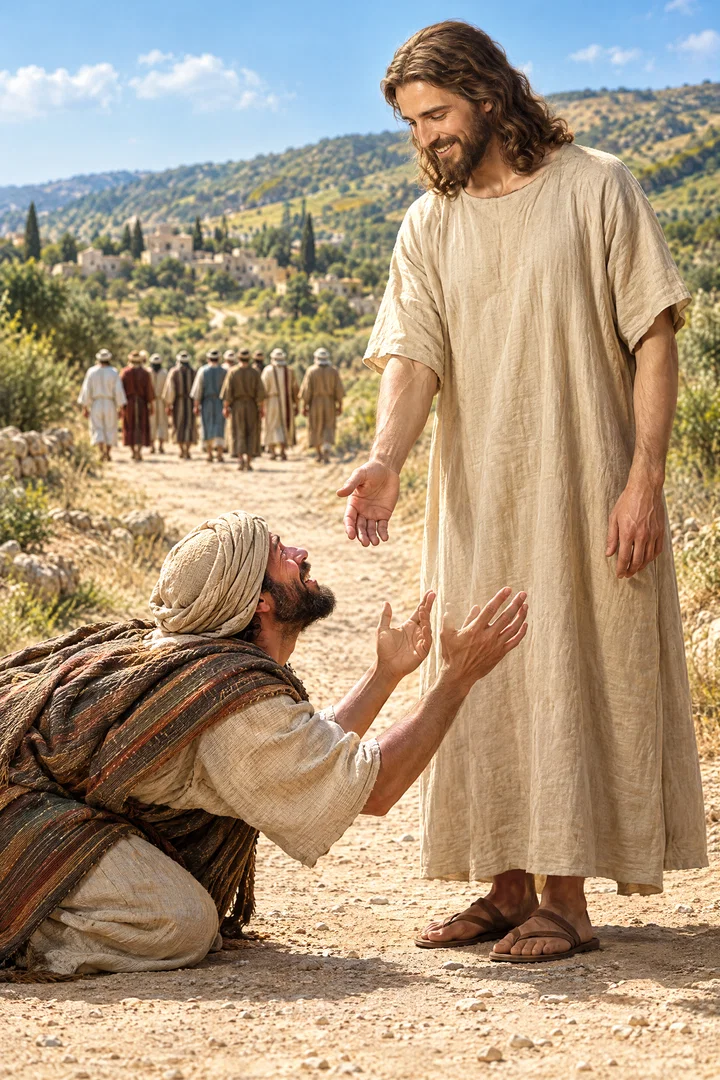
There are not found that returned to give glory to God, save this stranger.
Translations
American King James Version, King James Version, KJV Cambridge Paragraph Bible
There are not found that returned to give glory to God, save this stranger.
There are not found returning to give glory to God, save this stranger.
Revised Version, American Standard Version
Were there none found that returned to give glory to God, save this stranger?
There were not found who did turn back to give glory to God, except this alien;'
There have not been found to return and give glory to God save this stranger.
Have none been found returning to give glory to God, save this one of another race?
Berean Standard Bible, Majority Standard Bible
Was no one found except this foreigner to return and give glory to God?”
Were there none found who returned to give glory to God, except this foreigner?”
Have not any of them come back to give glory to God, but only this one from a strange land?
There is none founde that returned to giue God praise, saue this stranger.
Douay-Rheims (Challoner revision)
There is no one found to return and give glory to God, but this stranger.
Pictures
Cross-references
- Leviticus 14:1-32
And the LORD spake unto Moses, saying,
The law required healed lepers to show themselves to the priests for examination and offerings.
- Mark 1:41
And Jesus, moved with compassion, put forth his hand, and touched him, and saith unto him, I will; be thou clean.
Jesus’ command to be clean answers the lepers’ plea for healing.
- Luke 17:13
And they lifted up their voices, and said, Jesus, Master, have mercy on us.
The ten lepers’ prayer contrasts with the single return to give thanks.
- 2 Chronicles 6:32-33
Moreover concerning the stranger, which is not of thy people Israel, but is come from a far country for thy great name’s sake, and thy mighty hand, and thy stretched out arm; if they come and pray in this house;
The foreigner who seeks God is included in His care.
- Psalms 50:14-15
Offer unto God thanksgiving; and pay thy vows unto the most High:
Thanksgiving and calling on God in trouble lead to deliverance and glorifying him.
- Deuteronomy 10:18-19
He doth execute the judgment of the fatherless and widow, and loveth the stranger, in giving him food and raiment.
God’s care and love extend to the stranger.
- Romans 1:21
Because that, when they knew God, they glorified him not as God, neither were thankful; but became vain in their imaginations, and their foolish heart was darkened.
Failure to give thanks accompanies failure to glorify God.
- Ephesians 5:20
Giving thanks always for all things unto God and the Father in the name of our Lord Jesus Christ;
Calls for continual thanks to God.
Commentary
Each commentary is drawn from primary sources: the writings of Ellen G. White and Adventist pioneers and periodicals. Each commentary is separate. Its own words are not a quotation; follow the references to read the source passages.
Ellen G. White
22 sources
Ten lepers shut out by loathsome disease cried for mercy, were told to show themselves to the priests, and were cleansed as they went in faith in His power to heal.HRP 37.1–40.13T 178.2–180.2 Of the ten only one came back to give glory to God, and he was a stranger, a despised Samaritan, while the other nine, who were Jews, went on without honoring or thanking Him.CH 378.1–2Ms 63, 1896, par. 27–31Ms 145, 1899, par. 2–4 The one who returned came praising God aloud and fell on his face at Jesus' feet in humble worship and thanks, acknowledging his deep indebtedness for healing.CH 378.1–2HRP 37.1–40.1 Jesus asked where the nine were, having healed all ten for the sake of the one He foreknew would appreciate the cleansing, honor the Lord, and make right use of health.Lt 96, 1898, par. 7–9HRP 37.1–40.1 His faith made him whole, for the nine were healed in body yet remained unbelieving and defiled in soul, while the grateful stranger was healed in body and soul, showing that soul healing comes only by faith in Jesus as the Pardoner of sin.Ms 123, 1909, par. 1–3Ms 63, 1896, par. 27–31ST Jun 25, 1896
The Ten Lepers Cleansed
The ten were corrupted by loathsome disease and shut out from society by prescribed limits lest they contaminate others.HRP 37.1–40.13T 178.2–180.2 When Jesus came in sight they cried to Him for mercy as the only one with power to relieve them.HRP 37.1–40.13T 178.2–180.2 He told them to go show themselves to the priests, and they had faith to start, believing in His power to heal.HRP 37.1–40.13T 178.2–180.2 As they went they were cleansed and realized the horrible disease had left them.HRP 37.1–40.13T 178.2–180.2
Of the ten cleansed only one returned to give glory to God.CH 378.1–2Ms 63, 1896, par. 27–31Ms 145, 1899, par. 2–4Lt 96, 1898, par. 7–9Ms 25, 1888, par. 5 That one was a stranger, a despised Samaritan, not a Jew.CH 378.1–2Ms 63, 1896, par. 27–31Lt 96, 1898, par. 7–9Ms 25, 1888, par. 5Ms 99, 1894, par. 7–9 The other nine were Jews who went on their way without appreciating, honoring, or rendering grateful thanks.CH 378.1–2Lt 96, 1898, par. 7–9HRP 37.1–40.13T 178.2–180.2
The one who returned came praising God with a loud voice.Ms 63, 1896, par. 27–31HRP 37.1–40.13T 178.2–180.2 He fell on his face at Jesus' feet in greatest humiliation, humble worship, and thanks.CH 378.1–2HRP 37.1–40.13T 178.2–180.2 He acknowledged with thankfulness what was done for him and showed that he felt gratitude and deep indebtedness for the great work of healing.CH 378.1–2HRP 37.1–40.13T 178.2–180.2
Jesus asked where the nine were, since only the stranger had returned to give glory to God.Lt 96, 1898, par. 7–9HRP 37.1–40.13T 178.2–180.2MH 134.5–135.1 He knew beforehand that among the loathsome, apparently worthless ten there was one who would appreciate the cleansing and honor the Lord, and He looked upon that one with tenderest love.Lt 96, 1898, par. 7–9 He healed the whole ten for the sake of the one man who would appreciate the blessing of health and make a right use of it.Lt 96, 1898, par. 7–9HRP 37.1–40.13T 178.2–180.2MH 134.5–135.1
Faith That Makes Whole
The stranger's return to give glory to God belongs together with faith, for his faith made him whole, and this encourages a faith that takes hold of God's promise and brings the promised reality through Jesus.Ms 123, 1909, par. 1–3 Of the ten cleansed only the Samaritan stranger returned to give glory to God, while the nine were healed of bodily leprosy but did not believe in Christ as the only begotten Son of God, so their sins remained and their souls were still defiled and unhealed.Ms 63, 1896, par. 27–31 The one who returned with a loud voice glorifying God and giving thanks at Jesus' feet manifested the fruit proving he was healed in body and soul.Ms 63, 1896, par. 27–31 Physical healing is no evidence that the sins of the soul are healed, and healing of the soul comes only by faith in Jesus Christ as the Sin Pardoner, which takes away sin, pardons and cleanses the sinsick soul, and restores it whole.Ms 63, 1896, par. 27–31
His gratitude showed that he recognized Christ as the Redeemer of both soul and body and appreciated divine love.ST Jun 25, 1896 Few people recognize that healing, deliverance, and other blessings come through God's mercies in Jesus Christ, while those who do recognize this respond with praise and thanksgiving, and the nine went on their way without honoring God or Jesus their healer.ST Jun 25, 1896ST Jul 2, 1896 His response also made him an effective witness to Christ.ST Jun 25, 1896 Remembering and openly confessing God's acts strengthens faith and helps reveal Christ to others, in contrast to receiving the blessing yet forgetting the benefactor and enjoying His gifts without gratitude.DA 347.2–348.1 His response is a model for those cleansed from sin through Jesus, who should offer praise and give glory to God rather than remain indifferent to His love and gifts, since God's blessings call for expressed gratitude.DA 347.2–348.1ST Jul 2, 1896
Jesus used his response to teach the disciples that a Samaritan could show gratitude and faith, challenging their prejudice and narrow view of whom God could receive.Ms 99, 1894, par. 7–9 His gratitude helped teach them that Jesus' love for Samaritans remained unchanged despite their rejection of Him, preparing them to carry the gospel to Samaria.DA 488.4–6 The ten represent those who claim to be converted and to whom the living oracles of God with great light have been opened.Lt 96, 1898, par. 7–9 The nine represent the many who receive Christ's gracious healing work yet do not appreciate it because they do not walk in the light and do not obey a Thus saith the Lord, while the one represents the thankful believer who appreciates God's great gift.Lt 96, 1898, par. 7–9 Those upon the earth who have the Word of God and do it not are the most guilty, but those who believe the Word and obey it represent Christ, with the truth becoming a part of them as their meat and drink.Lt 96, 1898, par. 7–9
Gratitude Required Today
The cleansing of the ten shows how commonly goodness is received without recognition or thanks, for only the Samaritan stranger came back to thank and glorify God while the nine did not return to give thanks.Ms 145, 1899, par. 2–4 Even those granted many advantages and privileges may answer divine love only feebly, and a grateful response gives glory to God whereas ingratitude and self-sufficiency can shut out the grace and power longed to be given.Ms 145, 1899, par. 2–4 The lessons drawn from Christ include that people may approve what is good and right and yet find self-denial difficult.Ms 123, 1909, par. 14–16
Healing mercy lays a renewed obligation to the Creator that must not be forgotten, and those restored to health should gratefully acknowledge the benefit with remembrance, praise, and thanks rather than enjoying the gift without gratitude.CH 412.2ST Aug 8, 19065T 315.2 The nine illustrate hearts left unthinking and untouched by mercy, failing to appreciate the healing, while the one who returned to find Jesus and give glory to God made right use of the blessing received.CH 379.1–2CH 412.2GW 221.2 Goodness calls not for silence but for lifting the voice to praise God and proclaim His righteousness.Ms 25, 1888, par. 5
Workers for suffering humanity should not grow discouraged, disgusted, complaining, or weary, nor lose pity, sympathy, and patience, nor stand aloof, when labor is unappreciated and the healed will not use regained strength to bless others and society but return to the same self-gratification that ruined health.HRP 37.1–40.13T 178.2–180.2 They should pity such ones and keep working as Christ did, who pitied weakness even when disease came through sinful violation of natural law, and who instead of fearing contamination from the most loathsome disease touched the sufferers and commanded the disease to depart.3T 178.2–180.2 They should feel grateful, satisfied, and amply repaid if one out of twenty makes right use of benefits and appreciates their efforts, if one life out of ten is saved and one soul out of one hundred is saved.HRP 37.1–40.13T 178.2–180.2
The nine correctly represent Sabbath-keepers who come as patients to the Health Institute receiving much attention and care, even free or reduced-price treatment, yet fail to appreciate it.HRP 37.1–40.13T 180.3–181.1 They ought to realize the anxieties and discouragements of physicians and be last to add unnecessary care and burdens, but they are often the most difficult to manage, the most free to complain, to question the management, to burden physicians, and to speak disparagingly to others of the means employed for recovery while still receiving attention.HRP 37.1–40.13T 180.3–181.1 By contrast the stranger who returned represents worldlings and professed Christians of other denominations who more appreciate efforts for their recovery and when they return home exert a stronger favorable influence for the work.HRP 37.1–40.13T 180.3–181.1 The question where are the nine means why do not all Sabbath-keepers give their interest and support in favor of the Health Institute, and ungrateful complaining Sabbath-keepers are regarded as the nine lepers were.3T 180.3–181.1
Sources
Pioneers and periodicals
58 sources
Ten were cleansed of leprosy, but only one came back to give glory to God with thanks and praise while the nine did not return.ST Aug 13, 1894ST Nov 7, 1900ST Nov 7, 1900 The one who returned was a Samaritan, a stranger from another nation regarded as a heathen outsider and despised, in contrast with the other nine who were Jews.ST Aug 13, 1894ST Nov 7, 1900ST Nov 7, 1900 He humbly acknowledged the kindness received by praising God aloud, falling at Jesus' feet to give thanks, and putting honor to God before his own interests and restoration to his people.ST Nov 7, 1900ST Nov 17, 1881ST Apr 16, 1896 The lesson is thankfulness to God for deliverance, exposing the ingratitude of the nine who were satisfied with the benefit, forgot the Healer, and received without giving in return.ST Nov 17, 1881RH Nov 19, 1908ST Dec 19, 1900RH Mar 5, 1857ST Nov 18, 1903 The grateful stranger received a richer mercy beyond bodily cleansing in healing and wholeness of soul, showing that God's grace is freely given to people of every nation who seek Him.ST Dec 1, 1881ST Jan 28, 1897ST Nov 7, 1900ST Jan 9, 1893ST Oct 15, 1902
Story Words and Setting
Ten were cleansed, yet only one came back to give glory to God with thanks and praise, while the other nine did not return.ST Aug 13, 1894ST Nov 7, 1900ST Nov 7, 1900ST Nov 17, 1881ST Apr 16, 1896 The one who returned stood alone against the nine, and the question where the nine are marks their failure to give thanks.ST May 6, 1889ST Aug 13, 1894ST Nov 17, 1881RH Nov 19, 1908ST Apr 16, 1896 His coming back was gratitude for healing, recognition of goodness received, and honoring of God.ST May 6, 1889ST Nov 7, 1900ST Nov 7, 1900ST Apr 16, 1896ST Apr 16, 1896
He is called a stranger because he was a Samaritan, an outsider from another nation.ST May 6, 1889ST Aug 13, 1894ST Nov 7, 1900ST Nov 7, 1900ST Apr 16, 1896 By the reckoning of the Jews he was a heathen, despised and excluded, in contrast with the other nine who were Jews, Israelites, Jewish men.ST May 6, 1889ST Aug 13, 1894ST Nov 7, 1900ST Nov 17, 1881 The contrast is deliberate, setting the outsider's gratitude against the ingratitude of those within.ST May 6, 1889ST May 6, 1889ST Nov 7, 1900ST Nov 17, 1881
His return was humble acknowledgment of kindness received.ST May 6, 1889ST Nov 7, 1900ST Nov 17, 1881ST Apr 16, 1896 He praised God with a loud voice and fell humbly at Jesus' feet to give thanks, feeling gratitude and deep indebtedness.ST May 6, 1889ST Nov 17, 1881ST Apr 16, 1896 He put honoring God before his own interests, letting gratitude and the desire to glorify God come first rather than going on to have his cleansing officially recognized and be restored to his people.ST May 6, 1889ST Nov 7, 1900ST Nov 7, 1900
They were cleansed as they went to show themselves to the priests in obedience to the command.ST Apr 20, 1876ST Apr 19, 1877ST Jul 9, 1874RH Feb 10, 1874 This cleansing, with the one man's return to give glory to God, took place just before Christ answered the Pharisees about when the kingdom of God should come.ST Apr 20, 1876ST Apr 19, 1877ST Jul 9, 1874RH Feb 10, 1874 It was among the wonderful manifestations of divine power and grace in the miracles then in their midst, proving the kingdom of God was among them as the work of divine grace manifested among them, and joined to the teaching that when men say lo here or lo there about the kingdom it is not to be believed, for the kingdom is within.ST Apr 20, 1876ST Apr 19, 1877ST Jul 9, 1874RH Jan 16, 1866RH Feb 10, 1874 The record of the healing of the lepers closes the portion of the life of Christ extending from the healing of the woman with the issue of blood in Luke 8.ST Sep 1, 1909
Jesus' question draws attention to that contrast between the one and the nine.ST Nov 17, 1881RH Mar 5, 1857RH Mar 5, 1857 It expresses grief with manifest feeling over cleansing from loathsome disease met by so little return of praise.RH Mar 5, 1857RH Mar 5, 1857 With painful solicitude he still calls after the absent ones, asking where the nine are and urging them to return and give praise to God.RH Mar 5, 1857RH Mar 5, 1857
Gratitude and Ingratitude
Luke 17:18 is a lesson on thankfulness, for only the stranger returned to thank Jesus after healing and to humbly acknowledge the kindness received by giving glory to God, while the nine Jewish men failed to return.ST Nov 17, 1881RH Nov 19, 1908ST Dec 19, 1900ST Apr 14, 1909 It stands as the illustration of ingratitude, that among ten healed only one returned to give glory to God, and he was a stranger.RH Nov 19, 1908ST Dec 19, 1900ST Apr 14, 1909 The nine received freely given healing yet did not return to thank their Benefactor, and their failure exposes ingratitude.ST Oct 27, 1914 That return is the example of the gratitude that is lacking when people receive God's love and gifts but do nothing in response.ST Jan 8, 1885
The others accepted their healing as mere good fortune, satisfied with the benefit while forgetting the Healer.ST Nov 18, 1903RH Oct 3, 1865RH Aug 11, 1863 They received grace but forgot the Healer, so that grace bore no fruit leading to eternal life.ST Nov 8, 1899 They were glad to have a hope but did little to commend Jesus to the world or to make His church an honor to His name, acting on a policy of taking and receiving without giving and imparting in return for blessings received temporally and spiritually, physically, socially, intellectually and morally.RH Mar 5, 1857 Jesus knew their hearts, including their later ingratitude, yet did not withhold help from them.ST Nov 18, 1903 Genuine praise is rare compared with prayer, about one praiser for ten prayers, because Christians spend all breath in asking and too little in thanking.RH Oct 3, 1865 Dwelling only on wants as if no want was ever supplied displeases God, God may wait for praise for a benefit already given before giving another blessing earnestly desired, and praising God for what is done brings more success in prayer and more mercy, since prayer can be selfish for the benefit while praise gratefully honors the Benefactor.RH Oct 3, 1865RH Aug 11, 1863
The Samaritan's gratitude came from an unexpected source, for he was excluded from the temple and possessed only half the Scriptures, while the nine Jews did not return.ST Jan 28, 1897 He was a stranger despised by the Jews, yet his return was met with Christ's approval.ST Jun 25, 1896ST Jan 28, 1897 Jesus remembered and honored his thankful deed.ST Mar 15, 1905 His gratitude showed recognition and appreciation of the blessing, that he recognized Christ as Redeemer of both soul and body and appreciated divine love.ST Jun 25, 1896ST Jul 2, 1896 That recognition made him an effective witness to Christ.ST Jun 25, 1896 Though all ten were cleansed, he received a richer mercy, the healing of the soul, and his gratitude led him to devote his life to his Lord.ST Jan 28, 1897 Few recognize that healing, deliverance, and other blessings come through God's mercies in Jesus Christ, and those who do respond with praise and thanksgiving.ST Jul 2, 1896
The same inquiry still stands toward those who have found peace in Him or have received some special favor at His hand, for few return to praise God.RH Mar 5, 1857 Of all the brotherhood not more than one out of nine is zealous to honor Christ and His gospel.RH Mar 5, 1857 Truly grateful recipients are as uncommon as the one in ten who returned.ST Apr 29, 1908 Jesus healed people without first asking whether they were worthy, and those who serve others should not make their help depend on receiving thanks.ST Apr 29, 1908 The cleansed leper who returned to thank God and give Him glory gave the fitting response to divine mercy, which those cleansed from sin and receiving the benefits of salvation should follow, yet few return to do so.ST May 6, 1889ST May 6, 1889 Hearts kindled by His love should overflow in praise, and congregations should answer uplifting words with earnest praise and Amens.ST May 6, 1889 Gratitude was not universal in the healing of the ten, though more than one in ten people in Fiji might be grateful.ST Oct 9, 1901
Faith Healing and Wholeness
The account belongs to teaching about faith, standing with the truth that faith with power even as small as a grain of mustard seed will save.ST Jun 11, 1896 It calls for constant exercise of intelligent faith that grows continually to develop Christian experience, and for encouraging the faith that grasps the promises of God so those promises will be fulfilled.RH Dec 16, 1909 Faith is connected with healing and with giving glory to God.
Physical healing alone leaves the heart unchanged, and the return of the one was response to the influence of the Holy Spirit producing the change of heart called conversion.RH Feb 5, 1901 Divinely wrought miracles serve a purpose in the plan of salvation, but the popular idea of a miracle does not make character.RH Feb 5, 1901 Only character in Jesus Christ, with principles of truth inwrought in heart and life and flowing out in words and deeds of goodness, gives the passport to heaven.RH Feb 5, 1901 Those who depend on miraculous manifestations for salvation and for identifying truth and the people of God are not prepared for heaven but for deception.RH Feb 5, 1901 The healing was a temporal blessing, and the outward touch of influence did not itself mean that people were saved; receiving the light of truth must be shown by walking in it.ST Oct 15, 1902
The grateful one received a richer mercy beyond removal of bodily disease: healing of the soul, and his gratitude led him to devote his life to his Lord.ST Jan 28, 1897 His return was not disobedience, for his gratitude and desire to glorify God came first, whereas the others went on to have their cleansing officially recognized and be restored to their people.ST Nov 7, 1900 The words in verse 19 point to a blessing beyond removal of bodily disease, for leprosy illustrates how sin affects the soul, and being made whole means more than physical healing.ST Nov 7, 1900 Grace that is received but with the Healer forgotten bears no fruit leading to eternal life.ST Oct 15, 1902ST Nov 8, 1899
Jesus knew the hearts of all ten, including their later ingratitude, yet did not withhold help from them.ST Nov 18, 1903 He healed the whole ten for the sake of the one who would make right use of health. Their ingratitude did not stop him from continuing to heal, help, and encourage those who came to him.ST Mar 3, 1898
Sin Salvation and Kingdom
The cleansing of the ten lepers and the return of the one to give glory to God were manifestations of divine power and grace present in their midst.ST Apr 20, 1876ST Apr 19, 1877ST Jul 9, 1874 They prove that the kingdom of God was among the Pharisees when Jesus answered them about when it should come, for the work of divine grace was manifested among them.ST Apr 19, 1877ST Jul 9, 1874RH Feb 10, 1874 The cleansing took place as they went to show themselves to the priests, just before that answer about the kingdom.ST Apr 19, 1877ST Jul 9, 1874 When men say lo here or lo there about the kingdom it is not to be believed, for the kingdom of God is within.RH Jan 16, 1866
Leprosy illustrates how sin affects the soul, so being made whole means more than removal of bodily disease.ST Nov 7, 1900 Those cleansed from sin through Jesus should follow the returned leper's example, responding with praise and gratitude and giving glory to God rather than remaining indifferent to His love and gifts.ST May 6, 1889ST Jul 2, 1896ST May 6, 1889 His return was the fitting response to divine mercy and to the benefits of salvation and God's work in them.ST May 6, 1889ST May 6, 1889 Yet few return to give God glory when He works for His people, while hearts kindled by His love should overflow in praise.ST May 6, 1889ST May 6, 1889
To praise God should be the first thought of every soul set free from sin.ST Sep 22, 1914 Such praise gives thanks for the bread of life, the righteousness of Christ, and the ability to reflect His beautiful character in the flesh.ST Sep 22, 1914 This is expressed in the meat-offering of fine flour, oil, and frankincense following the burnt offering, as an offering of praise for acceptance and freedom from sin.ST Sep 22, 1914 A spirit of true gratitude and appreciation for favors bestowed is of great value in God's sight, even as Jesus' life continually poured out in service was often received ungratefully.ST Sep 22, 1914ST Sep 12, 1900
The one who returned was a Samaritan, a stranger from another nation.ST Dec 1, 1881ST Mar 17, 1898 His example shows that God's grace is freely given to people of every nation who seek Him.ST Mar 17, 1898 The account therefore urges preaching the gospel to people who do not know God.ST Jan 9, 1893 Children must first understand the actual event and its meaning before being given a figurative lesson about sin and Christ as healer.ST Dec 1, 1881
Living With Thanksgiving
Restored health, deliverance, help, and protection from danger place the healed under renewed obligation to the Creator that must not be forgotten but met promptly with thanksgiving, praise, and glory to God as deliverer.ST Aug 28, 1884ST Aug 8, 1906ST Jun 18, 1902RH Jun 16, 1863 Health restored in answer to prayer especially lays this obligation anew, and to meet it with gratitude is to show faith by works.ST Sep 29, 1914ST Aug 8, 1906 Of the ten lepers cleansed only one returned to find Jesus and give Him glory, while the nine went on with hearts untouched by mercy and unthinking of what had been done for them.ST Sep 29, 1914ST Aug 8, 1906ST Jun 18, 1902 That one was a stranger, and his grateful return is the example to follow after receiving healing.ST Aug 8, 1906RH Jun 16, 1863
Genuine praise is rare compared with prayer, about one praiser for ten prayers, for ten prayed together for mercy but only one returned to give glory.RH Oct 3, 1865RH Aug 11, 1863 People are quick to ask God for healing in pain but slow to praise Him when well and joyful, spending all breath in asking and too little in thanking, satisfied with the healing while forgetting the Healer.RH Oct 3, 1865ST Oct 1, 1902 To dwell only on wants as if no want was ever supplied displeases God, and He may wait for praise for a benefit already given before giving another blessing earnestly desired.RH Oct 3, 1865 Prayer can be selfish for the benefit while praise gratefully honors the Benefactor, and praising God for what is done brings more success in prayer and more mercy, making grateful praise both what God deserves and a source of further blessing.RH Oct 3, 1865RH Aug 11, 1863
Workers for suffering humanity are not to grow discouraged, disgusted, or complaining when most never appreciate the labor and will not use regained strength to bless others. They are to feel grateful and satisfied if even one out of twenty appreciates it and one life out of ten and one soul out of a hundred is saved, for Jesus healed the whole ten for the sake of the one who would make right use of health. Help is to be given without first asking whether recipients are worthy, and Christian service and home helpfulness are not to be made dependent on receiving thanks, nor on joining the church nor on reward for effort.ST Apr 29, 1908RH Nov 5, 1901 Truly grateful recipients may be as uncommon as the one in ten who returned, yet the Samaritan stranger who returned to thank and give glory made himself a better model of a gentleman than the nine who went on their way without grateful thanks.ST Apr 29, 1908RH Nov 26, 1872
Returning to report what God has done is itself a way to glorify Him alongside doing the work, for only one of the ten healed returned while the other nine did not.RH Dec 24, 1914 Hearts kindled by His love should overflow in praise, and congregations should answer uplifting words with earnest praise and Amens, since few return to give God glory when He works for His people.ST May 6, 1889 The healed Bengali leper's gratitude and the public acknowledgment of God's love by lepers in the asylum show that even those suffering from leprosy can thus return and give glory.RH Apr 5, 1906 Those who receive healing and see the love of God in medical missionary work yet remain unthankful picture the nine, while the few who respond with tears of gratitude and confess they now see the love of God they had only heard and read of follow the one, though the many urged to serve show how few respond to the call to labor for others.RH Jun 16, 1910RH May 27, 1915
Sources