Luke 18:10
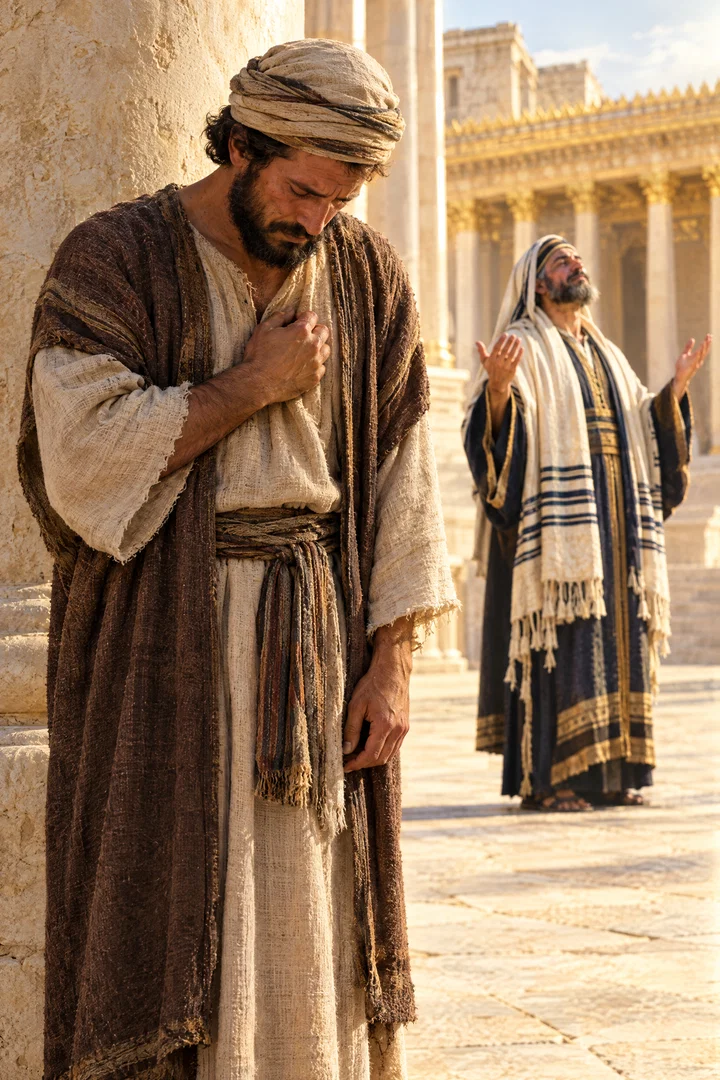
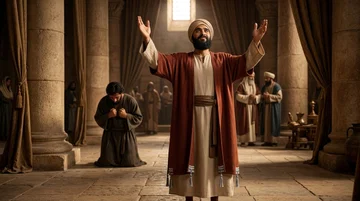
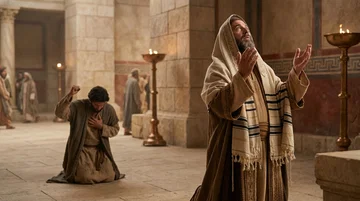
Two men went up into the temple to pray; the one a Pharisee, and the other a publican.
Translations
American King James Version, King James Version, KJV Cambridge Paragraph Bible, Webster Bible, Revised Version, American Standard Version
Two men went up into the temple to pray; the one a Pharisee, and the other a publican.
'Two men went up to the temple to pray, the one a Pharisee, and the other a tax-gatherer;
Two men went up into the temple to pray; the one a Pharisee, and the other a tax-gatherer.
Two men, went up into the temple to pray, one, a Pharisee, and, the other, a tax-collector.
Berean Standard Bible, Majority Standard Bible
“ Two men went up to the temple to pray. One was a Pharisee and the other a tax collector.
“ Two men went up into the temple to pray; one was a Pharisee, and the other was a tax collector.
Two men went up to the Temple for prayer; one a Pharisee, and the other a tax-farmer.
Two men went vp into the Temple to pray: the one a Pharise, and the other a Publican.
Douay-Rheims (Challoner revision)
Two men went up into the temple to pray: the one a Pharisee, and the other a publican.
Pictures
Cross-references
- Luke 18:14
I tell you, this man went down to his house justified rather than the other: for every one that exalteth himself shall be abased; and he that humbleth himself shall be exalted.
The humble publican goes home justified, while the self-exalting Pharisee is humbled.
- Matthew 6:5
And when thou prayest, thou shalt not be as the hypocrites are: for they love to pray standing in the synagogues and in the corners of the streets, that they may be seen of men. Verily I say unto you, They have their reward.
Both rebuke ostentatious prayer seeking human approval.
- 1 Samuel 16:7
But the LORD said unto Samuel, Look not on his countenance, or on the height of his stature; because I have refused him: for the Lord seeth not as man seeth; for man looketh on the outward appearance, but the LORD looketh on the heart.
God sees the heart rather than outward appearance or standing.
- Matthew 23:12
And whosoever shall exalt himself shall be abased; and he that shall humble himself shall be exalted.
Self-exalting is humbled, while the humble are exalted.
- Romans 10:1-4
Brethren, my heart’s desire and prayer to God for Israel is, that they might be saved.
Paul rebukes self-righteous trust in the law.
- Isaiah 66:2
For all those things hath mine hand made, and all those things have been, saith the LORD: but to this man will I look, even to him that is poor and of a contrite spirit, and trembleth at my word.
God regards the humble and contrite.
- Matthew 9:13
But go ye and learn what that meaneth, I will have mercy, and not sacrifice: for I am not come to call the righteous, but sinners to repentance.
Jesus calls sinners to repentance, not the self-righteous.
- Psalms 51:17
The sacrifices of God are a broken spirit: a broken and a contrite heart, O God, thou wilt not despise.
God does not despise a broken and contrite heart.
- Luke 14:11
For whosoever exalteth himself shall be abased; and he that humbleth himself shall be exalted.
The self-exalting are brought low, while the humble are exalted.
- Luke 19:1-10
And Jesus entered and passed through Jericho.
Zacchaeus, like the penitent publican, is a tax collector whom Jesus came to save.
- Acts 26:5
Which knew me from the beginning, if they would testify, that after the most straitest sect of our religion I lived a Pharisee.
Both texts identify a Pharisee within Jewish religious life.
- Hebrews 4:12-13
For the word of God is quick, and powerful, and sharper than any twoedged sword, piercing even to the dividing asunder of soul and spirit, and of the joints and marrow, and is a discerner of the thoughts and intents of the heart.
God discerns the heart’s intents beneath outward virtue.
Commentary
Each commentary is drawn from primary sources: the writings of Ellen G. White and Adventist pioneers and periodicals. Each commentary is separate. Its own words are not a quotation; follow the references to read the source passages.
Ellen G. White
49 sources
Two men go up to the temple to pray, the one a Pharisee and the other a publican, coming to the same place with the same stated purpose to meet with God.COL 150.1–152.2Ms 123, 1909, par. 1121MR 60.5–61.1 Their shared purpose sets up a contrast of opposite attitudes, for the Pharisee is full of self-praise and considers himself righteous while the publican sees himself as having no claim to mercy and comes aware of sin and need.COL 150.1–152.2ST Oct 21, 1897ST Oct 21, 1897 The Pharisee's prayer has no value and receives no hearing, while the publican's prayer is heard and accepted because it expresses dependence on God's power and reaches for infinite love through faith.Lt 40, 1899, par. 19RH Oct 30, 190021MR 44.3 The publican's sense of unworthiness places him nearer to God than the Pharisee's claims of piety, so the publican rather than the Pharisee goes home justified.LS 212.1RH Feb 28, 1907ST Feb 6, 1901 Everyone who exalts himself shall be abased and whoever humbles himself shall be exalted, for self-righteousness does not earn grace while humility is the way to be exalted and taught.Ms 123, 1909, par. 111T 330.3–331.2Lt 12, 1890, par. 15–18
Setting and Worshipers
Two men went up into the temple to pray, the one a Pharisee and the other a publican, and this sets the scene for a parable about two kinds of worshipers coming to the same place with the same stated purpose to meet with God.COL 150.1–152.2Ms 123, 1909, par. 1121MR 60.5–61.1Ms 84b, 1897, par. 17–21ST Oct 21, 1897 Their shared purpose sets up a contrast of outward worship that alone does not make a person right with God, teaching the need for true humility.COL 150.1–152.2ST Oct 21, 1897 The Pharisee worships from self-interest, trusting in his own righteousness and seeking approval, while the publican comes aware of his sin and need for God's mercy.COL 150.1–152.2 The Pharisee stands for those who pray and speak self-righteously, boast of good deeds, and thank God they are not like others, while dishonest actions show conduct that does not match profession of faith.1T 416.1–417.1 The call drawn from the account to be abased means to humble oneself, learn from the great Teacher, and value the privilege of learning from Scripture.Ms 123, 1909, par. 11
Outwardly standing to pray does not prove reverence or humility.21MR 60.5–61.1Ms 84b, 1897, par. 17–21 The Pharisee's erect posture accompanies haughty self-sufficiency, while the publican approaches humbly in contrast with it.21MR 60.5–61.1Ms 84b, 1897, par. 17–21 An erect stance in prayer must therefore not be treated as a sign of reverence.21MR 60.5–61.1Ms 84b, 1897, par. 17–21
The two men represent two classes and two confidences: self-righteous confidence and a sense of unworthiness.RH Feb 28, 1907MH 164.2Ms 198, 1905, par. 5Lt 168, 1897, par. 1–2 The Pharisee stands for self-righteousness and for those who stand apart in self-esteem and importance and look down upon others, a class Christ would never countenance.RH Feb 28, 1907MH 164.2Ms 198, 1905, par. 5Lt 168, 1897, par. 1–2 The publican stands for the outcast, the sinner, and the despised, whom Christ calls and by loving-kindness compels to come to Him and whom He welcomes.MH 164.2Ms 198, 1905, par. 5
Humble Prayer Heard
Two men come to the same place with the same stated purpose to meet with God, and their shared approach sets up a contrast of opposite attitudes that teaches the need for true humility.COL 150.1–152.2ST Oct 21, 1897ST Oct 21, 1897 The one worships from self-interest, trusting in his own righteousness, seeking approval, full of self-praise and considering himself righteous, while the other comes aware of his sin and need, seeing himself as having no claim to mercy or approval.COL 150.1–152.2ST Oct 21, 1897 Outward worship alone therefore does not make a person right with God.COL 150.1–152.2
Only one who knows himself to be a sinner can be saved, for without self-knowledge, without conviction of sin and without contrition the soul is encased in self-righteous armor that pardon and peace cannot reach and that the Holy Spirit cannot penetrate.COL 158.2 Knowledge of the real condition creates felt need for help, understanding of danger drives flight to the refuge, and feeling the pain of wounds creates desire for healing.COL 158.2 Christ came to heal the brokenhearted, to preach deliverance to captives, to give sight to the blind and to set at liberty the bruised, while those who are whole feel no need of a physician.COL 158.2
The self-satisfied prayer has no value and receives no hearing, marked as it is by self-praise, pride, self-sufficiency, little reverence and human superiority, and by looking down with contempt on those regarded as sinners.Lt 40, 1899, par. 19RH Oct 30, 190021MR 44.3ST Mar 15, 1899Ms 93, 1898, par. 9–12 By contrast the humble prayer is heard and accepted because it expresses dependence on God's power, regards self as nothing and shameful, and reaches for infinite love through faith and prayer.Lt 40, 1899, par. 19RH Oct 30, 190021MR 44.3 Faith also recognizes the benefit of making peace with God.Lt 40, 1899, par. 1921MR 44.3 Accepted prayer requires reverence, humility of mind, searching of heart, putting right wrongs done to others by speech, bringing soul and tongue and words to God to glorify Him, and watching unto prayer by speaking and acting in harmony with prayer.Ms 93, 1898, par. 9–12
The sense of unworthiness and plea for mercy place the needy one nearer to God than claims of piety, so he rather than the other goes home justified.LS 212.1RH Feb 28, 1907ST Feb 6, 1901 Heaven regards the proud boaster of righteousness differently from the person who knows need and longs to be nearer to God, and the needy sinner has greater discernment of heavenly things than the one who considers himself important and righteous.ST Feb 20, 1896 Those who claim to be sinless show the same self-righteous spirit, failing to recognize need for forgiveness, wisdom, light, strength and growth in grace.LS 212.1
Everyone who exalts himself shall be abased and whoever humbles himself shall be exalted, for exalting self and pointing to personal righteousness, devotion, prayerfulness, fasting and tithing does not earn grace.1T 330.3–331.2Lt 12, 1890, par. 15–1812MR 116.3–117.2 The self-exalted one is wise in his own opinion, forward to instruct but unwilling to be taught, despising instruction and condemning others while blind to his own faults, whereas true righteousness never produces pride or disdain.1T 330.3–331.2Lt 12, 1890, par. 15–1812MR 116.3–117.2 Humility is the way to be exalted, to learn from the great Teacher, and to value the privilege of learning from Scripture.Ms 123, 1909, par. 11Lt 12, 1890, par. 15–18 When mortals become just in their own eyes they are left to be deceived about themselves, and their life is not marked with the humility that must characterize followers of Christ.1T 330.3–331.2
Humility is necessary to receive Christ's presence and to enter heaven, and God's blessings are not secured by outward display or self-righteousness but by coming humbly and contritely.ST Feb 26, 1885Ms 37, 1890, par. 24 Such humility shines in the church and the world and will shine in heaven.ST Feb 26, 1885
Exposure of Self-Righteousness
The parable is given for the benefit of all who believe, to expose self-conceit, trust in one's own righteousness, and despising of others.ST Feb 26, 1885Lt 12, 1890, par. 15–1812MR 116.3–117.2 Such self-reliance is spiritual pride and vanity, leading its possessors to condemn others and parade their own virtues while remaining blind to their own faults, whereas true righteousness never produces pride or disdain.ST Feb 26, 1885Lt 12, 1890, par. 15–1812MR 116.3–117.2 People may thus display virtue while failing to see their sin, but God sees the heart with its disobedience and serious defects of character.ST Feb 26, 1885
The Pharisee congratulates himself and spreads his virtues before God, enumerating good deeds, devotion, prayerfulness, fasting, and tithing.1T 416.1–417.11T 330.3–331.2Lt 35, 1885, par. 11–14 He thanks God that he is not as other men, boasting of religious deeds, thinking little of his sins and much of his virtues, lifting himself as high as possible in his own eyes and treating himself as better than the publican.1T 416.1–417.1LS 212.11T 330.3–331.2Lt 35, 1885, par. 11–14 He is wise in his own opinion and exalted in his own eyes, forward to instruct but unwilling to be taught, despising instruction and seeing himself not as God sees him.1T 330.3–331.2Lt 35, 1885, par. 11–14 His dishonest actions show conduct that does not match profession, and his prayer is not regarded but rejected.1T 416.1–417.11T 330.3–331.2
That self-made righteousness springs from self and not from Christ, trusting one's own good works and meritorious acts to buy heaven and salvation.3T 172.2Lt 8, 1867, par. 9–10 It expresses itself in rigorous self-imposed fasting and prayer that God has not required and with which He has nothing to do, which leaves its practitioners unsustained and injures health.3T 172.2Lt 8, 1867, par. 9–10 In contrast every sinner must rely alone upon the merits and blood of a crucified and risen Saviour, for Christ and true godliness give health to the body and strength to the soul, and the true religion of the Bible never harms body or mind.3T 172.2Lt 8, 1867, par. 9–10
The Pharisee is the pattern of false profession of sanctification and of claims to be sinless and without need of Jesus, forgiveness, wisdom, light, strength, and growth in grace.LS 212.1BS 9.2 Those like him claim holiness and say God leads and teaches them and that they live without sin, yet they are entirely ignorant of the work of grace upon the heart.BS 9.2 They lay aside reason and judgment, depend wholly upon feelings and upon emotions once experienced, will bear no contradiction, and stubbornly urge their claims with many words while bearing no precious fruit as proof.BS 9.2 They delude their own souls and exert an influence to lead astray many who earnestly desire to conform to the will of God, in a dark, mysterious spirit altogether unlike Christ, the only true pattern.BS 9.2
The scene also exposes false humility in those who trust religious office and many devotional duties to make them accepted by God.15MR 271.1 They may speak of their own spiritual poverty and of others' faults while inwardly proud of supposed humility and righteousness.15MR 271.1 Their humility is false, and they refuse reproof when God exposes their defects.15MR 271.1
God's judgment is totally different from human judgment, for His eye reads the intents and purposes of the soul behind the profession.ST Feb 26, 1885Lt 35, 1885, par. 11–14 The fatal spell of this pride makes the soul deaf and blind to compassion, mercy, and truth, so that flattery of friends and trust that much good work will recommend to God's favor deceives the soul.Lt 35, 1885, par. 11–14
The Pharisee is a man anchored firmly to the rock of self-righteousness and entrenched in its fortress behind walls and armor, and while a person stays there neither God nor man can do anything for him.Lt 52, 1886, par. 1–2 To be freed he must wrench himself away from that mooring, break down the walls by seeking God and wrestling with Him in supplication, surrender himself to God, grasp the promises, and gain the victory.Lt 52, 1886, par. 1–2 If he does not come to the point and free his soul, he remains anchored there and is enshrouded in dense darkness.Lt 52, 1886, par. 1–2
The spirit of Pharisaism is a high estimate of self that refuses to humble the heart before God and to cast oneself wholly on the mercy of Christ.Ms 103, 1901, par. 2 This spirit excludes Christ from the thoughts, leaves the heart not bound up with the heart of Christ, hides the glory of the Redeemer, and places a barrier between the person and the Saviour.Ms 103, 1901, par. 2 It keeps people from candidly confessing sin, receiving pardon, and relying on Christ's righteousness.17MR 312.2–3 Professing belief while failing to do God's will, the Pharisee pictures the danger of becoming self-righteous instead of growing spiritually and following Jesus.Lt 55, 1886, par. 1
Warnings and Right Response
Do not measure righteousness by comparing conduct with those who act worse, but examine whether the light and instruction received have been taken seriously.ApY 68.113MR 35.1 Yield the heart to God, love to follow Jesus, and be guided by the Holy Spirit rather than flattering self as righteous.13MR 35.1 The Pharisee's course also warns against comparing one's own work with a brother's and criticizing or depreciating him, for such comparison is pride and not the meekness and lowliness learned from Christ.RCOC 74.3STMW7 15.1–16.1
Phariseeism is the grievous sin of self-sufficiency, feeling righteous and counting all acts meritorious while far from the right spirit toward God and toward brethren.Lt 15, 1888, par. 10 It is wanting to be first, with cherished self-esteem and criticism of others for not giving first place, producing envy, jealousy, suspicion, fault-finding, and false witness.Lt 15, 1888, par. 10 Under its power unconsecrated hearts turn everything said or done, even what is under God's special direction, into a wrong meaning, viewing things in a perverted light, making a man an offender for a word where often there is no actual sin, the suspicion coming only from the critic's own mind.Lt 15, 1888, par. 10 When one crosses their track there is no more unity or sweet fellowship but only disgust at all he says or does, with feelings spread to those who trust them and a secret spirit of retaliation at work, yet still claiming firm belief in the truth without practicing its spirit, so that evil surmising permeates the company, God is dishonored, truth is degraded, and Christian experience is marred and dwarfed.Lt 15, 1888, par. 10
This pride casts a fatal spell that makes the soul deaf and blind to compassion, mercy, and truth, deceived by flattery of friends and by trust that much good work will recommend to God's favor.Lt 35, 1885, par. 11–14 The lesson is to fear self-exaltation, to behold Christ in order to think little of self, to learn meekness and lowliness of heart and wear His yoke.Lt 35, 1885, par. 11–14 Accept the unpleasant work of soul cleansing and bruising of self rather than turning away from reproof and slumbering on in imperfection until the second death, seeing self as God sees instead of lifting self as high as possible and thinking little of sins and much of virtues.Lt 35, 1885, par. 11–14 Those exalted in their own opinion strengthen themselves by looking back to a past experience of God's leading and then conclude they need no further teaching and know it all.1T 330.3–331.2Ms 3, 1862, par. 6–7 They despise instruction and cast behind them teaching through God's servants, constantly pointing to their own righteousness, devotion, and prayerful life and depending on their own merits, including boasting of fasting and tithing, while their lives lack the humility that must mark Christ's followers.1T 330.3–331.2Ms 3, 1862, par. 6–7 When mortals become just in their own eyes Jesus leaves them to their own ways to be deceived about themselves, and they develop a hard, self-righteous spirit with no union with Christ's meekness.1T 330.3–331.2Ms 3, 1862, par. 6–7
The rebuke of the Pharisee applies to those who have lost their first love and use fasting, prayers, ceremonies, outward humility, and imposed sacrifices to claim righteousness and entitlement to heaven.Ms 84, 1894, par. 16 Such works cannot earn entrance into heaven, for the one great offering is sufficient for all who believe.Ms 84, 1894, par. 16 Ministers in particular are warned against a self-satisfied spirit that relies on old theories and rejects a message sent by God while wrongly thinking they are safe, for zeal marked by Pharisaism is not commended and is not of Christ.Ms 27, 1889, par. 16Ms 23b, 1896, par. 16 Those who consider themselves morally superior must seek God as sinners, for Pharisaism must be broken or they will fail to develop Christian character and be lost.Lt 31a, 1893, par. 11–12 Striving for superiority is pride and hardness of heart, while humble prayer and closeness to Jesus banish criticism and judgment of others.Lt 31a, 1893, par. 11–12Lt 110, 1893, par. 10
Do not approach God with pomposity, human superiority, and little reverence like the Pharisee who praised and adored himself and in pride and self-sufficiency despised those he regarded as sinners.21MR 61.2Ms 93, 1898, par. 9–12 Distrust personal strength, depend on God, and worship humbly, for whoever prays in pride and self-sufficiency will not be heard.21MR 61.2Ms 93, 1898, par. 9–12 Accepted prayer requires reverence, humility of mind, searching of heart, putting right wrongs done to others by speech, bringing soul, tongue, and words to God to glorify Him, and watching unto prayer by speaking and acting in harmony with prayer.Ms 93, 1898, par. 9–12 The only safe position is to consider oneself a sinner daily needing divine grace, with mercy through the atoning blood of Christ as the only plea, exalting God and His grace and seeking salvation through Christ alone instead of trusting and presenting one's own good deeds.ST Feb 26, 1885 This self-exalting spirit is urged by Satan when he appears as an angel of light, and his temptations can be met only with the word of God by standing fast on truth and relying on It is written.ST Feb 26, 1885 The call therefore is for humility, confession, and the Holy Spirit's help to see and correct faults rather than being pharisaical, condemning others while failing to discern one's own defects.Ms 13a, 1891, par. 19–23
Sources
Pioneers and periodicals
91 sources
Two men went up into the temple at the hour of public prayer to meet God in worship, one a Pharisee and the other a publican.ST Jul 23, 1885ST Aug 27, 1894ST Apr 23, 1896 The parable was spoken to those who trusted in themselves that they were righteous and despised others, setting forth in the two worshipers the only two classes of men who come to God.ST Apr 23, 1896 The Pharisee was a strict observer of rites and traditions who stood and prayed with himself without confession or sense of need, informing God of his goodness in fasting, tithing and not being as other men are, while the publican as a despised Roman tax-collector stood afar off, would not lift his eyes to heaven, smote his breast and pleaded only for mercy as a sinner.ST Nov 24, 1881ST Nov 24, 1881ST Oct 8, 1885 The publican went down to his house justified, counted just, pardoned and free from sin, because he felt his need and trusted wholly in free grace and the shed blood of Christ, while the Pharisee who thought himself already righteous did not desire pardon.ST Jul 23, 1885ST Aug 27, 1894ST Apr 21, 1881ST Jan 29, 1894RH Nov 30, 1916 God is no respecter of persons for wealth or reputation but looks on the heart, resisting the proud and giving grace to the humble, so that everyone who exalts himself shall be abased and he who humbles himself shall be exalted.ST Feb 19, 1885ST Feb 26, 1885RH Sep 9, 1902
Temple Scene and Worshipers
Two men went up into the temple to pray, the one a Pharisee and the other a publican, at the hour of public prayer and for the professed purpose of meeting God in worship.ST Oct 21, 1897ST Feb 19, 1885ST Apr 23, 1896ST Nov 27, 1901RH Oct 10, 1871 Their going up together sets the scene for a contrast in which religious standing and outward observances do not make a person righteous, for the Pharisee trusts in his own goodness while the publican recognizes his sin and need of mercy, so that the humble sinner is justified and the one who claims to be faultless is condemned.ST Jul 23, 1885ST Aug 27, 1894ST Nov 27, 1901 The difference between self-righteous pride and humble dependence on God is introduced in their very identities as they come to pray.ST Jul 23, 1885ST Aug 27, 1894ST Nov 27, 1901
The parable was spoken to those who trusted in themselves that they were righteous and despised others, and the two men set forth two contrasting classes in prayer.ST Apr 23, 1896 The Pharisee stands for those who trust in themselves that they are righteous and despise others, while the publican stands for the sinner who comes confessing sin and pleading for mercy, whom God justifies rather than the self-righteous man.ST Apr 23, 1896 Whoever so trusts in himself will despise others, and the publican's sense of need and recognition of poverty and sin meets the very first condition of acceptance with God.ST Nov 27, 1901RH Nov 6, 1860 Those whom heaven recognizes as holy are the last to parade their own goodness, and great as is the shame and degradation through sin, even greater will be the honor and exaltation through redeeming love, with an outlay of heaven's treasure and an excellency of power imparted to human beings striving for conformity to the divine image that will place them higher even than angels who have never fallen.ST Nov 27, 1901
The Pharisee was a Jew who knew the true and living God and belonged to a sect known for strict observance of religious rites, ceremonies and traditions.RH Oct 10, 1871 His picture was taken from real life, representing a class whose actual prayers thanked God for putting their lot with those who sit and study the law rather than with money-changers, traders, robbers, unclean persons and false swearers in the towns. His attitude matches thanksgivings that contrasted rising early to words of the law with rising early to vain things, labor that receives a reward with labor that receives no reward, and running to the life of the world to come with running to the pit of destruction. It matches also the boastful claim that if there were only two righteous men in the world they were a certain rabbi and his son, and if only one it was he himself.
A publican was a collector of Roman taxes or customs, and the actual collectors were often extortioners and were widely regarded as robbers.ST Aug 27, 1894 He stands for what people see as the worst in society, those who make no pretensions to righteousness, pictured as standing afar off, unwilling to lift the eyes to heaven, and asking God for mercy as a sinner who knows himself to be a sinner.RH Aug 11, 1904RH Aug 22, 1865ST Aug 27, 1894 A sinner who comes to God humbly in this way can go home saved and happy.RH Aug 22, 1865
The two men represent the two great classes into which all who come to worship God are divided, and there are only two classes of men: the sinner who thinks himself righteous and the righteous man who thinks himself a sinner.ST Feb 19, 1885RH Jul 28, 1910 They stand for what people see as the best and the worst in society, the very good, conscientious and scrupulously careful people who make the most pretensions to righteousness and those who make none.ST Feb 19, 1885RH Aug 11, 1904 The class represented by the Pharisee is regarded as eminent for piety and of great excellence of character, while the class represented by the publican is much less respectable in the eyes of the world and in their own estimate of themselves.ST Feb 19, 1885RH Aug 11, 1904 That human estimate is false, for Heaven holds the exact opposite estimation, and both stand under the eye of the heart-searching God who is no respecter of persons, to whom wealth and titles, talent and reputation are no recommendation, for man looks on the outward appearance but the Lord looks on the heart.ST Feb 19, 1885 Though both resort to the same place for the same professed purpose, their motives and the feelings expressed in their prayers stand in complete contrast.ST Feb 19, 1885
Contrasting Prayers and Attitudes
The Pharisee stood and prayed with himself rather than to God, seeing only self and therefore praising and exalting self, with no room for anything else.RH Mar 14, 1912ST Apr 1, 1897ST Oct 8, 1885 His prayer contained no confession of sin and no petition for mercy, because he felt no sense of need and trusted in his own righteousness while despising others.RH Mar 14, 1912RH Feb 18, 1858RH Oct 10, 1907 He compared himself not with God's law but with other men, resting on outward performances such as fasting and alms-deeds rather than humility, faith, or purity of heart, and had he seen God he would have abhorred self.ST Apr 1, 1897RH Feb 18, 1858 His approach had no value because it showed no dependence on God's power, whereas the prayer that expresses felt need is heard and answered.RH Oct 30, 1900RH Oct 10, 1907
His address was fluent, self-satisfied and pompous, informing God how good his life was and what laudable deeds he constantly performed.ST Nov 24, 1881ST Jan 11, 1877 He thanked God that he was not as other men are — extortioners, unjust, adulterers — nor as bad as the publican nearby, and listed avoiding extortion, cheating and adultery, fasting twice in the week, and giving tithes of all he possessed.ST Nov 24, 1881ST Apr 1, 1897 In one reckoning his twenty-nine words contain five I's, one I to every six words, mere boasting gotten off for a prayer, setting I a saint against me a sinner.ST Oct 8, 1885 In another reckoning his prayer was about five times as long as the publican's six-word prayer, a pompous address rather than a true petition for what is needed.ST Jan 11, 1877RH Oct 7, 1873
The publican stood afar off and alone in God's presence, unwilling to unite with other worshipers, trembling and abashed.RH May 23, 1871 He regarded self as shameful, sinful and polluted, with no merit to commend him, would not lift up so much as his eyes to heaven, and smote upon his breast in anguish and self-abhorrence.RH May 23, 1871RH Sep 23, 1873 His only plea was God be merciful to me a sinner, meaning me, the sinner, a definite confession that he himself is guilty, with mercy as his only plea and no comparison with others.ST Nov 24, 1881RH May 23, 1871 His brief six-word petition was humble, considerate and reverent, expressing deep unworthiness from the heart.RH May 23, 1871ST Jan 11, 1877RH Oct 7, 1873
The Pharisee came not from a sense of sin and need of pardon but from self-interest, thinking himself righteous and hoping to win commendation and secure favor with God and man by merit. He measured his goodness against other people rather than God's character, so that the worse they were the more righteous he appeared by contrast, and his religion remained outward, full of self-praise and self-satisfaction without touching the soul in love and mercy. The publican came feeling he had transgressed against God, desiring only pardon and peace, recognizing his sin and need of mercy with the dependence that belongs to the poor in spirit.ST Apr 20, 1915 Heaven responds to those who feel their need, but there is no promise to those who rely on their own excellence and feel no need of help.RH Oct 10, 1907ST Apr 20, 1915
The Pharisee's outward acts could be duties and were not worthy of censure in themselves, yet his service was not pleasing to God, while the publican though perhaps guilty of grievous sins found acceptance.ST Sep 22, 1881ST Aug 14, 1884 The difference was the state and condition of the heart and the unseen motive underlying every act, which God reads as man cannot see, rather than outward conduct or social standing.ST Sep 22, 1881ST Aug 14, 1884ST Jun 1, 1904 Length does not determine the worth of prayer, for the Pharisee's prayer was short though longer than the publican's, and a short prayer can be unacceptable just as a long prayer can be acceptable.RH Dec 11, 1860RH Jul 21, 1863ST Jan 11, 1877 The amount of prayer does not make it effective; the difference is praying in the right way from felt need, with the publican's brief petition changing his prospects for eternity while long prayers without that spirit avail nothing.RH Dec 11, 1860RH Jul 21, 1863
Justification by Humble Faith
The publican went down to his house justified rather than the Pharisee, counted as a just man, free from sin, pardoned and saved.ST Jul 23, 1885ST Aug 27, 1894ST Jan 29, 1894RH Aug 26, 1862RH Jul 27, 1876 He received pardon because he felt his need for it, while the Pharisee, believing himself already righteous, did not desire it.ST Jul 23, 1885ST Apr 21, 1881RH Aug 26, 1862RH Jul 27, 1876 The humble sinner is justified, but the one who claims to be faultless and trusts in religious standing and outward observances is condemned.ST Jul 23, 1885ST Aug 27, 1894 The contrast exposes the danger of trusting in one's own righteousness and looking down on others, for a long proud prayer without love is wasted while a lowly trusting prayer with deep repentance is heard.ST Aug 27, 1894RH Jul 27, 1876 The brokenhearted sinner who confesses unworthiness and seeks mercy is accepted through coming as a sinner, rather than claiming righteousness or waiting to become worthy.RH Aug 26, 1862RH Jul 27, 1876
He was justified through faith in Jesus' shed blood, made a partaker of the propitiation provided through faith in that blood by confessing that he was a sinner.ST Jan 29, 1894 Saving faith does not rely on personal merit but trusts wholly in Christ's merits and God's power to save, looking to God's worthiness rather than one's own goodness.ST Jan 29, 1894RH Nov 30, 1916RH Nov 14, 1865RH May 15, 1866 It seeks salvation only by free grace in Christ, depending on nothing but that grace even when sensible enjoyments are denied.RH Sep 3, 1857RH Aug 27, 1857 It places no merit in faith itself, nor in godly sorrow and repentance, nor requires any set measure of them; it is enough to hate sin, desire grace, and sincerely begin the Christian life.RH Sep 3, 1857RH Aug 27, 1857 The sinner who gives up attempts to make himself fit for God can receive Christ's righteousness and find peace and joy, while reliance on one's own moral life and works cannot make a person acceptable to God.RH Nov 14, 1865RH May 15, 1866
God is no respecter of persons, to whom wealth and titles, talent and reputation are no recommendation, for man looks on the outward appearance but the Lord looks on the heart.ST Feb 19, 1885 Both worshipers stand under the eye of the heart-searching God, and human estimate is false, for the class regarded as eminent for piety and of great excellence of character and the class much less respectable in the eyes of the world and in their own estimate stand in Heaven's exact opposite estimation.ST Feb 19, 1885ST Feb 20, 1896 He resisteth the proud but giveth grace unto the humble, so that pride makes the mighty God an adversary.ST Apr 27, 1882 The penitent is commended in tender love while the proud boaster and hypocrite whose heart is unchanged is spurned, and taking the publican's dress and posture, smiting the heart, bowing down, groaning and owning sins without feeling them while proud of humility is still the Pharisee's prayer.RH Sep 9, 1902ST Apr 27, 1882 Self-reliance is spiritual pride and vanity, parading virtues while failing to see sin, disobedience and serious defects of character that God sees.ST Feb 26, 1885 The forgiven publican becomes an altered man who comes with lifted head and joyfully gives thanks for the new life he leads, and God accepts his offering, for sometimes tears and sometimes thanks are accepted, but only truth pleases God.RH Sep 9, 1902
The sense of need and recognition of poverty and sin is the very first condition of acceptance with God.ST Nov 27, 1901 Awareness of spiritual need places a person on the path to a better state and nearer to God, with greater discernment of heavenly things and dependence on deliverance belonging to the poor in spirit.ST Feb 20, 1896RH Jun 26, 1855ST Apr 20, 1915 Confidence that one is better and trust in one's own goodness and excellence leaves a person satisfied with self, feeling no need of help, spiritually rich and therefore not pleading for grace, and unable to improve.RH Jun 26, 1855ST Apr 20, 1915ST Jan 22, 1885 Heaven responds to those who feel their need, but there is no promise to those who rely on their own excellence to save them.ST Apr 20, 1915 Those whom heaven recognizes as holy are the last to parade their own goodness, and to human beings striving for conformity to the divine image is imparted an outlay of heaven's treasure and an excellency of power that will place them higher even than the angels who have never fallen.ST Nov 27, 1901
Everyone who exalts himself shall be abased and he who humbles himself shall be exalted. Feeling spiritually favored does not make a person right with God, and a sense of unworthiness does not prove rejection, so the despondent should trust God's promises by faith.ST Sep 1, 1881 Humility is necessary to receive Christ's presence and enter heaven, and true humility shines in the church and the world and will shine in heaven.ST Feb 26, 1885 Trusting one's own judgment and supposing oneself righteous while mistaking self-esteem for holiness leads to being abased, while humility leads to being exalted. The publican's prayer shows true repentance in lowly manner, with deep sense of sin and guilt, broken and humbled heart, and desire for God to cleanse, pardon and save.RH Oct 2, 1856 He relies on forgiving mercy rather than claiming merit from good works, recognizing that he stands condemned with no defense of his own, ready to confess and forsake sins, and such sorrow and shame in humility are more valuable to God than costly sacrifices, while outward righteousness, high profession and boasted superior goodness lose sight of Christ.RH Oct 2, 1856RH May 27, 1875ST Jun 3, 1875ST Dec 30, 1880
Scriptural Parallels and Fulfilments
The first to live out the two prayers were Cain and Abel. Cain went up thinking himself righteous, bringing a thank-offering only, with no confession of sin and no acknowledgment of need for mercy. Abel went up as a lost sinner, bringing blood that pointed to the Lamb of God, with his only hope in the unmerited love of God. God had respect to Abel's offering and not to Cain's, for the sense of need and the recognition of poverty and sin is the very first condition of acceptance with God.
The Laodicean church stands in that same Pharisaic condition, self-satisfied and self-ignorant.RH Aug 11, 1904RH Apr 2, 1914RH Nov 6, 1860 She says I am rich and increased in goods, while in truth she is wretched and miserable and poor and blind and naked.RH Aug 11, 1904RH Nov 6, 1860 She feels rich and spiritually well while lacking the real power of godliness, regards herself as well off in the world and well to do in the spiritual kingdom, and mistakes gifts for graces with all her treasures imaginary.RH Aug 11, 1904RH Apr 2, 1914RH Nov 6, 1860 The same Christ who then spoke in parable now speaks plainly and without parable to Laodicea, declaring He will spue her out of His mouth.RH Nov 6, 1860
The same contrast reappears in Peter. The Pharisee's self-confidence and belief in his own righteousness parallel Peter's early boastful confidence. The publican's contrition and repentance parallel Peter's grief after denying Christ, and as Peter's repentance brought him mercy so humility and dependence on God open the way to pardon.
Even in the most religious mood of worship the Pharisee's self-righteous prayer made every mention of God's name empty, void, worthless, destitute of force and efficiency, to no purpose, fruitless and ineffectual.RH May 2, 1907 So to pray thus is to take God's name in vain in breach of the third commandment.RH May 2, 1907 The teaching sets forth the leading principles of Christ's kingdom: love to God, human brotherhood, and respect for the rights of all, including the poor and despised.ST Aug 25, 1914RH Oct 8, 1861 Christ calls the despised and outcast represented by the publican with loving-kindness, while the self-important class that looks down on others, represented by the Pharisee, He does not countenance.ST Aug 25, 1914RH Oct 8, 1861
The parable holds out salvation from sin to every kind of sinner across the whole range from the Pharisee to the prodigal.ST Jan 15, 1902ST Jan 29, 1902ST Feb 26, 1902ST Oct 23, 1901ST Nov 13, 1901 It belongs among the parables that offer that salvation to every type, including the Pharisee and the Pharisee type of sinner.ST Jan 15, 1902ST Jan 29, 1902ST Feb 26, 1902ST Nov 13, 1901ST Dec 4, 1901 The chapter to which the verse belongs also shows the oppressed people of God raising a united, persistent cry to heaven for deliverance near the close of the church's history in this world.RH Feb 25, 1862
Warnings and Christian Living
The verse commands judge not, for whoever trusts in himself that he is righteous will despise others.RH Aug 11, 1904RH Feb 18, 1858ST Dec 19, 1900RH Jun 3, 1858RH Dec 22, 1874 The two men stand for what people see as the best and the worst in society, those who make the most pretensions to righteousness and those who make none, the very good, conscientious, scrupulously careful person pictured as one who keeps the Sabbath, lives health reform, pays tithes of all he possesses and gives liberally to the cause, and the worst pictured as a saloon-keeper.RH Aug 11, 1904ST Apr 27, 1882ST Dec 19, 1900 The Pharisee judges himself by other men so that the worse they are the more righteous he appears, regarding himself with self-complacency and his neighbors with contempt, comparing himself not with God's law but with other men and looking only to outward performances such as fasting and alms-deeds rather than humility, faith, or purity of heart.RH Feb 18, 1858RH Jun 3, 1858RH Dec 22, 1874 He keeps up a high opinion of his own merit by elevating himself while depressing those over whom he claims superiority, being sharp-sighted to other men's faults and admiring of his own supposed excellencies, overlooking his own faults while seeing the faults of others as with a magnifying glass.RH Aug 11, 1904ST Apr 27, 1882RH Jun 3, 1858 That spirit seldom expresses itself as plainly as his prayer but is harbored in the heart and guarded against in conversation as much as in prayer, appearing when people do not speak of their own good deeds but loudly condemn the faults of others so hearers will think they are free from such failings, dwelling upon and magnifying the faults of others in gossip concerning scandals to lose sight of their own and make their own shortcomings seem small by comparison, raking together the enormities of the worst characters and the infirmities of the best to justify and applaud self instead of trying character by God's word as the only standard.RH Aug 11, 1904ST Apr 27, 1882RH Jun 3, 1858 A true Christian praises God that grace has made him to differ from others, but never uses comparison to justify himself, for being better than a hypocrite does not make a person good enough for heaven, and a person who recognizes his own sins is more acceptable to God than one who condemns another.ST Dec 19, 1900RH Jun 3, 1858RH Dec 22, 1874
Prayer should be directed to God, not shaped to impress human listeners or audiences.RH Sep 9, 1902RH Oct 24, 1912RH Mar 18, 1873 The Pharisee's prayer informs God how good a life he leads, while the publican's prayer shrinks back in shame and smites his breast, and God in tender love commends the penitent and spurns the hypocrite whose heart is unchanged.RH Sep 9, 1902RH Oct 24, 1912RH Mar 18, 1873 True prayer comes from a heart that recognizes its need and depends on God for salvation and help, and should be simple, direct, plain and humble, expressing the heart's need without elaborate introduction, meaningless words, much speaking, or grand language dressed up in fine phrases.ST Apr 20, 1904RH Oct 24, 1912RH Mar 18, 1873ST Jun 17, 1875 Taking the publican's dress and posture, smiting the heart, bowing down, groaning, and owning sins without feeling them while proud of humility is still the Pharisee's prayer, whereas the forgiven publican becomes an altered man who comes with lifted head and joyfully gives thanks for the new life he leads, and God accepts his offering.RH Sep 9, 1902 Sometimes tears and sometimes thanks are accepted, but only truth pleases God.RH Sep 9, 1902
Going to a place of worship is not enough if a person goes from habit or for social reasons and gives attention to worldly talk and distractions instead of prayer.RH Oct 10, 1871ST Oct 14, 1880 A person may appear devout while displaying self-sufficiency and praising human achievements instead of truly praying, for prayer that is only outward is not prayer.RH Oct 10, 1871ST Oct 14, 1880 The going up of the Pharisee and the publican into the temple to pray rebukes display religion and condemns ostentatious display, which has no place in the Christian standard, along with compulsory observance of religious rites such as enforced Sunday observance with fines and imprisonment.ST Oct 29, 1902 True Christianity is shown to all men not by public exhibition but by having love one to another, and display Christianity necessarily comes short of that standard.ST Oct 29, 1902
Pharisaical prayer is condemned when it is offered without concern for relieving suffering or resisting wickedness, as in professing Christians who pray while ignoring the misery of the poor and the wickedness of the slums and giving no thought to relieving suffering or confronting wickedness.RH Jul 6, 1869ST Aug 2, 1899 The self-righteous, unhumbled Pharisee is an example of the self-conceited and boastful person who represents self-righteousness and lack of humility and has no place in Christ's service, being unfit for it.ST Mar 24, 1887RH Jul 6, 1869 The only safe position is to shun Phariseeism, which is exalting self by trusting and presenting one's own good deeds and wonderful impressions instead of the meekness and humility of the Christian religion.ST Feb 26, 1885RH Dec 13, 1853RH Feb 17, 1852 A high profession of obedience to God's law is worthless without love for God and one's neighbor, expressed in truth, love, and meekness, for trusting in the law with a proud spirit as though outward obedience could earn God's acceptance misses that the law is fulfilled only through perfect love to God, not through self-righteousness.RH Dec 13, 1853RH Feb 17, 1852 People who claim to be sinless are like the self-righteous Pharisee who boasts of religious deeds and treats himself as better than the publican: they do not recognize their need for Jesus, forgiveness, wisdom, light, strength, or growth in grace, whereas the publican grieved and ashamed of sin cries for mercy and goes home justified.LS 212.1
Safety is to consider oneself a sinner daily needing divine grace, with mercy through the atoning blood of Christ as the only plea, exalting God and His grace and seeking salvation through Christ alone.ST Feb 26, 1885RH Oct 10, 1871 The lesson calls people to examine themselves and come to the Lord humbly, confessing and forsaking their sins.LS 212.1RH Oct 10, 1871 This self-exalting spirit is urged by Satan when he appears as an angel of light, and his specious temptations can be met only with the word of God by standing fast on the platform of truth, relying on It is written.ST Feb 26, 1885 Gratitude for God's blessings must not become pride or a feeling of superiority over others, for even being without sin is no reason to boast.ST Outward righteousness and a high profession do not make a person acceptable to God: the Pharisee appeared righteous, while the publican saw his sinfulness, was ready to confess it, and desired to forsake his sins, and was more acceptable.RH May 27, 1875ST Jun 3, 1875RH Jun 24, 1875 True holiness bears meekness, and a person who boasts of superior goodness loses sight of Christ and thereby loses sanctification, for professed Christians who vaunt their holiness and find no delight in God's law resemble the Pharisee rather than the publican, and faithfulness is better shown by a life of action than by publicly claiming to be cleansed from all sin.RH May 27, 1875ST Jun 3, 1875RH Jun 24, 1875 Keeping the Sabbath full of religious exercises does not make a selfish life Christian, and the Sabbath cannot wipe away sins committed during the week, for such religious observance can coexist with selfishness.RH Sep 10, 1872
The Pharisee's spirit of holding oneself aloof from others in self-righteous separation warns mothers and believers not to withdraw from the debased and erring in that proud, distant spirit.RH Dec 10, 1901 They must instead stoop to them with a Christlike touch to comfort them and win them.RH Dec 10, 1901 That compassionate work belongs in a more fitting place than within the shelter of the home, so impure company is not brought across the threshold to leave its smirch upon innocent children.RH Dec 10, 1901 The Pharisee's style also supplies the image of writing that may be polished but is spiritually hollow, without genuine devotion or emotion, in contrast to writing that shows a living experience with God or an earnest search for the way to Zion.RH Aug 15, 1871 The contrast warns against mistaking self-esteem, self-love and outward religious practice for holiness and humility, against confidence in creed, feelings and actions rather than trust in a personal God, and against measuring guilt against others instead of looking to the cross where one's sins placed the Saviour, for God loves a humble, penitent heart and wants true humility rather than self-trust and contempt for others.ST Dec 2, 1886ST Jun 11, 1896RH Mar 22, 1870RH Sep 14, 1869ST Jun 14, 1883
Sources