Luke 18:11
The Pharisee stood and prayed thus with himself, God, I thank thee, that I am not as other men are, extortioners, unjust, adulterers, or even as this publican.
Translations
The Pharisee stood and prayed thus with himself, God, I thank you, that I am not as other men are, extortionists, unjust, adulterers, or even as this publican.
King James Version, KJV Cambridge Paragraph Bible, Webster Bible
The Pharisee stood and prayed thus with himself, God, I thank thee, that I am not as other men are, extortioners, unjust, adulterers, or even as this publican.
Revised Version, American Standard Version
The Pharisee stood and prayed thus with himself, God, I thank thee, that I am not as the rest of men, extortioners, unjust, adulterers, or even as this publican.
the Pharisee having stood by himself, thus prayed: God, I thank Thee that I am not as the rest of men, rapacious, unrighteous, adulterers, or even as this tax-gatherer;
The Pharisee, standing, prayed thus to himself: God, I thank thee that I am not as the rest of men, rapacious, unjust, adulterers, or even as this tax-gatherer.
The Pharisee, taking his stand, these things unto himself was praying: O God! I thank thee, that I am not like the rest of men,—extortioners, unjust, adulterers, or, even as this tax-collector;
The Pharisee stood by himself and prayed, ‘ God, I thank You that I am not like the other men—swindlers, evildoers, adulterers— or even like this tax collector.
The Pharisee stood by himself and prayed, ‘ God, I thank You that I am not like other men—swindlers, evildoers, adulterers— or even like this tax collector.
The Pharisee stood and prayed by himself like this: ‘ God, I thank you that I am not like the rest of men: extortionists, unrighteous, adulterers, or even like this tax collector.
The Pharisee, taking up his position, said to himself these words: God, I give you praise because I am not like other men, who take more than their right, who are evil-doers, who are untrue to their wives, or even like this tax-farmer.
The Pharise stoode and prayed thus with himselfe, O God, I thanke thee that I am not as other men, extortioners, vniust, adulterers, or euen as this Publican.
Douay-Rheims (Challoner revision)
The Pharisee standing, prayed thus with himself: O God, I give thee thanks that I am not as the rest of men, extortioners, unjust, adulterers, as also is this publican.
Pictures

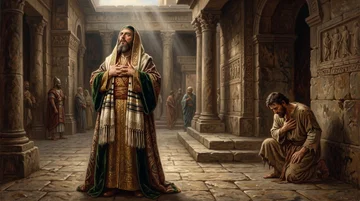


Cross-references 20 of 40
- Revelation 3:17
Because thou sayest, I am rich, and increased with goods, and have need of nothing; and knowest not that thou art wretched, and miserable, and poor, and blind, and naked:
Both expose self-satisfaction that blinds people to their true spiritual need.
- Romans 10:3
For they being ignorant of God’s righteousness, and going about to establish their own righteousness, have not submitted themselves unto the righteousness of God.
Contrasts establishing one’s own righteousness with submitting to God’s righteousness.
- Romans 3:22
Even the righteousness of God which is by faith of Jesus Christ unto all and upon all them that believe: for there is no difference:
God’s righteousness is received through faith, not reliance on one’s own goodness.
- Matthew 6:5
And when thou prayest, thou shalt not be as the hypocrites are: for they love to pray standing in the synagogues and in the corners of the streets, that they may be seen of men. Verily I say unto you, They have their reward.
Both portray prayer shaped by self-righteousness and seeking human praise.
- 1 Samuel 16:7
But the LORD said unto Samuel, Look not on his countenance, or on the height of his stature; because I have refused him: for the Lord seeth not as man seeth; for man looketh on the outward appearance, but the LORD looketh on the heart.
God sees and judges the heart rather than outward appearance.
- Philippians 2:3
Let nothing be done through strife or vainglory; but in lowliness of mind let each esteem other better than themselves.
Calls believers to esteem others above themselves, contrasting the Pharisee’s self-righteous comparisons.
- Isaiah 65:5
Which say, Stand by thyself, come not near to me; for I am holier than thou. These are a smoke in my nose, a fire that burneth all the day.
The Pharisee boasts of being holier than others and separates himself from them.
- Matthew 7:1
Judge not, that ye be not judged.
Jesus warns against judging others.
- Romans 2:1
Therefore thou art inexcusable, O man, whosoever thou art that judgest: for wherein thou judgest another, thou condemnest thyself; for thou that judgest doest the same things.
Judging others while guilty oneself brings self-condemnation.
- Matthew 23:12
And whosoever shall exalt himself shall be abased; and he that shall humble himself shall be exalted.
The verse gives the lesson drawn from the Pharisee’s self-exaltation.
- 2 Corinthians 10:12
For we dare not make ourselves of the number, or compare ourselves with some that commend themselves: but they measuring themselves by themselves, and comparing themselves among themselves, are not wise.
Both condemn self-comparison that measures oneself against others.
- James 4:6
But he giveth more grace. Wherefore he saith, God resisteth the proud, but giveth grace unto the humble.
God resists the proud but gives grace to the humble.
- Matthew 7:3-5
And why beholdest thou the mote that is in thy brother’s eye, but considerest not the beam that is in thine own eye?
The mote and beam warn against judging others while overlooking one’s own faults.
- Luke 14:11
For whosoever exalteth himself shall be abased; and he that humbleth himself shall be exalted.
Self-exaltation leads to being brought low, while humility leads to exaltation.
- John 8:7
So when they continued asking him, he lifted up himself, and said unto them, He that is without sin among you, let him first cast a stone at her.
Jesus says only the sinless may cast the first stone.
- Isaiah 64:6
But we are all as an unclean thing, and all our righteousnesses are as filthy rags; and we all do fade as a leaf; and our iniquities, like the wind, have taken us away.
Human righteousness is described as filthy rags, exposing the Pharisee’s self-righteousness.
- Luke 5:32
I came not to call the righteous, but sinners to repentance.
Christ calls sinners to repentance, not the self-righteous.
- Isaiah 66:2
For all those things hath mine hand made, and all those things have been, saith the LORD: but to this man will I look, even to him that is poor and of a contrite spirit, and trembleth at my word.
God regards the humble and contrite, unlike the self-important Pharisee.
- Matthew 9:13
But go ye and learn what that meaneth, I will have mercy, and not sacrifice: for I am not come to call the righteous, but sinners to repentance.
Jesus calls sinners to repentance rather than the self-righteous.
- Galatians 6:14
But God forbid that I should glory, save in the cross of our Lord Jesus Christ, by whom the world is crucified unto me, and I unto the world.
Contrasts self-glory with glorying in Christ’s cross.
Commentary part 1 of 2
Each commentary is drawn from primary sources: the writings of Ellen G. White and Adventist pioneers and periodicals. Each commentary is separate. Its own words are not a quotation; follow the references to read the source passages.
Ellen G. White
83 sources
The verse belongs to a parable spoken to those who trusted in themselves that they were righteous and despised others, in which a Pharisee eminent for piety and a publican much less respectable went up to the temple to pray, yet heaven's estimate reverses man's and justifies the humble and not the self-righteous.Ms 123, 1909, par. 11ST Feb 19, 1885ST Feb 19, 1885 The Pharisee stood apart in upright posture in haughty pride and self-sufficiency rather than humility and reverence, and he prayed with himself so that his prayer reached no higher than himself in self-worship and self-love rather than worship of God.COL 150.1–152.221MR 60.5–61.1Ms 84b, 1897, par. 17–21ST Feb 19, 1885ST Feb 19, 1885 His thanks names the faults of extortioners, the unjust, adulterers and the publican and spreads his own good deeds as proof of superiority, measuring his character against other people rather than against God's holy character and full of I while thinking little of his sins and much of his goodness.ST Mar 23, 1915DA 495.2Lt 53, 1887, par. 16 God, who looks on the heart and is no respecter of persons, judges such self-exalting prayer unanswered and of no value, so the Pharisee goes down to his house destitute of blessing and unjustified while the consciously unworthy publican pleading for mercy goes home justified.ST Oct 21, 1897ST Feb 19, 1885ST Feb 19, 1885RH Feb 28, 19071T 330.3–331.2 It teaches that righteousness from self and outward religious acts cannot earn salvation, which is through Christ alone, and that pardon requires self-knowledge, contrition, sense of spiritual poverty and humble dependence, while trusting in self, despising others and exalting self over them bars communion with God and must give way to humbling self to be exalted.Ms 123, 1909, par. 11Lt 12, 1890, par. 15–18Lt 46, 1900, par. 34–383T 172.2ST Feb 26, 1885
Parable Setting and Wording
The parable belongs to words spoken to those who trusted in themselves that they were righteous and despised others, in which two men, a Pharisee and a publican, went up into the temple to pray at the hour of public prayer professedly to worship God.ST Feb 19, 1885ST Feb 19, 1885 The Pharisee represents a class of worshipers regarded as eminent for piety and excellence of character, while the publican represents a class much less respectable in the eyes of the world, yet Heaven's estimation is the exact opposite of man's.ST Feb 19, 1885 Both stand under the eye of the heart-searching God who is no respecter of persons, to whom wealth and titles, talent and reputation are no recommendation, for man looks on the outward appearance but the Lord looks on the heart.ST Feb 19, 1885 The self-righteous Pharisee is not the example of those whom God justifies, for they are represented instead by the publican, and humility, not self-righteousness, marks those to whom Christ reveals himself, so that no one can enter heaven without humility and those who humble themselves and learn from the great Teacher will be exalted.Ms 123, 1909, par. 11ST Feb 26, 1885
He stood apart in an upright posture, and that standing expresses haughty pride and self-sufficiency rather than humility and reverence before God.21MR 60.5–61.1Ms 84b, 1897, par. 17–21 His prayer lists his good deeds and compares himself favorably with others, treating his own supposed goodness as its focus, and therefore reaches no higher than himself.21MR 60.5–61.121MR 61.2 That standing is presented as an example of irreverence and pomposity, not a posture to imitate, warning worshipers to distrust their own strength and approach God with humility and reverence.21MR 61.2 Those who claim to be righteous while failing to obey God's commands stand apart from other people in the same way as this self-righteous Pharisee, and his prayer is the expression of a self-righteous class that Christ would never countenance, remaining separated by his own exalted estimate of himself while Christ calls the outcast, the publican and sinner, the despised, and by loving-kindness compels them to come.MH 164.2Ms 127, 1899, par. 47
He prayed thus with himself, so that his prayer reached no higher than himself, and it was self-worship rather than worship of God.COL 150.1–152.221MR 60.5–61.1ST Feb 19, 1885 His words of thanksgiving concealed self-love, not real gratitude, for he neither loved God supremely nor his neighbor as himself, yet boasted of his goodness before God and people, praising and adoring himself instead of God.ST Feb 19, 1885Ms 93, 1898, par. 9–12 He comes prompted by self-interest rather than by a sense of sin and need of pardon, to win commendation and secure favor with both God and men and to be thought pious and excellent, regarding his worship as an act of merit, full of self-praise in look, walk, and prayer, perfectly self-satisfied and sure others admire him as he admires himself.COL 150.1–152.2ST Feb 19, 1885 Standing apart in complete self-satisfaction he assumes God and men view him with the same complacency, judging his character not by the holy character of God but by the character of other men, with his mind turned away from God to humanity, and that is the secret of his self-satisfaction.COL 150.1–152.2 Whoever trusts in himself that he is righteous will despise others, judging himself by other men and judging other men by himself, so that the worse they are the more righteous by contrast he appears, and this boastful, self-righteous, self-complacent prayer feeds self-love and vanity while covering his sins from his own sight, leaving him terribly self-deceived by a human standard.COL 150.1–152.2ST Feb 19, 1885 His self-righteousness leads to accusing and condemning other men as transgressors, manifesting the very spirit of Satan the accuser of the brethren, and with that spirit communion with God is impossible, so he goes down to his house destitute of the divine blessing, more offensive to Heaven than open wickedness.COL 150.1–152.2ST Feb 19, 1885 His self-commendation insults God and misrepresents His character, and self-congratulation brings God's condemnation even when a person is regarded as excellent or belongs to a church, since no one may claim credit for goodness because all that a person has is received through God's grace.ST Feb 19, 1885 To come to God with little reverence and a feeling of human superiority is to be like this Pharisee in pride and self-sufficiency while despising those regarded as sinners, and the Lord will not hear prayers offered in that spirit, for acceptable prayer requires reverence, humility, searching of heart, and putting right wrongs done to others before asking anything of God.Ms 93, 1898, par. 9–12
His thanks that he is unlike extortioners, the unjust, adulterers, or the publican names other people as sinners and measures his character against other people rather than against God's holiness, expressing self-satisfaction, not a sense of need for pardon.DA 495.2 He lists his own good deeds and devotion and treats his outward conduct as proof of superiority, trusting in his own righteousness while in contrast the humble publican's plea for mercy was accepted and his own prayer was not, which exposes his hypocrisy.DA 495.21T 330.3–331.2LJAHS 22.2 He prays to gain favor and praise, and his outward religion rests on his own works and a human standard rather than a heart shaped by love and mercy, using his good deeds and supposed moral superiority to comfort himself while refusing to confess faults.LJAHS 22.2 Prayer becomes self-praise when it proclaims one's own righteousness instead of honoring God, whereas God's name is hallowed when people seek His grace and spiritual blessings rather than glorifying themselves and when their lives represent Christ's character.Ms 34, 1903, par. 15 Those who count themselves righteous and exalt themselves are thus deceived about their condition before God.1T 330.3–331.2
Nature of False Worship
The prayer shows worship driven by self-interest rather than by a sense of sin and need of pardon.COL 150.1–152.2ST Oct 21, 1897 He comes to win commendation and to secure favor, wanting to be thought pious and excellent, treating his worship as meritorious and full of self-praise in look, walk and prayer.COL 150.1–152.2ST Oct 21, 1897 He relies on outward religious duties and his own works as the ground of approval, remaining in complete self-satisfaction and assuming he is viewed with the same complacency.COL 150.1–152.2ST Oct 21, 1897Lt 40, 1899, par. 19 There is in it no confession, no contrition, no love, gratitude or supplication, and no sense of want, only the dependence of the needy soul on divine power being absent and self not counted as shame.COL 150.1–152.2ST Oct 21, 1897Lt 40, 1899, par. 19
He measures his character by other people rather than by the holy character of God.ST Mar 23, 1915 By fixing on how he differs from extortioners, the unjust, adulterers and the publican, his mind is turned from God to humanity.ST Mar 23, 1915 Judging himself by other men and judging other men by himself, the worse they appear the more righteous by contrast he appears, and that comparison is the secret and source of his self-satisfaction and confidence in his own righteousness.COL 150.1–152.2ST Mar 23, 1915 Doing better than those who act worse does not make a person righteous, so instead of flattering self each one must consider the light received and whether the heart is yielded to God.ST Mar 23, 1915ApY 68.113MR 35.1
His prayer is full of I, spreading his virtues before God while thinking little of his sins and much of his goodness.Lt 53, 1887, par. 16Lt 35, 1885, par. 11–14Lt 52, 1886, par. 4–5 It is self-congratulation, self-esteem, self-sufficiency, proud boasting and complacent self-righteousness, parading self for praise and commendation whenever there is opportunity.Lt 53, 1887, par. 16Lt 35, 1885, par. 11–14Lt 52, 1886, par. 4–5 He keeps Jesus in the background and leaves Christ out, taking to himself the glory that belongs to God so that God cannot safely bless the labor.Lt 53, 1887, par. 16Lt 52, 1886, par. 4–5 Such I fills the whole temple of the soul and leaves no room for Jesus, putting Him on the lower seat while self swells into importance, is talked about, and kills spiritual life.Lt 53, 1887, par. 16Lt 52, 1886, par. 4–5 Recounting personal liberality, kindness, devotion and readiness for good works in prayer proves the one who prays so has not been blessed, and such self-praising words should never be spoken again.Lt 52, 1886, par. 4–5Lt 204, 1900, par. 1
He has no sense of his own defilement and no sense of need of mercy, feeling whole and in need of nothing while blind, destitute, wretched and diseased in judgment.1T 416.1–417.1Lt 46, 1900, par. 34–38SC 30.1–2 Without true knowledge of himself and without conviction of sin, his self-righteousness encases his soul like armor that pointed arrows cannot penetrate.SC 30.1–2COL 158.2 With the heart thus closed the Holy Spirit cannot work with him, so he receives nothing.Lt 46, 1900, par. 34–38SC 30.1–2COL 158.2 Pardon and peace require self-knowledge issuing in contrition, a sense of spiritual poverty, willingness to link with brethren and receive counsel, and dependence on the Holy Spirit to do anything righteous; only one who knows himself a sinner, understands his danger, and feels the pain of his wounds will feel need of help, flee to the refuge and desire healing.Lt 46, 1900, par. 34–38COL 158.2
His religion is formal and spiritless, making a show of righteousness while refusing to conquer evil and depend on God.Lt 52, 1886, par. 4–5Ms 3, 1862, par. 6–7Ms 37, 1890, par. 24 It makes excuses for defects, making them appear unavoidable or even praiseworthy, and goes back over past life and wonderful incidents of past experience instead of seeking a fresh, new, joyful daily experience.Lt 52, 1886, par. 4–5Lt 31, 1887, par. 2–3 It lays aside reason and judgment in supreme self-complacency that keeps a person from seeing himself, with the heart so woven through with self that God has little to do with it.Lt 31, 1887, par. 2–3Ms 3, 1862, par. 6–7 The fallow ground of the heart must be broken up by a large measure of the Spirit, the heart softened and subdued, self emptied at the foot of the cross, and humility learned, for only the humble and contrite who come without show receive blessing and become one with Christ.ST Jan 19, 1882Lt 31, 1887, par. 2–3Ms 3, 1862, par. 6–7Ms 37, 1890, par. 24
How God Regards Prayer
Both stand under the eye of the heart-searching God who is no respecter of persons, to whom wealth and titles, talent and reputation are no recommendation.ST Oct 21, 1897ST Feb 19, 1885 To Him praise from friends and much good work cannot commend anyone, nor can religious position and outward appearance earn approval, for man looks on the outward appearance but the Lord looks on the heart.ST Oct 21, 1897ST Feb 19, 1885Lt 35, 1885, par. 11–14 His eye reads the intents and purposes of the soul, including disobedience and serious faults of character hidden beneath outward standing, and His judgment is totally different from human judgment, so that heaven's estimate is the exact opposite of man's.ST Feb 19, 1885ST Feb 26, 1885Lt 35, 1885, par. 11–14 The one regarded as eminent for piety and excellence of character is found wanting in self-importance, while the one regarded as much less respectable is weighed by motives and feelings expressed in prayer at the hour of public prayer.ST Oct 21, 1897ST Feb 19, 1885
The boastful, self-righteous, self-complacent prayer is judged unanswered and of no value because it expresses no dependence on divine power and no shame over self.ST Feb 19, 1885RH Oct 30, 190021MR 44.3 Coming not from felt need of God, with no confession of sin, no broken and contrite heart, no love and gratitude for mercy, no supplication or sense of want, but to be thought pious and excellent and to secure favor, it leaves him to go down to his house destitute of the divine blessing and unjustified.ST Feb 19, 18851T 330.3–331.2 By contrast the publican, conscious of unworthiness and pleading for mercy in dependence on God, is nearer to God, his prayer is heard because it reaches out in dependence on divine power, and he goes home justified rather than the self-confident Pharisee whose claim of superior piety has no sound foundation.RH Feb 28, 19071T 330.3–331.2ST Feb 6, 1901RH Oct 30, 190021MR 44.3 Those who seek God must therefore come as needy suppliants with faith and prayer, for self-reliance before God ends in shame.RH Oct 30, 190021MR 44.3
Self-exalting prayer feeds self-love and vanity, covers sins from one's own sight, and leaves a person terribly self-deceived by judging himself by a human standard.COL 150.1–152.2ST Feb 19, 1885 Measuring character not by the holy character of God but by the character of other men, with the mind turned from God to humanity, is the secret of that self-satisfaction, for the worse others appear the more righteous by contrast he appears.COL 150.1–152.2 God abhors such self-worship as more offensive to heaven than open wickedness, finds the boaster wanting, and will not hear prayers offered in pride and self-sufficiency by those who praise themselves and look down on sinners.ST Oct 21, 1897ST Feb 19, 1885ST Mar 15, 1899 Self-congratulation is condemned even when a person is regarded as excellent or belongs to a church, and self-sufficiency like boastful confidence of never falling hides weakness, leads to a fall, and shuts a person out of communion with God.COL 150.1–152.2
Comparing oneself favorably with others and dwelling on their faults does not show true righteousness but reveals self-deception and false righteousness.Lt 12, 1890, par. 15–1812MR 116.3–117.2 Professing excellence not possessed and exalting self over others in pride and vanity are not signs of virtue or true piety, and confidence in one's own morality with contempt for others does not earn grace.Lt 12, 1890, par. 15–1812MR 116.3–117.2ST Feb 19, 1885 Exalting self in this way, trusting in one's own goodness and refusing to surrender to God, bars a person from communion with God and from the grace that truly exalts and alone makes anyone valuable in His sight.Lt 12, 1890, par. 15–18ST Feb 19, 1885Lt 52, 1886, par. 1–2 Self-exaltation leads to abasement while humility is the way to be exalted, and only God can change the heart and prepare a person for His kingdom.Lt 12, 1890, par. 15–1812MR 116.3–117.2Lt 52, 1886, par. 1–2
True and False Righteousness
The prayer illustrates a righteousness that springs from self alone and not from Christ, trusting personal religious acts and good works as grounds for salvation instead of relying alone upon the blood and merits of the crucified and risen Saviour.3T 172.2ST Feb 26, 1885Lt 8, 1867, par. 9–10 Outward religious acts and rigorous duties may proclaim a person righteous and entitled to heaven, but they cannot earn entrance, for salvation is through Christ alone and rests on His offering made for those who believe.3T 172.2ST Feb 26, 1885Ms 84, 1894, par. 16 It is a cold, legal, loveless religion that does not lead to Christ, the opposite of recognizing oneself as a sinner who daily needs mercy through His atoning blood.ST Feb 26, 1885Ms 84, 1894, par. 16 In contrast to such self-trust, the righteousness of Christ is true godliness, bringing health to the body and strength to the soul.Lt 8, 1867, par. 9–10
It means making profession without doing Christ's sayings and without rendering perfect and entire obedience to all the claims of God's law, which will be satisfied with nothing short of perfection.1T 416.1–417.1 Those who pray thus may point to prayerful lives, devotion, and good deeds while their conduct is crafty and dishonest in business, failing to see their own sinful condition.1T 416.1–417.1SG4 312.2–313.2 Their words and actions are wrong and bear bad fruit that disgusts unbelievers and does not correspond with faith, yet they think they are right and doing a great religious work when they are wrong.1T 416.1–417.1SG4 312.2–313.2 Greater light and knowledge bring greater accountability, so those who know the truth must practice it and keep growing spiritually, otherwise they become like the Pharisee.Lt 55, 1886, par. 1
The Pharisee is the picture of those who profess sanctification while entirely ignorant of the work of grace upon the heart, using good deeds and supposed moral superiority to comfort themselves and refusing to confess faults.LJAHS 22.2BS 9.2 Like him they will bear no contradiction, lay aside reason and judgment, depend wholly upon feelings and upon emotions once experienced, and stubbornly and perversely urge their tenacious claims of holiness with many words but no precious fruit as proof.BS 9.2 Their reiterated boast of being led and taught of God and living without sin deludes their own souls and leads astray many who earnestly desire to conform to the will of God, and the dark mysterious something felt by those who meet that spirit is altogether unlike Christ, the only true pattern.BS 9.2 Such pride, anchored in comparing self favorably with others and trusting in one's own goodness, bars the way to heaven, for one who will not surrender to God cannot receive His help, cannot seek pardon, and cannot receive Christ's righteousness.LJAHS 22.2Lt 52, 1886, par. 1–217MR 312.2–3 Zeal shaped by such self-righteous character is not commended, because it is not of Christ.Ms 23b, 1896, par. 16
Pardon and peace require self-knowledge that results in contrition, for only one who knows himself to be a sinner can be saved by Christ.COL 158.2 A person must know his real condition to feel need of Christ's help, must understand his danger to flee to the refuge, and must feel the pain of his wounds to desire healing.COL 158.2 His self-righteousness encases his soul like armor that God's pointed arrows cannot penetrate, so the Holy Spirit cannot work with him.COL 158.2 Inward self-righteousness claims keener perception and ideas far in advance of others, feels richness and high value and great ability, and regards brethren as inferior and scarcely to be tolerated.Lt 46, 1900, par. 34–38 That is spiritual disease and perverted judgment, feeling whole and in need of nothing while destitute of Christ, with pride and self-exaltation closing the heart so there is no room for Jesus and His blessings.Lt 12, 1890, par. 15–18Lt 46, 1900, par. 34–38 Comparing oneself favorably with others and dwelling on their faults does not show true righteousness but reveals self-deception and false righteousness, and exalting self in this way bars a person from the grace that truly exalts, which only God can give to change the heart and prepare it for His kingdom.Lt 12, 1890, par. 15–18 In the presence of Christ that high estimate is diminished and the prayer changes to confession of sinfulness and need, with a sense of spiritual poverty, willingness to link with brethren and receive counsel, and dependence on the Holy Spirit to do any righteous thing.Lt 46, 1900, par. 34–38
Contempt Toward Fellow Sinners
Whoever trusts in himself that he is righteous will despise others, professing an excellence he does not possess and exalting himself over them.COL 150.1–152.2ST Oct 21, 1897ST Oct 21, 1897 The Pharisee considers himself righteous in his own estimation, treats his own conduct as proof of worth, and measures himself against other people whom he despises.ST Oct 21, 1897ST Oct 21, 1897Lt 168, 1897, par. 1–2 He thanks God that he is not like sinners such as the publican, but his prayer is full of self-praise rather than humility.ST Oct 21, 1897ST Oct 21, 1897Lt 168, 1897, par. 1–2 He judges his character not by the holy character of God but by the character of other men, with his mind turned from God to humanity, so that the worse they are the more righteous by contrast he appears, and that comparison is the secret of his self-satisfaction.COL 150.1–152.2
His self-righteousness leads to accusing and condemning other men as transgressors, looking with contempt on the faulty who by natural temperament struggle to overcome besetting evils.COL 150.1–152.2GW 140.24T 131.1–2 He thanks God that his own faith and zeal exceed those of poor, feeble ones striving to do right under discouragement and darkness, exalting himself above people who are weaker.GW 140.2GW92 398.24T 131.1–2 That contempt toward a struggling sinner who needs salvation is wrong, for instead of showing compassion and helping bring the wanderer back to God he looks down on the repentant.GW 140.2Ms 40, 1899, par. 10–12RH Apr 10, 1900 Christ rejects standing apart in self-esteem and instead calls outcasts, publicans, and sinners with loving-kindness, pitying and bearing with the infirmities of the weak just as with the strong.GW92 398.24T 131.1–2ST Aug 25, 1914 No one has a right to hold aloof from faltering ones or assert marked superiority over them, but must come into unison with Christ to pity the erring, lift up hanging hands, strengthen feeble knees, and bid fearful hearts be strong.4T 131.1–2
Noticing another's faults can lead to thinking I am not like him and regarding oneself righteous by comparison.ST May 8, 1884 That lifting up of the soul in vanity, striving for superiority and making oneself seem superior by looking down on others, conflicts with esteeming others better than oneself.ST May 8, 1884ST Aug 25, 1881Ms 13a, 1891, par. 19–23 It is judging others while failing to see one's own faults, lifting self in vanity and condemning others while defects of character remain unrevealed.ST Aug 25, 1881Ms 13a, 1891, par. 19–23 Humble prayer and closeness to Jesus expel criticism and the desire to rank oneself above others, and by grace humility and the Holy Spirit's work reveal those defects.Lt 110, 1893, par. 10Ms 13a, 1891, par. 19–23
The accusing, condemning spirit manifests the very spirit of Satan the accuser of the brethren, and with that spirit communion with God is impossible.COL 150.1–152.2 Pharisaism can arise in any church when people think and pray self-righteously, comparing themselves favorably with others and thanking God that they are not like them instead of humbling the heart before God.Ms 24, 1892, par. 19–2015MR 150.211MR 267.1 It breaks love and oneness in Christ, and the fallow ground of the heart must be broken up so the seeds of truth can take deep root and bear much fruit.Ms 24, 1892, par. 19–20Lt 29, 1889, par. 18 It is self-sufficiency, feeling righteous and counting all acts as meritorious while far from the right spirit toward God and toward brethren, with cherished self-esteem and criticism of others for not giving first place.Lt 15, 1888, par. 10 That spirit produces envy, jealousy, suspicion, fault-finding, false witness, perverted viewing of words and acts, loss of unity and fellowship, secret retaliation, and planting disaffection and disunion while still claiming firm belief in the truth, which dishonors God and dwarfs Christian experience.Lt 15, 1888, par. 10
Even speaking to God about spiritual poverty and the faults of others can be false humility when inwardly taking pride in superior humility and righteousness.15MR 271.1 Likewise, criticizing and depreciating fellow workers by comparing their work with one's own, instead of esteeming others above self, acts like the Pharisee treating his own conduct as grounds for superiority.STMW7 15.1–16.1RCOC 74.3Ms 1, 1874, par. 28 Such criticism proves the Spirit of God is not with the critic and breaks the command to esteem others better than self.Ms 1, 1874, par. 28 Instead of flattering self that his own methods are best, every laborer must learn meekness and lowliness, work in Christ's lines, cooperate with God, and blend and harmonize with his brethren.Ms 1, 1874, par. 28
Warning and Call to Humility
Confidence in self moves a person farther from God and into less obedience to His commandments, while thoughts and actions become selfish.ST Feb 20, 1896 The prayer shows the proud, pretentious boaster who thinks himself an important personage and esteems himself righteous, revealing how heaven regards such self-exaltation.ST Feb 20, 1896 In contrast stands the soul who feels true need, knows himself a sinner, and longs for greater nearness to God, and therefore has more discernment of heavenly things.ST Feb 20, 1896 Such self-confident ones pride themselves on business judgment yet are ignorant of future well-being, are infatuated with this world and cast aside imperishable things, think riches mean greatness and honor with love of ease and display, desire positions of power and the flattery of the world, indulge sin until moral power is palsied, and make wealth an idol.ST Feb 20, 1896 Temporal wealth does not make men of value, for heaven does not estimate men as the world does, and only he who abides in Christ is found of value with God.ST Feb 20, 1896
The same prayer is formal and spiritless self-satisfaction that thanks God for superiority over grosser sinners while recounting personal liberality, kindness, and readiness to do good works.Lt 52, 1886, par. 4–5 It makes excuses for defects, making them appear unavoidable or even praiseworthy, goes back over past life instead of seeking fresh daily experience, and refuses reform in order to remain in spiritual darkness.Lt 52, 1886, par. 4–5 It brings in I whenever there is chance, parading self for praise and commendation, keeping Jesus in the background and leaving Christ out, and taking to self the glory that belongs to God, so that God cannot safely bless the labor.Lt 52, 1886, par. 4–5 It is being whole in one's own sight, rich and increased with goods and needing nothing, satisfied with self instead of being divested of self to give Jesus undivided worship, conscious of weakness, and putting forth determined effort to obtain divine aid.Lt 52, 1886, par. 4–5 The same spirit considers itself wiser and stronger than others and thanks God for being unlike them, showing itself when a struggling person is treated with superiority and refused help, while forgetting one's own vulnerability to temptation and need for help.6T 398.2
True religion does not lead people to congratulate themselves that they are better than others because they lack their faults, and it does not lead to self-righteousness, contempt, or condemnation of those who err.ST Apr 1, 1889 Doing better than those who act worse does not make a person righteous before God and is no reason for self-flattery.ApY 68.113MR 35.1 Instead of flattering self, each person must consider the light and instruction received, examine whether the heart is yielded to God and follows Jesus, and seek the Lord as a common sinner, for otherwise Christian character will not develop and the end is to be lost.ApY 68.113MR 35.1Lt 31a, 1893, par. 11–12
The spirit of Pharisaism cherishes a high estimate of self and refuses to humble the heart before God and cast self wholly on the mercy of Christ.Ms 103, 1901, par. 2 That spirit excludes Christ from the thoughts, keeps the heart from being bound up with the heart of Christ, blinds the person to the glory of the Redeemer, and places a barrier between the person and the Saviour.Ms 103, 1901, par. 2 It is a self-congratulating prayer full of I that lifts up self in self-esteem, self-sufficiency, proud boasting and complacent self-righteousness, filling the whole temple of the soul and leaving no room for Jesus, putting Him on the lower seat while self swells into importance and is talked about.Lt 53, 1887, par. 16 This I-centered religion kills spiritual life, which is why the Lord can do little, because the worker would appropriate all the glory to his own smartness, wisdom and ability, keeping I in front instead of hid in Christ until finally falling into grievous sins while presuming from self-importance that God will not hold to strict account.Lt 53, 1887, par. 16 Inwardly it thanks God for not being like other men, claims keener perception and ideas far in advance of others, feels richness and high value and great ability, and regards brethren as inferior and scarcely to be tolerated, which is spiritual disease and perverted judgment, a dangerous condition of feeling whole and in need of nothing while destitute of Christ, with pride and self-exaltation closing the heart so there is no room for Jesus and His blessings.Lt 46, 1900, par. 34–38
In the presence of Christ that high estimate is diminished and the prayer changes to confession of sinfulness and need, with a sense of spiritual poverty, willingness to link with brethren and receive counsel, and dependence on the Holy Spirit to do any righteous thing.Lt 46, 1900, par. 34–38 Ministers especially are warned, for people exalted in their own opinion point to their own righteousness, prayerful lives, and devotion and depend on their own merits for salvation, despising further instruction and learning because of past experience with God and lacking the humility that must mark followers of Jesus Christ.Ms 3, 1862, par. 6–7 When people become just in their own eyes, Jesus leaves them to their own ways to be deceived about themselves, for their hard, self-righteous spirit has no union with the meek spirit of Christ and puts them at war with the body and the work of God.Ms 3, 1862, par. 6–7 Like the Pharisees of old they may think they are safe because they cling to familiar teachings and reject the message God sends to His people, and zeal shaped by such self-righteous character is not commended because it is not of Christ.Ms 27, 1889, par. 16Ms 23b, 1896, par. 16
The lesson of the contrast between the self-exalting Pharisee and the humbled publican is to humble ourselves, learn from the great Teacher, and value the privilege of learning from Scripture, for those who humble themselves will be exalted.Ms 123, 1909, par. 11 Self-exaltation leads to abasement, while humility is the way to be exalted, for confidence in one's own morality and contempt for the publican do not earn God's grace, and those who focus on others' faults while blind to their own are self-deceived and need God to change their hearts and characters.12MR 116.3–117.2 The pride spreads its virtues before God while thinking little of sins and much of goodness, lifting self as high as possible instead of seeing self as God sees, but God's eye reads intents and purposes and His judgment is totally different from human judgment, so praise from friends and much good work cannot recommend a person to His favor.Lt 35, 1885, par. 11–14 This cruel pride is stirred and angry when spoken against, refuses to investigate closely whether reproof is deserved, turns away from sin as from a disagreeable picture without ceasing to sin, and rejects the unpleasant bruising of self on which health of soul depends, making a person deaf and blind to compassion, mercy, and truth, so that slumbering on in imperfection leads to the second death.Lt 35, 1885, par. 11–14 The way out is to learn meekness and lowliness of heart from Christ, wear His yoke and lift His burdens, become one with Christ, behold Him steadfastly, and think little of self.Lt 35, 1885, par. 11–14
Phariseeism as supreme self-complacency keeps a person from seeing himself, with a heart woven through with self so that God has little to do with it, requiring a large measure of the Spirit of God to break it up.Lt 31, 1887, par. 2–3 When grace enables him to see himself, empty himself of self-complacency, and humble himself at the foot of the cross, Jesus becomes his restorer, but without this he deceives his own soul by relating wonderful incidents of past experience while lacking a fresh, new, joyful experience in God.Lt 31, 1887, par. 2–3 Safety is found only in earnest prayer and living faith, keeping the moral nature braced by constant watchfulness and guarding the soul like faithful sentinels guarding a citadel without relaxing vigilance for a moment, for even with the best advantages none are beyond temptation and every character has weak points in danger when assailed.4T 575.1 So strengthened, the humbled one will pity the erring, lift hanging hands, and help faltering ones, with heart bound up heart to heart with Christ.Lt 46, 1900, par. 34–38Ms 103, 1901, par. 2
God's name is hallowed when people seek His grace and spiritual blessings rather than glorifying themselves, and when their lives represent Christ's character, whereas prayer becomes self-praise when proclaiming one's own righteousness instead of honoring God.Ms 34, 1903, par. 15 To come to God with little reverence and a feeling of human superiority, praying in pride and self-sufficiency while despising those regarded as sinners and adoring self instead of God, is to be like this Pharisee.Ms 93, 1898, par. 9–12 The Lord will not hear prayers offered in that spirit, for acceptable prayer requires reverence, humility, searching of heart, and putting right wrongs done to others before asking anything of God.Ms 93, 1898, par. 9–12 This Pharisaism is a danger to members of the church, breaking love and oneness in Christ, and the fallow ground of the heart must be broken up and the heart softened and subdued by the Holy Spirit so the seeds of truth can take deep root and bear much fruit to the glory of God and win others to Christ.Lt 29, 1889, par. 18ST Jan 19, 1882
Sources