Luke 18:41
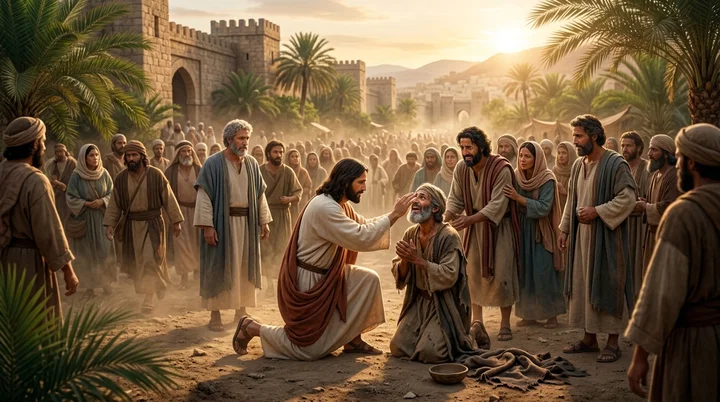
Saying, What wilt thou that I shall do unto thee? And he said, Lord, that I may receive my sight.
Translations
Saying, What will you that I shall do to you? And he said, Lord, that I may receive my sight.
Saying, What wilt thou that I shall do unto thee? And he said, Lord, that I may receive my sight.
saying, What wilt thou that I shall do unto thee? And he said, Lord, that I may receive my sight.
Saying, What wilt thou that I shall do to thee? And he said, Lord, that I may receive my sight.
Revised Version, American Standard Version
What wilt thou that I should do unto thee? And he said, Lord, that I may receive my sight.
saying, 'What wilt thou I shall do to thee?' and he said, 'Sir, that I may receive sight.'
What wilt thou that I shall do to thee? And he said, Lord, that I may see.
What desirest thou, I should do unto thee? And, he, said—Lord! …that I may recover sight!
Berean Standard Bible, Majority Standard Bible
“ What do you want Me to do for you?”“ Lord,” he said, “ let me see again.”
“ What do you want me to do?”He said, “ Lord, that I may see again.”
What would you have me do for you? And he said, Lord, that I may be able to see again.
Saying, What wilt thou that I doe vnto thee? And he said, Lord, that I may receiue my sight.
Douay-Rheims (Challoner revision)
Saying: What wilt thou that I do to thee? But he said: Lord, that I may see.
Pictures
Cross-references
- Matthew 20:32-34
And Jesus stood still, and called them, and said, What will ye that I shall do unto you?
Jesus asks what the blind men want, then restores their sight.
- Mark 10:51
And Jesus answered and said unto him, What wilt thou that I should do unto thee? The blind man said unto him, Lord, that I might receive my sight.
Bartimaeus asks Jesus to restore his sight.
- Matthew 8:2-3
And, behold, there came a leper and worshipped him, saying, Lord, if thou wilt, thou canst make me clean.
A helpless appeal to Jesus is met by his healing power.
- Revelation 3:17-18
Because thou sayest, I am rich, and increased with goods, and have need of nothing; and knowest not that thou art wretched, and miserable, and poor, and blind, and naked:
Both texts connect blindness and poverty with the need for Christ’s help.
- John 9:25
He answered and said, Whether he be a sinner or no, I know not: one thing I know, that, whereas I was blind, now I see.
A man healed of blindness testifies that he now sees.
- 2 Corinthians 4:6
For God, who commanded the light to shine out of darkness, hath shined in our hearts, to give the light of the knowledge of the glory of God in the face of Jesus Christ.
God’s light shines in the heart, opening knowledge of Christ.
Commentary
Each commentary is drawn from primary sources: the writings of Ellen G. White and Adventist pioneers and periodicals. Each commentary is separate. Its own words are not a quotation; follow the references to read the source passages.
Ellen G. White
8 sources
The question records Jesus asking a blind man what he wants done for him, and the man answering that he may receive his sight.Lt 85, 1900, par. 14RH Apr 12, 1906 His passing by is an offer of blessing that must not be allowed to pass without being received.Ms 128, 1901, par. 31 His question shows willingness to meet human need, offering pardon and freely given grace to souls needing salvation, as well as sight to those who are blind.RH Apr 12, 1906
With sympathy the same question is addressed by God to the humbled and penitent sinner.GW92 395.34T 178.1–2ST Feb 12, 1880 After reproof exposes sin and conviction humbles him, makes him feel his need, and brings him to seek salvation, he is invited to express what he longs for and what help he desires, and he is lifted up.GW92 395.34T 178.1–2ST Feb 12, 1880 The request to receive sight is also a prayer for spiritual sight, for those who see things in a wrong light need to ask God for mercy and for clear sight.Lt 85, 1900, par. 14 Those who earnestly call to Jesus for mercy receive clearer spiritual sight through God's grace, and this clearer sight is more valuable than material riches.19MR 18.2
Jesus is the great Physician who answers the faith-filled cry for mercy with comfort and healing power.SG2 202.1–2 The sick are to be brought to him in the arms of faith, with all medicine laid aside, relying alone upon his arm.SG2 202.1–2 Faith receives present healing as the salvation of God yet is not satisfied until entire restoration is given, bringing peace like a river, triumph in God, gratitude for his love, new dedication, and strength to sound the last notes of warning to the world.SG2 202.1–2 Those privileged to work with God should offer the prayer for mercy and clear sight daily.Lt 85, 1900, par. 14 As commandment-keeping people who wish to glorify his name, workers must receive him by walking humbly before him, coming down from self-exaltation, seeking the Lord with all heart and soul and strength and mind, searching the heart, setting in order things that ought to have been set in order before, and preparing the King's highway.Ms 128, 1901, par. 31
Sources
Pioneers and periodicals
21 sources
Jesus asks the blind beggar Bartimeus at Jericho what he wants done for him, and the man plainly and directly answers that he wants to receive his sight.ST Sep 3, 1894ST Mar 18, 1889ST Jan 3, 1911RH Jul 21, 1863 He asks not to inform one who already knows his need, but to invite him with compassionate power to state his desire openly and believe that nothing is too hard for God.RH Apr 12, 1906ST Feb 12, 1880RH Jul 21, 1863 The beggar cries persistently in faith to Jesus as Son of David though the crowd tries to silence him, and Jesus listens and heals him so that his faith makes him whole.ST Jan 3, 1911RH Jul 2, 1861 His blindness and request picture humanity's spiritual blindness and poverty, with the stricken sinner asking for Christ's healing touch of grace to open sightless eyes and bring light, life, and freedom from sin.ST Aug 30, 1905ST Jul 7, 1898 The exchange teaches brevity and humility in prayer that expresses need and dependence rather than self-praise, and faith increased by constant intelligent exercise that grasps God's promises until they are fulfilled.RH Mar 22, 1870RH Dec 16, 1909
Healing at Jericho
The verse belongs to the healing at Jericho of the blind beggar Bartimeus, who sat blind and begging and asked to receive his sight.ST Mar 18, 1889ST Jan 3, 1911 In Luke's account, as in Mark's, Bartimeus is the one named and mentioned, while Matthew's account speaks of two beggars.ST Mar 18, 1889 Bartimeus was the more conspicuous because of his persistence, and he may have spoken for both.ST Mar 18, 1889 His faith made him whole when Jesus listened despite the crowd's attempts to silence him and healed him.ST Jan 3, 1911
The account is also described as the healing of two blind men at Jericho.ST Mar 8, 1905 Luke places the plea for Jesus' attention as Jesus was entering Jericho, then leaves an interval unrecorded and describes the healing as Jesus was leaving the city.ST Mar 18, 1889 Energetic persistence explains how he sought Jesus at the entrance and waited for another opportunity at the opposite gate.ST Mar 18, 1889 The healing took place between the two cities of Jericho and shortly before the encounter with Zacchaeus in the newer, Roman-built city.ST Nov 21, 1900
It stands as one of the principal events in the section beginning at Luke 18:24 and closing with Luke 21.ST Apr 21, 1909 That section includes alongside it the foretelling of Christ's death, the call of Zacchaeus, the parable of the pounds, the riding into Jerusalem, and the weeping over the city.ST Apr 21, 1909 It includes also the parable of the husbandmen, the questions of the Pharisees and Sadducees, and the discourse on the destruction of Jerusalem and the second coming.ST Apr 21, 1909
Question and Request
Jesus asks what the man wants not to learn his need, which He already knew, but to speak with compassionate omnipotence that belongs to God alone and would be blasphemy on an angel's lips. The question puts divine power at the beggar's command like a blank to be filled with whatever he will, inviting him to open his mouth wide to be filled, to ask and to believe without fear, and so to see God's glory, power, grace and goodwill on his behalf. Nothing is too hard for the One who drove back the sea and brought water gushing from the rock for Israel. The question invites the needy and penitent person to plainly state the help desired, illustrating Christ's willingness and sympathy to meet human need and lift up the one humbled and convicted of sin.RH Apr 12, 1906ST Feb 12, 1880RH Jul 21, 1863 He offers pardon and freely given grace to souls who need salvation, as well as sight to those who are blind.RH Apr 12, 1906
The blind man plainly and directly answers that he wants to receive his sight, or to have it restored.ST Sep 3, 1894RH Jul 21, 1863 It is a short, direct, earnest request for a needed blessing and an example of a direct, earnest petition to the Saviour, expressing dependence on the Lord's mercy, poverty, and inability to help himself.ST Sep 3, 1894RH Jul 21, 1863 He asks in faith with energetic persistence, crying to Jesus as Son of David and Healer of the blind though the crowd tries to silence him.ST Jan 3, 1911ST Jul 29, 1897 He does not need to understand how Jesus can heal him to receive the healing, and he can then testify that he had been blind and now saw.RH Jul 2, 1861 Jesus listens, readily receives him, and heals him, and his faith makes him whole and opens his eyes.ST Sep 3, 1894ST Jan 3, 1911
The need for sight also pictures humanity's spiritual blindness and poverty: in Jesus, the blind receive sight and the spiritually poor receive rest, life, and robes of righteousness, for Jesus heals the beggars' blindness and brings spiritual light and life.ST Aug 30, 1905 The plea pictures the sinner's spiritual blindness, and the request means a stricken blind sinner crying not to be passed by and asking for Christ's healing hands and touch of grace upon sightless eyes to set free from sin's cruel blindness.ST Jul 29, 1897ST Jul 7, 1898 By faith, a helpless person who seeks Christ may receive the divine touch that opens the eyes.ST Jul 7, 1898 Receiving sight means looking into the Lord's benignant face and being led by that look to follow Him nearer, where sight is love and love satisfies, and the miracle teaches trust in God.ST Sep 3, 1894ST Jul 29, 1897
Lessons and Application
The verse teaches brevity and humility in prayer, a short and direct request for a needed blessing that expresses need rather than praising oneself or addressing an audience, in contrast to self-exalting prayer.RH Mar 22, 1870 It shows that faith must be increased by constant exercise, by intelligent faith that grows continually and grasps God's promises so that the promises are fulfilled.RH Dec 16, 1909 Those seeking righteousness will have divine help, they will ask and God will hear them even when the expected feeling does not come at once, and if they are in peril Jesus will deliver them, for His praying believing people are under His special care.RH Dec 16, 1909
The blind man's asking for restored sight is an invitation to look to Jesus for restored sight and faith, whose love proven at Calvary can touch the heart, cleanse it from sin, and bring joy.ST Apr 24, 1901 Christ's opening the eyes of the blind beggar made him a missionary to the poor.ST Jun 14, 1905 The account stands as a model for blind sufferers who may also receive sight and follow Jesus. It also shows Jesus stopping for a blind man who called to Him, a pattern for taking time to help blind people and bring them the gospel.RH Feb 2, 1905
Luke 18 teaches that the last days will not be a time of universal conversion and peace, contradicting the expectation that the whole world will be converted before Christ returns.RH Jul 4, 1871 It is connected with the oppressed people of God raising a united, persistent cry to heaven for deliverance in the closing scenes of the church's history on earth.RH Feb 25, 1862 That cry for deliverance is answered for the remnant who keep God's commandments and have the testimony of Jesus.RH Feb 25, 1862
Sources