Mark 10:51
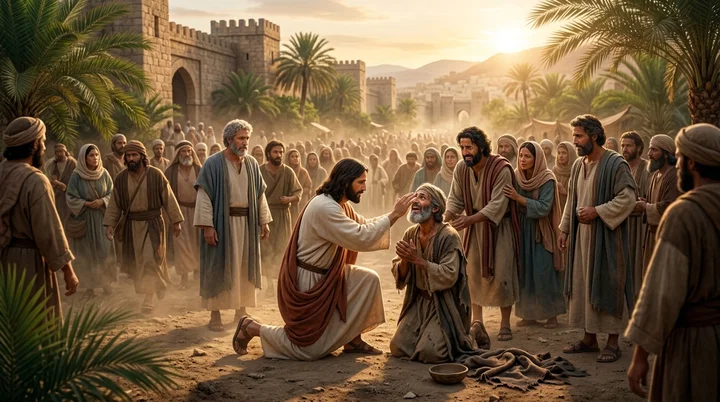
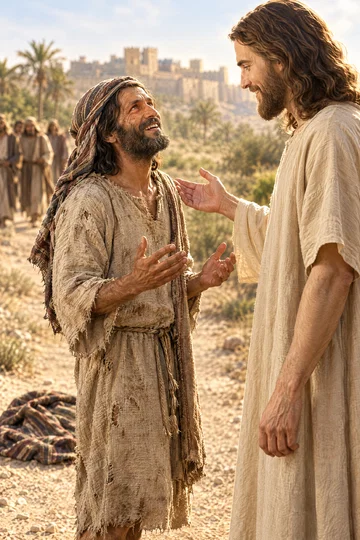
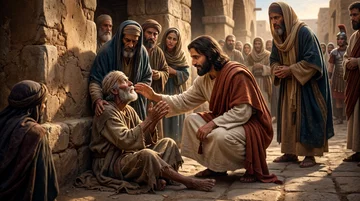
And Jesus answered and said unto him, What wilt thou that I should do unto thee? The blind man said unto him, Lord, that I might receive my sight.
Translations
And Jesus answered and said to him, What will you that I should do to you? The blind man said to him, Lord, that I might receive my sight.
King James Version, KJV Cambridge Paragraph Bible
And Jesus answered and said unto him, What wilt thou that I should do unto thee? The blind man said unto him, Lord, that I might receive my sight.
And Jesus answered and said to him, What wilt thou that I should do to thee? The blind man said to him, Lord, that I may receive my sight.
Revised Version, American Standard Version
And Jesus answered him, and said, What wilt thou that I should do unto thee? And the blind man said unto him, Rabboni, that I may receive my sight.
And answering, Jesus saith to him, 'What wilt thou I may do to thee?' and the blind man said to him, 'Rabboni, that I may see again;'
And Jesus answering says to him, What wilt thou that I shall do to thee? And the blind [ man] said to him, Rabboni, that I may see.
And, answering him, Jesus said—What desirest thou, I should do for thee? And, the blind man, said unto him—Rabboni! that may recover sight.
Berean Standard Bible, Majority Standard Bible
“ What do you want Me to do for you?” Jesus asked.“ Rabboni,” said the blind man, “ let me see again.”
Jesus asked him, “ What do you want me to do for you?”The blind man said to him, “ Rabboni, that I may see again.”
And Jesus said to him, What would you have me do to you? And the blind man said, Master, make me able to see.
And Iesus answered, and said vnto him, What wilt thou that I doe vnto thee? And the blinde sayd vnto him, Lord, that I may receiue sight.
Douay-Rheims (Challoner revision)
And Jesus answering, said to him: What wilt thou that I should do to thee? And the blind man said to him: Rabboni, that I may see.
Pictures
Cross-references
- Luke 18:41-42
Saying, What wilt thou that I shall do unto thee? And he said, Lord, that I may receive my sight.
Jesus asks what the blind man wants and restores his sight.
- Matthew 20:32-34
And Jesus stood still, and called them, and said, What will ye that I shall do unto you?
Jesus asks what they want, then restores the blind men’s sight.
- Matthew 9:27-30
And when Jesus departed thence, two blind men followed him, crying, and saying, Thou Son of David, have mercy on us.
Jesus restores sight to blind men who appeal to him for mercy.
- Matthew 8:2-3
And, behold, there came a leper and worshipped him, saying, Lord, if thou wilt, thou canst make me clean.
Jesus answers a helpless appeal with a healing word and touch.
- Luke 18:41
Saying, What wilt thou that I shall do unto thee? And he said, Lord, that I may receive my sight.
Both recount Bartimaeus asking Jesus to restore his sight.
- Mark 10:47
And when he heard that it was Jesus of Nazareth, he began to cry out, and say, Jesus, thou Son of David, have mercy on me.
The blind man's cry for mercy leads to Jesus answering him.
- Isaiah 35:5
Then the eyes of the blind shall be opened, and the ears of the deaf shall be unstopped.
Both speak of the opening of blind eyes.
- Mark 8:22-26
And he cometh to Bethsaida; and they bring a blind man unto him, and besought him to touch him.
Both accounts describe Jesus restoring a blind man’s sight.
- John 9:25
He answered and said, Whether he be a sinner or no, I know not: one thing I know, that, whereas I was blind, now I see.
A man healed of blindness testifies that he was blind and now sees.
- Revelation 3:18
I counsel thee to buy of me gold tried in the fire, that thou mayest be rich; and white raiment, that thou mayest be clothed, and that the shame of thy nakedness do not appear; and anoint thine eyes with eyesalve, that thou mayest see.
Calls people to anoint their eyes so they can see.
- John 8:12
Then spake Jesus again unto them, saying, I am the light of the world: he that followeth me shall not walk in darkness, but shall have the light of life.
The lesson connects Jesus’ healing of blindness with its study of Him as the Light of the world.
- Acts 16:30
And brought them out, and said, Sirs, what must I do to be saved?
A desperate plea is met with a direct question.
- 2 Corinthians 4:4
In whom the god of this world hath blinded the minds of them which believe not, lest the light of the glorious gospel of Christ, who is the image of God, should shine unto them.
The blind man pictures the darkened, blinded condition described here.
- 2 Corinthians 4:6
For God, who commanded the light to shine out of darkness, hath shined in our hearts, to give the light of the knowledge of the glory of God in the face of Jesus Christ.
God’s creating word opens blind eyes and shines light in the heart.
Commentary
Each commentary is drawn from primary sources: the writings of Ellen G. White and Adventist pioneers and periodicals. Each commentary is separate. Its own words are not a quotation; follow the references to read the source passages.
Ellen G. White
13 sources
At Jericho Jesus asks the blind Bartimaeus what he wants Him to do, and the man appeals for mercy that he might receive his sight.Lt 60, 1903, par. 3–4SG2 202.1–2RH Jan 10, 1856 The blind man pictures the sinner who is blind to the higher interests of the soul, to his real danger on the brink of perdition, and to his own happiness and eternal welfare.Lt 1d, 1890, par. 15Lt 1d, 1890, par. 17Lt 1d, 1890, par. 16 The question expresses deepest sympathy and compassion, inviting the afflicted and penitent to state his need and seek the blessing he lacks.GW92 395.34T 178.1–2DA 104.1–2 It is a waiting, longing offer to speak pardon, take away sins, and give saving grace as light for eyes blind to the truth, which earthly riches or pleasures cannot supply.Lt 60, 1903, par. 3–419MR 18.2 The destiny of the soul depends on answering at once without delay, crying with a broken and repentant heart for mercy and falling upon Christ without stopping to reason.Lt 1d, 1890, par. 15Lt 1d, 1890, par. 17Lt 1d, 1890, par. 18
Setting and Meaning
At the gate of Jericho Jesus asks the blind man what he wants Him to do for him, and blind Bartimaeus answers that he might receive his sight, appealing to Him for mercy and healing.Lt 60, 1903, par. 3–4SG2 202.1–2RH Jan 10, 1856 His appeal for healing is an example of faith seeking mercy and bringing a request to Jesus.SG2 202.1–2RH Jan 10, 1856 That same question is still asked of every soul now as Jesus of Nazareth passes by.Lt 60, 1903, par. 3–4
The blind man portrays the sinner who is blind to the higher interests of the soul.Lt 1d, 1890, par. 15Lt 1d, 1890, par. 17Lt 1d, 1890, par. 16 He is blind to real danger while walking on the brink of perdition, blind to his own happiness and eternal welfare while laying up an heritage of woe, and blind to his own interest while dishonoring and disowning the greatest Friend and leaving eternal interests to take care of themselves.Lt 1d, 1890, par. 15 Many groping in blindness for light in this way delay the one chance and last opportunity to obtain it.Lt 1d, 1890, par. 15
That blindness means being blind to the blessed, glorious attractions of a heavenly life in the city of God.Lt 1d, 1890, par. 16 It is shown in laboring for that which is not bread and sacrificing peace and honor and the companionship of the children of God, even one's own children, to walk without obstruction in one's own way.Lt 1d, 1890, par. 16 It strives to be content in secret sinful pleasure and base gratification irrespective of God and heaven.Lt 1d, 1890, par. 16 Through his own wicked course the sinner is bound by Satan and his senses have not recognized God's claims, and he is afraid to come to the light lest his deeds be reproved.Lt 1d, 1890, par. 18
The earnest appeal for mercy brings clearer sight.19MR 18.2 It is an example of faith bringing a request for healing to Jesus, applied also to prayer for healing with comfort and experienced healing as answers to that cry.SG2 202.1–2RH Jan 10, 1856 As a personal plea for spiritual help its value surpasses gold, silver, or precious stones.19MR 18.2
Christ's Sympathy and Grace
The question is asked with deepest sympathy, tenderness and compassion toward the afflicted, penitent, stricken person, inviting him to state his need and seek the blessing he lacks.GW92 395.34T 178.1–2DA 104.1–2ST Feb 12, 1880PK 435.1–2 It comes only after the soil of the heart is broken up, the conscience is heavily burdened, the soul is pierced by sharp arrows of conviction, and the fearful judgments of God deepen the sense of great need to prompt the agonizing cry for salvation.GW92 395.34T 178.1–2DA 104.1–2ST Feb 12, 1880PK 435.1–2 The same voice and hand that humbles to the dust, rebukes sin, and puts pride and ambition to shame then lifts the sinner up and raises the penitent with this question.GW92 395.34T 178.1–2DA 104.1–2ST Feb 12, 1880PK 435.1–2
Healing from Jesus is sought only after lethargy is broken and wickedness is felt, for God sends no pleasing flattery or message of peace to flatter the sinner or lull the unsanctified into carnal security.GW92 395.3DA 104.1–2 The question is His waiting, longing offer to speak pardon and impart freely offered grace, to take away sins and wash in His blood.Lt 60, 1903, par. 3–4 It gives the gospel of saving grace as help to the needy, light for eyes blind to the truth, and guidance to souls seeking the true foundation, with full and everlasting salvation within reach of every soul to meet the deep need earthly riches or pleasures cannot supply.Lt 60, 1903, par. 3–4 The blessing is received by understanding and living faith whose preciousness and value cannot be expressed, and the earnest appeal for mercy and healing that brings clearer sight is a personal plea for spiritual help whose value surpasses gold, silver, or precious stones.Lt 60, 1903, par. 3–419MR 18.2
Urgent Call to Respond
Jesus stands unseen beside every sinner, and as Jesus of Nazareth passes by He still asks every soul what is wanted from Him.Lt 1d, 1890, par. 15Lt 60, 1903, par. 3–4Lt 1d, 1890, par. 17 He passes by to give grace and compassion and to rescue from despair, hearing every sigh of penitence and knowing the heart's longing for the peace only He can give.Lt 1d, 1890, par. 15Lt 60, 1903, par. 3–4 He does this even for the hopeless, Godless, sin-hardened soul without God, separated from God and bound by Satan through a wicked course, even at the eleventh hour on the very borders of the eternal world.Lt 1d, 1890, par. 17Lt 1d, 1890, par. 18Lt 1d, 1890, par. 16 To such a one He offers what is most needed, which is of infinite gain even if it cost the toil and suffering of a whole lifetime, meeting the deep need that earthly riches or pleasures cannot supply.Lt 60, 1903, par. 3–4Lt 1d, 1890, par. 16 The destiny of the soul depends on immediate action without delay, hesitation, waiting, or stopping to reason, because many groping in blindness for light delay the one chance and last opportunity to obtain it.Lt 1d, 1890, par. 15Lt 1d, 1890, par. 17Lt 1d, 1890, par. 18
Answering means crying with a broken, repentant heart, Jesus of Nazareth, have mercy on me, and falling broken on Christ the Rock and throwing oneself at the feet of Jesus the sin-pardoning Saviour without delay, before it is utterly too late.Lt 1d, 1890, par. 17Lt 1d, 1890, par. 18 It means breaking the bands of Satan and risking everything, refusing Satan's desperate efforts to silence supplication and refusing whatever and whoever bids hold peace.Lt 1d, 1890, par. 18 It means confessing sins to God and to those wronged and making thorough work for repentance.Lt 1d, 1890, par. 18 Whoever comes at once, even at the eleventh hour, will not be left to perish.Lt 1d, 1890, par. 17Lt 1d, 1890, par. 18 God alone will touch the heart with a new tenderness and lead to a sense of obligation to God long perverted, so that the one who comes grasps the crown of life and is rescued out of the snare of the devil, not dying in the devil's hands nor lost in eternal judgment.Lt 1d, 1890, par. 17Lt 1d, 1890, par. 18
The same appeal holds for prayer for physical healing.RH Jan 10, 1856 The blind man's request to receive sight is an example of faith bringing a cry for mercy to Jesus for healing.RH Jan 10, 1856 Comfort and experienced healing are the answer to that cry of faith for mercy.RH Jan 10, 1856
Sources
Pioneers and periodicals
40 sources
Jesus stops on the way out of Jericho to ask the blind beggar by the roadside what he wants done for him, and the man answers plainly that he wants to receive his sight.RH Oct 30, 1860ST Nov 21, 1900ST Jan 3, 1911 His direct request follows persistent, earnest cries for mercy that refuse to be silenced and reach the heart of the Saviour.RH Jan 10, 1856ST Mar 18, 1889RH Feb 4, 1873ST Sep 5, 1911RH Oct 23, 1860 The question and healing show Christ's sympathy and personal care in pausing for one needy sufferer even while pressed with greater work.RH Oct 30, 1860RH Dec 26, 1907RH Dec 2, 1862RH Feb 25, 1875 The plea for physical eyes pictures the sinner's spiritual blindness and need, which Christ still meets by giving sight, pardon, and new life to all who cry to Him.ST Jul 29, 1897ST Jun 20, 1906ST Aug 30, 1905 Having his eyes opened, the man follows Jesus from darkness to light, leaving an example both of grateful following and of stopping to help those who call for aid.RH Dec 6, 1906ST Mar 18, 1889RH Dec 26, 1907RH Feb 2, 1905
Setting and Wording
Jesus asks the blind man what he wants done for him, and the man answers that he might receive his sight.RH Oct 30, 1860ST Nov 21, 1900ST Jan 3, 1911RH Feb 4, 1873RH Feb 25, 1875 The request is clear, plain and direct for the thing he most needed, expressing the one burden of his heart without studied speech.RH Jan 10, 1856ST Jan 3, 1911RH Feb 4, 1873RH Feb 25, 1875 In answering he addresses Jesus as Rabboni, meaning my teacher.ST Nov 21, 1900ST Jan 3, 1911
The exchange takes place as Jesus leaves Jericho on His way to Jerusalem.ST Nov 21, 1900 The blind beggar sits by the roadside and wayside and by the city gate, begging and calling for help, as blind people in Palestine still did.ST Nov 21, 1900RH Aug 29, 1871ST Mar 31, 1909ST Nov 25, 1880 Before answering, he cries out, Thou Son of David, have mercy on me, and keeps crying out more when told to be quiet.ST Jan 3, 1911ST Sep 5, 1911 Jesus heeds him and commands that he be called, and the messenger tells him to rise and be of good cheer because Jesus is calling him, and he rises quickly and casts away his garment so it will not hinder him in running to Jesus.ST Jan 3, 1911
His leaving his garment behind when Jesus calls shows confident faith in Jesus' power to heal, trusting he can find it after receiving his sight.ST Nov 21, 1900 The question and answer are a renewed supplication, for he first sought to attract Jesus' attention as Jesus was entering Jericho and failed to secure a hearing, then went to the opposite gate and waited till Jesus came out.ST Mar 18, 1889 Matthew and Mark record only what took place after leaving the city, while Luke notices the prayer on entering and then the healing on leaving.ST Mar 18, 1889
The healing at Jericho is one of several specially noted healings of blind people.ST Mar 8, 1905 Bartimaeus is described as the uncle of Miriam, the maid of Claudia Procula.ST Jan 17, 1911 Jesus gives him sight and tells him his faith has made him whole to go in peace, and the man is filled with rapture as he sees the earth for the first time.RH Dec 6, 1906ST Jan 3, 1911ST Nov 25, 1880
Christ's Compassionate Mission
The question put to the blind man shows sympathy for the suffering and care for individuals, with the request for sight answered by One who lifts human burdens and relieves suffering.RH Oct 30, 1860RH Feb 25, 1875 The blind beggar by the roadside received help and had his burden lifted, for Christ came to him as consolation.ST Mar 4, 1880 He was a disconsolate beggar by the wayside whose sorrow and need were met when the Consolation came and lifted his burden.ST Jun 7, 1877
Jesus stopped in the street to open the blind man's eyes rather than treating him as a disturbance, giving an example of compassion and willingness to attend to people in need.RH Dec 2, 1862 Even while pressed with important work He took time to restore the man's sight, showing quiet, practical care for people and readiness to do good.ST Nov 9, 1915 The need was met with healing compassion, and the cries for aid of a blind man by the roadside begging and calling for help, as blind people in Palestine still did, moved His pitying heart.ST Aug 30, 1905RH Aug 29, 1871
He gave personal, direct attention to the blind man crying by the roadside, seeking him out and answering his cry and making His appeal personal and direct rather than general.RH Dec 26, 1907 That stopping for one needy person proves that coming from heaven to save sinners means stopping for one needy person.RH Dec 26, 1907
Opening the blind beggar's eyes was an act of mission to the poor.ST Jun 14, 1905 It was done by using His power to help suffering people, including a blind man who cried out for help, as one of His triumphs over disease and human weakness.RH Dec 2, 1873
Going to the blind man by the wayside to do what He could for him belongs with going to the king's palace, to Herod's judgment hall, to the shepherds' tents, to the Samaritan at the well, to the fishers by the sea, and to the lunatic in the tombs.ST Jul 9, 1894 Together they show a reach extending from the king on the throne to the beggar at the gate.ST Jul 9, 1894
The question is also God's sympathetic appeal to a person humbled by conviction, for after rebuking sin and exposing pride He lifts up the penitent and asks what help is needed.ST Feb 12, 1880 In that form it invites the sinner to seek the blessing he lacks.ST Feb 12, 1880
The healing at Jericho, when sight was given upon asking, shows that Jesus is innocent and just and ought not to be put to death.ST Jan 17, 1911 The blind man healed there was Bartimaeus, the uncle of Miriam, the maid of Claudia Procula.ST Jan 17, 1911
Earnest Faith and Prayer
Bartimaeus answers plainly and directly with the one thing he most needs, the return of his sight, expressing the single burden of his heart without studied speech, as clear and deeply felt and definite prayer that brings a real need to Christ.ST Mar 18, 1889RH Feb 4, 1873RH Oct 23, 1860RH Feb 4, 1873 He does not have to understand how healing can be given in order to ask for it and receive it.RH Jul 2, 1861 That direct request comes after persistent, determined, earnest and humble appeals for mercy, crying out and refusing to be silenced, and such pleading reaches the heart of the Saviour as faith seeking mercy.RH Jan 10, 1856ST Mar 18, 1889ST Sep 5, 1911
His appeal for healing is faith that brings real answers, comfort and experienced healing, an actual healing through faith as a real gift received by faith in God's word even before its fuller future realization.RH Jan 10, 1856ST May 6, 1897 His plea for mercy shows how sinners are to come, admitting need and asking to be saved without waiting to become worthy and without bringing anything to earn favor.RH Nov 17, 1859 Jesus heeds the urgent plea and personally invites him to come, and that call is reason for good cheer, for He does not invite only to refuse.RH Nov 17, 1859ST Jan 3, 1911
His earnestness is the pattern for all who recognize their need of healing in coming to the Saviour.ST Nov 21, 1900 His call speaks to people in every age to come in need, to lay aside sin, and to seek sight for spiritual blindness while the opportunity to repent remains, open to all who will come for life and light.RH Feb 4, 1873
Spiritual Sight and Renewal
The cry for physical sight pictures the spiritual blindness and need of humanity, for Christ gives sight to the blind soul, along with life and love, rest to the weary, and robes of righteousness to those who have none of their own.ST Aug 30, 1905 When sinners come to Jesus asking as the blind man asked for his sight to be restored, He gives them spiritual sight, reveals His friendship to them, and graciously receives and forgives them. That healing draws the person nearer to Himself and leads on to following Him, as freedom from the blindness of sin.ST Jul 29, 1897 The plea for sight is therefore a prayer for mercy and pardon and for the removal of spiritual blindness, so that a person may see Christ's way and follow Him.ST Jun 20, 1906
The same Jesus still gives spiritual eyesight and wisdom from above to all who cry to Him. That gift is full and complete conversion of soul, a deep and permanent work of the Spirit in stony, hard, dark, spiritually dead hearts. It breaks unbelief, expels every foe, dispels false carnal peace, and gives a constant fountain of heavenly light so as not to err, an awakening that only God can give. Blindness is the sinner's condition, darkened and blinded, chaotic and confused in mind, desolate of good and alienated from the life of God, like the earth left waste and void and covered with darkness.ST Jul 7, 1898 The cry is what every waste, desolate, darkened, blinded, chaotic soul does who believes God, looks to Him, reaches up a helpless hand to the Saviour and asks His presence after the Spirit turns him to repentance.ST Jul 7, 1898
The opening of the eyes is the mighty Creator-Redeemer speaking light, life, fruitfulness, order, and beauty into the soul by the same word that spoke matter into existence and spoke the world from confusion to order, from chaos to cosmos, from wasteness and ugliness to fruitfulness and beauty.ST Jul 7, 1898 It proves Creator and Redeemer are one, able to save to the uttermost, so that no one needs to trouble over how he came into existence or what his life has been.ST Jul 7, 1898 The request also serves as a plea for spiritual sight when blind to the way, to other people's pain, and to hurt caused by careless words, asking Jesus for mercy and help to see and live rightly.ST May 13, 1889 The plea becomes a prayer for the soul's dear sight, to see Christ's pierced heart whence poured life's last red drop on Calvary's hill and the cruel thorns on His forehead, that the sight may touch a diviner chord.ST Mar 20, 1893 Whether grief is removed or pressed deeper still is left to Christ's will.ST Mar 20, 1893
Bartimaeus's physical blindness, healed by Jesus, stands in contrast to spiritual blindness caused by selfishness and impaired by theological training.STRH Jun 23, 1874 A husband who fails to recognize his wife's love and need for affection needs divine grace to regain sight.ST That recovery is an even greater miracle than the healing of the blind beggar.ST
Following and Helping Others
The blind man's asking to receive his sight is followed by healing and by following Jesus along the way.RH Dec 6, 1906ST Mar 18, 1889RH Feb 4, 1873 His faith is made whole when sight is granted, and he becomes an example of one who received sight and followed.RH Dec 6, 1906ST Mar 18, 1889RH Feb 4, 1873 His clear, plain request for the thing he most needed comes after persistent and determined appeals for mercy that would not be silenced, and it expresses the one burden of his heart without studied speech.ST Mar 18, 1889RH Feb 4, 1873 Calling for help rather than letting Jesus pass by brings him from darkness to light into a happier prospect. That same plea for restoration of sight serves as prayer for freedom from sin's blindness, where healing brings sight, draws a person nearer to Jesus, and leads to following Him.ST Jul 29, 1897
Jesus giving personal, direct attention to the blind man crying by the roadside and seeking him out to answer his cry shows that coming to save sinners means stopping for one needy person.RH Dec 26, 1907 The encounter teaches taking time to stop and help those who call for aid.RH Dec 26, 1907RH Feb 2, 1905 Believers are therefore to turn aside from small earthly affairs to carry Christ's message to others with a direct, tender word that is a balm to the aching heart, making the appeal personal and direct rather than general.RH Dec 26, 1907
Going to the blind man by the wayside to do what could be done for him belongs with going to the king's palace, to Herod's judgment hall, to the shepherds' tents, to the Samaritan at the well, to the fishers by the sea, and to the lunatic in the tombs, reaching everyone from the king on the throne to the beggar at the gate.ST Jul 9, 1894 That example leaves missionary instruction to go among all people in every place, not hampered by location or by being in the care of the State, and not wearying in welldoing.ST Jul 9, 1894 As with the blind beggar sitting by the wayside receiving sight, a striking change in a person can prompt others to ask questions.ST Mar 31, 1909
Sources