Luke 19:3
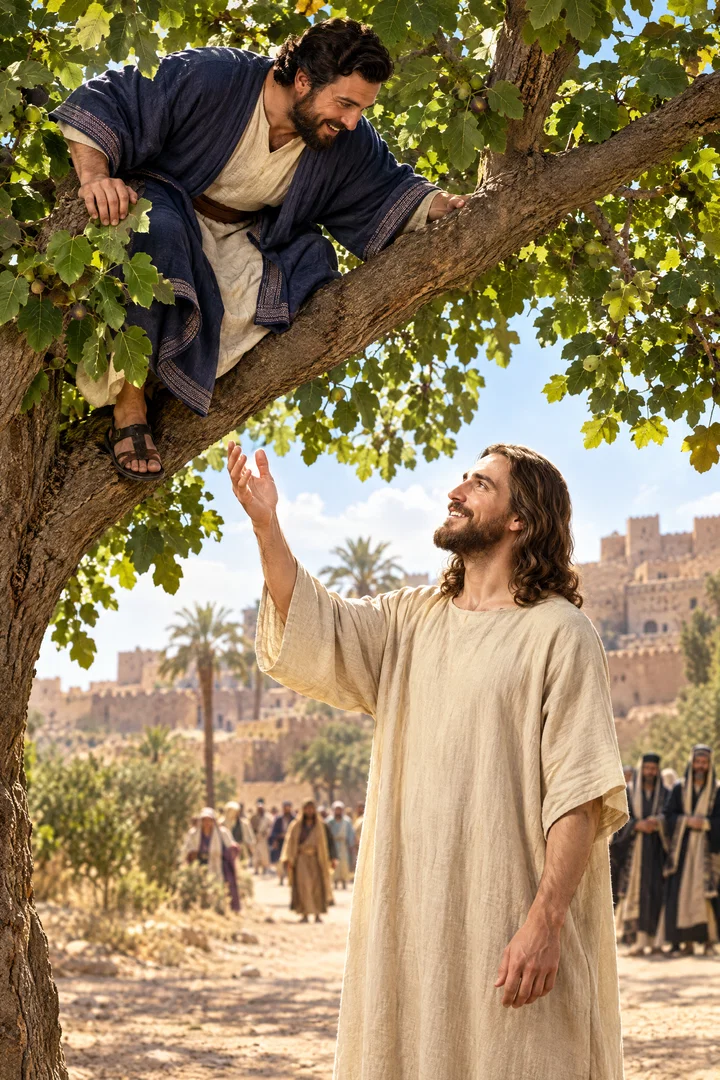
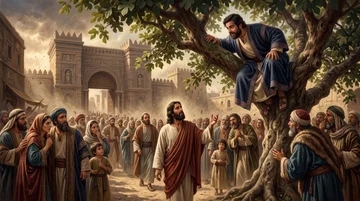
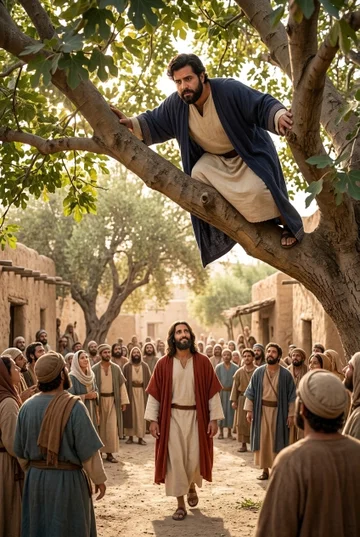
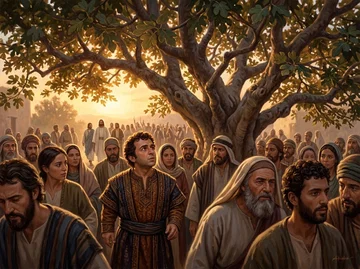
And he sought to see Jesus who he was; and could not for the press, because he was little of stature.
Translations
American King James Version, King James Version, KJV Cambridge Paragraph Bible
And he sought to see Jesus who he was; and could not for the press, because he was little of stature.
Webster Bible, Revised Version, American Standard Version
And he sought to see Jesus who he was; and could not for the crowd, because he was little of stature.
and he was seeking to see Jesus, who he is, and was not able for the multitude, because in stature he was small,
And he sought to see Jesus who he was: and he could not for the crowd, because he was little in stature.
And he was seeking to see Jesus, what sort of man he was, and could not for the multitude, because, in stature, he was, small.
Berean Standard Bible, Majority Standard Bible
He was trying to see who Jesus was, but could not see over the crowd because he was small in stature.
He was trying to see who Jesus was, and couldn’ t because of the crowd, because he was short.
Made an attempt to get a view of Jesus, and was not able to do so, because of the people, for he was a small man.
And he sought to see Iesus, who hee should be, and coulde not for the preasse, because he was of a lowe stature.
Douay-Rheims (Challoner revision)
And he sought to see Jesus who he was, and he could not for the crowd, because he was low of stature.
Pictures

Cross-references
- Luke 19:8
And Zacchæus stood, and said unto the Lord; Behold, Lord, the half of my goods I give to the poor; and if I have taken any thing from any man by false accusation, I restore him fourfold.
Zacchaeus responds to meeting Jesus with generosity and restitution, showing repentance.
- Luke 19:10
For the Son of man is come to seek and to save that which was lost.
Jesus later explains his mission while visiting Zacchaeus.
Commentary
Each commentary is drawn from primary sources: the writings of Ellen G. White and Adventist pioneers and periodicals. Each commentary is separate. Its own words are not a quotation; follow the references to read the source passages.
Ellen G. White
11 sources
Jesus was entering and passing through Jericho on the way to the feast, and crowds had gathered eager to see and honor Him because news had spread that He had brought Lazarus back to life.DA 552.2–3 Jericho itself was a busy center of trade and customs collection, inhabited by priests, Roman officials, soldiers, strangers, and many tax collectors.DA 552.2–3
Zacchaeus was a wealthy chief tax collector regarded with contempt by others.Ms 102, 1894, par. 12–14 In the eyes of others he was one going astray who was sick and hopeless.Ms 8a, 1891, par. 17–20
He had heard reports of Jesus' merciful works and wonderful teaching and longed for more, and those reported words took deep hold of his heart.ST Jun 11, 1896 They awakened hope in him and desire to know more of His principles and doctrines, so he sought for himself to see who Jesus was with eagerness and determination.DA 552.4ST Jun 11, 1896DA 553.1
His longing to see Jesus arose together with conviction that his life was wrong and a deeply felt need for repentance, reform, and restitution to those he had unjustly taxed at exorbitant rates.DA 552.4ST Jun 11, 1896 He had already begun to turn from wrongdoing and make restitution while facing the bitter results of sin and the difficulty of making things right when others met his efforts with suspicion.DA 552.4DA 553.1 His desire to see Jesus proved that the seed of truth had already been sown and nurtured in his heart and was about to bring forth a harvest to the glory of God.ST Jun 11, 1896
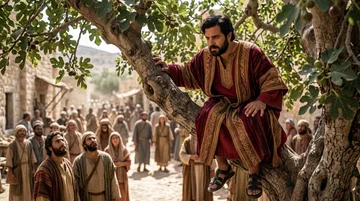
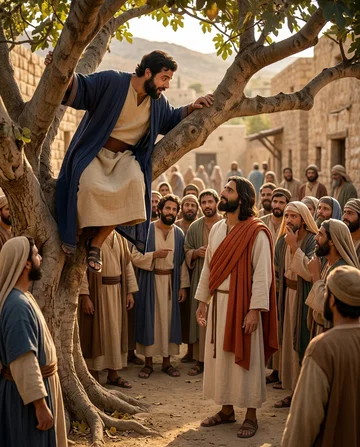
He could not see Jesus for the press of the crowd because he was little of stature and short.Ms 72, 1895, par. 4Ms 102, 1894, par. 12–14Ms 5, 1897, par. 16–20ST Jun 11, 1896 No one made way for him to see over the people on the crowded street.DA 553.2 His desire led him to find another way to see Him by running ahead and climbing a tree so he could see Jesus as He passed.Ms 72, 1895, par. 4Ms 102, 1894, par. 12–14Ms 5, 1897, par. 16–20
The tree he climbed to see Jesus as He passed was a sycamore tree, after which he joyfully received Jesus into his house.Ms 72, 1895, par. 4ST Jun 11, 1896 In one telling the tree he ran ahead and climbed to watch Jesus pass after no one made way is described as a fig tree.DA 553.2
Jesus noticed and welcomed him rather than judging him by outward standing or occupation.Ms 102, 1894, par. 12–14 He did not cut him off and leave him in the hands of Satan or build barriers between God and his soul, but brought him with cords of love where he could be prayed for and led and guided.Ms 8a, 1891, par. 17–20 That tender and merciful dealing drew faultfinding from the Pharisees.Ms 8a, 1891, par. 17–20
His seeking and reception of Christ was one of the bright spots in the journey through Jericho.ST Jun 11, 1896 It stood against anguish over the unbelief of Jesus' own family who lost precious opportunities to become acquainted with Him and receive His lessons of truth.ST Jun 11, 1896 It stood also against rejection by scribes and Pharisees and chief priests and religious leaders whose teaching did not harmonize with His, who would not accept one unrecognized by rabbis and scribes teaching as one having authority, and who could not bear His love and mercy shown to outcasts and sinners.ST Jun 11, 1896
His story shows that when Christ enters a person's heart the person abandons unrighteous practices and proves sincerity by making restitution.DA 556.1 It shows what to do with objectionable characters by putting forth extra effort for them to seek and save that which is lost.Ms 8a, 1891, par. 17–20
Sources
Pioneers and periodicals
41 sources
Zacchaeus was chief among the publicans, a very rich tax collector greedy for gain whose name meaning pure stood in contrast to his corrupt life as a lost sinner.ST Nov 21, 1900ST Aug 24, 1904 He sought to see Jesus who he was, but being little of stature he could not see over the crowd pressing about him.ST Nov 21, 1900ST Sep 13, 1899 He had heard of Christ's merciful works and wonderful teaching, whose words took hold of his heart and awakened conviction that he must reform and make restitution.ST Jun 11, 1896 His seeking was prompted in part by curiosity, yet it went beyond curiosity to an earnest longing to see for himself and judge whether Jesus was the promised Messiah. Such sincere desire Jesus discerns and never overlooks, meeting it with his own desire to seek and save the lost.
Setting in Time and Place
Jesus met Zacchaeus in Jericho as He entered and passed through the city at the beginning of the journey from Jericho toward Jerusalem.ST Jun 11, 1896ST Nov 21, 1900 There Zacchaeus, a chief publican and rich man whom Jesus had not met before, sought to see who Jesus was but could not for the press because he was little of stature.ST Nov 21, 1900 He therefore ran ahead and climbed a sycamore tree by the way, and then joyfully received Christ into his house when Jesus announced He would stay there.ST Jun 11, 1896 His seeking begins the explanation of how a rich man can be saved.ST Nov 21, 1900
The meeting happened a few days before the crucifixion, on the same day Jesus later arrived in Bethany six days before the Passover.ST Nov 21, 1900RH Jan 29, 1914 It belonged to the time when Jesus was going into Jerusalem and the disciples thought the kingdom of God should immediately appear.ST Nov 27, 1879ST Nov 20, 1884 The parable of the nobleman was then spoken to correct that impression.ST Nov 27, 1879
They proclaimed at the right time but misunderstood the event, and only after disappointment did they learn that Christ had to suffer before coming in His kingdom.ST Nov 20, 1884 The climbing of the sycamore to see Jesus is Luke's own account, not recorded in the other Gospels.ST Sep 20, 1905 The call of Zacchaeus to which it belongs is one of the principal events in the section from Luke 18:24 through Luke 21.ST Apr 21, 1909
Zacchaeus and His Seeking
Zacchaeus was chief among the publicans, a very rich tax collector and a man of the business world greedy for gain, belonging to a hated class.ST Nov 21, 1900ST Aug 24, 1904RH Aug 24, 1905ST Oct 31, 1916 His name means pure and innocent, in contrast to his corrupt and sordid character as a lost Israelite and lost sinner. He had sacrificed spiritual privileges and religious character and all the Jew held most sacred to love of gain, showing how sin degrades, brings men into contempt, and gains terrible power over them so that they will sacrifice anything to gratify sinful passions.
He sought to see Jesus who he was, wanting a better view than his small height gave him.ST Nov 21, 1900ST Sep 13, 1899 He was little of stature and could not see over the crowd, for the press blocked his view.ST Nov 21, 1900ST Sep 13, 1899ST May 18, 1882ST Mar 19, 1912 He was eager to see Jesus, whom he had never seen in person, and he longed to see and hear Him for himself as He passed.ST May 18, 1882ST Feb 20, 1912
He wanted more than a glimpse. Amid conflicting reports that some believed in Jesus and others called Him an impostor, he wanted to see and judge for himself who Jesus was and whether His claims were true. The wording who he was also points to learning which He was as the promised Messiah. His desire likely went beyond curiosity to personal knowledge of Jesus.
He had heard of Christ's merciful works and had listened to reports of His wonderful teaching, and he longed for more.ST Jun 11, 1896 The words of Jesus reported to him had taken deep hold of his heart and awakened conviction that he needed to reform his life.ST Jun 11, 1896 That conviction included making restitution to those he had unjustly taxed and charged at exorbitant rates, and desire to know more of Christ's principles and doctrines.ST Jun 11, 1896 His desire to see Jesus proved the seed of truth already sown and nurtured in his heart was about to bring forth a harvest to the glory of God.ST Jun 11, 1896
His effort was prompted in part by curiosity, which brought him into closer contact where grace could work for his good. Yet his eagerness and earnest longing to see and hear Jesus for himself went beyond curiosity to personal knowledge, saying in his heart I must see Jesus. Jesus discerned this sincere and earnest desire and responded with notice and encouraging kindness, for such desire He can never overlook or fail to see.
Obstacles Overcome and Meeting Jesus
The press of the crowd and littleness of stature hindered Zacchaeus from accomplishing his desire to see who Jesus was, preventing him from seeing over the people ahead of him.ST Nov 21, 1900RH May 4, 1911ST Jul 29, 1913 His eagerness to see was blocked because he was short and could not see over the crowd.RH Dec 26, 1907 To overcome these hindrances he ran on before ahead of the crowd and ahead of Jesus' group and climbed up to see him as he passed.ST Nov 21, 1900RH Oct 29, 1903ST May 18, 1882ST Jun 17, 1903ST Feb 20, 1912 The tree was a large, easy-to-climb sycamore by the roadside beside the road, climbed because his small stature left him no other place where he could see and hear, an action proper on that occasion.ST May 18, 1882ST Mar 19, 1912ST Feb 20, 1912
Rather than give up he persisted with determination until he found the Saviour he sought.RH Oct 29, 1903 He was willing to set aside his dignity as a wealthy official to run ahead and climb, and brave enough to endure jeers in order to see Jesus.RH Mar 2, 1905 His fragile body that climbed was lent by the Lord and destined to return to dust.ST Mar 19, 1912
Jesus noticed him in the tree and gave him personal attention.ST Jun 17, 1903RH Dec 26, 1907 He called him to come down and welcomed him, announcing that he would stay at his house.ST Jun 17, 1903 Zacchaeus came down and joyfully received Christ into his house, finding more than a sight of the passerby.ST Jun 11, 1896RH Nov 4, 1873 When human faith says I must see Jesus, divine love answers I must abide at thy house, so seeking brings a personal visit beyond expectation.
That seeking and joyful reception was one of the bright spots in the Saviour's journey through Jericho.ST Jun 11, 1896 It stood against anguish from the unbelief of his own family, who lost precious opportunities to become acquainted with him and receive his lessons of truth.ST Jun 11, 1896 It stood also against rejection by the scribes and Pharisees and chief priests and religious leaders, whose teaching did not harmonize with his.ST Jun 11, 1896 They would not accept one unrecognized by rabbis and scribes teaching as one having authority, and they could not bear his love and mercy shown to outcasts and sinners.ST Jun 11, 1896
Salvation and Changed Life
The seeking ended in finding, for the determination that put the short man in the tree brought him face to face with the Saviour he sought.RH Oct 29, 1903ST Mar 25, 1903 The visit of Jesus to his house brought salvation to him and to his household, as Jesus sought him out, called him by name, called him down, and drew him into personal acquaintance and love.ST Mar 25, 1903ST Jul 29, 1913ST Jul 29, 1913 Welcomed into home and heart, Christ gives continuing presence and guidance to eternal life to all who welcome him.ST Mar 25, 1903ST Dec 4, 1893 Those who seek him in this way should come without delay, for he is calling and another opportunity may not come.ST Dec 4, 1893
His conversion banished covetousness and bore the fruit of faith and true repentance.ST Apr 13, 1882ST Aug 24, 1904 He gave half his goods to the poor and made fourfold restitution to all he had defrauded or cheated.ST Apr 13, 1882ST Aug 24, 1904RH Nov 4, 1873 His salvation was not bought with money, for his generosity was the fruit of faith, and seeking Christ makes a person willing to set right past wrongs.ST Apr 13, 1882RH Nov 4, 1873
He had the right idea in resolving to make restitution, and his act is bringing forth fruits for repentance.RH Feb 22, 1870 His example is confession joined with restoring what was wrongfully taken, showing penitents how to acknowledge sins and make things right with one another.RH Feb 22, 1870 Those who have cheated in trade, even by short weight or measure, should follow it and make reparation to those they wronged.RH Feb 22, 1870
As a chief publican and rich man, his seeking to see Jesus begins the explanation of how a rich man can be saved.ST Nov 21, 1900 Jesus did not rebuke possessors of riches except when riches hindered the growth of noble character.ST Sep 22, 1914 By giving half his goods Zacchaeus was delivered from the bondage of avarice, and once that change of heart was made Jesus asked no more of him, for wealth itself did not exclude him from Christ's care.ST Sep 22, 1914RH Oct 7, 1909
The rich publican at Jericho became Jesus' disciple.RH Aug 24, 1905 He was a worldly man whom the world would have thrown away as rubbish, yet God made a saint out of him.ST Mar 22, 1899 He stands with Peter the weak and wayward, Mary Magdalene the defiled, Thomas the despondent, and Paul the persecutor and blasphemer as proof that God makes apostles and saints out of discarded men and women.ST Mar 22, 1899 What God did in the first century He can do and is doing today.ST Mar 22, 1899
Christ's Mission and Example
Zacchaeus looking for Jesus is met by Jesus looking to seek and save the lost, and the one who desired to see Christ is joyfully receiving him when he comes.RH Nov 4, 1873ST Jun 14, 1905 In that meeting Jesus opens his spiritual eyes and ministers to him, bringing salvation to his house that also makes him willing to set right past wrongs by giving half his goods to the poor and repaying fourfold anyone he has cheated.RH Nov 4, 1873ST Jun 14, 1905ST Feb 21, 1906 The same seeking still finds poor sinners far from the Saviour, those without hope and without God in the world, sinners by choice and aliens by birth. To them he comes in person to the home, calls them by their own name, and brings glad tidings of great joy that saves them.
The account is an example of Christ as a missionary to the rich, opening the spiritual eyes of a rich man who sought to see Jesus despite the crowd and his short stature.ST Jun 14, 1905ST Feb 21, 1906 He labors for people of every class without partiality, engaging the publican and seeking to save him regardless of his social standing or reputation.ST Jul 21, 1898RH Jan 8, 1914 He graciously shows willingness to associate with him, to welcome sinners, to go to the home of Zacchaeus and to eat there.ST Jul 21, 1898RH Jan 8, 1914ST Aug 5, 1886
Christ saw and loved what was good even in Zacchaeus the publican, and for the sake of saving what was good in the human soul he forgot, forgave, and put out of sight what was bad.RH Jun 2, 1904 His kind, forgiving manner won Zacchaeus without a recorded sermon or denunciation, and seeing Jesus led Zacchaeus to desire to be like him. Even while pressed by multitudes and by the most tremendous work ever undertaken in this world, Jesus took time to encourage him.ST Nov 9, 1915 His life was not noise and bustle and loud pretension or breathless hurry, but quiet, useful busyness going from place to place doing good, never neglecting an opportunity to do good to humanity.ST Nov 9, 1915
Lessons and Applications for Believers
True greatness is measured by spirit and not by body, for though hindered by the crowd and short of stature, the seeker was a real giant because he was brave enough to endure jeers, run ahead of the crowd, and climb a sycamore tree in order to see Jesus.RH Mar 2, 1905 Though a little man of Jericho and short beside Saul of the Old Testament, who stood head and shoulders above his fellows with a portly and commanding presence, he turned out the better man, for Saul was jealous, pusillanimous, irresolute and weak in all that constitutes real manhood despite his figure.ST Feb 3, 1887 Bodily littleness is no bar to true manhood, which is measured by soul and mind and character developed in Christ Jesus.ST Feb 3, 1887
The seeking is an invitation for sinners to come to Jesus without delay, for he is calling them and they may not have another opportunity.ST Dec 4, 1893 Those who welcome him receive his continuing presence and guidance to eternal life.ST Dec 4, 1893
Jesus coming personally to the hindered seeker and visiting him in his home, seeking him, calling him by name, and drawing him into personal acquaintance and love, illustrates the value of close, individual contact in reaching people.RH May 4, 1911ST Jul 29, 1913 That visit brought salvation to the household and shows the place of personal effort as an important factor in missionary work.RH May 4, 1911 It likewise shows the value of the minister in the home and of Christ coming to the home.ST Jul 29, 1913
That love, which saw and loved what was good even in the publican and for the sake of saving what was good in the human soul forgot, forgave, and put out of sight what was bad, is the pattern for loving one another in spite of differences and faults.RH Jun 2, 1904 It calls for making the best of one another instead of fixing attention on weak points, magnifying them, and destroying happiness and usefulness.RH Jun 2, 1904 Love for the gospel is shown through practical support for its work, after the example of desire to see Jesus despite the crowd and short stature.ST Jul 19, 1883
Like Zacchaeus, a prominent church member whose large gifts to missions and charities cannot cover money gotten from the blood and sweat and toil of weak brothers and sisters, or made by transgressions that are legal under the law of the land but immoral under the law of God, is not a Christian.ST Mar 11, 1913 Mere emotion and sporadic deeds of goodness cannot carry a man successfully through life nor minister to a soul diseased, and trying to bribe God by good works must stop.ST Mar 11, 1913 Like Zacchaeus he must seek for forgiveness and try to straighten the past.ST Mar 11, 1913
Sources