Luke 19:4
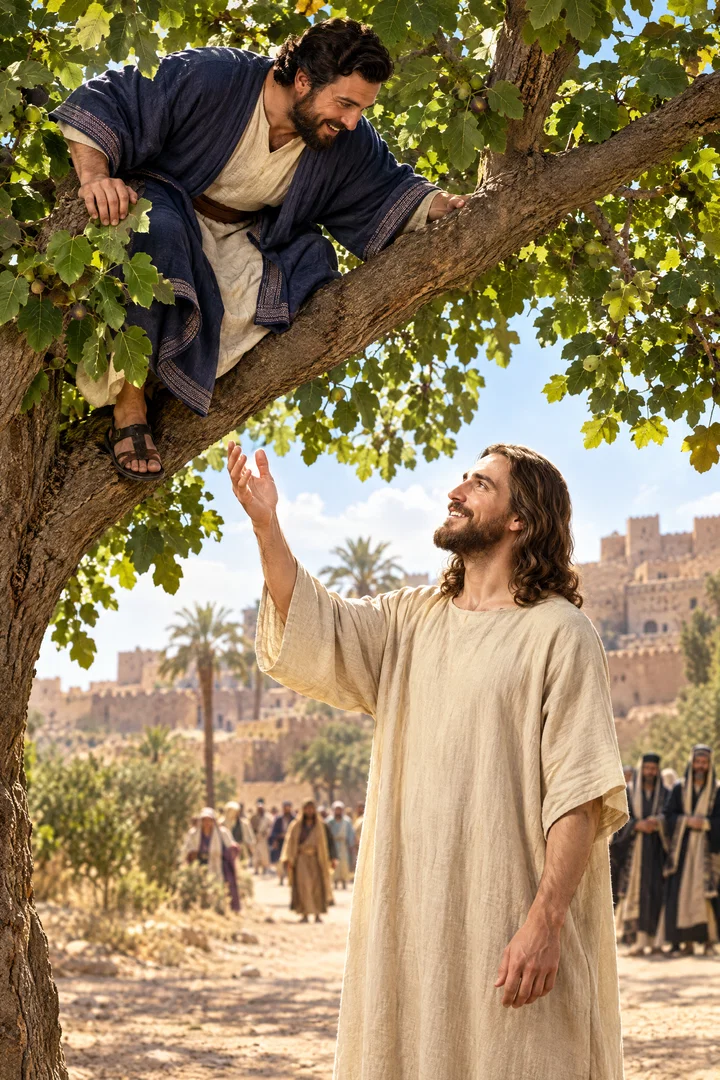
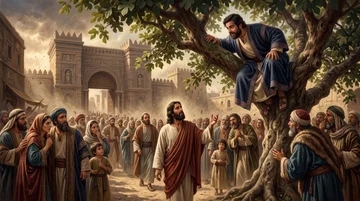
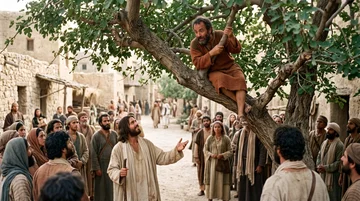
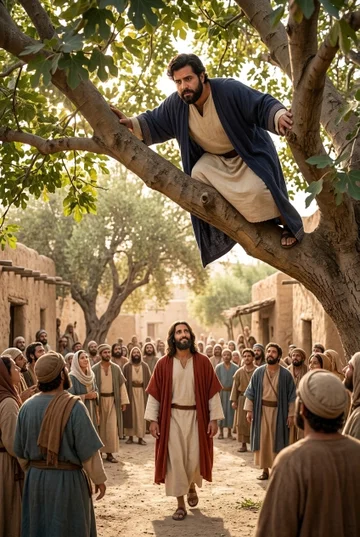
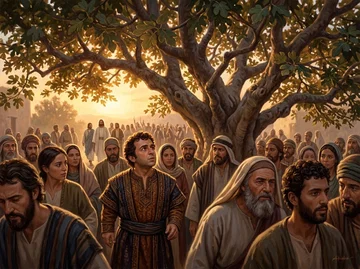
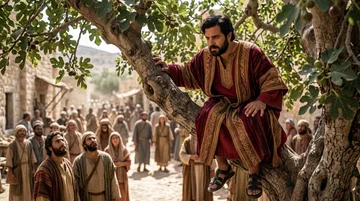
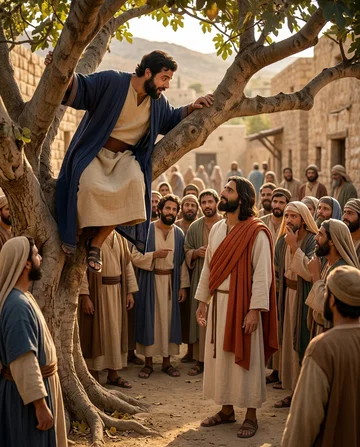
And he ran before, and climbed up into a sycomore tree to see him: for he was to pass that way.
Translations
American King James Version, King James Version, KJV Cambridge Paragraph Bible
And he ran before, and climbed up into a sycomore tree to see him: for he was to pass that way.
And he ran before, and climbed up upon a sycamore-tree to see him; for he was to pass that way.
Revised Version, American Standard Version
And he ran on before, and climbed up into a sycomore tree to see him: for he was to pass that way.
and having run forward before, he went up on a sycamore, that he may see him, because through that [way] he was about to pass by.
And running on before, he got up into a sycamore that he might see him, for he was going to pass that [ way].
And, running forward unto the front, he got up a sycamore-tree, that he might see him; for, by that way, was he about to pass.
Berean Standard Bible, Majority Standard Bible
So he ran on ahead and climbed a sycamore tree to see Him, since Jesus was about to pass that way.
He ran on ahead and climbed up into a sycamore tree to see him, for he was going to pass that way.
And he went quickly in front of them and got up into a tree to see him, for he was going that way.
Wherefore he ranne before, and climed vp into a wilde figge tree, that he might see him: for he should come that way.
Douay-Rheims (Challoner revision)
And running before, he climbed up into a sycamore tree, that he might see him; for he was to pass that way.
Pictures


Cross-references
- Luke 19:8
And Zacchæus stood, and said unto the Lord; Behold, Lord, the half of my goods I give to the poor; and if I have taken any thing from any man by false accusation, I restore him fourfold.
Zacchaeus’s generous giving and restitution show repentance’s fruit and changed conduct.
- Luke 19:10
For the Son of man is come to seek and to save that which was lost.
Zacchaeus’s account illustrates Christ’s mission to seek and save the lost.
- Luke 18:35-43
And it came to pass, that as he was come nigh unto Jericho, a certain blind man sat by the way side begging:
The blind man by the roadside receives Jesus’ attention.
Commentary
Each commentary is drawn from primary sources: the writings of Ellen G. White and Adventist pioneers and periodicals. Each commentary is separate. Its own words are not a quotation; follow the references to read the source passages.
Ellen G. White
11 sources
Jesus was passing through Jericho at a time of crowded excitement, with multitudes and visitors eager to honor Him and with great interest stirred by His raising of Lazarus.DA 552.2–3 The city was crowded with people and visitors drawn to see Him as He entered and passed through.DA 552.2–3ST Jun 11, 1896
Zacchaeus, being short and unable to see over the press of the crowd, ran ahead along the route Jesus was to take and climbed up into a sycamore tree, a wide-branching fig tree, so he could see Him pass.Ms 72, 1895, par. 4Ms 102, 1894, par. 12–14ST Jun 11, 1896DA 553.2 He watched eagerly for the figure he longed to see, earnest to see who Jesus was.ST Jun 11, 1896DA 553.2DA 553.1 His effort shows strong desire and earnestness in seeking to see Jesus.Ms 72, 1895, par. 4ST Jun 11, 1896DA 553.1
His longing to see who Jesus was grew from hearing of His kindness and merciful works and teaching.DA 552.4ST Jun 11, 1896 Those words convicted him that his way of life was wrong and made him recognize his need to reform, repent, and make restitution.DA 552.4ST Jun 11, 1896 He had already begun turning from wrongdoing and making restitution to those he had wronged.DA 552.4DA 553.1 He wanted to look upon the One whose words had given him hope that repentance and a changed life were possible and to learn more from Him.DA 552.4ST Jun 11, 1896DA 553.1
His eager seeking led to his joyful reception of Christ, which was one of the bright spots in the Saviour's experience.ST Jun 11, 1896 It brought comfort amid anguish over the unbelief of His own family, who did not believe on Him as the world's Redeemer.ST Jun 11, 1896 It also brought comfort amid rejection by the scribes and Pharisees and the chief priests and religious leaders of the nation.ST Jun 11, 1896 They rejected Him because His teachings did not harmonize with theirs, because He taught as one having authority though unrecognized as a religious teacher by the rabbis and scribes, and because they could not bear His manifestation of love and mercy to those considered outcasts and sinners.ST Jun 11, 1896
His encounter shows that conversion means abandoning the unrighteous practices that marked his life and removing what hindered his Christian life.DA 552.4Ms 5, 1897, par. 16–20DA 556.1 Making restitution is proof of sincerity.DA 552.4DA 556.1 It illustrates that integrity and salvation matter more than money and that right principles should be put into practice.Ms 5, 1897, par. 16–20
People whom others dismiss because of outward status or reputation, even those counted hopeless in the eyes of others and objectionable and sick in character, may still be open to Christ's call, because He came to seek and save that which was lost.Ms 102, 1894, par. 12–14Ms 8a, 1891, par. 17–20 The verse reveals what Christ does for one going astray.Ms 8a, 1891, par. 17–20 He does not cut such a one off and leave him in the hands of Satan or build barriers between God and the soul.Ms 8a, 1891, par. 17–20 He does not press humiliation upon him and drive him to discouragement, desperation, and stubbornness, but brings him with cords of love into His own hands where prayer and leading and guiding can reach him, putting forth extra effort for the very ones most in need.Ms 8a, 1891, par. 17–20 His tenderness and mercy toward Zacchaeus drew fault-finding from the Pharisees, yet it reveals His work and the work of His Spirit.Ms 8a, 1891, par. 17–20
Sources
Pioneers and periodicals
46 sources
Zacchaeus, being short and unable to see over the crowd, ran ahead and climbed into a sycomore tree to watch Jesus as he passed through Jericho on his way toward Jerusalem for the Passover.ST Jun 11, 1896ST Sep 10, 1894ST Nov 21, 1900RH Jan 29, 1914ST Nov 21, 1900 The tree was a large, low-branching evergreen fig, easy to climb, distinct from the sycamine and the common sycamore.ST May 18, 1882 His climbing was not mere curiosity to look at a famous person, but an earnest, open and resourceful desire to know Jesus personally, setting aside the dignity of a rich chief publican and braving the jeers of the crowd to overcome his stature and the press.ST Nov 21, 1900ST Jun 17, 1903ST May 18, 1882 Jesus sought him in return, called him down by name and went home with him, and that joyful welcome brought salvation to him and his household.ST Mar 19, 1912ST Mar 25, 1903 His repentance proved itself by fruits, in giving half his goods to the poor and restoring fourfold what he had taken wrongfully, calling sinners still to come down without delay and receive Christ into home and heart.RH Feb 22, 1870ST Sep 22, 1914RH Jul 30, 1908ST Aug 24, 1904ST Mar 25, 1903
Words and Setting
Zacchaeus, being little of stature and unable to see Jesus for the press of the crowd, ran on before and climbed up into a sycomore tree to see him as he was to pass that way.ST Sep 10, 1894ST Nov 21, 1900ST Nov 21, 1900ST Jun 17, 1903ST Feb 20, 1912 He was trying to see who Jesus was, and to overcome the crowd and his shortness he ran ahead of the group accompanying Jesus and made himself conspicuous in the tree where he could both see the Saviour and hear him.ST Nov 21, 1900ST Mar 19, 1912ST Jun 17, 1903ST May 18, 1882ST Feb 20, 1912 His small stature thus led him to the tree, and his effort to watch Jesus pass while remaining among the branches brought him to Jesus' notice and set the stage for the encounter that led to Jesus visiting his home.ST Mar 19, 1912ST Jun 17, 1903ST Feb 20, 1912
The sycomore was a kind of Egyptian fig, an evergreen fig tree, large but easy to climb because its trunk was short and its branches spread widely and low.ST May 18, 1882 It was not the sycamine of Luke 17:6 nor the familiar sycamore. The word rendered climbed up illustrates the sense of coming up as rising, ascending, climbing, or growing, as seen in Zacchaeus's quick ascent into the tree to see Jesus.ST Feb 9, 1915
The event took place in Jericho as Jesus entered and passed through on his way toward Bethany and Jerusalem for the Passover, shortly before his crucifixion.ST Jun 11, 1896ST Nov 21, 1900RH Jan 29, 1914 It happened on the day he dined with Zacchaeus.RH Jan 29, 1914 The account of Zacchaeus climbing the tree is found in Luke and not in the other Gospels.ST Sep 20, 1905
Luke records this in his Gospel, which dwells more on the human side of the Saviour than the other writers, tracing him back to Adam the first man.ST Aug 26, 1913 It stands alongside the good Samaritan, the lost sheep, the lost piece of silver, the prodigal son, the penitent thief, and the penitent publican.ST Aug 26, 1913 Luke 19:1-28 belongs to the six days before the Passover, showing Jesus traveling many miles from Jericho toward Jerusalem and arriving at Bethany at the home of Lazarus where a supper was made for him as the first of those six days. That travel day was neither the Sabbath nor the first day of the week, leaving the following Sabbath as the fifth day before the Passover spent at Lazarus's home and fixing the crucifixion on Friday.
Zacchaeus Seeks Jesus
Zacchaeus was a rich publican in Jericho, a chief publican and lost sinner whose character had been degraded by love of gain.RH Nov 4, 1873 He was trying to see who Jesus was, but being little of stature he could not see for the press of the crowd.ST Jun 11, 1896ST Nov 21, 1900ST Aug 26, 1913 His strong and earnest desire to see Jesus had grown from hearing of Jesus' merciful works and teaching, whose words made him recognize his need to reform, repent, and make restitution, and he wanted to learn more from Jesus.ST Jun 11, 1896ST Jun 17, 1903ST May 18, 1882ST Aug 26, 1913
His running on before and climbing up into a sycomore tree to see Him as He passed that way was what he did to overcome those obstacles.ST Nov 21, 1900ST Jun 17, 1903ST May 18, 1882 His climbing into the tree to see Jesus was more than mere curiosity or the common wish to look at a famous person; it came from a desire in his heart to know Jesus personally, while Jesus was also seeking him. To do it he acted openly, decisively, and resourcefully, running ahead of the group accompanying Jesus into town and making himself conspicuous in the tree rather than seeking a private meeting.ST May 18, 1882 His small stature led him to the tree, where he could see the Saviour and hear Him.ST Mar 19, 1912ST Jun 17, 1903ST May 18, 1882
His unusual effort set aside the dignity expected of a rich official and showed he would not shrink from what he thought necessary to fulfill his desire to see Christ, even though as a wealthy tax collector he was despised and excluded by his society. Running ahead and climbing took bravery because he had to stand the jeers of the crowd.RH Mar 2, 1905 His climbing on that occasion was perfectly proper, not climbing onto the judgment-seat to judge others but climbing to see the humble Galilean Teacher. That Teacher's look, attitude, and bearing showed benevolence and kindness and forgiveness, won the sinner without any sermon or denunciation, and made him desire to be like Christ and see that he bore no resemblance to Christ in character.
A heart determined to find the Saviour will succeed, and Jesus notices sincere efforts to draw near to Him and answers them with attention and encouragement.RH Oct 29, 1903 His effort brought him to Jesus' notice, and the encounter led to Jesus visiting his home.ST Jun 17, 1903 Zacchaeus was small in body but a giant in spirit, proving a real giant is made by spirit and not by flesh or physical size.RH Mar 2, 1905 Though little in bodily figure, he turned out a better man in character and all that constitutes real manhood than Saul, the first king of Israel, who stood head and shoulders above his fellows with portly and commanding presence but was jealous, pusillanimous, irresolute, and kingly in nothing but bodily figure.ST Feb 3, 1887
Christ Receives Sinners
Christ took the initiative in that first meeting at Jericho with Zacchaeus the rich publican, seeking him out rather than waiting to be sought.ST Jul 29, 1913 He called him down from the tree by name and announced that he would stay at his house that day.ST Mar 19, 1912ST Jul 29, 1913 In doing so he made himself at home with a person in need so that he could help and save him.ST Jul 29, 1913 Zacchaeus had climbed because he was short and could not see over the crowd, and from the tree he could both see the Saviour and hear Jesus call him to come down and receive him as guest.ST Mar 19, 1912ST Jul 29, 1913
His strong desire to see Jesus had led him to run ahead and climb the sycomore where Jesus would pass, since the press blocked his view.ST Jun 17, 1903ST Dec 4, 1893 He used the tree beside the road to watch Jesus pass while remaining among the branches.ST Jun 17, 1903ST Dec 4, 1893 That effort brought him to Jesus' notice, and the encounter led to Jesus visiting his home.ST Jun 17, 1903 The climb therefore provides the setting for Jesus' call to come down, and for the invitation for sinners to respond without delay.ST Dec 4, 1893ST Dec 4, 1893
His prompt obedience when called led him to welcome Jesus joyfully into his home and heart.ST Mar 25, 1903 That visit in his home brought salvation to him and his household.ST Mar 25, 1903ST Jul 29, 1913 The episode shows Christ's personal visit and attention as a means of bringing salvation, illustrating his personal contact with people and his personal ministry reaching people.ST Jul 29, 1913RH May 4, 1911 Zacchaeus was among those who received Jesus' personal attention, and his meeting with Jesus illustrates the Saviour's personal contact when a man makes personal effort to see him by running ahead and climbing because Jesus is going that way.ST Jul 29, 1913RH Dec 26, 1907RH May 4, 1911
In this meeting Jesus went to the house of a rich tax collector to seek and save the lost.ST Aug 24, 1904RH Nov 4, 1873 He opened the spiritual eyes of Zacchaeus, ministering to the rich as well as to others.ST Feb 21, 1906ST Jun 14, 1905 Wealth did not exclude Zacchaeus from Christ's care, and despite his great wealth Jesus saved him and he became his disciple.ST Aug 24, 1904RH Aug 24, 1905RH Oct 7, 1909 Meeting Christ led him to intend to give half his goods to the poor and repay fourfold those he had defrauded, showing salvation bringing repentance, restitution, and freedom from the grip of wealth.ST Aug 24, 1904RH Nov 4, 1873
Christ saw and loved Zacchaeus despite his faults, looking at what was good in him beyond what was bad.RH Jun 2, 1904ST Jul 21, 1898 He showed favor by going to the publican's house and eating there, mingling with publicans and sinners and laboring to save them.RH Jun 2, 1904ST Aug 5, 1886RH Jan 8, 1914 He welcomed Zacchaeus and went home with him despite his standing among sinners, illustrating willingness to associate with those respectable society might reject.ST Jul 21, 1898ST Aug 5, 1886RH Jan 8, 1914 His social standing did not make him less worthy of Christ's help.ST Aug 5, 1886RH Jan 8, 1914
This eager seeking and joyful reception was one of the bright spots in the Saviour's experience.ST Jun 11, 1896 It brought comfort amid anguish over the unbelief of his own family who did not believe on him as the world's Redeemer.ST Jun 11, 1896 It brought comfort amid rejection by the scribes and Pharisees and the chief priests and religious leaders of his nation, who rejected him because his teachings did not harmonize with theirs, because he taught as one having authority though unrecognized as a religious teacher by the rabbis and scribes, and because they could not bear his manifestation of love and mercy to those considered outcasts and sinners.ST Jun 11, 1896 Zacchaeus of Jericho had the privilege of sitting at the same table with him, an example of the joy of being near Jesus.ST Nov 9, 1915RH Apr 16, 1867 Christ always found time to encourage him even though pressed with the most tremendous work ever undertaken in this world, for his life was not noise and bustle and loud pretensions and breathless hurry but quiet, useful busyness going from place to place doing good and never neglecting an opportunity to do good to humanity.ST Nov 9, 1915RH Apr 16, 1867
Repentance and Restitution
The account of the rich tax collector who ran ahead and climbed the tree to see Jesus as he passed through Jericho shortly before the crucifixion explains how a rich man could be saved.ST Nov 21, 1900RH Nov 4, 1873 Meeting Christ in his house to seek and save the lost led him to receive Jesus joyfully, and that meeting brought repentance, restitution, and freedom from the grip of wealth.RH Nov 4, 1873 His example shows that one who has wronged others should bring forth fruits of repentance by making reparation to those who were wronged.RH Feb 22, 1870RH Jul 30, 1908 Salvation was accompanied by a solemn commitment to set matters right, including restoring what had been taken, illustrating that oppression and unjust claims must be put away among God's people.RH Jul 30, 1908
His response showed covetousness removed from his heart, in that he intended to give half his goods to the poor and repay fourfold anyone he had defrauded.ST Aug 24, 1904RH Nov 4, 1873 His giving half his goods afterward delivered him from the bondage of avarice, of which Jesus asked no more.ST Sep 22, 1914 His example as a rich man who gave half his goods to the poor and was blessed by the Lord presents generous giving as a proper use of wealth.RH Jun 9, 1868
His seeking Jesus for forgiveness and then straightening his past pictures a guilty man who repents and makes restitution for what he took wrongfully instead of trying to bribe God with good works.ST Mar 11, 1913 Such a man stops trusting mere emotion and sporadic deeds of goodness, and stops thinking that giving much to missions and charities makes him a Christian while he keeps money got from the blood and sweat and toil of weak brothers and sisters or made by transgressions legal under the law of the land but unmoral under the law of God.ST Mar 11, 1913 He is a pattern for penitents who confess their sins to each other and make restoration to each other, bemoaning their own sins and trusting Christ's blood alone to wash them away, and such Zacchaeus-like confession and restoring opens the way for the Spirit's outpouring to come upon the people round about.
Kingdom Timing Corrected
Luke 19 belongs to the time when Jesus was going up into Jerusalem and those with him thought the kingdom of God should immediately appear, an example of a proclamation given at the right time but followed by a mistaken expectation about the event.ST Nov 20, 1884ST Sep 16, 1889ST Nov 27, 1879 Only after their disappointment did they understand that Christ had to suffer before coming in his kingdom.ST Nov 20, 1884 The parable of the nobleman in the chapter was spoken to correct that mistaken impression about the time and order of future events.ST Sep 16, 1889ST Nov 27, 1879
It teaches that Christ goes away to receive a kingdom and will return, showing that Christ, not human beings, prepares and establishes his kingdom.ST Sep 16, 1889ST Nov 27, 1879ST Sep 12, 1895 The mistake shows the disciples were laboring under errors about when and in what order prophecies would be fulfilled, so joining the overthrow of the city with the coming of Christ and the end of the world would not prove those events happen at the same time.ST Sep 16, 1889 Even if the parable was understood when spoken, it did not fully remove the expectation.ST Sep 16, 1889ST Nov 27, 1879
This was proved when they entered Jerusalem and hailed him as Son of David and rejoiced before him as a king in triumph with palm branches and shouts, without realizing he was going into the city to be condemned and crucified as a malefactor.ST Sep 16, 1889ST Nov 27, 1879
Application for Today
Zacchaeus climbing the sycamore to see Jesus as He passed sets the scene for the call to come down, and that call is an invitation for sinners to respond without delay.ST Mar 25, 1903ST Dec 4, 1893 His prompt obedience in coming down led to welcoming Jesus into his home and heart, and on that day salvation came to him and his household.ST Mar 25, 1903 His making a personal effort to see Jesus — running ahead and climbing because Jesus was going that way — illustrates the Saviour's personal contact with people, and shows such personal effort to be an important factor in missionary work.RH May 4, 1911
The tree in which he climbed to see Christ pictures curiosity and speculation that keeps people at a distance from Him.ST Mar 30, 1882 Those seeking salvation must therefore leave religious speculation behind and receive God's kingdom simply, like children, turning instead to repentance and faith.ST Mar 30, 1882 Zacchaeus was the worldly sinner whom the world would have thrown away as rubbish, yet God made a saint out of him.ST Mar 22, 1899 His story proves that God makes apostles and saints out of rejected men and women, and what God did for him in the first century He still does today.ST Mar 22, 1899
Sources