Luke 19:8
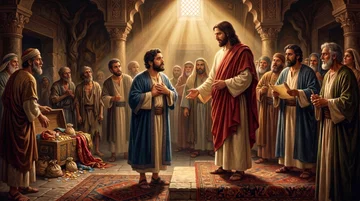
And Zacchæus stood, and said unto the Lord; Behold, Lord, the half of my goods I give to the poor; and if I have taken any thing from any man by false accusation, I restore him fourfold.
Translations
And Zacchaeus stood, and said to the Lord: Behold, Lord, the half of my goods I give to the poor; and if I have taken any thing from any man by false accusation, I restore him fourfold.
And Zacchæus stood, and said unto the Lord; Behold, Lord, the half of my goods I give to the poor; and if I have taken any thing from any man by false accusation, I restore him fourfold.
And Zaccheus stood, and said unto the Lord; Behold, Lord, the half of my goods I give to the poor; and if I have taken any thing from any man by false accusation, I restore him fourfold.
And Zaccheus stood, and said to the Lord; Behold, Lord, the half of my goods I give to the poor; and if I have taken any thing from any man by false accusation, I restore him four-fold.
And Zacchaeus stood, and said unto the Lord, Behold, Lord, the half of my goods I give to the poor; and if I have wrongfully exacted aught of any man, I restore fourfold.
And Zacchæus stood, and said unto the Lord, Behold, Lord, the half of my goods I give to the poor; and if I have wrongfully exacted aught of any man, I restore fourfold.
And Zaccheus having stood, said unto the Lord, 'Lo, the half of my goods, sir, I give to the poor, and if of any one anything I did take by false accusation, I give back fourfold.'
But Zacchaeus stood and said to the Lord, Behold, Lord, the half of my goods I give to the poor, and if I have taken anything from any man by false accusation, I return [ him] fourfold.
But, taking his stand, Zacchaeus said unto the Lord—Lo! the half of my possessions, Lord, unto the destitute, I give; and, if, from anyone, I have taken aught by false accusation, I give back fourfold.
Berean Standard Bible, Majority Standard Bible
But Zacchaeus stood up and said to the Lord, “ Look, Lord, half of my possessions I give to the poor, and if I have cheated anyone, I will repay it fourfold.”
Zacchaeus stood and said to the Lord, “ Behold, Lord, half of my goods I give to the poor. If I have wrongfully exacted anything of anyone, I restore four times as much.”
And Zacchaeus, waiting before him, said to the Lord, See, Lord, half of my goods I give to the poor, and if I have taken anything from anyone wrongly, I give him back four times as much.
And Zaccheus stood forth, and said vnto the Lord, Beholde, Lord, the halfe of my goods I giue to the poore: and if I haue taken from any man by forged cauillation, I restore him foure folde.
Douay-Rheims (Challoner revision)
But Zacheus standing, said to the Lord: Behold, Lord, the half of my goods I give to the poor; and if I have wronged any man of any thing, I restore him fourfold.
Pictures






Cross-references
- Exodus 22:1
If a man shall steal an ox, or a sheep, and kill it, or sell it; he shall restore five oxen for an ox, and four sheep for a sheep.
Requires fourfold repayment for stolen property.
- Leviticus 6:4-5
Then it shall be, because he hath sinned, and is guilty, that he shall restore that which he took violently away, or the thing which he hath deceitfully gotten, or that which was delivered him to keep, or the lost thing which he found,
Requires repayment with added compensation for property wrongfully taken.
- Ezekiel 33:15-16
If the wicked restore the pledge, give again that he had robbed, walk in the statutes of life, without committing iniquity; he shall surely live, he shall not die.
Restoring what was taken shows repentance and is linked to receiving life.
- Luke 3:13
And he said unto them, Exact no more than that which is appointed you.
John’s instruction to tax collectors not to collect more than appointed led Zacchaeus toward reform.
- Numbers 5:6-7
Speak unto the children of Israel, When a man or woman shall commit any sin that men commit, to do a trespass against the LORD, and that person be guilty;
Joins confession of wrongdoing with making restitution.
- Exodus 20:15
Thou shalt not steal.
Restitution puts the command not to steal into practice.
- 1 Samuel 12:3
Behold, here I am: witness against me before the LORD, and before his anointed: whose ox have I taken? or whose ass have I taken? or whom have I defrauded? whom have I oppressed? or of whose hand have I received any bribe to blind mine eyes therewith? and I will restore it you.
Both describe restoring what was wrongfully taken or received.
- Luke 19:2
And, behold, there was a man named Zacchæus, which was the chief among the publicans, and he was rich.
Identifies Zacchaeus as a chief tax collector.
- 2 Samuel 12:6
And he shall restore the lamb fourfold, because he did this thing, and because he had no pity.
David’s judgment required fourfold repayment for the stolen lamb.
- Psalms 69:4
They that hate me without a cause are more than the hairs of mine head: they that would destroy me, being mine enemies wrongfully, are mighty: then I restored that which I took not away.
Both describe restoring what was taken or wrongly claimed.
- Mark 10:21
Then Jesus beholding him loved him, and said unto him, One thing thou lackest: go thy way, sell whatsoever thou hast, and give to the poor, and thou shalt have treasure in heaven: and come, take up the cross, and follow me.
Jesus tells the rich ruler to give his possessions to the poor.
- Luke 12:33
Sell that ye have, and give alms; provide yourselves bags which wax not old, a treasure in the heavens that faileth not, where no thief approacheth, neither moth corrupteth.
Giving possessions is linked with storing treasure in heaven.
- Luke 18:22-23
Now when Jesus heard these things, he said unto him, Yet lackest thou one thing: sell all that thou hast, and distribute unto the poor, and thou shalt have treasure in heaven: and come, follow me.
Zacchaeus gives willingly, unlike the rich ruler who leaves sorrowful when told to give to the poor.
- 1 John 3:17
But whoso hath this world’s good, and seeth his brother have need, and shutteth up his bowels of compassion from him, how dwelleth the love of God in him?
Both texts show care for the needy through generous sharing.
- Matthew 6:19-21
Lay not up for yourselves treasures upon earth, where moth and rust doth corrupt, and where thieves break through and steal:
Zacchaeus gives away wealth and makes restitution, showing treasure set on heavenly things.
- Proverbs 28:13
He that covereth his sins shall not prosper: but whoso confesseth and forsaketh them shall have mercy.
Confessing and forsaking sin brings mercy, alongside making restitution.
- Leviticus 25:35-37
And if thy brother be waxen poor, and fallen in decay with thee; then thou shalt relieve him: yea, though he be a stranger, or a sojourner; that he may live with thee.
Zacchaeus’s giving reflects Israel’s laws against oppressing the poor.
- Luke 15
Then drew near unto him all the publicans and sinners for to hear him.
Zacchaeus’ story connects with Jesus’ parables about the lost.
Commentary
Each commentary is drawn from primary sources: the writings of Ellen G. White and Adventist pioneers and periodicals. Each commentary is separate. Its own words are not a quotation; follow the references to read the source passages.
Ellen G. White
26 sources
Luke 19:8 records Zacchaeus declaring that he would give half of his possessions to the poor and repay fourfold anyone he had defrauded or taken from by false accusation.DA 552Ms 5, 1897, par. 16–20 His promise was an immediate response to conviction that his tax-collecting practices were wrong, showing a desire to reform and abandon dishonest practices, and it was evidence of genuine conversion and sincere repentance.DA 552.4ST Jun 11, 1896ST Jun 11, 1896 Those who held it teach he had already practiced generosity to the poor and fourfold restitution before meeting Jesus and had begun correcting past wrongs beforehand.Ms 72, 1895, par. 4DA 553.1 His declaration was a public confession that made his repentance visible, expressing love and loyalty through concrete generosity and restitution.DA 554.2–555.1 Genuine repentance bears practical fruit in confessing unjust dealings and making wrongs right as far as able, with restitution not limited to the original amount but including what it would have accumulated through wise and right use, and with property gained by deceit restored if possible or at least acknowledged with efforts to set matters right.Ms 2, 1888, par. 36–38ST Aug 29, 1878Lt 8, 1889, par. 8–10ST Jun 11, 1896DA 556.2
Zacchaeus's Declaration and Change
Luke 19:8 records Zacchaeus standing to declare that he would give half of his possessions to the poor and repay fourfold anyone he had defrauded or taken from by false accusation.DA 552Ms 5, 1897, par. 16–20 These concrete acts of giving and promising restitution were evidence of his response to Jesus, showing a changed heart demonstrated by making wrongs right and dealing justly with others.DA 552Ms 5, 1897, par. 16–20 His declaration was a public confession that made his repentance visible, expressing love and loyalty to Christ through action in generosity and restitution.DA 554.2–555.1
His promise was an immediate response to conviction that his tax-collecting practice was wrong, leading him at once to begin making restitution to those he had wronged and robbed.DA 552.4ST Jun 11, 1896ST Jun 11, 1896 His decision to give half his goods to the poor and repay fourfold what he had taken unfairly was evidence of genuine conversion and sincere repentance, following the Scriptures' instructions about justice and restitution.ST Jun 11, 1896 His willingness to return what he had taken reflected repentance and a reformed life with a desire to reform his conduct toward those he had unjustly taxed.DA 552.4ST Jun 11, 1896 He marked Christ's entrance into his heart by abandoning the dishonest practices of his former life and proving his sincerity through restitution, showing that genuine conversion changes how a person conducts business and makes right the wrongs he has done.DA 556.1
He had already practiced generosity toward the poor and restitution to anyone he had wronged, restoring four times what he had taken by false accusation, which were works of a Christian even though he had not yet met Christ.Ms 72, 1895, par. 4 He had begun to make restitution to people he had wronged before he met Jesus and to correct his past.Ms 72, 1895, par. 4DA 553.1 Turning from wrongdoing was difficult, for he faced misunderstanding, suspicion, and distrust as he tried to correct his past.DA 553.1
His response took place in the context of Christ's tender and merciful dealing with one who was lost and hopeless in the eyes of others.Ms 8a, 1891, par. 17–20 Christ did not cut him off and leave him in the hands of Satan or build barriers between God and his soul, but drew him with the cords of love to save that which was lost.Ms 8a, 1891, par. 17–20 Though others found fault with Him for being so tender and merciful toward such an objectionable, sick character, He showed in Zacchaeus what He will do for every erring one who needs extra effort, prayer, leading and guiding rather than harshness, discouragement and being driven to desperation.Ms 8a, 1891, par. 17–20
Restitution as Fruit of Repentance
Genuine repentance bears practical fruit in confessing unjust dealings and making wrongs right as far as able, which is part of God's work in the heart and evidence of the Spirit's genuine work.Ms 2, 1888, par. 36–38ST Aug 29, 1878Lt 8, 1889, par. 8–10CET 133.3 Open confession extends to hidden sins such as adultery, hypocrisy, deception, false oaths for gain, and cheating the poor, made even before unbelieving neighbors and at great trouble and distance on foot, because there is no rest day nor night until sin is confessed publicly so the work may be vindicated.SG2 124.1–126.1 Restitution is not limited to the original amount but includes what it would have accumulated through wise and right use while it was held.ST Jun 11, 1896DA 556.2
The fourfold repayment stands as a protest against the shared system of fraud among tax collectors, and teaches that those awakened by the Holy Spirit should acknowledge wrong and earnestly restore what was taken.ST Jun 11, 1896 When restitution can still be made it should be given to the person wronged, but when the injured person has died and direct redress is impossible, the best response is to bring a trespass offering to the Lord, who accepts and pardons.5T 339.1 Property gained by deceit or false pretenses should be restored if possible, and when full repayment is beyond ability the wrong should still be acknowledged with efforts to set matters right with God and others.Ms 1, 1868, par. 10
Conversion is complete rather than partial change, holding fast with a sense of justice by confessing and restoring what was robbed, which applied to a husband who deserted his family means confessing wrongs to his patient, suffering wife and restoring provision and paying the large debt owed instead of leaving her broken in health under burdens.Lt 35, 1896, par. 8–11 One who led others by exaggeration and glowing promises of large returns to put means belonging to the cause into city lands and mining stocks, who used schemes to obtain means because of extravagant spending and embarrassing debt, and who promised to repay if expectations failed, must openly confess, tell those wronged of the errors and schemes, fulfill the promise to repay, and restore fourfold what was received unjustly.TEPD 71.2 Those who persuade fellow believers into losing enterprises must make up the loss sustained, and one who caused such financial harm is not clear until the loss is repaid, as with inducing investment in patent-rights that fail.1T 455.1–3
Money wrongfully withheld from the Southern field should be restored fourfold, heartily, as a needed correction and fitting fruit of repentance.Lt 6, 1901, par. 7–11 The hope of Jesus' coming moves people marked by dishonesty to seek to repay what was wrongfully taken.EW 196.1 Taking by false accusation is extortion and robbery, believers must not keep company with extortioners and robbers, and while some occupations are thoroughly bad and admit no reform, medicine is a legitimate calling where faithfulness is shown by charging a fair price and exacting no more, with generosity to the poor and fourfold restoration as the mark of repentance.1MR 210.1 Its principle applies to ordinary dealings, where a person who may have been treated unfairly should be offered full restitution, transactions should be fair and square, and making things right may include fourfold restoration.Lt 17, 1884, par. 17
Sources
Pioneers and periodicals
89 sources
At Jericho a wealthy chief tax collector welcomed Jesus into his home and heart, and salvation came to his household when his covetous heart was changed and he became a true child of Abraham by faith.ST Nov 21, 1900ST Sep 10, 1894ST Sep 22, 1914RH Oct 10, 1871ST Aug 7, 1879 Small in stature and despised as one who had grown rich by extorting his own people, he stood and publicly vowed henceforth to give half of all he owned to the poor and to repay fourfold anyone he had wronged by false exaction.ST Sep 13, 1899ST Nov 21, 1900ST Aug 26, 1913ST Jan 22, 1902 His promise was the fruit and proof of thorough repentance, not its price, showing penitence by deeds in confession to those injured, abandonment of dishonest gain, and a life made generous and unselfish by love for Christ.ST Feb 20, 1912ST Apr 13, 1882ST Apr 7, 1881ST Feb 19, 1894RH Jul 7, 1859 No gift to God or to the poor can cover money wrongfully taken while the rest is kept, for true repentance first restores what was taken and adds more besides, generously and without delay, even after many years.RH Dec 22, 1868ST Aug 26, 1875ST Apr 23, 1896ST Mar 13, 1893ST May 15, 1879 Receiving Christ as Lord therefore places all possessions under His direction, freeing the heart from avarice and binding it to care for the poor, repair slander and fraud, and live with less of this world's goods.ST Feb 20, 1879RH Apr 14, 1859ST Nov 29, 1905
Setting and Wording
The meeting took place at Jericho when Jesus entered the house of Zacchaeus, a rich chief tax-gatherer and publican, and that coming brought salvation to him and his household.ST Jul 29, 1913RH Aug 24, 1905 He became a disciple through that visit, which shows Christ comes to people in need whom He can help and save.RH Aug 24, 1905 Even with pressing work Jesus took time to engage him personally and encourage him as an individual.ST Nov 9, 1915
Zacchaeus was small in stature and climbed into a sycamore tree to see Jesus.ST Aug 26, 1913 He belonged to a hated class that had sacrificed spiritual privileges, religious character, and all a Jew held most sacred for love of gain, and as a man of business he had once been greedy for gold.ST Oct 31, 1916 His name means pure and innocent, a name thought very inappropriate for him, for his character had become corrupt and sordid instead of pure and innocent, showing how sin degrades and gains power until men will sacrifice anything to gratify sinful passions. He was a lost Israelite and a lost sinner, yet Christ sought and welcomed him and others like him, laboring for every class including the degraded without respect of persons and extending His benefits to the rich and needy rather than to a favored group.RH Jan 8, 1914RH Oct 7, 1909
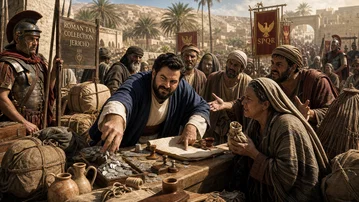
Taking by false accusation means extortion through wrongful exaction, including farming taxes from fellow Jews and exacting more than was due, unjust assessments, and taking money from fellow townsmen by falsely accusing them before magistrates.ST Mar 28, 1911ST May 18, 1882ST Jan 22, 1902 His words were a settled, public vow of future purpose, not a claim of what he had already done, made on receiving Jesus and at the Lord's invitation to abide at His house.ST Sep 13, 1899ST Nov 21, 1900ST May 18, 1882RH Jan 31, 1856 He determined to give half his goods to the poor and to repay fourfold anyone wronged by wrongful collection, the fourfold repayment being the highest restitution Roman law required for that offense.ST Sep 13, 1899ST May 18, 1882RH Jan 31, 1856 That promise does not by itself prove he had knowingly committed extortion, but shows he recognized some gains might have come through unjust assessments and stood ready to make restitution as he became aware of it.
In Luke the story belongs to the special emphasis on the human Saviour as Son of Man traced back to Adam.ST Aug 26, 1913 It stands with the good Samaritan, the lost sheep, the lost coin, the prodigal son, the penitent thief, and the penitent publican.ST Aug 26, 1913 It provides the setting for the parable of the pounds and belongs to the section from Luke 18:24 through Luke 21, after the foretelling of Christ's death and the healing of the blind man and before the riding into Jerusalem, the weeping over the city, the parable of the husbandman, the questions of Pharisees and Sadducees, and the discourse on the destruction of Jerusalem and the second coming.ST Apr 30, 1896ST Apr 21, 1909
The declaration grew out of mutual seeking. Zacchaeus was moved not by mere curiosity about a man of public attention but by heart desire to know Jesus personally, and one determined to find the Saviour will succeed.RH Oct 29, 1903 He climbed to see Him, then hastily obeyed the call to come down and welcomed Jesus into his home and heart without delay.ST Mar 25, 1903 In return Jesus sought him, chose him in love and pity, declared His intention to go to his house, and went home with a sinner whom respectable society despised.ST Jul 21, 1898
Conversion and Salvation
Receiving Jesus brought salvation into the sinner's life and into his house and heart, and made him a child of Abraham and son of Abraham by faith and not by ancestry or good works, because the Son of Man came to seek and save the lost and is found among those who need salvation.ST Sep 10, 1894RH Oct 10, 1871ST Aug 7, 1879ST Feb 17, 1898 His welcome of the Lord was accompanied by a practical change to give half his goods to the poor and to repay fourfold anyone wronged through wrongful exaction and false accusation, and Jesus declared that salvation had come to his house in connection with that response.ST Sep 10, 1894RH Oct 10, 1871ST Aug 7, 1879 To everyone who humbles himself, confesses and forsakes sin, gives to the poor and restores what was wrongly taken, the same word is spoken as to Zacchaeus.RH Oct 10, 1871
His declaration explains how a rich person can be saved, for receiving Jesus leads to generosity and to making wrongs right.ST Nov 21, 1900ST Aug 25, 1881ST Aug 24, 1904 Jesus so completely changed the rich sinner that covetousness was driven from his heart, and his generous restitution freed him from the bondage of avarice, so that Jesus asked no more.ST Sep 22, 1914ST Aug 24, 1904 Though wealthy and a sinner, he received the declaration that salvation had come to his house, and wealthy people who follow his example of practical repentance may experience the same result.ST Aug 25, 1881
His generosity and restitution show a changed life and thorough conversion that includes the whole person and all that belongs to him, changing the use of money as well as the heart.ST Feb 20, 1912ST Apr 19, 1883ST Dec 4, 1893 True conversion bears practical fruit in unselfish care for the poor and in honest effort to repair harm done, including restoring what was wrongfully taken, and proves that God makes saints from worldly men the world would throw away.ST Feb 19, 1894RH Jul 7, 1859ST Apr 19, 1883 When Christ is joyfully received salvation leads to practical deeds and to a religion willing to live with less of this world's goods, and since restitution would use much of what remained, the pledge to give half and repay fourfold was nearly equivalent to selling all his property and was good evidence of thorough conversion, a duty that remains today.ST Dec 10, 1885ST Apr 19, 1883 Receiving the truth is thus lived out rather than merely professed, in compassion and generosity.RH Jul 7, 1859
His conviction led him at once to reform conduct and make restitution to those robbed, in keeping with the Scriptures' instructions about justice and restitution, as evidence of genuine conversion and sincere repentance.ST Jun 11, 1896 His heart was melted and touched to humility and penitence by Christ's great love and pity in choosing him, and by respectful welcome, kindness and mercy, proving the genuineness of penitence by deeds and devoting himself to God's service while promising in restitution to exceed the requirements of the law. In him Christ as missionary to the rich opened spiritual eyes.ST Feb 21, 1906ST Jun 14, 1905 Christ saw and loved what was good in the publican's soul, and for the sake of saving what was good He forgot, forgave and put out of sight what was bad, which is the love with which Christians are to make the best of one another instead of fixing attention only on weak points and magnifying them.RH Jun 2, 1904
His changed conduct is repentance through confession to those wronged and restoration to those robbed or defrauded.ST Apr 7, 1881ST Apr 24, 1893 His promise to restore shows he had already begun the work of a true penitent before seeing Christ, when he had confessed sin and yielded to the Holy Spirit's conviction.ST Nov 21, 1900 Publicans joined together to oppress the people and support one another's fraud, but he abandoned every dishonest practice when he yielded to that conviction, desiring to reform his conduct and make restitution to those unjustly taxed.ST Jun 11, 1896ST Nov 21, 1900
Requirement of Restitution
Money wrongfully obtained cannot be made acceptable to God by keeping it while offering Him a portion of it, and it must instead be used to repay those who were wronged, with something added when it is restored.RH Dec 22, 1868ST Aug 26, 1875 Even systematic benevolence paid from unjust gain drawn from others or from laborers is an offense to God, counted as moth-eaten, rust and corruption, and without confession, change of course and fourfold restoration such gain will become a curse and scatter.RH Dec 22, 1868ST Aug 26, 1875 If money offered for God's work is known to have been taken from someone else, it should be returned to its rightful owner rather than given to that work.RH Dec 22, 1868ST Aug 26, 1875ST Apr 23, 1896 Giving much to missions and charities does not make a man a Christian if the money was gotten from the blood and sweat and toil of weak brothers and sisters, or by transgressions that are legal under the law of the land but immoral under the law of God, for mere emotion and sporadic deeds of goodness cannot heal a soul diseased by sin, nor can trying to bribe God with good works take the place of seeking forgiveness and straightening the past.ST Mar 11, 1913
Restitution must be generous and ungrudging, restoring fourfold when possible and not merely returning the same amount that was taken.ST Mar 13, 1893ST Mar 23, 1888RH Jul 23, 1872 One who has taken unfair advantage should try to repair the wrong by giving back more than was due, as in correcting past undermeasurement and overpaying in future transactions, and such restitution can demonstrate the reality of religion and lead others to faith.ST Mar 13, 1893RH Jul 23, 1872RH Jul 30, 1872 It is right to be on the safe side by restoring even what may not have been taken rather than withholding what should be restored, for confessing and forsaking sin is not enough without restoring as far as in human power, and this restoring tests sincerity and is pleasing to God, not because God has need or would suffer loss, but because humans need that spirit and are themselves the losers without it.ST Mar 13, 1893ST Mar 23, 1888RH Jul 23, 1872 Restitution is not limited to the original amount but includes what that amount would have accumulated through wise and right use, including the value it could have gained while in the wrongdoer's possession.ST Jun 11, 1896RH Jul 23, 1872RH Jul 30, 1872 The fourfold repayment is illustrated by a penitent thief returning four times what he had stolen.ST Mar 13, 1893ST Mar 23, 1888RH Apr 20, 1916
Valid confession to secure pardon must embrace both the spirit and the work of restitution to the extent of knowledge and ability.RH Jun 17, 1862RH Dec 3, 1867RH Apr 7, 1868 Past wrongs and advantages taken from others are to be confessed and restitution made, for love for one's neighbor makes a person honest in dealings, and confessing past dishonest dealings and making restitution to people who were wronged reflect the spirit of one who has received salvation.RH Jun 17, 1862RH Dec 3, 1867 True repentance leads one who has wronged others to make amends and restore what was taken as far as possible, whether the wrong was deliberate or accidental.RH Apr 7, 1868RH Sep 21, 1869 Genuine sorrow for sin leads one who has wrongfully taken another's property to confess the wrong and restore what belongs to its rightful owner, and keeping what one knows was wrongfully obtained leaves it as a witness against that person in the judgment.RH Apr 7, 1868RH Sep 21, 1869 Confession is joined with making things right, as when brothers acknowledge their wrongs and restore what has been damaged between them, and their repentance and reconciliation are followed by the Spirit's outpouring.RH Jun 17, 1862RH Dec 3, 1867 The proper course is to confess to God and to the one injured, acknowledge the injury, throw oneself on his mercy, abandon all known sin henceforth, and repair the wrong as fully and as far as possible, praying for pardon for wrongs that cannot be righted by the sinner but only by the Father's full pardon.RH Jun 17, 1862RH Apr 7, 1868RH Sep 21, 1869
Doing justly reaches back to wrongs already committed, for repentance requires returning what was taken and knowingly keeping the proceeds of sin is not repentance.RH Apr 4, 1871RH Nov 4, 1873 Restitution came before giving away more, and willingness to make things right showed that salvation had reached the home.RH Apr 4, 1871RH Nov 4, 1873 The promise to make fourfold repayment if anyone had been defrauded is met by the declaration that salvation had come to the house.RH Apr 4, 1871RH Nov 4, 1873
Restoring what was wrongfully taken tests sincerity and shows faith through works.RH Sep 17, 1872RH Jun 23, 1863RH Sep 17, 1872 Those who have gained wealth unjustly and would forsake sin and stand on the Lord's side must make full restitution, and no less is required.RH Sep 17, 1872RH Jun 23, 1863RH Sep 17, 1872 When the Lord fully possesses the heart it becomes eager to repair wrongs and make restitution as far as possible, ready to restore fourfold goods obtained unjustly.RH Sep 17, 1872RH Jun 23, 1863RH Sep 17, 1872
The example is the proper pattern for people who have cheated others in business, such as by giving short weight or measure: they should make reparation to the people they wronged, as a fruit of repentance, though others may not be able to go as far.RH Feb 22, 1870RH Dec 3, 1867ST Jan 18, 1899 Setting past wrongs right includes stopping extortion, confessing past dishonest dealings, asking anyone from whom anything has been taken to make it known, and then answering with restitution.RH Jun 17, 1862RH Dec 3, 1867ST Jan 18, 1899 Whether property taken dishonorably should be restored in a particular case, such as use of a ticket, must be judged personally: the wrong lies in the sin and its effect on the one who commits it, not in the worth or status of the person or institution wronged, and if a ticket is legally valid for whoever holds it, using it does not defraud anyone, while otherwise defrauding or robbery is evil and should be made right if possible.ST Jun 21, 1905RH Feb 22, 1870ST Jan 18, 1899
Generosity With Wealth
He gave half his goods to the poor, an exceptionally generous giving sanctioned at a level that may seem costly.ST Aug 19, 1875ST Jan 28, 1875ST May 18, 1882 Since restitution would take much of what remained, his pledge was nearly equivalent to selling all his property, yet he remained a rich man.RH Jun 9, 1868ST May 18, 1882 His giving was the fruit of faith and true repentance and not a price paid for salvation.ST Apr 13, 1882 It was followed by the Saviour's blessing, showing that repentance bears practical fruit.ST Apr 13, 1882RH Jun 9, 1868
Receiving Christ as Lord includes placing possessions under His laws without reserve and putting wealth under His direction. Wealth is then valued as a means of expressing love to Christ, and the pardoned heart gives generously rather than calculating the offering's worth.RH Apr 14, 1859 No law had ever asked a rich man for half his estate for the poor, but the change of nature made him liberal.ST Jan 22, 1902 That same change moved him to restore not merely the same amount but fourfold for anything taken wrongfully.ST Jan 22, 1902
His giving freed him from the bondage of avarice.ST Jul 29, 1908RH May 28, 1908 His possessions were no longer hindering the growth of his nobler character, and Jesus asked no more.ST Jul 29, 1908RH May 28, 1908
His gift stands alongside the poor widow's gift of all her living to show that the gospel commends giving in proportion to means, from half a rich man's goods to everything a poor person has.ST Jan 28, 1875 It illustrates self-denial and liberality beyond what was imposed on ancient Israel.RH Aug 19, 1873 It is surrender of possessions to support God's work and mission fields and to advance the cause of truth.ST Nov 8, 1883RH Jun 16, 1904 Love for the gospel is thus made visible through generous giving and faithful restitution.RH Jun 16, 1904ST Jul 19, 1883
Wider Connections and Application
Turning from oppression and dishonest gain belongs with entering into covenant with God, as seen when property and goods were restored before the covenant in the days of Nehemiah.RH Jul 30, 1908
The fourfold repayment becomes a measure of retribution, in which those who inflict suffering and pain receive the same back upon themselves.RH Sep 29, 1868 By contrast, stolen goods could be repaid fourfold while wrongly spoken words cannot be fully taken back or repaired, so evil speech leaves a lasting harm that money can never quite undo.RH Feb 9, 1860 In the opposite direction, wealth, time and talent given in joyful service to God are promised back fourfold.ST Jul 21, 1881
Making things right reaches beyond financial wrongs to harm done to character and conscience, requiring open recall of false words and slanders, retraction of slander, correction of false accusations, and repair of injury to another person's name.ST Feb 20, 1879
The same principle appears in concrete life when one who dishonestly claimed a prize returns four sixpences to make restitution for the wrong.ST Jan 20, 1881 It appears when one who charged an unfair price corrects it, returns the difference, and restores trust through honest dealing.ST Oct 26, 1882 It appears when a returned young man pays for a colt, showing a religion that makes past wrongs right through restitution upon genuine conversion.RH Dec 24, 1901
Honesty is proved not merely by being free of debts but by giving to the poor and making generous restitution for anything obtained by false accusation.ST Mar 2, 1882 Genuine revival leads those enriched by fraud to restore what was taken.ST Jul 9, 1894 True thanksgiving includes confessing sin, righting wrongs, and restoring ill-gotten substance in charity toward others.ST Nov 29, 1905 This righteousness must come before power for witnessing, since salvation is no reason to continue wrongdoing or postpone repentance until death, but calls for humility and a changed life.ST Jan 26, 1882 Those who rob the poor must therefore repent and restore what they have taken.
The duty is urgent and must not be delayed when restitution is possible, even though it costs time or money.ST Jul 29, 1880 Every moment of delay increases the wrong, yet wrongfully kept money should be restored even after many years, bringing an end to a burdened conscience through courage and grace.ST Jul 29, 1880 When Christ is let into the soul He requires a thorough cleaning out of long-harbored evils, and any hidden dishonest gains must be restored to their lawful owners.ST May 15, 1879
Sources