Luke 19:2
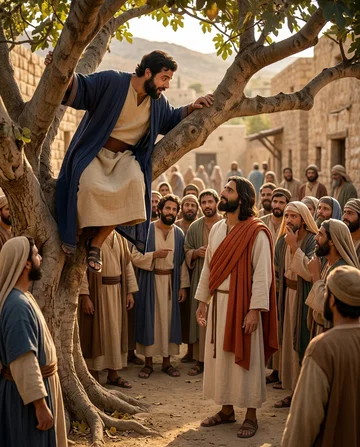
And, behold, there was a man named Zacchæus, which was the chief among the publicans, and he was rich.
Translations
And, behold, there was a man named Zacchaeus, which was the chief among the publicans, and he was rich.
And, behold, there was a man named Zacchæus, which was the chief among the publicans, and he was rich.
And behold, there was a man named Zaccheus, which was the chief among the publicans, and he was rich.
And behold, there was a man named Zaccheus, who was the chief among the publicans, and he was rich.
And behold, a man called by name Zacchaeus; and he was a chief publican, and he was rich.
And behold, a man called by name Zacchæus; and he was a chief publican, and he was rich.
and lo, a man, by name called Zaccheus, and he was a chief tax-gatherer, and he was rich,
And behold, [ there was] a man by name called Zacchaeus, and he was chief tax-gatherer, and he was rich.
and lo! a man, by name called Zacchaeus, and, he, was a chief tax-collector, and [he] was rich.
Berean Standard Bible, Majority Standard Bible
And there was a man named Zacchaeus, a chief tax collector, who was very wealthy.
There was a man named Zacchaeus. He was a chief tax collector, and he was rich.
A man, named Zacchaeus, who was the chief tax-farmer, and a man of wealth,
Beholde, there was a man named Zaccheus, which was the chiefe receiuer of the tribute, and he was riche.
Douay-Rheims (Challoner revision)
And behold, there was a man named Zacheus, who was the chief of the publicans, and he was rich.
Pictures

Cross-references
- Luke 19:8
And Zacchæus stood, and said unto the Lord; Behold, Lord, the half of my goods I give to the poor; and if I have taken any thing from any man by false accusation, I restore him fourfold.
Zacchaeus gives to the poor and promises fourfold repayment for what he took.
- Luke 19:10
For the Son of man is come to seek and to save that which was lost.
Christ’s mission to seek and save the lost is fulfilled in Zacchaeus’s encounter.
- Luke 19:7
And when they saw it, they all murmured, saying, That he was gone to be guest with a man that is a sinner.
The crowd objects to Jesus visiting Zacchaeus, whom they call a sinner.
- Luke 3:12-13
Then came also publicans to be baptized, and said unto him, Master, what shall we do?
John tells tax collectors not to overcharge, an instruction reflected in Zacchaeus’s conduct.
- Luke 19:9
And Jesus said unto him, This day is salvation come to this house, forsomuch as he also is a son of Abraham.
Jesus declares salvation after Zacchaeus repents
- Matthew 9:9
And as Jesus passed forth from thence, he saw a man, named Matthew, sitting at the receipt of custom: and he saith unto him, Follow me. And he arose, and followed him.
Matthew, like Zacchaeus, was a tax collector gathered by Jesus.
Commentary
Each commentary is drawn from primary sources: the writings of Ellen G. White and Adventist pioneers and periodicals. Each commentary is separate. Its own words are not a quotation; follow the references to read the source passages.
Ellen G. White
12 sources
Luke 19:2 names Zacchaeus as a Jewish holder of the chief tax office at Jericho who was rich, his rank and wealth coming from leadership among the tax collectors.DA 552.4Ms 72, 1895, par. 4Ms 102, 1894, par. 12–14Ms 5, 1897, par. 16–20ST Jun 11, 1896 His occupation was despised by the Jews as especially abhorrent and associated with injustice and extortion, so he was counted among outcasts and sinners and regarded by others as objectionable and hopeless, and his calling was not thought likely to refine character.DA 552.4Ms 102, 1894, par. 12–14ST Jun 11, 1896Ms 8a, 1891, par. 17–20
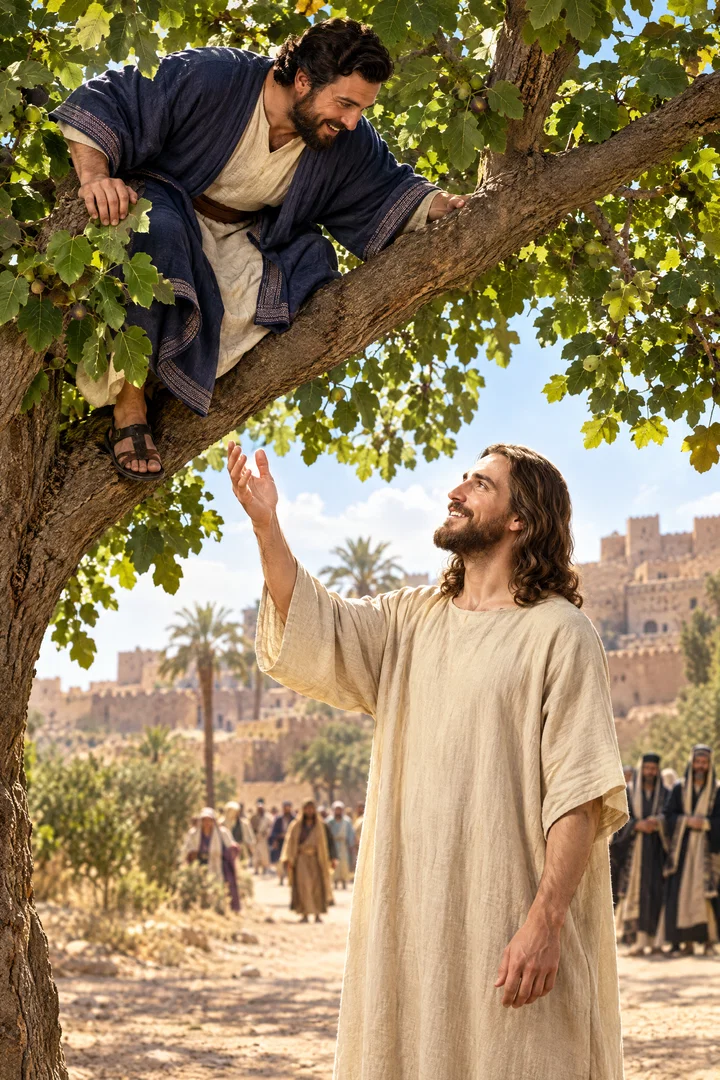
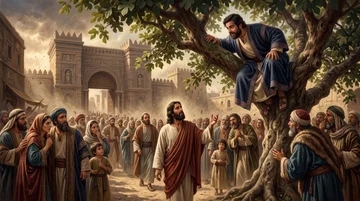
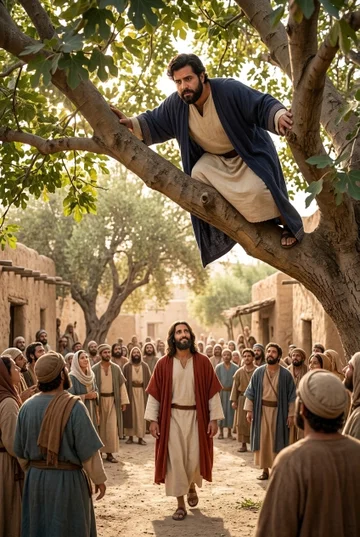
The verse places him in Jericho, a city on the western edge of the Jordan valley surrounded by palm trees and gardens watered by springs and set among limestone hills and ravines.DA 552.1 Jericho was a major center of traffic where customs collection made it home to many tax collectors, and Roman officials, soldiers, and travelers from other regions were also there, alongside many priests.DA 552.2–3 He was short in stature, and with the crowded streets blocking his view of Jesus he ran ahead and climbed a fig tree to see him.DA 553.2 In that office he had unjustly taxed people, demanding exorbitant rates and gaining by false accusation and extortion.DA 552.4ST Jun 11, 1896
Though he seemed worldly and proud, he was open to divine influence and longed for a better life and to see Jesus for himself after hearing reports of his merciful works and wonderful teaching.DA 552.4ST Jun 11, 1896 What he knew from Scripture and the words of Jesus reported to him convicted him that his practice was wrong, showed him his need to reform his life, to repent and to make restitution, gave him hope that repentance and a changed life were possible even for him, and made him desire to know more of his principles and doctrines, like seed sown in his heart and nurtured until about to bring forth a harvest.DA 552.4ST Jun 11, 1896DA 553.1 Even before meeting Christ he had already begun Christian works of giving half his goods to the poor and restoring fourfold anything gained by false accusation, but he found it hard to return from wrongdoing while facing suspicion and distrust.Ms 72, 1895, par. 4DA 553.1
Jesus welcomed him, chose to dine at his house, and treated him with tenderness as one come to save the lost, and his welcoming of Jesus stood as a bright spot in the journey through Jericho while Jesus faced unbelief from his own family and rejection by scribes, Pharisees, chief priests and religious leaders who opposed his authoritative teaching because it did not agree with their own.Ms 102, 1894, par. 12–14ST Jun 11, 1896Ms 8a, 1891, par. 17–20 His example shows that outward status and a despised occupation do not reveal the heart, that people whom others might dismiss can be approached with mercy and become workers for God, and that those who have gone astray should not be abandoned or driven away but brought toward Christ with loving help.Ms 102, 1894, par. 12–14Ms 8a, 1891, par. 17–20 Genuine conversion leads a person involved in dishonest dealings to abandon unrighteous practices, to remove what hinders Christian growth, and to prove sincerity by practicing honesty toward others and making restitution, as he later promised to restore what he had taken.Ms 102, 1894, par. 12–14Ms 5, 1897, par. 16–20DA 556.1
Sources
Pioneers and periodicals
49 sources
There was at Jericho a Jewish chief tax collector serving the Roman government over a strong force of collectors in a productive district, who was rich and small in stature.ST Nov 21, 1900ST Mar 19, 1912ST Dec 4, 1893ST May 18, 1882ST May 18, 1882 His name means pure and innocent, in marked contrast to his corrupt character as a lost sinner who gained wealth by extortion and false accusation.ST Jan 18, 1899ST May 18, 1882 Having heard of Jesus he longed to see Him for himself, and being unable to see over the crowd he ran ahead and climbed a roadside sycamore tree, where Jesus noticed him with personal interest and declared His intention to go to his house.ST Jun 11, 1896ST Jun 17, 1903ST Mar 19, 1912ST Feb 20, 1912 His resolve to give half his goods to the poor and repay fourfold everyone he had defrauded was the fruit of true repentance and a changed nature delivered from avarice, not a payment to buy salvation.ST Apr 13, 1882ST Sep 22, 1914ST Aug 24, 1904RH Nov 4, 1873RH Jun 9, 1868 His case shows how a rich man can be saved, for Christ sought the lost without respect of persons, blessing the wealthy leading collector as freely as the poor.ST Nov 21, 1900ST Jun 14, 1905ST Feb 21, 1906ST Oct 2, 1901
Identity and Historical Setting
His name means pure and innocent, in marked contrast to his corrupt and sordid character as a lost sinner and lost Israelite. The contrast was counted unfitting by the Jews, for instead of pure and innocent he had sacrificed his spiritual privileges, his religious character, and all the Jew held most sacred to love of gain. His condition shows how sin degrades, brings men into contempt, and gains terrible power over them so that they will sacrifice anything to gratify sinful passions. He was a Jewish chief tax collector at Jericho serving the Roman government in a despised work associated with opportunity for extortion.ST Nov 21, 1900 He headed a strong force of customs and excise collectors in a productive district with trade across the Jordan, an office like that of a customs commissioner under an oppressive and arbitrary tax system that weighed heavily on the inhabitants.ST May 18, 1882
He was rich through that profession, and was regarded as an extortioner and traitor to his people and to God.ST May 18, 1882 His wealth was suspected to come from extortion or other dishonest means, and in fact was gained by exacting more than was appointed, including taking money by false accusation under oath before magistrates.ST May 18, 1882ST Jan 22, 1902 This connects with the practical instruction to publicans not to collect more than what was appointed to them.ST Jan 18, 1899 He farmed taxes from his fellow Jews and often exacted more than was due.ST Jan 22, 1902 He was small in stature, short and unable to see over the crowd.ST Dec 4, 1893ST Aug 26, 1913 His short stature enabled him to bend the branches of a sycamore to gain advantage and see, and despite position and wealth shows that true manhood is measured by character rather than physical stature.ST Mar 19, 1912ST Feb 3, 1887
The verse stands as Jesus passed through Jericho on His way to Jerusalem at Jericho in A.D. 30 just a few days before the crucifixion, and his case explains how a rich man can be saved.ST Nov 21, 1900 It belongs to the day He dined with Zacchaeus before traveling to Bethany six days before the Passover to the home of Lazarus where a supper was made for Him.RH Jan 29, 1914 That travel day of many miles from Jericho to Bethany was neither the Sabbath nor the first day of the week, or the Passover would have fallen on the following Sabbath. The episode of his climbing the sycamore tree is found only in Luke and not in the other Gospels.ST Sep 20, 1905 This is in keeping with Luke presenting Christ on the human side as Son of Man traced back to Adam the first man, giving great and excellent instruction.ST Aug 26, 1913 The parable of the pounds was probably spoken at his house during Jesus' visit there.ST Apr 30, 1896
Seeking and Meeting Jesus
Living in Jericho, he had heard of Jesus as teacher, preacher, and physician, and reports of merciful works and wonderful teaching had reached him.ST Jun 11, 1896ST Feb 20, 1912 Those reported words took deep hold of his heart, convicting him of his need to reform his life, to repent, and to make restitution to those he had wronged.ST Jun 11, 1896ST Feb 20, 1912 The seed of truth had been sown in his heart and he nurtured it until it was about to bring forth a harvest, and he had already begun a formal work of reform.ST Jun 11, 1896ST Feb 20, 1912 From this grew a longing to see and hear Jesus for himself, to know more of His principles and doctrines.ST Jun 11, 1896ST Feb 20, 1912
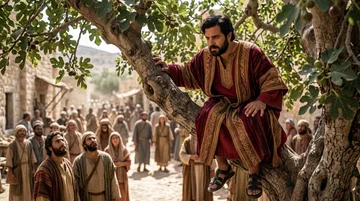
Eager to see Jesus as He passed through, he was too short to see over the crowd, so he ran ahead and climbed a roadside sycamore tree, bending its branches to gain advantage.ST Jun 17, 1903ST Mar 19, 1912ST Feb 20, 1912 That running ahead and climbing was an unusual and conspicuous act, showing determination and strength of character, the same determination and strength reflected in his position and wealth. His short stature both hindered his seeing and enabled him to bend the branches and see.ST Mar 19, 1912ST Feb 20, 1912ST Dec 4, 1893
At first his motive was curiosity, without intending to approach Jesus or make himself known.ST Dec 4, 1893RH Dec 26, 1907 Yet his climbing was more than mere curiosity over one who had attracted public attention, for he desired in his heart to know Jesus personally.ST Dec 4, 1893 Curiosity carried him up but love to Christ brought him down, and the little climber found what he sought, showing that the determined heart that seeks the Saviour succeeds in finding Him.RH Oct 29, 1903
Jesus noticed him there with personal interest, told him to hurry and come down, and declared His intention to go to his house.ST Jun 17, 1903ST Mar 19, 1912 He was right to climb in that situation, and Jesus did not need to preach to or denounce him, for His kind, benevolent manner conveyed forgiveness and won him to want to become like Him. Jesus called him down and shared his hospitality at home, where he received Jesus joyfully and welcomed Him.ST Jun 17, 1903ST Mar 19, 1912 At Jericho in that meeting he became Jesus' disciple.ST Jun 17, 1903RH Aug 24, 1905
Repentance Restitution and Salvation
His promise to give half his goods to the poor was the fruit of faith and true repentance, not a payment to buy salvation, and he received Christ's promised blessing.ST Apr 13, 1882 His determination to make restitution was the proper response to having wronged others in business, showing that salvation is accompanied by setting right past dishonesty.RH Feb 22, 1870RH Jul 30, 1908 That penitence was joined to restoring what had been wrongfully taken, bringing blessing on those around him, though others may not be able to do as much as he did.RH Feb 22, 1870
Covetousness was banished from his heart, and he resolved to give half his wealth to the poor and repay fourfold everyone he had defrauded for anything gained by false accusation.ST Aug 24, 1904RH Nov 4, 1873 His wealth had been gained by farming taxes from fellow Jews and often exacting more than was due, yet his voluntary offer proved a changed nature that ceased robbing God and men.RH Jun 9, 1868ST Jan 22, 1902 A man thus made right with God will not steal and can be trusted with any amount of money, becoming richer in character by giving up wealth and making amends even at substantial cost.RH Nov 4, 1873ST Jan 22, 1902
His position and riches did not prevent him from receiving Jesus, and his later obedience and welcome led to salvation for him and his household.ST Mar 25, 1903 Though his public position as rich chief tax collector made him hated and despised, Jesus chose him as guest in loving mercy, and being treated with respect awakened in him the desire for a new life.ST Mar 25, 1903ST May 18, 1882 A man whose money came from the toil of weaker brethren or from acts legal by the land but immoral by God is not made Christian by large gifts to missions and charities.ST Mar 11, 1913 Sporadic goodness cannot heal a diseased soul or bribe God, so he must seek forgiveness and like Zacchaeus straighten the past by restitution.ST Mar 11, 1913
He stands as a worldly chief whom the world would have thrown away as rubbish yet God made a saint of, proving what God did in the first century He can do and is doing today.ST Mar 22, 1899 Together with Peter the weak and wayward, Mary Magdalene the defiled, Thomas the despondent, and Paul the persecutor, he shows God makes apostles and saints out of rejected men and women.ST Mar 22, 1899 Despite position and wealth he became an example of a sinner whom Jesus calls.ST Dec 4, 1893ST Mar 22, 1899
Wealth Generosity and Stewardship
Zacchaeus was a chief tax collector who was rich, and his case explains how a rich man can be saved.ST Nov 21, 1900 Christ's mission reached the rich as well as the poor, for He opened the spiritual eyes of this rich chief among the publicans.ST Jun 14, 1905ST Feb 21, 1906 He was a wealthy chief tax collector, a man of the business world whose former greed for gold did not prevent Jesus from gathering him into the gospel community.ST Oct 31, 1916
His giving of half his goods to the poor delivered him from the bondage of avarice, and Jesus asked no more of him than that.ST Sep 22, 1914 Jesus did not hate rich owners nor oppose the system by which wealth was obtained, and He rebuked the possessor of riches only when riches hindered the growth of noble character.ST Sep 22, 1914 His dealing with the rich came from love, to save them from the love of money at whatever cost of property was needed to break that love.ST Sep 22, 1914
His wealth could be put to benevolent use under the Lord's blessing, as seen when this rich chief tax collector gave half his goods to the poor.RH Jun 9, 1868 He loved the gospel and showed that love through his actions, which applies to believers demonstrating love for the cause by faithfully paying tithes and pledges and supporting the work financially.ST Jul 19, 1883 His position and wealth reflected determination and strength of character, qualities later seen in his resolve to overcome the crowd to see Jesus. Jesus did good to Zacchaeus as a wealthy chief tax collector just as He did to people in every condition of life, for wealth did not prevent him from receiving Christ's attention and the gospel freely offered to all.RH Oct 7, 1909
Christ's Impartial Saving Mission
Zacchaeus held a leading place among the tax collectors and was wealthy, and this places him among those regarded as outcasts and sinners to whom Jesus showed love and mercy.ST Jun 11, 1896 His welcoming of Jesus was a bright spot on the journey through Jericho, which otherwise met unbelief from Jesus' own family and rejection by scribes, Pharisees, chief priests and religious leaders who opposed His authoritative teaching because it did not agree with their own.ST Jun 11, 1896
Jesus did not reject him for being rich, but went to his house and sought him as the lost.RH Nov 4, 1873 Though a rich chief tax collector of a despised and dishonest class, widely despised among the Jews as associated with the heathen and as a tool of oppressors, and regarded as a sinner whose wealth was readily suspected to come from extortion or other dishonest means, his low social standing, unpopularity and undesirable circumstances did not keep Christ from coming to him.RH Nov 4, 1873 Christ reaches people in such circumstances and regards the honesty and integrity of the heart. His response showed that salvation changes the use of wealth, for he gave half his goods to the poor and promised fourfold repayment for anything gained by false accusation, proving that true conversion sets right past dishonesty even at substantial cost and makes a man richer in character by giving up wealth and making amends.RH Nov 4, 1873
By going to the home of a rich chief publican and eating there, Jesus mingled with people of every class, including those considered degraded and sinful, and sought to help and save them.RH Jan 8, 1914ST Aug 5, 1886 In doing so He showed preference for the company of sinners and the common people over fashionable respectability.ST Jul 21, 1898 He did this without favoring the rich over the poor or the high over the low.RH Jan 8, 1914
As the Light of the World He is impartial, blessing the wealthy leading collector as freely as the poor, so there is no respect of persons with God.ST Oct 2, 1901 Christ saw and loved what was good in this publican, forgetting, forgiving and putting out of sight what was bad in him in order to save what was good in his soul.RH Jun 2, 1904RH Jul 22, 1902
Prophecy and Kingdom Timing
The chapter to which this verse belongs contains the parable of the nobleman who goes to receive a kingdom and returns to bring judgment upon those who rejected his rule, and that return and judgment is the second advent of Christ.RH Apr 15, 1858 The parable was spoken while going up into Jerusalem when the disciples thought the kingdom of God should immediately appear, to correct their mistaken expectation about the time and order in which prophecy would be fulfilled.ST Sep 16, 1889 They were then laboring under mistakes about when and in what order future events would come to pass.ST Sep 16, 1889
That mistaken expectation continued as they hailed Him as the son of David and rejoiced before Him with palm branches and shouts of triumph as a king coming to reign.ST Sep 16, 1889 They did this instead of realizing He was going into the city to be condemned and crucified as a malefactor.ST Sep 16, 1889
Pattern for Ministry Today
Jesus' visit to Zacchaeus in his own home brought salvation to his household and led him to serve God, showing personal nearness to people in ministry.ST Jul 29, 1913RH May 4, 1911 That visit is the example of personal ministry in the home and of a minister's visit.ST Jul 29, 1913ST Jul 29, 1913 Zacchaeus is presented as a rich man, in contrast with the poor family likewise visited, and his wealth as chief tax collector sets him apart from that poor family whose visit from a minister is compared with Christ's visit to him.ST Jul 29, 1913RH May 4, 1911
His making restitution after conversion illustrates the eighth commandment in business dealings with fellow men.RH Jul 30, 1872 Like him, a farmer sought to repair past dishonest dealings by giving more than the full measure and overpaying the blacksmith.RH Jul 30, 1872 That changed conduct helped convince the blacksmith that religion was real.RH Jul 30, 1872
Christ saw and loved what was good in this publican, forgetting, forgiving, and putting out of sight what was bad in him for the sake of saving what was good in his soul.RH Jun 2, 1904 His love is therefore the pattern for loving one another by loving in spite of differences and faults and making the best of one another.RH Jun 2, 1904 That means not fixing attention only on weak points, magnifying and irritating them, and destroying happiness and usefulness.RH Jun 2, 1904
Though small in stature and chief among the publicans and rich, he became a better man than Saul, showing that true manhood is measured by character rather than physical stature.ST Feb 3, 1887 Jesus did not reject him for being rich as a member of a despised and dishonest class, but went to his house and sought the lost.RH Nov 4, 1873 His response showed that salvation changed his use of wealth, for he gave half his goods to the poor and promised fourfold repayment for anything he had gained by false accusation.RH Nov 4, 1873 Such restitution shows that true conversion makes a person set right past dishonesty even at substantial cost, and he became richer in character by giving up wealth and making amends.RH Nov 4, 1873
Sources