Translations
American King James Version, Bible in Basic English
And they said, The Lord has need of him.
King James Version, KJV Cambridge Paragraph Bible, Webster Bible, Revised Version, American Standard Version
And they said, The Lord hath need of him.
and they said, 'The Lord hath need of it;'
And they said, Because the Lord has need of it.
And, they, said—His Lord, hath, need.
Berean Standard Bible, Majority Standard Bible
“ The Lord needs it,” they answered.
They said, “ The Lord needs it.”
And they sayd, The Lord hath neede of him.
Douay-Rheims (Challoner revision)
But they said: Because the Lord hath need of him.
Pictures
Cross-references
- Zechariah 9:9
Rejoice greatly, O daughter of Zion; shout, O daughter of Jerusalem: behold, thy King cometh unto thee: he is just, and having salvation; lowly, and riding upon an ass, and upon a colt the foal of an ass.
The King’s humble entry into Jerusalem riding on a colt fulfills the prophecy.
- Mark 11:2-3
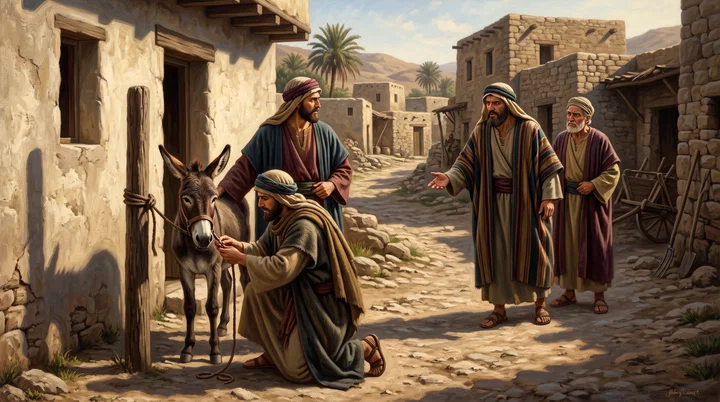
And saith unto them, Go your way into the village over against you: and as soon as ye be entered into it, ye shall find a colt tied, whereon never man sat; loose him, and bring him.
Jesus directs the disciples to find the colt, saying the Lord has need of him.
- Matthew 21:1-11
And when they drew nigh unto Jerusalem, and were come to Bethphage, unto the mount of Olives, then sent Jesus two disciples,
Parallel account of Jesus obtaining the colt and entering Jerusalem.
- Matthew 21:2-3
Saying unto them, Go into the village over against you, and straightway ye shall find an ass tied, and a colt with her: loose them, and bring them unto me.
Parallel account of obtaining the colt for Jesus.
- Mark 11:4-6
And they went their way, and found the colt tied by the door without in a place where two ways met; and they loose him.
parallel account of finding colt and answering
- Mark 11:7-10
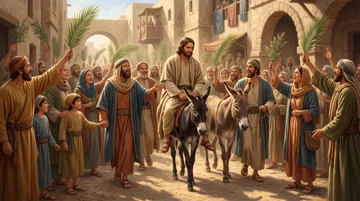
And they brought the colt to Jesus, and cast their garments on him; and he sat upon him.
A parallel account of Jesus riding the colt into Jerusalem.
- John 12:14-15
And Jesus, when he had found a young ass, sat thereon; as it is written,
Describes Jesus riding into Jerusalem on a colt.
Commentary
Each commentary is drawn from primary sources: the writings of Ellen G. White and Adventist pioneers and periodicals. Each commentary is separate. Its own words are not a quotation; follow the references to read the source passages.
Ellen G. White
21 sources
As He neared Jerusalem Jesus sent two disciples ahead to fetch an unridden colt, bidding them answer any challenge by saying He needed it, and on that word it was given for His use on entering the city.Ms 49, 1890, par. 12DA 569COS 91.1–5 Though all belonged to Him, He depended on a stranger's kindness for the animal, and His exact directions for finding it showed His divinity.DA 569.3–4DA 569.1–2ST Jun 8, 1882 The riding was a royal entry fulfilling prophecy that Messiah would come as King, a public claim to kingship which He accepted amid the multitude's worship and hosannas.4RED 120.21T 57.3–58.12SP 384.1–385.1DA 570.1–571.14SP 253.2 The people and disciples took the homage to mean He would at once take David's throne, free Israel and reign as a temporal prince, and when within days He hung on the cross their hopes turned to bitter disappointment, yet prophecy was being fulfilled and He remained true to His promises.EW 206.41T 57.3–58.1ST Jul 22, 18864SP 253.2 His weeping over the city in that ride looked beyond Jerusalem's destruction to a doomed impenitent world, so the entry points to scenes to be repeated in the last great day.Ms 122, 1909, par. 24–26Ms 85, 1893, par. 3
The Colt and Setting
The saying belongs to the account of Christ riding into Jerusalem in triumph.Ms 49, 1890, par. 12DA 569Ms 128, 1899, par. 1 As He approached the city for His purpose in entering it, Jesus sent two of His disciples ahead to bring a colt, and when asked why they were taking it they were to answer that the Lord needed it.DA 5694RED 115.32SP 383.2ST Jul 22, 1886 So the colt was taken and obtained for Jesus' use.ST Jun 8, 1882COS 91.1–5ST Jul 22, 1886 He had commanded them to bring an ass's colt so He could ride into Jerusalem as He neared the city to attend the Passover surrounded by multitudes also going up to the feast.COS 91.1–54RED 115.32SP 383.2
The errand took place on the first day of the week on the short journey from Bethany to Jerusalem to keep the feast of the Passover.4RED 115.32SP 383.2 Multitudes who had flocked to Bethany to see Jesus accompanied Him, and other pilgrim companies going to the feast continually joined Him on the way to the city.4RED 115.32SP 383.2 It was a beautiful season when nature rejoiced in verdure and blossom fragrance, and many people had gathered for the feast.2SP 383.2Ms 128, 1899, par. 1 The raising of Lazarus had drawn an enthusiastic crowd eager to see Him.Ms 128, 1899, par. 1 Though the distance was short and Jesus had always chosen to travel on foot, He now chose to ride.4RED 115.32SP 383.2
The animal was a colt, the foal of an ass or donkey.4RED 115.32SP 383.2COS 90 It was deliberately chosen for His own use although no one had ever ridden or sat upon it.ST Jun 8, 18822SP 384.1–385.1ST Jul 22, 18864RED 116.1–117.2 In the triumphal procession the humble beast was guided by Lazarus.4RED 120.2 The disciples in glad enthusiasm spread their garments upon the colt and placed Jesus upon it, and the moment He was seated the entry began.COS 91.1–52SP 384.1–385.1 As He rode the crowd spread outer garments as a carpet in His path, strewed olive and palm branches in the way, and waved palm boughs.2SP 384.1–385.1COS 90
The plea that the Lord had need of the animals was readily granted.DA 569.3–4DA 569.1–2 The colt was obtained for His use because the Lord needed it.ST Jun 8, 1882 Although all the cattle belonged to Him, He depended on a stranger's kindness for a colt to ride into Jerusalem as King.DA 569.3–4 His precise instructions and directions for obtaining it revealed His divinity.DA 569.3–4DA 569.1–2
Kingship, Disappointment, and Warning
The colt He claimed was for a royal entry, for riding an animal associated with Israel's kings fulfilled prophecy that the Messiah would come as King.1T 57.3–58.1DA 570.1–571.14SP 253.2 That prophecy had to be fulfilled, so that if the people held their peace even the stones would cry out.1T 57.3–58.1
The entry was a public acknowledgment of His kingship which Jesus accepted.2SP 384.1–385.1ST Jul 22, 18864RED 116.1–117.2 The moment He was seated the multitude broke into triumphant acclamation of Him as Messiah and King with the worship of happy hearts, with loud hosannas and shouting.2SP 384.1–385.1ST Jul 22, 18864RED 116.1–117.2 Unlike the processions of earthly conquerors it had no train of mourning captives as trophies of valor, but was surrounded by the trophies of His labors of love for sinful man.4RED 120.2 About Him were captives rescued from Satan praising God, the blind whose sight was restored leading the way, the dumb whose tongues were loosed shouting hosannas, healed cripples waving palm branches, widows and orphans exalting Him for mercy, cleansed lepers spreading garments in His path and hailing Him as King of Glory, and others awakened from the sleep of death, with the humble beast guided by Lazarus restored from corruption in the grave to full strength.4RED 120.22SP 384.1–385.1
The disciples and people hailed Him as Messiah and King, but wrongly took that homage as proof that He would soon be acknowledged as Israel's king in Jerusalem.1T 57.3–58.1ST Jul 22, 18864RED 116.1–117.2 They expected Him to take David's throne and an earthly kingdom, to free Israel from its oppressors, to enter the capital and proclaim Himself King of the Jews and assert His royal power, and to reign as a temporal prince.EW 206.41T 57.3–58.14RED 115.32SP 383.24SP 253.2 Though the distance was short and He had always chosen to travel on foot, the disciples were puzzled by His choice to ride, yet hope brightened in them.4RED 115.32SP 383.2 They told that hope on their errand, until excitement spread far and near and raised the expectations of the people to the highest pitch, and people flocked from all the region about crying Hosanna to the Son of David.1T 57.3–58.14RED 115.32SP 383.2
Those high hopes were not realized as imagined, and soon turned to bitter disappointment.EW 206.41T 57.3–58.14SP 253.2 In a few days those same disciples who believed He would reign on David's throne saw their beloved Master stretched upon the cruel cross above the mocking, taunting Pharisees, with the darkness of death closing about them.1T 57.3–58.1 That disappointment of the disciples was greater than later disappointment, yet prophecy was being fulfilled and Christ was true to His promises, giving sweet consolation to His people and rich reward to the true and faithful.EW 206.41T 57.3–58.14SP 253.2
The riding into Jerusalem is a solemn subject.Ms 85, 1893, par. 3 Christ's weeping over Jerusalem in that ride looked beyond the destruction of Jerusalem to an impenitent world doomed to destruction.Ms 85, 1893, par. 3 The entry points to scenes that will be repeated in the last great day.Ms 122, 1909, par. 24–26
Sources
Pioneers and periodicals
29 sources
Jesus sent two disciples into the village by Bethphage to loose the tied colt and bring it to Him for His entry into Jerusalem, and when those standing by challenged them they answered exactly as He had told them that the Lord had need of it, and were let take it.ST Jul 22, 1886ST Sep 17, 1894ST Sep 27, 1899ST Sep 17, 1894 It was a humble borrowed beast that no one had ever ridden, chosen for Him to ride into the city.ST Jun 8, 1882ST Jul 22, 1886 In this He fulfilled Zechariah's prophecy that Zion's King would come lowly riding upon a colt, for commands written by the prophets are sure predictions fulfilled in their season.RH May 16, 1912ST Jun 5, 1879RH Jul 4, 1871 The disciples and crowd rightly welcomed Him as King with Hosanna and garments spread beneath Him, and He accepted this public homage as the one occasion in His life when He allowed the multitudes to honor Him openly.ST Jun 8, 1882ST Jul 22, 1886ST Jul 22, 1886 Yet they expected God's kingdom to appear immediately with His taking David's throne for an earthly reign, which the parable of the pounds was spoken to correct, and only after being crushed by His death did they learn that He must suffer before entering His kingdom.ST Jun 5, 1879ST Nov 27, 1879ST Sep 16, 1889
The Colt Provided
Jesus sent two disciples near Bethphage by the Mount of Olives into the village to loose the tied colt and bring it to Him for His entry into Jerusalem.ST Jul 22, 1886ST Sep 27, 1899ST Sep 17, 1894 The colt was needed for Jesus' purpose in entering the city, and the verse belongs to His instructions for obtaining it.ST Jul 22, 1886ST Sep 17, 1894 When men standing by challenged them for loosing it, they answered exactly as Jesus had told them that the Lord had need of it.ST Sep 17, 1894ST Sep 27, 1899ST Sep 17, 1894 They explained why they were taking it for Jesus as He approached Jerusalem, and the men let them take it to Him for His ride into the city.ST Sep 17, 1894ST Sep 27, 1899
The colt was a tied, humble beast that no one had ever ridden, borrowed and chosen for Jesus' use to ride into Jerusalem.ST Jun 8, 1882ST Jul 22, 1886RH Nov 4, 1873 It carried Him in the triumphal procession into the city, as part of His poor and unpossessive life in which He accepted what was needed for His mission rather than living for wealth.ST Jun 8, 1882RH Nov 4, 1873 Their mission to fetch the colt helped people learn that He intended to enter the city that day, prompting the procession to welcome Him.RH Jan 29, 1914 The colt was for Jesus to ride into Jerusalem, and the disciples' reply when asked why they were taking it was that the Lord needed it.RH Jan 29, 1914
The entry belonged to the last week of Christ's life on earth, going from Bethany and Bethphage over the Mount of Olives toward Jerusalem from the direction of Bethany.ST Apr 14, 1898ST Nov 3, 1898ST Nov 17, 1898ST Nov 28, 1878 It came the day after the feast at the house of Simon the leper, when at the descent of the Mount of Olives He was met by the throng with palm branches.ST Nov 17, 1898 The route went down through the valley, up the slope to the gate, and into the city, in a procession on the Mount of Olives as Jesus approached Jerusalem.ST Jun 22, 1882ST Nov 3, 1898 In Luke's order this riding into Jerusalem is one of the principal events in Luke 18:24 through Luke 21.ST Apr 21, 1909
It comes after the foretelling of Christ's death, the healing of the blind man, the call of Zacchaeus, and the parable of the pounds.ST Apr 21, 1909 It comes before the weeping over the city, the parable of the husbandman, the questions of the Pharisees and Sadducees, and the discourse on the destruction of Jerusalem and the second coming.ST Apr 21, 1909 When He came near He beheld the city and wept over it, grieving because its destruction was near yet repentance and salvation were still possible.ST Jun 22, 1882ST Nov 3, 1898 He continued to plead for it before its day of mercy ended, and after entering the city He entered the temple and cast out the traffickers.ST Jun 22, 1882ST Nov 3, 1898
King Prophesied Yet Misunderstood
The riding into Jerusalem fulfilled Zechariah's prophecy and command to rejoice greatly and shout, for Zion's King would come lowly and humbly, riding on a colt and on a donkey and on an ass.RH May 16, 1912ST Jun 5, 1879RH Jul 4, 1871RH Dec 11, 1866RH Mar 17, 1859 The obtaining of the colt with the explanation that the Lord had need of it was part of that fulfillment, belonging to the account in Luke 19:30-40 of Christ's humble entry amid the cry of Hosanna.ST Jun 8, 1882RH May 16, 1912RH Jul 4, 1871ST May 9, 1878RH Mar 17, 1859 Commands written by the prophets in the imperative mood are predictions of things to be done far in the future, and they are always surely fulfilled in their seasons.RH Jul 4, 1871 The events for this entry were ready in advance, and God's prophetic word did not fail.RH May 16, 1912
The disciples' actions in carrying out the prophetic command were guided by divine impulse.ST Jun 5, 1879 The part describing the lowly coming riding on a donkey was then fulfilled, while the prophecy's remaining promise of Christ's worldwide dominion is yet to be fulfilled.RH Dec 11, 1866 That future fulfillment connects this entry with Christ's final triumph when He enters His kingdom to reign.RH Dec 11, 1866ST Apr 14, 1898
The disciples spread their garments beneath Him as He rode, and the crowd hailed Him as Messiah and King with Hosanna, welcoming Him as King and carrying Him in triumphal procession.ST Jun 8, 1882ST Jul 22, 1886 Jesus accepted this public homage, on the one occasion in His life when He allowed the multitudes to honor Him openly.ST Jul 22, 1886ST Jul 22, 1886 They proclaimed the King's arrival at the right time, and their rejoicing and praise were right, so that if the people were silent the stones would cry out.ST Nov 20, 1884RH Sep 18, 1855 Yet their expectation of the timing was mistaken.ST Nov 20, 1884RH Sep 18, 1855
They expected God's kingdom to appear immediately, that He would then be acknowledged as Israel's king in Jerusalem and would immediately take David's throne to begin an earthly reign.ST Jun 5, 1879ST Nov 27, 1879ST Sep 16, 1889RH Sep 18, 1855RH Mar 17, 1859 The parable of the nobleman, or pounds, was spoken to correct that expectation of an immediate kingdom.ST Nov 27, 1879ST Sep 16, 1889 Their triumphant welcome shows they had not fully understood the parable nor realized that He was going to suffer and be condemned.ST Nov 27, 1879ST Sep 16, 1889 Only after their disappointment and being crushed by His death did they learn that Christ had to suffer before entering His kingdom.ST Jun 5, 1879ST Nov 20, 1884
The Lord Needs You
Even this humble animal had a part in serving Him in His entry into Jerusalem, and even a small animal was given a share in His work.STST Because the Lord had need of the colt for that entry, His use of even so humble a creature gives a boy reason to believe that the Lord can also use him.ST That same statement that the Lord has need is a young person's call to serve God, as when Robert Moffat heard that the Lord had need of him in Africa, showing that young people can be called to give their lives to God's work and serve others.RH Oct 20, 1910
The Lord's need is a personal call to each heart to enter God's work now because the missionary need is stupendous at home and abroad. An average of seven hundred persons every hour in Africa, eight hundred in India, and fourteen hundred in China are sinking into Christless graves. So many remain unreached in the great cities that an evangelist with a new audience of one thousand every evening would need four years to reach Chicago and more than ten years to reach New York City.
Riding into Jerusalem on a borrowed colt because the Lord had need of it belonged to His poor and unpossessive life, in which He accepted what was needed for His mission rather than living for wealth.RH Nov 4, 1873 Luke 19 teaches that Christ entrusted work to His servants and will require each one to give a strict account when He returns.ST Nov 20, 1884
Sources