Luke 19:35
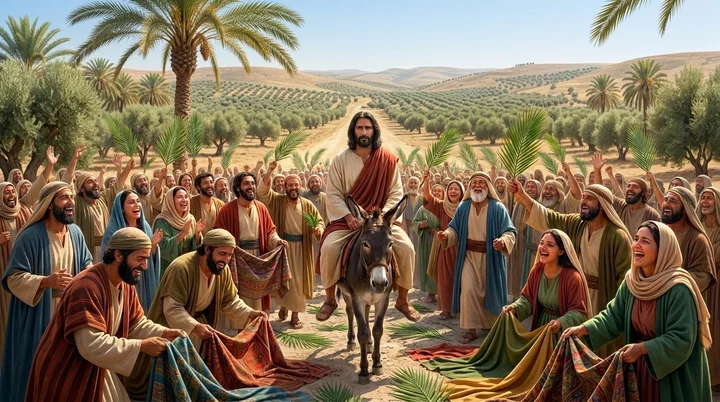
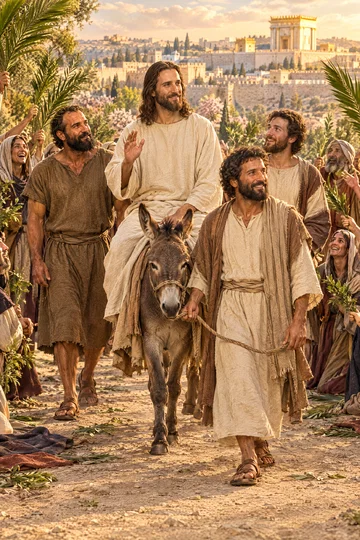
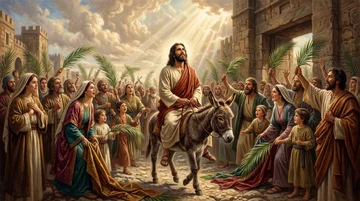
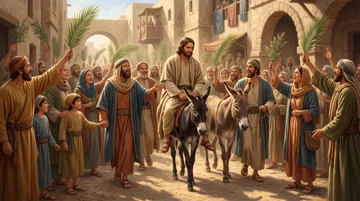
And they brought him to Jesus: and they cast their garments upon the colt, and they set Jesus thereon.
Translations
And they brought him to Jesus: and they cast their garments on the colt, and they set Jesus thereon.
King James Version, KJV Cambridge Paragraph Bible
And they brought him to Jesus: and they cast their garments upon the colt, and they set Jesus thereon.
And they brought him to Jesus: and they cast their garments upon the colt, and they set Jesus upon him.
Revised Version, American Standard Version
And they brought him to Jesus: and they threw their garments upon the colt, and set Jesus thereon.
and they brought it unto Jesus, and having cast their garments upon the colt, they did set Jesus upon it.
And they led it to Jesus; and having cast their own garments on the colt, they put Jesus on [ it].
And they brought him unto Jesus; and, throwing their mantles over the colt, they seated Jesus thereon.
Berean Standard Bible, Majority Standard Bible
Then they led the colt to Jesus, threw their cloaks over it, and put Jesus on it.
Then they brought it to Jesus. They threw their cloaks on the colt and sat Jesus on them.
And they took him to Jesus, and they put their clothing on the ass, and Jesus got on to him.
So they brought him to Iesus, and they cast their garments on the colte, and set Iesus thereon.
Douay-Rheims (Challoner revision)
And they brought him to Jesus. And casting their garments on the colt, they set Jesus thereon.
Pictures
Cross-references
- Mark 11:7
And they brought the colt to Jesus, and cast their garments on him; and he sat upon him.
Garments are placed on the colt as Jesus rides into Jerusalem.
- Matthew 21:1-11
And when they drew nigh unto Jerusalem, and were come to Bethphage, unto the mount of Olives, then sent Jesus two disciples,
Parallel account of Jesus entering Jerusalem on the colt.
- Zechariah 9:9
Rejoice greatly, O daughter of Zion; shout, O daughter of Jerusalem: behold, thy King cometh unto thee: he is just, and having salvation; lowly, and riding upon an ass, and upon a colt the foal of an ass.
The prophecy foretells the King’s humble entry riding on a colt.
- John 12:12-15
On the next day much people that were come to the feast, when they heard that Jesus was coming to Jerusalem,
Describes Jesus’ entry into Jerusalem and the crowd’s royal welcome.
- Luke 19:40
And he answered and said unto them, I tell you that, if these should hold their peace, the stones would immediately cry out.
Jesus declares that praise of him cannot be silenced.
- Luke 19:41-44
And when he was come near, he beheld the city, and wept over it,
Jesus weeps over Jerusalem and foretells its destruction.
- John 12:14-15
And Jesus, when he had found a young ass, sat thereon; as it is written,
Jesus rides a colt as Zion’s King, fulfilling prophecy.
- Matthew 21:9
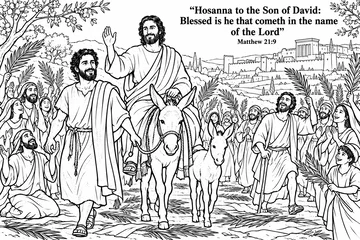
And the multitudes that went before, and that followed, cried, saying, Hosanna to the Son of David: Blessed is he that cometh in the name of the Lord; Hosanna in the highest.
crowd hailed Jesus as Son of David
- Psalms 118:26
Blessed be he that cometh in the name of the LORD: we have blessed you out of the house of the LORD.
The crowd’s royal welcome echoes the psalm’s blessing.
- Matthew 21:2
Saying unto them, Go into the village over against you, and straightway ye shall find an ass tied, and a colt with her: loose them, and bring them unto me.
sending disciples to bring colt
- Matthew 21:5
Tell ye the daughter of Sion, Behold, thy King cometh unto thee, meek, and sitting upon an ass, and a colt the foal of an ass.
Jesus rides a colt, fulfilling the prophecy of the coming King.
- Matthew 21:8
And a very great multitude spread their garments in the way; others cut down branches from the trees, and strawed them in the way.
Describes garments and branches spread along Jesus’ road into Jerusalem.
- Mark 11:8
And many spread their garments in the way: and others cut down branches off the trees, and strawed them in the way.
Describes people spreading garments and branches in Jesus’ path.
Commentary
Each commentary is drawn from primary sources: the writings of Ellen G. White and Adventist pioneers and periodicals. Each commentary is separate. Its own words are not a quotation; follow the references to read the source passages.
Ellen G. White
21 sources
They brought the colt to Jesus for His triumphal entry into Jerusalem, laid their outer garments upon it, and set Him upon it.DA 569.3–4DA 569.1–2COS 91.1–5 It was the foal of an ass that had never been ridden.DA 569.3–4ST Jun 8, 1882ST Jul 22, 1886 In riding thus He fulfilled the prophecy of Zechariah 9:9 of the promised King coming to Jerusalem and to His kingdom lowly and riding on a colt, coming as Messiah and heir to David's throne in meekness and humility and not as an earthly conqueror.DA 569.3–4DA 569.1–2EW 88.2–3COS 91.1–5 He accepted the public homage as King while the disciples and the multitude honored Him by spreading garments and branches in His path and welcoming Him with loud Hosannas and blessing, recounting the mighty works of healing and raising the dead they had seen.Ms 122, 1909, par. 24–26DA 569Ms 123, 1909, par. 21–22ST Jun 8, 18824RED 120.2 The people expected Him then to take David's throne, assert royal power, free Israel from Rome and restore its independence, but within days their hopes were disappointed at His death on the cross, though His entry pointed also to His coming sacrifice and future glory as King.DA 569.3–4ST Jun 8, 1882COS 91.1–5EW 206.41T 57.3–58.1
The Entry Into Jerusalem
They brought the colt to Jesus, cast their garments upon it, and set Jesus upon it for His triumphal entry into Jerusalem toward the feast.DA 569.3–4DA 569.1–2COS 91.1–5EW 206.42SP 384.1–385.1 The disciples spread their outer garments on the colt and seated Him on it, honoring Him as they went toward the city.DA 569.3–4DA 569.1–2COS 91.1–52SP 384.1–385.14RED 116.1–117.2 The colt was the foal of an ass that had never been ridden, an unused animal chosen for Him to ride.DA 569.3–4ST Jun 8, 1882ST Jul 22, 18862SP 384.1–385.14RED 116.1–117.2 That unused state belonged to the very animal brought for the entry.ST Jun 8, 1882ST Jul 22, 18864RED 115.3
On the first day of the week Jesus resumed the short journey from Bethany to Jerusalem for the Passover, to join the feast.4RED 115.32SP 383.2 Though the distance was short and He had always chosen to travel on foot, He sent two of His disciples to bring the colt that He might ride into Jerusalem.4RED 115.32SP 383.2 The disciples were puzzled why He should prefer to ride on this occasion.4RED 115.32SP 383.2 It was the beautiful season of the year, with trees in verdure and fragrant blossoms, and many had gathered for the feast.4RED 115.32SP 383.2Ms 128, 1899, par. 1 Multitudes that had flocked to Bethany to see Jesus accompanied Him, with other companies on their way to keep the feast continually joining them, and the raising of Lazarus had drawn an enthusiastic crowd eager to see Him and witness His entry.4RED 115.32SP 383.2Ms 128, 1899, par. 1 Lazarus, whom Jesus had raised from the dead, guided the colt carrying his Liberator.4RED 120.2
Without costly gifts, royal standards, pomp, or display, the disciples and people honored Him by laying their garments on the colt and by spreading garments and branches in His path as a royal carpet.ST Jun 8, 1882EW 88.2–3ST Jul 22, 18862SP 384.1–385.14RED 116.1–117.2 They offered their garments in place of a royal carpet and celebrated His approach with branches, including palm branches laid along the way.DA 569EW 88.2–3ST Jul 22, 18862SP 384.1–385.1 The glory of the procession came not from display but from the people He had delivered from suffering and death, who praised God and honored Him.4RED 120.2
The crowd welcomed Him with loud praise, blessing, and Hosanna to the Son of David, as people flocked from all the region about.EW 88.2–34RED 120.21T 57.3–58.1 They praised Him by repeating the mighty works they had seen and could remember, His good works of healing and raising the dead and all His other works of deliverance from suffering and death, so that blessing came from their lips.Ms 122, 1909, par. 24–26Ms 123, 1909, par. 21–224RED 120.21T 57.3–58.1
King, Prophecy and Warning
Setting Him upon the colt was done after the manner of a royal entry according to the custom of an Israelite king.DA 569.3–4DA 569.1–2DA 570.1–571.1 He who was seated there was Messiah and King, heir to David's throne, yet He came meek and humble and lowly.DA 569.3–4DA 569.1–2EW 88.2–3COS 91.1–5DA 570.1–571.1 He did not come in the manner of an earthly conqueror, but rode a humble beast whose glory lay in the delivered people who praised Him.EW 88.2–34RED 120.2
The act fulfilled the prophecy of the promised King coming lowly to Jerusalem and to His kingdom riding on a colt.DA 569.3–4DA 569.1–2COS 91.1–5DA 570.1–571.14SP 253.2 That prophecy is the prophecy of Zechariah 9:9.EW 206.4
He accepted this public homage as King.ST Jun 8, 1882ST Jul 22, 1886 His disciples took that acceptance as proof that their hope of seeing Him acknowledged as Israel's King in Jerusalem would be realized and fulfilled.ST Jun 8, 1882ST Jul 22, 1886
The disciples and the people expected Him to proclaim Himself King of the Jews, to take David's throne and an earthly kingdom, and to assert royal power.DA 569.3–4ST Jun 8, 1882COS 91.1–5EW 206.4ST Jul 22, 1886 They looked for Him to free Israel from Roman rule and its oppressors and to restore its independence.1T 57.3–58.1DA 570.1–571.14SP 253.2 Excitement over that hope spread far and near to the highest pitch.1T 57.3–58.1
The praise could not be stopped.EW 88.2–31T 57.3–58.1 When those who wanted it silenced, priests and elders, asked Him to still the multitude, He answered that if they held their peace even the stones would cry out.EW 88.2–31T 57.3–58.1 It had to be so because prophecy had to be fulfilled, and the followers were praising Him by repeating His good works of healing and raising the dead and all His other works they could remember.Ms 123, 1909, par. 21–22EW 88.2–31T 57.3–58.1
Within a few days their hopes were disappointed when they saw their beloved Master stretched upon the cruel cross above mocking, taunting Pharisees, with the darkness of death closing about them.EW 206.41T 57.3–58.14SP 253.2 Yet His entry also pointed toward His coming sacrifice and His future glory as King.4RED 116.1–117.2 Only after His resurrection did they understand that prophecy had also foretold His suffering and rising.4SP 253.2 He remains true to His promises, giving sweet consolation and rich reward to the true and faithful.1T 57.3–58.1
The entry is a solemn event joined to His weeping on the crest of Olivet over the doomed city because His mercy and love were rejected.Ms 122, 1909, par. 24–26Ms 54, 1886, par. 4–7Ms 85, 1893, par. 3 In that weeping He saw beyond the destruction of Jerusalem to an impenitent world doomed to destruction.Ms 85, 1893, par. 3 It shows the mercy and love of Jesus in dying for sinful man so that he might not perish in his sins.Ms 54, 1886, par. 4–7
The scene warns that similar scenes will occur in the last great day.Ms 122, 1909, par. 24–26 Therefore people must recognize their need, come to Jesus, and be ready for what comes suddenly.Ms 122, 1909, par. 24–26
Sources
Pioneers and periodicals
26 sources
The disciples brought an unbroken colt to Jesus, laid their garments on it for a seat, and set Him upon it for His entry from Bethany over the Mount of Olives into Jerusalem and the temple on the first day of the last week of His life, the only journey on which He is recorded to have ridden.ST Sep 27, 1899RH Jan 29, 1914ST Apr 12, 1905ST Apr 14, 1898 As He rode they and the multitude spread garments and branches in the way with shouts of Hosanna to the Son of David, hailing Him after the manner of Israel's kings riding for peace as the Prince of Peace.ST Sep 27, 1899ST Apr 12, 1905 This seating of Him on the colt literally fulfilled Zechariah 9:9 that Zion's King comes meek and lowly riding upon an ass, near the end of His ministry when miracles and the raising of Lazarus had given ample evidence He was Messiah.ST Sep 27, 1899RH May 16, 1912ST Jun 5, 1879 They proclaimed Him king expecting the kingdom to appear immediately with His reign on David's throne in Jerusalem, not understanding He was going to be condemned and crucified, yet their mistaken rejoicing fulfilled prophecy under divine impulse and was understood only after His resurrection taught them He must suffer before entering His kingdom.ST Jun 5, 1879ST Nov 27, 1879ST Nov 20, 1884ST Sep 12, 1895 The garments laid on the colt and in the way gave Him royal honor and adoration expressing love for which nothing was too good, while His riding on a borrowed colt showed His poverty as He paused on Olivet to weep over the city whose time of grace was nearly ended.ST Jun 8, 1882RH Sep 18, 1855ST Jun 19, 1884ST Jun 22, 1882ST Nov 3, 1898
Entry Time and Manner
The verse belongs to the triumphal entry into Jerusalem from Bethany and Bethphage over the Mount of Olives, across the Kidron Valley and into the city and into the temple.ST Sep 27, 1899ST Apr 14, 1898 It took place on the first day of the week known as Palm Sunday, in A.D. 31, during the last week of his life.ST Sep 27, 1899RH Jan 29, 1914ST Apr 14, 1898 It was only a few days before and shortly before his sufferings and death, just before his crucifixion.ST Nov 8, 1883ST Apr 14, 1898ST Feb 14, 1878 It came the day after the feast at Simon the leper's house following the raising of Lazarus.ST Nov 8, 1883
The disciples brought the colt to Jesus and cast their garments upon it to make a seat, and set Jesus thereon.ST Sep 27, 1899ST Apr 12, 1905ST Apr 14, 1898 The colt was unridden and had never been ridden.ST Jun 8, 1882ST Jul 22, 1886ST Apr 12, 1905 This was the only recorded occasion during his travels when Jesus rode.ST Apr 12, 1905
As he rode, many spread their garments in the way, with branches cut from the fields and palms laid before him amid joyful acclamations.ST Sep 27, 1899ST They praised God for the mighty works they had witnessed. They cried Hosanna, Hosanna to the Son of David, and Blessed is he that cometh in the name of the Lord.ST Sep 27, 1899ST Riding after the manner of Israel's kings on an ass symbolized peace rather than war, so he entered as the Prince of Peace.ST Apr 12, 1905
Prophecy Fulfilled in Disappointment
The seating of Jesus on the colt literally fulfilled the prophecy to the daughter of Zion that her King comes meek and lowly and humble and riding upon an ass and upon a colt the foal of an ass, with its rejoicing and shouting.ST Sep 27, 1899RH May 16, 1912ST Jun 5, 1879ST Nov 8, 1883 The fulfillment came far in the future from when it was written, showing the announcement concerned a later event and not the time when it was first written.ST May 9, 1878RH Jul 4, 1871 It took place near the end of His ministry, only a few days before His crucifixion, when the Jews had ample evidence He was Messiah and heir to David's throne from His prophecies, miracles, pure life and teaching, and the recent raising of Lazarus.ST Sep 27, 1899ST Nov 8, 1883 The disciples brought the colt to Jesus near Bethphage at the Mount of Olives, cast their garments upon it to make a seat, and set Jesus thereon, after which many spread their garments upon the way with branches cut from the fields while the multitude cried Hosanna.ST Sep 27, 1899
The details were ready beforehand in God's providence, and the fulfillment shows that God's prophetic word does not fail.RH May 16, 1912 The command in Zechariah 9:9, though written in the imperative mood to rejoice greatly and shout, was a prediction that such rejoicing and shouting would be done far in the future, and such prophetic commandments are always sure to be fulfilled in their seasons.RH May 16, 1912ST May 9, 1878RH Jul 4, 1871
The disciples and people proclaimed Him as King at the right time but wrongly expected the kingdom of God to appear immediately and Him to take David's throne and reign in Jerusalem as a triumphant earthly king.ST Jun 5, 1879ST Nov 27, 1879ST Nov 20, 1884RH Sep 18, 1855 Their conduct in setting Him on the colt, hailing Him as Son of David, and rejoicing before Him with palm branches and shouts of triumph proves the parable of the nobleman spoken just before had not removed that expectation from their minds.ST Nov 27, 1879ST Sep 16, 1889 They had not understood He was going into the city to be condemned and crucified as a malefactor, since palm branches and shouts of triumph belong to a king in triumph and not to one lowly and condemned, and suffering before glory was still a mystery to them.ST Jun 5, 1879ST Nov 27, 1879ST Sep 16, 1889
Their mistaken expectation and resulting disappointment and scattering when He was crucified within days did not prevent their actions from fulfilling prophecy.ST Jun 5, 1879ST Nov 20, 1884ST Feb 11, 1903 They acted in the line of duty under divine impulse in carrying out the prophetic command by bringing Jesus the colt and setting Him on it.ST Jun 5, 1879 Their rejoicing was not wrong, for if they were silent the stones would cry out, while their disappointment when He did not take the throne itself fulfilled prophecy.ST Feb 11, 1903RH Sep 18, 1855 Only after His resurrection and the Spirit's coming did they understand these events more fully and receive renewed hope through His resurrection, learning that Christ had to suffer before coming into His kingdom.ST Jun 5, 1879ST Nov 20, 1884 This is in line with the parable's teaching in the same chapter that He goes away to receive a kingdom and will return to the kingdom prepared for His people.ST Nov 20, 1884ST Sep 12, 1895
Royal Honor and Application
The seating of Jesus on the colt began the triumphal procession into Jerusalem in which He was honored as King and Messiah.ST Jun 8, 1882ST Jul 22, 1886ST The disciples had no costly gifts or royal standards to offer, yet they gave Him honor and adoration.ST Jun 8, 1882ST The spreading of garments before Him was an act reserved for royalty.RH Sep 18, 1855 On this one occasion in His life He allowed the multitudes full expression of their demonstrations of honor toward Him and accepted this public homage.ST Jun 8, 1882ST Jul 22, 1886ST Jul 22, 1886 His disciples took it as proof that their hope of seeing Him acknowledged as Israel's King in Jerusalem would be realized.ST Jun 8, 1882ST Jul 22, 1886
The garments laid on the colt and in the way expressed love and honor for Christ.ST Jun 19, 1884 The people gladly gave them despite the possibility that the colt's hooves would damage them, showing that nothing was too good for Jesus their Saviour and King.ST Jul 2, 1894 Acts of kindness and faithful service, resisting temptation out of love for Christ, and even laying down one's life for Him are ways of showing Him love that He notices and accepts.ST Jun 19, 1884
The entry on a borrowed colt underscores His poverty and freedom from covetousness.RH Nov 4, 1873 He rode triumphantly from Bethany over the Mount of Olives into Jerusalem, seen distinctly from the mount across the Kidron Valley, accompanied by an enthusiastic throng moving down through the valley and up the slope through the gate into the city.ST Nov 3, 1898 As the procession paused on the Mount of Olives He wept over the city when He beheld it.ST Jun 22, 1882ST Nov 3, 1898 At that moment Jerusalem still had opportunity to repent and be saved while He pleaded for the city despite its rejection of His mercy and warnings, but its time of grace was nearly over and judgment was approaching.ST Jun 22, 1882 He completed the entry by going into the temple and casting out the traffickers.ST Nov 3, 1898
Sources