Luke 19:47
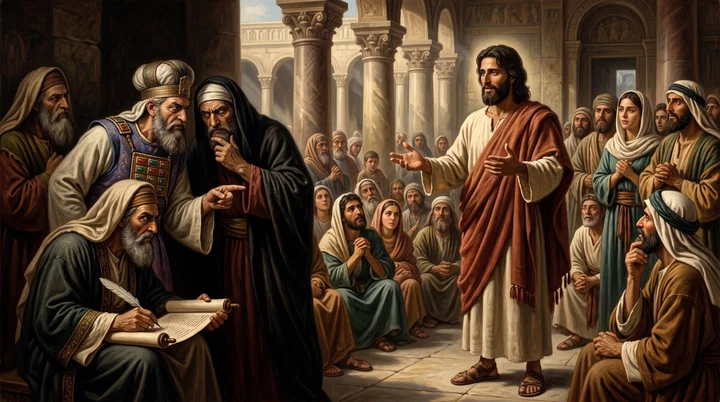
And he taught daily in the temple. But the chief priests and the scribes and the chief of the people sought to destroy him,
Translations
American King James Version, King James Version, KJV Cambridge Paragraph Bible
And he taught daily in the temple. But the chief priests and the scribes and the chief of the people sought to destroy him,
And he taught daily in the temple. But the chief priests, and the scribes, and the chief of the people sought to destroy him,
Revised Version, American Standard Version
And he was teaching daily in the temple. But the chief priests and the scribes and the principal men of the people sought to destroy him:
And he was teaching daily in the temple, but the chief priests and the scribes were seeking to destroy him — also the chiefs of the people —
And he was teaching day by day in the temple: and the chief priests and the scribes and the chief of the people sought to destroy him,
And he was teaching day by day in the temple; but, the High-priests and the Scribes, also the chiefs of the people, were seeking to destroy him,—
Berean Standard Bible, Majority Standard Bible
Jesus was teaching at the temple every day, but the chief priests, scribes, and leaders of the people were intent on killing Him.
He was teaching daily in the temple, but the chief priests, the scribes, and the leading men among the people sought to destroy him.
And every day he was teaching in the Temple. But the chief priests and the scribes and the rulers of the people were attempting to put him to death;
And he taught dayly in the Temple. And the hie Priests and the Scribes, and the chiefe of the people sought to destroy him.
Douay-Rheims (Challoner revision)
And he was teaching daily in the temple. And the chief priests and the scribes and the rulers of the people sought to destroy him:
Pictures
Cross-references
- Matthew 21:12-16
And Jesus went into the temple of God, and cast out all them that sold and bought in the temple, and overthrew the tables of the moneychangers, and the seats of them that sold doves,
Jesus cleanses the temple, and the leaders’ displeasure leads them to oppose him.
- Mark 11:15-19
And they come to Jerusalem: and Jesus went into the temple, and began to cast out them that sold and bought in the temple, and overthrew the tables of the moneychangers, and the seats of them that sold doves;
Parallel account of Jesus’ final temple cleansing.
- Matthew 21:23
And when he was come into the temple, the chief priests and the elders of the people came unto him as he was teaching, and said, By what authority doest thou these things? and who gave thee this authority?
leaders next confront him while teaching
Commentary
Each commentary is drawn from primary sources: the writings of Ellen G. White and Adventist pioneers and periodicals. Each commentary is separate. Its own words are not a quotation; follow the references to read the source passages.
Ellen G. White
3 sources
He taught daily in the temple while the chief priests and the scribes and the chief of the people sought to destroy Him.DA 589.1–590.2Ms 28, 1885, par. 13–15 The hostility of the priests and rulers was stirred because the people preferred to listen to Him rather than to them.Ms 28, 1885, par. 13–15 He knew His effort to reform the corrupt priesthood would fail, yet He continued His work so that the unbelieving people would have evidence of His divine mission.DA 589.1–590.2
There is always a party continually working against the sacred truth that should be maintained.Ms 123, 1909, par. 24 Unless people are wide awake to the work being done in the world, they will be overtaken and lose their chance of eternal life.Ms 123, 1909, par. 24 Accepting Jesus as Saviour, the Son of the living God who laid aside His royal robe and crown and clothed His divinity with humanity so that humanity may grasp humanity and divinity may be grasped by humanity in living faith in Him, requires self-denial by everyone and working out faith with fear and trembling.Ms 123, 1909, par. 24
Sources
Pioneers and periodicals
9 sources
Luke's nineteenth chapter gives the fullest account of Christ's entry into Jerusalem and lament over the city, fuller than the accounts in Matthew 21, Mark 11, and John 12.ST It belongs to Monday, the third day before the Passover, when Jesus came in the morning from Bethany to Jerusalem, cursed the fig tree, drove the buyers and sellers out of the temple, and then taught in the temple and healed the sick. The buying and selling prove the day was a common workday and not the Sabbath, and in the evening of that Monday he left Jerusalem and returned to Bethany.
It belongs to the account of Christ's triumphant ride into Jerusalem and entry into the temple, where by his mighty power he cast out the money changers and merchants.ST Feb 14, 1878 His daily teaching in the temple continued the next day, Tuesday, the second day before the Passover, when he spent all day teaching there while the chief priests and scribes and chief of the people sought to destroy him. After he cleansed the temple and rebuked those who bought and sold there, he taught daily in the temple, but the chief priests and the scribes and the chief of the people sought to destroy him because of that rebuke.ST Dec 23, 1886
It belongs to the record of his teaching as his ministry moves toward its close, when warnings of judgment become increasingly forceful.ST Feb 10, 1898 Jerusalem's people had great privileges but failed to heed the warning of the Spirit of God, and their time of probation was nearing its end.ST Feb 14, 1878 These warnings of judgment are given not to condemn people, but to lead them to seek God's kingdom and righteousness.ST Feb 10, 1898
The setting shows the disciples expected God's kingdom to appear immediately, so Jesus told the parable of the nobleman to correct that expectation.ST Nov 27, 1879 Their joyful and triumphant welcome of Jesus in Jerusalem shows they still did not understand that he was going there to suffer and be crucified, and their mistaken expectations did not establish the true order of future events.ST Sep 16, 1889ST Nov 27, 1879 The parable of Luke 19 teaches that the nobleman first goes into a far country to receive for himself a kingdom and then returns, showing the Lord is not depending on man to prepare a kingdom for him and showing that receiving the kingdom happens before the return and its accompanying judgments.RH Apr 15, 1858ST Sep 12, 1895
At his return, those enemies who would not have him reign over them are brought forth and slain in his presence, showing that the wicked are destroyed rather than converted.RH Apr 15, 1858 It is part of the setting in which Jesus taught about his coming kingdom, and his preaching gave the repentant thief reason to hope that Jesus would later return and establish that kingdom. It shows Christ as a constant and faithful Teacher who after his temptation in the wilderness began his work as a public teacher and preacher and then taught whenever and wherever opportunity presented itself, in public and in private, to multitudes and to individuals and to disciples, including teaching in the temple every day, continuing his teaching in another city when his teachings caused his life to be sought in one city.ST Sep 1, 1898
Sources