Luke 19:46
Saying unto them, It is written, My house is the house of prayer: but ye have made it a den of thieves.
Translations
Saying to them, It is written, My house is the house of prayer: but you have made it a den of thieves.
Saying unto them, It is written, My house is the house of prayer: but ye have made it a den of thieves.
saying unto them, It is written, My house is the house of prayer: but ye have made it a den of thieves.
Saying to them, It is written, My house is the house of prayer, but ye have made it a den of thieves.
Revised Version, American Standard Version
saying unto them, It is written, And my house shall be a house of prayer: but ye have made it a den of robbers.
saying to them, 'It hath been written, My house is a house of prayer — but ye made it a den of robbers.'
saying to them, It is written, My house is a house of prayer, but ye have made it a den of robbers.
saying unto them—It is written, And, my house, shall be, a house of prayer; but, ye, have made, it, a den of robbers.
He declared to them, “ It is written: ‘ My house will be a house of prayer.’ But you have made it ‘ a den of robbers.’”
He declared to them, “ It is written: ‘ My house is a house of prayer.’ But you have made it ‘ a den of robbers.’”
saying to them, “ It is written, ‘ My house is a house of prayer,’ but you have made it a ‘ den of robbers’!”
Saying to them, It has been said, My house is to be a house of prayer, but you have made it a hole of thieves.
Saying vnto them, It is written, Mine house is the house of prayer, but ye haue made it a denne of theeues.
Douay-Rheims (Challoner revision)
Saying to them: It is written: My house is the house of prayer. But you have made it a den of thieves.
Pictures
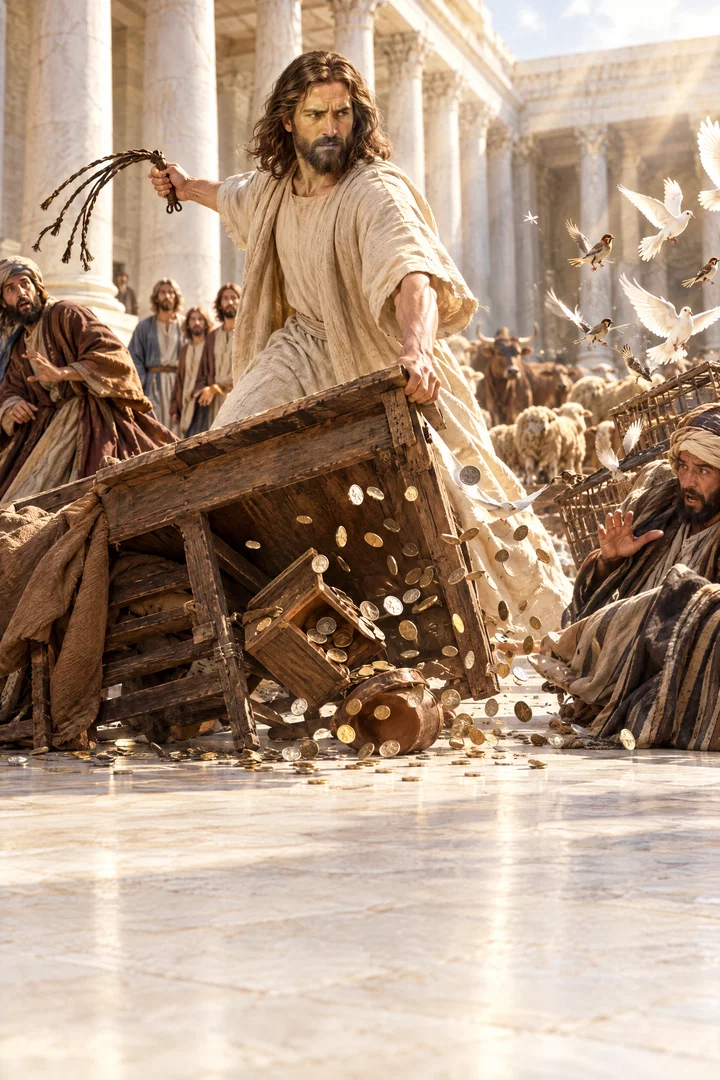
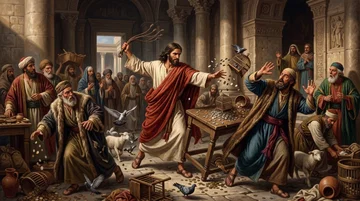
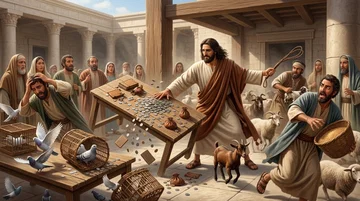
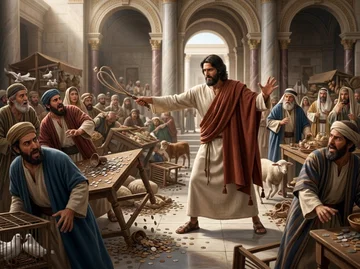
Cross-references
- Matthew 21:12-13
And Jesus went into the temple of God, and cast out all them that sold and bought in the temple, and overthrew the tables of the moneychangers, and the seats of them that sold doves,
Jesus drives out the temple traders and rebukes its corruption.
- Mark 11:15-17
And they come to Jerusalem: and Jesus went into the temple, and began to cast out them that sold and bought in the temple, and overthrew the tables of the moneychangers, and the seats of them that sold doves;
Parallel account of Jesus cleansing the temple.
- John 2:14-16
And found in the temple those that sold oxen and sheep and doves, and the changers of money sitting:
Jesus expels traders and money changers, rejecting commercial use of the temple.
- Jeremiah 7:11
Is this house, which is called by my name, become a den of robbers in your eyes? Behold, even I have seen it, saith the LORD.
Both condemn God’s house as a den of robbers.
- Isaiah 56:7
Even them will I bring to my holy mountain, and make them joyful in my house of prayer: their burnt offerings and their sacrifices shall be accepted upon mine altar; for mine house shall be called an house of prayer for all people.
Christ’s words about the temple as a house of prayer echo this prophecy.
- Psalms 69:9
For the zeal of thine house hath eaten me up; and the reproaches of them that reproached thee are fallen upon me.
The disciples recalled its words during the temple cleansing.
- Mark 11:15-16
And they come to Jerusalem: and Jesus went into the temple, and began to cast out them that sold and bought in the temple, and overthrew the tables of the moneychangers, and the seats of them that sold doves;
Jesus drives out traders and forbids carrying vessels through the temple.
- Malachi 3:1-3
Behold, I will send my messenger, and he shall prepare the way before me: and the Lord, whom ye seek, shall suddenly come to his temple, even the messenger of the covenant, whom ye delight in: behold, he shall come, saith the LORD of hosts.
The Lord comes to his temple and purifies his people.
- Isaiah 1:12-13
When ye come to appear before me, who hath required this at your hand, to tread my courts?
God rejects worship that profanes his courts and calls for changed conduct.
- Luke 19:41
And when he was come near, he beheld the city, and wept over it,
Jesus weeps over Jerusalem before cleansing the temple.
Commentary
Each commentary is drawn from primary sources: the writings of Ellen G. White and Adventist pioneers and periodicals. Each commentary is separate. Its own words are not a quotation; follow the references to read the source passages.
Ellen G. White
46 sources
Spoken at His second cleansing of the temple near the close of His ministry, Christ asserted with greater authority than at the first cleansing that the temple courts must be driven clear of traffickers.3SP 23.1–24.1Ms 49, 1890, par. 12COS 100.2 God's house is set apart as sacred for prayer, but at Passover it had been perverted into a noisy marketplace of exorbitant prices, money-changing for gain shared by priests and rulers, and traffic that drowned out worship, which was extortion and robbery even in the offerings.COS 99.2–100.1ST Sep 16, 1897Ms 123, 1909, par. 23DA 589.1–590.2ST Jan 4, 1877 Standing alone with the majesty of Heaven's King, His commanding voice, consuming indignation and soul-searching look exposed guilt, put the crowd to flight as before a judge, and foreshadowed the final reckoning for those who receive light yet reject mercy.3SP 23.1–24.1Ms 122, 1909, par. 24–26DA 590.3–591.1ST Mar 28, 1878STMW7 54.1–2 The courts filled with unholy traffic picture the heart, which should be Christ's dwelling but is defiled by selfishness, worldliness and evil passion, and in cleansing the temple He announced His mission to cleanse the heart from sin and make it a dwelling for God.RH Dec 31, 1908ST Jan 10, 1878Lt 102, 1905, par. 8–11 That cleansing stands as the pattern for His institutions, that churches must not be turned to feasting, trade or display, publishing houses must not be turned chiefly to commercial gain and error, and schools must be cleared of defiling books and teachings.CT 25.28T 92.44T 642.4–643.1GC88 474.2Lt 140, 1901, par. 1–4
Historical Setting and Utterance
The utterance belongs to the second cleansing of the temple near the close of ministry, in connection with the entry into Jerusalem.3SP 23.1–24.1Ms 49, 1890, par. 12STOM 31.1Lt 1f, 1890, par. 16–17 It pairs with the cleansing at the beginning of public ministry three years earlier, yet was spoken with greater authority than that first cleansing.3SP 23.1–24.1STOM 31.1Lt 1f, 1890, par. 16–17 The priests and rulers had been ashamed of their former fear and had resolved never to flee in that way again, but when they heard the words again they were terrified even more and obeyed in greater haste than before.3SP 23.1–24.1COS 100.2
He stood alone in the desecrated court in the majesty of Heaven's King, with divinity flashing through humanity.3SP 23.1–24.1 He spoke in clear accents with power like a mighty tempest and with trumpet tones that hushed all noise and swayed the people.3SP 23.1–24.1 His indignation and displeasure were like consuming fire, quenching all opposition.3SP 23.1–24.1ST Mar 28, 1878 His commanding authority and soul-searching look exposed guilt, asserted the holiness of God's house, and made the crowd feel answerable before God as before a judge.DA 590.3–591.1ST Mar 28, 18782SP 117.1–31RED 76.1–3ST Jan 4, 1877
The words were joined to the command to take these things away, and together they drove priests, rulers, buyers, sellers, cattle and merchandise in hasty flight from the temple of the Most High.3SP 23.1–24.1COS 100.2 Their fear and flight exposed them as convicted hypocrites and robbers.3SP 23.1–24.1ST Aug 4, 1909 The disciples remembered that flight of the merchants, and later hoped He would again display such power to disperse His enemies and prove Himself King of Israel.EW 139.3
After the traffickers had been driven out, He welcomed the sick into the temple court and healed them there.COS 100.3–4 The people then praised God in the restored house of prayer.COS 100.3–4
House of Prayer Desecrated
God's house is set apart as sacred for prayer, and Christ's own presence made the temple sacred, so to turn it to other uses is to profane it.ST Sep 16, 1897ST Mar 28, 18782SP 117.1–31RED 76.1–3ST Jan 4, 1877 Buying and selling there, marked by extortion and robbery and by disturbance of worship, had turned it into a den of thieves, and His words condemned that misuse and commanded the traffic to be removed.COS 99.2–100.1ST Mar 28, 18782SP 117.1–3 The rebuke exposed the leaders' failure to preserve true worship, for sacred worship had been corrupted by unfair dealings in the temple courts where the poor were exploited.COS 99.2–100.1ST Sep 16, 1897
At Passover the courts were perverted with merchandise and made to resemble a noisy marketplace rather than a place of prayer.ST Jan 4, 18771RED 74.1–23MR 61.4 Sellers charged exorbitant prices for sacrificial animals, and priests and other authorities shared the gains from that profiteering and from exchanging the money worshipers brought.ST Sep 16, 1897ST Jan 4, 18771RED 74.1–2 Their traffic filled the court with noise that seriously disturbed worshipers inside and drowned out prayers, showing how greed and love of power had corrupted the sacred temple and its worship.COS 99.2–100.1ST Jan 4, 1877COS 99.1 Even bustling commerce like that seen in modern cities illustrates the same point, treating a sacred place as though it had no sacredness.3MR 61.4
This traffic was extortion and robbery, carried out even in the offerings presented.COS 99.2–100.1Ms 123, 1909, par. 23Lt 116, 1907, par. 6–7 The priests and rulers who took part in buying, selling, and exchanging money became, in God's sight, no better than thieves.DA 589.1–590.2ST Mar 28, 18783SP 20.2 Their commerce corrupted the sacrificial service, for offerings meant to point people to the Lamb of God were made a means of gain, while outward sacrifices replaced humble repentance and obedience.DA 589.1–590.2 Selfishness and love of money, envy and strife, injustice and fraud, malice and passion ruled, with everyone seeking gain from his quarter.Lt 31, 1898, par. 9–12
With all His infinite love and mercy He can execute stern justice against such desecration.3SP 23.1–24.1ST Mar 28, 1878ST Mar 28, 1878 His words carried divine authority and drove those who had brought cattle and merchandise into the temple to flee, and that stern act was followed by profound pity for the fleeing crowd.3SP 23.1–24.1ST Mar 28, 1878
Judgment and Coming Dispersion
The words exposed the traffickers and declared the temple sacred, so that the crowd felt answerable before God as before a judge.2SP 117.1–31RED 76.1–3ST Jan 4, 1877 The priests and rulers who shared in buying, selling and money-changing were made, in God's sight, no better than thieves, and their gain-seeking commerce corrupted the sacrificial service meant to point to the Lamb of God into a means of money-getting in place of humble repentance and obedience.DA 589.1–590.22SP 117.1–3 Their fear and flight exposed their guilt as convicted hypocrites and robbers, and their refusal to repent under conviction showed wickedness and impenitence, though it was already known that the corrupt priesthood would not be reformed.DA 589.1–590.2ST Aug 4, 1909 His presence made the place sacred, His desecrated house brought condemnation, and His assertion of holiness carried divine authority as judge.1RED 76.1–3ST Jan 4, 1877
That flight also symbolized the coming dispersion of the Jewish nation for wickedness and impenitence.ST Sep 16, 1897ST Aug 4, 1909 Jerusalem had been favored as the depository of sacred trusts, yet perverted the truth and despised entreaties and warnings, and the courts where the poor were exploited and true worship was not preserved became a den of thieves through unfair dealing, selfishness and love of money, envy and strife, injustice and fraud, malice and passion, with everyone seeking gain.ST Sep 16, 1897Lt 31, 1898, par. 9–12 She stands as a warning that by long departure from just and righteous principles men place themselves where light and truth, justice and mercy are not discerned until sin reaches the boundary where repentance cannot be felt.Lt 31, 1898, par. 9–12 Over such a course Christ sorrows and weeps, turns away, and comes to investigate the condition.Lt 31, 1898, par. 9–12
The scene in Jerusalem warns that similar scenes will take place in the last great day.Ms 122, 1909, par. 24–26 At the cleansing His words carried the authority of judgment and foreshadowed a future reckoning for those who reject God's messages and offers of forgiveness.STMW7 54.1–2 That warning and call to repentance applies still to those who receive great heavenly light but refuse it, with consequences corresponding to the light received.STMW7 54.1–2ST Jan 10, 1878 The cleansing near the end of the ministry, paired with the cleansing at the beginning of the public ministry, together form the pattern for the final warning to the world: the second angel's message and the call from heaven for God's people to come out of Babylon.STOM 31.1Lt 1f, 1890, par. 16–17 His rebuke and expulsion of the extortionate dealers in sacrificial offerings, who robbed the people and profaned sacred things, taught that religious name and position count for nothing beside virtue, purity of character, honesty, and righteous dealing.Lt 116, 1907, par. 6–7
Heart and Soul Cleansed
The courts filled with unholy trade were a picture of the heart defiled by sinful desires, selfish lusts, and evil habits.RH Dec 31, 1908 That heart was meant to be Christ's dwelling, yet it is defiled by selfishness and love of the world, by malice and envy and unholy passion.ST Jan 10, 1878 In cleansing the temple Jesus announced His mission to cleanse the heart from sin and to make it a dwelling place for God.RH Dec 31, 1908
That cleansing must take place in the soul temple by driving out the buyers and the sellers.Lt 102, 1905, par. 8–11 The buyers and sellers are worldly merchandise, commercial burdens, and the leaven of worldliness that mingle with sacred things, crowd the mind, and destroy spiritual discernment.Lt 102, 1905, par. 8–11 The means and the physical and mental powers entrusted by God are sacred, and they must be kept unmingled with worldly merchandise and invested wholly in the Master's service, for results as far reaching as eternity.Lt 102, 1905, par. 8–11 Such cleansing makes doing the Master's bidding and promoting His work the one aim of life, bringing upward growth and transformation of character by the Holy Spirit, with self hid with Christ in God.Lt 102, 1905, par. 8–11 It brings a generous spirit in kindness and tender regard for others through beholding Christ's character.Lt 102, 1905, par. 8–11
Faithful Use of Institutions
God's house is meant for prayer, not for turning worship to personal profit, and making it a den of thieves is what professed worshipers do when they put worldly gain first while keeping only a form of piety.ST Nov 17, 18814T 252.2 Those who disregard God's commands for their own advantage will face His judgment, and God's people and the church are called to examine themselves lest they do the same.ST Nov 17, 18814T 252.2 Refusing to receive and walk in the light God has given follows the same track as Jerusalem, which though favored as the depository of sacred trusts perverted truth and despised warnings, with selfishness and love of money, envy and strife, injustice and fraud, malice and passion ruling while everyone sought gain from his quarter.Lt 31, 1898, par. 9–12 The publishing house in Battle Creek turned into a desecrated shrine of unholy merchandise and traffic is part of that same departure, over which Christ sorrows and weeps and which He comes to investigate.Lt 31, 1898, par. 9–12 Jerusalem stands as the warning that long departure from just and righteous principles leaves men unable to discern light and truth, justice and mercy, until sin reaches the boundary where repentance cannot be felt.Lt 31, 1898, par. 9–12
Churches become that desecrated house when in the name of religion they host feasting and unholy trade to raise money by encouraging appetite, greed, or pleasure instead of rebuking those evils.GC88 474.2 The same desecration occurs when worship is turned to display and worldly interests, so that people focus on fashionable dress rather than Christ and the sermon.4T 642.4–643.1 Such display dishonors God's house as surely as did the money-changing Jesus banished from the temple.4T 642.4–643.1GC88 474.2
Christ's cleansing stands as the pattern for publishing houses, which are to serve their sacred purpose and not be turned chiefly toward commercial gain or questionable work.Lt 140, 1901, par. 1–4 His cleansing of moral pollution requires removing injustice and fraudulent dealings, for schemes that deprive people of their rights are contrary to His order.Lt 76, 1895, par. 9–11 Those who see such wrongdoing must speak against it fearlessly.Lt 76, 1895, par. 9–11
A publishing institution becomes a den of thieves when objectionable commercial work and the printing of teachings contrary to truth displace the printing and circulation of truth.8T 92.4STGC 22.1Lt 46, 1903, par. 9–10 In that condition workers' time and talents are wasted and misused, money is misappropriated, and presses meant to spread God's truth are used to spread error and Satan's theories.8T 92.4STGC 22.1 Such corruption defiles the institution, and dishonorable gain is worse than loss.8T 92.4 Commercial work joined with the printing of error desecrates a place devoted to God's work just as merchandise and robbery desecrated the temple in Christ's day.Lt 46, 1903, par. 9–10
The defilement includes accepting, soliciting, and printing commercial and worldly literature that unsettles faith, misdirects the mind, and sows doubt, questioning, and unbelief about the authority and purity of the Old Testament Scriptures and about Christ, even arguing He was only a man.6MR 268.1–269.3 That work dishonors the Redeemer, brings Satan and his sophistry into the office, and sends forth educated infidels from a place established to give truth to the world, turning it into a place of evil work that God condemns.6MR 268.1–269.3 The defilement is also leading and managing without the Holy Spirit, without justice and integrity and the love of God guiding managers, in perversity and unsanctified, unrighteous dealing.18MR 218.1–3 It is practiced iniquity and every unfair scheme savoring of selfish grasping, often reproved, which hardens the actors until their hearts are beyond impression.18MR 218.1–3 God will bear with such working only so long, His wrath is kindled, and He will soon cleanse it, so publishing plants must exist elsewhere without longer dependence on Battle Creek.18MR 218.1–3 At the center of the work the buyers and sellers and merchandise are corrupt management ruling other minds, seeking full control or crushing the work, turning men from their rights, overbearing Spirit-led men unless they fight for right methods, weakening confidence and Protestant principles and nearly extinguishing divine light.Lt 83, 1896, par. 38–40 God wants His temple no longer a den of thieves and moneychangers but purified, with His servants men of piety and holy endeavor.Lt 83, 1896, par. 38–40
When the publishing office is made a house of prayer, God is present with the workers both in their religious exercises and in their daily work.Ms 101, 1901, par. 34 As Christ cleansed the temple, He would likewise cleanse schools by removing books, teachings, and other influences that defile students, corrupt minds, or misrepresent God.CT 25.2FE 174.2 In their place He would give substantial knowledge, heart-treasured truths, and precepts that safely guide conduct.CT 25.2FE 174.2
Sources
Pioneers and periodicals
46 sources
God's house is meant to be a house of prayer for all nations, and turning it to buying and selling and commercial gain makes it a den of thieves and robbers.ST Aug 20, 1894ST Sep 17, 1894ST Sep 17, 1894 On Monday morning, three days before the Passover, Jesus came from Bethany to Jerusalem and drove the buyers and sellers and money-changers from the temple courts, not even allowing anyone to carry a vessel through it.ST Dec 16, 1897 What became robbery began as honorable provision for distant travelers in animals for sacrifice and exchange of money, until priests moved the traffic little by little into the courts and joined in its exorbitant prices and gains, so that noisy trafficking with wrangling and oaths drowned out prayer and exploited the poor.ST Jan 4, 1877ST Aug 20, 1894RH Nov 23, 1916RH Sep 16, 1902ST Oct 5, 1904 In cleansing the temple He announced His mission to cleanse the defiled heart from selfish lusts, evil habits, love of the world, and unholy passion, and to make it a dwelling place for God.RH Dec 31, 1908ST Jan 10, 1878 The same condemnation forbids turning God's house today into a place of money-making by fairs, bazaars, feasts, entertainments, and gambling schemes, and calls for giving from duty and love to God and humanity rather than for pleasure or gain.ST Apr 15, 1880ST Nov 19, 1894ST Dec 29, 1887ST Jun 10, 1875
Context and Wording
The account belongs with the entry into Jerusalem and lament over the city recorded in Matthew 21, Mark 11, Luke 19, and John 12, with Luke 19 giving the fullest account.ST It was the final act of the triumphal ride from Bethany over the Mount of Olives into Jerusalem, when coming near He beheld the city and wept over it, while the throng passed down through the Kidron Valley, up the slope to the gate, and into the city with Him.STST Nov 3, 1898 The cleansing belongs to Monday, the third day before the Passover. That morning He came from Bethany to Jerusalem, cursed the fig tree, drove the buyers and sellers from the temple, taught and healed the sick there, and in the evening left Jerusalem and returned to Bethany. The buying and selling proves the day was a common workday and not the Sabbath, fixing the sequence that places the crucifixion on Friday and the resurrection on Sunday.
It records the Desire of All Nations coming to the second temple and filling it with glory, finding its courts defiled by buying and selling, casting out sellers and buyers, and declaring its true purpose.ST Sep 17, 1902 He had been slighted, despised, and rejected by His own who fled from His glory.ST Sep 17, 1902 At the same time He wept over Jerusalem and foretold its desolation and destruction by enemies casting a trench about it and laying it even with the ground with no stone upon another, because it knew not the time of its visitation.ST Sep 17, 1902 God intended the temple to be a house of prayer for all nations, but the Jews had made it a den of thieves.ST Sep 17, 1902ST Sep 17, 1894ST Sep 17, 1894
The temple means not only the central building but the surrounding courts including the court of the Gentiles.ST Aug 20, 1894 Great numbers of animals for Passover sacrifice gave occasion to set up markets right in the sacred courts.ST Aug 20, 1894 The place that should have been given to reverent, holy conversation and worship of God was given up to trafficking and trading with its wrangling and bitter words and reckless oaths, driving sharp, hard bargains as in any earthly merchandise.ST Aug 20, 1894 It is a parallel account of driving out those trading there and objecting to the temple being used for commerce.ST Aug 20, 1894ST Sep 22, 1909 God's house was meant to be a place of prayer, but by buying and selling the people had made it a den of robbers.ST Aug 20, 1894ST Sep 17, 1894ST Sep 17, 1894ST Sep 22, 1909
He stopped the desecration by driving the merchants out so completely that He did not even allow anyone to carry a vessel through it.ST Dec 16, 1897 A place dedicated to God as holy is to be kept sacred, and its service is not a place for commerce.ST Dec 16, 1897
Temple Trade Condemned
What became robbery began as honorable provision for those who came from far lands unable to bring their required offerings, in selling oxen, sheep, and doves and in changing travelers' money into Jewish currency.RH Sep 16, 1902 The priests took up that need and moved it little by little nearer until it was admitted into the temple courts as an important department of temple work.RH Sep 16, 1902 Traffic carried on under the garb of religion thus made the Lord's house a place of merchandise and robbery.RH Sep 16, 1902
At Passover the courts had become a place of profiteering, where sellers charged exorbitant prices for sacrificial animals and priests and other authorities shared the gains.ST Jan 4, 1877 The rulers had approved the unholy buying and selling and profited from it, and clearing it challenged their prestige and exposed their self-interest.ST Oct 5, 1904 The courts were filled with money changers crying their coin and hucksters selling, with a treasury box guarded by hoarding priests, while pilgrims rushed for the choicest place with no care for the need of others.RH Nov 23, 1916
The temple was meant to be a place of prayer and worship, but merchants and money changers had turned it into a place of dishonest trade.ST Aug 20, 1894 Its leaders had turned it into a place of greedy trade, and their buying and selling in the sacred precincts made them thieves in God's sight and desecrated the temple.ST Mar 28, 1878 That greedy, dishonest trade exploited the poor and dishonored God.ST Mar 28, 1878ST Aug 20, 1894
The noisy trade disturbed worshipers and drowned out their prayers, showing how greed and love of power had corrupted the sacred temple and its worship.ST Jan 4, 1877 When Jesus climbed the marble steps and sat in the temple His presence stopped the traffic and exposed the robbery, the changers gripping their coin and ceasing their cry, the sellers made dumb, the priests slinking back abashed to hide.RH Nov 23, 1916 God claims reverent prayer and mercy in His house, not selfish gain and hard-hearted worship, as shown when Jesus turned aside to lift and heal by touch a fallen aged woman whom the rushing worshipers would not lift.RH Nov 23, 1916
The charge applied chiefly to the priests and teachers, not only to the common people, for they had dishonored God and corrupted His house.RH Mar 31, 1863 They had also corrupted God's word and ignored signs being fulfilled before them, though those signs were read in the synagogues every Sabbath.RH Mar 31, 1863 The temple service and its sacred precincts had been corrupted by greed into a den of thieves, for which Jesus drove the greedy traders out with a whip of cords.RH Jun 6, 1907
Judgment and Prophecy
God's house was meant for prayer, but it had been made a den of thieves as the Jewish nation was filling up its cup of iniquity.ST Sep 16, 1897ST Sacred worship in the temple courts had been corrupted by dishonest trade in which the poor were exploited, and Jesus drove out those who did it.ST Sep 16, 1897 His rebuke exposed the failure of the leaders to preserve true worship, and the scene symbolized the coming dispersion of the Jewish nation for wickedness and impenitence.ST Sep 16, 1897
When Christ rebuked their corruption the priests and rulers fled from the temple.ST Aug 4, 1909 Their fear exposed their guilt as hypocrites and robbers, and their refusal to repent though convicted showed wickedness and impenitence.ST Aug 4, 1909 Their flight itself symbolized the dispersion of the nation.ST Aug 4, 1909 Jesus entered the temple in mighty power and cast out the money-changers and sellers of merchandise in connection with His triumphant entry into Jerusalem before His crucifixion.ST Feb 14, 1878 Jerusalem's failure to heed God's warning and to value its privileges is a warning to people in every age whose time of probation is passing.ST Feb 14, 1878
The sacred standing of the temple did not come from its buildings, objects, or services alone, for holy things are holy through God's presence. When people trusted in those material things while rejecting Christ they made God's house a den of thieves, and when He departs what was holy becomes common, so that even what is cherished as most holy is profane without Christ. The tearing of the temple veil at Christ's death revealed that the people had rejected Him and that the glory had departed. Jesus cleansed the temple near the end of His ministry as He had done when He began His public ministry, and the two cleansings parallel the two distinct calls in the final warning to the world, the second angel's message and the call from heaven for God's people to come out of Babylon.ST Feb 13, 1893 His driving of the sellers from the temple courts was a cleansing of a place consecrated to God by rejecting its use for commercial gain, of which Nehemiah's prohibition of selling on sacred ground was a faint type.ST Nov 15, 1899
Authority and Inner Cleansing
The temple is God's house meant for prayer, and turning it into dishonest trade desecrates it into a den of thieves.ST Mar 28, 1878ST Jan 4, 1877ST Mar 28, 1878ST Aug 20, 1894 Jesus condemned that misuse with words carrying divine authority and declared the place sacred.ST Mar 28, 1878ST Jan 4, 1877ST Mar 28, 1878 He drove out the people with their cattle and merchandise, clearing the sacred courts by that authority.ST Mar 28, 1878ST Mar 28, 1878ST Aug 20, 1894 His words exposed the wrongdoing, and His presence and bearing silenced the crowd and made them feel answerable before God as before a judge.ST Jan 4, 1877ST Aug 20, 1894 His infinite love and mercy coexist with stern justice, and that justice did not exclude driving out the desecrators until they fled.ST Mar 28, 1878ST Mar 28, 1878
He exercised that authority to drive people from the temple twice. His command was decisive enough to clear hundreds at once. That power came not from position or intimidation but from His influence and kingly bearing.
The courts filled with unholy trade represented a heart defiled by sinful desires, selfish lusts, and evil habits.RH Dec 31, 1908 That defilement includes selfishness, love of the world, malice, envy, and unholy passion where Christ should dwell.ST Jan 10, 1878 The heart should be Christ's dwelling, and in cleansing the temple Jesus announced His mission to cleanse the heart from sin and make it a dwelling for God.RH Dec 31, 1908ST Jan 10, 1878 The warning and call to repentance then given still applies to those who receive great light but reject it, with consequences corresponding to the light received.ST Jan 10, 1878
The house is also the human body as God's living temple, whose right condition is a place of prayer.RH Sep 23, 1902 Made wrong, it is defiled by sin and by things that cause disease.RH Sep 23, 1902 The remedy is to welcome Jesus into the temple again and let Him cleanse it, replacing sin within with Christ within.RH Sep 23, 1902 When He enters and dwells there as God with us, He saves people from their sins and by that saves them from the consequence of sin, which is disease and premature death.RH Sep 23, 1902
Faithful Worship Today
God's house is meant for prayer, not for turning worship into personal profit, and making it a den of thieves describes professed worshipers who keep a form of piety while putting worldly gain first.ST Nov 17, 1881 Disregarding God's commands for advantage brings His judgment, and God's people are to examine themselves whether they are doing the same.ST Nov 17, 1881
The house of God is for worship and must not be turned to profane purposes or joined to playhouses and club rooms to cater to amusement.ST Jun 4, 1885 It is profaned when turned to worldly entertainment and display, with fairs, shows, feasts and music filling the church while the rich sit in cushioned pews and the poor are left outside.ST Jan 13, 1881 Churches using such entertainments and fundraisers should plead for mercy, give them up, and return to dependence on God.ST Dec 30, 1903
Christ opposed making God's house a place of money-making, including church feasts, parties and fundraising schemes that attract through appetite and pleasure and seek money for worldly ends.ST Jun 10, 1875 Turning God's house into merchandise is forbidden, and giving is to be pure benevolence from duty, from the need of the cause, and from love to God and humanity, not for show and not to get something out of it. Bazaars, fairs and all artificial makeshift ways of raising money are condemned, because in them people hope to give without sacrifice and to be compensated in pleasure for all they give, and such methods always have a downward tendency and eat out pure benevolence.
Even ordinary legitimate trade made the temple a den of thieves, and raffling, which is gambling and therefore dishonest everywhere, is still more out of place in God's house.ST Dec 29, 1887 Frivolity, cheating and gambling in church fairs turn a house of prayer into merchandise and profane its purpose.ST Jan 19, 1882 Proceeds from lotteries and feasts are like the changers' money in the Lord's house and are unfit for sacred use.ST Apr 15, 1880 The cleansing of sellers of sacrificial offerings from the outer court, though their trade was more legitimate than selling amusements for church revenue, condemns turning a place devoted to worship into commerce.ST Nov 19, 1894
Gatherings in a church are not wrong merely for being social, but using the church for worldly revelry or improper fundraising violates the principle that God's house is for prayer and not for sinful or unholy purposes.ST Mar 13, 1907 The cleansing applies to churches where money rules, shields wrongdoers from discipline, and governs by financial power rather than prayer.ST Sep 9, 1889 In the present time also, people who prey on others have invaded the Lord's sacred house and deserve to be driven out, for God's house is meant for prayer, not exploitation.
Calling the temple a den of thieves names the spirit of driving sharp hard bargains as in any earthly merchandise, amid wrangling, bitter words and reckless oaths where reverent holy conversation and worship belonged.ST Aug 20, 1894 The same condemnation rests on the churches of the Dark Ages and on church fairs and festivals now held, and on any church made a place of merchandise, which Christ would cleanse with a scourge of cords.ST Aug 20, 1894 Driving sellers from the temple rebukes corruption in worship and teaches Christians to remove corruptions as far as they can, as in the Scottish Reformation in removing images and objects fostering idolatry and image-worship. The temple needs that cleansing when Protestant denominations unite to perpetuate and glorify a Roman institution, such as joining with Catholic and Episcopal churches to observe Holy Week.RH May 23, 1912
Driving the priests from commercial activity and restoring the place to a house of prayer illustrates keeping preachers devoted to religious duties rather than drawn into political activity.ST Mar 23, 1915 Driving money-changers and other tricksters from the temple applies to public corruption beyond human effort, where only God's power can save and the sincere should appeal to Him for clearer minds and hearts to meet the need. The den of thieves also describes cities where criminals and law officers work together for profit, a corruption growing despite reform, bringing destruction on the society tolerating it and leaving Christ's second coming as the only hope.ST Dec 8, 1914
The house of prayer calls for reverence, so thoughtless behavior during the Doxology and benediction is unbecoming there.RH Jun 23, 1868 Attending the house of prayer is important, while faithful attendance is distinguished from reckless disregard for health or family responsibilities.RH Apr 28, 1859 A family's own home is also to be a house of prayer, where a father who never prayed leads wife and children to kneel together, give themselves to Christ and talk with God, marking freedom from sin and the beginning of Christian family worship and missionary life.RH Mar 20, 1900
Sources