Luke 9:31
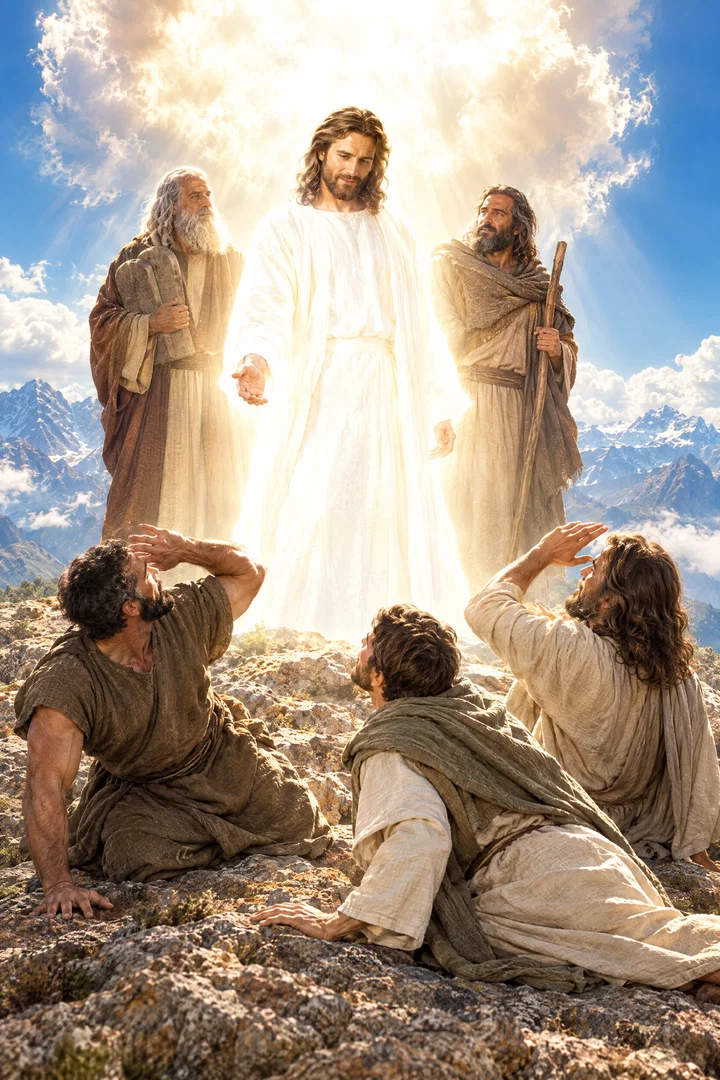
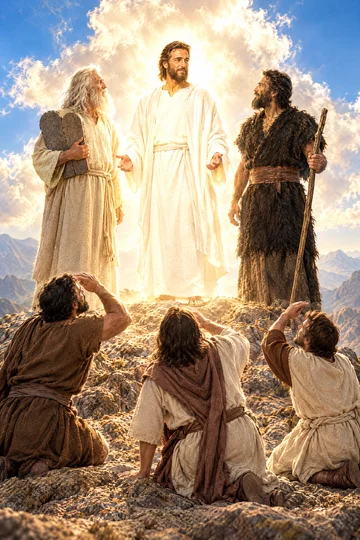
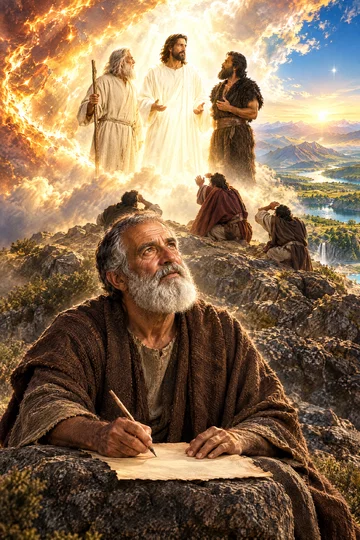
Who appeared in glory, and spake of his decease which he should accomplish at Jerusalem.
Translations
American King James Version, Webster Bible
Who appeared in glory, and spoke of his decease which he should accomplish at Jerusalem.
Who appeared in glory, and spake of his decease which he should accomplish at Jerusalem.
who appeared in glory, and spake of his decease which he should accomplish at Jerusalem.
Revised Version, American Standard Version
who appeared in glory, and spake of his decease which he was about to accomplish at Jerusalem.
who having appeared in glory, spake of his outgoing that he was about to fulfil in Jerusalem,
who, appearing in glory, spoke of his departure which he was about to accomplish in Jerusalem.
who, appearing in glory, were speaking as to his departure, which he was about to fulfil in Jerusalem.
Berean Standard Bible, Majority Standard Bible
They appeared in glory and spoke about His departure, which He was about to accomplish at Jerusalem.
who appeared in glory and spoke of his departure, which he was about to accomplish at Jerusalem.
Who were seen in glory and were talking of his death which was about to take place in Jerusalem.
Which appeared in glory, and tolde of his departing, which he shoulde accomplish at Hierusalem.
Douay-Rheims (Challoner revision)
Appearing in majesty. And they spoke of his decease that he should accomplish in Jerusalem.
Pictures
Cross-references 20 of 36
- Matthew 17:1-3
And after six days Jesus taketh Peter, James, and John his brother, and bringeth them up into an high mountain apart,
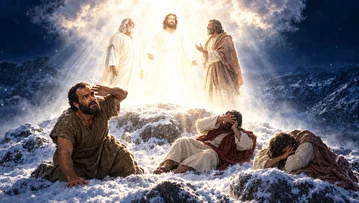
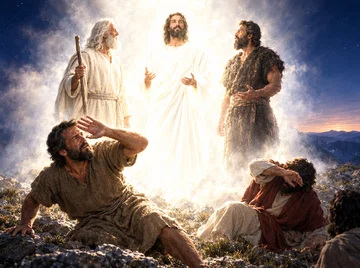
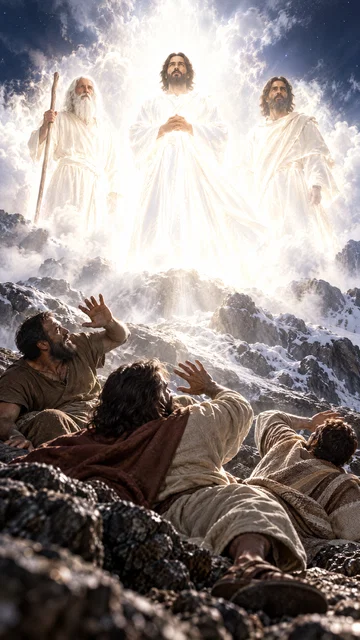
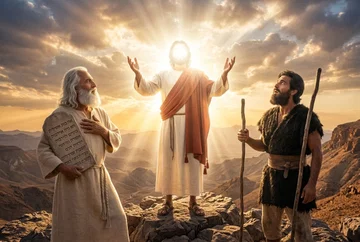
Moses and Elijah appear with Jesus in glory at the transfiguration.
- Mark 9:2-8
And after six days Jesus taketh with him Peter, and James, and John, and leadeth them up into an high mountain apart by themselves: and he was transfigured before them.
The transfiguration shows Jesus in glory with Moses and Elijah.
- 2 Peter 1:16-18
For we have not followed cunningly devised fables, when we made known unto you the power and coming of our Lord Jesus Christ, but were eyewitnesses of his majesty.
Peter recalls witnessing Christ’s glory at the transfiguration as a preview of his coming.
- Matthew 16:28
Verily I say unto you, There be some standing here, which shall not taste of death, till they see the Son of man coming in his kingdom.
The Transfiguration fulfills Jesus’ promise that some would see him coming in his kingdom.
- Luke 9:27
But I tell you of a truth, there be some standing here, which shall not taste of death, till they see the kingdom of God.
The Transfiguration fulfills Jesus’ promise that some would see the kingdom of God before death.
- Mark 9:1
And he said unto them, Verily I say unto you, That there be some of them that stand here, which shall not taste of death, till they have seen the kingdom of God come with power.
The Transfiguration fulfills Jesus’ promise that some would see the kingdom come with power.
- Luke 9:35
And there came a voice out of the cloud, saying, This is my beloved Son: hear him.
The voice from the cloud affirms Jesus as God’s Son during the transfiguration.
- Luke 9:22
Saying, The Son of man must suffer many things, and be rejected of the elders and chief priests and scribes, and be slain, and be raised the third day.
Jesus foretells the suffering and death discussed at the transfiguration.
- Matthew 25:31
When the Son of man shall come in his glory, and all the holy angels with him, then shall he sit upon the throne of his glory:
Christ’s future coming in glory contrasts with the temporary transfiguration.
- Matthew 16:27
For the Son of man shall come in the glory of his Father with his angels; and then he shall reward every man according to his works.
Christ’s coming in glory is foreshadowed by the transfiguration.
- Matthew 17:2
And was transfigured before them: and his face did shine as the sun, and his raiment was white as the light.
Describes Jesus’ glorious, transformed appearance at the transfiguration.
- Matthew 17:5
While he yet spake, behold, a bright cloud overshadowed them: and behold a voice out of the cloud, which said, This is my beloved Son, in whom I am well pleased; hear ye him.
The divine voice at the transfiguration commands the disciples to hear Jesus.
- Luke 23:34
Then said Jesus, Father, forgive them; for they know not what they do. And they parted his raiment, and cast lots.
Jesus prays for forgiveness for those persecuting him.
- 1 Peter 1:11
Searching what, or what manner of time the Spirit of Christ which was in them did signify, when it testified beforehand the sufferings of Christ, and the glory that should follow.
Christ’s sufferings were foretold, followed by glory.
- Hebrews 2:10
For it became him, for whom are all things, and by whom are all things, in bringing many sons unto glory, to make the captain of their salvation perfect through sufferings.
Christ’s decease through suffering perfects him as captain of salvation.
- Exodus 33:18-23
And he said, I beseech thee, shew me thy glory.
Describes God revealing his glory to Moses.
- Matthew 26:37-39
And he took with him Peter and the two sons of Zebedee, and began to be sorrowful and very heavy.
Jesus’ glory contrasts with his sorrowful prayer in Gethsemane before his death.
- Matthew 17:1
And after six days Jesus taketh Peter, James, and John his brother, and bringeth them up into an high mountain apart,
Gives the parallel account as occurring after six days.
- 2 Peter 1:18
And this voice which came from heaven we heard, when we were with him in the holy mount.
Peter recalls hearing God’s voice on the holy mount.
- Matthew 17:9
And as they came down from the mountain, Jesus charged them, saying, Tell the vision to no man, until the Son of man be risen again from the dead.
appearance called a vision
Commentary
Each commentary is drawn from primary sources: the writings of Ellen G. White and Adventist pioneers and periodicals. Each commentary is separate. Its own words are not a quotation; follow the references to read the source passages.
Ellen G. White
39 sources
On the mountain Jesus was glorified before Peter, James and John, his face shining like the sun and his clothing white and bright as Moses and Elijah stood beside him in heavenly glory in close conversation with him.SG1 43.2DA 421.1–23RED 122.1Lt 64, 1900, par. 4 They spoke not of his enthronement but of the suffering and death he was to accomplish at Jerusalem, with the cross preceding the crown for the salvation of the world.2SP 328.1–329.13RED 117.1–118.1ST Jun 7, 1877DA 422.1–2 They had been sent by the Father as bearers of light and glory to comfort and strengthen him for his coming agony, chosen rather than angels because having endured human sorrow and longing for human salvation they could sympathize with him in his loneliness and trial.1SP 343.12SP 328.1–329.13RED 117.1–118.1ST Jun 7, 1877SG1 40.1 The manifestation was also given to prove to the perplexed disciples that he is surely the Son of God and that his shameful death was part of the divine plan of redemption, so their faith would not utterly fail in his humiliation and crucifixion.DA 419.1–4ST Jun 7, 1877EW 131.33RED 115.1–116.1 In that glory they saw his kingdom in miniature come with power, with Moses representing those who will be raised from the dead at his second coming and Elijah representing those who will be changed and taken to heaven without dying.2SP 336.2EW 134.1SG1 43.2
Mountain Setting and Glory
After a full day of teaching the people and healing the sick, Jesus took his three most devoted disciples out of the noisy town across the fields and up a steep mountain at sunset to be alone for meditation and prayer.3RED 115.1–116.1 He sought retirement from the crowds in order to give them additional proof of his Messiahship, knowing their grief and perplexity over his coming suffering and death, so their faith would not utterly fail in the severe ordeal to come.3RED 115.1–116.1 As night darkness gathered, with the setting sun having gilded the path, he prayed hour after hour with tears and importunity for strength to bear his afflictions and for grace for his disciples to bear the terrible trials awaiting them in his humiliation and death, having taken them to watch and pray with him.3RED 115.1–116.1 The disciples at first united their prayers with his in sincere devotion but, weary and fatigued from toil, travel, and the ascent, they were overcome with weariness and loss of sleep and fell asleep.3RED 115.1–116.1
He approached this event after a night of prayer and communion with his Father. His glory, normally veiled by his humanity, shone through him as he communed with heavenly visitors, with his face shining like the sun and his clothing becoming white and bright.SG1 43.2Lt 64, 1900, par. 4 The disciples saw as much of that glory as they could bear, while God acknowledged his Son and raised him above humanity for communion.Lt 64, 1900, par. 4 On the mount Jesus appeared in heavenly glory with Moses and Elijah beside him in close conversation, paying him homage.DA 421.1–23RED 122.1
James, John, and Peter witnessed Jesus glorified.7RED 68.1RH Apr 27, 1911 Judas was not included among the three chosen disciples who witnessed the transfiguration upon the mount.ST Dec 17, 1912 His Father glorified him there before his betrayal and crucifixion to strengthen him for his last dreadful sufferings.SG4 268.4
Talk of Coming Death
Moses and Elijah appeared with Jesus in heavenly glory and spoke with him about the sufferings and death he would accomplish at Jerusalem and about the completion of his mission there.2SP 328.1–329.13RED 117.1–118.1ST Jun 7, 1877EW 131.3ST Jun 7, 1877 His coming death was part of his work and part of the divine plan of redemption and the completion of his mission, not an unforeseen defeat.2SP 328.1–329.1ST Jun 7, 1877ST Jun 7, 18773RED 126.1 They were sent to bring him heaven's glory and to comfort and strengthen him for his coming agony, and because they had experienced human sorrow and suffering and the trials of earthly life they could sympathize with him in his trial.3RED 117.1–118.1ST Jun 7, 1877EW 131.3ST Jun 7, 18773RED 126.1 Elijah had represented Christ as a prophet, and Moses had led Israel in Christ's place, following his direction.3RED 117.1–118.1ST Jun 7, 1877 Their visit also gave the disciples a manifestation of his divinity to strengthen their faith and confidence through the sorrow, disappointment, humiliation and crucifixion ahead, with heaven's testimony to his divine character as strong proof that he was the promised Messiah.ST Jun 7, 1877EW 131.33RED 126.1 The transfiguration fulfilled his promise that some disciples would see the kingdom of God come with power, for Jesus was glorified and declared by the Father to be the Son of God, with Moses representing those who will be raised from the dead at Christ's second coming and Elijah representing the living who will be changed from mortal to immortal and taken to heaven without dying.3RED 126.1
The subject of their conversation was not his enthronement but the death he would accomplish at Jerusalem, with the cross preceding the crown.DA 422.1–2 The salvation of the world was the burden of what they discussed, and their visit comforted Jesus in his loneliness and suffering because they had endured sorrow and shared his longing for human salvation.DA 422.1–2 Their presence did not mean they would save him from that fate, for his suffering and death were necessary to complete the plan of salvation.2SP 330.2–3 The disciples missed this conversation and, seeing the heavenly messengers, wrongly hoped they would protect Jesus and establish his kingdom on earth.2SP 330.2–3
What they discussed was the reconciliation for iniquity and the everlasting righteousness which the Messiah brings in through his sacrifice, the same truth later revealed to Daniel in answer to fervent prayer.11MR 101.2–3 The cross of Calvary is the great center, and this truth acted upon makes Christ's sacrifice effectual.11MR 101.2–3 By the humiliation of the cross he was to bring everlasting deliverance to all who would walk after him, giving positive evidence that they are separated from the world.11MR 101.2–3 Through chosen agencies God makes these purposes known so the grand work of redemption goes forward.11MR 101.2–3
Heaven's Comfort to Christ
They were sent by the Father as bearers of light and glory to the Son, to bring Him heaven's glory at His transfiguration when they spoke with Him about His sufferings and the completion of His mission.1SP 343.12SP 328.1–329.1SG4 58.2PP 479.2–480.2 Their coming was to comfort and strengthen Him for the suffering and death He would accomplish at Jerusalem, which belonged to His work and to the divine plan of redemption rather than being an unforeseen defeat.2SP 328.1–329.13RED 117.1–118.1ST Jun 7, 1877 In that coming agony their visit brought Him comfort as they appeared with Him in heavenly glory.3RED 117.1–118.1ST Jun 7, 1877DA 422.1–2
God chose Moses and Elijah instead of angels to converse with His Son because they had experience in the trials of earthly life.3RED 117.1–118.1ST Jun 7, 1877SG1 40.1 Having endured human sorrow and suffering and sharing His longing for the salvation of men, they could sympathize with Him and share in His human sorrow in His loneliness and trial.3RED 117.1–118.1ST Jun 7, 1877SG1 40.1DA 422.1–2 Moses had been honored by speaking with God face to face as a friend and by seeing God's glory.SG4 58.2 Elijah had represented Christ as a prophet, and Moses had led Israel in Christ's place, following His direction.3RED 117.1–118.1ST Jun 7, 1877
Elijah had been translated without seeing death, while Moses had been raised from the dead and glorified.PP 479.2–480.2 Moses standing on the mount fulfilled his prayer made centuries before to enter the inheritance of Israel, for he stood upon the goodly mountain within the heritage of his people.PP 479.2–480.2 There he bore witness to Christ in whom all the promises to Israel center.PP 479.2–480.2
Assurance to the Disciples
Knowing the grief and perplexity of the disciples over His coming suffering and death, Jesus sought to give them additional proof of His Messiahship, pleading especially that they might witness such a manifestation of His divinity as would forever remove unbelief and lingering doubts and comfort them in His supreme agony with the knowledge that He is surely the Son of God and that His shameful death is part of the divine plan of redemption.3RED 115.1–116.1
The scene revealed His divinity and majesty, for He was glorified and honored by Moses and Elijah, received honor and glory from God the Father, and was declared by the Father's voice from heaven to be the beloved Son in whom the Father was well pleased.DA 419.1–42SP 336.23RED 126.1AA 534.2DA 487.2–3 That honoring by the heavenly visitors and by the Father gave strong proof that He was the promised Messiah.DA 419.1–43RED 122.1DA 487.2–3 That manifestation of His divinity and that heavenly testimony to His divine character were meant to strengthen the faith and confidence of the disciples through the severe ordeal, sorrow, disappointment, humiliation, and crucifixion ahead, so their faith would not utterly fail.DA 419.1–4ST Jun 7, 1877EW 131.3SG1 40.12SP 327.1 This evidence was to sustain them so that in their coming bitter sorrow and disappointment they would not entirely cast away their confidence.SG1 40.13RED 122.1
Remembering what they heard and saw there helped them hold to faith that He was the Son of God during His trial, even though they could not believe that He would die.EW 139.3 When they later recognized the same glory in Gethsemane with an angel present they believed God had taken charge of Jesus to protect Him from His enemies.5RED 22.1–3 This was the second time God's voice proclaimed Christ as His Son, the first being at His baptism and the third coming just before His betrayal.Ms 101, 1897, par. 30–32 This heavenly testimony stood in contrast to the cross where the voice from heaven was silent and no testimony in His favor was heard while He suffered alone.Ms 101, 1897, par. 30–32 His death was necessary for His own glory and the Father's glory and so the human race could share in that glory, and the transfiguration was a visible sign of His divinity and a symbol of His kingdom given to help the disciples understand His mission and strengthen their faith.Ms 202, 1899, par. 12
Kingdom Seen in Miniature
The transfiguration fulfilled Jesus' promise that some standing by Him would not taste death until they saw the kingdom of God come with power.2SP 336.2EW 134.1SG1 43.23RED 126.1 On the mount the three disciples were given that sight in miniature, beholding Christ's coming kingdom with Jesus Himself clothed in heavenly glory.2SP 336.2EW 134.13RED 126.1PK 227.2 His face shone like the sun and His clothing became white and bright, while the Father's voice declared Him to be the Son of God.2SP 336.2SG1 43.23RED 126.1
In that miniature kingdom Moses stood for those who will be raised from the dead at Christ's second coming and second advent.2SP 336.2EW 134.1SG1 43.23RED 126.1PK 227.2 Elijah stood beside him for those who will be alive at Christ's return, who will be changed from mortal to immortal and taken to heaven without seeing death.2SP 336.2EW 134.1SG1 43.23RED 126.1PK 227.2 Together with Jesus in glory they showed the disciples in miniature the kingdom of the redeemed.2SP 336.2PK 227.2
Redemption and Related Scriptures
His death to be accomplished at Jerusalem was not an unforeseen defeat but part of the divine plan of redemption and the completion of his mission.DA 419.1–4ST Jun 7, 18772SP 330.2–32SP 327.1 The glory seen with Moses and Elijah reveals his divinity while showing that his shameful suffering and death belong to that plan.DA 419.1–4ST Jun 7, 18772SP 327.1 Their presence did not mean they would save him from that fate, for his suffering and death were necessary to complete salvation.ST Jun 7, 18772SP 330.2–32SP 327.1 The disciples missed this conversation and, seeing the heavenly messengers, wrongly hoped they would protect Jesus and establish his kingdom on earth.2SP 330.2–3 That glimpse of glory and witness to his divine identity was meant to strengthen the disciples for the time of his suffering and the trials ahead.DA 419.1–4ST Jun 7, 18772SP 327.1
Moses had beforehand been shown Christ's crucifixion amid the Jews crying for his blood, Christ's agony on the cross, his burial in Joseph's new tomb, his coming forth as a majestic conqueror, and his ascension to heaven with a multitude of captives escorted by angelic hosts.10MR 155.1–3Ms 69, 1912, par. 35–39 He had been shown that he himself would be one of those attending the Saviour at his ascension to open the everlasting gates.10MR 155.1–3Ms 69, 1912, par. 35–39 The joy and glory and light that shone from his face at this no language can describe.10MR 155.1–3 Having seen Christ's suffering and death and later his resurrection and ascension, he came to the mount to comfort Christ with that knowledge and with the prospect of accompanying him and welcoming him through the everlasting gates.10MR 155.1–3Ms 69, 1912, par. 35–39
What Moses and Elijah talked about with Christ was the reconciliation for iniquity and the everlasting righteousness which the Messiah brings in through his sacrifice, the same truth later revealed to Daniel in answer to fervent prayer.11MR 101.2–3 The cross of Calvary is the great center, and this truth acted upon makes Christ's sacrifice effectual.11MR 101.2–3 By the humiliation of the cross he was to bring everlasting deliverance to all who would walk after him, giving positive evidence that they are separated from the world.11MR 101.2–3 Through chosen agencies God makes these purposes known so the grand work of redemption goes forward.11MR 101.2–3
Call to Follow and Serve
Luke 9:26-62 is to be studied to get the meaning of this verse, for it belongs to the time when Christ was in the world reflecting light upon the people and was nearly to be taken from them and desired that they remember all He had said to them.Ms 72, 1911, par. 1–5 Having the heart in full harmony with Christ and intelligent in His work, and following on to know the Lord with continual increase of light, prepares for the time when trials and persecutions will be everywhere.Ms 72, 1911, par. 1–5
The glory on the mountain stands alongside His descent to meet and restore the demon-possessed boy, showing the Divine One stooping from the Father's glory to save the lost.DA 429.2–430.1 Those who have beheld His glory are called to go down into the plain and help people enslaved by Satan through faith and prayer, serving people in need rather than remaining only in moments of spiritual illumination.DA 429.2–430.1ST Jan 22, 1902 Redemption is thus presented as the example of the disciples' mission.DA 429.2–430.1
James, John, and Peter witnessed Jesus glorified, and James understood more fully at his execution what Jesus had said about sharing His cup and baptism, that following Christ could mean suffering and death.7RED 68.1 When facing imprisonment and death he grasped those words still more fully.RH Apr 27, 1911 Judas was not included among the three, and his exclusion made him jealous at once.ST Dec 17, 1912 That was when he made shipwreck of faith, after which he permitted doubt, envy, suspicion, bitterness, and hatred to control him until the leaven of disaffection grew in him.ST Dec 17, 1912
The glory given to Jesus strengthened Him for His coming suffering before betrayal and crucifixion.1T 353.3 That same glory serves as a pattern for God's faithful people, who will share in His spirit and glory during their final conflict as they are strengthened by the latter rain.1T 353.3
Sources
Pioneers and periodicals
99 sources
On the lonely mountain at night Jesus was changed into shining glory and talked with Moses and Elijah about the suffering, shameful death, burial and resurrection he would accomplish at Jerusalem.ST Jul 18, 1900ST Mar 8, 1899ST Dec 2, 1880RH Apr 13, 1876ST Jan 16, 1901 They came from heaven with sympathy to comfort and strengthen him for the ordeal just before him, and to confirm to the sleeping disciples what he had told them of rejection and death.ST May 12, 1890ST Oct 6, 1881ST Jul 18, 1900ST Sep 12, 1911ST Sep 22, 1909 The scene fulfilled his promise that some would see the kingdom of God, giving a miniature preview and pledge of his personal second coming in power and majesty with reward for every person.ST Sep 27, 1910RH Jun 13, 1854RH Jul 31, 1866ST Apr 28, 1898ST Jan 11, 1905 With Christ as King at the center, Moses stands for those who die and are raised to immortality and Elijah for those alive at his coming who are changed without seeing death, and their knowing one another shows friends will be known in heaven.ST Jul 18, 1900RH Oct 16, 1855ST Aug 24, 1904ST Jan 28, 1889 Moses is there in a bodily resurrection, raised by Michael who is Christ after contending with the devil over his body, and Elijah in his translated body, which gives no support to a conscious intermediate state, though some taught from the scene that the souls of the righteous live on after death.ST Dec 2, 1880ST Aug 24, 1904STRH Aug 6, 1872RH Jan 23, 1866
Scene Words and Setting
The verse belongs to the transfiguration on a lonely mountain-top at night, where Jesus had led his three faithful disciples apart from worldly pomp to talk with God in prayer and bowed the knee with them in sweet silent solitude lifted above the world's concerns.ST May 12, 1890RH Apr 13, 1876ST Jan 15, 1880 As he continued in prolonged prayer of faith his followers fell asleep from weariness, while the fashion of his countenance was altered and his raiment became white and glistering.ST May 12, 1890ST Jan 16, 1901RH Jan 17, 1871 When Peter and those with him awoke they saw his changed countenance and his glory and the two shining men standing and talking with him about his coming death at Jerusalem.RH Apr 13, 1876ST Jan 16, 1901RH Jan 17, 1871 Their hearts were then filled with joy and happiness so that they desired to remain in that beautiful place and make it their home.ST Aug 31, 1915RH Apr 13, 1876 The scene followed a night spent in prayer, showing communion with the Father preceding important work and trial.ST Aug 31, 1915
It was a literal, real supernatural historical event witnessed by the apostles, not a dream, trance, imagined vision, deception, or moonlight on snow.RH Jan 23, 1866ST Apr 9, 1902RH Jun 26, 1866 It is called a vision in the sense of a seeing or spectacle of what was really there, and a vision may be real.ST Apr 9, 1902ST Jan 9, 1901 The disciples heard and understood real persons conversing, with parallel accounts in Matthew and Mark differing only in added details.ST Jan 16, 1901RH Jun 26, 1866 Moses was literally present on the mount rather than merely appearing as an image, though the text does not address whether his soul was there.RH Oct 16, 1860
Luke's after eight days and Matthew and Mark's after six days describe the same interval following the preceding events, and after eight days need not mean exactly one week later.RH Nov 24, 1868 The round dome of Mt. Tabor seen to the east from the hill above Nazareth was long held to be the mount, and three churches were built on its summit to carry out Peter's proposal to make three tabernacles.ST May 19, 1898 That traditional site is set aside for some part of Mt. Hermon, supposed to be near Caesarea Philippi.ST May 19, 1898RH Apr 26, 1906
Appearing in glory means extraordinary light shining through Christ's face and whole person and enveloping even his garments, with the light of heaven shining round about him.RH Jan 23, 1866RH Apr 13, 1876 This glory was greater than the radiance Moses received in communion with God, and it showed Christ's unique relation to the eternal God who is light.RH Jan 23, 1866 It revealed his native kingly beauty and dignity from before time began, as he stood enthroned in light in majesty and unutterable glory before his three followers.RH Jan 8, 1875ST Jun 10, 1889ST Jan 15, 1880 It was one bright moment bathing him in ineffable glory with the Father's divine voice of approval, marking his difficult earthly path alongside ministry to multitudes, fellowship at Bethany, rejection at Nazareth, Gethsemane, and the cross.ST Mar 2, 1915
The two bright forms who appeared in glory with him were Moses and Elijah, glorified men and not merely spirits.ST Jul 23, 1885RH Jan 8, 1875 Moses is the one last seen of old on lonely cold Nebo with eye not dim, who did not cross Jordan but passed to his celestial Canaan, whom God buried in Moab in an unknown grave.RH Jan 8, 1875ST Feb 25, 1875 Elijah is the same who went away in the chariot of flame and whose prayer prevailed when Baal's hosts were bowed on Carmel's height, taken to heaven without dying.RH Jan 8, 1875ST Feb 25, 1875 Peter, James and John recognized them and Peter called them by name in proposing three tabernacles, one for Jesus and one for Moses and one for Elijah, though they had never known them on earth, and Moses and Elijah also knew each other without introduction.RH Aug 6, 1872ST Jan 28, 1889 Their recognition proves identity is not lost and friends will be known in heaven and will not meet as perfect strangers.ST Jan 28, 1889
Conversation About Decease
They spoke of his decease or departure to be accomplished at Jerusalem, that is his coming suffering, rejection, agony, shameful death at Calvary by crucifixion, burial and resurrection.ST Jul 18, 1900ST Mar 8, 1899ST Jul 4, 1899RH Jun 7, 1915ST Dec 17, 1896 The talk concerned the strife and conflict through which life was won, the completion of his mission and the great sacrifice that takes away the world's sin.ST Dec 2, 1880ST Jul 4, 1899RH Jun 7, 1915ST Dec 17, 1896 It belonged to the stage when, after leading the disciples to think of his divine origin, he began to instruct them about his death and resurrection before later teaching prominently about his return, and it confirmed what he had told them that suffering and death would be followed by resurrection.ST Jul 4, 1899RH Jun 7, 1915 His death so spoken of was to bring to completion at Jerusalem what he had come to do.ST Jul 18, 1900ST Mar 8, 1899ST Dec 17, 1896
They came from the mansions of glory with heaven's sympathy to comfort and strengthen Jesus for the ordeal just before him, encouraging him as he faced the work of carrying out the plan of redemption.ST Jun 7, 1877ST Jul 18, 1900ST Sep 22, 1909 Having passed through earthly probation, lived hundreds of years in heaven, and known human suffering, they could share his sorrow, for Moses had led Israel in Christ's place following his direction and Elijah had represented Christ as a prophet.ST Jun 7, 1877ST Jun 7, 1877 The Father sent them to comfort him in his coming agony, and their visit following his earnest prayer strengthened him for the suffering and salvation of the world then before him.ST Jun 7, 1877ST Jun 7, 1877ST Jul 18, 1900 Moses, who had been raised from the dead, was a type of Christ, while Elijah, who had been taken to heaven without dying, was a type of the Lord's forerunner.ST Jul 18, 1900
The talk addressed the very suffering, rejection and slaying that had perplexed the disciples and cast doubt and despondency over them, and the dark days of Calvary being just before Jesus he greatly desired his followers to understand his mission.ST May 12, 1890ST Oct 6, 1881ST Dec 2, 1913 It was meant to explain the whole problem so there need be no more doubts, to confirm his announcement that his glory as Messiah would come through suffering and death, to cheer the discouraged and gradually help them accept his approaching humiliation, and to fortify the three for the dashing of earthly hopes.ST May 12, 1890ST Oct 6, 1881ST Dec 2, 1913 Hearing precious thoughts from men who had passed through earthly probation and lived hundreds of years in heaven would have strengthened the hearers to transmit encouragement to others and to instruct the disciples, showing Moses and Elijah in harmony with him.ST May 12, 1890ST Mar 5, 1902ST May 10, 1905 But Peter, James and John slept from weariness through the prolonged prayer of faith on the lonely mountain-top at night, and God having intended them to hear, they missed words that would have kept them from surprise, prepared them for events ahead, helped the other disciples understand what was coming, and strengthened them when he died.ST May 12, 1890ST Sep 12, 1911ST Dec 2, 1913ST May 10, 1905
Kingdom Preview Fulfilled
The transfiguration fulfilled the promise that some standing with Jesus would not taste death till they saw the kingdom of God and the Son of man coming in his kingdom with power.RH Jun 13, 1854RH Jul 31, 1866ST Jan 11, 1905ST Mar 31, 1898ST Mar 31, 1898 It was the fulfillment presented immediately after the prediction of suffering and coming glory, with Moses and Elijah appearing in glory and speaking of the death to be accomplished at Jerusalem as part of that fulfillment.ST Jan 11, 1905ST Mar 31, 1898ST May 14, 1894 It gave the disciples assurance that the promised coming in glory was no fable, and it provides eyewitness evidence, for Peter later identifies it directly as seeing Christ's majesty and hearing the divine witness on the holy mount.RH Jun 13, 1854ST Mar 31, 1898ST Jul 23, 1885RH Mar 12, 1908
It is a miniature representation, type, preview, pledge and foretaste of Christ's personal, glorious second coming in the clouds with power, majesty and angels, when he will reward every person.ST Sep 27, 1910ST Dec 8, 1914ST Nov 12, 1894ST Sep 2, 1880ST Apr 11, 1911 His temporary glory and the glory of the coming kingdom were revealed in advance, showing the kingdom's arrangement before its full eternal splendor.ST Nov 12, 1894ST Sep 2, 1880RH Feb 14, 1854 The conversation about coming suffering leading to future glory proved suffering before glory, and taught that the kingdom is not now set up but comes only at his return, to be revealed on earth.ST Apr 28, 1898ST Sep 2, 1880RH Jun 13, 1854
The central word of the event is that Jesus is the beloved Son who must be heard, shown in glory talking with Moses and Elijah about his death just before the overshadowing cloud.ST Sep 19, 1900ST Jan 11, 1905 From that cloud the Father's voice owned him as Son, and he received honor and glory from God the Father in approval.ST Oct 6, 1881ST Jul 23, 1885ST Feb 17, 1909ST Jan 11, 1905RH Mar 12, 1908 He was thus declared by the Father to be the Son of God while appearing in heaven's glory as the glorified King as he will appear when he comes.ST Oct 6, 1881ST Feb 17, 1909ST Jan 11, 1905
Together with Christ as King in shining robes and unveiled glory, Moses and Elijah with him displayed the future kingdom of glory in miniature, with Christ as its center and the glorified saints with him.ST Jul 18, 1900RH Apr 13, 1876ST Jan 16, 1901RH Feb 14, 1854RH Jun 13, 1854 Christ's appearance in glory gives visible assurance of the glory he will share with his people when he returns, and Peter's eyewitness of that majesty assures believers of the majesty to be displayed when Christ comes.ST Nov 12, 1894RH Apr 13, 1876RH Feb 14, 1854 With the disciples present, Moses, Elijah and the disciples can also stand for the law, the prophets and the gospel while Christ himself stands for all three together as King with a representative of each class of his subjects.ST Mar 31, 1898
Representatives of Redeemed
Moses stands for those who die and are raised by Jesus to immortality in the first general resurrection, while Elijah stands for those alive at Christ's coming who are changed from mortal to immortal and translated without seeing death.ST Jul 18, 1900RH Oct 16, 1855ST Sep 12, 1911ST Dec 8, 1914ST Dec 2, 1880 Together with Christ as King they display in miniature the future kingdom of glory and the two classes who will make up its subjects with him at his second coming.ST Jul 18, 1900RH Oct 16, 1855ST Sep 12, 1911ST Dec 8, 1914ST Mar 31, 1898 Their appearing bodily in glory could only have happened because Moses was raised from the dead and taken to heaven and Elijah was taken without dying, with Moses representing the dead in Christ who will be raised at the last day.RH Oct 16, 1855ST Aug 24, 1904ST Sep 12, 1911ST Dec 2, 1880 They spoke with Jesus about the death he would accomplish at Jerusalem, concerning his suffering and the salvation of the world, coming with heaven's sympathy to comfort and strengthen him for the ordeal just before him.ST Jul 18, 1900RH Oct 16, 1855ST Sep 12, 1911 God intended the disciples to hear that conversation, but they slept and missed words that would have strengthened them when Jesus died.ST Sep 12, 1911
With the disciples present, Moses, Elijah and the disciples can also stand for the law, the prophets and the gospel, while Christ himself stands for all three together as King present with a representative of each class of his subjects.ST Mar 31, 1898 This meeting fulfills the promise that some standing with Jesus would see the Son of man coming in his kingdom, and Luke gives the report of what the three talked about.ST Mar 31, 1898 Jesus alone is the Pattern shown in the mount, the glorious one who is the fount of life and light, so Peter's proposal to build equal tents for Jesus, Moses and Elijah was rebuked and they disappeared leaving Jesus alone as the one to be heard and given attention.ST Mar 31, 1898ST Jun 10, 1889ST Nov 13, 1893 Their presence did not make them equal recipients of religious honor with Christ, for the followers wanted three tabernacles for them to dwell in but were overwhelmed with awful fear and the glory fled into lonely darkness until they saw Jesus only.ST Jun 10, 1889ST Nov 13, 1893 Moses who had been raised from the dead was a type of Christ, and Elijah who had been taken to heaven without dying was a type of the Lord's forerunner.
The disciples recognized Moses and Elijah and Peter called them by name when he proposed three tabernacles, one for Jesus and one for Moses and one for Elijah, though they had never known them on earth. Moses and Elijah also knew each other without being introduced by Peter. This proves that identity is not lost and friends will be known in heaven.ST Jan 28, 1889 The redeemed in the next world will know as much as in this world, will know each other and will recognize those with whom they walked in fellowship and friendship on earth, and will not meet as perfect strangers.ST Jan 28, 1889
Resurrection and Afterlife
Moses stands on the mount in a bodily, glorified state because God raised him from the dead after burying him in Moab in an unknown grave.ST Dec 2, 1880ST Aug 24, 1904ST Apr 27, 1904 Michael, who is Christ as the Archangel meaning Who is like God, the Prince of Life by whose voice the dead are raised, was sent and contended with the devil over the body when Satan disputed His authority and sought to prevent the resurrection before the appointed time.ST Apr 27, 1904ST Jul 23, 1912ST Jan 16, 1901 Christ came down to Satan's own plane with certainty of the victory of the cross and in loyalty to God, conquered Lucifer, unsealed the grave, and brought Moses from the tomb to heaven and then to the mount in glory, never to return to the grave.RH Apr 13, 1876ST Apr 27, 1904ST Jul 23, 1912 That raising broke the reign of death from Adam till Moses and manifested resurrection power before Calvary had obtained the keys of death and the grave.ST Apr 27, 1904ST Jul 23, 1912 Elijah stands beside him in a bodily, glorified state because he was taken to heaven without dying by a whirlwind, which is why heaven is called glory.RH Nov 15, 1853ST Feb 25, 1875 Changed from mortal to immortal life, he appeared in that same translated body with Moses, both in glorified bodies, Moses as raised and Elijah as translated.ST Dec 2, 1880ST Nov 23, 1915ST Dec 2, 1880
Their appearing in glory gives no support to an immortal soul, a conscious intermediate state, or disembodied spirits watching the living.STST May 12, 1890RH Aug 6, 1872 Moses appeared as a man in a resurrected state, not as a conscious disembodied person or disembodied soul, and Elijah had not died and been buried like one at a funeral.RH Jan 23, 1866ST Jan 16, 1901ST May 12, 1890RH Feb 4, 1875 Moses raised stands as representative of all the righteous dead who sleep in Jesus and will be raised at Christ's coming, while Elijah with him represents the living saints who will be translated without seeing death, showing the necessity of resurrection and the second coming at which alone hope is fulfilled.ST Jan 16, 1901ST May 12, 1890 As such they are an exception to the general rule that the dead are without awareness and that the dead know nothing of earthly affairs apart from this provision.RH Apr 16, 1872RH Feb 4, 1875
Those who held otherwise taught that the scene evidences that the souls of the righteous live after their bodies die, since Moses and Elijah appeared alive and conversed on earth with Jesus about His departure to be accomplished at Jerusalem.RH Aug 6, 1872RH Jun 26, 1866RH Apr 16, 1872 On that ground they taught that these were not resurrected bodies, because Christ had not yet died and risen as the first to rise from the dead according to Acts 26:23.RH Jun 26, 1866 Moses, though dead and buried, was thus held to be present and conscious while Elijah had been translated without dying, and Moses' taking part in earthly events was used to challenge the claim that the dead know nothing of earthly affairs.RH Aug 6, 1872RH Jun 26, 1866RH Apr 16, 1872 The disciples were held to have truly heard and understood a real conversation and to have recognized them as Moses and Elijah, not to have been deceived by a vision mistaken for reality.RH Aug 6, 1872RH Jun 26, 1866
The text does not address whether Moses' soul was there but presents him as literally present on the mount in a resurrected state rather than merely appearing as an image in a vision.RH Jan 23, 1866RH Oct 16, 1860 If in glory refers to the perfected glory of the redeemed it points to a future scene, and their appearance may have been a vision representing future events rather than only a physical meeting.RH Aug 6, 1872 As vision only it gives no evidence for conscious existence between death and resurrection, for vision simply means seeing, and the disciples saw and heard real persons, not a trance or disembodied spirits.RH Aug 6, 1872ST Jan 11, 1905 Christ being called the firstfruits of those who sleep and firstborn does not preclude Moses' prior resurrection, for firstfruits and firstborn mean first in preeminence and purpose as the Lamb slain from the foundation of the world, by whose death and resurrection all others are raised, as with Enoch, the Shunammite's son, Lazarus and others.ST Jan 11, 1905 The account is thus connected with the resurrection of Moses secured when Michael disputed with the devil about the body of Moses and with Christ as first-fruits.ST Jan 11, 1905RH Jan 21, 1875
Christ in Glory
Jesus' glory as Messiah would come through suffering and death, and the talk on the mountain concerned his coming suffering leading to future glory.ST Oct 6, 1881ST Apr 28, 1898 The disciples could not yet understand that announcement and were discouraged by it, but the transfiguration soon afterward was meant to cheer them and gradually help them accept his approaching humiliation.ST Oct 6, 1881 If they had listened they would have learned of that decease to be accomplished at Jerusalem.ST Apr 28, 1898 The scene is a representation in miniature and pledge of the Son of man coming in his kingdom with power, proving suffering before glory, since that kingdom is not now set up but comes only at his second coming.ST Apr 28, 1898 It shows that self-sacrificing love is the path to the highest joy and glory.ST Oct 6, 1881 His divinity was joined to humanity, and his divine glory was revealed not only on the mount but in loving ministry among ordinary people, where his care made humanity's divine worth visible and linked the human race to God.ST Jul 29, 1897
His death was part of the divine plan of redemption and the completion of his mission, not an unforeseen defeat.ST Jun 7, 1877 The two bright forms who appeared in glory with him were Moses and Elijah, with Jesus standing enthroned in light in his native kingly beauty from before time.RH Jan 8, 1875 Moses is the one last seen of old on lonely cold Nebo with eye not dim, who did not cross Jordan but passed to his celestial Canaan, now wearing a crown of light brighter than Egypt's crown, and Elijah is the same who went away in the chariot of flame and whose prayer prevailed when Baal's hosts were bowed on Carmel's height.RH Jan 8, 1875 They came to the Son of God to talk of all his agony, his decease to be accomplished at Jerusalem, bringing him comfort in his coming agony and giving the disciples a manifestation of his divinity to strengthen faith through trials ahead.ST Jun 7, 1877RH Jan 8, 1875 The shadow of his cross already falls across the scene and is seen along the fields of heaven with angel eyes tearful over it, even to his last prayer, Father forgive and let his persecutors live.RH Jan 8, 1875ST Jan 15, 1880ST Jan 15, 1880
The mountain scene shows the supernatural glory of God witnessed by Moses, Elijah and the disciples.ST Feb 4, 1903 A life reflecting Christ can also reveal God to others.ST Feb 4, 1903 His footsteps in humble service show the way to follow him.ST Jul 29, 1897ST Feb 4, 1903
Life and Ministry Lessons
The glimpse of the triumphant kingdom on the mountain did not end suffering and need on earth, and Christ and the three with Him came down again to minister to the sick and the demon-possessed.RH Jan 4, 1912ST May 8, 1901ST Aug 16, 1905 Beyond outward triumph lay the broad needy field of sick bodies and dying souls in the valley below, a demon-haunted multitude calling for labor and travail in giving the glory of His life to save souls.ST Jan 22, 1902ST May 8, 1901 Seeing the afflicted boy below, He descended with renewed zeal to help the needy rather than remain apart from human suffering.ST Aug 16, 1905ST Oct 5, 1904 The talk in glory was of the sacrifice to be accomplished at Jerusalem, and sight of that cross reveals man's sin, need and peril and measures the world's need.ST Jun 13, 1900 Passion for service is born only in that sight, and those who have been with Christ on the mount are fitted by faith and prayer to go down to work for men in the valley enslaved by Satan, even to cast out evil spirits at the foot of the mount.ST Jan 22, 1902ST Jun 13, 1900 The mountain moment of spiritual exaltation thus stands in contrast with the suffering and need met on descending among the people, before a return to difficult work, while witnessing to the power of His resurrection.ST May 8, 1901ST Oct 5, 1904
The scene points forward to Christ's return, when His followers will share a transformation from mortality to immortality, while meanwhile they are to do faithfully the work assigned to them.ST Jan 27, 1904 His looking ahead to the death to be accomplished at Jerusalem did not distract Him from present duties but strengthened Him for them.ST Dec 23, 1886 The remembered light of that exalted experience of heavenly presence does not last as an experience, yet it gives strength for daily duties below and shows the pattern for a nobler life.ST Jun 23, 1909 That one bright moment bathed in ineffable glory with the divine voice of approval stood in His difficult earthly path alongside ministry to eager multitudes hanging on His words and quiet fellowship at Bethany, in contrast with rejection at Nazareth, undeserved enmity, the dark hours of Gethsemane and the blackness of the cross.ST Mar 2, 1915 Every step believers are asked to walk is thus marked with the footprints of the Man of Calvary who sought above all that God's will be wrought in Him and by Him and through Him for their eternal good and the glory of God, giving reason to trust and stay upon God in darkness where one cannot trace.ST Mar 2, 1915
Peter, James and John as His closest companions had beheld His glory on the mount, where they saw Moses and Elijah talking with Him and heard the voice from heaven, and because they had shared that experience He desired them to be near Him in His great struggle in Gethsemane.ST Apr 11, 1900 The dark days of Calvary were just before Him, and He greatly desired His followers to understand His mission and be strengthened for the severe trial His death would bring, which was what the decease to be accomplished at Jerusalem spoke of together.ST Dec 2, 1913 That same hour of trial spoken of in glory was later faced in Gethsemane, where the disciples slept and Jesus endured the crisis alone with only God's presence sustaining Him.ST Mar 31, 1909 Their conversation on the mount brought the disciples face to face with the sacrifice needed to share in His kingdom, shown as a miniature of the second coming with Jesus as glorious King, Moses for the righteous dead raised to life and Elijah for the righteous living translated without seeing death, given to encourage them through coming trials, yet expectation of an earthly kingdom clouded the lesson so they still failed to understand His death and resurrection and the nature of the atonement.ST Jan 1, 1894ST Sep 7, 1904 James himself only later understood more fully, when facing imprisonment and death, the words about sharing His cup and baptism.RH Apr 27, 1911
When Peter and those with him awoke out of sleep and saw the glory of the Lord and the two men standing with Him, with the light of heaven shining round about Him, their hearts were filled with joy and happiness so that they desired to remain in that beautiful place and make it their home.RH Apr 13, 1876 Overwhelmed with joy they wanted to remain there, but following Jesus also means facing suffering and self-denial.RH Jun 8, 1869 To remain on the mount and become too elevated for service is wrong.ST May 27, 1897 Judas was not included among the three witnesses of the transfiguration, and his exclusion made him jealous at once, and that was the time when he made shipwreck of faith, after which he permitted doubt, envy, suspicion, bitterness and hatred to control him and the leaven of disaffection grew in him.ST Dec 17, 1912
Sources