Luke 9:30
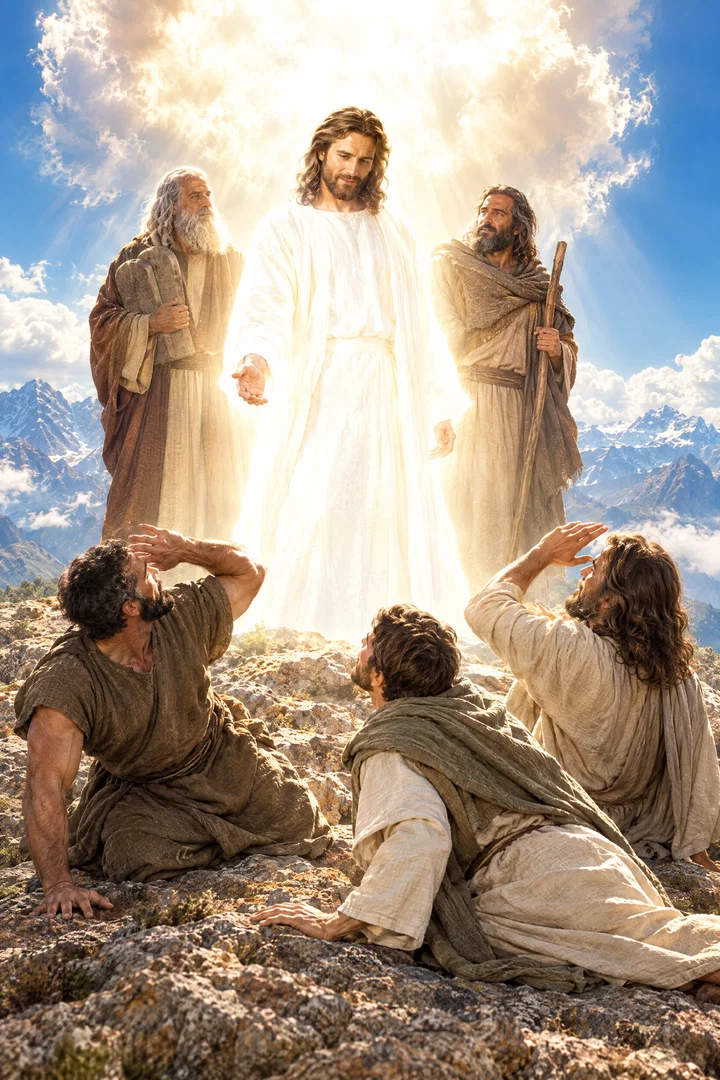
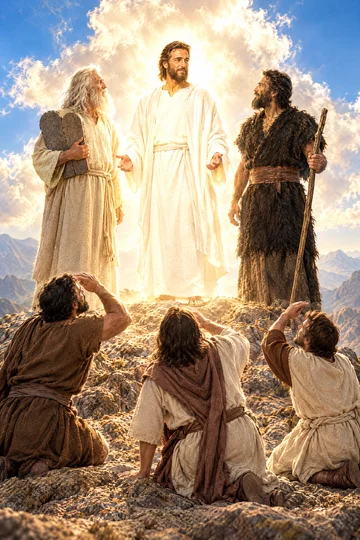
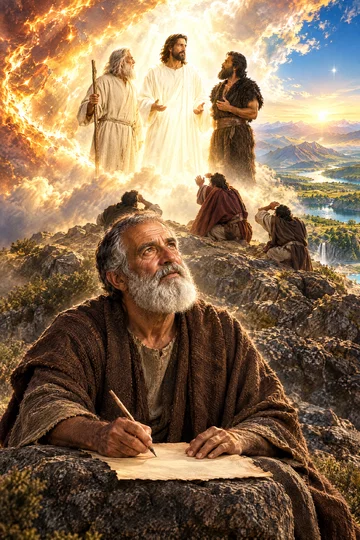
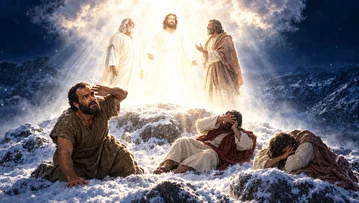
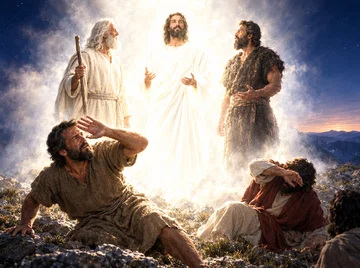
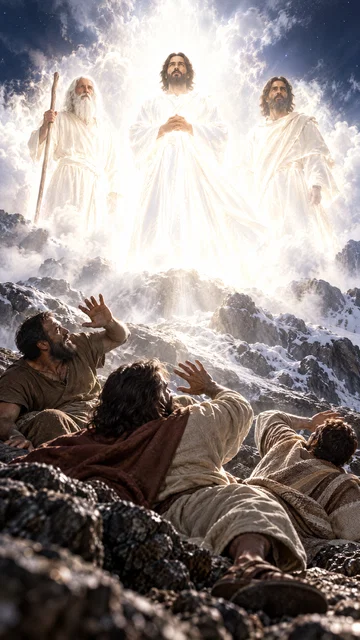
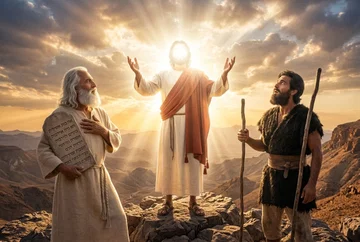
And, behold, there talked with him two men, which were Moses and Elias:
Translations
American King James Version, King James Version
And, behold, there talked with him two men, which were Moses and Elias:
And behold, there talked with him two men, which were Moses and Elias:
And behold, there talked with him two men, who were Moses and Elijah.
And behold, there talked with him two men, which were Moses and Elijah;
And behold, there talked with him two men, who were Moses and Elijah;
And lo, two men were speaking together with him, who were Moses and Elijah,
And lo, two men talked with him, who were Moses and Elias,
And lo! two men, were conversing with him, who, indeed, were Moses and Elijah,—
Berean Standard Bible, Majority Standard Bible
Suddenly two men, Moses and Elijah, began talking with Jesus.
Behold, two men were talking with him, who were Moses and Elijah,
And two men, Moses and Elijah, were talking with him;
And beholde, two men talked with him, which were Moses and Elias:
Douay-Rheims (Challoner revision)
And behold two men were talking with him. And they were Moses and Elias,
Pictures
Cross-references 20 of 38
- Matthew 17:3
And, behold, there appeared unto them Moses and Elias talking with him.
Moses and Elias appear and speak with Jesus at the transfiguration.
- Mark 9:4
And there appeared unto them Elias with Moses: and they were talking with Jesus.
Moses and Elijah appear and speak with Jesus.
- 2 Kings 2:11
And it came to pass, as they still went on, and talked, that, behold, there appeared a chariot of fire, and horses of fire, and parted them both asunder; and Elijah went up by a whirlwind into heaven.
Elijah is taken bodily to heaven without experiencing death.
- 2 Peter 1:16-18
For we have not followed cunningly devised fables, when we made known unto you the power and coming of our Lord Jesus Christ, but were eyewitnesses of his majesty.
Peter’s eyewitness account of the holy mount testifies to Christ’s majesty and coming.
- Jude 1:9
Yet Michael the archangel, when contending with the devil he disputed about the body of Moses, durst not bring against him a railing accusation, but said, The Lord rebuke thee.
The dispute over Moses’ body is linked to Christ raising him.
- Deuteronomy 34:5-6
So Moses the servant of the LORD died there in the land of Moab, according to the word of the LORD.
Moses had died and was buried, so his appearance with Jesus implies resurrection.
- Matthew 16:28
Verily I say unto you, There be some standing here, which shall not taste of death, till they see the Son of man coming in his kingdom.
Jesus’ promise that some would see his kingdom coming is fulfilled in the Transfiguration.
- Luke 9:35
And there came a voice out of the cloud, saying, This is my beloved Son: hear him.
The Father’s voice from the cloud declares Jesus his beloved Son and commands them to hear him.
- Mark 9:1
And he said unto them, Verily I say unto you, That there be some of them that stand here, which shall not taste of death, till they have seen the kingdom of God come with power.
The promise that some would see the kingdom come with power is followed by the Transfiguration.
- Exodus 33:11
And the LORD spake unto Moses face to face, as a man speaketh unto his friend. And he turned again into the camp: but his servant Joshua, the son of Nun, a young man, departed not out of the tabernacle.
Moses is described as speaking with God face to face.
- 1 Kings 18:36-39
And it came to pass at the time of the offering of the evening sacrifice, that Elijah the prophet came near, and said, LORD God of Abraham, Isaac, and of Israel, let it be known this day that thou art God in Israel, and that I am thy servant, and that I have done all these things at thy word.
Elijah’s prevailing prayer on Carmel identifies him.
- Matthew 17:9
And as they came down from the mountain, Jesus charged them, saying, Tell the vision to no man, until the Son of man be risen again from the dead.
Jesus calls the transfiguration a vision.
- 2 Kings 2:1
And it came to pass, when the LORD would take up Elijah into heaven by a whirlwind, that Elijah went with Elisha from Gilgal.
Elijah was taken to heaven without dying.
- Deuteronomy 18:15
The LORD thy God will raise up unto thee a Prophet from the midst of thee, of thy brethren, like unto me; unto him ye shall hearken;
Moses foretells a Prophet to whom the people must listen, as Moses bears witness to Jesus.
- Matthew 17:2
And was transfigured before them: and his face did shine as the sun, and his raiment was white as the light.
Describes Jesus’ glory at the transfiguration.
- Mark 9:2
And after six days Jesus taketh with him Peter, and James, and John, and leadeth them up into an high mountain apart by themselves: and he was transfigured before them.
Also dates the transfiguration as occurring after six days.
- Exodus 3:2-4
And the angel of the LORD appeared unto him in a flame of fire out of the midst of a bush: and he looked, and, behold, the bush burned with fire, and the bush was not consumed.
Moses encounters God’s revelation at the burning bush.
- Exodus 24:15-18
And Moses went up into the mount, and a cloud covered the mount.
Moses spoke with God on Sinai.
- Matthew 17:1
And after six days Jesus taketh Peter, James, and John his brother, and bringeth them up into an high mountain apart,
Both texts describe events surrounding the transfiguration.
- Malachi 4:5
Behold, I will send you Elijah the prophet before the coming of the great and dreadful day of the LORD:
The disciples connect Elias’s appearance with the prophecy of Elijah’s coming.
Commentary
Each commentary is drawn from primary sources: the writings of Ellen G. White and Adventist pioneers and periodicals. Each commentary is separate. Its own words are not a quotation; follow the references to read the source passages.
Ellen G. White
37 sources
On the mount of transfiguration Jesus was met by Moses and Elijah appearing in glory as honored heavenly messengers to pay Him homage.DA 419.1–4DA 421.1–2SG4 268.4SG4 58.2 The Father sent these two rather than angels because as men who had lived on earth in sorrow, suffering and trial they could sympathize with Him, with Moses having stood in Christ's place as leader of Israel and Elijah having foreshadowed His work as prophet to Israel.2SP 328.1–329.1EW 131.3ST Jun 7, 1877 They talked with Him about the completion of His mission in His coming sufferings and death at Jerusalem for the reconciliation of iniquity and everlasting righteousness, comforting Him in His sadness over Jerusalem's rejection.1SP 343.13RED 115.1–116.111MR 101.2–3 They bore light and glory from the Father to comfort and strengthen Him for His last dreadful sufferings, declaring Him glorified.2SP 328.1–329.13RED 117.1–118.1SG4 268.4 Together with the glorified Jesus they portrayed in miniature His kingdom, with Moses who died and was raised to immortal life representing those raised at Christ's second coming and Elijah who was translated without death representing those who will be changed and taken without seeing death, a glory given to strengthen the disciples so they would not cast away confidence through His humiliation and crucifixion.3RED 115.1–116.1EW 131.32SP 336.22SP 336.13RED 126.1
Heavenly Visitors Comfort Christ
The two men belong to the transfiguration, which followed a night Jesus spent in prayer as He prepared for important work and trial. It was the hour when He was glorified by His Father before betrayal and crucifixion, and the glorification declared that the Son of man is glorified and God is glorified in Him.SG4 268.4 His divine glory then shone through His humanity while the disciples saw as much of His glory as they could bear, as God recognized His Son and lifted Him above humanity to commune with Him.Lt 64, 1900, par. 4
The two men are Moses and Elijah, appearing as heavenly beings and honored messengers in glory to honor Jesus and pay Him homage.DA 419.1–42SP 330.2–3 Moses had talked with God on Sinai face to face, and God had revealed His glory to him in a way He had not done to anyone else.SG4 58.2 He then died and was raised by Christ with a glorified body to immortal life and called to an inheritance infinitely more glorious than earthly Canaan.2SP 328.1–329.1PP 479.2–480.2 Elijah had been translated to heaven without dying and without seeing death, a unique privilege shared with only one other person.DA 419.1–4DA 421.1–2PP 479.2–480.2
The Father sent these two rather than angels, though of all the hosts gathered around the throne they are fittest to minister to the Son of God and were favored above all others who ever lived on earth.3RED 117.1–118.1SG1 40.1 They were chosen because they had lived on earth as human beings and experienced human sorrow, suffering, trial and the trials of earthly life, and so could sympathize with Jesus in His earthly trial.EW 131.3ST Jun 7, 18773RED 117.1–118.1 Elijah was fit because as prophet to Israel his work represented Christ's work and was in a degree similar to the Saviour's work.ST Jun 7, 18773RED 117.1–118.1 Moses was fit because as leader of Israel he stood in Christ's place, communing with Him and following His directions under Christ's direction.2SP 328.1–329.1ST Jun 7, 1877ST Jun 7, 18773RED 117.1–118.1
They talked with Him about the completion of His mission, especially His coming sufferings and death at Jerusalem.1SP 343.13RED 115.1–116.13RED 117.1–118.1 Their talk was of the reconciliation for iniquity and the everlasting righteousness the Messiah brings in through His sacrifice, the same truth revealed to Daniel in answer to fervent prayer.11MR 101.2–3 It centered on the cross of Calvary as the great center, which becomes effectual when acted upon, and on how by the humiliation of the cross Christ would bring everlasting deliverance to all who walk after Him and give positive evidence by separation from the world that they belong to Him.11MR 101.2–3 Moses comforted Christ as He shared His sadness over Jerusalem's rejection and the suffering and death awaiting Him.10MR 155.1–3Ms 69, 1912, par. 35–39 He did so having himself seen Christ crucified, buried in Joseph's new tomb, risen as a majestic conqueror, ascending with a multitude of captives escorted by angels, and having seen that he himself would attend Christ to open the everlasting gates, so that his face was filled with joy and glory and light as he comforted Christ.10MR 155.1–3
They were sent as bearers of God's light and glory from the Father to the Son, to bring heaven's glory to Him and to comfort and strengthen Him for His last dreadful sufferings.2SP 328.1–329.13RED 117.1–118.1SG4 268.4PP 479.2–480.2
Kingdom in Miniature Revealed
The appearing of the two men fulfills the promise that some standing with Him would not taste death till they saw the kingdom of God come with power.EW 134.13RED 126.1SG1 43.2 His countenance was changed and shone like the sun and His raiment was white and glistening, and under the overshadowing cloud He was proclaimed by the Father as the Son of God.EW 134.13RED 126.1SG1 43.2 The disciples beheld His excellent majesty with fear and astonishment and heard the voice of God in terrible majesty commanding them to hear Him as His beloved Son.SG1 43.2
Moses and Elijah together portray in miniature Christ's kingdom and the kingdom of the redeemed.2SP 336.23RED 126.1PK 227.2 Moses represents those who will be raised from the dead at Christ's second coming and second appearing.2SP 336.2EW 134.12SP 336.13RED 126.1SG1 43.2 Elijah, who was translated without seeing death, represents those who will be living then and will be changed from mortal to immortal and taken to heaven without seeing death.2SP 336.22SP 336.13RED 126.1SG1 43.2PK 227.2 Together they portray the two classes saved at Christ's second advent, the resurrected saints and the living saints changed to immortality.EW 134.1SG1 43.2PK 227.2
Their presence with the glorified Jesus, together with the voice from heaven, revealed His divinity and kingdom and gave proof of His divinity and Messiahship.DA 419.1–43RED 115.1–116.13RED 122.1 It gave a visible token of His divinity and a symbol of His kingdom, confirming to the disciples that He is the promised Messiah and God's Son.3RED 115.1–116.13RED 122.1Ms 202, 1899, par. 12 It was the second time God's voice was heard proclaiming Christ as His Son, after His baptism and before a third audible witness just before His betrayal.Ms 101, 1897, par. 30–32 At the transfiguration the Father gave public testimony in Christ's favor when He was glorified and honored, in contrast to the cross where heaven was silent and no testimony was heard while He suffered abuse and mockery alone.Ms 101, 1897, par. 30–32DA 487.2–3
The glory and proof were given to strengthen the disciples' faith to know He was the Son of God and that His death was part of redemption.DA 419.1–43RED 115.1–116.1EW 131.3 Their presence gave strong proof that He was the promised Messiah, so that through His humiliation and crucifixion and their coming bitter sorrow and disappointment they would not cast away confidence.3RED 115.1–116.1EW 131.3SG1 40.13RED 122.1 The glory revealed there remained in the disciples' memory, recalling the glory of God surrounding Jesus and the voice from the cloud, and remembering that scene strengthened their faith that Jesus was the Son of God.EW 139.35RED 22.1–3 As eyewitness testimony to His majesty it helped them understand His mission and coming death and strengthened them to endure His humiliation and crucifixion.3RED 122.1Ms 202, 1899, par. 12
The disciples at first misunderstood the scene, thinking Elijah's appearance fulfilled prophecy and meant Christ's earthly kingdom was about to be established.2SP 330.2–3 Peter supposed the two honored messengers would protect Jesus from the death awaiting Him in Jerusalem.2SP 330.2–3 Their appearance as favored heavenly messengers attending Him did not remove the necessity of His suffering and death.2SP 330.2–3
Strength for Trial and Service
The passage Luke 9:26-62 is to be studied to get its meaning so that the heart is in full harmony with Christ and intelligent in regard to His work and what He will do for those who follow on to know the Lord.Ms 72, 1911, par. 1–5 That following on brings continual increase of light, as Christ in the world reflected light upon the people when the time was nearly come for Him to be taken from them.Ms 72, 1911, par. 1–5 He desired them to remember all He had said to them in preparation for the coming time of trials and persecutions everywhere.Ms 72, 1911, par. 1–5
The transfiguration was witnessed by Peter, James and John, the three brought into the closest relationship with Christ and permitted to behold His glory on the holy mount.AA 534.2RH Apr 27, 1911BS 45.1–3 James saw it before later facing imprisonment and death, and John was one of the three permitted witnesses of Christ's glory on the mountain.RH Apr 27, 1911BS 45.1–3 Peter's witnessing of Christ's majesty and hearing the Father's voice gave eyewitness testimony about Jesus and the kingdom of God.AA 534.2
The scene on the mount, where the disciples saw Jesus in glory and heard Him proclaimed the Son of God, stands in contrast with His descent to rescue the boy enslaved by Satan.DA 429.2–430.1 It is part of an object lesson of redemption in which the Divine One stoops from the Father's glory to save the lost.DA 429.2–430.1 The glory seen there calls Christ's disciples to carry faith and prayer to people in need below, serving them with the self-sacrificing love of Christ.ST Jan 22, 1902
As Jesus was glorified by His Father and strengthened before His betrayal and crucifixion, so divine glory prepared Him for His coming suffering.1T 353.3 God's faithful people will likewise be strengthened and share in divine glory as they face their final time of trouble.1T 353.3
Moses standing on the mount with Elijah, who had been translated without seeing death while Moses himself had been raised to immortal life and called to an inheritance infinitely more glorious than earthly Canaan, fulfilled his prayer uttered centuries before.PP 479.2–480.2 He stood upon the goodly mountain within the heritage of his people, bearing witness to Christ in whom all the promises to Israel center.PP 479.2–480.2 Their talk centered on the cross of Calvary as the great center, on the reconciliation for iniquity and the everlasting righteousness the Messiah brought in through His sacrifice, the same truth revealed to Daniel in answer to fervent prayer, which becomes effectual when acted upon and brings everlasting deliverance to all who walk after Him and give positive evidence by separation from the world that they belong to Him.11MR 101.2–3 His presence displays together God's justice in shutting him out of earthly Canaan to teach exact obedience and to warn against taking the glory due to God, and God's love in not forgetting or forsaking His servant but remembering his suffering and every act of faithful service through long years of conflict and trial.PP 479.2–480.2 God makes these purposes known through His chosen agencies so the grand work of redemption can go forward.11MR 101.2–3
Sources
Pioneers and periodicals
88 sources
Behold there talked with him two men, which were Moses and Elias, means Moses and Elijah themselves were literally present as real, living, glorified men standing and talking with Jesus on the mount of transfiguration.RH Jan 23, 1866ST Dec 2, 1880RH Oct 16, 1860 They appeared in glory and spoke with him about his coming suffering, death and resurrection to be accomplished at Jerusalem, sent from heaven to comfort him and strengthen him for his approaching ordeal.RH Apr 13, 1876ST May 12, 1890ST Mar 8, 1899ST Jul 18, 1900ST Jul 18, 1900 Their presence with the glorified Christ was a miniature preview and pledge of his kingdom and glorious second coming with power and angels.RH Jun 13, 1854RH Apr 13, 1876ST Sep 27, 1910 Together they showed all the subjects of that kingdom, Moses raised from the dead by Michael representing the sleeping saints to be raised in the first resurrection, and Elijah translated without dying representing those alive at his return who will be changed without dying.ST Jul 18, 1900RH Oct 16, 1855ST Aug 24, 1904RH Jul 31, 1866ST His presence does not prove the dead live on as conscious disembodied spirits, since the dead generally sleep unconscious till the resurrection with Moses raised as the exception, while others hold that Moses and Elijah alive and speaking long afterward proves the souls of the righteous live in consciousness after death.RH Jul 31, 1866STRH Aug 6, 1872RH Jan 23, 1866RH Jun 26, 1866
Mountain Setting and Timing
Luke 9:30 belongs to the transfiguration, when Jesus took Peter and James and John apart onto a secluded, lonely mountain-top at night to pray.ST Oct 6, 1881ST May 12, 1890ST Jul 4, 1899 He prolonged his prayer while they slept from weariness, and was transfigured with altered countenance and white glistening raiment while his glory was revealed around him.RH Apr 13, 1876ST May 12, 1890RH Jul 31, 1866 The two men were seen standing with him in that glory, appearing and talking with him while he was praying.RH Nov 14, 1912ST Jul 4, 1899RH Nov 23, 1911 The scene was an important occasion of prayer on which heavenly messengers came to him.ST May 12, 1890RH Nov 14, 1912RH Nov 23, 1911
The mountain was probably a spur of Hermon near Caesarea Philippi, not the fortified summit of Tabor whose condition did not fit the seclusion described.ST Oct 6, 1881RH Apr 26, 1906 The mount lying east of Nazareth with a round dome was long identified as Tabor, where three churches were built on the summit to carry out Peter's proposal to make three tabernacles.ST May 19, 1898 That identification is set aside for some part of Hermon.ST Oct 6, 1881ST May 19, 1898RH Apr 26, 1906
The event came about eight days, about a week, later after Jesus told his disciples he must suffer many things, be rejected, betrayed, killed and buried, and after three days rise again.RH Jun 13, 1854ST Jan 11, 1905RH Feb 14, 1854 It followed his promise that some standing there would in nowise taste of death till they see the Son of man coming in his kingdom, the kingdom of God come with power.RH Jun 13, 1854RH Jul 31, 1866ST Jan 11, 1905 Luke's telling parallels Matthew 17:1-9 and Mark 9:1-10, varying only in additional details and standing in the same setting in each Gospel.ST Jan 16, 1901ST Jan 11, 1905 Luke says about eight days and Matthew and Mark say after six days, showing approximately the same interval, a comparison used to explain that the gathering after eight days in John 20:26 cannot be assumed to have fallen exactly one week after the earlier gathering.ST Jan 16, 1901RH Nov 24, 1868
Peter, James and John were the three closest companions brought into closest relationship with him, who witnessed the transfiguration while awake and not as a dream.RH Apr 27, 1911RH Jan 23, 1866ST Apr 11, 1900 When they awoke they saw his glory and the two men standing with Jesus, and heard the voice from heaven.RH Apr 13, 1876ST Jan 27, 1904ST Apr 11, 1900 Because they had shared that revelation they were desired to be near him in his great struggle in Gethsemane.ST Apr 11, 1900 Peter remembered the event as he saw the glory around Jesus' head before the ascension, and James saw it with Peter and John before later facing imprisonment and death.RH Apr 27, 1911ST Jan 27, 1904ST Feb 14, 1911
Real Men Present
Luke 9:30 records that Moses and Elijah appeared and spoke with Jesus during the transfiguration as a real historical event witnessed by the apostles while awake, not a dream or imagined fancy.RH Jan 23, 1866RH Oct 16, 1860RH Oct 28, 1858 They were literally on the mount as two real, living, bodily, glorified men talking with him, not a phantom, angel, disembodied spirit, invisible soul, departed immortal spirit, or mere likeness of them.ST Dec 2, 1880RH Oct 16, 1860RH Apr 13, 1876ST Jul 23, 1885RH Oct 28, 1858 What was seen was two men standing with him, not one man and one spirit and not an invisible spirit beside a man.ST Dec 2, 1880RH Apr 13, 1876 The same language that proves Elijah was literally there proves Moses was literally there, for the verse positively states that the two men were Moses and Elijah.RH Oct 16, 1860RH Oct 28, 1858 Elijah was the same man who had lived among Israel and was taken bodily to heaven, and therefore Moses was likewise the same man who led Israel out of Egypt, present bodily with Elijah.ST Dec 2, 1880RH Apr 13, 1876
The scene is also called a vision, but vision there means a sight, seeing, or spectacle and can describe a real, supernatural event with real persons and real happenings.ST Apr 9, 1902ST Jan 9, 1901ST Jan 11, 1905ST Apr 9, 1902 It was not an unreal scene, parable, moonlight and snow, or imagined fancy, but is described in vivid terms as an actual event.ST Jul 28, 1881ST Apr 9, 1902 Their presence in person shows that Moses had been raised from the dead and that Elijah, who had not died, was alive and appeared in person, with Moses representing the resurrected and Elijah the translated in the presentation of the kingdom and majesty of Christ.ST Jul 28, 1881ST Jan 9, 1901ST Jan 11, 1905 Moses had died and the Lord had buried him, so he could live again to stand on the mount only by a resurrection from the dead.ST Jan 11, 1905ST Apr 9, 1902
Elias is Elijah himself of the Old Testament who never died and whose literal presence is agreed, the same person who lived among Israel and proclaimed God's word in the days of Ahab, present in whole spirit, soul, and body, not John the Baptist.RH Oct 16, 1860RH Apr 13, 1876ST Apr 21, 1898 Moses is the same person who led Israel out of Egypt, last seen on lonely cold Nebo with eye not dim, viewing the far goodly land yet forbidden to cross Jordan.RH Apr 13, 1876RH Jan 8, 1875ST Jan 15, 1880 He was borne by seraphim to the heavenly Canaan and now wears a crown of light brighter than Egypt's crown.RH Jan 8, 1875ST Jan 15, 1880 Elijah is the one who went up in the chariot of flame to God's throne and sped away in raptured flight, whose prayer prevailed when Baal's hosts were bowed on Carmel.RH Jan 8, 1875ST Jan 15, 1880
Talk of Coming Death
They appeared in glory with Jesus on the lonely mountain-top at night, when His countenance was altered and His clothing became white and glistening, and talked with Him as two real men standing with the glorified Christ the King.ST May 12, 1890ST May 14, 1894ST Apr 28, 1898 What they spoke of was His decease which He should accomplish at Jerusalem, His coming death, suffering, rejection, slaying, burial and resurrection, including the trial of Gethsemane.ST May 12, 1890ST Mar 8, 1899ST Jul 18, 1900ST May 14, 1894ST Apr 28, 1898 Moses, who had been raised from the dead and taken to heaven, had come from heaven for this word about the death Jesus would accomplish at Jerusalem.ST Mar 8, 1899ST Jul 18, 1900ST Apr 27, 1904 They spoke amicably with Him, showing no variance with Him.ST May 12, 1890ST Mar 8, 1899ST Jul 18, 1900
They were two men from the mansions of glory who had passed through earthly probation and been hundreds of years in heaven, now sent to visit Him and talk with Him of His departure from this world.RH Apr 13, 1876ST May 12, 1890ST May 12, 1890 They came to speak with Jesus about His coming suffering and agony and death, to comfort Him with heaven's sympathy, to bear words of encouragement in His time of temptation and trial, and to give renewed strength for His approaching ordeal.ST Jul 18, 1900ST Sep 12, 1911RH May 29, 1913AUST Jun 21, 1920RH Jan 8, 1875 The hope of the world and human salvation was the burden of their conversation, with the shadow of His cross already seen amid the fadeless green of heaven.ST Jul 18, 1900RH Jan 8, 1875 Both had lived as humans and had sorrowed and suffered, Moses leading Israel under Christ's direction and Elijah representing Christ in prophetic work, so they could sympathize, Moses being fitted by learning divine power day by day from his call as the meek shepherd of Midian to deliver Israel unto Horeb, and Elijah being the one who lived among Israel in Ahab's days, whose prayer prevailed on Carmel and who went up in the chariot of flame to God's golden throne, while Moses was last seen on lonely cold Nebo with eye not dim, not allowed to cross Jordan but borne to the heavenly Canaan to wear a crown of light brighter than Egypt's crown.RH May 29, 1913RH Jan 8, 1875 Angels are pictured weeping in sympathy before hearing His last prayer for His persecutors to be forgiven and live.RH Jan 8, 1875
Their coming was also to counteract the discouragement, doubt, despondency and perplexity that the prospect of that suffering, rejection and slaying had cast over the disciples, to strengthen drooping spirits and to fortify their minds.ST May 12, 1890ST May 12, 1890RH Jan 17, 1871 The whole event was a dramatic enacted celestial parable, picture and tableau, given not so much as a prophetic representation to interpret as a pictorial representation to fortify them so that when their earthly hopes centered in Him were dashed they would be bold and maintain faith in Him, and its explanation of the problem was a golden opportunity to hear precious truth from those long in heaven and to transmit encouragement to others.ST May 12, 1890ST May 12, 1890RH Jan 17, 1871 But Peter, James and John had climbed with Him for undisturbed devotion and then slept from weariness while He prolonged His prayer, and being overcome with sleep they missed this encouraging conversation.ST Sep 12, 1911ST May 10, 1905ST May 12, 1890 When they awoke out of sleep they saw the glory of the Lord and the two men standing with Jesus, yet they awoke bewildered, made an impractical suggestion, and still did not understand Jesus' death, resurrection, or the atonement and the means of entering the kingdom.RH Apr 13, 1876ST May 10, 1905ST Jan 1, 1894
Kingdom in Miniature
The transfiguration about eight days, about a week, later fulfilled the promise that some standing there would in nowise taste of death till they see the Son of man coming in his kingdom, the kingdom of God come with power.RH Jun 13, 1854RH Jul 31, 1866ST Jan 11, 1905ST Mar 31, 1898ST May 14, 1894 Luke 9:30 belongs to Luke 9:28-36, parallel to Matthew 17:1-9 and Mark 9:2-9, standing in the same setting in each Gospel one week after Jesus told the disciples he must suffer many things, be rejected, betrayed, killed and buried, and after three days rise again.RH Jul 31, 1866ST Jan 11, 1905 When Jesus took Peter and John and James up into the mountain to pray, the fashion of his countenance was altered and his raiment was white and glistening, and Moses and Elias talking with him in glory was not accidental but had important object and meaning as that promised sight of the kingdom of God.RH Jun 13, 1854RH Jul 31, 1866ST Mar 31, 1898 Peter, John and James witnessed the scene before dying, and it gave them assurance that Jesus would come in glory and that his coming was no fable.RH Jun 13, 1854ST May 14, 1894 In Moses, Elijah and the disciples are represented the law, the prophets and the Gospel, while Christ himself represents the whole three, and in Moses, Elijah and Christ is represented the kingdom of Christ with the King standing with a representative of each class of his subjects.ST Mar 31, 1898
The scene was a miniature display, type, preview, pledge and picture of the kingdom of God and of Christ's personal, glorious second coming in the clouds of heaven with power, majesty, holy angels and eternal splendor to sit on the throne of his glory.RH Jun 13, 1854ST Sep 27, 1910ST Jul 18, 1900ST Apr 28, 1898ST Nov 12, 1894 The kingdom is not now set up but will come when he comes again, with its kingly arrangement shown in the glorified Christ the King speaking of his decease to be accomplished at Jerusalem.RH Apr 13, 1876ST Apr 28, 1898 Jesus was glorified and the light of heaven shone round about him, and two men from the mansions of glory visited him and talked with him of his departure from this world.RH Apr 13, 1876ST Jul 18, 1900 When Peter and those with him awoke out of sleep they saw the glory of the Lord and the two men standing with Jesus, and their hearts were filled with joy so that they desired to remain in that beautiful place and make it their home.RH Apr 13, 1876 They were men, not angels, and their glorified bodies offered a picture of the glory awaiting the redeemed, while the hope of the world and human salvation was the burden of their conversation to comfort him with heaven's sympathy concerning his coming suffering leading to future glory.ST Jul 18, 1900ST Apr 28, 1898 It was given as a vision shown to three disciples and a representation in miniature and pledge to convince them, and it was not a symbol of the intermediate state between death and resurrection.ST Apr 28, 1898ST Nov 12, 1894
Jesus was shown as the glorified King in shining robes, with heaven's light round about him, in his native beauty and kingly dignity from his own place long before time began.RH Apr 13, 1876ST Apr 28, 1898ST Jan 15, 1880 On the lonely mountain at prayer with his three followers, as mountain and daylight faded the gates of light swung open and more-than-sun brightness burst forth with Jesus standing enthroned in light.RH Apr 13, 1876ST Jan 15, 1880 He received honor and glory from God the Father, whose voice identified him as his beloved Son to be heard, and the central message is that call to faith in him.ST Sep 19, 1900ST Jul 23, 1885ST May 3, 1899 The scene gave Peter and the other witnesses a view of Jesus' majesty accompanying the Father's declaration of his Son, and the tenderness of his prayer melted the listening three and lifted them on ecstasy to stand before the gates of day.ST Jan 15, 1880ST Jul 23, 1885ST May 3, 1899
Representatives of the Redeemed
Together with Christ the King they showed all subjects of the kingdom of glory to come.ST Jul 18, 1900RH Oct 16, 1855RH Oct 28, 1858ST Jul 28, 1881ST Mar 31, 1898 Moses, who had died, represents the righteous dead, the sleeping saints in the grave, who will be raised from the dead in the first resurrection and clothed with immortality.ST Jul 18, 1900RH Oct 16, 1855ST Aug 24, 1904RH Oct 28, 1858ST Sep 12, 1911 Elijah, who was taken to heaven alive without dying, represents those who will be living when Christ returns and will be changed in a moment from mortal to immortal without tasting death.ST Jul 18, 1900RH Oct 16, 1855RH Oct 28, 1858ST Jul 28, 1881ST Sep 12, 1911 They were men, not angels, appearing bodily in glory and speaking with Jesus, and their glorified bodies offered a picture of the glory awaiting the redeemed and of how people will appear in God's kingdom.ST Jul 18, 1900RH Oct 16, 1855RH Oct 28, 1858ST Jul 28, 1881ST Sep 12, 1911 The scene was an actual event and not a parable, with the actual men present rather than figures who merely looked like them, serving as a miniature picture and preview of Christ's second coming in power and majesty and confirming the prophecy of His power and coming.RH Oct 16, 1855ST Aug 24, 1904RH Oct 28, 1858ST Jul 28, 1881ST Sep 12, 1911 They came from heaven to speak with Him about His decease and sufferings to be accomplished at Jerusalem and to comfort Him with heaven's sympathy, with the hope of the world and human salvation as the burden of their conversation, though the disciples missed it because they were overcome with sleep.ST Jul 18, 1900RH Oct 28, 1858ST Jul 28, 1881ST Sep 12, 1911
In Moses, Elijah, and the disciples with Christ in His transfigured glory are also represented the law, the prophets, and the Gospel, while Christ Himself represents the whole three.ST Mar 31, 1898 In Moses, Elijah, and Christ is represented the kingdom of Christ, so that the King stands with a representative of each class of His subjects.ST Jul 18, 1900RH Oct 28, 1858ST Mar 31, 1898 The scene is the fulfilment of the promise that some standing there would see the Son of man coming in His kingdom.RH Oct 16, 1855RH Oct 28, 1858ST Mar 31, 1898
Moses had been a type of Christ, and Elijah a type of His forerunner. Jesus' glorious body on the mount was given as a miniature representation of Christ's second coming and as the pattern for the glorious bodies of the redeemed.ST Jul 18, 1900RH Apr 18, 1854 That glory resembled the garments of light worn by innocent Adam and Eve before sin stripped them of that glory.ST Apr 7, 1914 Moses was present because the Lord had resurrected him, and Elijah was present because he had been translated without seeing death, meeting Jesus on the lonely mountain at night in answer to His earnest prayer to talk with Him about His death.ST Jul 28, 1881ST Sep 12, 1911 Their visit was for His encouragement, to give Him renewed strength for the approaching ordeal of His suffering and death.ST Jul 18, 1900ST Sep 12, 1911
Moses Raised, Elijah Translated
Moses had died after viewing Canaan from Nebo and had been buried by God in a hidden, unnamed grave in Moab, while Elijah had gone to heaven without dying in a whirlwind and chariot of fire.ST Sep 12, 1911ST Apr 27, 1904ST Jan 11, 1905 Moses therefore stood bodily on the mount only because the Lord had raised him from the dead and taken him to heaven, where both he and Elijah then lived.ST Aug 24, 1904RH Jul 31, 1866RH May 28, 1861ST Sep 12, 1911ST Apr 27, 1904 Elijah appeared in the same translated body in which he had been taken, Moses clothed with immortality and Elijah changed from mortality to immortality.ST Sep 12, 1911ST Dec 8, 1914ST Jan 16, 1901
Moses was raised by Michael, who is Christ as Archangel meaning Who is like God, the Prince of Life and Life-giver by whose voice and power the dead are raised.ST Dec 8, 1914ST Jul 23, 1912ST Jan 16, 1901 Christ acted on the plane on which Satan was created, raising Moses before the triumph of Calvary in certainty of the victory of the cross and before He had obtained the keys of death and the grave.ST Jul 23, 1912ST Jan 11, 1905 Satan as prison-keeper and keeper at the gates of death, who claims the dead as his captives and refuses to let his prisoners loose, disputed over the body of Moses to prevent its unsealing and its resurrection before its appointed time.STST Jul 23, 1912RH Mar 4, 1862ST Jan 16, 1901ST Jan 11, 1905 The word The Lord rebuke thee was sufficient through faith in the Father and loyalty to God to silence the devil and conquer Lucifer, so Moses lived again, was brought forth from the grave and taken home to the heavenly Canaan.ST Jul 23, 1912RH Mar 4, 1862RH Apr 13, 1876ST Jan 11, 1905 There he belongs among the twenty-four elders around the throne who have been redeemed unto God from every kindred and people by the blood of the Lamb and made kings and priests to reign as representatives of the people of God until all the elect are gathered.RH Apr 13, 1876
Christ being called firstfruits and firstborn of those who sleep does not deny the prior resurrection of Moses about fifteen hundred years after his death.ST May 6, 1897ST Jan 11, 1905RH May 28, 1861 Those titles mark supreme rank, precedence in rank, and pre-eminence, and the importance of His resurrection through which other resurrections are accomplished, not first in time.ST May 6, 1897ST Jan 11, 1905RH May 28, 1861 So Ephraim and Jacob are called firstborn though Manasseh and Esau were older, and Christ was the Lamb slain from the foundation of the world in purpose though He died thousands of years later, and by virtue of His determined death and resurrection all others raised, including Moses, Enoch, the Shunammite's son, Lazarus, and others, are victors over death.ST Jan 11, 1905 His appearance in his raised body therefore stands as a pledge of the resurrection, with Moses now in heaven with Enoch and Elijah as representatives of redeemed humanity and, with Jesus, among the first fruits of the resurrection.RH Apr 12, 1860ST Nov 16, 1888
Soul, Death and Identity
Moses himself stood talking with Jesus long after his death, not merely his soul or spirit apart from the body, and his being alive means he had been raised from the dead, so the scene is evidence of resurrection rather than of a soul continuing consciously apart from the body.RH Jul 31, 1866STRH Aug 6, 1872 After the devil disputed over the body, Jude 9 explains that the archangel rebuked him and the body was resurrected, and Moses therefore came from heaven to the mount, the dispute being an attempt to prevent his resurrection before its appointed time.ST His presence does not prove that the soul is immortal or that dead people exist as conscious disembodied spirits, because he could have been raised, and both he and Elijah appeared in person as men in glory, not as disembodied souls or spirits separated from the body.RH Aug 6, 1872ST Nov 23, 1915ST May 12, 1890 Moses had died and been buried and God resurrected him to take him to heaven, while Elijah was taken to heaven bodily without dying, and together in the miniature picture of the kingdom of glory they represented the two classes of the redeemed at its beginning, Moses the righteous dead raised to life and Elijah those translated without seeing death, both alive as witnesses who also spoke with Jesus about the death he would suffer in Jerusalem.RH Aug 6, 1872ST Nov 23, 1915ST May 12, 1890 The dead in general are asleep unconscious in their graves, not awake with Christ in heaven, and do not return as angels or communicating spirits watching the living, with Moses' resurrection as the exception, angels and glorified men remaining distinct even when angels appear as men, this being the only appearance of one of Adam's race after death before Christ's resurrection.ST Jan 28, 1889
Those who held the opposite taught that Moses and Elijah as real living men talking with Christ, not angels or phantoms, show that death is not the end and that there is another life of consciousness and activity, since Moses had died more than a thousand years earlier and Elijah had been taken about eight hundred years earlier.RH Jan 23, 1866 On that understanding their being alive and speaking with Jesus demonstrates that the souls of the righteous live after their bodies are dead, and their presence could not be a deception or the appearance of resurrected bodies since Christ had not yet died and risen, though the disciples heard them speaking about Jesus' death.RH Jun 26, 1866 In the same way their being alive and talking with Christ though their bodies had slumbered for hundreds of years was taken to prove the existence of spirits and that the immortality of the soul underlies all of Christ's discourses.RH Feb 10, 1859
Peter, James and John recognized Moses and Elias and called them by name without prior acquaintance, and Moses and Elias knew each other without needing words to introduce them, proving that people will know as much in the next world as in this, that the redeemed know each other there and do not meet as perfect strangers, and that identity is kept so intimate friends from earth will be recognized in heaven.ST Jan 28, 1889 Moses placed in conversation with Jesus about the approaching death in Jerusalem was taking part in events on earth, which challenges the claim that the dead know nothing only about earthly affairs.RH Apr 16, 1872
Christ Alone and Discipleship
Moses and Elijah appeared and spoke with Jesus in his majesty and glory on the mount, but Jesus alone remains as the Pattern, the source of life and light.ST Jun 10, 1889ST Nov 13, 1893 Peter's proposal to build a shelter for each was rebuked, and Moses and Elijah disappeared leaving Jesus alone, for the Father's message directs attention to his beloved Son alone rather than making them equal recipients of religious honor with Christ.ST Jun 10, 1889ST Nov 13, 1893 They spoke amicably with him about his coming death in Jerusalem, showing no variance with him, and their agreement supports the harmony of Moses, the prophets, Christ and the apostles in testimony about God's will and the ten commandments.ST Nov 13, 1893RH Sep 5, 1865
Moses talked with Jesus as a messenger bearing words of encouragement to the Son of God in his time of temptation and trial.RH May 29, 1913RH Feb 25, 1915 He was fitted for this work by learning lessons of divine power, resource and love a day at a time, from his call as the meek shepherd of Midian to deliver Israel through the wonderful events that brought him again to Horeb.RH May 29, 1913 After Moses died God gave him a resurrection and took him home to glory to live and reign in the courts above, so that he stood alive in celestial glory talking with Elijah and Christ.RH Feb 25, 1915 His presence there proves his choice to thrust away the riches of Egypt and heirship to Pharaoh's throne and to suffer affliction with the people of God and esteem the reproach of Christ greater riches was vindicated and never regretted, while Pharaoh's throne crumbled to dust.RH Feb 25, 1915
The transfiguration gave the disciples a glimpse of the triumphant kingdom of heaven, but this vision did not end suffering or the needs of people below.RH Jan 4, 1912ST May 8, 1901ST Aug 16, 1905 The disciples witnessed heavenly glory and were overwhelmed with awe and longed to remain in that heavenly setting and make it home, yet Jesus descended to help the suffering people below.RH Jan 4, 1912RH Jun 8, 1869ST Aug 16, 1905 After the mountain transfiguration Christ gave the glory of his life to the needy, demon-haunted multitude in the valley below, showing that mountain triumph is followed by labor, travail, pain and the triumph of saving souls.RH Jan 4, 1912ST May 8, 1901ST Aug 16, 1905 Being with Christ on the mount is preparation for work below, so that those who have been with Christ on the mount can cast out evil spirits at the foot of the mount, carry faith and prayer with self-sacrificing love, and reflect God's glory in a devoted life.ST Jul 29, 1897ST Jun 13, 1900ST May 8, 1901 His divine glory was shown not only on the mount but also in his loving care for people, revealing the divine beauty of humanity and linking the human race to God.ST Jul 29, 1897ST May 8, 1901 Keeping a mount experience instead of serving and leading to Christ is warned against, as shown when the same disciples who longed to remain later failed to stay awake with Jesus in Gethsemane and Peter denied him when facing suffering and trial.ST Jun 13, 1900RH Jun 8, 1869
Sources