Matthew 17:1
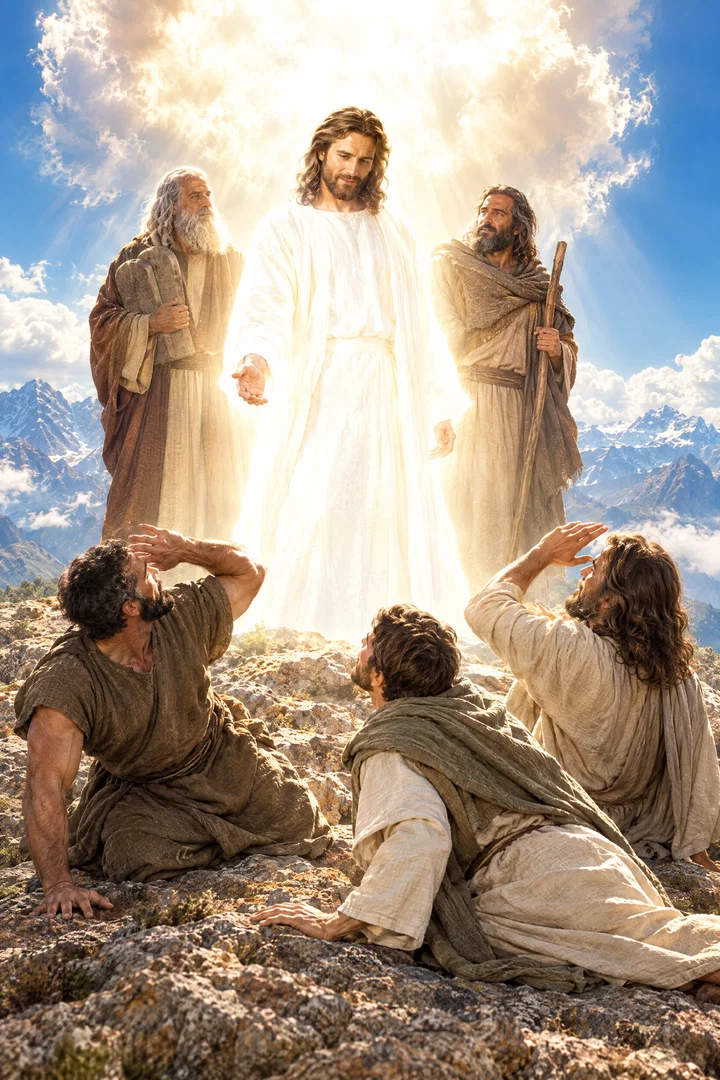
And after six days Jesus taketh Peter, James, and John his brother, and bringeth them up into an high mountain apart,
Translations
And after six days Jesus takes Peter, James, and John his brother, and brings them up into an high mountain apart,
And after six days Jesus taketh Peter, James, and John his brother, and bringeth them up into an high mountain apart,
And after six days Jesus taketh Peter, James, and John his brother, and bringeth them up into a high mountain apart,
And after six days, Jesus taketh Peter, James, and John his brother, and bringeth them upon a high mountain apart.
Revised Version, American Standard Version
And after six days Jesus taketh with him Peter, and James, and John his brother, and bringeth them up into a high mountain apart:
And after six days Jesus taketh Peter, and James, and John his brother, and doth bring them up to a high mount by themselves,
And after six days Jesus takes with [ him] Peter, and James, and John his brother, and brings them up into a high mountain apart.
And, after six days, Jesus taketh with him, Peter and James and John his brother, and bringeth them up into a high mountain, apart;
Berean Standard Bible, Majority Standard Bible
After six days Jesus took with Him Peter, James, and John the brother of James, and led them up a high mountain by themselves.
After six days, Jesus took with him Peter, James, and John his brother, and brought them up into a high mountain by themselves.
And after six days Jesus takes with him Peter, and James, and John, his brother, and makes them go up with him into a high mountain by themselves.
And after sixe dayes, Iesus tooke Peter, and Iames and Iohn his brother, and brought them vp into an hie mountaine apart,
Douay-Rheims (Challoner revision)
And after six days Jesus taketh unto him Peter and James, and John his brother, and bringeth them up into a high mountain apart:
Pictures
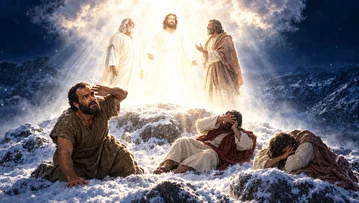
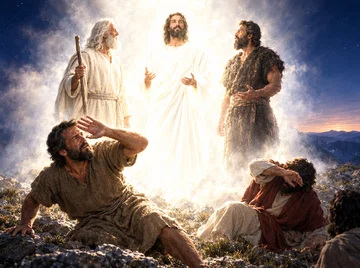
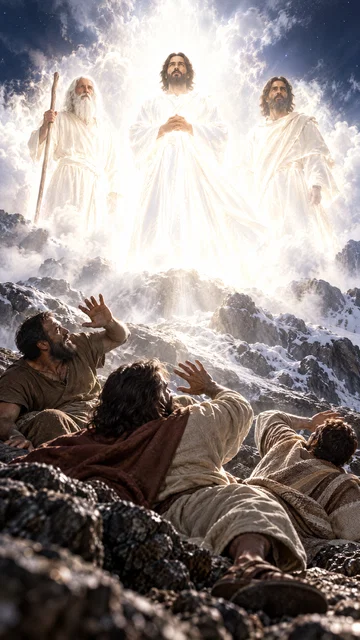
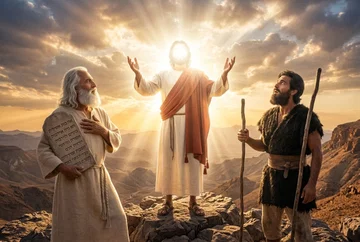
Cross-references 20 of 40
- 2 Peter 1:16-18
For we have not followed cunningly devised fables, when we made known unto you the power and coming of our Lord Jesus Christ, but were eyewitnesses of his majesty.
Peter recalls witnessing Christ’s majesty on the holy mount.
- Luke 9:28-36
And it came to pass about an eight days after these sayings, he took Peter and John and James, and went up into a mountain to pray.
Luke’s parallel account describes the same event and its witnesses.
- Mark 9:2-8
And after six days Jesus taketh with him Peter, and James, and John, and leadeth them up into an high mountain apart by themselves: and he was transfigured before them.
Jesus takes the same three disciples up the mountain and is transfigured before them.
- Matthew 16:28
Verily I say unto you, There be some standing here, which shall not taste of death, till they see the Son of man coming in his kingdom.
The transfiguration fulfills Jesus’ promise that some disciples would see him coming in his kingdom.
- Matthew 26:37-38
And he took with him Peter and the two sons of Zebedee, and began to be sorrowful and very heavy.
The same three disciples witness Jesus’ anguish in Gethsemane.
- Luke 9:27
But I tell you of a truth, there be some standing here, which shall not taste of death, till they see the kingdom of God.
The promise that some would see the kingdom of God is fulfilled at the transfiguration.
- Matthew 17:5
While he yet spake, behold, a bright cloud overshadowed them: and behold a voice out of the cloud, which said, This is my beloved Son, in whom I am well pleased; hear ye him.
The Father’s voice identifies Jesus as his beloved Son and commands the disciples to hear him.
- Mark 9:1
And he said unto them, Verily I say unto you, That there be some of them that stand here, which shall not taste of death, till they have seen the kingdom of God come with power.
The promise that some would see God’s kingdom come with power is followed by the Transfiguration.
- Matthew 17:9
And as they came down from the mountain, Jesus charged them, saying, Tell the vision to no man, until the Son of man be risen again from the dead.
Jesus calls the mountain experience a vision and tells the disciples to keep it private until his resurrection.
- Luke 9:31
Who appeared in glory, and spake of his decease which he should accomplish at Jerusalem.
Moses and Elijah speak with Jesus about his approaching death in Jerusalem.
- 2 Peter 1:17-18
For he received from God the Father honour and glory, when there came such a voice to him from the excellent glory, This is my beloved Son, in whom I am well pleased.
Peter recalls the mountain vision and the Father’s voice honoring Christ.
- Exodus 34:29-35
And it came to pass, when Moses came down from mount Sinai with the two tables of testimony in Moses’ hand, when he came down from the mount, that Moses wist not that the skin of his face shone while he talked with him.
Moses’ face shone after meeting with God on Sinai.
- Luke 9:32
But Peter and they that were with him were heavy with sleep: and when they were awake, they saw his glory, and the two men that stood with him.
The disciples were heavy with sleep before seeing Jesus’ glory.
- Mark 9:3
And his raiment became shining, exceeding white as snow; so as no fuller on earth can white them.
Describes Jesus’ radiant clothing at the transfiguration.
- Matthew 17:8
And when they had lifted up their eyes, they saw no man, save Jesus only.
After the vision, only Jesus remains for the three to see.
- Exodus 33:18
And he said, I beseech thee, shew me thy glory.
Moses asks to see God’s glory, which passes before him.
- 2 Kings 2:11
And it came to pass, as they still went on, and talked, that, behold, there appeared a chariot of fire, and horses of fire, and parted them both asunder; and Elijah went up by a whirlwind into heaven.
Elijah’s ascent to heaven is reflected in his appearance at the Transfiguration.
- Exodus 19:20
And the LORD came down upon mount Sinai, on the top of the mount: and the LORD called Moses up to the top of the mount; and Moses went up.
both show God revealing himself in majesty on a mountain
- 2 Peter 1:18
And this voice which came from heaven we heard, when we were with him in the holy mount.
Both describe the heavenly voice heard on the holy mount.
- Luke 9:30
And, behold, there talked with him two men, which were Moses and Elias:
Moses and Elijah appear and talk with Jesus at the transfiguration.
Commentary
Each commentary is drawn from primary sources: the writings of Ellen G. White and Adventist pioneers and periodicals. Each commentary is separate. Its own words are not a quotation; follow the references to read the source passages.
Ellen G. White
63 sources
After six days Jesus took Peter, James and John apart up a high mountain, fulfilling His promise that some standing with Him would see the Son of man coming in His kingdom before tasting death.Lt 354, 1907, par. 4–10SG1 43.2EW 134.1 Those six days were long gloomy days of grief and doubt after He had plainly foretold His life as a homeless wanderer, His suffering and shameful death at Jerusalem, and the cross His followers must bear.Ms 203, 1899, par. 6–10ST Jun 7, 18772SP 326.1–2 Near evening after a weary day of teaching and healing He led them out of the noisy town across fields up a steep rugged lonely height, the climb adding to their weariness.DA 419.1–4Ms 29, 1909, par. 2–4Ms 126, 1907, par. 3–8 He sought that elevation for retirement from the crowds for solitude, meditation and night prayer before this important event.3RED 115.1–116.13RED 117.1–118.1ST Jun 7, 1877 The three taken with Him were His most devoted and trusted disciples, permitted to witness His glory on the holy mount to give them undeniable proof He is the promised Messiah and Son of God and to strengthen their faith for His humiliation and crucifixion.Ms 203, 1899, par. 6–10SG1 40.1EW 131.3ST Jun 7, 18777RED 68.1
Time Place and Company
The after six days ties the ascent directly to the promise that some standing with Him would not taste death till they saw the Son of man coming in His kingdom and the kingdom of God come with power.Lt 354, 1907, par. 4–10SG1 43.2EW 134.1 Six days after that promise He took Peter and James and John up into a high mountain apart and was transfigured before them, His face shining as the sun and His raiment white as light, with Moses and Elijah appearing and talking with Him.Lt 354, 1907, par. 4–10SG1 43.2EW 134.1 That sight gave the three a glimpse of the Saviour's future glory and majesty to strengthen their faith for the trying scenes of His humiliation and crucifixion.Lt 354, 1907, par. 4–10SG1 43.2EW 134.1
Those six days were six long gloomy days of grief, perplexity, sorrow and doubt after He had gathered the disciples and told them plainly that He must live as a humble homeless wanderer and go to Jerusalem to suffer humiliation and shameful death as a malefactor.ST Jun 7, 18772SP 326.1–2ST Jun 7, 1877 He had discouraged all their hopes of temporal aggrandizement as a mighty king and told them they also must bear the cross, suffer humiliation, reproach and shame, and be crucified to the world, resigning all hope of its pomp and pleasure, or they could never share His glory.ST Jun 7, 1877ST Jun 7, 1877 Because they loved their Master sadness oppressed their hearts and doubt harassed their minds, for it seemed incomprehensible that the Son of God should be subjected to cruel humiliation, and though they daily saw evidence of His divinity they feared their hopes would be crushed.Ms 203, 1899, par. 6–10ST Jun 7, 1877 They could not understand why He would voluntarily meet such an ignominious fate, they dared not seize Him by force to a place of security as a suggestion of Satan, and they comforted themselves through the six days that some unforeseen circumstance might avert His doom, thus sorrowing and doubting, hoping and fearing.Ms 203, 1899, par. 6–10ST Jun 7, 18773RED 113.2–114.2
Near evening after a weary day of travel, teaching the people and healing the sick, He led them out of the noisy town, across the fields and up a steep rugged lonely high mountain apart from the others.DA 419.1–43RED 115.1–116.1ST Jun 7, 1877 He was very weary and fatigued from His labor all day and from toiling up the steep ascent, and the disciples also were tired from the climb.Ms 126, 1907, par. 3–8Ms 203, 1899, par. 6–10ST Jun 7, 1877 Though accustomed to retiring into solitudes for prayer they wondered that He would climb the rugged mountain after such fatigue, yet they asked no questions about His purpose and patiently accompanied Him while the setting sun left the valleys in shadow and lingered on the mountaintops and then died out into night darkness in harmony with their sorrowful lives.ST Jun 7, 18772SP 326.1–2 He sought the high elevation for retirement from the crowds that continually sought Him and for solitude, meditation and night prayer before this important event.3RED 115.1–116.13RED 117.1–118.1ST Jun 7, 18772SP 326.1–2MH 509.1
Those taken apart were Peter, James and John, His three most devoted, trusted and closely related disciples, later to serve as chief witnesses after His death.Ms 203, 1899, par. 6–10ST Jun 7, 18777RED 68.1ST May 22, 1879AC1 68.1 John was specially privileged as the disciple whom Jesus loved, who enjoyed His friendship in a pre-eminent degree as a token of love and confidence, a man of amiable disposition and warm loving heart capable of deepest earnest devotion, not weak or vacillating in character.ST Oct 16, 1884 These three were permitted to witness Christ's glory on the holy mount at the transfiguration, where Peter witnessed His majesty and heard the Father's voice declare Him the beloved Son, and John beheld that glory.AA 534.2AA 539.1ST Nov 2, 1882
Prayer and Transfigured Glory
On the mountain He spent hour after hour in earnest prayer with tears and importunity, pleading for strength to bear His afflictions and for grace for His disciples to bear the terrible trials ahead, that their faith would not fail.DA 419.1–4Ms 126, 1907, par. 3–8ST Jun 7, 18772SP 327.1 He especially pleaded that they might witness such a manifestation of His divinity as would forever remove unbelief and lingering doubt, even the revelation of the glory He had with the Father before the world was begun.Ms 126, 1907, par. 3–8Ms 203, 1899, par. 6–10ST Jun 7, 18772SP 327.1 At first the three united their prayers with His in sincere devotion, but as the hours dragged on they were overcome with weariness and loss of sleep and fell asleep even while trying to keep interest.ST Jun 7, 1877
His prayer was answered when heaven opened and holy radiance enshrouded the kneeling Christ until He stood in God-like majesty with soul-agony gone.DA 419.1–4Ms 126, 1907, par. 3–8ST Jun 7, 1877 His divinity, veiled by humanity, shone through His humanity in glorious brightness, as much of His glory as humanity could bear.DA 419.1–4Lt 93, 1901, par. 7–8DA 421.1–2 His face shone as the sun with serene light and His countenance shone with divine glory, while His raiment became white as light and glittering like the noonday sun.Lt 354, 1907, par. 4–10SG1 43.2SG1 40.1ST Jun 7, 1877DA 421.1–2 The flood of glory awakened the sleeping disciples, and they were favored with a glimpse of the Saviour's future glory.Lt 93, 1901, par. 7–8ST Jun 7, 1877
From the overshadowing cloud and Excellent Glory the Father's voice proclaimed Him the Son of God, God's beloved Son in whom He is well pleased, and commanded them to hear Him.2SP 336.2SG1 40.1EW 134.13RED 126.12SP 332.1–3 That testimony had been heard at His baptism and was heard here again before the cross, the second of three occasions when God's voice was heard during His ministry.ST May 16, 1878 Moses and Elijah appeared in glory beside Him and conversed with Him concerning the completion of His mission, especially His coming sufferings and death at Jerusalem, the humiliation of the cross and the deliverance it would bring.2SP 328.1–329.1SG1 40.1EW 131.3ST Jun 7, 1877Lt 201, 1899, par. 12–14
Moses, who talked with God face to face amid the thunder and lightnings of Sinai and was honored by God and had seen God's glory, and Elijah, who did not see death but was conducted to heaven in a chariot of fire, were sent to speak with Jesus about His sufferings and to bear God's glory to Him.2SP 328.1–329.1ST Jun 7, 1877DA 421.1–2SG4 58.2 They were chosen as messengers rather than angels because they had lived on earth as men, had experienced human sorrow and suffering and the trials of earthly life, and could sympathize with Jesus and comfort Him.2SP 328.1–329.1EW 131.3ST Jun 7, 1877 Elijah had represented Christ as prophet to Israel and Moses had stood in the place of Christ as leader of Israel, making them of all the hosts around the throne fittest to minister to the Son of God.2SP 328.1–329.1ST Jun 7, 1877
Purpose for Christ and Disciples
The ascent gave the three chosen disciples undeniable evidence and sure proof that Jesus is the promised Messiah and Son of God, with heaven's own testimony declaring His divine character and honor, forever removing unbelief and lingering doubt.SG1 40.1EW 131.33RED 122.12SP 332.1–3 That proof was sealed by God's voice owning Him as Son and by Moses and Elijah honoring Him beside Him in glory.3RED 122.12SP 332.1–3 It was given so that sorrow and disappointment at His crucifixion would not destroy their confidence.SG1 40.1EW 131.3
They were favored with a glimpse of the Saviour's future glory and divinity shining forth, to strengthen them to endure the test and trial of their faith in the severe ordeal of His humiliation, suffering and crucifixion.DA 419.1–4Lt 93, 1901, par. 7–8Lt 354, 1907, par. 4–10Ms 126, 1907, par. 3–8 He brought them apart from the crowds to a quiet place for prayer and meditation for this revelation, that they might be prepared for His coming suffering and death in Jerusalem and their faith would not fail in its sorrow and disappointment.DA 419.1–4Ms 126, 1907, par. 3–83RED 115.1–116.13RED 117.1–118.1 They were then to bear testimony of what they had seen to the other disciples, that their faith might be strengthened also.Lt 93, 1901, par. 7–8
The vision was to teach them that His shameful death belonged to the divine plan of redemption and mission, and that they might see Him in divine majesty and understand its necessity.DA 419.1–4Ms 126, 1907, par. 3–8Ms 203, 1899, par. 6–102SP 328.1–329.1 He prayed especially that doubt would be removed, that they would know He was the Son of God, and that His death belonged to God's plan.2SP 327.1 That death was shown to be necessary for His own glory, for the Father's glory, and for humanity's share in that glory.Ms 202, 1899, par. 12
The Father's glorifying of Jesus on the mount also strengthened Jesus Himself before His betrayal and crucifixion to endure His final sufferings.SG4 268.4RH May 27, 18621T 353.3 Much is to be learned from the account, for it reveals the character of the Father as manifested through the Son.Ms 72, 1901, par. 1–3 The Excellent Glory spoke from the cloud declaring Jesus to be God's beloved Son in whom He is well pleased, commanding every son and daughter of Adam to hear Him for their eternal interest, so that Christ stands pre-eminent above every teacher and authority in the world, and every word He utters is to be obeyed as law and as life.Ms 72, 1901, par. 1–3 The presence of Moses and Elijah as two co-laborers sharing His longing for the salvation of souls represented the law and the prophets, teaching that the teachings of the Old Testament are not done away with the preaching of the gospel of Christ but are fully in accord with the New and embraced in the new dispensation.Lt 354, 1907, par. 4–10
The mountain setting itself begins the account in which Christ opens future scenes before His disciples.Ms 29, 1909, par. 2–4 It gave them a visible sign and symbol of His kingdom and divinity.Ms 202, 1899, par. 12
Preview of Coming Kingdom
The ascent fulfilled the promise that some standing with Him would not taste death until they saw the Son of man coming in His kingdom and the kingdom of God come with power, for the three taken apart were permitted to see the kingdom of Christ in miniature.2SP 336.2SG1 43.2EW 134.13RED 126.1 On the mountain they beheld Jesus in heaven's glory and majesty, His face shining as the sun and His raiment white as light and glistening, His divinity shining through His humanity to meet the glory from above while the Father's voice proclaimed Him the Son of God.2SP 336.2SG1 43.2EW 134.1DA 421.1–23RED 126.1 In the glorified figures beside Him the disciples saw a miniature representation of the kingdom of the redeemed.2SP 336.23RED 126.1PK 227.2
Moses represented those who will be raised from the dead at Christ's second coming, and Elijah represented those who will then be alive, changed from mortal to immortal and translated to heaven without seeing death or dying.2SP 336.2SG1 43.2EW 134.13RED 126.1PK 227.2 Moses had talked with God face to face on Sinai, and Elijah had been taken to heaven without dying in a chariot of fire, so their presence revealed Christ's divine glory and previewed His future kingdom with the risen righteous and the translated together beside Him.SG1 43.2EW 134.1DA 421.1–2 Moses and Elijah appeared in glory and spoke with Him, Moses representing the risen righteous and Elijah those to be translated at Christ's second coming.2SP 336.2DA 421.1–23RED 126.1
Moses and Elijah were sent from the Father to the Son as bearers of light and glory.PP 479.2–480.2 By so standing on the mount Moses stood within the heritage of his people and bore witness to Christ in whom all the promises to Israel centered, and his appearance fulfilled his long prayer to share in Israel's inheritance.PP 479.2–480.2 The glory by which the Father glorified Jesus strengthened Him before betrayal and crucifixion to endure His final sufferings, and it points also to the glory that will attend God's faithful people in their final conflict.1T 353.3 Strengthened by the latter rain, they will share in the light and power of God's closing work.1T 353.3
Chosen Witnesses and Failures
The same three were taken apart on the mountain because they were also to be brought farther with Him into His agony in Gethsemane to watch and pray beside Him in His sorrow.DA 419.1–4ST Dec 2, 1897Ms 42, 1897, par. 1–3 They had seen His glory on the mount with Moses and Elijah speaking with Him and the voice from heaven, and their presence with Him in the garden set that glory in contrast with His coming struggle.DA 419.1–4ST Dec 2, 1897DA 686.1–2 They were favored with the glimpse of the Saviour's future glory to strengthen them to endure the test and trial of their faith, and they were to bear testimony of what they had seen to the other disciples that their faith might be strengthened also.Lt 93, 1901, par. 7–82SP 332.1–3 They thereby became chief witnesses of Christ after His death, with Peter witnessing His majesty on the holy mount and hearing the Father's voice declare Him the beloved Son.AA 534.23SP 334.2ST May 22, 1879AC1 68.1 Peter appealed to that eyewitness of Christ's majesty and the voice from the excellent glory as proof of Christ's power and coming, not cunningly devised fables, joined to the more sure word of prophecy.AA 534.23SP 334.2 They were to keep the vision secret until after His resurrection, when their testimony would confirm Him as the Son of God.2SP 332.1–3
The voice they heard and the glory they saw strengthened their faith that He was the Son of God, and they remembered it during His trial.EW 139.3 Yet they still hoped He would use His power to escape death and defeat His enemies.EW 139.3 Seeing Moses and Elijah honored beside Him, they believed Elijah had come as prophecy foretold and that Christ's earthly kingdom was about to be established.2SP 330.2–3 Peter's offer to build shelters expressed his mistaken hope that the heavenly messengers would protect Jesus from death and establish His earthly rule, forgetting that suffering and death must fulfill the plan of salvation.2SP 330.2–3
Overcome with sleep and failing to watch and pray, they heard little of what passed between Christ and the heavenly messengers.Ms 126, 1907, par. 9–10 By sleeping they did not receive the light God desired to give them, the knowledge of the sufferings of Christ and the glory that should follow, and they lost the blessing that might have been theirs by sharing His self-sacrifice.Ms 126, 1907, par. 9–10 They showed themselves slow of heart to believe and little appreciative of the treasure with which heaven sought to enrich them.Ms 126, 1907, par. 9–10 Because they did not remain watching, when His predictions came to pass they failed to endure the proving, Peter denied his Lord before His enemies, and they lost faith as they beheld the Son of God dying on the cross, where some rays of hope would otherwise have lighted the darkness and sustained their faith.Ms 126, 1907, par. 9–10
Judas was not among the three taken apart, and his jealousy over being excluded fed his growing doubt and disaffection.ST Dec 17, 1912ST Dec 24, 1894Ms 120, 1897, par. 7–8 James was among the three brought into the closest relationship with Christ at the transfiguration, where with Peter and John he witnessed Jesus glorified.ST May 22, 1879AC1 68.1RH Apr 27, 1911 His later imprisonment and execution brought home the meaning of sharing Christ's cup and baptism of suffering.ST May 22, 1879AC1 68.1
Remembrance and Mission Below
Within hours of beholding heavenly glory and heavenly messengers on the mount, the three saw Jesus descend to free a boy enslaved by Satan, showing redemption as the Divine One stooping from the Father's glory to rescue the lost.2SP 336.1DA 429.2–430.1 The contrast between the radiant glory with the voice proclaiming Him the Son of God and the valley encounter displays Him moving from that glory to save the suffering.2SP 336.1DA 429.2–430.1
Those who have stood with Christ beholding His beauty as chiefest among ten thousand and altogether lovely become radiant with the glory of the Lord risen upon them, and then receive the word to arise and shine.ST Jan 22, 1902 They must go down into the plain where souls enslaved by Satan wait for the word of faith and prayer to set them free, for His servants must leave moments of spiritual illumination to help suffering people below.DA 429.2–430.1ST Jan 22, 1902
The same three later remembered the glory surrounding Jesus and God's voice from the cloud when they saw that glory again in Gethsemane, and recognizing it were reassured that God was caring for Jesus.ST May 30, 18783SP 101.3–102.2DA 693.3–694.2 They recognized the angel's bright light shining upon and around Jesus as the same glory that had encircled Him at transfiguration and in the temple, and because God had taken Him in charge and an angel was present to protect Him from His foes they had no further fear for their Master.5RED 22.1–3 Even so, weary and heavy with sleep, they sank again into unconsciousness beside Him in His coming struggle.5RED 22.1–3DA 686.1–2
The mountain meeting was a time of communion with God that did a special heart-work in them, giving not mere theory but the living power of His humble, self-denying example as a worker bearing weariness to reach multitudes in the thoroughfares and help souls walk the narrow path of holiness.MH 509.1Ms 124, 1903, par. 20 Such communion with God precedes power for mission, as communion preceded the power and glory of Pentecost.ST Jul 27, 1915
Standing nearest to Christ means having drunk most deeply on earth of His self-sacrificing love that vaunteth not itself, is not puffed up, seeketh not her own, is not easily provoked, thinketh no evil.ST Jan 22, 1902 That love moves the disciple as it moved the Lord to live and labor and sacrifice even unto death for the saving of humanity.ST Jan 22, 1902
Jesus still comes to people at times in that bright transfiguration glory in bright raiment, just as at other times He comes in the humble garments in which He walked the hills and valleys of Palestine.Lt 144, 1902, par. 24–25 People are to receive Him by faith and be delighted to find Him in that bright form.Lt 144, 1902, par. 24–25
Sources
Pioneers and periodicals
169 sources
After six days Jesus took Peter and James and John his brother up into a high mountain apart, fulfilling his promise that some standing with him would see the Son of man coming in his kingdom.RH Jan 5, 1860RH Jul 31, 1866ST Jul 4, 1899ST Oct 6, 1881ST Jan 15, 1880 After six days in Matthew and about eight days after in Luke speak of the same interval by inclusive counting in ordinary speech, meaning full days of night and day after six long gloomy days of grief since he foretold his rejection, death and their cross-bearing.ST Jun 7, 1877ST Sep 13, 1910ST Oct 6, 1881ST Mar 11, 1886RH Mar 31, 1874 The mountain is unnamed and secluded, likely a spur of Hermon near Caesarea Philippi rather than fortified Tabor, climbed apart from others and from worldly concerns for prayer and revelation with only the innermost three as chosen earnest witnesses.ST Jun 7, 1877ST Oct 6, 1881RH Jan 23, 1866ST Jul 18, 1900ST May 19, 1898 That going up begins the transfiguration, a miniature representation and pledge of God's future kingdom of glory and of Christ's personal glorious second coming with power, with Jesus as glorified King in his own glory and the Father's glory in the cloud and voice.RH Sep 18, 1856RH Jan 5, 1860RH Jul 31, 1866ST Mar 20, 1879ST Sep 2, 1880 Moses stands for the righteous dead who will be raised and glorified, having died and been raised bodily when Michael prevailed for his body, and Elijah stands for the righteous living who will be translated without seeing death, together the law and the prophets bearing witness to Christ until he alone remains to be heard.ST Mar 20, 1879ST Sep 2, 1880RH Aug 6, 1872ST Apr 26, 1905ST May 3, 1910 The weight of teaching holds their presence points to bodily resurrection and translation and not to conscious disembodied souls, the vision being real and supernatural with opened senses, while those who differed held it proves the righteous live consciously after death.RH Oct 16, 1855ST Mar 20, 1879RH Aug 6, 1872ST Apr 9, 1902RH Mar 4, 1862
Time Phrase and Setting
After six days Jesus took Peter, James and John his brother and brought them up into a high mountain apart, six days after promising that some standing with him would see the Son of man coming in his kingdom, and this taking begins the fulfillment of that promise.RH Jan 5, 1860RH Jul 31, 1866ST Jul 4, 1899RH Jun 20, 1854ST Mar 31, 1898 There he showed them in vision a glimpse of his future glory when he comes in his kingdom with his saints, with Jesus, Moses and Elias representing that kingdom, a miniature representation, type, figure and epitome of it.RH Jan 5, 1860RH Jul 31, 1866RH Jun 20, 1854 The three were chosen as witnesses of his glory as they would later witness his suffering, to see him appear in kingly glory as a preview of his coming kingdom.RH Jun 20, 1854ST Mar 31, 1898ST Jul 4, 1899ST Jan 11, 1905 Matthew's after six days and Luke's about eight days after describe the same interval, Luke counting the first and last days to make eight, in approximate ordinary speech with no contradiction and no exact weekday, the exact timing not being important.ST Sep 13, 1910ST Oct 6, 1881ST Mar 11, 1886ST Aug 13, 1874 After six days means about eight days, so after eight days need not mean exactly one week later, cannot prove a meeting fell on the first day of the week to make it the Sabbath, and the like phrase in John 20:26 may mean the ninth day rather than just a week later.ST Aug 13, 1874RH Mar 31, 1874RH Jul 11, 1854 The word day here means a full period of twenty-four hours covering night and day, one of many texts where periods of days are specified or a succession of days is mentioned in which day stands for the entire twenty-four hours.RH Mar 31, 1874RH Dec 12, 1871
The six days were six long gloomy days of grief, perplexity, sorrow and doubt after his plain foretelling of his humiliation, shameful death, rejection of temporal kingship, and the disciples' own cross-bearing.ST Jun 7, 1877ST Jun 7, 1877ST Oct 6, 1881 He had told them he must live as a humble homeless wanderer and go to Jerusalem to suffer humiliation and shameful death as a malefactor, had discouraged all hopes of his temporal aggrandizement as a mighty king, and had told them they also must bear the cross, suffer humiliation, reproach and shame, be crucified to the world and resign all hope of its pomp and pleasure or never share his glory.ST Jun 7, 1877ST Jun 7, 1877 Because they loved their Master sadness oppressed their hearts and doubt harassed their minds, for it seemed incomprehensible that the Son of God should be subjected to cruel humiliation and leave them in greater darkness, they were deeply grieved and could not understand why he would voluntarily meet such an ignominious fate.ST Jun 7, 1877ST Jun 7, 1877 They thought of taking him by force to a place of security but dared not because he had denounced such projects as suggestions of Satan, and comforted themselves that some unforeseen circumstance might avert his doom, and thus they sorrowed and doubted, hoped and feared through the six days.ST Jun 7, 1877ST Jun 7, 1877
The event occurred during his first advent, about twelve months before his mission closed, not his second coming, after his suffering, death, resurrection and coming kingdom were foretold.ST Jan 11, 1905RH Jun 18, 1861 It took place in the evening at sunset into night, a quiet time often chosen for solitary prayer and fitted for solemn thought, after weary teaching of the people and healing of the sick all day and toiling up the steep ascent.ST Jun 7, 1877RH Jan 23, 1866 He knew their grief and led his three most devoted disciples out of the noisy town, across the fields and up a steep rugged mountain to give added proof of his Messiahship so faith would not fail in the severe ordeal of his coming humiliation and death, seeking high elevation for retirement from the crowds and for meditation and prayer.ST Jun 7, 1877 He was very weary and fatigued and the disciples were also tired, and though accustomed to retiring into solitudes for prayer they wondered that he would climb the rugged mountain after such fatigue, yet asked no questions and patiently accompanied him while the setting sun left the valleys in shadow and lingered on the mountaintops and then died out into night darkness in harmony with their sorrowful lives.ST Jun 7, 1877 Having gained the place he sought he engaged in earnest prayer to his Father hour after hour with tears and importunity for strength to bear his afflictions and for grace for his disciples to bear the terrible trials ahead, and especially pleaded that they might witness such a manifestation of his divinity as would forever remove unbelief and lingering doubts and comfort them in his supreme agony with the knowledge that he was of a surety the Son of God and that his shameful death was part of the divine plan of redemption.ST Jun 7, 1877 At first the disciples united their prayers with his in sincere devotion, but as the hours dragged on they were overcome with weariness and loss of sleep and fell asleep even while trying to keep interest, though he had taken them that they might watch and pray with him while he pleaded.ST Jun 7, 1877
The wording that he bringeth them up into a high mountain apart means going up onto the mountain in seclusion apart from others, not merely near it, for into can describe going up onto it just as going into water means entering it rather than standing close by.ST Oct 6, 1881RH Jan 10, 1871 It was a lonely, secluded, quiet elevated setting suited for revelation of his glory, for reverence and prayer, and for withdrawing from ordinary distractions and worldly concerns so the soul feels close to God.ST Oct 6, 1881ST Jan 15, 1880RH Jan 8, 1875ST Sep 8, 1909 They go there to pray and speak with God away from worldly pomp and art, where solitude and silence give the reverent mood in which the soul best feels God in need, mounts above worldly concern, feels love's celestial fire burn within, and prayer hallows the mountain air.ST Jan 15, 1880RH Jan 8, 1875ST Jan 15, 1880 The mountain setting suits sacred and divine events and serves as a symbol of God's majesty, strength, purity and glory.ST Sep 8, 1909RH Jan 23, 1866
Mountain Place and Witnesses
The mountain is not named, and the going up was apart into seclusion from others in a quiet setting suited for revelation of glory.ST Oct 6, 1881ST Jul 18, 1900ST May 19, 1898 It was likely a spur of Hermon near Caesarea Philippi where Jesus was teaching, rather than Mount Tabor, which was fortified and could not have given the solitude described.ST Oct 6, 1881ST Jul 18, 1900RH Apr 26, 1906 More recent investigation places the event on some part of Hermon, and the mountain scene is presented as Hermon where Christ as Mediator is surrounded by excellent glory greater than that which once shone on Moses.ST May 19, 1898AUST May 31, 1920 Those who hold the other reading identify the site traditionally as Tabor and Tabor's top, or as some part of Hermon.RH Sep 25, 1900ST Aug 21, 1884ST May 19, 1898 On that reading the transient gleam rested on Tabor, and the bright Tabor light that shone about His feet will again shod them with glory at His coming with victor tread to bring peace and immortal blessedness.ST Aug 21, 1884ST Jun 14, 1905 Tabor stands with the Mount of Olives from which He ascended, Calvary and Gethsemane as historic ground touched by incarnate God, to be purified and preserved and not thrown down, and the scene there made a deep lasting impression on Peter for lessons about the future.ST Aug 21, 1884ST Apr 15, 1875RH Mar 14, 1871ST Jun 14, 1883
Jesus took only Peter and James and John his brother apart with Him, the innermost circle and closest most trusted friends chosen as especially fit witnesses to establish important facts.RH Jan 23, 1866RH Feb 20, 1855RH Dec 18, 1860 These same three had witnessed His glory with Moses and Elijah and heard the voice from heaven, and they were the three He later took into the retired part of Gethsemane where they should have shown responsive sympathy.ST Apr 11, 1900RH Dec 18, 1860 They were also admitted to the raising of the girl and accompanied Him in the garden during His passion, and would be chief witnesses after His death and at the ascension.ST May 22, 1879ST Jul 4, 1899 Their absence did not mean the others were shut out from knowing, but their special access was purposeful.RH Jan 23, 1866 They were taken because though not perfect they were the most earnest of the disciples, the nearest to God, the most devoted and reliable, and the best prepared among the twelve to understand the nature of the kingdom and appreciate what they would see.ST Jun 7, 1877RH Dec 18, 1860ST Jul 18, 1900ST Apr 17, 1901 He knew their grief after His plain foretelling of humiliation, shameful death and their own suffering, and meant to give them added proof of His Messiahship so faith would not fail in the severe ordeal of His coming humiliation and death.ST Jun 7, 1877
Though God's work shows no favoritism, He may allow some to enter more deeply into its mysteries while others trust His wisdom and justice.ST Jul 4, 1899 John especially received the privilege of witnessing the glory as a token of love and confidence, as the disciple whom Jesus loved, of amiable disposition and warm loving heart, capable of deepest earnest devotion and not weak or vacillating.ST Nov 2, 1882ST Oct 16, 1884 While the three were with Jesus on the mountain, the other nine left behind felt jealous, injured at not being chosen, and striving for the highest place.RH Feb 10, 1916RH May 7, 1914RH Nov 30, 1911ST Jan 9, 1912 When a demon-possessed person was brought, in particular the father bringing his son, they could not heal him, and their divided self-seeking condition showed they had lost the spiritual power earlier received.RH Feb 10, 1916RH May 7, 1914ST Jan 9, 1912 That power was not regained until baptism anew with the Holy Spirit at Pentecost, showing that oneness must precede revival and that communion with God on the mountain prepares for mission and precedes power.ST Jul 27, 1915RH Feb 10, 1916RH May 7, 1914 Judas also was not among the three chosen, and his jealousy over exclusion fed his growing doubt and disaffection.ST Dec 17, 1912ST Dec 24, 1894
The same Christ who spoke with Israel at Sinai from the midst of fire was later transfigured on the mountain, making Sinai and the mountain of transfiguration twin in fame and honor.
Kingdom Preview Fulfilled
The taking up the mountain begins the transfiguration, which fulfills the promise made six days before that some standing with Jesus would see the Son of man coming in his kingdom and the kingdom of God come with power.RH Jul 31, 1866ST Jul 4, 1899ST Jan 11, 1905RH Oct 31, 1854RH Feb 1, 1870 The mountain vision is a miniature representation, type, figure and epitome of God's future kingdom of glory and of Christ's personal, glorious, literal second coming with power, which Jesus himself called a vision and charged them to tell no one until he was risen from the dead.RH Sep 18, 1856RH Jan 5, 1860RH Jul 31, 1866ST Mar 20, 1879ST Sep 2, 1880 In the scene Jesus appears as its glorified King in his own personal glory with shining face and white glittering garments, the Father's glory present in the bright cloud and voice, with holy angels and glorified saints implied, displaying unveiled divine majesty.ST Mar 20, 1879ST Sep 2, 1880RH Feb 10, 1874RH Apr 9, 1857RH Feb 1, 1870 The light there displayed his unveiled glory and foreshadowed the majesty that will attend his return.ST
The preview shows the kingdom's nature and timing: heavenly not earthly political, supernatural not human, immortal, revealed on earth, set up at the second advent and resurrection of the just, not before and not already come in the apostles' days.RH Apr 9, 1857ST Jul 28, 1914RH Oct 31, 1854RH Feb 1, 1870ST Sep 2, 1880 Because the vision took place on earth with Christ in personal glory, the Father's glory in the bright cloud, and Moses and Elijah as the raised and the changed, it showed that God's kingdom will be revealed on earth when Christ appears.RH Jun 13, 1854 It was given to encourage the disciples, strengthen expectation of his coming in glory, correct wrong ideas of the Messianic kingdom, comfort Jesus about his coming death at Jerusalem, and keep the literal kingdom before their minds as a pledge.ST Jun 7, 1877ST Jan 16, 1901ST Feb 5, 1880ST Jun 29, 1904ST Jan 16, 1901 Moses and Elijah appeared to comfort him shortly before his suffering, speaking of the completion of his mission and especially his death at Calvary, burial and resurrection, bringing him the glory and sympathy of heaven as men who had lived on earth, suffered human sorrow, and were fittest to minister to him.ST Jun 7, 1877RH Jul 13, 1911
It was not itself the second coming, for all holy angels did not then accompany him, and it occurred during his first advent about twelve months before his mission closed.RH Mar 25, 1858RH Jun 18, 1861 At his return the disciples will behold his real glory, royal majesty and renewed earth with the glorified saints, far brighter than Tabor's transient gleam, for the light of the transfiguration was dim beside the glory that will attend his personal, world-wide return that every eye will see.ST Apr 15, 1875ST Nov 3, 1898 It does not mean Christ will return occasionally with only a few saints, for when he comes he will come in all his own glory and all the Father's glory with all the holy angels, and unbelievers will be destroyed by the brightness of his coming.ST Jan 29, 1902 The transfiguration glory was Christ's own hidden dignity already possessed and allowed to shine forth briefly, the only dazzling display in an otherwise humble obedient life, a glimpse of the royal splendor laid aside and of humanity crowned with lost glory.ST Jul 1, 1886ST May 21, 1896RH Apr 2, 1861RH Jan 30, 1866 There in the place of humanity God's glory shone from his face and enveloped his whole person, showing what humanity's original glory was like, though Adam and Eve's glory was less than Christ's, and showing how he will appear when he comes, though his glory remains hidden from the world until then; his transfigured glory did not make him another person from when he prayed in sorrow or lived with no form nor comeliness, because he is the same yesterday, today and forever.ST Jul 1, 1886ST May 21, 1896ST Sep 17, 1896 God's voice at the transfiguration was the second of three occasions when God's voice was heard during Jesus' ministry.ST May 16, 1878
Moses and Elijah Meaning
Moses on the mountain stands for the righteous dead who will be raised and glorified at Christ's coming, while Elijah stands for the righteous living who will be changed and translated without seeing death.ST Mar 20, 1879ST Sep 2, 1880RH Aug 6, 1872ST Apr 22, 1897RH Feb 10, 1874 The scene is a miniature representation, type, figure and epitome of God's future kingdom of glory and of Christ's personal, glorious, literal second coming with power, in which Jesus appears as its glorified King with the Father's glory present in the bright cloud and voice.ST Mar 20, 1879ST Sep 2, 1880RH Aug 6, 1872RH Feb 10, 1874RH Apr 9, 1857 Moses's living presence there therefore shows that he had been raised bodily, not that a separate immortal soul had appeared, and the disciples saw in the event a preview of Christ's power and coming fulfilling the promise that some standing with him would see the kingdom of God.ST Mar 20, 1879RH Aug 6, 1872ST Apr 22, 1897RH Apr 9, 1857 It shows the kingdom's nature and timing as immortal, to be set up at the second advent and the resurrection of the just, with Moses representing those raised and Elijah those alive and changed at his appearing.ST Sep 2, 1880RH Feb 10, 1874RH Apr 9, 1857
Moses had died and God had buried him with unknown grave and without human funeral ceremonies, so his living presence on the mount means he had been raised from the dead, since resurrection is the only way one who has once died can live again.ST May 9, 1906STST Feb 25, 1875RH Feb 4, 1875 He was raised bodily to life again after Christ as Michael the Archangel prevailed over the devil for his body and over Satan's claim to keep the dead as prisoners in the grave, by special resurrection before Christ's resurrection when the grave could not prevail against him.ST Apr 26, 1905STST Mar 17, 1898ST Aug 18, 1887 Elijah had been taken to heaven without dying and without tasting death in a chariot of fire, never buried with human funeral ceremonies, and returned in body.ST May 3, 1910ST Sep 17, 1896ST Feb 25, 1875RH Feb 4, 1875 His appearance illustrates translation without dying and serves as a type of those who will be translated when Christ comes in glory, of the righteous of the last generation and of the living saints translated without dying, while his experience before translation represents the trials of those who remain faithful in the last days.ST Apr 26, 1905ST May 3, 1910ST Sep 17, 1896ST Jul 23, 1885ST Aug 27, 1885
Moses and Elijah appear as two glorified men in real bodies, not merely as spirits, seen and heard by the disciples talking with Jesus.ST Jul 23, 1885RH Jul 13, 1911ST Jan 15, 1880ST Jan 11, 1905 They converse with him concerning the completion of his mission and especially his coming sufferings at Jerusalem, his death at Calvary, burial and resurrection and the death he will accomplish there.ST Jun 7, 1877RH Jul 13, 1911ST Jan 27, 1898 Heaven opens and holy radiance enshrouds the kneeling Christ until soul-agony is gone, and they bring him the glory of heaven and comfort him.ST Jun 7, 1877 They were chosen as messengers because they had lived on earth as men, Moses having talked with God face to face amid Sinai's thunder and lightnings and having stood in the place of Christ as leader of Israel, and Elijah having represented Christ as prophet to Israel and having been conducted to heaven without seeing death, having experienced human sorrow and suffering so they could sympathize with Jesus, making them of all the hosts around the throne fittest to minister to the Son of God.ST Jun 7, 1877 Calling the event a vision, horama, means the disciples saw it, not that it was an unreal trance.ST Jan 11, 1905
Their presence shows Moses forgiven despite his sin and exclusion from the promised land, confirming he had been raised from the dead.ST May 27, 1889ST Sep 10, 1902 Although barred from entering the land promised to Israel, he shared in the greater inheritance promised to Abraham and his spiritual descendants.ST Sep 10, 1902 Their glory with Christ gives a picture of the glory in which believers will appear and of the glorious body they will receive when he comes and changes their mortal bodies, illustrating the garments of light that had clothed Adam and Eve before sin and disappeared in transgression leaving them naked and ashamed.RH Dec 29, 1859ST Apr 7, 1914
Together they draw near as representatives of the law and the prophets bearing witness to Christ, with prophecy finding its fulfillment in him and he the substance to which the law's shadows point.RH Jan 28, 1862RH Sep 25, 1900 In the light of Christ they grow radiant and luminous, showing that the law and the prophets point to the cross and the kingdom of Christ and are confirmed, interpreted and fulfilled by the gospel.RH Sep 25, 1900 For sinners in Christ the law's judgments, threats and condemnation no longer terrify, but they learn to keep the law more fully and steadfastly, and Christ cannot be separated from God's law and word through which he is revealed.RH Jan 28, 1862ST Apr 2, 1894 When the Father commands hearing his beloved Son, Moses and Elijah disappear and the glory flees, leaving Jesus only and alone in the midst of his representative apostles while heaven declares this is my beloved Son.ST Jun 10, 1889ST Nov 13, 1893ST Oct 8, 1902RH Sep 25, 1900 Peter's proposal to make three tabernacles for the Lord and Moses and Elijah to dwell in is thus rebuked as a division of honor, teaching that Christ's honor is not to be shared with others, that he is greater than the prophets and the full and final revelation of God, the fount of life and light and the Pattern shown in the mount, the center in whom law and gospel, prophets and apostles meet as one.ST Jun 10, 1889ST Nov 13, 1893ST Oct 8, 1902RH Sep 25, 1900
The disciples recognized Moses and Elijah by name and Peter identifies them, and they saw and spoke with them, showing that people will know one another in the blessed state and in the life to come.ST May 13, 1908ST Jan 28, 1889 Their appearance prompts the disciples' question why the scribes say Elijah must first come, and Jesus answers that Elijah truly shall first come and restore all things, but Elijah is come already unrecognized and men did to him whatever they listed.ST Aug 7, 1901 That means John the Baptist, who came in the spirit and power of Elijah, not as Elijah himself, and that same Spirit will be given to God's people before and after the great day of the Lord.ST Aug 7, 1901RH Dec 10, 1867 The Father, whose voice is heard there identifying Jesus as His Son and commanding the disciples to hear him, remains the highest authority and supreme Lawgiver.RH Dec 12, 1854 Jesus is thereby presented as a teacher of God's law, not as a new lawgiver, and his teachings do not replace the Ten Commandments which God spoke directly to the people and wrote on stone.RH Dec 12, 1854
Death Resurrection and Soul
The scene gives no proof of a conscious soul living apart from the body, for its account never uses the words soul or spirit, and Moses being seen alive points instead to bodily resurrection while Elijah points to translation without dying.RH Oct 16, 1855ST Mar 20, 1879RH Aug 6, 1872ST It presents the future kingdom in miniature with Jesus as its glorified King, Elijah representing the living saints to be translated and Moses representing the righteous dead to be raised to glory and immortality at the second coming.ST Mar 20, 1879RH Aug 6, 1872RH Feb 20, 1872ST Oct 12, 1876 Moses had died, been buried by God, and then been raised bodily to life when Michael prevailed over the devil for his body, and from heaven he came to the mount.STRH Feb 20, 1872 His bodily presence is therefore explained either as part of the vision or as resurrection, not as evidence that a conscious disembodied spirit survives death, and a disembodied appearance would not fittingly pledge the literal resurrection.RH Aug 6, 1872RH Feb 20, 1872
The event is called a vision, horama, meaning a seeing, sight, something gazed at, a spectacle, which can be real though supernatural and still be commanded to be told to no one until the Son of man be risen from the dead.ST Apr 9, 1902ST Jan 9, 1901ST Jan 11, 1905 The mountain, the overshadowing glory, the voice from heaven, the two prophets, and their talking with Jesus about His coming death were actually there and real.ST Apr 9, 1902 It was a vision of the kingdom with Jesus as King, Elijah representing saints alive at the second coming to be caught up as he was, and Moses representing resurrected saints, not yet the actual coming in which all holy angels will accompany Him.ST Aug 20, 1912RH Mar 25, 1858RH Oct 16, 1855 On that understanding Moses and Elijah were shown representatively in the vision of Christ in glory without needing to be physically present, and their appearance does not prove souls live consciously apart from the body.RH Oct 16, 1855RH Oct 16, 1855RH Dec 12, 1854 The dispute over Moses' body gives inferential support for resurrection if he was literally seen, yet this reading inclines to say they were not literally present and does not claim their souls were seen.RH Oct 16, 1855
Others hold that Moses was literally and bodily present as a real being, not merely figured in vision, with Elijah alive in his own body, seen and heard by the disciples.RH Oct 16, 1860RH Jan 23, 1866ST Jan 11, 1905RH Apr 16, 1872 In this literal event Moses appears in a resurrected state as representative and guarantee of the resurrected saints, raised before Christ's resurrection, and Elijah as representative of those to be translated without seeing death.RH Jan 23, 1866RH Nov 20, 1860ST Jan 9, 1901ST Jan 11, 1905 Calling it a vision means the disciples really saw it, not that it was an unreal trance, and Moses conversed with Jesus about His approaching death in Jerusalem in the disciples' presence.ST Jan 11, 1905RH Apr 16, 1872 A representation by disembodied spirits would be false, because all subjects of that kingdom after Christ comes will have glorified immortal bodies.RH Feb 20, 1872ST Oct 12, 1876RH Aug 12, 1873 Since Elijah had not died but was translated and appeared bodily, Moses' bodily presence likewise evidences that he had been raised from the dead, supporting hope of future life through bodily resurrection rather than return of disembodied spirits.ST Oct 12, 1876RH Aug 12, 1873
Those who disagreed taught that the appearance proves the righteous live consciously after the body dies, as immaterial substance, and that Moses remained conscious and had not slept in the grave or ceased to exist.RH Mar 4, 1862RH Jun 26, 1866ST Mar 11, 1880RH Sep 17, 1872 In that teaching the great lesson conveyed was the immortality of the soul in forcible manner, with Moses and Elias caused to be seen and heard talking, alive long after death.ST Oct 12, 1876RH Jun 26, 1866ST Mar 11, 1880 One form of that teaching said Elijah appears as a disembodied spirit because his mantle, his robe of flesh, fell back at translation, and Moses appears as a disembodied spirit because he died and was buried, which is conclusive proof the soul lives after death.ST Oct 12, 1876 It added that they were not resurrected bodies because Christ had not yet died and risen as the first to rise from the dead.RH Jun 26, 1866 The contrary answer is that the dead know nothing and have no more portion in anything done under the sun, and when breath goes forth thoughts perish, so Moses, who died in Moab, could be bodily present only by being raised, while Elijah was there alive in his own body because he never died but was translated.ST Apr 9, 1902
Christ's radiant appearance and the heavenly voice illustrate the glorious bodily transformation promised to followers, who will be like Him, able to converse in the kingdom, and clothed with righteousness and unfading glory on the renewed earth.RH Jul 29, 1902RH Apr 18, 1854RH Aug 5, 1902 The transfiguration gave eyewitnesses a pattern of His glorious body and a miniature of the second advent when He comes in His Father's glory with angels to reward each person.RH Apr 18, 1854RH Sep 2, 1862 The glorified Jesus represents the returning Saviour, Elijah changed by translation represents living saints to be caught up and changed, Moses dead, buried and raised represents the resurrection, and the three disciples in unglorified flesh represent saved nations walking in the light of the New Jerusalem.RH Sep 2, 1862 Resurrected saints will likewise have embodied radiant bodies suited to life in the renewed earth, and Jesus receiving honor and glory from the Father as man and representative of humanity points to the future glorification of all justified.RH May 21, 1872RH Aug 5, 1902 His glory was not ordinarily visible, but the disciples' eyes had to be opened and their spiritual senses awakened to perceive the spiritual world present with Christ transfigured and Moses and Elijah.RH Jan 7, 1873
Witness Prophecy and Life
Peter, James and John saw Christ's majesty on the holy mount and heard God's voice declaring honor and glory upon the beloved Son, and that seeing and hearing gives visible and audible proof that preaching of his power and coming is not cunningly devised fables, for to see a thing for oneself is the best human proof and the end of controversy.STST Jul 17, 1884STRH Jun 13, 1854ST Jul 23, 1885 The mountain scene was a miniature representation of the power and coming of the Lord Jesus Christ, revealing the meaning of his second coming and showing his personal glory with the Father's glory present in the bright cloud and with Moses and Elijah as the raised righteous dead and the changed righteous living, a vision displayed on earth to show the kingdom will be revealed on earth at his appearing.STSTRH Jun 13, 1854ST Jul 23, 1885RH Mar 12, 1908 The apostles give prominent place in their preaching to the power and coming because they saw that glory with their own eyes on that occasion.ST Jul 17, 1884RH Mar 12, 1908
That visible and audible evidence confirms the promise, yet the more sure word of prophecy is still surer than sight and hearing.RH Jul 9, 1872ST Jul 17, 1884ST Oct 20, 1909ST Jul 15, 1913ST May 3, 1899 Human senses can be mistaken, while prophetic Scripture partly fulfilled gives stronger light until the everlasting day and remains sure even when people misunderstand it.ST Jul 17, 1884STST Oct 20, 1909ST Jul 15, 1913ST May 3, 1899 The transfiguration fulfilled the sayings in Matthew 10:23 and 16:28 as a miniature of the future kingdom, but the promise rests not only on that sight but also on the more certain prophetic guide.RH Jul 9, 1872ST Oct 20, 1909ST Jul 15, 1913
Matthew's after six days and Luke's about eight days after describe the same taking of Peter, James and John up the mountain, so after eight days need not mean just a week later and cannot prove a meeting fell on the first day of the week to make it the Sabbath or to establish Sunday observance or identify a particular weekday.RH Mar 31, 1874ST Jul 1, 1880 The calendar date of the day of transfiguration is for wise reasons concealed so it cannot be identified, though the day was eventful because his glory and majesty shone forth as at his second advent, Moses and Elijah conversed with him, and the Father spoke from heaven.RH Feb 13, 1872 Like the days of his birth, baptism, crucifixion, resurrection and ascension it was not set apart for sacred purposes, was never given the title Lord's day, and is not to be observed, showing the resurrection day has no undoubted pre-eminence to be called the Lord's day.RH Feb 13, 1872
The lonely mountain apart teaches withdrawal from ordinary distractions and worldly concerns to pray and speak with God, and that solitude and silence give the reverent mood where the soul best feels God in need, mounts above worldly concern, and feels love's celestial fire burn within.ST Jan 15, 1880RH Jan 8, 1875ST Oct 6, 1909 The mountain is presented as a place where God communes with his servants and makes his presence known, hallowing the mountain air by prayer.ST Jan 15, 1880RH Jan 8, 1875ST Sep 20, 1899 That mountain meeting with Jesus was a time of communion that prepared the disciples for their mission, for communion with God preceded the power and glory of Pentecost, and supplies the model of one who first seeks Jesus in prayer and then comes to speak gently and wisely, returning transfigured after prayer.ST Jul 27, 1915ST Sep 20, 1899RH Jul 31, 1900
The vision does not end suffering or excuse remaining apart, for demon-tortured people are waiting below and the disciples must come down to the needy multitude at the mountain's foot.ST Mar 28, 1906ST Dec 17, 1896RH Jan 4, 1912ST Jun 13, 1900RH Jan 4, 1912 Being with Christ on the mount prepares followers to serve people in need below, including casting out evil spirits, and the blessing and assurance gained are kept fresh by sharing with others what was seen and heard rather than separating from earthly duties or becoming unfit for service.ST Dec 17, 1896RH Jan 4, 1912ST Jun 13, 1900RH Jan 4, 1912 Jesus came down with renewed zeal to help the poor lost suffering world waiting below, while the three with him did not appreciate their lesson and wished only to build and abide there, and those left below with the multitude were humiliated because they could not bring healing to the afflicted, a type of the church left to represent the absent Master to give light and healing yet often unable.ST Mar 28, 1906RH Jan 4, 1912ST Aug 16, 1905
The disciples' sleep while Jesus was transfigured in a glorified state is a striking picture of the church near the glory of Christ's second coming and the millennium, yet those who ought to be watching are asleep as prophecy shows the end near at hand.ST May 6, 1875RH Oct 27, 1874 Beholding the Lord on the mountain instead changes people into his image through the Spirit, so that others can see they have been with him, for Jesus' life displays God's law in living form as the pattern for followers.ST Mar 7, 1906ST Oct 7, 1880 The exalted heavenly vision does not last, but its remembered light gives strength for the days that follow and shows a pattern for a nobler life in the paths of daily duty.ST Mar 7, 1906ST Jun 23, 1909ST Oct 7, 1880
Following Jesus to the mount includes glimpses of glory, but also leads into suffering and self-denial as his path continued to Gethsemane where he bore the sins of the world, and those who refuse to go with him to Gethsemane cannot see him in glory, for suffering with Christ precedes being glorified with him.ST Dec 3, 1902ST Oct 20, 1887 The mountain scene was a time of heavenly glory and comfort in which the disciples felt ready to follow, yet that readiness was tested later in suffering when they failed him, showing following on the mountain was easier than following toward Calvary.RH Jun 8, 1869 Their earlier witness of glory with Moses and Elijah and the voice from heaven helps explain why Jesus wanted these same three near him during his later struggle in Gethsemane.ST Dec 3, 1902RH Jun 8, 1869ST Apr 11, 1900
Peter in exuberant gratitude wished to build houses and remain in the blessed Presence, a wish that pictures gratitude wanting to sit with Christ rather than serve, which must be guided by wisdom and controlled rather than followed.ST Mar 28, 1906RH Jun 8, 1869ST Aug 16, 1905 True wise gratitude heeds Christ's direction to leave the mountain and go to the needy ignorant and those in Satan's possession in the very shadow of the mountain of glory.ST Mar 28, 1906ST Aug 16, 1905 The disciples were so overwhelmed by Jesus radiant with glory that Peter wanted to remain there, a joyful contrast with the suffering and trials that follow.ST Mar 28, 1906RH Jun 8, 1869
Peter had seen Jesus' glory on the mountain with James and John and received special proofs of love, making his later denial a striking example of how Jesus showed compassion even to one who had received great light and then grievously sinned.RH May 30, 1854 God sometimes trusts some of his people with such a special view of himself apart from others, bringing responsibility for new views of truth received, including a new glimpse of Christ's relation to man and of men associated with Christ as those saved by way of the grave and those translated without seeing death.ST Apr 17, 1901 The mountain also reveals the danger of hasty speech in God's presence, as Peter spoke without deliberation and without prayer about staying and making three tabernacles for comfort, forgetting the suffering world below.ST Apr 17, 1901RH May 30, 1854
The mountain vision was a miniature representation of Jesus' future coming in his kingdom, which Jesus called a vision and told them not to speak of until he had risen from the dead.RH Sep 18, 1856 It was given in fulfillment of the promise at Caesarea Philippi that certain disciples should witness his second advent as it will appear at the last day, displaying the Son of man coming in the glory of his Father with his angels to reward every man according to his works, in order that his announcement might be perfectly understood.ST Oct 25, 1883 The appearance says nothing of soul or spirit and does not prove a conscious soul exists separately from the body, for if Moses was literally seen the appearance points instead to his resurrection.RH Oct 16, 1855
Christ's transfiguration of humanity by divinity was not shown on the mountain alone, for his glory was also revealed in loving ministry among ordinary people where no outward light was visible yet spiritual sight could recognize divine beauty in his care and see humble paths of service reflecting the glory of the mount.ST Jul 29, 1897 Jesus comes down again to face hatred and the cross, revealing God's love to help, heal, comfort and share the sorrows of people, and the lesson should remain after descending so that keeping it clear in the heart shapes lives in love and mercy until divine love shines through them.RH Dec 25, 1913RH Sep 24, 1908 The mountain calls to rising to a high place of faith to hear God's voice from behind the cloud, and mountains are thus honored by God's presence from law-giving and sermon to ascension.ST Jul 29, 1897RH Dec 25, 1913RH Sep 24, 1908 Christian perfection does not consist chiefly in seeking such rare extraordinary revelations, but in taking up the cross and following Christ through suffering.RH Aug 14, 1860
Sources