Matthew 26:37
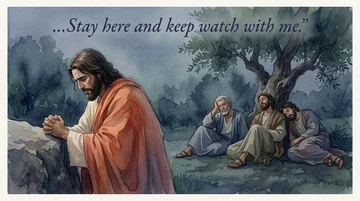
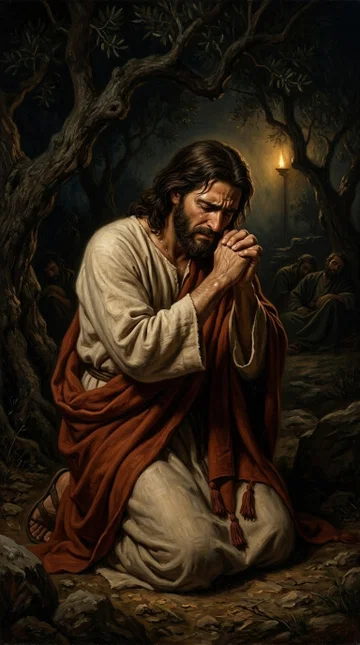
And he took with him Peter and the two sons of Zebedee, and began to be sorrowful and very heavy.
Translations
American King James Version, King James Version, KJV Cambridge Paragraph Bible
And he took with him Peter and the two sons of Zebedee, and began to be sorrowful and very heavy.
And he took with him Peter, and the two sons of Zebedee, and began to be sorrowful and very heavy.
Revised Version, American Standard Version
And he took with him Peter and the two sons of Zebedee, and began to be sorrowful and sore troubled.
And having taken Peter, and the two sons of Zebedee, he began to be sorrowful, and to be very heavy;
And taking with [ him] Peter and the two sons of Zebedee, he began to be sorrowful and deeply depressed.
And, taking with him, Peter and the two sons of Zebedee, he began to be grieved and to be in great distress.
Berean Standard Bible, Majority Standard Bible
He took with Him Peter and the two sons of Zebedee and began to be sorrowful and deeply distressed.
He took with him Peter and the two sons of Zebedee, and began to be sorrowful and severely troubled.
And he took with him Peter and the two sons of Zebedee, and became sad and very troubled.
And hee tooke vnto him Peter, and the two sonnes of Zebedeus, and began to waxe sorowfull, and grieuously troubled.
Douay-Rheims (Challoner revision)
And taking with him Peter and the two sons of Zebedee, he began to grow sorrowful and to be sad.
Pictures
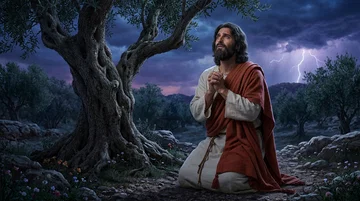
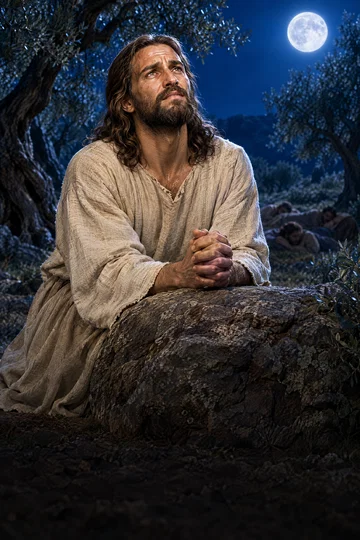
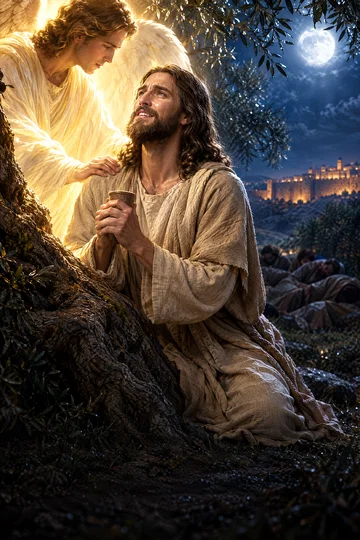
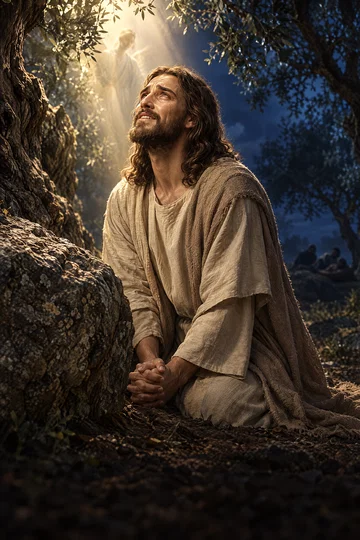
Cross-references 20 of 40
- Luke 22:41-44
And he was withdrawn from them about a stone’s cast, and kneeled down, and prayed,
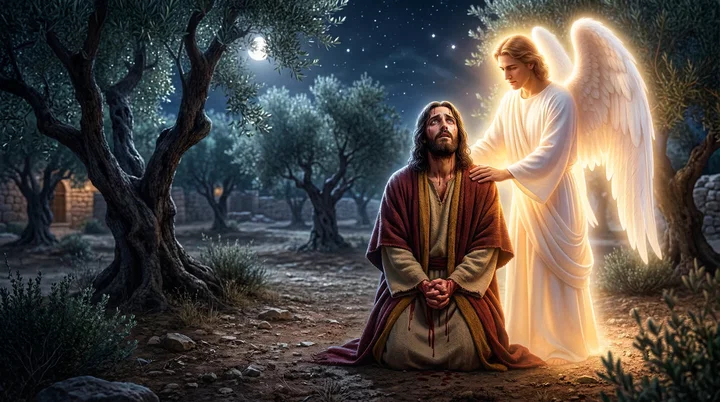
Jesus prays in anguish, strengthened by an angel, as he suffers in Gethsemane.
- Mark 14:33-34
And he taketh with him Peter and James and John, and began to be sore amazed, and to be very heavy;
Jesus takes three disciples with him and becomes deeply sorrowful in Gethsemane.
- Matthew 17:1-2
And after six days Jesus taketh Peter, James, and John his brother, and bringeth them up into an high mountain apart,
Peter, James, and John witnessed Jesus’ glory on the mountain.
- Matthew 27:46
And about the ninth hour Jesus cried with a loud voice, saying, Eli, Eli, lama sabachthani? that is to say, My God, my God, why hast thou forsaken me?
Jesus’ cry from the cross continues the anguish of Gethsemane.
- Isaiah 53:3-4
He is despised and rejected of men; a man of sorrows, and acquainted with grief: and we hid as it were our faces from him; he was despised, and we esteemed him not.
Christ’s grief and sorrow reflect the servant’s suffering and bearing human griefs.
- Matthew 20:22-23
But Jesus answered and said, Ye know not what ye ask. Are ye able to drink of the cup that I shall drink of, and to be baptized with the baptism that I am baptized with? They say unto him, We are able.
Jesus tells James and John they will share his cup and baptism.
- Matthew 26:41
Watch and pray, that ye enter not into temptation: the spirit indeed is willing, but the flesh is weak.
Jesus urges the disciples to watch and pray against temptation, for the flesh is weak.
- Luke 22:43
And there appeared an angel unto him from heaven, strengthening him.
An angel from heaven strengthens Jesus during his agony.
- Hebrews 4:15
For we have not an high priest which can not be touched with the feeling of our infirmities; but was in all points tempted like as we are, yet without sin.
Christ’s human anguish shows that he understands and sympathizes with human weakness.
- Matthew 26:69-75
Now Peter sat without in the palace: and a damsel came unto him, saying, Thou also wast with Jesus of Galilee.
Peter denied Jesus under pressure and wept bitterly afterward.
- John 18:1
When Jesus had spoken these words, he went forth with his disciples over the brook Cedron, where was a garden, into the which he entered, and his disciples.
Identifies the garden Jesus entered with his disciples before his arrest.
- Isaiah 53:3
He is despised and rejected of men; a man of sorrows, and acquainted with grief: and we hid as it were our faces from him; he was despised, and we esteemed him not.
Calls the Messiah a man of sorrows, acquainted with grief.
- Luke 22:42
Saying, Father, if thou be willing, remove this cup from me: nevertheless not my will, but thine, be done.
Jesus prays in agony, yielding to the Father’s will.
- Matthew 26:56
But all this was done, that the scriptures of the prophets might be fulfilled. Then all the disciples forsook him, and fled.
The disciples forsake Jesus and flee when he is arrested.
- Hebrews 5:7
Who in the days of his flesh, when he had offered up prayers and supplications with strong crying and tears unto him that was able to save him from death, and was heard in that he feared;
prayed with strong crying and tears
- Mark 14:37-38
And he cometh, and findeth them sleeping, and saith unto Peter, Simon, sleepest thou? couldest not thou watch one hour?
Jesus finds the disciples sleeping and urges them to watch and pray.
- Luke 8:51
And when he came into the house, he suffered no man to go in, save Peter, and James, and John, and the father and the mother of the maiden.
Peter, James, and John accompany Jesus when Jairus’s daughter is raised.
- Luke 22:39
And he came out, and went, as he was wont, to the mount of Olives; and his disciples also followed him.
Jesus goes to the Mount of Olives with his disciples.
- Isaiah 53:6
All we like sheep have gone astray; we have turned every one to his own way; and the LORD hath laid on him the iniquity of us all.
Human sin laid upon him connects with his suffering in Gethsemane.
- Matthew 26:42
He went away again the second time, and prayed, saying, O my Father, if this cup may not pass away from me, except I drink it, thy will be done.
He submits to the Father’s will to drink the cup.
Commentary part 1 of 2
Each commentary is drawn from primary sources: the writings of Ellen G. White and Adventist pioneers and periodicals. Each commentary is separate. Its own words are not a quotation; follow the references to read the source passages.
Ellen G. White
85 sources
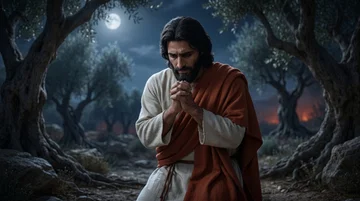
On a full-moon Passover night in the garden of Gethsemane He left the other disciples behind and took only Peter, James and John farther with Him into the garden, and there He began to sink under sorrow and crushing heaviness.DA 685.1ST Dec 2, 18976RED 88.1ST May 30, 1878ST Nov 2, 1882 To be sorrowful and very heavy means He who had always walked in the light of His Father's presence now felt shut out from it as the guilt and iniquity of fallen humanity was laid upon Him though He knew no sin.Ms 35, 1895, par. 9–10DA 685.2ST Jan 15, 1902 His anguish came as Satan pressed horror of great darkness upon Him to separate Him from God, while the destiny of the lost world hung on whether He would stand as man's surety and drink the cup in submission to His Father's will.ST Jun 3, 1897ST Mar 19, 1912ST Nov 25, 1889Ms 139, 1909, par. 24–25 In His humanity He longed for human sympathy and asked the three to watch and pray with Him, but they slept from sorrow and missed the strength the scene would have given them for the trials ahead.Ms 42, 1897, par. 1–3ST Mar 19, 19124T 542.1Ms 139, 1909, par. 24–25Ms 45, 1892, par. 6–9 In all that distress He gave the pattern of absolute submission to the divine will, the sinless Son treated as a sinner and wounded for transgressions so that sinful beings might be treated as innocent and the unchangeable law be upheld.Ms 134, 1905, par. 3Ms 139, 1909, par. 24–25Ms 58, 1897, par. 2–518MR 335.2–337.3
Gethsemane Setting and Companions
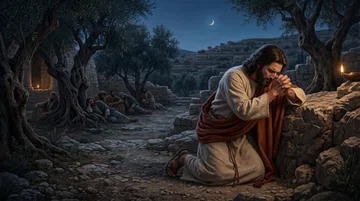
Jesus made His way slowly with His disciples at night to the garden of Gethsemane at the foot of the Mount of Olives, after crossing the Kedron.DA 685.13SP 250.33SP 250.1 It was Passover night under a broad and full moon shining from a cloudless sky, while the city of pilgrims' tents lay hushed in silence.DA 685.1ST May 30, 1878 The garden and the Mount had been hallowed and consecrated by His presence in human nature, by His prayers and tears.6RED 88.13SP 250.3 There He endured deep sorrow and agony, moistening the ground and the sod with His blood.6RED 88.13SP 250.3
Gethsemane was His accustomed retreat for bracing His spirit for trial and duty by fervent prayer.5RED 14.1–3ST May 30, 1878ST Sep 23, 1886 He had often spent the entire night there in prayer, while His disciples watched and prayed a little while and then slept undisturbed at a little distance until He woke them in the morning to go forth and labor anew.5RED 14.1–3ST May 30, 1878ST Sep 23, 1886 Because this was His familiar practice when preparing for trial and duty, His taking the three with Him called forth no remark.5RED 14.1–33SP 94.1–3ST May 30, 1878
On reaching the garden He told His other companions to sit where they were and pray for themselves and for Him.ST Dec 2, 18975RED 14.1–3 Then He selected only Peter and the two sons of Zebedee to go farther with Him into the recesses and seclusion of the garden to pray.ST Dec 2, 18975RED 14.1–3Ms 139, 1909, par. 24–25Ms 119, 1906, par. 5–11Ms 59, 1897, par. 7 There He began to be sorrowful and very heavy as He faced the cup of suffering.ST Dec 2, 1897Ms 139, 1909, par. 24–25Ms 119, 1906, par. 5–11
The three were Peter, James and John, James and John being the sons of Zebedee.3SP 334.27RED 68.1ST May 22, 1879AC1 68.1 They were the favored disciples brought into the closest relationship with Him and His chief witnesses after His death.3SP 334.27RED 68.1AC1 68.1 John was among those permitted to witness the agony in Gethsemane during the night of His suffering.ST Nov 2, 18823SP 334.2AA 539.1BS 45.1–3
He chose these three because they had been with Him at the transfiguration and had seen Moses and Elijah talking with Him.ST Dec 2, 18977RED 68.1ST May 22, 1879 They had beheld Him glorified, and the revelation of His divine glory was meant to strengthen them for the hour of His suffering and death.3SP 334.27RED 68.1DA 419.1–4 He desired their presence with Him on this occasion also.ST Dec 2, 1897
After earnest talk on the way He turned strangely silent and became utterly sad, more sorrowful and silent than ever before.DA 685.35RED 14.1–3ST May 30, 1878 Increasing sadness weighed on Him physically, so that His form swayed as if about to fall, every step was taken with labored effort, and He groaned aloud as if suffering under the pressure of a terrible burden.DA 685.35RED 14.1–3ST May 30, 1878 Twice His companions had to support Him or He would have fallen to the earth.DA 685.3 His disciples were perplexed and anxiously watched His face for explanation and looked for His usual place of retirement that He might rest, yet dared not question Him about the cause.DA 685.35RED 14.1–3ST May 30, 1878
The sorrow belongs to the future scenes He opened before His disciples and to the ordeal He foresaw of betrayal, agony in Gethsemane, and crucifixion.Ms 29, 1909, par. 2–44RED 102.2–103.12SP 289.2–290.1 He prepared His faithful followers beforehand so that fickleness, desertion, turning away and abuse would not take them by surprise, shake their faith, or draw them away from Him.DA 394.2–34RED 102.2–103.12SP 289.2–290.1 On the way to the garden He gave them lessons for that hour, using the vine as the symbol of the union of His church with Himself and His Father.3SP 250.1 The last solemn hours before Gethsemane were spent speaking words of comfort and assurance, and then all united in a hymn of praise to the Most High, giving a lesson of courage and fortitude even as He entered the bloodstained path that would lead through abuse and mockery to Calvary.LSEGW 257.4
Sense of Sorrowful and Heavy
To begin to be sorrowful and very heavy means He seemed shut out from the light of God's sustaining presence in which He had walked all His life on earth.DA 685.2 Now He was numbered with the transgressors to bear the guilt of fallen humanity though He knew no sin, with the iniquity of all laid upon Him.DA 685.2
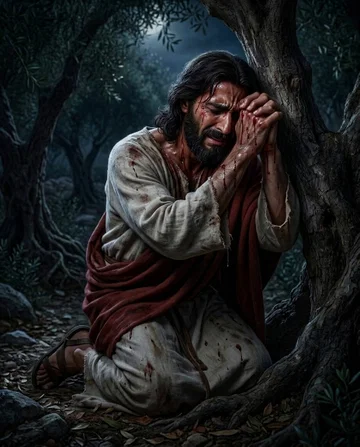
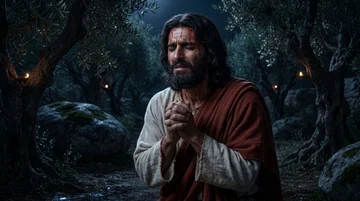
The sorrow was a sinking under deep sorrow and crushing weight.ST Mar 19, 1912Ms 123, 1909, par. 35–364SP 481.2–482.2ST Nov 27, 1879 The mysterious cup trembled in His hand.ST Mar 19, 1912Ms 123, 1909, par. 35–36 Bloody sweat fell from His brow to moisten the ground, great drops coming from the pores of His skin.Ms 123, 1909, par. 35–36ST Aug 8, 1878Ms 95, 1897, par. 10–12 He prayed three times for the cup to pass as He felt His Father's presence withdrawn, and afterward comfort was sent from heaven by an angel.ST Aug 8, 1878
It marks the beginning of His suffering in Gethsemane.Ms 29, 1909, par. 2–4Ms 134, 1905, par. 3ST Sep 19, 1878Ms 56, 1901, par. 8 It was the most fearful strain ever brought upon a human being, permitted by God to come upon His Son and impossible to exceed because He was bearing the sins of the whole world.Ms 134, 1905, par. 34SP 481.2–482.2 His agony was unlike anything He had faced before and exceeded even the bitterness of the final struggle with death.ST Aug 8, 1878
It shows Him entering profound sorrow and anguish as He faced the coming events.Ms 29, 1909, par. 2–4ST Aug 8, 1878ST Sep 19, 1878ST Nov 27, 1879Ms 56, 1901, par. 8 He endured the garden's conflict before the shame of the cross and His victory over death.ST Sep 19, 1878
Causes of His Anguish
His anguish came as the sins and iniquity of the world were laid upon Him and weighed heavily on His soul, with the weight of the sins of the whole world resting upon Him and causing His agony in Gethsemane just before betrayal and trial.Ms 35, 1895, par. 9–10ST Jan 15, 1902Ms 52, 1904, par. 3Ms 119, 1906, par. 5–11 The curse of human transgression shadowed His Father's face and shut Him from the light of sustaining presence, bringing horror at bearing sin's curse and alienation from His beloved Father.Ms 35, 1895, par. 9–10ST Jan 15, 1902 By sin He was being separated from His Father across a broad, black, deep gulf that made His spirit shudder, as He bore the sins of the world, drank the bitter cup, and faced separation from His Father in the trial before Him.ST Jan 15, 1902Ms 119, 1906, par. 5–11
The destiny of the lost world hung in the balance on whether He would stand as man's surety or refuse, with everything at stake in His decision to save man at any cost to Himself.ST Jun 3, 1897ST Jan 15, 1902ST Mar 19, 1912 The mysterious cup trembled in His hand as that choice pressed upon Him.ST Mar 19, 1912
Satan surrounded and encircled His humanity with horror of great darkness, pressing darkness upon His soul and oppressing Him while He wrestled with the powers of darkness alone.ST Jun 3, 1897ST Jan 15, 1902ST Mar 19, 1912ST Nov 25, 1889 It was a conflict where impurity fought with purity and the prince of darkness fought with the prince of light, a wrestling under temptation of awful power in conflict with satanic agencies who strove to separate Him from God as the Jews had separated themselves, yet He would not yield.Ms 95, 1897, par. 10–12Lt 147, 1903, par. 29 Satan tempted Him to think God had forsaken Him and to let the guilty human race bear the consequences of its own guilt while He remained innocent before God.ST Jun 3, 1897ST Mar 19, 1912 The conflict was so terrible that great drops of blood came from the pores of His skin and moistened the ground, before betrayal by Judas with a kiss and the flight of all His disciples, amid superhuman assaults that preceded abuse, betrayal, trial and death.Ms 95, 1897, par. 10–125T 501.2
The hour of Satan's apparent triumph had come and the storm of wrath was about to beat upon Him.ST Jan 15, 1902 He had been hunted from city to city by priests, rulers and others influenced by Satan, and now Satan pressed upon Him rejection by His own people, betrayal by a disciple, denial by a zealous follower, and forsaking and flight by all.ST Jan 15, 1902ST Nov 25, 1889 The disciples dear to Him failed to give sympathy and comfort and reproached and forsook Him, and the place itself stood as a reminder of His unrequited love after He had given lessons of union by the vine on the way to the garden.6RED 87.1–23SP 250.1
He would not use His divine power to escape, but as man must suffer the consequences of man's sin and endure God's wrath against transgression.ST Jan 15, 1902 To do this He laid off His royal robe and kingly crown and clothed divinity with humanity to live a sinless life on man's behalf and to make atonement on the cross, consenting to take the body of humanity and to suffer humiliation and death when He could have refused.ST Jan 15, 1902Ms 134, 1905, par. 3
Sin appeared so dreadful to Him and the weight of guilt so great that He was tempted to fear it would shut Him out forever from His Father's love, feeling how terrible is the wrath of God against transgression.DA 685.2ST Jan 15, 1902 The sense of God's wrath against sin was crushing out His life, an agony unlike anything He had faced before that exceeded even the bitterness of the final struggle with death, as He felt His Father's presence withdrawn.ST Jan 15, 1902ST Aug 8, 1878 He appeared to hesitate to drink the cup and prayed for it to pass, praying three times with sweat falling like drops of blood until heaven sent an angel to comfort Him, yet chose to drink it in submission to His Father's will to become the propitiation for a race that willed to sin.ST Jan 15, 1902Ms 139, 1909, par. 24–25ST Aug 8, 1878Ms 139, 1907, par. 6
Longing for Disciples' Sympathy
In that hour His human nature longed for human sympathy and companionship, yearning for words of relief and love that would strengthen and comfort Him. He craved to know that those He had blessed and comforted understood the terrible temptation pressing upon Him and were praying for Him and for themselves, and their understanding would have strengthened Him.Ms 42, 1897, par. 1–3ST Mar 19, 1912Ms 45, 1892, par. 6–9RH Dec 28, 1911AA 490.3–491.2 That desire for love and sympathy belongs to the heart God gave humanity, and in bearing the guilt of sinful men He felt it with full force.SLP 309.2
He asked the three to stay and watch with Him while He prayed, telling them His soul was sorrowful even unto death, but when He returned He found them asleep.Ms 42, 1897, par. 1–3Ms 45, 1892, par. 6–9 Their sleep was sleep from sorrow, brought on by Satan and his evil angels, when love for their suffering Master should have kept them awake.Ms 45, 1892, par. 6–9Ms 119, 1909, par. 32–34
While they slept they missed His voice and had only a dim sense of the angel's presence sent to comfort Him.4T 542.1Ms 59, 1897, par. 7 Through drowsiness and stupor they failed to receive the spiritual evidence and power of the scene that would have strengthened their souls for the terrible scenes and trials ahead.4T 542.1ST Aug 31, 1915Ms 59, 1897, par. 7 Their failure stands as a warning to be spiritually awake and ready to believe, and to place themselves in communion with heaven lest those who most need divine instruction fail to receive it.Ms 139, 1909, par. 24–25
He wanted them to watch so they would better understand the sorrow pressing on Him and be fitted to behold His death on Calvary's cross.Ms 45, 1892, par. 6–9 Watching would have led them to remember what He had told them many times about rejection, suffering, death and rising again, and to keep rays of hope and strengthened faith when Satan seemed to gain the victory.Ms 45, 1892, par. 6–9 It would have taught them that He came to suffer and die for the sins of the world and to set up a kingdom of love, peace and purity in hearts fitted for heaven, rather than an earthly kingdom with themselves as rulers, and would have made them ready and able to bear the scorn and mockery falling on Him without leaving Him alone in His bitter trial.Ms 45, 1892, par. 6–9
His grief was also for the disciples themselves, who would soon endure the trial of His betrayal and death and be left without His comforting presence, and knowing their weakness He met them with sympathy rather than rebuke.ST Jan 15, 1902ST Jan 17, 1878 His own sorrow awakened sympathy for the weak who slept instead of watching and praying.ST Jan 15, 1902 The disciples dear to Him thus failed to give Him the sympathy and comfort He most needed in His humiliation.6RED 87.1–2
Peter afterward remembered that he had slept while Jesus prayed through those fearful hours and that he had seen Him prostrate in agony with bloody sweat moistening the ground.Lt 54, 1874, par. 15–163T 416.2 That memory humbled him to penitence and remorse and to renewed commitment.Lt 54, 1874, par. 15–163T 416.2 By it he was prepared to pity the tempted, to sympathize with the weak and erring, to warn the presumptuous, and to strengthen his brethren.Lt 54, 1874, par. 15–163T 416.2
Doctrinal Meaning of Suffering
In that distress He gives the pattern of absolute submission to the divine will, surrendering His own will to the Father's will even as He began to bear the sins of the whole world under the most fearful strain ever laid upon a human being.Ms 134, 1905, par. 3Ms 139, 1909, par. 24–25 He sought strength from the Father to resist the enemy of righteousness, enduring temptation faithfully and remaining true in poverty and humility.Ms 139, 1909, par. 24–25Ms 183, 1907, par. 33 He prayed for the cup to pass yet chose to drink it in submission rather than escape, consenting to take humanity's body and suffer humiliation and death when He could have refused.Ms 134, 1905, par. 3Ms 139, 1909, par. 24–25
The sinless Son was treated as a sinner so that sinful beings might be treated as innocent, wounded for transgressions and bruised for iniquities with the chastisement of peace upon Him bringing healing.Ms 134, 1905, par. 318MR 335.2–337.3 He stood in the sinner's place as Mediator and divine-human Substitute, laying off royal robe and kingly crown and clothing divinity with humanity to live a sinless life on man's behalf and make atonement.Ms 134, 1905, par. 318MR 335.2–337.3 The whole debt for transgression of the law was demanded from Him, and the extreme penalty fell upon Him without abatement because He was the Son of God.18MR 335.2–337.3
His agony together with His suffering and death demonstrates the seriousness of sin and the justice of God, showing that the law is unchangeable, holy and immutable.Ms 58, 1897, par. 2–518MR 335.2–337.3 His suffering did not cancel, lessen or abrogate the law, but left it in holy dignity and immutability and showed that God will not excuse transgression.Ms 58, 1897, par. 2–518MR 335.2–337.3 As Surety and Sacrifice He bore humanity's burden so that people could have another trial and be brought into favor with the Father, with full satisfaction of justice.Ms 58, 1897, par. 2–518MR 335.2–337.3
His sorrow displays the depth of the Father's love in sparing not His own Son but delivering Him up, and reveals God's love in laying down His life in order that sinners might not perish but have eternal life.Lt 67, 1903, par. 3–1318MR 335.2–337.3 By that struggle reconciliation with God was obtained and the garden was consecrated, vividly portraying His suffering for humanity.9T 101.3RH Nov 4, 1902Lt 67, 1903, par. 3–13
His sorrow proves He took not the nature of angels but the seed of Abraham and was made like His brethren in all things, suffering when tempted so that He might be a merciful and faithful High Priest to make reconciliation and help those who are tempted.Ms 20, 1902, par. 20–21 He who was always touched with human woe and always sought by word and deed to relieve human suffering was brought low and appeared as a bruised reed.ST Jan 15, 1902Ms 20, 1902, par. 20–21 He is touched with the feeling of human infirmity, so that tried, tempted, weak and broken-hearted souls can spread their case before Him and find deliverance, strength, enlightenment and healing, with divine help nearest in the moment of greatest discouragement.ST Jan 15, 1902
That agony was watched from the heavenly courts with intense interest, angels seeing every movement of their Commander in the hands of a merciless power stirred by Satan to cut off communication between heaven and earth.ST Apr 15, 1897 No command was given for the angels to break ranks and go to the help of the divine Sufferer.ST Apr 15, 1897 The Gethsemane sorrow stands joined to what followed it: being insulted, mocked, derided, scourged, staggering fainting under the burden of His own cross, and hanging on the cross in shameful humiliation and agony.ST Apr 15, 1897
Links to Other Scriptures
The sorrow that begins in Gethsemane is not the same as the tears shed over Jerusalem, for those tears and groans came from beholding a doomed city rejecting its Redeemer and refusing the blessing and salvation brought to it.4SP 18.1ST Jun 8, 18824RED 122.2–123.22SP 390.2–391.2 That grief over Jerusalem sprang from blindness and refusal to repent and from seeing judgment drawing near for what the city might have become had it accepted Him, not from fear for Himself or fear of physical suffering and crucifixion.4SP 18.1ST Jun 8, 18824RED 122.2–123.22SP 390.2–391.2 The anguish of Gethsemane still lay ahead when He wept over the city, yet it was not the cause of that weeping.4SP 18.1ST Jun 8, 18822SP 390.2–391.2
The garden where this heaviness begins stands as obedience set against the disobedience of the Garden of Eden in eating the forbidden tree.Lt 69, 1897, par. 23–25 The Lord's Supper calls believers to remember this agony as part of His humiliation and suffering in the sacrifice He offered for the world.Ms 19, 1897, par. 50–53 The disciples with Him in the garden could not fully enter into the burden He bore.Ms 19, 1897, par. 50–53
The three taken with Him that night were Peter, James and John, His favored disciples brought into closest relationship with Him, James and John being the sons of Zebedee.7RED 68.1ST May 22, 1879AC1 68.1RH Apr 27, 1911 They had seen Him glorified at the transfiguration and were His chief witnesses after His death.7RED 68.1ST May 22, 1879AC1 68.1 James later understood more fully His words about sharing His cup and baptism of suffering when he was imprisoned and put to death by execution.7RED 68.1ST May 22, 1879AC1 68.1RH Apr 27, 1911
The verse shows Him preparing for great trial through communion with His Father in prayer, with a night of prayer preceding His agony and the events leading to the cross.ST Mar 15, 1883Ms 183, 1907, par. 33 Withdrawing from His disciples to pray, He entered agonizing prayer with tears for the people for whom He would give His life, seeking strength from the Father to resist the enemy and enduring temptation faithfully in poverty and humility.ST Mar 15, 1883Ms 183, 1907, par. 33 His example in deep sorrow and distress teaches believers to wrestle with the Father in prayer for strength and power to make God known in word and action, making His life a pattern of earnest prayer and selfless care for others.RH Aug 26, 1909ST Mar 15, 1883
Pattern and Call for Believers
His sorrow in the garden is the pattern for God's people in the time of trouble, when they will cry and agonize with Him day and night for deliverance while facing a death decree for refusing to abandon the seventh-day Sabbath.1T 353.4RH May 27, 1862SG4 269.1–2 God will preserve them in that hour, as He sustained Christ pouring out His soul in agony.RH May 27, 1862 His agony in bearing the weight of human sin before betrayal and crucifixion was greater than the anguish His people will endure in their final trouble.ST Nov 27, 1879
His suffering there was endured to show the way through hardship and to bring the divine help needed to overcome.STSE 45.13T 371.1 His example calls followers to accept conflict, self-denial and sacrifice for eternal life.STSE 45.1 It reveals the self-denial of bearing the world's sins and rebukes indifference and love of ease.GW92 69.2 His soul agony makes His life a pattern of earnest prayer and selfless care for others.ST Mar 15, 1883 That same suffering teaches self-sacrifice, patience under affliction, solemn consecration to God, and fitting preparation for holy work.GW92 360.3
He became poor that the guilty through His poverty might be made rich, enduring sorrow in the garden when the sins of the whole world were laid upon Him and then a shameful death on the cross to save man.RH Apr 15, 1858 His willingness to suffer so much rebukes those for whom the sacrifice was made who are unwilling to suffer little for truth.RH Apr 15, 1858 It likewise rebukes indifference and love of ease in the face of bearing sin for humanity.GW92 69.2 His anguish came amid superhuman assaults of Satan and before abuse, betrayal, trial and death with Peter and the two sons of Zebedee beside Him, showing that His followers should not expect popularity but should be meek and lowly like their Master.5T 501.2 His last terrible trial was passed through that sinners might not perish but have eternal life, revealing God's love in laying down His life, and it rebukes failure to work in harmony and requires believers to lay down their lives for the brethren in brotherly love and unity.Lt 67, 1903, par. 3–13
That sacrifice in Gethsemane together with His death on Calvary measures the great work entrusted to the church.RH Apr 11, 1912 His suffering and death are the price by which people are bought and offered salvation for soul and body, which Christians are to keep in view as they serve others.Lt 122, 1901, par. 15 The sleeping disciples did not hear His voice in His agony, having only a dim sense of the angels' presence and losing the power and glory of the scene. Because of drowsiness and stupor they failed to receive the evidence that would have strengthened their souls for the terrible scenes before them, and so those who most need divine instruction still fail to receive it when they do not place themselves in communion with heaven. His betrayal, trial and crucifixion picture how reformers are treated when differences of opinion stir frenzy and hostility.12MR 14.1–2Lt 14, 1889, par. 2–9 That treatment works through the same satanic spirit moving people through doubt, bitterness, wrath and hatred.Lt 14, 1889, par. 2–9
Sources
Pioneers and periodicals
192 sources
In Gethsemane on the last night of His mission He took Peter, James and John farther with Him apart from the others and began to enter deep sorrow, distress and heaviness as His decisive struggle opened.ST Jun 3, 1897ST Dec 2, 1897ST Apr 11, 1900ST May 12, 1898RH Jun 20, 1854 His anguish was real human suffering of the sinless Saviour bearing the shame, guilt and burden of the whole world as substitute and surety under the storm of God's wrath against sin.ST Jan 15, 1902ST Jan 20, 1914ST Apr 11, 1900ST Apr 14, 1914ST Mar 31, 1909 He felt the hiding of His Father's presence across a gulf of separation and feared being shut out forever, while Satan pressed Him with darkness to abandon the mission when the eternal destiny of the lost world hung trembling in the balance.ST Jun 3, 1897ST Mar 19, 1912ST Apr 11, 1900ST Apr 14, 1914 He wrestled in earnest prayer three times for the cup to pass, then meekly submitted His will to His Father's, and gained the infinite victory of renewed consecration to drink the cup that humanity might be saved.RH Nov 14, 1912RH Dec 16, 1873RH Feb 3, 1863ST Jun 24, 1886 Left to struggle alone while the three slept instead of watching, His human nature longed for sympathy and prayer, and proved Him touched with infirmity to invite and comfort all tried, tempted and broken-hearted souls who spread their case before Him.ST Jan 15, 1902ST Jun 3, 1886RH Mar 14, 1865RH Nov 26, 1903RH Jul 16, 1857
Garden Setting and Moment
In Gethsemane Jesus took Peter and the two sons of Zebedee farther with Him, leaving the other disciples behind to sit and pray for themselves and for Him.ST Jun 3, 1897ST Dec 2, 1897ST Apr 11, 1900ST May 12, 1898ST Mar 31, 1909 There He began to be sorrowful and very heavy, deeply sorrowful, burdened, distressed and troubled, and asked them to stay and watch with Him.ST Jun 3, 1897ST Apr 11, 1900ST May 12, 1898ST Mar 27, 1901ST Mar 31, 1909 His sorrow there was unlike anything He had felt during earlier visits to the garden, for He felt lonely and seemingly cut off from God's sustaining presence as He bore humanity's guilt and faced God's wrath against sin.ST Jun 3, 1897ST Apr 11, 1900ST Mar 31, 1909
It was Passover night, the last night of His earthly mission, after eating the Passover, instituting the Lord's Supper, singing a hymn, walking through Jerusalem and crossing the brook Cedron.ST May 30, 1878ST Jan 15, 1885ST Aug 12, 1886 Coming to Gethsemane under a broad full moon after earnest conversation, He grew strangely silent, utterly sad, and unsteady in form as if about to fall, which perplexed His disciples who dared not question Him.ST May 30, 1878ST Jan 15, 1885 Gethsemane was His accustomed retreat for bracing His spirit for trial and duty by fervent prayer, where He had often prayed through the night to strengthen Himself while His disciples watched briefly and then slept nearby until He woke them in the morning for labor, so His taking the three farther into its recesses called forth no remark.ST May 30, 1878ST Sep 23, 1886 That sorrowful heaviness outweighs the forty days in the wilderness, the temple and the mountain-top, all toil, miracle-working and teaching through Judea, Samaria and Galilee, and every unkind look, ungracious word, opposition of chief priests, scribes and elders, forced seclusion and earnest prayer from the Jordan to the upper chamber, marking the culminating scene and the beginning of the decisive moral struggle that closes His mission.ST Jan 15, 1885 This was the last Passover, as the Passover type was about to meet its fulfillment in the death of the Lamb of God for the sins of the world, and He was soon to undergo His full baptism of suffering.ST Aug 12, 1886
If He and His disciples ate the Passover at the proper time, Pentecost that year fell on the Sabbath.ST Apr 15, 1889 Gethsemane at the foot of the Mount of Olives is a real landmark where He prayed and where the disciples slept, and a nearby spot is pointed out as where they slept, confirming the sacred narrative of His betrayal there.RH Aug 29, 1871RH May 13, 1902 Its name means the oil press, and His anguish there is His treading the winepress alone, with none of the people with Him.RH Jan 8, 1875
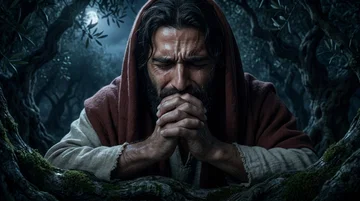
The garden is a low still place among ancient olive trees under the soft light of the paschal moon.ST Mar 7, 1906 It is pictured in evening dusk under starlight, on a dark and lonely night with dew-cold earth, where He walks slowly over a stony lonely hill and enters a garden dry as salt.ST Mar 5, 1902 There the olives are kind to Him and the thorn tree seems to recognize Him, and though spent with love and shame He leaves content to face death and shame, ultimately to be slain on a tree.ST Jul 8, 1897
The sorrow belongs to the day He was crucified and showed His love for humanity by giving His life.RH Feb 13, 1872 Its anguish marks the beginning of the cross's suffering, for Gethsemane symbolizes atonement and His descent into suffering to recover what humanity lost through sin in Eden, suffering necessary to save humanity from being hopelessly lost.ST Feb 24, 1887 His suffering there was lonely and intense as His followers forsook Him, and the garden's conflict and anguish led onward through betrayal, the shame of the cross, imprisonment, the tomb, death, and then victory, resurrection and ascension.ST Sep 19, 1878ST Aug 15, 1916ST Dec 24, 1896RH Feb 4, 1915
The supreme crisis of the world and of the universe took place in Gethsemane, not at the cross.ST Mar 7, 1906 There alone with God, while even His most stalwart followers slept unaware of His struggle, He yielded Himself again with renewed consecration, facing all the coming suffering, to become the supreme and everlasting sacrifice for humanity.ST Mar 7, 1906 The crucifixion with its mocking, pain and hiding of the Father's face, and the resurrection, were only the outward demonstration in life of the submission already made in Gethsemane.ST Mar 7, 1906 That submission followed earlier crises when He gave Himself as a Lamb slain from the foundation of the world, took the form of a servant among angels, was made in the likeness of man, and conquered the mighty temptations of the adversary at the beginning of His ministry by faith in the Word of God.ST Mar 7, 1906 At that hour above all others the destiny of the human family for all eternity hung trembling in the balance, and the infinite victory gained there in behalf of humanity will be considered and remembered vividly with anthems of grateful praise by men and angels through all eternity.ST Nov 3, 1898ST Aug 20, 1912 Left by the sustaining hand of God with no basis of hope, He made His last decision to save man at any cost to Himself, choosing eternal death for Himself if need be rather than that guilty man should perish, and would not turn from the mission He had chosen after leaving heaven's purity, happiness and glory to save the one lost sheep, the one fallen world.ST Aug 20, 1912 His Passion is thus the supreme incident in world history and the turning point of human destiny, and His hour of trial in the garden meant final victory for the sinner.ST May 19, 1909
The Gethsemane scene follows His ride into Jerusalem, the most striking scene before it and the one occasion when He allowed the multitudes to give Him full public honor.ST Jul 22, 1886
Three Companions Chosen
The three taken with Him were Peter, James and John, James and John being the sons of Zebedee, and John was among the witnesses of the agony.ST Mar 19, 1912ST Dec 2, 1897ST Nov 2, 1882ST May 22, 1879ST Oct 16, 1884 They were chosen to witness His sufferings just as they had been chosen to witness the glory that would follow.ST Dec 2, 1897RH Jun 20, 1854ST Apr 11, 1900 They were the same three who had been with Him on the mount of transfiguration and had seen Moses and Elijah talking with Him, and for that reason He desired their presence with Him on this occasion also.ST Dec 2, 1897ST May 22, 1879RH Jun 8, 1869ST Apr 11, 1900 Their presence at His agony, as at the raising of Jairus's daughter and the transfiguration, reflects their special role as witnesses to important events in His ministry.RH Jan 23, 1866ST Jul 4, 1899 Where on the mount they were overwhelmed with rapturous awe in light and glory and desired to stay, in Gethsemane they were wrapped in unconscious slumber through His scene of unutterable anguish when the weight of sin and woe pressed upon Him.RH Jun 8, 1869
They belonged to His innermost circle of closest and most trusted followers, the small inner circle allowed to witness more deeply the events of His work.RH Jan 23, 1866ST Jul 4, 1899ST Jul 4, 1899 Though the Lord's work does not favor people unjustly, He permits some to enter more deeply than others into the mysteries of His work, and all should trust God's wisdom and justice.ST Jul 4, 1899 He brought them to show His love and to have their companionship in His darkest trial.ST Aug 8, 1906ST Dec 30, 1889 He brought them to prepare them through prayer for the coming conflict and to have them watch with Him.ST Aug 8, 1906ST Dec 30, 1889RH Dec 18, 1860 He prepared His chosen disciples for that trial by bringing a crisis while He was still with them to comfort and strengthen them, for the coming ordeal of betrayal, agony and crucifixion would test weak and undecided followers by His humiliation and condemnation and by the crowd's rejection of Him.ST Oct 8, 1896
They were chosen because they especially needed to witness this part of His trial. Though they had claimed they could share His suffering, they slept while He endured the agony of death, and Peter could not watch with Him even for one hour.ST Aug 8, 1906ST Dec 30, 1889 The disciples were still human and not yet strengthened by the Pentecostal baptism and so could not share His painful cup then. Later they drank of it through self-denial, devoted service, and giving their lives for His sake. James's later imprisonment and execution helped him understand more fully Jesus' words about sharing His cup and baptism of suffering.ST May 22, 1879RH Apr 27, 1911
Nature of Sorrow
In Gethsemane He began to be sorrowful and very heavy, entering deep sorrow, distress, heaviness and anguish as He faced the suffering ahead.ST Jun 3, 1897ST Apr 11, 1900ST May 12, 1898ST Dec 15, 1898ST Aug 24, 1904 Taking Peter and the two sons of Zebedee with Him, He felt His soul sorrowful even unto death and asked them to stay and watch with Him.ST Jun 3, 1897ST Apr 11, 1900ST May 12, 1898 He devoted those hours to prayer, and God heard Him and strengthened Him to endure the coming pain, so that those overwhelmed by sorrow should cry to God rather than give way to despair, trusting that God hears and answers prayer.RH Feb 3, 1863 His sorrow came as He bore humanity's guilt and the burden of the world's sins while facing God's wrath against sin, feeling lonely and seemingly cut off from God's sustaining presence and fearing that sin might shut Him out from His Father's love.ST Apr 11, 1900ST Dec 15, 1898 The destiny of the lost world hung trembling in the balance on His choice to stand as humanity's surety, while Satan surrounded His human nature with darkness and tempted Him to think God had forsaken Him.ST Jun 3, 1897
That sorrow was unlike anything in His earlier visits to the garden.ST Apr 11, 1900 It outweighed the forty days in the wilderness, the temple and the mountain-top, all toil, miracle-working and teaching, every unkind look, ungracious word, opposition, forced seclusion and earnest prayer from the Jordan to the upper chamber.ST Jan 15, 1885 It marked the culminating scene and the beginning of the decisive moral struggle closing His mission.ST Jan 15, 1885 Its agony exceeded even the bitterness of the final struggle with death, as with the burden of the world's guilt pressing upon Him and His Father's presence withdrawn He prayed three times for the cup to pass and sweat fell like drops of blood before heaven sent an angel to comfort Him.ST Aug 8, 1878
It was real human suffering by the sinless, holy, pure Saviour who never knew sin, revealing His humanity.ST Sep 30, 1889ST Dec 30, 1880RH Oct 27, 1863 Bowed under deep sorrow, He wept and bore guilt and burden not His own, sustained by divine love, and His suffering was for us to open the way to heaven.ST Sep 30, 1889RH Dec 8, 1859 His agony was so intense that blood came from every pore.RH Dec 8, 1859 Those who sip life's bitter chalice to its dregs can come to Him as one who has suffered too and ask Him to be with them.ST Dec 30, 1880 This suffering involved a loneliness no human heart can fully know.RH Sep 3, 1901
Its horror was not chiefly fear of the physical pain of crucifixion, whose terrors were only a faint picture of bearing the guilt of sin and God's righteous wrath.ST Jul 14, 1881 He suffered as the sin offering, bearing human iniquity to accomplish redemption.ST Jul 14, 1881 Yet He faced the full depth of human distress, including the dread of death.ST May 6, 1889 Though He prayed that the cup might pass and it did not, strength was sent from heaven so He could endure and die for humanity, giving hope for people facing their own conflicts that through Him they can endure the difficult path.ST May 6, 1889
To be very heavy means a lonely weight bowed low with sunken head and brooding brow, hungry and unfed and desolate, full of tired woe and homeless pangs and tears and sighs and trembling breath rising and sinking.ST Mar 5, 1902 In evening dusk under starlight He walked slowly over a stony lonely hill and entered a garden dry as salt.ST Mar 5, 1902 Hungered yet consecrate, still pleading and yearning, His high and lonely sorrow and dimmed face bore human woe for human grace.ST Mar 5, 1902 His sorrowful bosom and breast were deepened to give rest, a bed for tired woe and a nest for trouble, an open gate and house and hearth where famished hope is led, building far bliss and Paradise from His sinking.ST Mar 5, 1902
He was prostrate in grief in terrible inward struggle and conflict, revealing the depth of His love.ST Oct 10, 1906ST Nov 20, 1879 Alone in the valley of sorrow, He knew the cross lay ahead and that He must endure what awaited Him alone.ST Oct 10, 1906ST Nov 20, 1879 Spent with love and shame, He found the olives kind to Him, left content to face death and shame, and was ultimately slain on a tree.ST Jul 8, 1897
These tears and groans are distinguished from His sorrow over Jerusalem rejecting its Redeemer, which did not come from fear of physical suffering; the anguish of Gethsemane was still ahead and not the cause of that grief.ST Jun 8, 1882 In the garden He was without exuberant joy or ecstasy, yet His love did not lessen and His Father's love for Him was no less there than by the Jordan and on the holy mount where the voice said, This is my beloved Son in whom I am well pleased.ST Oct 7, 1897 Feeling may change through sorrow and discouragement, but love abides above all feeling as an eternal, abiding, life-giving principle.ST Oct 7, 1897 His sorrow did not destroy the calm self-possession that marked His trust in God, for Christian repose is not inaction or freedom from cares but a steady mind that can remain calm under pressing duties and perplexities, sustained by faith in the heavenly Father and confidence in His promises.ST Jul 29, 1886
Sources