Mark 12:15
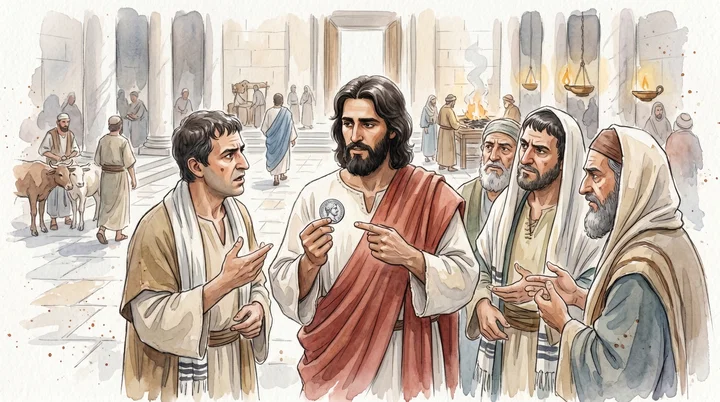
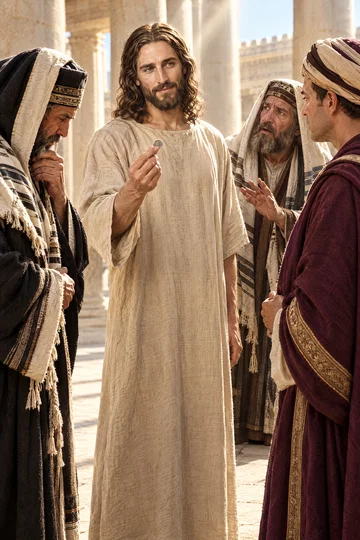
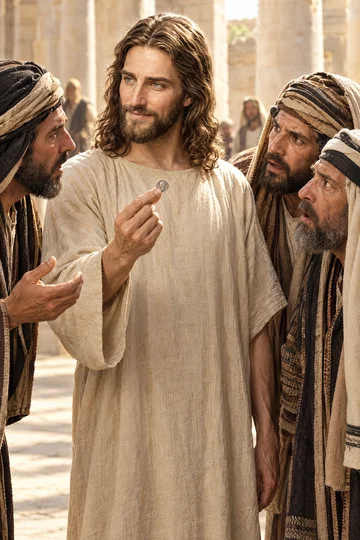
Shall we give, or shall we not give? But he, knowing their hypocrisy, said unto them, Why tempt ye me? bring me a penny, that I may see it.
Translations
Shall we give, or shall we not give? But he, knowing their hypocrisy, said to them, Why tempt you me? bring me a penny, that I may see it.
King James Version, KJV Cambridge Paragraph Bible, Revised Version
Shall we give, or shall we not give? But he, knowing their hypocrisy, said unto them, Why tempt ye me? bring me a penny, that I may see it.
Shall we give, or shall we not give? But he, knowing their hypocrisy, said to them, Why tempt ye me? bring me a penny, that I may see it.
Shall we give, or shall we not give? But he, knowing their hypocrisy, said unto them, Why make ye trial of me? bring me a denarius, that I may see it.
And he, knowing their hypocrisy, said to them, 'Why me do ye tempt? bring me a denary, that I may see;'
Should we give, or should we not give? But he knowing their hypocrisy said unto them, Why tempt ye me? Bring me a denarius that I may see [ it].
But, he, knowing their hypocrisy, said unto them—Why are ye, tempting, me? Bring me a denary, that I may see it.
Berean Standard Bible, Majority Standard Bible
But Jesus saw through their hypocrisy and said, “ Why are you testing Me? Bring Me a denarius to inspect.”
Shall we give, or shall we not give?”But he, knowing their hypocrisy, said to them, “ Why do you test me? Bring me a denarius, that I may see it.”
Are we to give or not to give? But he, conscious of their false hearts, said to them, Why do you put me to the test? give me a penny, so that I may see it.
Should we giue it, or should we not giue it? but he knew their hypocrisie, and said vnto them, Why tempt ye me? Bring me a peny, that I may see it.
Douay-Rheims (Challoner revision)
Who knowing their wiliness, saith to them: Why tempt you me? bring me a penny that I may see it.
Pictures
Cross-references
- Matthew 22:17-21
Tell us therefore, What thinkest thou? Is it lawful to give tribute unto Caesar, or not?
Jesus exposes the trap and answers the question about tribute to Caesar.
- Luke 20:20-25
And they watched him, and sent forth spies, which should feign themselves just men, that they might take hold of his words, that so they might deliver him unto the power and authority of the governor.
Jesus exposes the trap over Caesar’s tribute and answers what is due to Caesar and God.
- Matthew 22:22
When they had heard these words, they marvelled, and left him, and went their way.
The hearers marvel at Jesus’ answer about tribute to Caesar.
Commentary
Each commentary is drawn from primary sources: the writings of Ellen G. White and Adventist pioneers and periodicals. Each commentary is separate. Its own words are not a quotation; follow the references to read the source passages.
Ellen G. White
15 sources
Hypocritical spies sent by the rulers pretended sincere guidance-seeking with flattering courtesy to trap Him over paying tribute to Rome.Ms 149, 1898, par. 6DA 601.1–602.5ST Jun 29, 1882 They laid a double bind hoping rejection would betray Him to Roman authority and approval would accuse Him of opposing God's law.3SP 42.2ST Jun 29, 18823SP 41.3–4 He was not deceived for a moment but knew their concealed hypocrisy and exposed them by challenging them for testing Him.Ms 149, 1898, par. 6DA 601.1–602.5ST Feb 8, 1899 He then asked to be shown the tribute money in order to inspect it, and they brought Him a coin bearing Caesar's image and inscription.DA 601.1–602.5ST Jun 29, 1882ST Apr 25, 1878 By that image He taught that loyalty to God does not cancel civil obligation, so what belongs to the earthly power is to be rendered to it in peaceable subjection so long as it does not conflict with full obedience to God.ST Apr 25, 18783SP 129.3–130.15RED 49.2–50.1
The Hypocritical Trap
The question about tribute did not come from honest inquirers but from hypocritical spies, the Pharisees joined by the Herodians as witnesses and sent by the chief priests and rulers to entrap Him.Ms 149, 1898, par. 6ST Jun 29, 1882ST Apr 25, 18783SP 41.3–4 They came pretending sincere interest and a desire for guidance, hiding their intent to trap Him behind courteous flattery about His fearless teaching.Ms 149, 1898, par. 6DA 601.1–602.5ST Jun 29, 1882ST Apr 25, 18783SP 41.3–4 Their flattering approach masked false sincerity while they posed as seekers of truth.DA 601.1–602.5ST Feb 8, 18993SP 41.3–4
They laid a deliberate double bind over Roman tribute, which they themselves chafed under as contrary to God's law, hoping He would offend either Roman authority or Jewish law.3SP 42.2ST Jun 29, 18823SP 41.3–4 If He rejected tribute to Caesar there would be ground to have Him arrested by the Romans, while if He approved it there would be ground to accuse Him of opposing God's law and the law of the Jews.3SP 42.2ST Jun 29, 18823SP 41.3–4 Their artful questions were part of a deliberate malicious effort to undermine His influence and remove Him.3SP 42.2ST Jun 29, 1882Ms 4, 1883, par. 63–64
He was not deceived for a moment but knew their hypocrisy, wicked device, false sincerity, and concealed motives.Ms 149, 1898, par. 6DA 601.1–602.5ST Feb 8, 1899ST Jun 29, 1882ST Apr 25, 1878 He turned upon them by challenging them for testing Him, asking why they tempted Him, and thereby exposed their hidden purpose and brought their deceit into the open.Ms 149, 1898, par. 6DA 601.1–602.5ST Feb 8, 1899ST Jun 29, 18823SP 41.3–4 That discernment of concealed motives gave evidence of His divinity.DA 601.1–602.5ST Feb 8, 1899
He then asked to be shown the tribute money in order to inspect it and prepare His answer about duties to Caesar and to God.Ms 149, 1898, par. 6DA 601.1–602.5ST Jun 29, 1882 Thrown off guard by His counter-demand, they immediately brought Him a penny bearing the image and inscription of Caesar the Roman ruler.DA 601.1–602.5ST Jun 29, 1882ST Apr 25, 1878 The coin they produced carried the image and superscription of the Roman ruler under whose power they lived.DA 601.1–602.5ST Jun 29, 1882ST Apr 25, 1878
Duty to Caesar and God
Holding up the coin with Caesar's image and inscription, He taught that what belonged to Caesar should be given to him.ST Apr 25, 18783SP 129.3–130.15RED 49.2–50.1ST Jul 4, 1878 Loyalty to God does not cancel civil obligation while living under the protection of an earthly power.ST Apr 25, 1878ST Jun 29, 1882 Those so living owe support to the governing power so long as it does not conflict with duty to God, with full obedience rendered to God and peaceable subjection to the laws of the land.ST Apr 25, 1878ST Jun 29, 1882 He Himself paid tribute and taught His disciples to do so, remaining obedient to the governing power.3SP 129.3–130.15RED 49.2–50.1ST Jul 4, 1878
The encounter also carried a rebuke, for Israel's subjection to Rome was the penalty of apostasy.ST Apr 25, 1878 Had they answered God's claims and fulfilled their obligations to Him, they would not have become a broken nation.ST Apr 25, 1878 Instead Roman ensigns, sentinels, and governors stood over Jerusalem as the fruit of that failure.ST Apr 25, 1878 His exposure of the trappers warns that rejecting Him as Son of God and Redeemer without repentance brings the judgment foreshadowed in this account, a warning that applies to every sinner who refuses to receive Christ.DA 600.3
His request for the coin and His reply were wise and candid, plain and intelligent, rather than evasive.Ms 71, 1897, par. 27Ms 78, 1897, par. 17–18 They laid out the principle behind the question clearly and settled it for many minds.Ms 78, 1897, par. 17–18 At the same time His plain answers brought precious truth to the people listening.Ms 71, 1897, par. 27
Sources
Pioneers and periodicals
19 sources
The question about paying the Roman tax was a joint trap by Pharisees and Herodians to force an answer that would either destroy His standing with the people or expose Him to Rome as seditious.ST Jun 29, 1882ST Oct 10, 1906ST Sep 30, 1886 Knowing their flattery covered hypocrisy and a hidden purpose to catch Him in His words, He turned on them for tempting Him.ST Jun 29, 1882ST Oct 4, 1910ST Feb 21, 1906ST Oct 10, 1906 He refused the trap and called for a Roman penny to inspect, which led to His question about its image and to His answer that defeated and astonished them.ST Feb 21, 1906ST Jan 30, 1907 What bears Caesar's stamp belongs to Caesar and is to be rendered to him, while what bears God's stamp belongs to God.ST Oct 4, 1910ST Oct 30, 1901ST Jan 23, 1907 Loyalty to God does not cancel civil obligation under an earthly power, so taxes and outward duties are owed in peaceable subjection so long as they do not conflict with duty to God, but duty of soul must never be surrendered to human authority, and the Sabbath marked holy by God belongs to Him and not to civil control.ST Apr 25, 1878ST Jan 30, 1907ST Oct 30, 1901ST Jan 23, 1907ST Sep 30, 1886
The Trap and Response
This verse belongs to the captious questions put to Jesus by the Pharisees and Sadducees. The tribute question was a joint trap in which the Pharisees united with the Herodians, two classes with no ordinary sympathy, to catch Him in His words.ST Oct 10, 1906 At the instigation of the chief priests and rulers they sent learned representatives and spies, with the Herodians present as witnesses.ST Jun 29, 1882ST Apr 25, 1878ST Oct 10, 1906
The questioners introduced the trap with flattery about His fearless, truthful, impartial teaching of the way of God in truth, and with pretended interest in learning whether tribute to Caesar was lawful.ST Jun 29, 1882ST Apr 25, 1878ST Oct 10, 1906 Jesus was not deceived for a moment by their courteous pretence.ST Jun 29, 1882ST Apr 25, 1878 The question was framed to force a Yes or No that would break His influence.ST Oct 10, 1906
If He approved the Roman tributary tax that grieved and chafed the Jews, they would reject Him as the Messiah who would free Israel from its oppressor and relieve that yoke, claim He could not be the Messiah, and put Him in difficulty with His people.ST Jun 29, 1882ST Oct 10, 1906ST Oct 25, 1910RH Mar 9, 1869 If He disapproved it, they would charge Him before the Roman authorities and governor and hand Him to Pilate as teaching treason and making sedition and appearing seditious.ST Oct 10, 1906ST Sep 30, 1886ST Oct 25, 1910RH Mar 9, 1869 The Pharisees chafed under Roman taxes as contrary to God's law and hoped He would offend either Jewish law or Roman authority.ST Jun 29, 1882
Knowing their hypocrisy, wicked device, and hidden purpose, Jesus recognized the question as a hypocritical attempt to trap Him between the Jewish religious authorities and Roman political authority and to test and catch Him in His words.ST Oct 4, 1910ST Feb 21, 1906ST Jan 30, 1907ST Mar 3, 1909 He turned upon them with the charge of tempting Him, exposed their attempt to test Him, and challenged them to stop testing Him.ST Feb 8, 1899ST Feb 21, 1906ST Oct 18, 1899ST Mar 3, 1909 His discernment of their concealed motives gave evidence of His divinity.ST Feb 8, 1899 Though the scribes and Pharisees tried to tempt Him through their question, He remained faithful and did not let their efforts turn Him from obedience.ST Mar 12, 1912
He refused the trap and called for a penny, a Roman denarius or tribute money, to see, examine, and inspect it.ST Feb 21, 1906ST Jan 30, 1907ST Oct 18, 1899ST Oct 10, 1906 Thrown off guard, they immediately brought Him a coin bearing the image and superscription of the Roman ruler.ST Jun 29, 1882ST Apr 25, 1878ST Oct 10, 1906 This led to His question about the image and superscription and His answer about rendering to Caesar and to God.ST Oct 10, 1906ST Jan 23, 1907 That answer defeated and astonished the questioners, left them in confusion, manifested His wisdom in answering puzzling questions, and stands as an example of a problem designed to corner the person answering.ST Oct 10, 1906RH Mar 9, 1869
Caesar and God Distinguished
When asked to be shown a coin, the point was to expose by its image and inscription whose authority it represented.ST Oct 4, 1910ST Oct 30, 1901ST Jan 23, 1907 By the principle that people acknowledge as lord the king whose money is current among them, what bears Caesar's stamp belongs to Caesar and is to be rendered to Caesar, while what bears God's stamp belongs to God.ST Oct 30, 1901ST Jan 23, 1907RH Mar 9, 1869 The hypocritical attempt to trap Him between Jewish religious authorities and Roman political authority was thus answered by distinguishing what belonged to Caesar from what belonged to God.ST Oct 4, 1910RH Mar 9, 1869
Loyalty to God does not cancel civil obligation while living under the protection of an earthly power.ST Apr 25, 1878ST Jul 4, 1878ST Jun 29, 1882 Jesus was obedient to the ruling power, paid tribute Himself, and taught His disciples to do so.ST Apr 25, 1878ST Jul 4, 1878ST Sep 30, 1886 Those living under Roman protection owe support to the governing power, which may claim taxes and other outward duties between people, so long as it does not conflict with duty to God.ST Apr 25, 1878ST Jun 29, 1882ST Oct 30, 1901 Full obedience is to be rendered to God with peaceable subjection to the laws of the land.ST Apr 25, 1878ST Jun 29, 1882
The incident distinguishes what belongs to civil government from what belongs to God, establishing that a person's duty to God belongs to the soul and must not be surrendered to human authority.ST Oct 4, 1910ST Jan 30, 1907ST Oct 30, 1901 By the same principle, the Sabbath, given by God and marked as holy to Him, belongs to God and is not for Caesar or civil government to control or legislate.ST Jan 30, 1907ST Jan 23, 1907 Israel's subjection to Rome, with Roman ensigns, sentinels, and governors over Jerusalem, was a rebuke and the penalty of apostasy, for had they answered God's claims and fulfilled their obligations to Him they would not have become a broken nation.ST Apr 25, 1878 The question about whether it is lawful to pay tribute is relevant to the relation between religion and civil government.
The Pharisees leaving the sphere of the simple Gospel to question Christ about the civil matter of paying tribute in order to confuse and entangle Him means that professed people of God who have lost the power of the Gospel turn to the arm of civil law and to Herodian lawmakers for power.ST They seek to silence Christ in the person of His people because He does not teach according to the traditions of the fathers.ST The same work appears today when churches at ease in tradition make laws for the nation on religious matters outside the province of the church and demand conformity in worship such as keeping Sunday as the Lord's day, seeking to put dissenters out of the way.ST This proves that Sunday sacredness rests only on tradition that needs the puny arm of man to sustain it, while God's institutions stand and His truth prospers and triumphs.ST In answering the tribute question Jesus used the penny as a familiar, concrete starting point for teaching a lesson, and its two sides can also help a child begin to learn through observation and conversation.ST Mar 12, 1885
Sources