Matthew 22:17
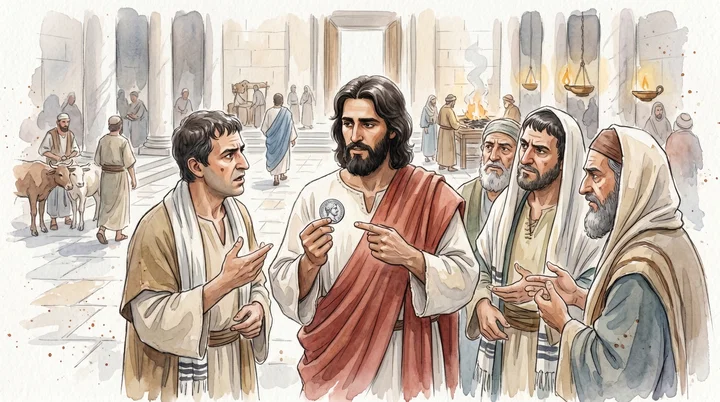
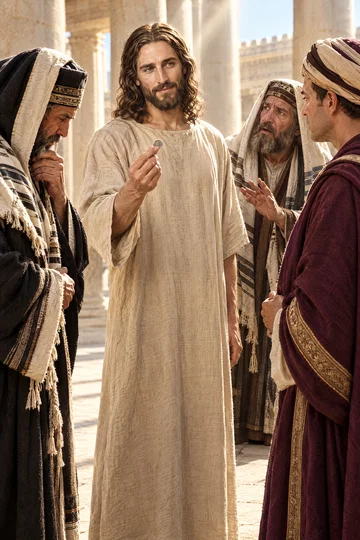
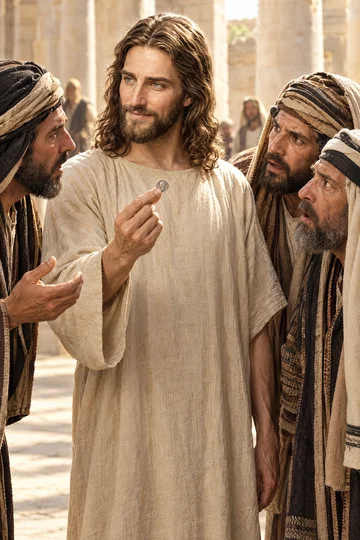
Tell us therefore, What thinkest thou? Is it lawful to give tribute unto Caesar, or not?
Translations
Tell us therefore, What think you? Is it lawful to give tribute to Caesar, or not?
King James Version, Revised Version
Tell us therefore, What thinkest thou? Is it lawful to give tribute unto Caesar, or not?
Tell us therefore, What thinkest thou? Is it lawful to give tribute unto Cesar, or not?
Tell us therefore, What thinkest thou? Is it lawful to give tribute to Cesar, or not?
Tell us therefore, What thinkest thou? Is it lawful to give tribute unto Cæsar, or not?
tell us, therefore, what dost thou think? is it lawful to give tribute to Caesar or not?'
tell us therefore what thou thinkest: Is it lawful to give tribute to Caesar, or not?
Tell us then, how, to thee, it seemeth? Is it allowable to give tax unto Caesar, or not?
Berean Standard Bible, Majority Standard Bible
So tell us what You think: Is it lawful to pay taxes to Caesar or not?”
Tell us therefore, what do you think? Is it lawful to pay taxes to Caesar, or not?”
Give us, then, your opinion of this: Is it right to give tax to Caesar, or not?
Tell vs therefore, how thinkest thou? Is it lawfull to giue tribute vnto Cesar, or not?
Douay-Rheims (Challoner revision)
Tell us therefore what dost thou think, is it lawful to give tribute to Caesar, or not?
Pictures
Cross-references
- Luke 20:20-25
And they watched him, and sent forth spies, which should feign themselves just men, that they might take hold of his words, that so they might deliver him unto the power and authority of the governor.
Parallel account of the tribute question and Jesus’ answer.
- Mark 12:14-17
And when they were come, they say unto him, Master, we know that thou art true, and carest for no man: for thou regardest not the person of men, but teachest the way of God in truth: Is it lawful to give tribute to Cæsar, or not?
Parallel account of the tribute question and Jesus’ answer.
- Matthew 22:21
They say unto him, Cæsar’s. Then saith he unto them, Render therefore unto Cæsar the things which are Cæsar’s; and unto God the things that are God’s.
Jesus distinguishes what is owed to Caesar from what is owed to God.
- Matthew 17:24-27
And when they were come to Capernaum, they that received tribute money came to Peter, and said, Doth not your master pay tribute?
Contrasts the temple tribute with Roman tribute; Jesus pays the tax rather than giving offense.
- Romans 13:1
Let every soul be subject unto the higher powers. For there is no power but of God: the powers that be are ordained of God.
Says governing powers are ordained by God, supporting the duty to respect civil authority.
- Luke 23:2
And they began to accuse him, saying, We found this fellow perverting the nation, and forbidding to give tribute to Cæsar, saying that he himself is Christ a King.
Jesus is falsely accused before Pilate of forbidding tribute to Caesar.
- Romans 13:7
Render therefore to all their dues: tribute to whom tribute is due; custom to whom custom; fear to whom fear; honour to whom honour.
Both address paying tribute and other dues to those entitled to them.
- Romans 13:6
For for this cause pay ye tribute also: for they are God’s ministers, attending continually upon this very thing.
Earthly rulers’ authority and role explain why tribute is due to them.
- Matthew 22:22
When they had heard these words, they marvelled, and left him, and went their way.
They marvelled and left after hearing Jesus’ answer about tribute.
- Mark 12:15-17
Shall we give, or shall we not give? But he, knowing their hypocrisy, said unto them, Why tempt ye me? bring me a penny, that I may see it.
Parallel account of the question about Caesar’s tribute and Jesus’ answer about Caesar and God.
- Luke 20:24-25
Shew me a penny. Whose image and superscription hath it? They answered and said, Cæsar’s.
Both texts address rendering to Caesar and to God what is due.
- 1 Peter 2:13
Submit yourselves to every ordinance of man for the Lord’s sake: whether it be to the king, as supreme;
Both address submission to civil authority and its ordinances.
- Titus 3:1
Put them in mind to be subject to principalities and powers, to obey magistrates, to be ready to every good work,
Both address obedience to civil authorities.
- Acts 5:29
Then Peter and the other apostles answered and said, We ought to obey God rather than men.
Obedience to God takes priority over obedience to human rulers.
Commentary
Each commentary is drawn from primary sources: the writings of Ellen G. White and Adventist pioneers and periodicals. Each commentary is separate. Its own words are not a quotation; follow the references to read the source passages.
Ellen G. White
16 sources
The question about paying tax to the Roman ruler was not sincere but a planned trap set by religious leaders with their political opponents to force an answer that could be used to have Him arrested.Ms 10, 1906, par. 8–12DA 601.1–602.5ST Jun 29, 1882 They flattered Him and demanded a yes-or-no reply, hoping a no would let them denounce Him to Rome as a rebel and a yes would turn the people against Him as unfaithful to God.Ms 10, 1906, par. 8–12ST Jun 29, 1882ST Jun 29, 1882 He saw through their motives completely yet answered without evasion by distinguishing the two obligations, using the ruler's coin to show that what bears his stamp is owed to him and what belongs to God is owed to God.Ms 10, 1906, par. 8–12DA 601.1–602.5ST Apr 25, 1878ST Feb 8, 1899ST Jun 29, 1882 That answer requires peaceable obedience and support to the governing power under whose protection people live, as He Himself modeled, but only so far as it does not conflict with supreme allegiance to God.DA 601.1–602.5ST Apr 25, 1878ST Jun 29, 1882
Trap Laid to Entangle
The question was not an honest inquiry but a deliberate snare laid to entangle Him in His talk and incriminate Him.Ms 10, 1906, par. 8–12ST Jun 29, 18823SP 42.23SP 41.3–4 It was put by spies sent by the chief priests and rulers, arranged privately with the Herodians to hear Him, witness against Him for trial, report Him, and have Him arrested and condemned.ST Jun 29, 18823SP 42.2ST Jun 29, 1882 The Pharisees joined with the Herodians in the plot, pretending to seek instruction while trying to make Him condemn Himself.DA 601.1–602.53SP 42.23SP 41.3–4
The trappers came with courteous pretended friendship and flattering commendation, professing confidence in His wisdom and teaching.Ms 10, 1906, par. 8–12ST Jun 29, 1882Ms 80, 1896, par. 5 They praised His straightforward course without regard to favor or frowns, and with assumed candor asked as if seeking information about the lawfulness of giving tribute to Caesar.Ms 10, 1906, par. 8–12ST Jun 29, 1882 They tried to ensnare Him by praise and flattery while pretending to be His friends, and they expected a direct yes or no answer.ST Jun 29, 1882Ms 80, 1896, par. 5
The dilemma was framed so that either answer would expose Him. If He said tribute was unlawful, those present would report Him at once to the Roman authorities as an enemy of civil authority, a rebel creating sedition and rebellion among the Jews, to insure His arrest and condemnation.Ms 10, 1906, par. 8–123SP 42.2ST Feb 8, 1899ST Jun 29, 1882 If He said it was lawful, they designed to turn the Jewish people and the elders against Him and accuse Him as opposed to the law of God.Ms 10, 1906, par. 8–123SP 42.2ST Jun 29, 1882 The Pharisees chafed under Roman taxes, held that paying tribute was contrary to God's law, and stirred resistance to Roman rule, hoping He would offend either Jewish law or Roman authority.ST Jun 29, 1882ST Apr 25, 18783SP 41.3–4
He was not deceived by the flattering commendation and cover of pretentious righteousness, for He perceived their wickedness.Ms 10, 1906, par. 8–12ST Jun 29, 1882 He read their hearts, wicked purposes, character and motives as an open book, and they knew He detected their trap.Ms 10, 1906, par. 8–12Ms 80, 1896, par. 5 He still knows the true motives of every person, with no profession able to deceive Him.Ms 10, 1906, par. 8–12 Though constantly assailed, He continued in pity, sympathy and love to labor for the salvation of lost, ungrateful men, firmly and unswervingly telling the truth and teaching heaven's law of righteousness and justice, without revenge and without deviating one hair from principle.Ms 80, 1896, par. 5
The question belongs with His illustrations and repeated warnings showing what rejecting the Son of God would bring on the Jews.DA 600.3ST May 2, 1878 In it He was addressing all in every age who refuse to receive Him as Redeemer, exposing their true condition and warning of retribution and doom unless they repent.DA 600.3ST May 2, 1878 Spies followed Him and scrutinized His words so they could twist them, create false issues, and mislead the people.ST May 2, 1878Lt 59, 1890, par. 18–19 Yet the questions of the Pharisees, Herodians and Sadducees were answered plainly and wisely, bringing precious light to the people and sowing seeds of truth.Ms 71, 1897, par. 27
Duty to Caesar and God
Jesus settled the disputed question without evasion by distinguishing what is owed to each, holding up the Roman coin stamped with Caesar's name, image and inscription and teaching to render to Caesar what belongs to Caesar and to God what belongs to God.DA 601.1–602.5ST Feb 8, 1899ST Jun 29, 18823SP 129.3–130.15RED 49.2–50.1 Because they lived under the protection of the Roman power, they were to give the state its due support and remain peaceably subject to and obey the laws of the land.DA 601.1–602.5ST Apr 25, 1878ST Jun 29, 1882 His own teaching and example were always obedience to the reigning power, for He Himself paid tribute and taught His disciples to do so.3SP 129.3–130.15RED 49.2–50.1ST Jul 4, 1878 That answer met an issue stirred by resistance to Roman rule and by the claim among the Jews that their law forbade paying tribute to a foreign power, a claim that produced constant tumults and insurrections against Rome.3SP 129.3–130.15RED 49.2–50.1
That civil obligation is limited and ordered: it holds only so long as it does not conflict with duty to God.DA 601.1–602.5ST Apr 25, 1878ST Jun 29, 1882 At all times obedience must be rendered to God and His claims answered, for first allegiance always belongs to God.DA 601.1–602.5ST Apr 25, 1878ST Jun 29, 1882 The Jewish nation's subjection to Rome was the penalty of apostasy, brought on by failure to meet God's claims.ST Apr 25, 1878
At His trial before Pilate the priests falsely charged Him with the exact opposite of this teaching, that He forbade giving tribute to Caesar.5RED 49.2–50.1ST Jul 4, 1878 They did this in order to make Pilate view Him as a rebel, suppressor of Roman rule and leader of sedition.5RED 49.2–50.1ST Jul 4, 1878
Sources
Pioneers and periodicals
42 sources
The question put to Jesus was whether it was lawful under God to pay the census tax to the Roman emperor, a politically charged issue over which many held that payment to a foreign power was unlawful.ST Apr 25, 1878ST Mar 26, 1896ST Feb 12, 1902ST Mar 26, 1896ST Sep 30, 1886 It was not asked honestly but as a manufactured trap by spies sent by the Jewish leaders together with the Herodians, so that answering yes would turn the people against Him as opposing divine law and denying His Messiahship, while answering no would expose Him to arrest by Rome for sedition and treason.ST Jun 29, 1882ST Jul 3, 1907ST Oct 18, 1899ST Jun 4, 1894 Seeing through their hypocrisy, He pointed to Caesar's image and inscription on the tribute coin and taught that what belongs to Caesar is to be rendered to Caesar and what belongs to God to God, thereby settling the question without evasion.ST Jul 3, 1907ST Oct 18, 1899ST Jun 4, 1894RH Mar 9, 1869 This establishes that properly constituted civil government is ordained by God to be supported and not overthrown, and is owed its just dues including tribute and taxes and peaceable subjection to the laws of the land.ST Apr 25, 1878ST May 28, 1912ST Jan 23, 1907ST Mar 19, 1896 Yet civil and religious duties belong to distinct spheres, so government must not legislate over conscience, worship, and what bears God's image, including the Sabbath, and when it oversteps its bounds to interfere with duty to God its requirements must be disregarded, for obedience to God has the prior claim.ST Jul 3, 1907ST May 28, 1912ST Jun 3, 1908RH Mar 26, 1914
Wording, Setting, and History
The tribute asked about is not the temple contribution but the census tax paid to the Roman emperor, the word itself being the Greek form of the Latin census for tribute to support the government.ST Mar 26, 1896ST Mar 26, 1896ST Sep 2, 1889 To confuse the two kinds of tribute erases the significance of the words about divine Sonship and of Peter's failure to remember his confession of Jesus as the Son of the living God.ST Mar 26, 1896 Tribute is a tax levied on people under a government's rule to support that government, so earthly governments may rightly require taxes while what belongs to God must be rendered to God and not claimed by Caesar.ST Sep 2, 1889
The question belongs to Jesus' answers to critics who tried to make him stumble while he was teaching in the temple on Tuesday, the last day of his teaching there.ST Sep 3, 1912RH Jan 29, 1914 It stands in the chapter where the kingdom of heaven is likened to a certain king who made a marriage for his son.RH Apr 15, 1858 By the king's son is meant the Son of God and by his marriage is meant the marriage of the Lamb, a definite event taking place just before Christ's return, when the nobleman who went into a far country to receive a kingdom returns after receiving it.RH Apr 15, 1858
The question touched a politically charged dispute over Roman taxation.ST Feb 12, 1902 Judas of Galilee had led a revolt against the land tax imposed by Augustus, urging that it was unlawful to pay tribute to Caesar.ST Feb 12, 1902 Tumults and insurrections were constantly arising among the Jews against the Roman government, since many affirmed that paying tribute to a foreign power was against Jewish law, while the Roman authorities were watching rigorously to suppress such movements.ST Sep 30, 1886
The Jewish people were subject to Rome and lived under Roman protection.ST Apr 25, 1878ST Sep 11, 1893 Their use of coins bearing Caesar's image and inscription acknowledged his authority and showed that Caesar was their ruler.ST Sep 11, 1893 Their failure to meet God's claims had brought the nation under foreign rule, so its subjection to Rome was the penalty of apostasy.ST Apr 25, 1878
Jesus himself was always obedient to the reigning power, paid tribute and taught his disciples to pay it, proving he was no leader of sedition.ST Jul 4, 1878ST Sep 30, 1886 He plainly taught the people to give Caesar all that was due to him, including tribute.ST May 25, 1904 The later charge before Pilate that he was perverting the nation and forbidding tribute to Caesar was therefore false, made by the priests to excite Pilate's fears and make him view Jesus as a rebel and suppressor of Roman rule.ST Jul 4, 1878ST May 25, 1904ST Sep 30, 1886
Trap to Ensnare Jesus
The question was no sincere request for guidance but a crafty, manufactured snare to make Jesus stumble and force from Him something usable to condemn Him.ST Jun 29, 1882ST Oct 18, 1899ST Jun 4, 1894RH Mar 10, 1868 It was laid by spies sent by the chief priests and rulers with the scribes, Pharisees, Sadducees and other learned men, arranged privately with the Herodians to hear Him and witness against Him for trial, though Pharisees and Herodians were opposed to each other.ST Jun 29, 1882RH Mar 10, 1868ST Sep 30, 1886 Instigated by Satan, the questioners acted as his agents, in the same spirit as objections against the Sabbath and not from desire for light.ST Jun 29, 1882 The spies were sent by scheming priests to entrap Him at a time when tumults and insurrections were constantly arising because many affirmed that paying tribute to a foreign power was against Jewish law, while Roman authorities watched rigorously to suppress such movements.ST Sep 30, 1886
They came with courteous pretended interest in His wisdom and confidence in His teaching, flattering His straightforward course without regard to favor or frowns.ST Jun 29, 1882ST Jun 3, 1908 Then with assumed candor they asked as if seeking information, presenting the matter as one of religious and civic duty.ST Jun 29, 1882ST Oct 18, 1899ST Jun 3, 1908 Their flattery and question were a trap, hoping to make Him answer in a way that would expose Him to charges before the Roman courts.ST Jun 3, 1908
The question was deliberately difficult because a direct yes or no would expose Jesus to attack for political or religious conspiracy.ST Feb 8, 1899ST Jul 3, 1907 Saying tribute was unlawful would lead those present to report Him to the Roman authorities to have Him arrested at once as creating rebellion, sedition and treason to insure condemnation, with denial exposing Him to a charge of sedition.ST Apr 25, 1878ST Feb 8, 1899ST Jun 3, 1908ST Oct 30, 1901 Saying it was lawful would disappoint Jews resentful of Roman rule, turn the people against Him, alienate the Jewish people, and bring accusation that He opposed divine law.ST Apr 25, 1878ST Feb 8, 1899ST Oct 30, 1901 Agreement with tribute would also be portrayed as proof He was not the Messiah who would free Israel, while either answer would give one of the opposing parties grounds to attack Him.
The trap arose because the Pharisees chafed under Roman taxes, resented being subject to Roman taxation, and held that paying tribute was contrary to the law of God, while refusal could bring charges from the Roman government.ST Jun 29, 1882ST Apr 25, 1878ST Jun 4, 1894
Christ's Discerning Answer
Jesus saw through the crafty inquiry to the wicked intent behind it, reading the motives and animus of those who framed it.ST Apr 25, 1878ST Oct 18, 1899ST Sep 10, 1896 He exercised the gift of discerning of spirits, recognizing them as agents of Satan at work rather than seekers of light or truth.ST Sep 10, 1896 He openly exposed their hypocrisy instead of allowing the pretense of religious and civic duty to stand.ST Apr 25, 1878ST Jul 3, 1907RH Mar 10, 1868 The trap was manufactured to entangle Him in talk, in the same spirit as objections against the Sabbath, with the real difficulty lying in ignorance of the Scriptures. He met the challenge from the Scriptures and showed that ignorance for what it was.
Holding the Roman coin stamped with Caesar's name, image and superscription, He turned their own evidence against them.ST Jun 29, 1882ST Jul 4, 1878ST Sep 30, 1886 He asked whose image and inscription appeared on the tribute money, then distinguished what belonged to Caesar from what belonged to God.ST Jun 4, 1894ST Sep 30, 1886 His answer rested on the principle taught by their own teachers that people acknowledge as lord the king whose money is current among them.RH Mar 9, 1869 In this way He settled the disputed question without evasion and without giving either side grounds for attack.ST Feb 8, 1899ST Jun 4, 1894 He Himself had always been obedient to the reigning power, paid tribute and taught His disciples to do so, proving He was no leader of sedition.ST Jul 4, 1878ST Sep 30, 1886
He answered with forbearance and magnanimity, as though the question had been asked sincerely from pure motives for instruction, not letting hostile motive prevent instruction.ST Apr 8, 1875 His course exemplified answering a fool according to his folly, exposing the folly without betraying the same evil temper by becoming like the fool.RH Sep 17, 1861 He never turned from obedience to God, but used the occasion to expose the questioners' true condition and warn of the retribution awaiting them if they persisted in sin.ST May 2, 1878 His wisdom silenced them completely, defeating the trap so that they withdrew in confusion and left Him.ST Feb 8, 1899RH Mar 10, 1868RH Mar 9, 1869
Duties to Caesar and God
The question whether tribute to Caesar was lawful is answered by recognizing that properly constituted civil government has rightful authority because it is ordained by God to be supported, not overthrown.ST May 28, 1912ST Jan 23, 1907ST Mar 19, 1896 Earthly rulers are therefore owed their just dues, and earthly governments may rightly require taxes, tribute being a tax levied on people under a government's rule to support that government.ST May 28, 1912ST Mar 19, 1896ST Oct 31, 1895ST Sep 2, 1889 What is owed to Caesar includes tribute, taxes, and lawful civic service, while what is owed to God is owed to God.ST May 28, 1912ST Jan 23, 1907ST Jul 1, 1908ST Sep 2, 1889
Duty turns on ownership and jurisdiction, so civil government has authority over civil matters and obligations between people, including taxes, while what belongs to God belongs to God.ST Oct 30, 1901RH Feb 3, 1910ST Jun 4, 1894 The soul and its worship and conscience are God's claim, and religious duty belonging to God has the prior claim over the State's jurisdiction in civil matters.ST Oct 30, 1901RH Feb 3, 1910ST Jun 4, 1894 Because people live under the protection of the civil power, they should render to that power the support it claims and remain peaceably subject to the laws of the land, so long as doing so does not conflict with duty to God.ST Apr 25, 1878ST Jun 29, 1882ST Mar 19, 1896 At all times obedience is owed to God and his claims must be answered, and when civil authority oversteps its proper bounds and interferes with duty to God its requirements must be disregarded, yet Christians are to remain subject to civil authorities even when arrested for conscience' sake for violating a civil statute.ST Apr 25, 1878ST Jun 29, 1882ST Mar 19, 1896
Jesus did not undertake to regulate people's civil affairs or engage in political work, for his mission was to save sinners, not to reform earthly governments.ST Apr 25, 1900ST Sep 11, 1893 He did not restore the former theocracy of the Jewish people subject to Rome, nor accept temporal rule from them.ST Apr 25, 1900ST Sep 11, 1893 By the coin bearing Caesar's image and inscription he reminded the Jewish rulers that Caesar was their ruler, rebuking their claim to civil authority, since their use of such money acknowledged his authority.ST Sep 11, 1893
Separation of Church and State
The question about paying tribute to Caesar was a trap meant to force a charge of political or religious conspiracy, and the answer given with the coin bearing Caesar's image distinguishes what is owed to Caesar from what is owed to God.ST Jul 3, 1907ST Jun 3, 1908RH Feb 3, 1910 Civil and religious duties belong to distinct spheres that coexist without being joined, with citizens to render to the State what is due to it and to God what is due to Him.ST Jul 3, 1907ST May 28, 1912 The State protects secular interests while the Church serves spiritual and religious interests, and pure Christianity requires this separation.ST Jul 3, 1907RH Oct 29, 1914 The church is not to use religious power to control civil matters nor rely on secular power to advance its cause, and churches that leave gospel work to seek power through laws on religious matters act outside their proper sphere.RH Mar 26, 1914ST Dec 12, 1895ST
The distinction sets a firm limit on civil authority and shows the limitations of civil power.ST May 28, 1912 Government must not legislate in the realm of religion or conscience, and Caesar has no right to claim what belongs to God.ST May 28, 1912ST Jun 3, 1908 Government may collect tribute, but worship and religious ordinances belong to God and are not for Caesar to exact, alter, or direct.ST Dec 12, 1895ST Mar 6, 1907 The State has no right to intrude into a person's relationship with God, since doing so usurps divine authority and trespasses on holy ground.RH Feb 3, 1910 Instead government should protect each person's liberty to follow or not follow religious convictions so long as equal rights of others are not violated.ST May 28, 1912
What bears Caesar's image belongs to the civil government, while what bears God's image, authority, origin and law belongs to God.ST Jan 30, 1907ST Jun 30, 1909ST Dec 12, 1895 That which bears God's authority in origin and law includes the Lord's Supper, baptism, and the Sabbath.ST Dec 12, 1895 The Sabbath belongs to God because the Sabbath law identifies it as the seventh day of Jehovah the Creator's day, so civil rulers have no authority over it.ST Jan 30, 1907ST Jun 30, 1909 Religious observance cannot be made holy or sincere by civil law, nor may the church use force to enforce the principles of Christ's spiritual kingdom.ST Sep 13, 1905 God leaves people free to observe the Sabbath or not, and His servants are not commissioned to condemn them or sentence them before the final judgment.ST Jun 30, 1909 Christians are to show courtesy and respect for civil authorities without compromising truth in teaching or example.
Sources